KELLY FREMON CRAIG’S THE EDGE OF SEVENTEEN — A REVIEW BY NICK CLEMENT

3

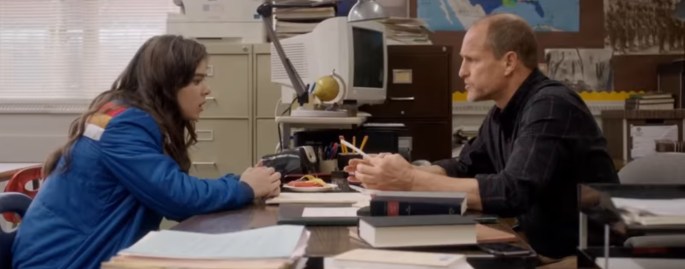
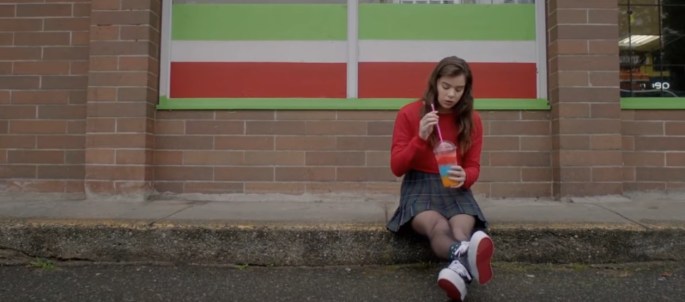
The Edge of Seventeen is a funny if overly familiar story of a female high school student learning to adjust to her new surroundings and the changing attitudes of the people around her. Hailee Steinfeld is unsurprisingly confident as the lead character, but for me, the real discovery of the movie was Haley Lu Richardson; if her agent is sharp, she’ll be landing some choice projects in the near future. Written and directed by Kelly Fremon Craig, the film is certainly perceptive in terms of modern teenage life, but I could have done without the more over the top plot shenanigans, and again, there was a whiff of familiarity and predictability to nearly the entire film. And while well written, some of the dialogue and the exchanges came off as too precious or self-labored; I didn’t truly believe the way some of the people spoke at times during this film.

2

Woody Harrelson does some dryly humorous supporting work, while Kyra Sedgwick is given an odd role to play, that of a stressed-out single mom whose role in the narrative feels a little underdeveloped. For me, the big reveal from this movie is Richardson, who was charming and extremely photogenic and seemingly capable of much more than just the “best friend” role. Blake Jenner, who was also good in Richard Linklater’s Everybody Wants Some, is a hunk of All-American beef, with a mile-wide smile that reminds of a young Dennis Quaid, while Hayden Szeto delivered some awkward laughs. The film was produced by James L. Brooks, and was critically embraced last fall when it was released to decent if quiet box office results.

1

STEVEN SODERBERGH’S HAYWIRE — A REVIEW BY NICK CLEMENT

4

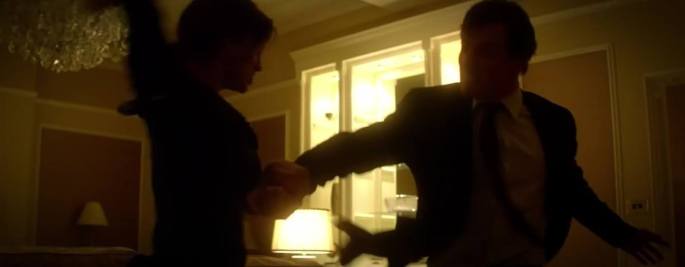
Haywire demonstrates Steven Soderbergh upending the conventions of the modern spy movie and the Bourne aesthetic, resulting in a cold, calculated, and wonderfully crisp action thriller that strips away any narrative pretense and bloat, favoring classical and exquisitely shot and cut fight sequences with a terse screenplay (written by Soderbergh frenemy Lem Dobbs) that only divulges exactly what you need to know and nothing more. Gina Carano, a former MMA star, isn’t a particularly expressive or emotive screen presence, but what she possibly lacks in charisma she more than makes up for with her intense physicality and grace-under-pressure-confidence during the film’s numerous high-throttle action sequences. Her hotel room blow-out with a game Michael Fassbender is one of the single best fight sequences in any movie. Insanely aggressive, visceral, dangerous, and a hoot to watch, the two of them slam each other around a hotel suite, crashing into tables and mirrors and walls, trading repeated blows, with a static, observing camera capturing each potentially lethal kick and punch with hard-core efficiency.

2

Carano is Mallory Kane, a black-ops soldier who’s tasked with doing a mysterious job by some nefarious government officials (Ewan McGregor, Michael Douglas, Antonio Banderas, Channing Tatum in one very nasty sequence) who are looking to use her as bait in a much larger plan of action. She doesn’t realize at first that she’s being set up, but when he makes heads of the situation, she’s off on the run, trying to put the pieces together with the help of a stranger (Michael Angarano) and her Tom Clancy-esque father, perfectly underplayed by Bill Paxton. As usual, Soderbergh acts as his own cameraman and editor (Peter Andrews and Mary Ann Bernard POWER), and the film carries a fleet, slick yet gritty, totally engrossing style that beautifully serves the various action set-pieces and cynical dialogue exchanges.

3

David Holmes’ score is jaunty, jazzy, and not the usual for this sort of genre fare; it’s one of my favorite recent scores to any film, a total play-thru on CD, riffing on Bond in some spots, and filled with tons of inspired 60’s and 70’s flair. As he did in The Informant! and on his TV show The Knick, Soderbergh opted for a unique use of nontraditional music in Haywire, which gave the entire film a bracing jolt of originality when compared to other genre efforts. And then there’s the final shot and line of dialogue – I’m not sure if I’ve ever loved two seconds of an action movie more than those moments. I can remember some people in my theatrical screening getting very annoyed by how Haywire finishes. Not me. The brevity of the entire piece is what I love so much, and the fatally sharp closing was a perfect way to fade to black.

1

TATE TAYLOR’S THE GIRL ON THE TRAIN — A REVIEW BY NICK CLEMENT

3

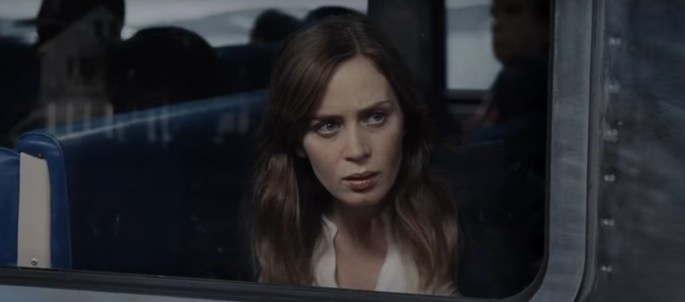
I very much enjoyed last year’s much-derided thriller The Girl on the Train. It’s not the best movie I’ve ever seen, and it’s hardly the worst. I like a good, steamy, erotic thriller, the types of movies that used to be original screenplay spec sales back in the 90’s. But nowadays, these genre thrillers are typically made because they’re based on best-selling novels, which is the case with this flick. Emily Blunt is absolutely awesome as a totally out of control alcoholic who can’t remember the fine details concerning her potential involvement in the disappearance of a local hottie who may or may not be schtupping the entire neighborhood. The gorgeous Haley Bennett is the seductress, Justin Theroux is Blunt’s much-irritated ex-husband, side-of-beef Luke Evans is around as a possible suspect, and Allison Janney and Rebecca Ferguson fill in the margins as a cop and goodie-good-wife respectively. The gorgeous cinematography by Charlotte Bruus Christensen (Far From the Madding Crowd) stresses visual sensuality at nearly every chance afforded, while the luxury home furnishing production design is nearly pornographic in the same way as the current HBO show Big Little Lies, which I’m thoroughly enjoying.

2

Director Tate Taylor (The Help, Get On Up) might have been a little too tasteful with some of the seamier elements to the narrative, which was adapted by screenwriter Erin Cressida Wilson (Chloe, Fur) from the Paula Hawkins novel; I kept wishing that Brian De Palma had been offered a chance to direct this pulpy-trash because when formally elevated, these types of movies can be very entertaining, as this one was for me. Paul Verhoeven might’ve been a cool fit with the material, too. It’s got a leering, predatory vibe, and while Taylor is a smooth craftsman, I’m not sure he was fully up for all of the kink that was inherent to the material. Still, for its entire running time, I was engrossed and entertained. It’s nothing serious or overly substantial, but it’s a solid thriller made with lots of production polish, and anchored by the magnetic acting chops of Blunt, who can seemingly do no wrong for me as a viewer. Despite mixed reviews, the film was a sizable worldwide hit, grossing $175 million off of a $45 million budget. Danny Elfman’s score is appropriately sketchy.

1

GUS VAN SANT’S GERRY — A REVIEW BY NICK CLEMENT

1

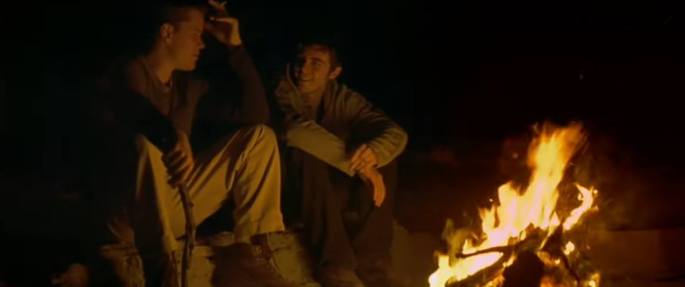
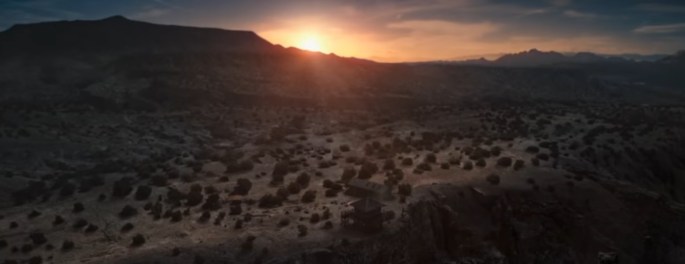
Gus Van Sant’s “death trilogy” started in 2002 with the unique and intimate film, Gerry, kicking off a run of small, super low budget and very internalized pieces of work, which also included 2003’s Elephant and Last Days in 2005 (while similar, 2007’s Paranoid Park isn’t officially part of this unofficial grouping). Certainly not for all tastes due to the unconventional nature of the narratives, these films found Van Sant in total artistic mode, essentially searching for answers to questions where answers might not ever be possibly found. Purposefully slow paced and based on true and very tragic events, Gerry unfolds in an elliptical manner, with two main characters drifting in and out of the narrative like spectral creations who never feel truly tethered to the here and now.

2

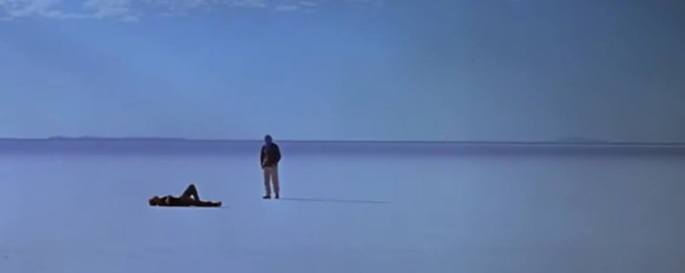
Matt Damon and Casey Affleck play two lost souls (literally and figuratively) who wander the Utah dessert, get lost, have ruminative discussions about the meaning of life, wander some more, and then, well, you’ll have to see the film to learn what happens by the end. What I will say is that this film is intensely private, it lends itself well to watching while under the influence of psychoactive substances, it doesn’t care if you don’t like it, and the cinematography by the late, great Harris Savides is visually sublime; his work on Elephant and Last Days is similarly striking and challenging on an aesthetic level. Van Sant has credited the work of filmmaker Bela Tarr as a heavy inspiration when making Gerry; the film is dedicated to the memory of Ken Kesey.

3

SPIKE LEE’S INSIDE MAN — A REVIEW BY NICK CLEMENT

1

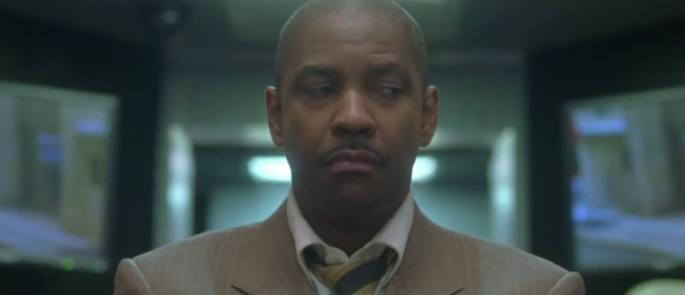
Spike Lee has always been a very politically and socially conscious filmmaker, with much of his work touching on topical elements that link us all together as human beings. This makes his straight-up genre picture, Inside Man, all the more atypical, as it’s one of the few gun-for-hire pictures that he’s put his name on. And it’s also one of his most overtly entertaining and stylish motion pictures. Denzel Washington was fantastic here, not exactly the guy who you think he is, and the same could be said for Clive Owen; this movie has many tricks up its sleeves, and I love how it kept you guessing as to the morality of the characters all the way until the end. Jodie Foster is extra-icy in this one, playing a bureaucratic serpent in an expensive wardrobe with a flexible moral compass. Willem Dafoe, Christopher Plummer, and Chiwetel Ejiofor round out the super supporting cast, with lots of familiar faces making up the various bank hostages who are central to the heist narrative that’s central to the story.

2

Russell Gewirtz’s script has a strong sense of anger running along the edges of the tight plotting that he created, and while there’s certainly a “message” at play, it’s buried neatly under the confines of dense plot threads and colorful dialogue. Snazzy cinematographer Matthew Libatique went for a slick and gritty visual style, with some really choice individual shots peppered all throughout the proceedings. Terence Blanchard’s blustery score hits some righteously jazzy notes; the opening credits with Chaiyya Chaiyya playing on the soundtrack are a total visual and sonic stunner. Terry George and Menno Meyjes both contributed to the script but didn’t receive on-screen credit, while Lee felt that this was his chance to do his version of Dog Day Afternoon. Released in 2006, Inside Man did strong box office and got rock solid reviews, and is always worth a revisit.

3

STEVEN SPIELBERG’S CATCH ME IF YOU CAN — A REVIEW BY NICK CLEMENT

2

Lighthearted, spirited, and undeniably charming, Catch Me If You Can is easily one of Steven Spielberg’s most purely entertaining films, and it’s a work that I find to be hugely re-watchable and always a pleasure to behold. Leonardo DiCaprio was light on his feet in a way that feels very far removed from his more recent performances, taking on the role of a notorious conman whose exploits seem too impossible to be true. The based on a true story narrative is extremely well calibrated, with screenwriter Jeff Nathanson effortlessly blending family dynamics, chase-film elements, con-artistry, various love interests and side-plots, and two, off-beat, father-son relationships that stretch between DiCaprio and his dad, warmly played by Christopher Walken with twinges of sadness in-between the margins, and Tom Hanks, as the FBI agent who doggedly pursues the young criminal as he hitches free rides on planes and cashes his own perfectly forged checks. There isn’t one aspect to this film I’m not enamored with, between the jaunty John Williams score to the gorgeous cinematography from Janusz Kaminiski, and then there’s that amazing opening title sequence, Michael Kahn’s peppy editing, and that ridiculous supporting cast. This movie is pure fun and yet another reminder of how generous and loving The Beard can be as a storyteller.

4

DAVID CHASE’S NOT FADE AWAY

1

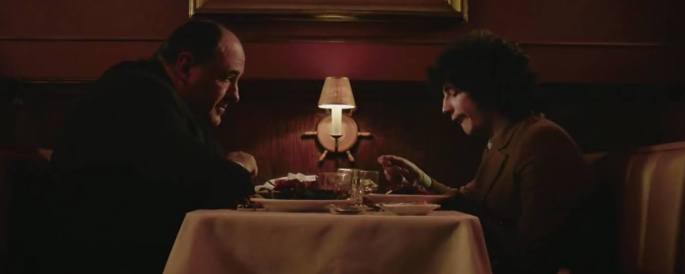
Totally buried by Paramount Vantage at the end of 2012, David Chase’s Not Fade Away is a funny and nostalgic time portal back to the 60’s, with a fantastic soundtrack, and a killer supporting performance from James Gandolfini. While the film possibly feels incomplete (I really would love to see a miniseries that picks up right after the events of the final scene), it’s yet another reminder of how well-observed Chase is as a storyteller, and how he really needs to be doing more work. The dialogue is sharp as a tack and I loved the freewheeling, almost rambling quality to Not Fade Away’s narrative. Bella Heathcote is positively alluring as Grace, the object of desire for eager musician Douglas, played with sensitivity by John Magaro, who with his buddies has dreams of making it big as a Beatles-inspired musical act. Gandolfini is Douglas’s extremely disapproving father who doesn’t understand the “noise” that his long haired son is creating in the garage.

2

There’s an excellent sense of time and place in Not Fade Away, and you get the feeling that Chase really knows these characters. If only he had been given a bit more time to tell the story (I wouldn’t be surprised to learn that stuff was left on the cutting room floor) because while what we’re left with is strong and enjoyable, there were times that I felt like it could have been even more expansive and thematically probing. Still, great music, solid performances, Heathcote and Gandolfini steal the show, and really nice cinematography from Eigil Bryld (House of Cards, In Bruges). After debuting at the NY Film Festival, this $20 million production would go on to gross less than $1 million in a shamefully small release, and while critics were mostly kind, people underrated this one a bit; it didn’t deserve to die on the vine without anyone even knowing that it was an option. Not Fade Away is available on Blu-ray and via various streaming providers.

3


JAMES MANGOLD’S LOGAN — A REVIEW BY NICK CLEMENT

3

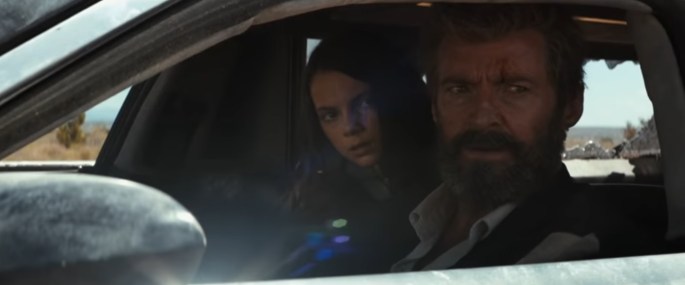
Depending on your sensibilities, you may agree with how I feel about Logan – this is the most satisfying comic-book/superhero movie since The Dark Knight Rises and EASILY the best movie to have that flashing-image Marvel logo attached to it. It took 17 years, but they finally made an R-rated Wolverine movie, and because of this decidedly different tone and approach, no other cinematic endeavor featuring any of the X-Men can remotely come close to touching it. This film feels as if it was created for adults rather than for children; look elsewhere for spandex outfits and reassuring, jokey humor. I’ve always felt that there’s nothing PG-13 about a mutant with razor blades that pop out of his knuckles when he’s pissed, so considering that director James Mangold got a chance to go balls-out with the character, it would be sort of hard to screw up the potential that this particular premise has to offer. Mangold has long been a solid craftsman with more than a few very strong pictures on his resume (Cop Land is my favorite work that he’s released and I’ve viewed Walk the Line countless times), and after he delivered two-thirds of a good entry back in 2013 with The Wolverine (the final act is really dumb with that mechanical samurai thing), it’s clear he learned from that film’s shortcomings, dialing it back a notch, and making a genre film that is refreshingly free of distracting and needless CGI.

2

It’s pointless to reiterate the fact that Hugh Jackman is perfectly cast in the lead role; this will be the big-screen character that he’ll always be remembered for. He’s absolutely on fire in Logan, all animalistic fury but with a broken heart as well as a crushed soul; he needs one final shot at redemption. I loved that the film felt like a desolate Western, both visually and thematically, and Dafne Keen was a total scene-stealer as the mutated child, all feral rage and explosive anger to match Jackman’s patented brand of ferocity that he’s always brought to his dual character of Logan/Wolverine. Patrick Stewart is, as usual, terrific as Professor X, and gets some key emotional moments because of the surprisingly thoughtful screenplay. Richard E. Grant smartly underplays the chief baddie role, while Boyd Holbrook is very menacing as one of the main henchmen, with a flawlessly integrated mechanical hand that’s definitely creepy. And under albino make-up, Stephen Merchant is affecting as the link between the two parties, as this is essentially an extended chase scenario, with an ailing Logan and Professor X trying to protect a special girl with a dark history.

2

The screenplay by Mangold, Scott Frank, and Michael Green is literate, witty, and packed with brutal action, with cinematographer James Mathieson doing some beautiful yet low-key work behind the camera. The set=pieces sting with a level of brutality that feels bracing for the gore-free previous outings, which seem downright jokey and lame in comparison. I don’t really care, on the whole, about the comic-book movie genre; to me, these types of movies are fast-food-cinema. They get the job done, and then you’re hungry for something more substantial. But Logan is a different beast in that it DOES feel substantial, like there’s some emotional heft and weight behind it. And the way it subverts your expectations is a crucial reason for its success. The filmmakers present a narrative with true stakes, never spinning out of control and unleashing the dreaded CGI vortex in the sky, keeping the themes intimate so that you actually care about the outcome, while the action is bloody, unrelenting, and consistently savage. As it should be. Free of creative constraints, it’s abundantly clear everyone had a blast with this seemingly final chapter of this particular saga.

1

Marvel has boxed themselves in with Logan; how can one be asked to take their product seriously when they’ve offered a definitive portrait of one of their most iconic characters, doing it the gritty justice that it deserves? The best thing that one might be able to say is that someone has come along and made a superhero film that doesn’t really feel like a superhero movie for nearly the entire runtime. I’m no easy-lay with Marvel product; I’ve skipped or not enjoyed as many as I’ve been able to hang with. My favorite stuff has included the two Captain America films, Iron Man 3, and Ang Lee’s underrated Hulk. But Logan is something all-together different. It doesn’t give a fuck about anything that’s come before it and doesn’t give a fuck if you don’t like it or think that it’s too nihilistic or aggressive. In short, it’s the Wolverine movie we all deserve and I can’t imagine myself feeling inclined to see too many more movies of this type in the future.
1

ANDREW DAVIS’ THE FUGITIVE — A REVIEW BY NICK CLEMENT

3

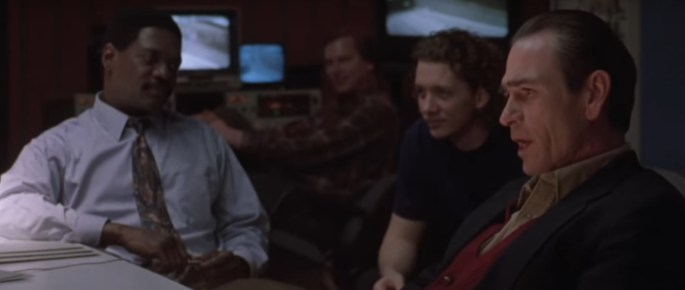
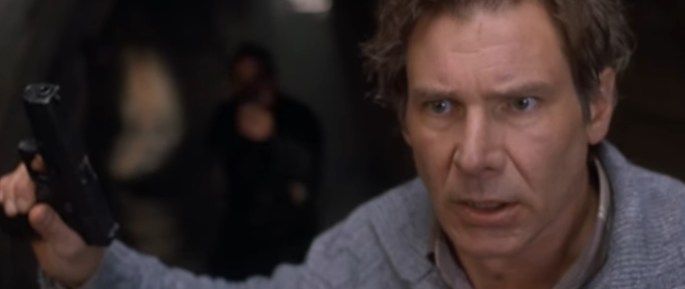
Classy action-dramas like The Fugitive are a tough breed to find these days on movie screens; it seems nearly insane that this film was nominated for Best Picture in 1993, not because it’s not fully awesome, but rather, this genre would NEVER be paid attention to by members of the Academy in our current cinematic climate. Harrison Ford delivered a quintessential movie star performance, eliciting sympathy right from the outset, and allowing the audience to embark on his journey with him, rather than feeling like a spectator. There’s a great supporting cast including Sela Ward, Joe Pantoliano, Jeroen Krabbe, Julianne Moore, and Andreas Katsulas. The fantastic Tommy Lee Jones of course won the Oscar for Best Supporting Actor, the film was a massive financial success, and a decent pseudo-sequel following Jones’ character was released in 1998.

2

The Fugitive is easily the best film that filmmaker Andrew Davis ever directed, as it was extremely well-crafted on a technical level with ace cinematography by Michael Chapman and a terrific score by James Newton Howard, while Jeb Stuart and David Twohy’s smart and logical screenplay never went too far over the top, instead playing it realistic yet exciting, and always making sure we cared deeply about Ford and his paranoid plight. Apparently, when the film was in various stages of development, Michael Douglas, Kevin Costner, Nick Nolte, and Alec Baldwin were all considered for the Dr. Kimble role, while Gene Hackman and Jon Voight were both thought of for US Marshall Gerard. The film is notable for extensive location shooting in and around the city of Chicago and in the state of North Carolina. “I didn’t kill my wife!” “I don’t care!”

1

MICHAEL DAVIS’ SHOOT ‘EM UP — A REVIEW BY NICK CLEMENT

2

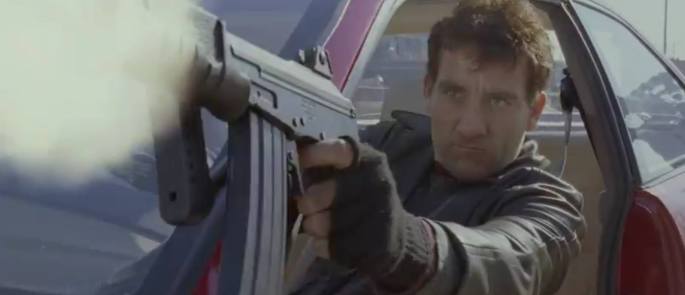
Shoot ‘Em Up is a wildly silly R-rated cartoon of a movie, tremendously fun and berserk and made with low-budget zeal and ingenuity. Playing like a Looney Tunes adventure on a few hits of PCP, this is pure comic-book-movie shenanigans, but instead of superheroes from another galaxy, the characters in this oddly eccentric actioner bounce off one another with crazy glee and nasty aplomb.  There’s a lactating hooker (Monica Bellucci, bless her gorgeous soul), an infant mixed up in a barrage of bullet-riddled set—pieces, a mid-coitus shoot-out that’s both sexy and stupid in equal measure, and enough barking-mad scenery chewing from Paul Giamatti, as one of the most incompetent villains in the history of action movies, to choke a horse. Clive Owen basically reprised his role from the BMW Films series, this time with a carrot fetish (you’ll see!), as a take-no-nonsense Driver who shoots first, steps on the gas second, and rarely has time to ask questions. Pseudo-amateur filmmaker Michael Davis famously got this film made by showing New Line execs the entire movie via hand-drawn pre-viz artwork, and it’s a shame that someone with this level of creativity hasn’t been allowed to work since (the movie flopped big time at the box office despite mostly positive reviews).  Peter Pau’s aggressively stylish cinematography is a constant eye-scorcher, making the film feel larger than its modest budget likely allowed. There’s a careening sense of insanity to Shoot ‘Em Up, with the film’s wicked energy level never stopping for a moment.  Make no mistake – this film is complete junk-food-cinema, but it’s so happily absurd about its own existence that it’s tough to not go along with it, as it’s an endeavor that managed to talk the talk and walk the walk when it comes to extreme, outlandish thrills.

1