MARTIN BREST’S GOING IN STYLE — A REVIEW BY NICK CLEMENT

3

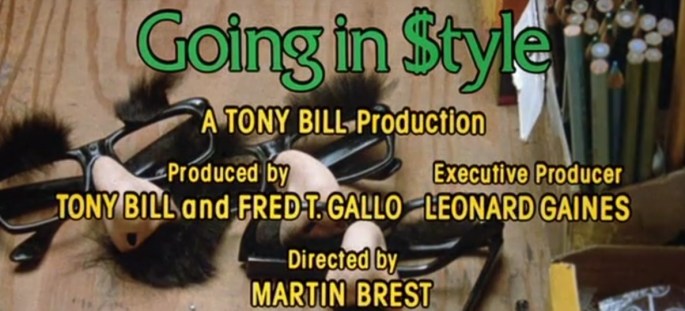
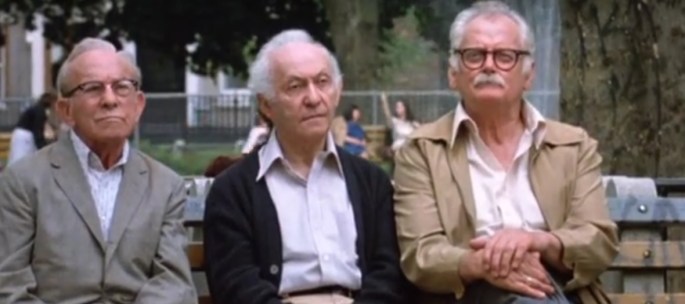
Because Going In Style had been out of print on DVD for so long (WB Archives released it last summer), I’m always scanning Turner Classics in the hopes that it will be listed as an upcoming feature presentation, as I’ve still yet to pull the trigger on a disc purchase. Twice in the last year and a half they’ve aired this wonderful, charming and extremely entertaining if melancholy little film, and I really hope that a boutique Blu-ray label will finally release this as a special edition in the near future. Martin Brest’s 1979 dramedy was always one of those “Holy Grail” movies for me growing up as a budding cinemaniac, an early effort from a fabled filmmaker that I had so much interest in seeing that it was almost driving me crazy that I hadn’t. Back in the day, my local Blockbuster didn’t carry it, so it became extra annoying that it remained so out of reach. But after two viewings, I can say that it was worth the wait, and it reconfirms my feelings that Brest’s banishment from Hollywood is one of the most egregious wastes of talent that I can think of.
2

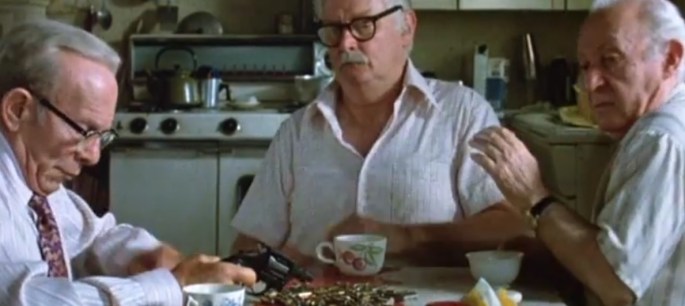
This is such a funny, endearing movie, made with that special late-70’s tone and style that’s so distinctive and personal feeling. Starring George Burns, Art Carney, and Lee Strasberg as three cranky retirees who decide to rob a bank on a whim (their pension checks suck and they figure that they’ll either get away with it or get free room and board in the slammer until they die) as they assume nobody will ever expect three old geezers wearing Charlie Chaplin nose-and-glasses disguises would be crazy enough to attempt a stick-up. They carry out their plan, but what happens next should be left for you to discover, because this film packed much more in than I ever expected. As always, Brest stressed the human qualities of life, going for simple but extremely effective humor, some terrific moments of introspection, and a quiet, unassuming style that’s in perfect tandem with the graceful nature of the narrative. The three central performances are all perfect, and Michael Small’s bouncy, energetic score amps up the film’s playful, soulful, and earnest qualities at every moment.
1

SAM PECKINPAH’S BRING ME THE HEAD OF ALFREDO GARCIA — A REVIEW BY NICK CLEMENT

3

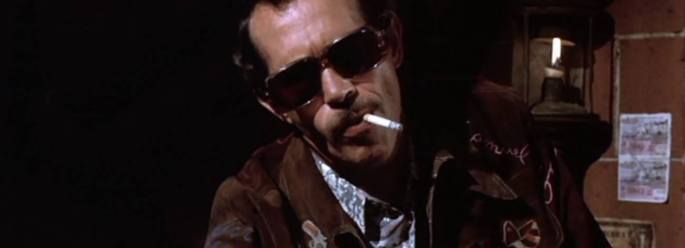
This is a tough, unrelentingly nasty film – no wimps allowed. From many accounts that I’ve read, Sam Peckinpah was battling alcohol addiction during production of Bring Me the Head of Alfredo Garcia, so as a result, the rough and boozy quality that the film possesses feels all the more authentic and bracing. Warren Oats delivered a staggering performance of ugliness, instability, and wasted melancholy. As usual for Sam the Man, gritty violence is in abundance, with his fascination for rape and sexual violence still very much intact and on sad, brutal display. He was a complicated man who made troubling films, and Bring Me the Head of Alfredo Garcia is easily his bleakest, most nihilistic effort, even more so than Straw Dogs, chiefly because there’s ZERO chance for reflection by the time Alfredo Garcia’s narrative has come to a close. I’m a Student of Sam, and having seen nearly all of his films, I can easily state that this one is likely my favorite. I’m not sure what that might say about me, but there’s something so unique about Alfredo Garcia which allows it to stand out from the pack.

2

And given that Peckinpah’s filmography is peppered with underrated gems and seminal classics, it can be a daunting task to try and single out one as your “favorite.” There’s a tragic sense of desperation that hangs all over this sadistic film, with Oates conveying an inherent disheveled sloppiness that worked in perfect tandem with the raggedy, exploitation-y filmmaking that still reached the typically operatic heights of Peckinpah’s ultra-violent, revisionist Westerns and thrillers. Oates is playing such an un-remorseful character that it becomes easy to notice the seething rage that accompanies much of the narrative, from the open contempt for women, to the shockingly direct use of violent force that everyone seems capable of delivering throughout the course of this sordid story. And when coupled with an ending that is beyond any sense of hope and which plunges straight into a hellish abyss of death, Alfredo Garcia will likely feel too morally, ethically, and spiritually repugnant for many viewers. The action centers on a crime boss who tortures his pregnant teenage daughter in an effort to find out who has knocked her up. Once the boss, known simply as El Jefe, determines that it was his underling and possible successor who has impregnated his daughter, El Jefe offers a $1 million bounty to whoever can “bring me the head of Alfredo Garcia.”

6

Oates plays a habitually cocked and extra-skeevy piano player and broken-down bar manager in Mexico City named Bennie, and after hearing about the potential reward, he goes looking for Alfredo Garcia. Upon learning that Alfredo has died in a car accident a few weeks prior, he sets off to find the body and remove the head so that he can get paid. Along the way there are double crosses, multiple murders, and all sorts of depraved acts of psychological violence, all carried out with a matter of fact bluntness that really pushes this movie into a very different category. Bring Me The Head of Alfredo Garcia feels like the sort of film that could never get remade, even in the independent landscape (despite repeated attempts), because it feels so singular and so much a product of inner artistic turmoil that came from a clearly personal place. As you might expect, at the time of its release, the film was a critical and commercial failure, but over the years, it has gained a rightful cult reputation as a movie that pushes buttons to the extreme.

1

OLIVIER ASSAYAS’ CLOUDS OF SILS MARIA — A REVIEW BY NICK CLEMENT

1

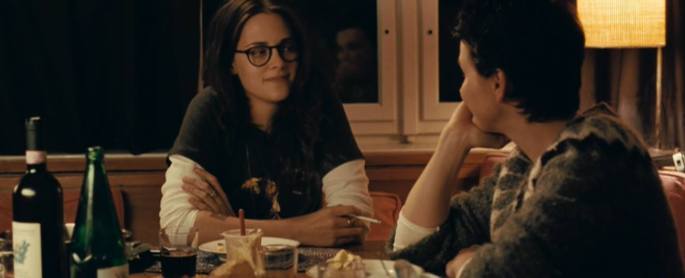
Currently streaming on Netflix and available on disc via The Criterion Collection, Clouds of Sils Maria is a finely layered and always interesting film about the nature of duality and repressed feelings, a piece of work that has come into full view after more than one screening. Shot on location all over Europe at a variety of obscenely photogenic locations by cinematographer Yorick Le Saux on 35mm film(!), Olivier Assayas’ dreamy film, which he wrote and directed, stars the always alluring Juliette Binoche as a famous actress struggling with an offer to take on a role in a revival of the play that made her famous when she was a rising starlet. Only this time, she’s wanted for the “older woman” role, which is causing her much mental grief. She was the young vixen the first time around, and she can’t imagine herself as the “old one,” or rather, doesn’t want to imagine herself in that way. Her assistant is played by Kristen Stewart, excellent yet again in another artsy effort, and the relationship that Binoche has with her is deeply complicated, so much so that when something mysterious happens to Stewart’s character, the audience is left to think a bit about what they’ve been watching.

2

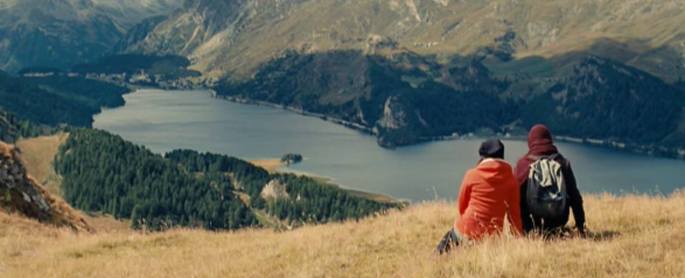
This is a flat-lined narrative movie, very talky and purposefully slow moving, with lots of shots of the mountains and cloud formations, with Assayas placing a strong emphasis on nature and its intrinsic bond between a person’s healthy mental thought process. Binoche is anguished and stressed, constantly flip-flopping between her reactions and decisions, and the film takes an interesting swing into tabloid celebrity culture when it’s revealed that the IT girl of the moment (Chloe Grace Moretz, perfectly cast and clearly having fun vamping it up) is going to be playing the role that made Binoche famous. The lines between reality and art begin to blur, and Binoche essentially descends into an existential crisis over what she should be doing with her life. Unique and thought provoking, certainly pretentious but never obnoxious about it, and filled with ideas about the way that people respond to the smallest of moments, Clouds of Sils Maria is yet another accomplished piece of work from Assayas, who has quietly become one of the most eclectic and exciting filmmakers working today, with a body of work including Irma Vep, Summer Hours, Carlos, Boarding Gate, and Demonlover.

3

SYLVESTER STALLONE’S ROCKY BALBOA — A REVIEW BY NICK CLEMENT

3

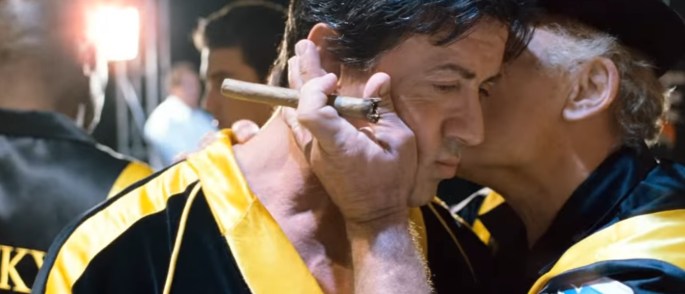
Rocky Balboa should never have worked and yet it does, triumphantly so. Stallone dusted off the iconic character after the creakiness of the last few sequels had mostly been forgotten back in 2006, and dropped some hurtin’ bombs on old fans of the series, and any new takers who happened to check it out. I was in tears all throughout this old-timer macho-fantasy, and while the entire thing is sort of ridiculous, Stallone’s heartfelt script felt organic to the world that he created thirty years previous in 1976, while the outcome of the big bout is handled in a realistic and satisfying way. With a narrative that at times felt self-reflexive for Stallone as a human being and an artist, there’s an undeniably touching father-son element to the narrative, with Milo Ventimiglia effectively portraying Rocky’s son, who is reluctant to go along with his dad’s last competitive wish.

2

Burt Young was back as Paulie, and kicking some ornery ass, while the solid supporting cast was rounded out by Tony Burton, the excellent Geraldine Hughes, and Antonio Tarver has Rocky’s much younger opponent. Bill Conti’s impossibly triumphant score still has the ability to leave a lump in your throat, and I’m a big fan of the understated cinematography by Clark Mathis, who went gritty with his location shooting, and then opted for a mixed-media and multiple perspective style during the big bout, which was really well done. Shot for $25 million and grossing $155 million worldwide, the film was also a success with critics, and is one of those movies that I find to be thoroughly re-watchable; I find myself always watching it whenever I spot it on one of the movie channels. Rocky Balboa worked much in the same way that Stallone’s 2007 Rambo reboot did, in that it took classic material and paid respect to what made it classic without gussying it up too much.

1

SAM PECKINPAH’S THE KILLER ELITE — A REVIEW BY NICK CLEMENT

1

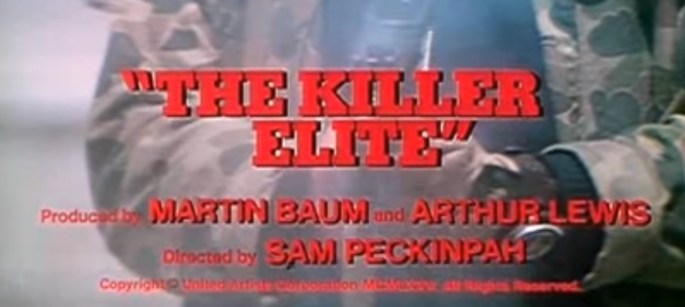
The Killer Elite is a wild and crazy, late-career actioner from Sam Peckinpah that combined spy plotting, sort-of-insane-kung-fu, bloody shoot-outs, wild car-chases, and seemingly every other genre ingredient under the sun. Fronted by James Caan and Robert Duvall and surrounded by a terrific ensemble cast including Burt Young, Bo Hopkins, Mako, Arthur Hill, Gig Young, and many others, the plot involves CIA skulduggery, double-crosses, violent showdowns, political assassinations, and the kitchen sink. Jerry Fielding’s peppy and lively musical score perfectly accentuated all of the various action set-pieces, while the great cinematographer Philip Lathrop (Point Blank, The Driver, The Cincinnati Kid, Hard Times) called the shots behind the camera, making great use of San Francisco and other physical locations. Legendary filmmaker Monte Hellman served as editor. Distributed by United Artists in 1975, The Killer Elite has taken on cult-classic status among action movie lovers and Peckinpah enthusiasts, despite mixed reviews and not making a big dent in the box-office. A decent-enough remake was released in 2011 with Robert De Niro, Clive Owen, and Jason Statham, but the original contains that special brand of Peckinpah craziness that he brought to his action scenes; few have done slow-motion shoot-outs and macho confrontations the way he did. The Killer Elite is available from Twilight Time, and contains Peckinpah’s 1966 TV film Noon Wine, which had been previously unreleased on home video platforms.

elite

THE SPIERIG BROTHERS’ PREDESTINATION — A REVIEW BY NICK CLEMENT

1

Predestination is a gloriously trippy and constantly surprising time travel movie that plays by its own set of mind-bending rules (as all the best time travel narratives do), constantly busting out twists and tricks, and is refreshingly story-focused and character-centric as opposed to being obsessed with empty flash and CGI-spectacle. Despite what appears to have been a modest budget, the film has been made with extreme smarts and lots of style. Directed by The Spierig Brothers, an Australian duo who previously helmed the solid B-movie Daybreakers, this one is a huge step forward for them as filmmakers, as they confidently crafted a tight and exciting and constantly shifting sci-fi piece based on the Robert Heinlein short story.

2

Ethan Hawke is customarily intense as a Temporal Agent, essentially a time-travelling cop, who is trying to track down a serial bomber throughout the decades. Australian actress Sarah Snook is flat-out fantastic as an, ummm, interesting woman caught up in the mystery, giving dual performances (don’t want to spoil anything!), and generally registering as someone who needs to be closely paid attention to as an actress. She has a confidence that immediately draws you in, and when you see her performance, I think you’ll agree that she should get serious traction in Hollywood. This is a very entertaining, low-profile indie genre item that deserves the big fan following that I feel is waiting around the corner.

3

BRIAN DE PALMA’S THE UNTOUCHABLES — A REVIEW BY NICK CLEMENT

6

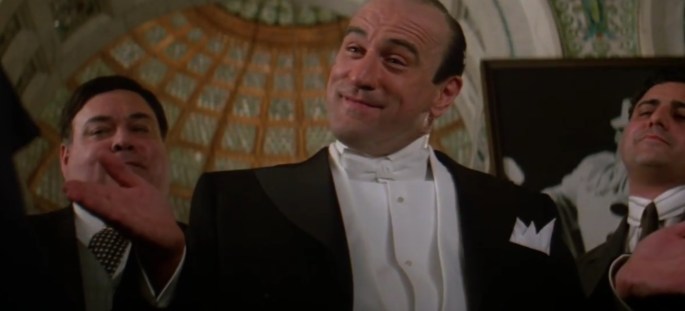
The Untouchables is a stone-cold classic. Brian De Palma’s bravura direction amounts to a clinic on how to make a supreme piece of studio funded entertainment, with showboating performances from a massive cast, all filtered through the elegant and stylized dialogue courtesy of David Mamet; his vulgar poetry really sets this one on fire. It’s been documented that both De Palma and Mamet had a contentious relationship during production, and that both have issues with certain aspects of the film. And that’s fine. I get it. I wasn’t there, and those guys are world-class artists. But as a finished product, this movie kicks ass in ways that most movies could only dream of doing. It seems like all the great directors need to try their hand at a gangster movie, and De Palma really aced it in terms of bringing all of the ingredients together with his sprawling imagining of Elliot Ness vs. Al Capone in 1930’s Chicago. Cinematographer Stephen H. Burum’s flamboyant camera moves have a sinewy quality, with De Palma clearly relishing his chance to stage some violent shootouts and confrontations, with a very memorable death scene from one particularly famous actor.

2

Everyone in the ridiculous cast had fun with the material, and because each character was distinct and memorable and given something important to do within the jam-packed narrative, everyone felt equally important. Ennio Morricone’s big and blustery Oscar nominated score was a perfect accompaniment to the fully-loaded visuals, while the fabulous production design, which also received an Academy Award nomination, was handled by the prolific Patrizia von Brandenstein, William Elliot, and Hal Gausman, and went a long way in evoking a very specific time and place. Well reviewed by critics and a solid box office hit (it opened to $10 million before legging its way to $75 million domestic), The Untouchables has become a staple cable item throughout the years, with various sequences, most notably the Battleship Potemkin-inspired staircase shootout, becoming iconic cinematic touchstones. I could watch this film any day of the week with zero qualms.

8

GORE VERBINSKI’S RANGO — A REVIEW BY NICK CLEMENT

3

With the new and apparently very stylish horror thriller A Cure for Wellness opening this weekend (I can’t wait to check it out…!), I went back and watched some bits and pieces from Gore Verbinski’s absolutely stunning CGI-animated adventure-comedy Rango. This is not a kid’s movie. Sure, kids will enjoy certain aspects of the film, but in general, this idiosyncratic and creepy effort feels much more designed for adults, as the plot cooked up by John Logan, James Ward Byrkit, and Verbinski essentially mimics Chinatown, the humor is sophisticated and plot-centric, and the characters, while certainly funny, have a distinct sense of menace that never quite makes any of them warm and cuddly. Johnny Depp’s voicing of the titular character is some of the most effective acting that he’s done in years; look out for the Hunter Thompson and Lawyer cameo which sets up the film’s inciting incident and opening set-piece.

2

The musical score by Hans Zimmer is one of that composer’s most underrated and offbeat, and visually, there are passages in this film that are utterly sublime, especially Rango’s existential walk through the desert under a starry nighttime sky that forces him to re-evaluate his life with Explosions in the Sky on the soundtrack. I’m a massive fan of Verbinski’s entire filmography; his Pirates trilogy is blockbusting on a grand scale, The Ring is still one of the freakiest film’s I’ve ever seen, I adore The Weather Man, and The Lone Ranger is mystifyingly underrated. He’s got a subversive streak that peppers all of his movies, regardless of budget, and he’s a maximalist in terms of his visual style and sense of cinematic atmosphere. Rango is easily one of my all-time favorite animated films.

1

MICHAEL DOWSE’S GOON — A REVIEW BY NICK CLEMENT

2

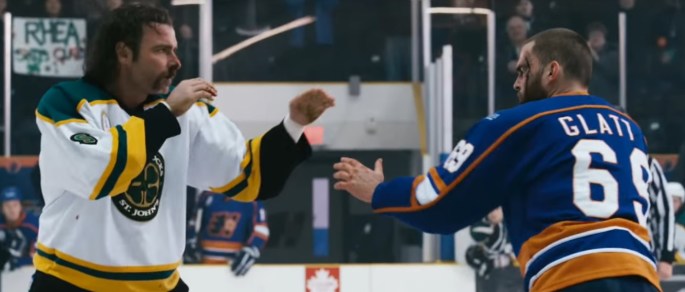
The list of truly memorable hockey movies is short, but near the very top, and definitely sitting in the penalty box for excessive fisticuffs, is Goon, the raucous and extremely bloody 2011 comedy from director Michael Dowse (What If, Take Me Home Tonight) and writers Jay Baruchel (Man Seeking Woman) and Evan Goldberg (Pineapple Express, Superbad). This rowdy little gem has two great lead performances from Sean William Scott as a dimwitted on-ice hero, and the rather amazing Liev Schreiber as a notorious league bruiser who is only out to pick some serious fights. Alison Pill, Eugene Levy, Kim Coates, Marc-Andre Grondin, and Baruchel all provided strong supporting work. Cinematographer Bobby Shore captured some truly authentic hockey action, with slick camera moves that were strongly aided by Reginald Harkema’s sharp editing. Goon may not have been a massive champion at the box office (it did $7 million worldwide), but this is the sort of hysterical and smart sports flick that has cult-classic status waiting around the corner. And while watching the film, especially if you’ve played the game, you’ll notice how the filmmakers REALLY understood hockey; this film nails the little details in the same way that Slap Shot did. Goon is partially inspired by the book Goon: The True Story of an Unlikely Journey into Minor League Hockey by Adam Frattasio and Doug Smith, with some ass-kicking footage of the actual Smith shown during the closing credits.

4

DAVID GORDON GREEN’S ALL THE REAL GIRLS — A REVIEW BY NICK CLEMENT

4
Filmmakers have been obsessed with capturing the mood and spirit of innocent romance for years, and with the poetic, sad, and beautiful film All the Real Girls, director David Gordon Green tapped into the heartstrings of an inexperienced woman who is learning to love for the first time (Zooey Deschanel in her wonderful breakout performance) and an older lothario who just so happens to fall in love with the sister of his best friend (co-writer Paul Schneider playing the womanizer; the phenomenal Shea Wigham is his unstable, potentially dangerous best friend). This is a small-town movie with perfect, small-town flavor and ambiance, but it never skimps on big, dramatic moments or honest emotional fireworks. The complicated narrative dares to explore love and sex and friendship in a brutally honest fashion, while also delving into the double-standards that our society has ingrained in our psyches. Throw in hilarious support from Danny McBride in one of his first screen roles and customarily intense work from Patricia Clarkson and you’ve got the makings of something special and unique, and that’s exactly how you could describe this gentle little gem of a film.
5
David Gordon Green brought a Terrence Malick-esque visual quality to this film, and along with his trusted, long-time cinematographer Tim Orr, crafted a lyrical ode to blossoming sexuality and the limits of the heart via exquisitely framed compositions, naturalistic lighting, and an emphasis on long takes that heighten the dramatic mood at almost every turn. This is a film that I’ve never heard someone say that they hated, and it’s one that I feel will make people laugh, cry, and smile in equal measure. Anyone who has ever fallen in love, had their heartbroken, been excited by the possibilities of a new romantic partner, or been confused as to what they want in life will find this movie to be a potent summation of all of our fears, desires, and longings when it comes to finding that special someone. I’d really love it if The Criterion Collection or Kino Lorber or Olive could put out a much deserved Blu-ray special edition of this film. It warrants that type of film buff attention.
6