CHRISTOPHER NOLAN’S INCEPTION — A REVIEW BY NICK CLEMENT

3

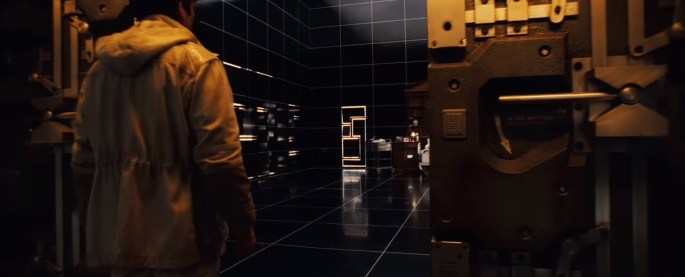
I still don’t understand everything that happens in Christopher Nolan’s spellbinding sci-fi epic Inception, but I don’t care, because I am convinced that Nolan understands it all, and that’s good enough for me. This is a supremely satisfying movie that leaves your head spinning, much like the best of Nolan’s work (The Prestige, Interstellar, The Dark Knight Rises, Memento), and given that I’m a massive fan of his entire filmography and overall aesthetic, it’s no small thing to say that this film might be his most totally realized effort to date. I’m not sure. It’s debatable, of course. The Prestige is probably my favorite of his overall, just because it’s so damn fun and unique for a period film. But on repeated viewings of Inception, zero impact has been lost over the astounding cast (I absolutely LOVE Tom Hardy in this movie), the impeccable cinematography by Wally Pfister, the dreamy narrative concocted by Nolan, the nearly operatic musical score courtesy of Hans Zimmer, and the overall sense that anything’s possible within the visually stunning fantasy sequences that mix architectural rigidity with a sensual swirl of emotions and passion and free-form association that our most vivid dreams and nightmares are capable of concocting. The ending is deliciously tantalizing to ponder, constructed not as a cheat, but as a further extension of all that has come before it. Leonardo DiCaprio was seriously on-point, much like everyone else who Nolan recruited, while the thundering action scenes resonate with nods to Bond, the Wachowskis, and classic action movie cinema, all of which has further cemented Nolan as a populist popcorn auteur with a cerebral streak that separates him from the rest of the blockbuster pack.

2

IRA SACHS’ LOVE IS STRANGE — A REVIEW BY NICK CLEMENT

3
John Lithgow and Alfred Molina deliver wonderful, sensitively attuned performances in Ira Sachs’ warmhearted drama Love is Strange. Portraying an older gay couple living in a gorgeous NYC apartment when they’re suddenly and unexpectedly forced to move out, the film takes a simple and observant look at the lives of these two dapper, eccentric, and compassionate people, and the various individuals that they come into daily contact with. The two men have also decided, that after 39 years of living together, that it’s time to get married. But when Molina is fired from his job at a Catholic school because of his decision to marry, their entire life is turned upside down as a result, as they’re forced to temporarily split up and live with either friends or family until they can get things sorted out.
2.jpg
 
Filled with honest humor, a quiet sense of grace, and the desire to tell a story that’s universal yet very specific at the same time, Love is Strange has an unforced level of dignity about itself that felt very refreshing to experience. The intelligent screenplay, co-written by Sachs and Mauricio Zacharias, pokes at the societal hypocrisies that face same-sex couples on a daily basis, and while never preachy, it’s very clear that this is a topic that means something to Sachs as a filmmaker. And while Love is Strange has a surprisingly sad ending, I would hesitate to call it depressing, as it’s yet a further reflection on the fragility of life, and how people should value their friends and loved ones as much as possible as there’s nothing ever guaranteed during our relatively fleeting time on this planet.
1

ROBERT LIEBERMAN’S FIRE IN THE SKY — A REVIEW BY NICK CLEMENT

3

Few movies have frightened me more in the theater than Fire in the Sky. I was 13 years old when my dad took me to see this incredible alien abduction film, and we went opening night because I was so excited that an alien movie was coming out on the big screen. My fascination with UFO’s and extraterrestrials was in full swing, The X-Files would air its debut a few months later, and all I did was go to the library and read as many books about Area 51 that I could find. Directed by Robert Lieberman and written by Tracy Torme, the film is loosely based on the famous Travis Walton alien abduction story, and while the scenes on board the UFO in the film don’t necessarily jive with Walton’s personal account, few movies have shown a more terrifying surgery-by-ET than this film. Seriously – everything on board the ship is wholly gripping and rather terrifying.

1

Shot on a limited budget but featuring absolutely stunning special effects work by Industrial Light and Magic, the scenes aboard the ship are absolutely extraordinary, and make up for the more pedestrian scenes set back on Earth. The excellent cast includes D.B. Sweeney as Walton, Robert Patrick as his best friend, Peter Berg, Craig Scheffer, Henry Thomas, Bradley Gregg, and James Garner as a crusty local cop trying to make sense of a situation that he absolutely believes is a hoax. Bill Pope’s fantastic cinematography made the film look five times as expensive as it probably was, and Mark Isham’s creepy music unsettles at nearly every turn. I don’t get scared by movies too often, but this one absolutely scared the shit out of me. Oh, and since 1993, I’ve never looked at maple syrup in quite the same way.

2

JEAN-FRANCOIS RICHET’S MESRINE — A REVIEW BY NICK CLEMENT

2

The two-part French crime opus Mesrine (released as Mesrine: Killer Instinct and Mesrine: Public Enemy Number One) was one of the most under the radar pieces of cinema from 2008. Completely fantastic and totally riveting, the sprawling films took a cue from gangster Jacques Mesrine’s autobiographical book L’instinct de mort, while trading off of well-worn genre conventions that were artfully spruced up by underrated director Jean-Francois Richet (this year’s superb pulp thriller Blood Father, the 2005 remake of The Assault on Precinct 13). Starring Vincent Cassell in a towering performance as the titular character, there’s an epic sweep to the 60’s and 70’s-set narrative that never loses sight of some fine intimate details, while the superb supporting cast, including Gerard Depardieu, Cecile De France, Ludivine Sagnier, Michel Duchaussoy, Gilles Lellouche, Myriam Boyer, Mathieu Amalric, Olivier Gourmet, Roy Dupuis, and Elena Anaya, truly came to play in every single moment. Robert Gantz’s stark and vibrant cinematography captured all of the bloody violence and live-wire passion that Mesrine’s life brought forth, and because Cassell was so laser focused on the work, you become totally engrossed in his character despite him being a fairly reprehensible person. Critics made apt comparisons to Brian De Palma’s Scarface, as both films certainly share some of the same operatic flourishes, with the script by Richet and Abdel Raouf Dafri balancing the business and personal dealings of their larger than life criminal with great ease. Richet won Best Director at the Cesar Awards, and Cassell won Best Actor.

3

GAVIN O’CONNOR’S THE ACCOUNTANT — A REVIEW BY NICK CLEMENT

3
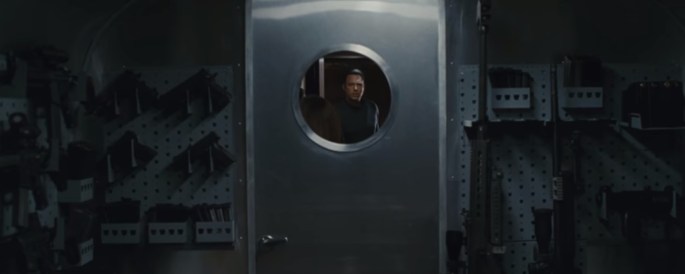
The Accountant is exactly the sort of movie that has been in short supply of late — an old school, high concept, totally slick star vehicle with a ridiculous yet extremely entertaining plot that’s just as fun as it is far-fetched. The spec script market seems to be dead, with nearly every film based on a book or a comic or a pre-existing property or some sort of remake or reboot. And while The Accountant isn’t going to win any awards, it puts forward an extremely engaging mix of genres in an effort to do something unique with strands of familiar plotting. The Accountant is true MOVIE, and I mean that in the best sense possible; I have really missed these types of films that aren’t necessarily designed to win Oscars or sell lunch boxes, but that have been crafted to entertain in that classic fashion that we used to expect. This film feels like a late 90’s studio offering, and I really hope that it does well at the box office so that more original ideas like this can make their way through the system. Stylishly directed by Gavin O’Connor (Warrior, Miracle, this year’s underrated western Jane Got A Gun) and densely conceived by screenwriter Bill Dubuque (The Judge), the film stars a perfectly cast Ben Affleck as an Aspergers-afflicted man with a penchant for numbers crunching and trigger pulling; by day he’s a buttoned up money manager who knows all of the tricks of the trade, and by night he’s a lethal assassin working for the highest bidder and taking out some extremely dangerous targets. It’s a melding of two different ideas, and then spiced up even further with no more than three subplots with some terrific supporting actors getting a chance to let it rip with juicy movie-star material. There’s a lot going on in The Accountant, and it takes its time telling its story; this isn’t exactly the slam-bang action flick that the trailers have sold, as it’s just as interested in its characters, especially Affleck, as it is in showcasing Silat-infused fight sequences and bloody shoot-outs.

2
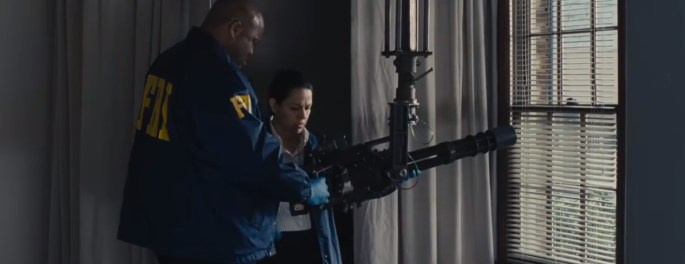
Shot with casual style in desaturated, shadowy tones on 35 mm film by the great cinematographer Seamus McGarvey (World Trade Center, We Need to Talk About Kevin, The Avengers) and smoothly edited by Richard Pearson (United 93, Quantum of Solace), the film benefits from its low-key and rather moody musical score by the superb composter Mark Isham (O’Connor’s cop flick Pride and Glory, Wayne Kramer’s gonzo actioner Running Scared), and the sleek minimalist production design courtesy of Keith Cunningham and his art team. The high-powered fire-arms on display are rather awesome in their brute force, and I don’t remember an actioner with this many silencers in recent memory. O’Connor and Dubuque never use the Autism angle as a cheap ploy for sentimentality, and while the entire film certainly strains logic in more than once instance, the commitment from everyone in the deep cast and behind the camera sells the goods for this sort of strange and very atypical studio offering. Anna Kendrick is her usual chipmunk-adorable self, getting some great and unexpected laughs (this film is rather funny in retrospect) and developing a nice chemistry with Affleck, who for his part, never wavered in his dedication to a very mysterious character who only gradually allows the audience into his world of layered pain. The flashback sequences are some of the most interesting moments in the entire film, as in those parts, there’s almost this ethereal superhero quality that the film takes on; it’s hard to describe. Jon Bernthal is absolutely terrific in a spirited supporting performance as a rival assassin who is tasked with finding Affleck, and J.K. Simmons, Jeffrey Tambor, Jon Lithgow, and the alluring Cynthia Addai-Robinson all deliver very solid turns. And by the end, while The Accountant might not have broken any new ground, it reminds that a well-oiled programmer with a lack of huge special effects or year-end-award aspirations can be a very enjoyable alternative to the more overblown offerings that have come to dominate the cinematic landscape.
1

GORE VERBINSKI’S THE RING — A REVIEW BY NICK CLEMENT

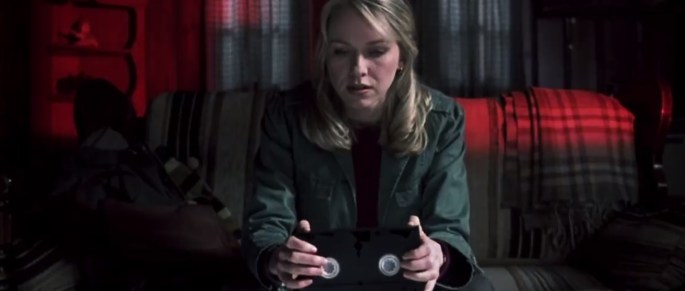
3I can still vividly remember seeing Gore Verbinski’s extra-sketchy horror thriller The Ring at a test screening deep in the San Fernando Valley, roughly five months before the film’s official release, and how absolutely floored the audience was by the conclusion, and on a personal level, how totally unnerved I felt when I left the theater and headed to the parking lot. I had not seen the original film, I had no real idea of the notion of “J-horror,” and because this genre is the one that’s the least traveled for me as a viewer, I wasn’t prepared for how lethal and odd this movie would be. I am a massive fan of Gore Verbinski’s work, from the smaller films (The Weather Man) to the blockbusters (The Lone Ranger, Pirates 1-3) to the outright surreal (Rango) and everything else in between (Mousehunt, The Mexican); he’s got a tremendous visual eye, he’s attracted to smart and quirky material, and I love his attention to detail and his sense of cinematic excitement.
2

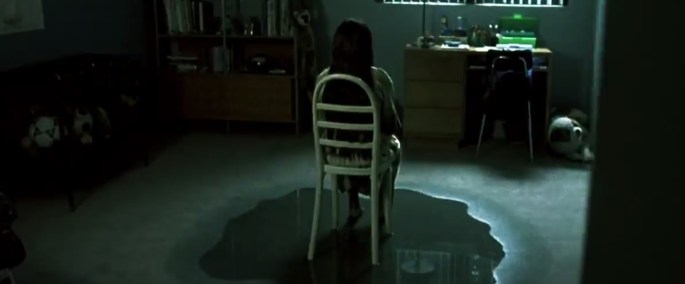
The Ring is one of those movies that no matter how many times I check it out, I am always left creeped out by the finale; when that girl pops out of the television, I’m telling you, people leapt out of their seats during that advance screening and I needed a change of pants. Bojan Bazelli’s extraordinarily stylish images basically put you into a trance while watching this bold and artistic piece, and in tandem with the haunting musical notes from Hans Zimmer, the film conjured up a near constant state of dread while keeping unnecessary blood and gore to a minimum. And then there’s the scared-to-death face in the opening reel! Naomi Watts was great here, and looked utterly stunning, while weirdo-boy David Dorfman conveyed an appropriate amount of vulnerability and unease. Brian Cox comes in like thunder towards the end and dominates with a beyond menacing and pivotal supporting performance. Everything about this movie works for me as a viewer, and I find it to be thoroughly entertaining and rather glorious on an aesthetic level.

1

THE HUGHES BROTHERS’ DEAD PRESIDENTS — A REVIEW BY NICK CLEMENT

2Hugely ambitious, extremely tough and gritty, and telling a story of massive scope that might’ve benefited from at least 30 more minutes of screen time, the 1995 war/crime hybrid Dead Presidents was the extra-stylish and hot-blooded follow-up for sibling filmmakers Allen and Albert Hughes, who had conquered cinema a few years previous with the crimes-in-Compton classic Menace II Society. Larenz Tate was absolutely sensational in the lead role of a lifetime, playing a young high school student on the cusp of graduation who ships off to Vietnam as a new Marine, sees some absolutely horrendous stuff on the battlefield, and comes home a changed and scarred individual, leading to a life of petty crime before taking on something much larger, something he probably knows he can’t fully control. The superb supporting cast, including Chris Tucker, Keith David, Terrence Howard, and Bokeem Woodbine (to name just a few) all delivered fierce performances, while the film itself was greatly bolstered by Lisa Rinzler’s muscular and brooding cinematography, and through one of Danny Elfman’s most atypical musical scores. Reviews were mixed and box office returns were only decent, but the film looks five times as large as its reported $10 million budget, and the balance of action, violence, romance and social/family commentary was all extremely well-calibrated. Available as a $5 DVD or as a streaming option via Amazon.

3

RICHARD LINKLATER’S EVERYBODY WANTS SOME — A REVIEW BY NICK CLEMENT

3

Richard Linklater’s Everybody Wants Some is a fun and amiable college-set comedy about a group of baseball players going to school in Texas who spend the first few days of the new school year getting wasted, chasing the ladies, and generally acting like a bunch of horny and rambunctious clowns. Set in 1980 and filled with wall-to-wall classic rock hits and all sorts of hilarious wardrobe and production design, the film does feel, to a certain degree, like Linklater’s “spiritual sequel” to his far greater and more ambitious high school classic Dazed and Confused. But if Everybody Wants Some lacks that film’s overriding sense of lightning-in-a-bottle-magic, the bros in his newest tale are fun to hang with (to a certain extent…), the drug humor is funny, the ball-busting on display is frequently inspired, and the women are all very, very attractive. Slight, modest, and totally in love with itself from first frame to last, Everybody Wants Some benefits from it’s mostly unknown cast of charismatic actors hiding behind ridiculous mustaches, and feels like yet another effortless extension of Linklater’s idea of unassuming, organic cinema.

2

RICHIE SMYTH’S THE SIEGE OF JADOTVILLE — A REVIEW BY NICK CLEMENT

1.jpg

The Siege of Jadotville, a new Netflix original film, is one of those square-jawed military actioners that used to get released in the 60’s and 70’s, unpretentious and ass-kicking, centering on a true story, and adding appropriate dashes of Hollywood flash while never sacrificing any of the gritty integrity that the material promises. Impressively directed by Richie Smyth, who shows a terrific sense of action choreography with his well-produced battle scenes, Jadotville tells the story of a group of 150 Irish UN troops who went into battle against nearly 3,000 Congolese fighters led by Prime Minister Moise Tshombe in Central Africa. The year was 1961, and the cold war was raging on, with French and Belgian mercenaries becoming contracted by the various mining companies in Africa to help lead the fighting and protect valuable resource interests. Outnumbered and outgunned, the Irish forces had to rely on some unpredictable strokes of great luck, as well as steely-eyed determination in an effort to never give up. Kevin Brodbin’s extremely solid and action-packed screenplay has a good sense of history to match the archetypal character work that one might expect for the genre, while it’s clear that he must’ve done his research, as the narrative rarely leaves the field of battle or the interiors of discussion rooms. This is the sort of lesser-known war story that might not have gotten the big-screen treatment if it weren’t for Netflix stepping up to the plate with a diverse and interesting set of in-house projects, and I have a feeling that the combat angle that Jadotville showcases will be very compelling for many viewers.

2

For over an hour, after establishing who’s who and the various sides to the story, Smyth, in his assured directorial debut, brings the explosive action with hardly any interruptions, as Brodbin’s efficient screenplay, which was based on Declan Power’s non-fiction account of the incident, stayed focused on the bloody combat and the militaristic maneuverings of both sides, both on and off the battlefield, while allowing for the appropriate amount of character development and interplay to smooth out the edges. Shot with clarity by director of photography Nikolaus Summerer, all of the fighting takes place on a hot, sunny day, and the way that both director and cinematographer were able to portray the unrelenting madness brought back some shades of films such as Hamburger Hill and We Were Soldiers. All of the various set-pieces were seemingly done for real, with some tremendous explosions and vicious fire-fights, and when CGI is employed, it’s kept to a mostly seamless minimum, including some very cool aerial shots of warplanes with heavy artillery. Everyone in the thoroughly macho cast feels right at home with the material, with Jamie Dornan providing a very commanding sense of purpose as the leader of the Irish troops, and Jason O’Mara and Sam Keeley doing strong supporting work. Other standouts include a gruff Guillaume Canet as one of the French soldiers of fortune, and the ever-reliable Mark Strong as an ineffectual politician without the knowledge or resources to help his men out. I had never heard of this particular incident before seeing this film, and I gather it went oddly unreported for many years. The Siege of Jadotville is available on Netflix Streaming, and currently is screening at iPic theaters.

3

BEN YOUNGER’S BOILER ROOM — A REVIEW BY NICK CLEMENT

3

Wearing its influences like a badge of honor while setting the stage for future endeavors, Ben Younger’s smashing directorial debut Boiler Room generated some serious heat for its all-star cast and incendiary storytelling. Released to excellent reviews in 2000 and announcing a dynamic new storytelling voice from its debuting director, this propulsive drama races through the shady inner-workings of a questionable NYC brokerage firm, operating outside of the lines of all the big players in the crowded market. Starring Giovanni Ribisi, in one of his best performances, as an underachiever running an unlicensed gambling operation out of his apartment who gets sucked into this particular brand of high-stakes, high-reward con-artistry, the film has a ridiculous supporting cast which includes Tom Everett Scott, Vin Diesel, Nicky Kat, Jamie Kennedy, Nia Long, Scott Caan, Ben Affleck, and Ron Rifkin. Younger’s sharp script balanced solid drama with raucous humor in good measure, while the exceedingly masculine cast clearly forged a major on-screen bond as everyone feels perfectly in synch.

2

Affleck was fantastic in only a few scenes, taking on a role that was clearly molded after Alec Baldwin’s fiery turn as a corporate motivator in James Foley’s adaptation of David Mamet’s play, Glengarry Glenn Ross. And Rifkin, one of the great and unsung character actors of the 90’s, was extremely memorable as Ribisi’s disapproving father, a man working as a high ranking Federal judge who catches wind of what his son is up too, with explosively dramatic results. The scenes between Ribisi and Rifkin are absolutely fantastic, and ground the film with a serious sense of morality, while there’s a definite thrill to being privy to all of the ways that these sharks in business suits cut their way through ethically questionable waters. Enrique Chediak’s lively cinematography gave the film a terrific vibe; he’d go on to shoot such films as 28 Weeks Later, 127 Hours, and Deepwater Horizon. The tight editing by Chris Peppe kept the pace brisk while never moving too fast, as lots of information is hurled at the viewer. After Boiler Room, Younger released the very underrated dramedy Prime, with Meryl Steep and Uma Thurman, and has the hotly anticipated Bleed for This, with Miles Teller, set for release this fall.