JAMES FOLEY’S GLENGARRY GLEN ROSS — A REVIEW BY NICK CLEMENT

3

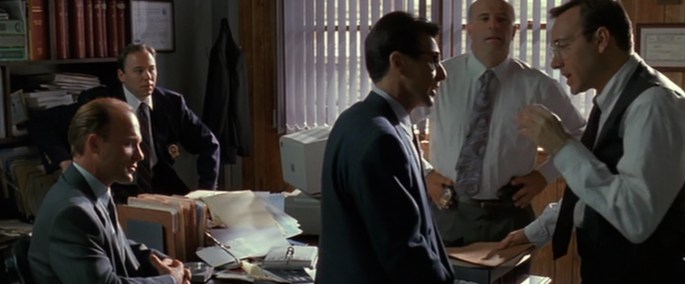
Al Pacino. Jack Lemmon. Ed Harris. Alan Arkin. Kevin Spacey. Bruce Altman. Jonathan Pryce. Jude Ciccolella. Alec Baldwin. Glengarry Glen Ross. All director James Foley had to do was point his camera and shoot. David Mamet adapted his own blistering play for the screen with a tremendous sense of vulgar energy and edgy verve, so all that was required was someone to capture the words and do little else. But instead, because Foley has quietly fashioned himself into one of the most underrated filmmakers of my lifetime, he brought his own sense of macho style to this testosterone-fueled war of the words, and as a result, the film still feels every bit as incendiary now as it likely did upon first release as a Pulitzer winning play back in 1983. Showcasing the desperate and volatile lives of a group of Chicago-based real estate salesman, this is one of those special narratives that provides every single actor with a serious chance to shine on multiple occasions, while allowing for one of the most show-stopping single scenes of character interaction that’s ever been captured on film to take place (the bit with Baldwin and his hostile threats to the entire group). After the agents come under fire for lack of results, the story’s pace becomes even quicker, with each man doing their best to not be fired by the end of the week. Words are flung like extra-sharp daggers all throughout this whip-fast and supremely observed character study, with Mamet basing certain aspects of the office life depicted on screen on his own experiences working in a real estate office when he was just starting his writing career.

2

In working with the great cinematographer Juan Ruiz Anchia, Foley was able to craft a casually menacing visual atmosphere, shooting through glass with streaks of bold yet smeared color, and lots of rain drops, with an uncertain vibe thanks to the jazzy and cryptic score from James Newton Howard. Howard Smith’s judicious editing kept an extremely fast pace, which is all the more a challenge when a film is as dialogue heavy as this one. And what can one really say about Mamet’s perverse sense of humor and his caustic worldview? Each character in Glengarry Glen Ross is given their own distinct voice, despite everyone letting the F-bombs fly with gusto; few other writers have understood the value and meaningful nature of the word “fuck” the way Mamet does. What you end up hearing all throughout this movie amounts to a form of brutal, tough-guy poetry, and it’s the way that there’s always this sense of honesty and concrete logic to Mamet’s writing that keeps it solidified even when it becomes highly stylized. Despite not catching on at the box office, Foley’s magnetic piece of filmmaking has become a well deserved classic as a result of the VHS and DVD era, and has inspired any number of motion pictures moving forward. Lemmon won the Volpi Cup for Best Actor at the Venice Film Festival, while Pacino nabbed Oscar and Golden Globe nominations for Supporting Actor (while winning Best Actor for Scent of a Woman). Many consider Baldwin’s extended cameo to be his greatest screen achievement. This is a piece of work that simply gets better and better as the years progress.

1

JOHN CASSAVETES’ HUSBANDS — A REVIEW BY NICK CLEMENT

3

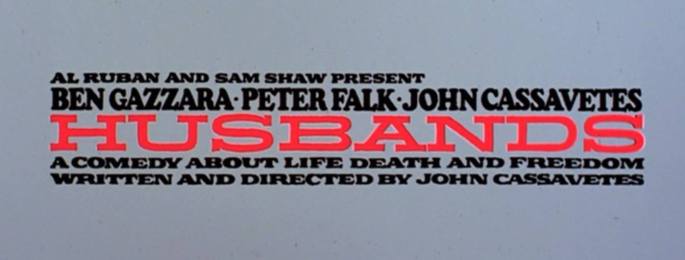
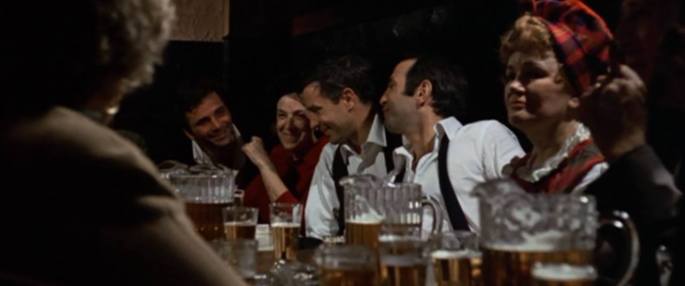
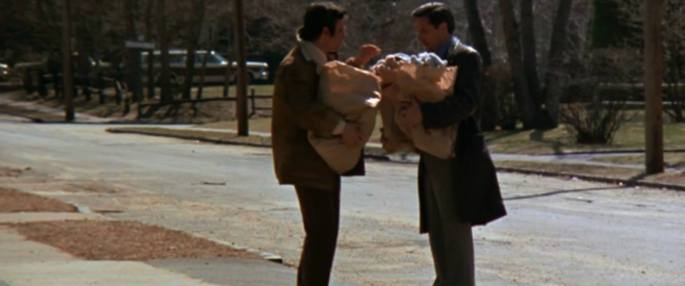
Husbands is a take no prisoners drama about men facing uncertainty in middle age. I can see how this film was so polarizing for many people back when it was released in 1970, but there’s no question that writer/director John Cassavetes was on to something extremely intense and raw and honest with this purposefully ragged account of men being boys who think they are being men. I loved the improvisational spirit and style, the performances from Ben Gazzara, Cassavetes, and Peter Falk all complement one another brilliantly, and all three men got a chance to etch an extremely detailed portrait of masculine malaise that felt rooted in truth and feeling. This is one of those epic waste-festival movies that will turn off some viewers because of the excessive debauchery, but I found it to be thought provoking, emotionally stirring, and frequently hysterical.

2

You can definitely see why this film has been so inspirational to so many filmmakers over the years, and how the style has been appropriated countless times. Victor Kemper’s bold cinematography shoved every image in your face with force, while the spontaneous nature of the filmmaking aesthetic and acting in general allowed for unpredictable beats of true life to bubble to the surface. This has got to be one of the ultimate cinematic explorations of manliness in all its forms and complexities, while it simultaneously operates as a scabrous indictment of the marriage in suburbia. The film’s final scene stings with a poignancy and uncertainty that is hard to shake. Oh, and I absolutely adore the opening credit montage with the still photos – such a great way to immediately grab the viewer.

1

COREY ALLEN’S THUNDER AND LIGHTNING — A REVIEW BY NICK CLEMENT

thunder_and_lightning

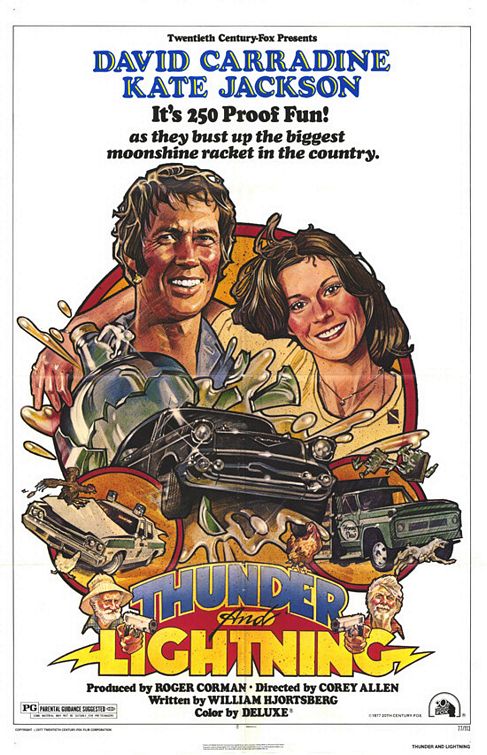
Thunder and Lightning is exactly what the amazing one-sheet promises — tons of backwoods idiocy with chases galore and all sorts of redneck hijinks leading the way. Produced by Roger Corman and directed by Corey Allen, this zippy and ramshackle B-movie from 1977 (it was released as the second half a double bill with The Driver) benefitted from the filmmaker’s total sense of gonzo energy, a frequently witty script, and game performances from the entire cast, lead by David Carradine as a Florida moonshine runner who runs up against rival bootleggers, and crosses paths with a buxom bombshell (Kate Jackson) who has personal ties to the baddies. The film’s big speed boat chase is undeniably impressive and rather dangerous looking, as are most of the vehicular stunts, of which there are a ton. Mix in trigger happy local cops, throw in a dash of alligator wrestling, sprinkle the proceedings with some explosions, and splash it all with a boozy sense of fun, and you’ve got this scrappy little B-movie that makes for a rowdy late night selection to enjoy with some pizza ‘n beer. The film’s screenwriter, William Hjortsberg, would go on to craft the script for Ridley Scott’s Legend, as well as the book which would serve as the inspiration for Alan Parker’s Angel Heart. The film marked the final big-screen credit for the prolific actor and voice-artist Sterling Holloway (Dumbo, Alice in Wonderland, The Jungle Book). Available on DVD (at a very expensive price), Amazon streaming, and on YouTube.

KEN ANNAKIN’S SWISS FAMILY ROBINSON — A REVIEW BY NICK CLEMENT

3

Ken Annakin’s Swiss Family Robinson, released in 1960, was one of my absolute favorite movies to watch on VHS when I was growing up, and upon a recent revisit, I was reminded of how enjoyable this film is, and how it’s one of the most violent family films ever made. Seriously – killing bad guys is treated like a family event in this film, a sort of sport, with everyone getting in on the action, including good-old Mom! Coconuts are turned into improvised hand-grenades, massive logs and tree trunks are used to roll over henchmen, swords and muskets are busted out at a moment’s notice, while a general air of smiling menace hangs over the entire film. A splendid cast including John Mills, Dorothy McGuire, James MacArthur, Janet Munro, Tommy Kirk, and Kevin Corcoran made the most out of each role, while the stranded on a deserted island plot line allowed for all sorts of shenanigans and pratfalls.

2

Harry Waxman’s full bodied cinematography is sensational, while the film itself was the first widescreen Disney movie shot with Panavision lenses, as the company had predominantly used matted widescreen or CinemaScope as their preferred photographic process. Filmed on location in Tobago and London’s Pinewood Studios, Swiss Family Robinson does truly feel epic at times, with lots of extras, huge ships, big action set pieces on shore and at sea, while the film never lost track of some of the smaller details that make this one better than you might remember. William Alwyn’s robust score was the cherry on top of the sundae. The film would become a huge financial success, grossing $40 million off of a $4 million budget, and that was back when money was real.

1

JAMES GRAY’S THE IMMIGRANT — A REVIEW BY NICK CLEMENT

1

James Gray’s The Immigrant is a great film in hiding, practically buried by its distributors and not embraced enough by the critical community; even its greatest reviews seem subdued. The Weinsteins should be ashamed of themselves for the embarrassing way they treated this movie – it’s like they thought they had a dud on their hands and they pretended that it didn’t exist. It’s better than pretty much every other movie they put their company logo on in 2014, and over time, I truly hope it attains the status it deserves as a captivating, frequently brilliant and completely consuming work of American historical art. Every single shot in The Immigrant is worthy of museum placement. Legendary cinematographer Darius Khondji (Seven, Evita) is a visual genius, and the way he paints with light is a marvel to behold. Engrossing doesn’t cover it as this film overwhelms you with both epic and intimate details. It’s easily the best, most fully realized work from Gray, and he’s made some superb movies (Two Lovers, Little Odessa, The Yards, We Own the Night), so that’s no small compliment. There’s an ambiguous nature to the patient narrative, and by the end of this tragic and distinct piece of work, you’ll have experienced a serious range of emotions.

2

Marion Cotillard is a magnetic screen presence, portraying a European immigrant coming to America in the early 1920’s, arriving with nothing in her hands at Ellis Island (how were these scenes achieved?), and meeting the potentially nefarious Joaquin Phoenix, doing customarily intense work as a shady business man with various ties to unseemly individuals. He’s smitten immediately, and whisks her away to his apartment, eventually putting her to work as a high-end call girl. She then meets a frisky and upbeat stage magician played by an always in-the-moment Jeremy Renner, who also starts to fall in love with her. From there, Gray tells a tale about love, the American dream, and the idea of people coming to this country and trying to navigate the slippery waters of citizenship. It’s simply mind boggling why this haunting, uniquely adult, and magnificently mounted production got buried with a half-assed release during the summer movie season. This was a “fall prestige picture” all the way, and I hope that Gray steers clear of the Weinsteins moving forward (they also botched the release of his Godfather-esque drama The Yards). And just wait for the final shot – it’s astonishing in its quiet beauty and utterly devastating in its narrative implications.

5

DAVID MACKENZIE’S HELL OR HIGH WATER — A REVIEW BY NICK CLEMENT

3

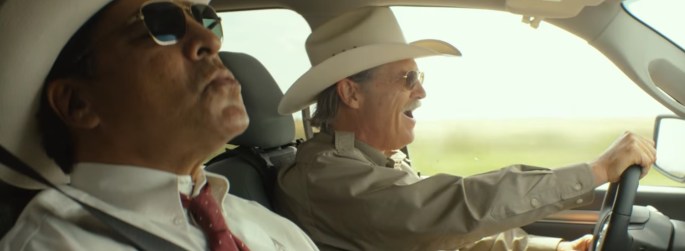
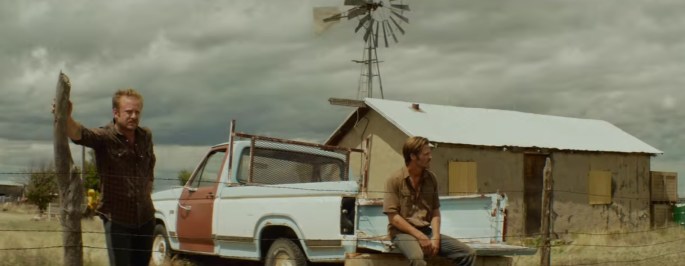
Hell or High Water is easily my second favorite movie of the year, not far behind the hard to classify gem Midnight Special. Of course Peter Berg produced (and was at one point attached to direct) this shit-kicking, dusty, Texas-set tale of brotherly love and bank robbing. It’s nothing revolutionary, but rather, underrated filmmaker David Mackenzie does everything just about correct, with a perfect sense of tone, atmosphere, and dramatics. Jeff Bridges brilliantly garbles his way through yet another study of neo-Western machismo, the volatile Ben Foster is literally a loose-cannon all throughout this dangerous little film, and Chris Pine delivers the best, most nuanced performances of his career, while resembling Colin Farrell in both Miami Vice and True Detective Season 2. There’s zero fat on Taylor Sheridan’s terse and authentic screenplay, and after his firecracker of a script for last year’s thoroughly absorbing Sicario, he’s at the top of my list in terms of writers whose name means quality.

2

Shot with striking clarity in a no nonsense fashion by cinematographer Giles Nuttgens, the film never overreaches, and gets down and dirty with its locations, themes, and overall presentation.  Pacing is kept crisp and clean by ace cutter Jake Roberts. The score from Nick Cave and Warren Ellis is evocative without ever becoming cloying, hitting repeated grace notes to match more menacing chords of sonic edginess. The topical overtones about the greediness of banks and the lunacy of open-carry gun permit laws only sweeten the deal. Honestly, watching this film slightly restored my faith in the theatrical experience, after months of films that have failed to lived up to their various expectations, or just a lack of interesting options in general. I was on board with Mackenzie as a filmmaker after the one-two-punch of Perfect Sense and Starred Up, but this movie really announces the arrival of someone special, and is one instance where the critical acclaim is highly warranted.

1

NOAH BAUMBACH AND JAKE PALTROW’S DE PALMA — A REVIEW BY NICK CLEMENT

3

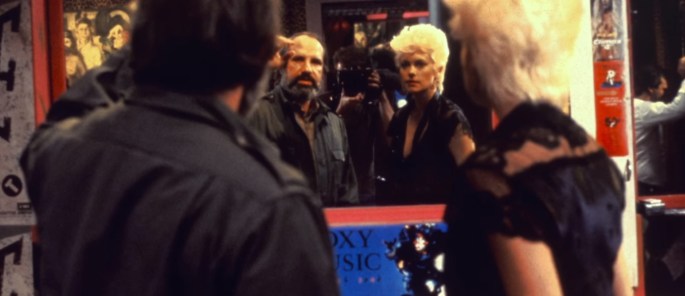
What can I really say about the fascinating and beyond entertaining new documentary De Palma? It was two glorious hours of listening to one of my absolute favorite directors discussing his remarkable and ludicrously underrated career. He’s made a roll-call of perverse, transgressive masterpieces, including Femme Fatale, Body Double, Carrie, Blow Out, Dressed to Kill, Casualties of War and bold, operatic crime drams like Scarface, Carlito’s Way, The Untouchables, and Snake Eyes. He’s dabbled in big budget studio popcorn fare with Mission: Impossible and Mission to Mars, while still allowing for more quirky, edgy, and personal projects like Phantom of the Paradise, Redacted and Passion to find their way to the screen. He’ll likely forever be known as one of the great masters of the erotic thriller, a director enamored by the work of Alfred Hitchcock, with films like Sisters and Raising Cain tipping their hat to the original master of suspense. So when I heard that the brilliant filmmaker Noah Baumbach and his co-directing partner Jake Paltrow would be interviewing De Palma, and touching upon every single film on his resume, I nearly fainted with anticipation. Doing nothing more than setting up a camera on a tripod, pressing record, and letting De Palma go full force with the anecdotes and remembrances would have been perfectly enough, but when combined with all of the top-shelf footage from his aggressively awesome filmography, you’re constantly reminded of how distinct and memorable his work has been.

2

Because even when some of De Palma’s movies have been misfires overall, there are moments and sequences of astounding movie-making that are sometimes better than entire feature films made by other directors. Think of the bravura opening moments of The Bonfire of the Vanities, or the staircase set piece and opening brawl in The Black Dahlia — these films weren’t his best but they have flashes of greatness all throughout. But when all of the ingredients added up and fell into the blender in the proper order, few cinematic voices have offered up this many kinky thrills and long lasting works. If you’re a fan of De Palma’s sensibilities as a filmmaker, then this movie is literally a cinegasm of pure delight. If you’re not a fan of his brand of shock-the-senses cinema, then maybe you’ll gain a new found appreciation or respect for this tremendously smart and gifted filmmaker’s output. It seems so beyond crazy to think that De Palma has NEVER been nominated by the Academy for Best Director, but this is a sad fact of life, and if it’s any consolation to him and his devoted legion of fans, this engrossing documentary is a fitting tribute to a director who relishes in the notion of “pure cinema,” and when you watch the various images from all of his sexy and sinewy and stylish films, it dawns on you how consistently provocative and unique a filmmaker De Palma has become after years of butting heads with studio execs and the MPAA over the enveloping pushing content of his edgy motion pictures.

1

PETER BOGDANOVICH’S SAINT JACK — A REVIEW BY NICK CLEMENT

1

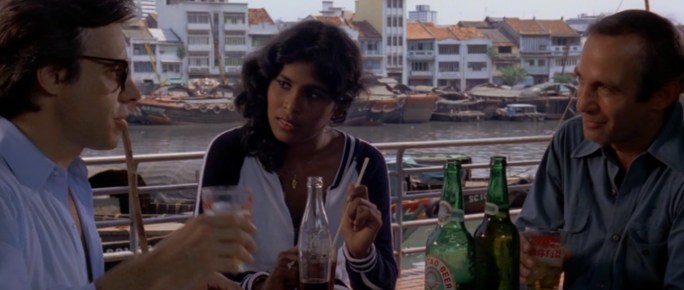
I’m not sure if I’ve ever seen a film quite like Peter Bogdanovich’s labor of love Saint Jack, and I doubt that anything remotely resembling it will be made any time soon. Released in 1979 and based on the Paul Theroux novel from six years earlier, the narrative pivots on the life of Jack Flowers (the absolutely amazing Ben Gazzara), a nice-guy hustler with pimping aspirations, living in Singapore who feels like he’s stuck in a personal rut. So, he decides to enter into the big time, by opening up his own bordello in conjunction with the CIA as a station for American soldiers who are on leave, which angers local Chinese gangsters who feel that he’s encroaching on their business and territory. Honestly, I think we need a big-screen revival of cathouse movies in general; there’s all sorts of possibilities with this milieu, and in regards to Saint Jack, the way that Bogdanovich subverted expectations and told a generally amiable story with flashes or threats of violence speaks to the unique way in which he approached his material. The film has an appropriately scuzzy visual style, with the great cinematographer Robby Müller calling the shots behind the camera, and bathing the film in a layer of textural grime that fit perfectly with the humid setting and mildly ramshackle production design. The fantastic supporting cast includes Denholm Elliot, James Villiers, George Lazenby, Joss Ackland, Rodney Bewes, Mark Kingston, and Bogdanovich in a quick and sly cameo.

3

As with the best of Bogdanovich’s work, Saint Jack eschews cheap and easy narrative exposition in favor of the story being motivated solely by character and behavior, with Gazzara’s strangely-warm-for-a-pimp performance giving the film an added layer of moral ambiguity that’s so rare in today’s brand of storytelling. Shot for a reported $1 million and lensed entirely on location in Singapore, and as of 2006 the only Hollywood production to do so (not sure if anyone has done a film there since then…), Saint Jack angered government officials over its portrayal of their society, and the film was banned from local cinemas. The filmmakers even lied about the plot of the film because they apparently figured that they’d be met with hostility from various groups. And despite never receiving the theatrical release it deserved, Bogdanovich has stated in interviews that he feels it’s one of his best works as an artist. This cinematic adaptation of Theroux’s book took root when Cybill Shepherd sued Playboy magazine after they printed photos of her from the set of The Last Picture Show; her settlement included the novel’s film rights. Hugh Hefner and Roger Corman are credited as producers. Available on DVD with audio commentary by Bogdanovich, new and old interviews, and other assorted bits of extra fun.

2

PAUL WILLIAMS’ DEALING: OR THE BERKELEY-TO-BOSTON FORTY-BRICK LOST-BAG BLUES — A REVIEW BY NICK CLEMENT

1

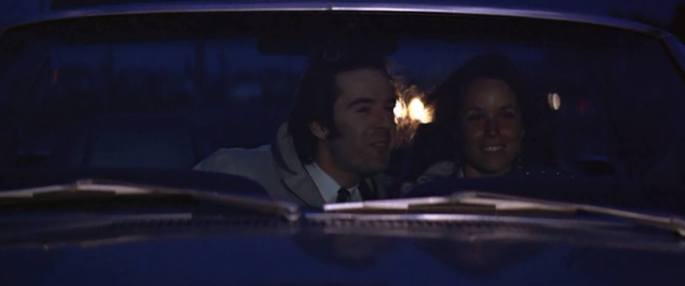
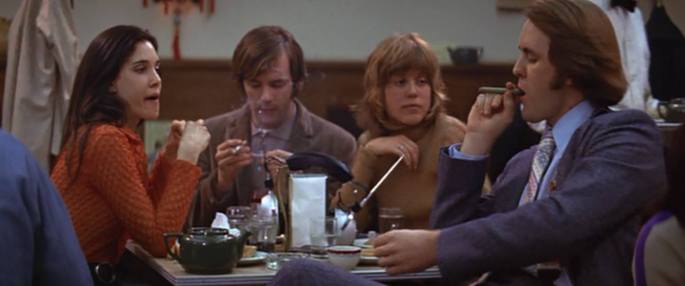
Dealing: Or the Berkeley-to-Boston Forty-Brick Lost-Bag Blues is one of my favorite recent obscure cinematic finds. Available on DVD thru Warner’s Archives label, this is a sly, strange, and totally cool movie that juggles genres and tones all the way up until the surprisingly nasty finale. Directed by Paul Williams (Out of It, The Revolutionary), Dealing: Or the Berkeley-to-Boston Forty-Brick Lost-Bag Blues was released in 1972, and was based on the novel by Michael and Douglas Chrichton under the pseudonym Michael Douglas(!). The plot centers on a Harvard law grad student, played by the interesting if a bit stiff Robert F. Lyons, who decides to smuggle of massive shipment of marijuana from Berkeley to Boston after doing numerous smaller-scaled jobs. Along for the ride is Barbara Hershey, in all of her youthful, gorgeous splendor, as the reluctant pseudo-girlfriend who decides to help with the big score, but soon finds herself in way over her pretty head. And can she fully be trusted?

2

Produced by cinematic legend Ed Pressman (Conan the Barbarian, American Psycho, Walker, Blue Steel, Wall Street, Phantom of the Paradise), Dealing: Or the Berkeley-to-Boston Forty-Brick Lost-Bag Blues has the distinction of having one of longest official titles in movie history. The film also sports a nifty supporting cast including John Lithgow (in his film debut as a shifty pot dealer), Charles Durning as a shady cop, Paul Sorvino as a cabbie, and the prolific character actor Victor Argo. The jazzy and offbeat musical score by Michael Small contributed to the overall stoniness of the entire picture. It was also very well shot by cinematographer Edward R. Brown (The Hot Rock, Lovin’ Molly), who gave the film a laid back vibe while still keeping things visually interesting. Funny, weirdly sexy, offbeat, and dangerous in spots, this is a unique item that would likely please many viewers who are looking for something totally unexpected.

3

JOHN G. AVILDSEN’S THE KARATE KID — A REVIEW BY NICK CLEMENT

1

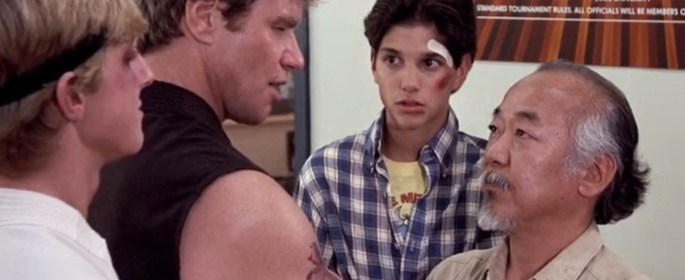
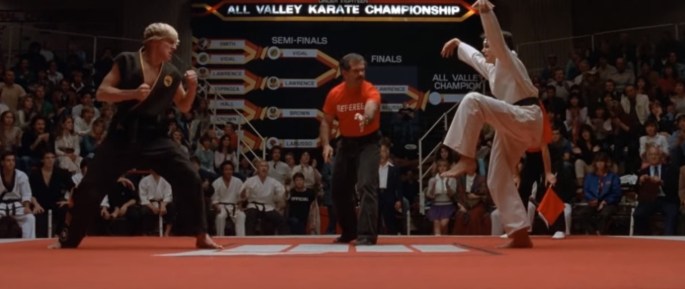
When a movie works it works. And that’s The Karate Kid — it’s so well calibrated that no matter how many times you’ve seen it you’re left with a lump in your throat when that final freeze frame of Mr. Myiagi appears on screen. Released in 1984 and becoming an immediate blockbuster, the film was heroically directed by John G. Avildsen (Rocky, The Formula), from a triumphant screenplay by the extra-prolific Robert Mark Kamen. Ralph Macchio was presented with the role of a lifetime in Daniel LaRusso, for better or for worse in regards to the rest of his career, projecting the perfect amount of innocence and potential for underdog success. Noriyuki “Pat” Morita delivered one of the most iconic screen performances in the history of the medium as young Daniel’s semi-reluctant mentor, and when push comes to shove, isn’t afraid to lay the smack down on some beer bottles and high school hooligans. And let’s talk about those hooligans for a moment; this film absolutely nailed the fear that some kids have when confronted by bullies, and I love how the story feeds off intense emotions for all of the characters, so when the action arrives, all the kicks and chops mean something to everyone.

2

Led by the menacing William Zabka as the infamous Johnny Lawrence, he and his evil sensei John Kreese (the amazing Martin Kove) and a band of other karate-kicking bad-asses making life a living hell for poor Daniel, until he decides enough is enough, and that someone needs to get their face crane-kicked into oblivion. Elisabeth Shue made for one of the ultimate early screen crushes for my personal generation, and in retrospect, it’s a wonderful and warm performance that mildly transcends the stock-girlfriend role that’s required by these types of narratives. Bill Conti’s soaring, totally engrossing musical score hit every single note of sonic perfection, going hard in the most dramatic of moments, and allowing for silence during some crucial spots. Morita would rightfully receive an Oscar nomination for Best Supporting Actor, while the film would spawn multiple sequels (two of them also directed by Avilsden), and a surprisingly successful reboot from 2010. But nothing will ever match the honest passion and clear-eyed sentiment of the original Karate Kid. Avilsden knew how to exploit the material for all it was worth, and as a result, the film became critically acclaimed, and has resonated for years with various generations of moviegoers. Finish him!

3