NA HONG-JIN’S THE CHASER — A REVIEW BY NICK CLEMENT

3

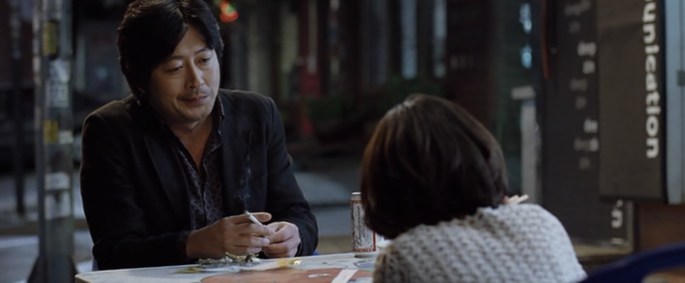
The Chaser is a masterfully directed South Korean thriller from filmmaker Na Hong-jin, who tipped his hat to Seven and other thoughtful and visceral detective procedurals, while still providing his own directorial stamp all over the proceedings, playfully skewering the expected tropes from this type of storytelling. This is one of the most startling and confident filmmaking debuts that I’ve seen, and serves as a reminder that some of the better films in recent memory are originating from all over the world, and not the tidy confines of traditional Hollywood storytelling. Released in 2008 and focusing on the cat and mouse game between an ex-cop-turned-pimp (Kim Yoon-seok) who uses his old police contacts to help to track down a serial killer who is seemingly targeting his stable of women. He narrows down his search to a prime suspect, played with casual lethality by Ha Jung-woo, and after various encounters, advances, and setbacks, has to decide just how far he’s willing to go to get his man.

2

This is a riveting film, unnervingly tense in many scenes, with two ferocious lead performances, and some absolutely insane bits of violent action that puts most movies to shame. Lee Sung-jae’s brilliant cinematography shows you just enough without ever getting overly grotesque, while the film is aided immensely by the tight editing from Kim Sun-min. The Chaser does all the things you least expect it to do, killing off characters you think for sure will live to see the end credits, and going to some brutal places both narratively and physically. The film was a massive box office hit in its native country, and will probably receive the unnecessary remake treatment by Hollywood any day now. The less you know about this twisty, twisted, and totally intense thriller the better. It knocked my socks off and then some.

1

HECTOR BABENCO’S IRONWEED — A REVIEW BY NICK CLEMENT

3

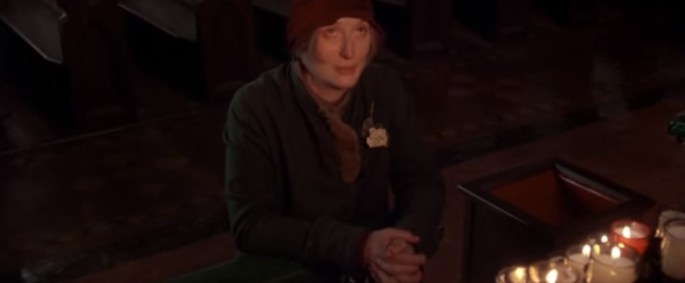
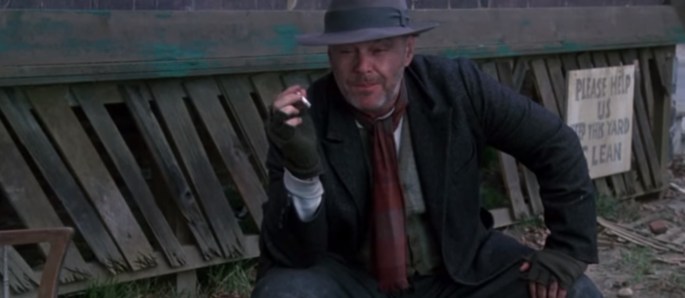
The critically acclaimed 1987 powerhouse period piece Irownweed pulls no punches. This is spectacular dramatic cinema with blistering performances from Jack Nicholson and Meryl Streep, both of whom seemed utterly smashed all throughout the production. I was not prepared for how grim this movie would be, and I credit the director, Héctor Babenco (Kiss of the Spider Woman, At Play in the Fields of the Lord), for never allowing the material to escape his firm grasp, as this story could easily have gone the cheap and easy route towards the end. It doesn’t. And because it doesn’t, it resonates. Nicholson has rarely been better than he was in Ironweed; for some reason his quiet and soulful work in The Border came to mind while watching him in this film. Set during the Great Depression and taking place in and around Albany, NY (where it was shot on location), this is one of those slow-burn pieces of cinema that sticks to the ribs. Playing a deeply depressed former baseball player who could be responsible for the accidental death of his infant son years ago, Nicholson nailed the wobbly and boozy character with tremendous gusto, yet never went too far over the top into overwrought histrionics. Has Streep ever been bad in a film? I doubt it. In Ironweed, she plays a woman beyond the reach of help, and her tired eyes and sickly visage helped to create a portrait of a woman who is literally falling apart on both the inside and the outside.

2

The two lost souls search for some sort of meaning in their broken lives, while probably knowing deep down inside that they are three sheets to the wind and unlikely to find solace. And even if the worldview is bleak and limiting, the strength of the performances and the forceful nature of Barbenco’s directorial style keeps the film extremely watchable, despite the obviously tough subject matter. William Kennedy adapted his own Pulitzer Prize winning novel for the big screen, so as a result, one gets the impression that this is precisely what the original author would have wanted to see. The deep supporting cast includes   Carroll Baker, Michael O’Keefe, Diane Venora, Fred Gwynne, Nathan Lane and Tom Waits. The filmmakers also wonderfully evoked a very specific time and place, with Lauro Escorel handling the un-showy, measured cinematography, which made great use of the authentic, lived-in production design by the great Jeannine Oppewall (L.A. Confidential, Pleasantville). The costumes also played a big part, with designer Joseph G. Aulisi (Nobody’s Fool, The Pope of Greenwich Village) stressing tattered garments and dirty, disheveled garment pairings to amplify the sorrowful mood. The flashbacks and frequent introspective beats allow for a dream like vibe, and when the unrelenting ending comes around the corner, there’ll be no escaping it. Because that’s how it had to go. Both Nicholson and Streep were rightfully nominated for Oscars. Ironweed is available as a free HD streaming option on YouTube via the Paramount Vault channel.

1

BARRY LEVINSON’S BUGSY — A REVIEW BY NICK CLEMENT

2

The director’s cut of Barry Levinson’s brooding and stylish gangster epic Bugsy is sensational entertainment, made huge by a massive lead performance from Warren Beatty, fabulous production values, an all-star supporting cast, and a pungent and gritty screenplay by James Toback that peppered the proceedings with humor, heart, and an appropriate amount of violent confrontation. Released in theaters in 1991, the theatrical version excised 13 additional minutes which can be seen on the DVD, and sadly, the movie didn’t do as well as expected at the box office despite generally excellent reviews, but over time, this has solidified itself as one of the better offerings in this very crowded genre. Spanning the turbulent and erratic life of mobster Bugsy Siegel, Beatty’s larger than life performance as the titular hoodlum brought him a much deserved Oscar nomination, while future wife Annette Bening dropped a sensitive and stellar early star turn as Siegel’s love interest, Virginia Hill. Featured in the background were Harvey Keitel, Ben Kingsley, Elliot Gould, Joe Mantegna, Bill Graham, and Bebe Neuwirth, all knocking it out of the park, while master cinematographer Allen Daviau evoked old-school Hollywood with his burnished and elegantly composed photography. Ennio Morricone’s rich and full-bodied score only sweetens the deal. This is easily one of Levinson’s strongest overall films, and fully reminds that when he was firing on all cylinders, he was capable of smart and well-appointed films that knew how to balance commercial demands with artsier instincts.

3

TODD PHILLIPS’ WAR DOGS — A REVIEW BY NICK CLEMENT

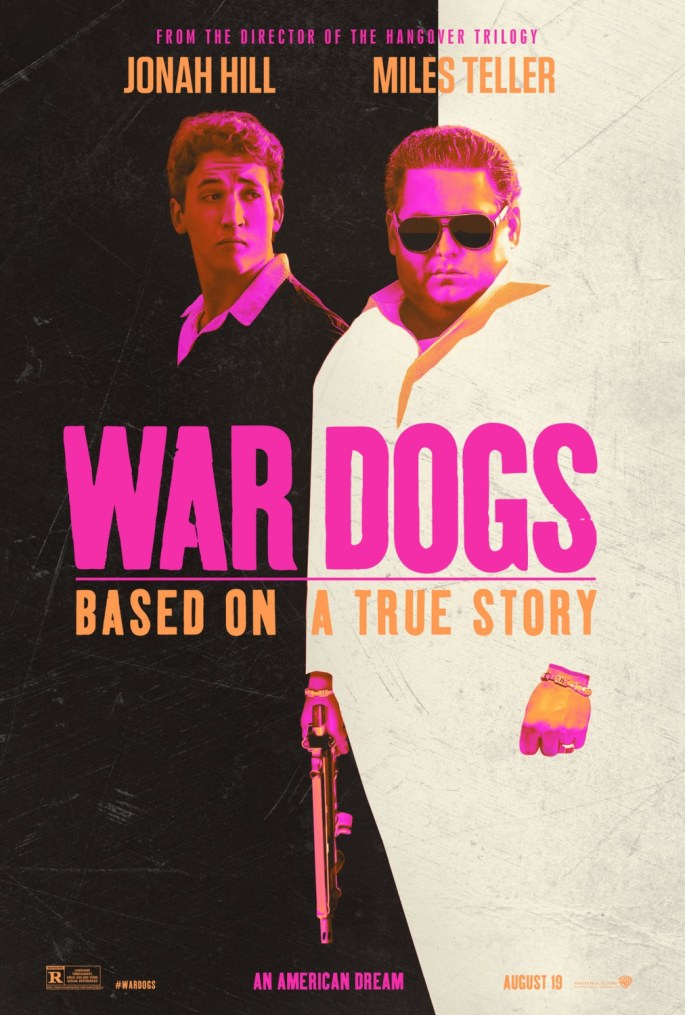
war_dogs_ver2_xlg

With War Dogs, it’s clear that cinematic funnyman Todd Phillips (The Hangover, Due Date, Old School) wanted to make a film that would raise his dramatic credibility as a storyteller. Sort of akin to the transition that Adam McKay made with his blistering financial meltdown drama The Big Short, this new and extremely entertaining film takes a real-life story and runs with all of its most absurd aspects, and as a result, the audience is left with a larger than life tale that feeds off of everyone’s collective desire for quick and sensational success. This is exactly the sort of movie that I want to see on the big screen. It’s smart, it’s got bite, it’s got some pointed social commentary, and it further showcases the notion of the Misguided American Dream, a concept that has informed other recent efforts like Michael Bay’s terrific Pain & Gain and Martin Scorsese’s juggernaut The Wolf of Wall Street.

1

At this point, with very few exceptions, I am all set with CGI dominated movies. I am TOTALLY done with swirling vortexes in the sky that have to be defeated in the final act. I want to see real films based on real stories that are tangible and topical and that feature characters that are morally questionable and interesting on various levels. Phillips and his extremely talented cinematographer Lawrence Sher tip their aesthetic hats in the direction of Scorsese, employing freeze frames in some choice spots, and using on-screen title cards that then become lines of dialogue in the next passage. This is an energetic and visually vibrant and distinctive movie, much like the rest of Phillips’ output, and even if War Dogs is satisfied to harness a traditional arc rather than anything groundbreaking, when a story is told this confidently by the chief creative parties, you just sit back and go for the ride and watch the wheels eventually fall off the operation.

2

Inspired by the Rolling Stone article and subsequent novel by Guy Lawson and previously known as Arms and the Dudes (a title which I personally prefer), War Dogs was written by Phillips, Jason Smilovic, and Stephen Chin, and charts the improbable but true story of two 20-something arms dealers, Efraim Diveroli (the absolutely amazing Jonah Hill) and David Packouz (a solid Miles Teller), who were able to procure government contracts to supply various types of weapons and ammo to U.S. troops stationed in Afghanistan during the high points of the War on Terror. Riffing on some beats that the more cynical Lord of War explored, the filmmakers offer up some potent questions about military and governmental decision making, the ease in which people are able to get their hands on vast quantities of weapons, and how those who are smart enough will always find a way to exploit the system.

war_dogs_xlg

While the film is no doubt dramatized for poetic license and dramatic effect, the root of the story remains intact, and what the audience is presented with takes the shape of an edgy, sometimes dangerous “process narrative,” where we see and learn what it takes to accomplish what Diveroli and Packouz did. Co-starring a shady Bradley Cooper as the team’s potentially devious mentor and the alarmingly photogenic Ana de Armas as Packouz’s disapproving girlfriend, War Dogs wisely chooses to center much of the action on the dynamic between Hill and Teller, with some major laugh out loud moments coming courtesy of Hill’s blustery and obnoxious creation of a toxic soul run amok. That obnoxious and creepy laugh seals the deal. He’s really cornered the market on aggressive, potentially hostile, and totally unpredictable loose cannon-characters; he could be the next Joe Pesci as he has that brilliant actor’s impeccable sense of comedic timing. War Dogs is easily one of the better movies that I’ve seen this summer.

3

ELAINE MAY’S MIKEY AND NICKY — A REVIEW BY NICK CLEMENT

3

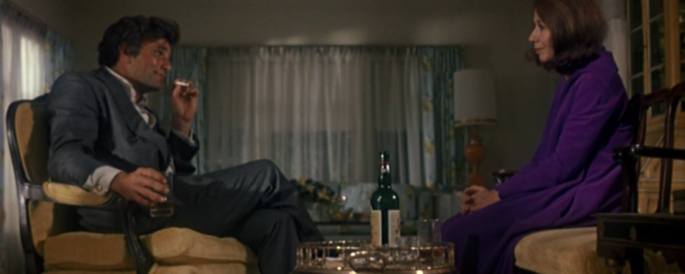
Funny, dark, uncompromising, and totally a product of the auteur-driven studio system of the 1970’s, Mikey and Nicky was written and directed by Elaine May, and it wouldn’t be the last time she had to deal with a turbulent production. To hear it from Victor Kemper’s candid interviews on the DVD, the shoot for this film was anything but easy (Kemper would quit the production twice!), but as so often with influential pieces of cinema, the terrific end result almost had to be born out of some form of madness. The action centers on Nicky (John Cassavetes, desperate and sad), who yet again needs help from his best friend Mikey (Peter Falk, intense and filled with quick-tempered rage), as he’s in over his head with debts to gangsters, and at the start of the film, is holed up inside a sketchy hotel, losing his collective mental shit in the process. Mikey tries to help is buddy, but at almost every turn, Nicky screws it all up, leading to a potentially tragic finale that tests the boundaries of friendship and sacrifice. This is one of those tricky films that was able to find the perfect balance between dangerous plotting, character based comedy, and genuine heart. May had such a distinct cinematic voice that it seems a shame that her career would often be plagued with issues having nothing to do with the overall quality of her work.

2

Because May was happy to leave cameras rolling (according to the internet she shot 1.4 million feet of film!), there’s a spontaneous feeling to the loose and gritty aesthetic favored by Kemper and the various other collaborators who worked on this scrappy little picture. And the natural rapport between Cassavetes and Falk really was something special; these two actors knew precisely how to play off of each other, always bringing out the best that they had to offer. The film clearly had to have influenced filmmaker Jon Favreau when he was working on his comedy classic Made, as the casting of Falk as the guy who sets the plot in motion in that 2001 film seems especially astute in retrospect. Ned Beatty, M. Emmett Walsh, Carol Grace, William Hickey, and Rose Arrick round out the solid supporting cast, while Sheldon Kahn’s jagged editing patterns contributed to the frenetic quality to the storytelling and filmmaking aesthetic. Also, it must be noted, and this is according to Wikipedia: “Budgeted at $1.8 million and scheduled for a summer 1975 release, the film ended up costing $4.3 million and not coming out until December 1976. May was eventually fired by Paramount Pictures (the studio which financed the film), but succeeded in getting herself rehired by hiding two reels of the negative until the studio gave in.” Those were the days – filmmakers holding films for ransom from the studios! If only this sort of anarchic spirit still lurked in Tinseltown.

1

ROGER DONALDSON’S THE BANK JOB — A REVIEW BY NICK CLEMENT

1

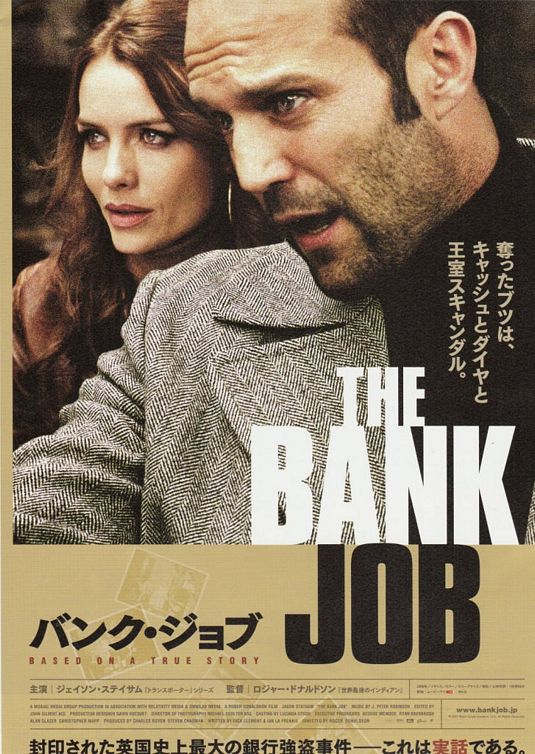
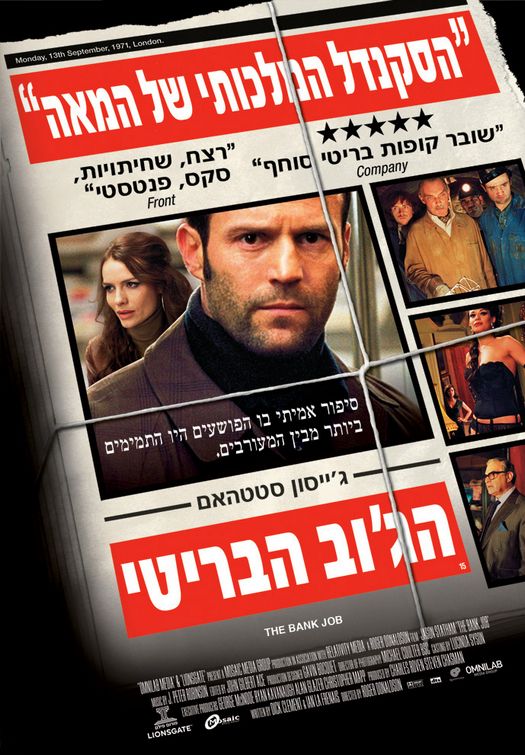
The less you know about Roger Donaldson’s enormously entertaining heist flick The Bank Job the better off you will be when you see it. This is a total crowd-pleaser from start to finish, a smart, adult-oriented thriller that really thrills, and it’s a shame that it slipped in and out of theaters back in 2008. Donaldson, who has had a solid directorial career filled with some great popcorn flicks and more personal underrated efforts, crafted a very polished piece of genre filmmaking with The Bank Job; it may be his best overall effort. The caper movie can be a tricky beast at times as the audience expects surprises from stories such as this, and in that respect, The Bank Job doesn’t disappoint. The smart yet complicated script courtesy of veteran screenwriters Dick Clement and Ian Le Frenais (The Commitments) is sassy, tough, and fast paced. It’s also very funny, and when necessary, down and dirty and mean. Anchored by a sturdy, Steve McQueen-esque performance from big-screen tough-guy Jason Statham (his best work to date as an actor) The Bank Job breezes along, never slowing down for a moment during the extremely tight two hour run time.
bank_job_ver4

One of the reasons why I had such a blast with this flick was that I didn’t know all of the particulars. The film starts off in sexy, 70’s fashion, with a couple of topless women frolicking in crystal clear ocean water, at some unnamed resort area. The ladies, and their male friend, move to a nearby bungalow, for a more private encounter. What the three of them don’t realize is that there is someone snapping some incriminating photographs from outside their window. What the audience doesn’t initially realize is that one of the women enjoying the tryst happens to be British royalty. And it doesn’t help matters that the individual taking those photographs happens to be connected to the ruthless gangster Michael X (a sneering and vicious Peter De Jersey). The photos will serve as leverage if he ever gets into trouble with the British government. Right off the bat, some excellent pieces are set into motion.

2

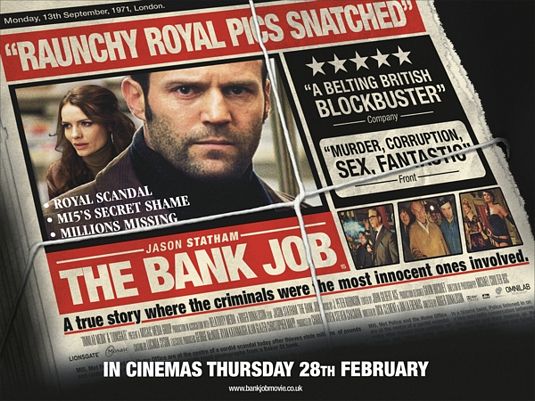
Cut to London. Terry Leather (Statham) runs an auto-body shop with a couple of ex-goons. Leather is no stranger to trouble and local harassment from an assortment of petty gangsters and crooked cops. It’s clear that he might have had some run-ins with the law earlier in life, but that he’s at least attempting to go straight. But before long, in classic tradition, his stunningly gorgeous old-flame Martine (Saffron Burrows, exuding sexiness), a part-time model, shows up at his shop with a potentially dangerous but extremely lucrative proposition. She’s met some people who want to rob a bank in downtown London. There are some specifics to the case that I will allow you to discover on your own, but I will concede that Martine may or may not be 100% truthful with all of the facts. And the way a porn kingpin, the British secret intelligence, local cops, a high-class brothel, dirty politicians, and a variety of naked women figure into the plot are also developments that should be left for your discovery. Normally a heist film doesn’t juggle this many plot lines, but credit the writers with doing so coherently and excitingly, while never losing sight of the tight story at its core. Also, in reference to the on-screen nudity, I must say how refreshing it was to actually see an adult-minded picture that wasn’t shy about sexuality and had some fun in this realm. It was also rather nice to see a heist film where I actually believed the heist that was going on! How many times have we seen over-the-top scenarios with an impossible heist in the middle of a ridiculous plot? The fact that The Bank Job is based on real events makes it even juicier.
bank_job_ver2


Statham got a chance to actually prove that he could act in The Bank Job, grounding the movie at all times with his inherent gravitas, while also allowing for more nuance than one probably expects from him as a performer. While I have loved seeing him kick continuous bad-guy ass in movies like Crank and Crank 2 and The Transporter/Expendables series, it was great to see him play a real character for once, one with a credible backstory, honest vulnerabilities, and some level of genuine stress. But never fear – Statham gets to flex his muscles at the end of The Bank Job, and because the ass-whooping that he throws is completely warranted by the plot, it felt all the more cathartic and exciting. The deep ensemble cast, made up of lots of British character actors, seals the deal as there isn’t one wasted performance or actor in the entire bunch. Burrows, who has more to do in the film than you might think considering her “hot-chick” character archetype, is mysterious, gorgeous, and dangerous, exactly what a femme fatale should be.

3

But to be honest, I can’t help but feel that the real star of The Bank Job is its director. Donaldson, an Australian journeyman/gun-for-hire, had a couple of big hits in the 80’s with the excellent No Way Out and the slick ‘n shitty Cocktail. And then came the 90’s, which weren’t as kind: Cadillac Man, White Sands, and the wholly unnecessary yet still entertaining remake of Sam Peckinpah’s masterwork The Getaway, all of which were critical and commercial disappointments. Then there was the schlocky and totally awesome sci-fi hit Species, which while derivative beyond belief, was a fun, effective B-movie that did solid business, spawned a franchise, and introduced the world to Natasha Henstridge. Next came Dante’s Peak, the first (and better) of the two big-budget volcano movies of the late 90’s. Then, in 2000, Donaldson busted out with the excellent Cuban missile crisis political thriller 13 Days, which did piss-poor business, and probably competes with The Bank Job for “best film of career” honors. Needing a hit, he followed that up with the more conventional spy film The Recruit, which was solid if uninspired entertainment, and then in 2005, he made the delightful Anthony Hopkins starrer The World’s Fastest Indian, clearly a more personal project.
bank_job_ver3

Donaldson, always a solid technician who brings an unfussy sense of style to all of his films, seemed to have been reinvigorated by the material in The Bank Job. He directed with an icy firm grip, never letting the busy plot spin out of control, shooting the action in a crisp and clean fashion, and allowing for moments of character based humor. And in tandem with his talented cinematographer Michael Coulter, he brought a gritty, desaturated color palette to match the 70’s-style realism with the on location London surroundings. But while critics heaped praise on The Bank Job, it died a quick death with theatrical audiences, and after the unfair box office failure, Donaldson has gone back to more routine offerings, like 2011’s clichéd lawyer thriller Seeking Justice (which barely got a release) and the vanilla-looking The November Man (haven’t seen that one yet). If you’re looking for smart entertainment, a film that is sexy, unpredictable, humorous, and satisfying, you could do a lot worse than check out The Bank Job. It doesn’t re-invent the wheel, but for what it is, it’s just about damn near perfect. And sometimes, all we need is a classy, unpretentious piece of entertainment like The Bank Job to remind us that there is life left in one of our more well-stocked genres.

bank_job_xlg


MARTIN SCORSESE’S THE WOLF OF WALL STREET — A REVIEW BY NICK CLEMENT

3

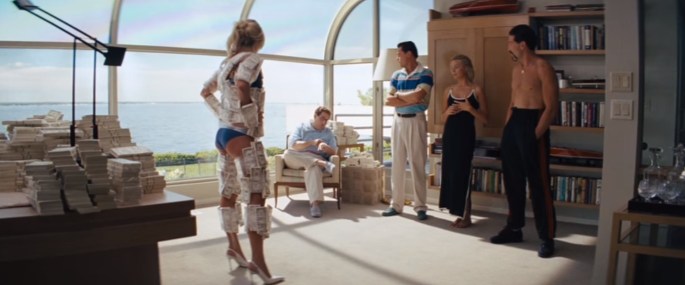
The epic, excessive life of notorious Wall Street huckster Jordan Belfort got epic, excessive cinematic treatment by one of the most epic, excessive of directors, Martin Scorsese, in The Wolf Of Wall Street. Leonardo DiCaprio was completely and utterly on fire from frame-one, giving it his all in every sense of the phrase. It’s also, most crucially and surprisingly, the funniest and loosest he’s ever been on screen, revealing new, comedic sides to his personality. On the complete opposite side of things, the enormously gifted comedic actor Jonah Hill again severely impressed in a dramatic role after doing stellar work in Cyrus and Moneyball, while also landing some of the heartiest laughs in this blackest of comedies. Littered with tons of familiar faces, spot-on character work, and the alarming presence of alluring Australian bombshell Margot Robbie (doing a terrific New Joisey accent, it must be noted), The Wolf of Wall Street races through its three-hour running time like an out of control freight train being driven by a lunatic mad-man.

2

No movie since Terry Gilliam’s hedonistic tour de force of drug-fueled shenanigans Fear and Loathing in Las Vegas has embraced on-screen drug-use for both dark humor and for appalling dramatic effect the way The Wolf of Wall Street did. But that’s why Scorsese continues to be the most important, vital voice in modern cinema – he’s always up to a challenge, always pushing the limits, always going for the filmic jugular. Along with the gifted screenwriter Terrence Winter, they painted a sprawling, troubling portrait of a morally decaying society – the American dream run amok, perverted and corrupted by ultra-success and zero consequences. And the last shot of the film – possibly the best single shot of its year – casually and brilliantly indicts everyone, not just the despicable characters in the film and the zombie-eyed audience members that Belfort is preaching too at his seminar, but anyone who was in the audience or watching at home who has missed the point of this outrageous and masterful piece of storytelling. And one last thing: Never call Rob Reiner during The Equalizer!

5

ABDELLATIF KECHICHE’S BLUE IS THE WARMEST COLOR — A REVIEW BY NICK CLEMENT

1
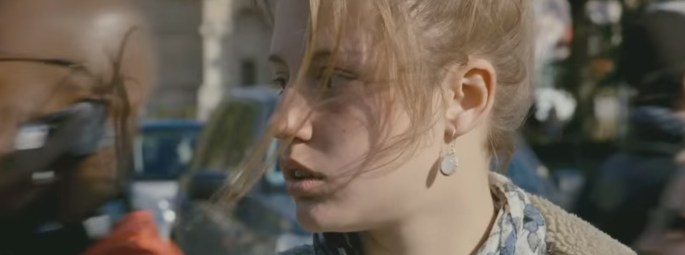
Blue is the Warmest Color is one of the most romantic movies I can think of, often times transcending what we normally expect from a “love story,” and on numerous occasions becoming something else entirely – a direct peek into another person’s soul. The film operates as a raw and incredibly open glimpse of a woman experiencing a sexual and spiritual awakening filled with both her innermost desires and deepest uncertainties, while unfolding with aesthetic grace and narrative simplicity, and is guided by two of the most fearless performances that I’ve ever seen from any actor or actress in my lifetime. Adele Exarchopoulous and Lea Sedoux are absolutely astonishing in Blue is the Warmest Color, allowing the audience to get to know them in ways that are rarely allowed, and letting their love affair blossom in a way that feels both unexpected and strangely familiar.
 
2
Writer-director Abdellatif Kechiche favors naturalism above all else, and he’s clearly fascinated with the daily minutiae of everyday life. As his camera fixes its stare on his characters, you get the sense that he’s a filmmaker who’s constantly searching for that perfect moment of clarity, that one particular beat where you can say to yourself that you’ve captured life at its purest on camera. This film reminds you that love is irrational and unexpected, and hits us in various forms and shapes and sizes, at any moment that it chooses, and that when we’re least expecting it, our lives can forever be altered by just a glance at the right, or wrong, person. Blue is the Warmest Color is also a well-observed study of human behavior, and how we act and react in a variety of situations and contexts. What does it mean to love and what does it mean to know when your love isn’t enough for another person? Are we allowed to choose how we feel, or is everything predetermined no matter how spontaneous we try to be?
la_vie_dadele_ver2_xlg
Every kiss in this film is felt, every bite of food or sip of wine is tasted, and every moment is savored as if it might be the last. The sexuality on display will leave many people speechless; you become privy to two people exploring the boundaries of themselves and one another, and in those deeply personal moments, you feel as if you’re in that room with them, a curious observer to something private and extraordinary. Everything in Blue is the Warmest Color feels real, which is why I immediately responded to it, and have found myself drawn back to its various mysteries and charms, despite the leisurely pace and hefty run-time. There’s a lover’s quarrel that feels as scary and as intense as any cinematic fight has ever felt, or at least that I’ve seen, and it’s shockingly believable and phenomenally sad because every verbal sling feels like an honest dent in the armor. This is a heavy duty piece of cinema, a work unafraid to go to some emotionally draining places, but because all of it feels so honest and refreshingly alive, even the most harrowing moments are counterbalanced by something uniquely graceful and optimistic. Available on Criterion Blu-ray.
3

CURTIS HANSON’S WONDER BOYS — A REVIEW BY NICK CLEMENT

1

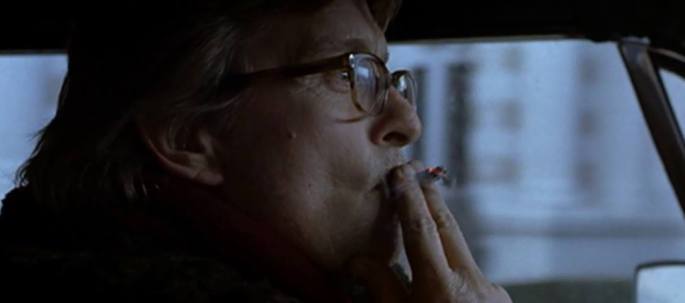
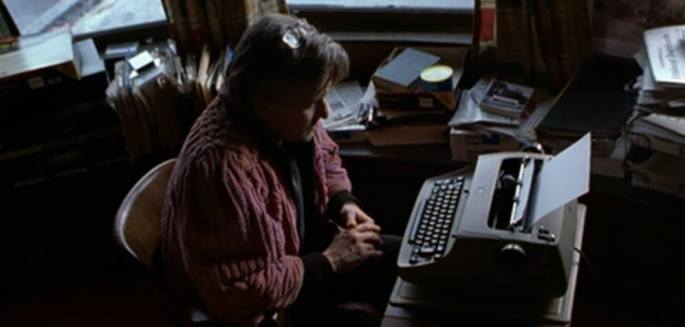
I love the lived-in beauty, the quiet tranquility, and the super stony vibe of Curtis Hanson’s terrific drama Wonder Boys, which features one of the all-time best performances from Michael Douglas as a pot-smoking college professor/writer’s blocked novelist whose younger wife has just left him. He’s having an affair with the Dean’s wife (the lovely and pointedly funny Frances McDormand), there’s a lustful young student who has him in her sights (eager and adorable Katie Holmes), he’s got a hounding, unfocused, rapscallion of an agent to contend with (witty and charming Robert Downey Jr.), and the closeted writing prodigy who is looking for a mentor needs to be broken out of his tightly wound shell and comes looking for help (Tobey Maguire, rarely better). Based on Michael Chabon’s novel, Steven Kloves’ generous, warmhearted, and deeply funny screenplay is filled with fabulous literary allusions, and perfectly balanced all of these fantastic characters, giving them all a chance to shine, while providing Douglas with the opportunity to be vulnerable and scruffy and sloppy and affable — an all-around good guy — a side to him as an actor we rarely get a chance to see, because let’s be honest – he’s a terrific cinematic prick!

2

Hot off the critical and commercial success of L.A. Confidential, Hanson probably had the pick of the litter when it came to a follow up project, so it speaks volumes to his humanistic character and as a sensible filmmaker and honest storyteller that he went with something as low-key and unassuming as Wonder Boys. This film, released in 2000, is one that’s constantly filled with surprises, and while a critical favorite, it died a terrible and tragic death at the box office. I’d like to think that over time people have caught on to this film’s odd, specific, and brazenly marijuana-infused charms, as it’s one of those small gems that gives off that contact high feeling while you watch it. Cannabis is a character in this film, not something that’s to be giggled over by immature dopers with nothing interesting to say. The linkage of pot to the process of writing – and how it can both help and place a burden upon an artist – is explored to great, subtle degree in Wonder Boys. The film also features an absolutely incredible soundtrack, with Bob Dylan’s fantastic and melancholy tune “Things Have Changed” rightfully taking home the Oscar for Best Song. Everything about this movie makes me smile, and I really, really hope that it gets the Blu-ray treatment that it deserves, because Dante Spinotti’s beautifully hazy cinematography deserves better.

3

ROBERT ALTMAN’S BUFFALO BILL AND THE INDIANS, OR SITTING BULL’S HISTORY LESSON — A REVIEW BY NICK CLEMENT

1

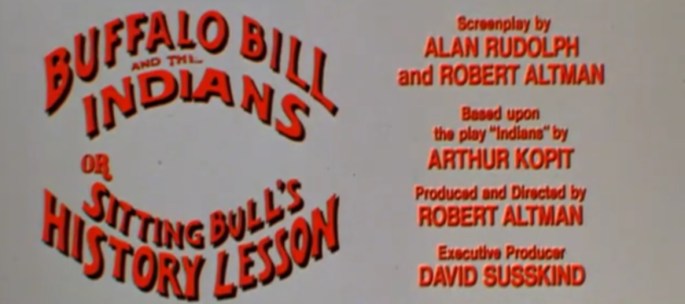
Only Robert Altman would have had the wily nerve to release his cynical, ultra-revisionist Western oddity Buffalo Bill and the Indians, or Sitting Bull’s History Lesson on the bicentennial anniversary of the United States. Casually ripping apart the longstanding and totally absurd notions of white nobility and the violent Native American savage, this is a darkly comical, defiantly strange movie with a careening tone and a hazy, sometimes murky visual style that relied heavily on long shots with multiple characters in the frame, all of whom were talking at once, without any close-ups to establish whose voice belongs to who. Shot by Altman regular Paul Lohmann, I can think of few other films that walk, talk, and breathe like this one, and in tandem with Peter Appleton and Dennis M. Hill’s adroit editing, Buffalo Bill and the Indians, or Sitting Bull’s History Lesson displays a dreamy vibe that just has to be experienced for full effect. Altman’s bold and challenging use of sound and overlapping conversations has always been a point of discussion, but in this film, it may have reached its apex in terms of the use of multiple and simultaneous audio tracks.

4This rascally effort features an eclectic supporting cast, including Will Sampson, Harvey Keitel, Geraldine Chaplin, Burt Lancaster, and Ned Buntline, with everyone allowing the irreplaceable Paul Newman ample room to run away with the movie in various spots. He was absolutely terrific here playing Buffalo Bill, taking the myth out of the man, and layering him in tragic, alcoholic glee. Co-written by Altman with frequent collaborator Alan Rudolph and adapted from the play Indians by Arthur Kopit, the film took on an episodic, farcical approach to the material, and arriving immediately after his much celebrated Nashville, my guess is that critics and audiences didn’t know what to do with Altman’s newest at the time of its release. Focusing on the wild, behind-the-scenes antics of the famous travelling Wild West Show, which was organized by Buffalo Bill and became a massively successful source of entertainment despite showcasing staggeringly inaccurate historical recreations, Altman and Rudolph were able to lay waste to the traditional idea of the hero in the wild West, presenting Buffalo Bill as a larger than life clown and drunkard, only interested in self-satisfaction and purveying a false sense of self-importance and legend. This is a phenomenally ambitious, wholly original, and totally unique item in the legendary filmography of one of America’s greatest and most influential filmmakers.
2