NEVELDINE/TAYLOR’S CRANK 2: HIGH VOLTAGE — A REVIEW BY NICK CLEMENT

1

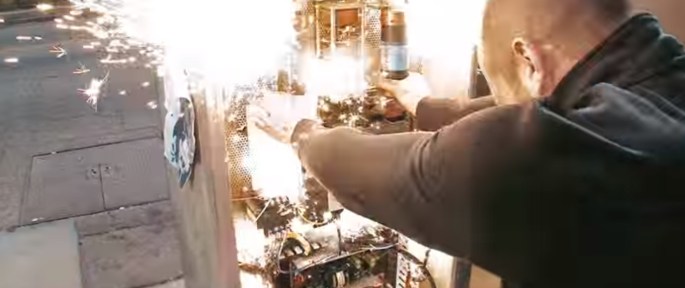
Crank 2: High Voltage is absolutely insane. On purpose and by design. You likely already know if this bit of madcap lunacy is in your cinematic wheelhouse; those unfamiliar with the first installment are not likely to take this challenge. The plot here is the same as the original: Indestructible hitman Chev Chelios (Jason Statham) has to keep his heart pumping fast enough to overcome a ridiculous affliction, with the conceit here being that his own heart has been removed and replaced with an artificial one that requires electricity to operate. The gonzo-splatter filmmakers, Mark Neveldine and Brian Taylor (the first Crank, Gamer), are sadists of the first order. Here’s a random checklist of some of the cartoon-like atrocities that are displayed in this breakneck action movie: Anal-violation via shotgun; elbow-caps hacked off with machete; close-quarter machine gun shoot-outs; 10,765 old-school squibs being detonated; graphic and near pornographic sex scenes; gratuitous female nudity; Godzilla-style beat-downs (in the film’s most inspired sequence); casual racism; casual homophobia; casual misogyny; pitch-black humor – this equal opportunity offender has something hysterical and repugnant for every member of the extended family! I am able to easily award this amazing piece of trash four outta four stars. Four Big Ones. The film itself knows that it’s bonkers, and everyone involved in the making of it knew that it was bonkers. It doesn’t give a fuck what you think of it, and most enjoyably, it makes sense on its own terms. Extreme cinema like this lives in its own bubble, and I love these types of modern grindhouse efforts, as they typically all feature explosive stylistic ingredients that push various formal boundaries.

2

Sure, it’s nothing more than an R-rated Wile E. Coyote cartoon where nothing makes any logical sense. But the sheer energy and low-tech skill that Neveldine/Taylor brought to the table is simply staggering. Working with the daring and resourceful cinematographer Brandon Trost, the filmmakers shot this off-the-wall movie with 20, $1000 consumer-grade camcorders (or so I’ve read), resulting in a Tony Scott-on-a-sheet-of-acid aesthetic that will send anyone with any sort of spastic disorder into bouts of epileptic shock. The rogues gallery supporting cast is incredible, with the likes of Dwight Yoakam, David Carradine, a totally tripped-out Bai Ling, Corey Haim, Art Hsu, Reno Wilson, the amazing Efren Ramirez, and a snarling, extra-bad-ass Clifton Collins, Jr. as one of the chief baddies. Oh, and MAJOR shout-out to super-hottie Amy Smart, who again proved herself to be a champ on all fronts. She’s basically topless THE ENTIRE FILM, and her racetrack love scene with Statham is probably one of the longest, funniest, and wildest bits of simulated movie sex ever put on film. And what can you say about Statham that hasn’t been already said? He’s become his own brand, and even if I’m not in love with all of his actioners, when he wants to rip it up with full-force, he’s more than capable, and in the Crank films, he was able to cut totally loose and go for broke. Again – you’ll likely know before reading this review if you want to see this film. Is this the greatest movie ever made? No. But it’s an unqualified success based on its ambition, and no matter how depraved their vision may be, Neveldine/Taylor were clearly operating with a singular vision with this one.
3

JOHN FORD’S MY DARLING CLEMENTINE — A REVIEW BY NICK CLEMENT

1

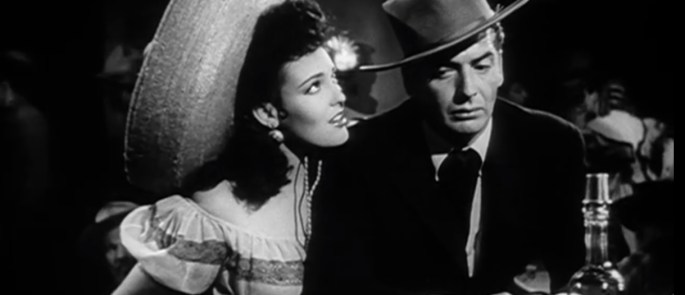
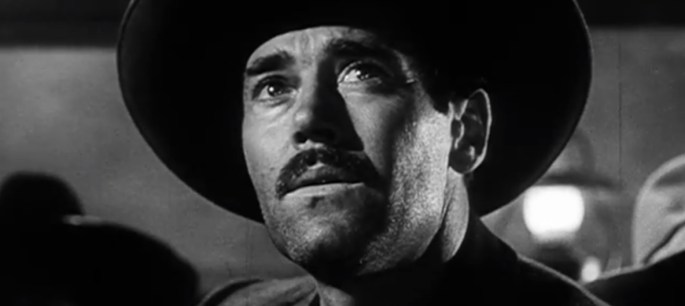
My Darling Clementine will always be my favorite motion picture from legendary director John Ford. There’s something so simple and elegant about the film, and the somewhat recently released Criterion Collection Blu-Ray features a stunning digital transfer, no blemishes to speak of, the shimmery and wonderfully detailed black and white cinematography filling the 1.33:1 frame in all its Academy-ratio glory. Despite the compromised post-production process, the film still stands as one of Ford’s most assured and distinctive works, the funereal tone creating a dreamy and melancholic atmosphere to the old west proceedings. Henry Fonda’s performance was laid-back brilliance, always allowing the story to come to him, instead of trying to dominate each scene with blustery acting techniques.

3

Victor Mature’s work as the alcoholic Doc Holliday is the stuff of cinematic dreams-come-true; it’s one of my favorite performances of all time and every time you observe his work in this film you are able to find new, sad grace notes. Light on gun-slinging but rich in subtleties and character, the movie sort of feels at times like an anti-Western, which is interesting given that it was made during the genre’s full swing and not during the revisionist period. Kevin Costner tipped his hat to My Darling Clementine repeatedly in his underrated 2003 film Open Range, which also features a gripping and deadly shoot-out at the finish. I love contemplative westerns where the dialogue is rich and the relationships are complex – My Darling Clementine fits that bill while also providing unforgettable imagery and projecting a quietly lethal sense of finality.

2

ABEL FERRARA’S FEAR CITY — A REVIEW BY NICK CLEMENT

1

Gritty integrity. That’s the promise you get with every single film by maverick auteur Abel Ferrara, the director of The Bad Lieutenant, King of New York, The Black Out, The Funeral, and so many other brilliant, transgressive pieces of searing indie cinema. His customarily seedy and sadly neglected 1985 masterpiece Fear City might just be one of his greatest and least celebrated pieces of work, a film that is so much a product of its time that it feels inconceivable that it could ever be made today. It also feels so much like the product of its creators that I could think of no other director’s name to appear in the credits. The ludicrous yet wildly entertaining plot concocted by frequent Ferrara collaborator Nicholas St. John couldn’t contain any more exploitive elements if it tried: There’s a karate-master serial killer on the loose in Manhattan, targeting the strippers who work at the various joints along Time Square, and it’s up to a down and out former boxer, the perfectly cast Tom Berenger, to figure out who is responsible while trying to protect his main squeeze, who may or may not be the killer’s next intended victim.

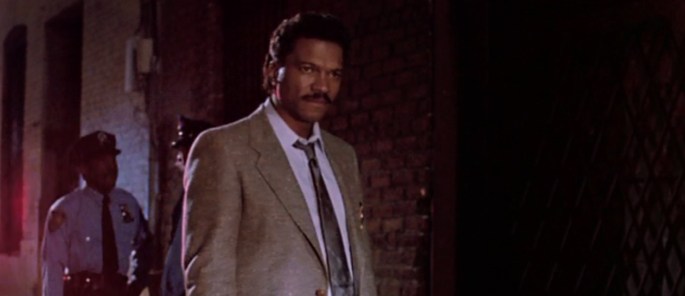
3This is a disreputable film, and right from the extra-sleazy start with the blood-red title credits splashed over a sexed-up montage of women of the night strutting their considerable stuff, you just know you’re stepping into Ferrara’s signature playground of eroticism and violence. The dark and purposefully smeary cinematography by James Lemmo captured NYC in all of it’s old-school, scuzzy splendor, highlighting shadowy alley ways and ominous street life, with streaks of bold color and flashing neon emanating from downtown. The eclectic supporting cast is impossibly cool, with Billy Dee Williams turning in one of his best performances as a determined detective, Melanie Griffith as Berenger’s ultra-sexy love interest, 80’s icon Rae Dawn Chong, Rossano Brazzi as Berenger’s buddy, Jack Scalia, John Foster, Neil Clifford, and Maria Conchita Alonso. The film was originally bankrolled and produced by 20th Century Fox, who then sold it after becoming concerned by the level of sordid elements. Dirty, raw, and with a constant sense of danger running all throughout, Fear City is a walk on the wild side for fans of this type of extreme, outlaw cinema. Available on Blu-ray from Shout! Factory.
2

WON SHIN-YUN’S THE SUSPECT — A REVIEW BY NICK CLEMENT

1

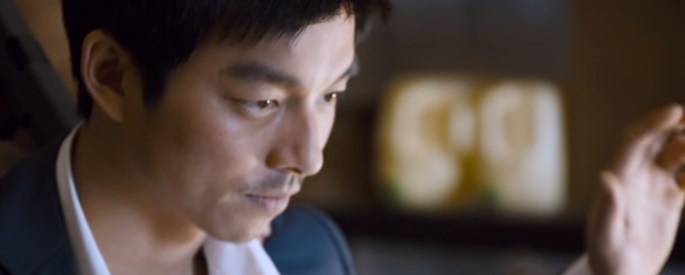
Won Shin-yun’s breathless action thriller The Suspect is pure pedal to the metal adrenaline, but yet heavy on character and plot, so that by the finale, you’re totally invested in all of the various storytelling elements. I hadn’t heard of this movie until a friend suggested I see it, and thanks to Netflix streaming, this Korean ass-kicker should become a serious option for anyone looking for a high-octane antidote to the increasingly lackluster Hollywood action movie offerings. Centering on a top secret and ultra-lethal North Korean spy (the fabulous Gong Yoo) who is betrayed by his government and ends up on the run from multiple agencies, Shin-yun’s fast-moving actioner takes some sharp aesthetic cues from the hyped-up intensity of the Bourne movies and tells a thematically complex and astonishingly well-crafted tale of international espionage, using the man-on-the-run narrative conceit in a smart fashion, and allowing for some absolutely stunning action set-pieces to take center stage. We’ve seen the various plot ingredients before, but never done quite like this, and while the film could’ve benefited from some more judicious editing, I really responded to the character dynamics and the sociopolitical undertones to the screenplay.

2

There’s a mind-boggling car chase done half in reverse, shoot-outs galore, foot chases that seemingly break all the rules, and a tremendous sense of visual integrity in each and every shot. While watching a movie like this 2013 import, one becomes immediately reminded of how relatively barren and unexciting the American action film landscape has become. For me, with the exception of the visceral thrills of Paul Greengrass, the slick and gritty stylings of Michael Bay, and the promise that the John Wick-duo showed, there’s not much to be excited about. I’m consistently looking to the overseas action film market to get my ultimate genre kicks, which is how I was led to Gareth Evans and his two masterpieces, The Raid and The Raid 2. But something like The Suspect shoots up to the top of the charts, because it cares about all of the elements rather than just being a full on CGI-assisted sensory assault (whatever computer tricks that were used were flawlessly integrated). Exciting on nearly every level, exceedingly photogenic, forcefully acted across the board, and thoroughly rousing with an emotionally powerful and resonant final sequence, The Suspect is a true gem waiting to be discovered by action movie lovers.

3

TIM BURTON’S BEETLEJUICE — A REVIEW BY NICK CLEMENT

1

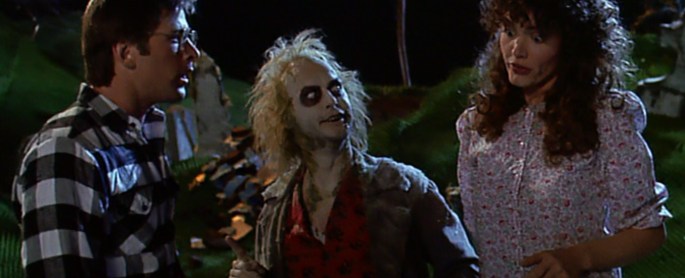
The thrill and creativity of Beetlejuice will never be replicated. Directed with insane zest by an in-his-prime Tim Burton, I can’t stress how many times I’ve seen this wild and wacky movie, and I am beyond excited to show this film to my son when he’s at a very impressionable age. This was a MEGA-EVENT for me as a seven year old; the fact that this film got a PG when PG-13 was an option still makes me laugh. Between the coupling of “Nice fuckin’ model!” with the testicle-double-honk to all of the rather gory and sometimes gruesome special effect make-up work to the various sexual innuendos – it just makes me laugh how this one escaped through the system. Everyone was on fire in this film; Geena Davis, Alec Baldwin, Jeffrey Jones, Catherine O’Hara, Winona Ryder, Sylvia Sidney, Glenn Shadix, and of course, Michael Keaton, in one of his signature roles, all delivered note-perfect performances. I love how this movie never feels like its playing by any set of predetermined rules, with Michael McDowell and Warren Skaaren’s witty and subversive screenplay being a perfect match for the idiosyncratic stylings of Burton’s fertile visual imagination. Danny Elfman’s score is an all-timer and the creepy production design by Bo Welch a tremendous accomplishment, while the playful yet ominous tone gave off a vibe that allowed for endless possibilities. It’s interesting to read how the original script evolved significantly, and how at first it was a much darker and more sinister piece. Produced by The Geffen Company and released by Warner Brothers in late March of 1988, Beetlejuice would become a critical success and audience favorite, and over the years, thank the Cinema Godz, any talk of a sequel or reboot has never formalized. I’d love it if we could all keep it that way. Oh, and Bob Goulet “Putz” POWER.

2

DARREN ARONOFSKY’S THE FOUNTAIN — A REVIEW BY NICK CLEMENT

1

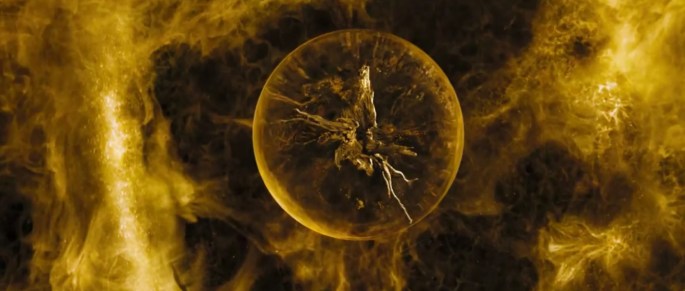
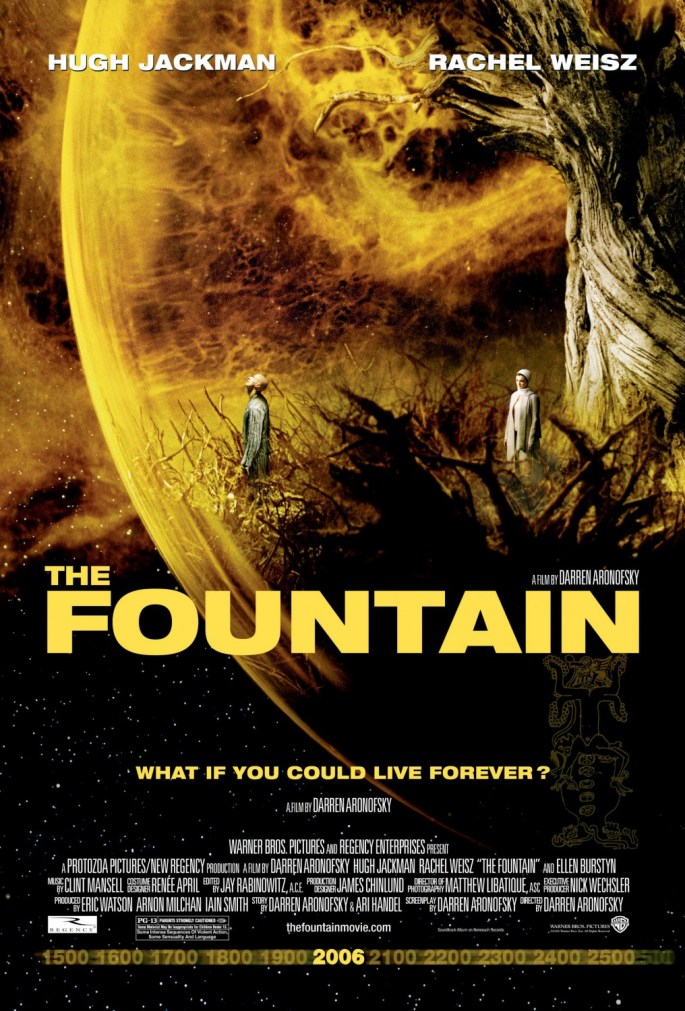
It’s very hard for me to completely describe my feelings of respect, love, and admiration for Darren Aronofsky’s uber-ambitious, boundary pushing The Fountain – it stands as a towering artistic achievement made by a filmmaker in total control of his vision. This is awe-inspiring cinema-as-magic, crafted by a director who was interested in stretching the limits of the form, delving deep into his wild, fertile imagination, and delivering something completely uncompromising and unique. The Fountain lives in the same cinemascape as 2001: A Space Odyssey, The Tree of Life, Enter the Void, Cloud Atlas, and Under the Skin, and as in those world-creating films, The Fountain has been hand-crafted by a filmmaker with an intensely personal vision, resulting in a work that is beyond thought provoking and visually astonishing at every turn. And I understand that MANY people will not share the same level of appreciation that I have for this movie; something this artistic and challenging and unique is bound to have its detractors. But I don’t care about any of that. Matthew Libatique’s cinematography on this film was transcendent; I’ll never completely understand how some if it was achieved. Originally intended to be a $70 million production with Brad Pitt in the lead role, the film was delayed, scrapped, then resurrected with Hugh Jackman in the hot-seat and a comparatively “low” budget of $35 million. Even though I wouldn’t change a frame of what Aronofsky delivered, I’ll always be curious to know what the larger, Pitt-led version would have been like. And it’s also been on my mind for a while now: Is there a “director’s cut” of The Fountain in Aronofsky’s back-pocket waiting to be unleashed at some point in the future?

2

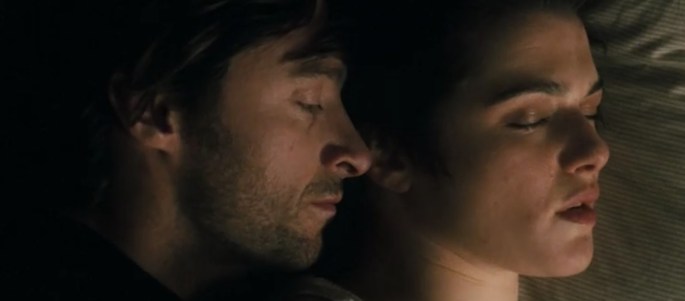
The complex narrative is going to be extremely dense for some, and to be honest, I’d be lying if I said that I’ve pulled everything from the story, even after countless viewings. And that’s fine. I’m not sure I need or want to know all of the secrets of The Fountain. Something this heady and layered needs to be experienced more than once, and as with all of the best art, every time you view The Fountain it will mean something different. At least that’s how it’s worked for me. The Fountain is an intentional and surreal hodgepodge of various elements from multiple genres, inspirations, and topics: History, religion, science, science-fiction, nature, and above all else, love. Aronofsky devised his mind-bending tale over three story lines, each one featuring Hugh Jackman and Rachel Weisz. Both actors deliver some of their best work in The Fountain, providing rich, full-bodied performances that are somehow never overwhelmed by the film’s visual grandiosity. The film is set in three vastly different eras, in which Jackman and Weisz play different sets of characters who might possibly be the same two people in the grand scheme of the universe. In the present day, Jackman is a fevered scientist racing around the clock, trying to save his dying wife (Weisz) from cancer. A second track follows an ancient conquistador (Jackman) and his queen (Weisz), and the third bit is that of an advanced astronaut (Jackman) who ostensibly hallucinates (reincarnates?) his long-lost love (Weisz). Aronofsky and his phenomenal editor, Jay Rabinowitz, brilliantly match-cut and jump-cut all throughout the film, creating an All-is-One type sense of encompassment. Add in the legendary score from Clint Mansell, which soars to grace notes previously undiscovered, and the overall results are nothing short of hallucinatory and spellbinding.

fountain_xlg

I vividly remember seeing this film in the theater on opening weekend, in a massive, mostly empty auditorium, and the experience I had at the time was extraordinarily different than the ones I have had over the last few years. I had never seen anything like The Fountain before when I first encountered it, and even if it trades off of some other classic pieces of cinema, this is one of the most thrillingly original films that I can think of.  As a piece of filmmaking, The Fountain feels like an organic creation, a living and breathing piece of art, something that reveals new sides and textures of its being each time you sit down to view it. And over the years, as my life has changed and as my cinematic tastes have progressed, the themes of The Fountain (love, death, life, the power of hope) have come into focus on an even stronger level. When you boil it down, The Fountain is an almost overwhelmingly sad film, filled with desperation, the longing for your soul mate, and our intrinsic desire to spend as much time with that one special person we love the most. The film makes you contemplate all that you value and hold dear to your heart, which is something that can’t be said for too many pieces of cinematic fiction. The surreal nature to the craftsmanship heightens each segment of this constantly over-lapping tale, which gives your mind a wonderful mental work-out. Aronofsky seemingly designed The Fountain to be something unique for every viewer, with each viewing holding the potential to teach you something new about yourself and the film in general. This is a cosmic and trippy ode to the very idea of love and the process of loving another human being, a work that allows for constant rediscovery and reinterpretation.

3

GUS VAN SANT’S TO DIE FOR — A REVIEW BY NICK CLEMENT

3

Gus Van Sant has made some terrific movies during his eclectic career, but one of his absolute best (and easily my personal favorite), is the scalpel-sharp 1995 satire To Die For. Ultra-vicious, scandalous, and gleefully nasty, this film is still as incisive now as it was at the time of its release over 20 years ago. Van Sant employed a mockumentary approach to a portion of the highly-stylized narrative, which was in perfect tandem with the truly hysterical and dark humor in Buck Henry’s absolutely brilliant screenplay. Henry, an old-pro-master of caustic, sexually charged cinema (The Graduate), biting social commentary (Catch-22), and playful comedy (What’s Up Doc?), wrote a poison-pen letter to the entire country with To Die For, and delivered some of the smartest, saddest laughs that I can possibly think of. This is a scathing indictment of our constant need to be celebrated, and it’s downright crazy how many similarities it shares with the recent and equally disturbing Nightcrawler; both films revel in outright contempt for our hyperactive media and the ever celebrated notion of “15 minutes of fame.” Loosely based on the real-life Pamela Smart murder case based out of Derry, New Hampshire, Nicole Kidman delivered the trickiest, iciest performance of her career, totally investing herself in a sociopathic character who sits at the same table as Lou Bloom in Nightcrawler.

2

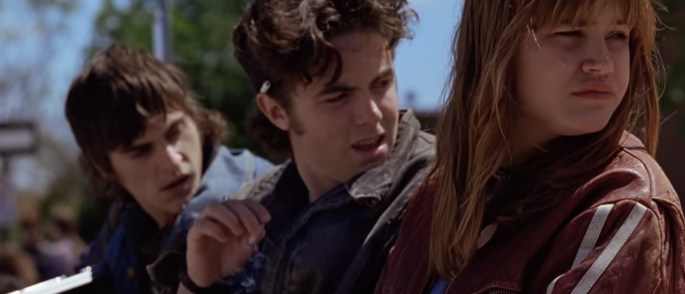
The comparisons are striking between the two films, as both feature self-possessed lead characters who are consumed with the need to be important and famous, both drive flashy red sports cars, both have coldly detached, murderous instincts, and both will stop at nothing to accomplish their “goals.” I’m assuming that Dan Gilroy is a big fan. Kidman has only matched her overall work in To Die For a couple of other times (Birth, Eyes Wide Shut), and has always been an actress of stunning, porcelain-doll beauty, but in the role of Suzanne Stone-Maretto, she tapped into something scary deep within herself, subverting her intense physical appearance, resulting in a performance for the ages. The stellar supporting cast includes the perfectly selected Matt Dillon as the poor, unfortunate husband, the impossibly unique Illeana Douglas, an absurdly young Casey Affleck and Joaquin Phoenix as two ultimate high school stoners, a dry Kurtwood Smith, Wayne Knight, Dan Hedaya, Michael Rispoli, and Buck Henry in a deliciously evil cameo as the high school teacher from Hell. Tragic, absurd, and mean-spiritedly honest about the delusions of a certain type of person, To Die For holds up remarkably well as a damning portrait of cinematic narcissistic self-involvement that extends its grasp to the fringes of our demented society.

1

PHILIP KAUFMAN’S THE RIGHT STUFF — A REVIEW BY NICK CLEMENT

1

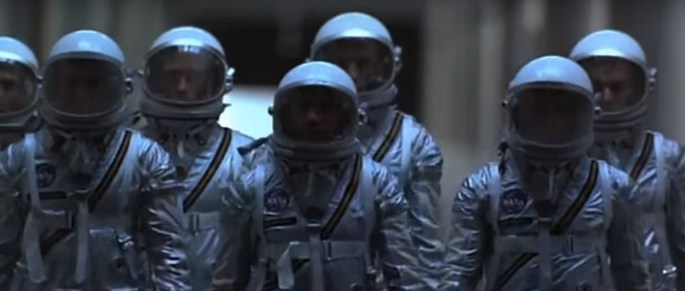
Epic yet somehow light on its feet, incredibly heroic and patriotic without ever slipping into phony jingoism, and massively entertaining above all else, Philip Kaufman’s iconic 1983 American masterpiece The Right Stuff is a shining example of dramatic, true life cinema done absolutely correct. The story of the great space race between the U.S. and Russia has been explored many times throughout pop culture but it’s never been given this sort of grand, sweeping treatment. The cast assembled for this film was extraordinary: Sam Shepard, Scott Glenn, Ed Harris, Fred Ward, Jeff Goldblum, Barbara Hershey, Veronica Cartwright, Lance Henriksen and Harry Shearer, with everyone getting their chance to shine and nobody ever forgetting the value of a great ensemble. Caleb Deschanel’s soaring, gorgeous cinematography fills the screen with one unforgettable image after another, all crafted in camera before the onslaught of CGI, in various aspect ratios, mixing archival footage and re-enactments into the proceedings flawlessly thanks to the remarkably fluid cutting from a five editor team.

2

Bill Conti’s massive musical score envelopes the entire film but never overpowers it, with stirring passages that rock the heart and soul. The three hour and 15 minute director’s cut Blu-ray has a fantastic image quality and the Oscar winning sound design roars from speaker to speaker with all levels perfectly calibrated. It’s hysterical how much Michael Bay stole from this movie for Armageddon, and I never realize how much Christopher Nolan cribbed from The Right Stuff during the first hour of Interstellar; it was also lovely to see the influence that Kubrick’s 2001 had on Kaufman during numerous scenes in The Right Stuff. Filmmakers have inspired their peers throughout the years with their boundary pushing work, and with a movie like The Right Stuff, it’s easy to see why so many people hold it close to their heart. It’s an impossibly mythic film, stretching from 1947 to 1965, tracing the birth of the test-pilot era all the way to the first men sent up into space, told in classic linear fashion, at an unhurried but smooth pace, with no boring spots or wasted moments. What a magnificent accomplishment.

3

PETE DOCTER’S UP — A REVIEW BY NICK CLEMENT

1

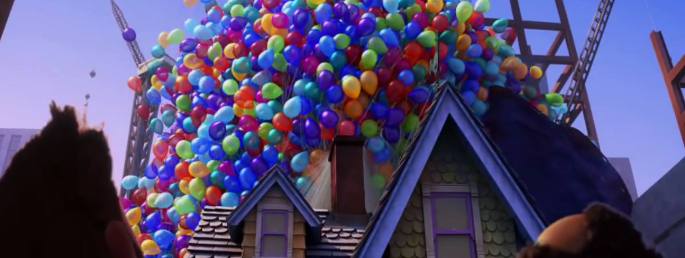
I’m not a huuuuge fan of animated fare, but I have to say, Up is ALL of the things that great films are – sad, funny, timeless, heart-warming, exciting, and by the end, genuinely moving. It’s a film that’s about never letting go of your dreams, no matter how out of reach they may seem. There’s a thrilling sense of adventure and a constant sense of wonder in Up that’s positively infectious, and along with the magical and masterful Wall*E, I consider it to be at the very top of the Pixar heap. The story is simple: Karl Fredricksen, an old man still in love with his deceased wife, doesn’t want to lose his beloved house to urban development, so he tethers about 100,000 balloons to it in order to fly off to the exotic (and possibly dangerous) island where he and his wife always wanted to visit and explore. The catch – the old man has a surprise companion, in the form of a tubby Eagle Scout named Russell, who just so happened to be on his doorstep before the house took flight. Up becomes a buddy picture of sorts, with the old man learning from the little kid, and vice versa.

2

Visual and verbal humor is on display in almost every scene, and director Pete Docter’s elegant gift with movement, eye-popping color, and visual and narrative sweep is in clear view. Bob Petersen’s amazing voice work as Doug the Dog is the stuff of instant comedy legend, and the bright, explosive color palette of Kevin the Bird is gorgeous and eye-filling. The mostly silent wedding/marriage/life montage that opens the film is a tour de force of non-verbal storytelling and easily one of the most captivating sequences I’ve ever seen in any film, animated or live-action. I was a bleary-eyed mess while watching this touching five minute prologue during my first viewing, and every time I give the film a revisit, I’m nervously apprehensive about watching the opening in full – it hits me very, very hard. If you’ve ever loved someone, there are elements of Up that will remind you of why we do in fact love other people, and why it’s important to never forget those who are the most important in our lives.

3

TONY SCOTT’S CRIMSON TIDE — A REVIEW BY NICK CLEMENT

1

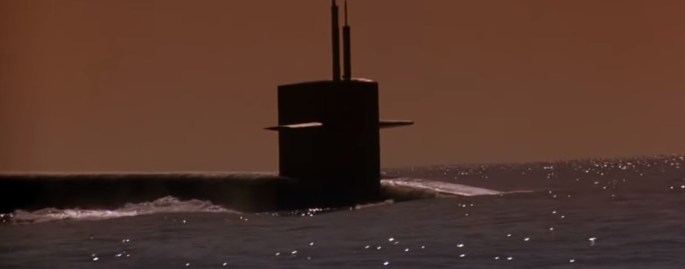
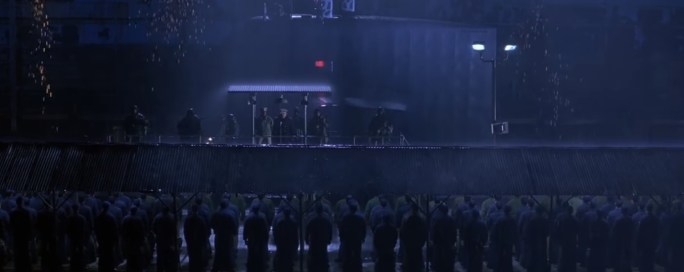
Crimson Tide remains one of the very best Don Simpson/Jerry Bruckheimer collaborations with the late, great Tony Scott at the helm. Don’t you miss that old lightning-bolt logo crashing down before a big-budget popcorn movie? Shot for a now-paltry $55 million and released in May of 1995, it featured an on-the-rise Denzel Washington going head-to-head against Gene Hackman as dueling nuclear submarine commanders engulfed in a hostile battle for command of the ship and the fate of the free world. An interrupted communications message leaves the crew of the sub unsure of what to do during a tense military stand-off with the Russians; will we or won’t we launch our warheads which will inevitably lead to WWIII? This film has a ton of replay value because Scott cared enough about his believable screenplay and his full-bodied characters to the point where his unavoidably stylish creative leanings didn’t overpower the entire production – it was a perfect match of material and filmmaker. A return to blockbuster form after the commercial failure of his mid-career masterpiece, True Romance, working in this souped-up fashion brought back the rollicking Tony Scott, and while his artsier offerings are always of massive interest (Revenge and Domino lead the pack), he knew exactly how to calibrate a big-budget thrill-ride movie. Recalling the claustrophobia of Das Boot and the grittiness of The Hunt for the Red October, Crimson Tide sits alongside those genre classics and many others as a first-rate submarine drama with narrative complexity to match its high-powered pyrotechnics, of which there are plenty.

2

Intelligently written by Michael Schiffer (Colors, Lean on Me, and the underrated The Peacemaker) with uncredited punch-ups by Quentin Tarantino (and others…), Crimson Tide has story tension, strong macho dialogue, and a credible finale after all of the angry dust has settled between Hackman and Washington. Both actors delivered power-house performances, sweating and snarling their way through each adrenaline filled scene. Budding master cinematographer Dariusz Wolski bathed the widescreen images in greens, reds, and blues, playing off of the submarine’s read-out screens with fantastic shadows covering the actor’s faces in numerous sequences. As Scott and Wolski’s camera darts down the sub’s narrow corridors and swings back and forth with almost primal ferocity, the film picks up a tremendous sense of visceral energy that continues all the way to the heated finish. The heavy use of extreme close-ups in tandem with Chris Lebenzon’s razor-sharp editing only further heightened the intensity. Hans Zimmer’s epic, often-borrowed score is one of his best, filled with moments of soaring grace that stirs your insides. And then there’s the ridiculous supporting ensemble, assembled by the legendary casting director Victoria Thomas, which includes no less than James Gandolfini, Viggo Mortensen, Matt Craven, George Dzundza, Ricky Schroder, Rocky Carroll, Steve Zahn, Danny Nucci, Lillo Brancato, Ryan Phillippe, and an uncredited Jason Robards. The film was a hit with critics and audiences, grossing $160 globally ($91 domestic), thus putting Simpson and Bruckheimer back on serious track after two previous hits that year in Bad Boys and Dangerous Minds. It also garnered three Oscar nominations for Film Editing, Sound, Sound Editing. I’ve watched Crimson Tide probably 50 times and I’ll likely watch it 50 more.

3