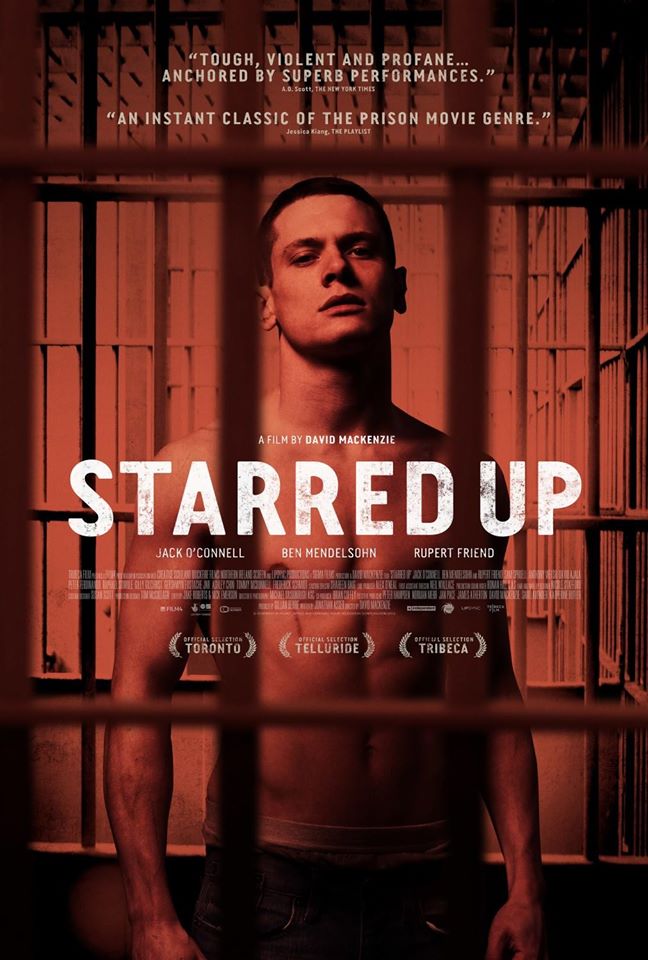
DAVID MACKENZIE’S STARRED UP — A REVIEW BY NICK CLEMENT

1

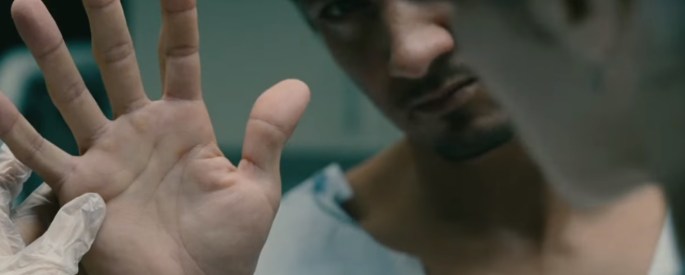
David Mackenzie’s startling and brutal prison film Starred Up brilliantly upends genre conventions, offering the familiar glimpse into hell that one expects from this sort of milieu, but taking it a step further psychologically by focusing on a surprising, compelling father-son dynamic that comes off as one of the most disturbing displays of dysfunctional family bonding that I’ve ever seen. Jack O’Connell is riveting as a 19 year old violent offender who is “starred up” (or transferred) from juvenile detention to an adult facility, where he encounters any number of obstacles, including one he never expected – meeting his estranged and unstable father behind bars, played by the amazingly skeevy Ben Mendelsohn, who has fast become one of my absolute favorite actors. This is a violent movie, both physically and emotionally, and O’Connell lets it all hang out in more ways than one; similar to Tom Hardy’s transformative work in Bronson, this is a film that required intense physical dedication at all times, and O’Connell burns up the screen with charisma and rage to spare.

Mendelsohn, who has essayed some of the most memorable cinematic creeps in recent memory (Animal Kingdom, Killing them Softly, The Place Beyond the Pines, Blacksea, the Netflix series Bloodline), is again beyond engrossing to watch, his every move worth studying, as he creates a tragic and bizarrely sympathetic portrait of a man who will never be able to make things better for himself or his son. Rupert Friend, so good as Quinn on Homeland, is a prison therapist who attempts to help O’Connell and a variety of other inmates. The tightly wound script was written by Jonathan Asser, who based the story on his experiences as a prisoner rehab specialist. Mackenzie’s direction is crisp and clean, with a stylish but un-showy style that relies more on exacting camera placement than overt tricks and flourishes. The economical and compact editing only helps to ramp up the tension from scene to scene. This is excellent, truly hard-hitting stuff.

MIKE JUDGE’S IDIOCRACY — A REVIEW BY NICK CLEMENT

1

I’ve written about this one in the past, but that’s not going to stop me from writing about it again and again in the future, especially with the direction we’re headed in America. I can think of few films that would qualify more as “of the moment” than Idiocracy. Despite being released 10 years ago, this film feels more relevant and applicable each and every day, as seemingly half of the U.S. populace are mentally out to lunch, and I can think of no better time than right now to reignite the fire for this scathingly brilliant, insanely prescient satire that also happens to be a genuine opus of dick and fart jokes on top of it. Endlessly screwed with by 20th Century Fox, it’s sort of hard to take subversive co-writer/director Mike Judge (Office Space) and co-writer Etan Cohen (Tropic Thunder) to task for the obviously crude and partially unfinished CGI and some of the more questionable production values. And yet, some of the ramshackle qualities actually worked to the film’s benefit, and is in keeping with the silly, flippant, yet harsh tone. But repeatedly and rather strikingly, this film hits so many truthful notes of ugly, bitter humor that’s coming from an aggressively smart and all too honest place.

2

Luke Wilson plays an amazingly average military desk jockey who decides to take part in an experiment where he’s frozen in a top secret government program. When the morons running the project forget to thaw him out, he’s left on ice until the year 3001, where he’s unleashed upon a society consisting solely of complete and utter fools. He’s the smartest man in the world, and the film chronicles his desperate attempts to try and find a time machine to get back home while evading various idiocies that are thrown his way. It’s pointless to try and rehash the hilarious bits and pieces of this punishingly funny movie, but make no mistake – this film is a glorious PISSER. It also has the potential to anger a lot of people, especially those of us who don’t want to be reminded of how astonishingly accurate this film is, and how it seems to be correctly predicting where much of our society is heading – into a field of dead crops being hydrated by Brawndo.

8

And I’d just like to make it be known that I saw this film, in the theater on opening weekend at a total shitplex in Sherman Oaks – I’m very happy to have contributed to its $495,303 worldwide box office gross. It’s ridiculous how Fox treated this film, and while I’ll never personally be privy to the behind the scenes issues that plagued this project, there are SO MANY AWFUL movies that get made and released on a WEEKLY basis, so it’s totally crazy to think that a film this smart, this bold, and this consistently funny would get the red-headed step-child treatment. I’m also not sure if I’ve ever seen a studio film so lovingly bite the hand that’s feeding it; the level of corporate disdain that Idiocracy revels in is bracing to behold. The film also went by the titles The United States of Uhh-merica and 3001 at various stages of development/production. Idiocracy is a film that began its life as a piece of fiction, but has actually revealed itself to be a documentary in hiding.

3

DENNIS HOPPER’S COLORS — A REVIEW BY NICK CLEMENT

1

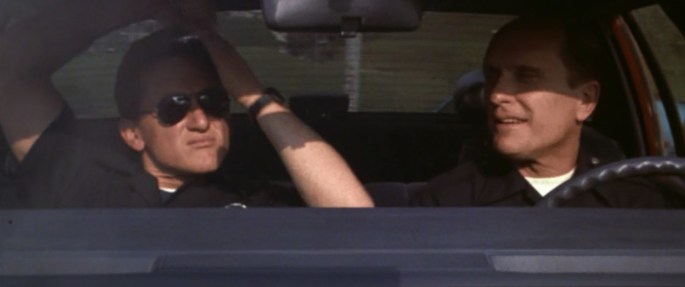
Dennis Hopper’s gritty cop movie Colors, released in 1988 to critical acclaim and strong box office, is precisely the sort of film not being made today and precisely the sort of film that I would pay to see on the big screen, as opposed to another tired, CGI-infested remake or bloated sequel. Featuring a live-wire Sean Penn and an extra-sage Robert Duvall as down and dirty Los Angeles cops taking on some of the worst of the worst, this is an explosive, extremely violent movie with a strong screenplay by Michael Schiffer (Crimson Tide, Lean on Me), and evocative, stylish lensing by legendary cinematographer Haskell Wexler. Examining the intense rivalry between the Bloods and the Crips and never stopping to pull any punches, Schiffer’s sharp script and Hopper’s attuned direction really demonstrated a true sense of authenticity, with the various sequences detailing gang life feeling all too believable and more than a tad sad and scary. There’s also a fabulous supporting cast peppered with familiar faces and character actors from the day, including Don Cheadle, Glenn Plummer, Grand Bush, Trinidad Silva, Randy Brooks, Damon Wayans, and Mario Lopez. Oh, and massive Maria Conchito Alonso POWER, too. For some reason, studios decided to stop making policiers, which have found their true home on television, but I am always down for a cinematic cop and crime story, and this is definitely one of the better genre entries I can think of. The period-appropriate and extremely lively soundtrack seals the deal while Robert Estrin’s tight editing keeps a crackling pace. Available on DVD, this one really deserves an American release Special Edition Blu-ray, as I gather there’s a UK blu available for those across the pond or living REGION FREE POWER…

2

PAUL GREENGRASS’ JASON BOURNE — A REVIEW BY NICK CLEMENT

3

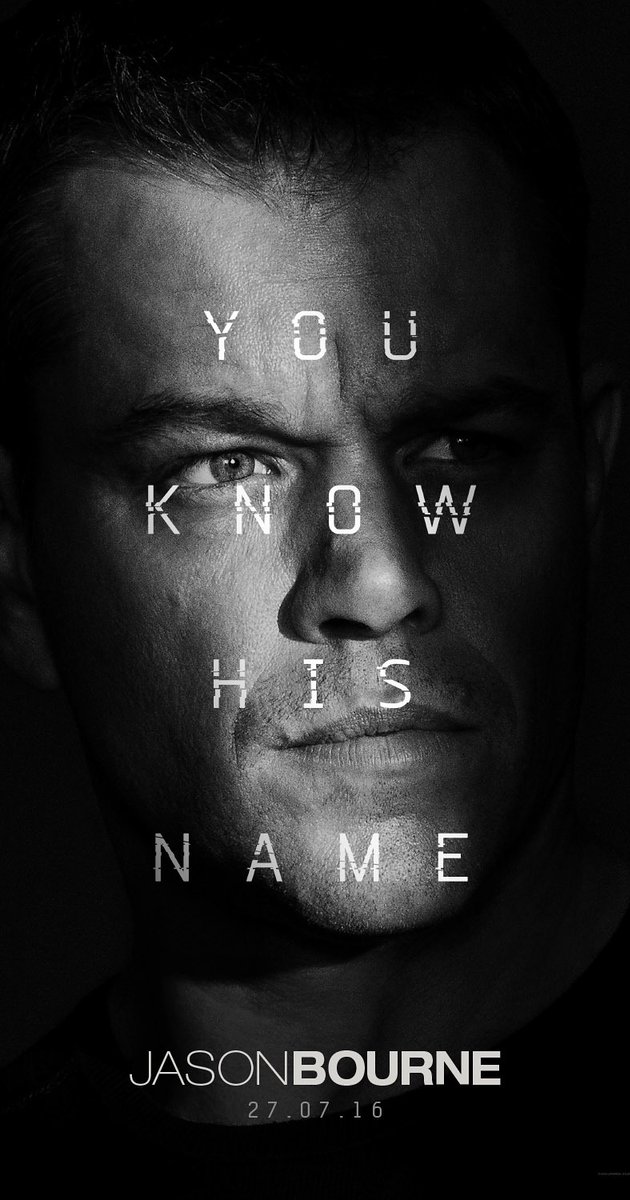
Jason Bourne is a hard-charging action film, and even if it doesn’t have the narrative complexity and overall depth that series architect Tony Gilroy brought to the table, the film operates as a riveting spy actioner with topical overtones, a serious examination of government surveillance crossed with a straight-ahead revenge plot, and features two absolutely outstanding set-pieces that certainly top anything in the real-deal action department that I’ve seen all year. By this point, you’re either on board with this franchise or you’re not; this film won’t win any new fans but those who want to know a bit more about David Webb should be very pleased. What it really does is provide a sense of bridging from one trilogy to the next. If Identity, Supremacy, and Ultimatum are the spine to the overarching plot, and Legacy served as a daring extension of the universe, the aptly titled Jason Bourne pivots into a new chapter of espionage for one of cinema’s most lethal of characters, taking things in a more stripped-down and personal direction. Written this time around by directorial mastermind Paul Greengrass and the brilliant editor Chris Rouse (who won the Oscar for his astonishing work on Ultimatum), the tense plot relies on terse dialogue and lots of visual storytelling, sending Bourne on a rather violent mission of retribution.

2

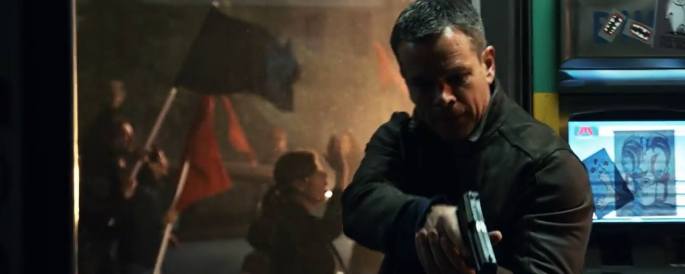
Alicia Vikander, Vincent Cassel and Tommy Lee Jones are the new and dangerous faces trying to bring Bourne down, and all deliver strong supporting turns, while series regular Julia Stiles returns and features prominently in one of the big action sequences, a motorcycle and auto chase through the crowded, rioting streets of Athens. In this sequence, and the crash ‘em up wowser set along the Vegas strip, Greengrass further demonstrates how he is at the top of the class in terms of action filmmaking, displaying an uncanny sense of verisimilitude that nearly becomes overwhelming. His trademark shaky-cam shooting style, this time orchestrated by genius lenser Barry Ackroyd (United 93, The Hurt Locker, The Wind that Shakes the Barley), is in full-effect all throughout, with the propulsive musical score by John Powell and David Buckley backing up every foot pursuit, computer hack, and fist fight. I’ll always be a fan of Greengrass’ intensely visceral aesthetic, and it was sort of wild to see him get into Michael Bay mode during the finale, as he stages one of the most spectacular crunched-metal/broken-glass displays of vehicular mayhem since Bad Boys II. It’s the most over the top sequence in any of the five films, and yet, it packs a serious punch and still felt totally believable within its own realm.

MV5BMTU1ODg2OTU1MV5BMl5BanBnXkFtZTgwMzA5OTg2ODE@._V1_UY1200_CR64,0,630,1200_AL_

And that’s what I love about these movies. Whatever CGI is used is totally invisible – these are pristine looking works of visual art that border on the level of expressionistic filmic creation with the use of fragmented information. The technology on display is scarily, almost obsessively showcased, and while “it’s just a movie,” I have no doubt that much of what we see in Jason Bourne is based off of current research. Damon totally commands the screen in every outing; this is his signature role and he knows it and as a result feels wholly committed to the character and all of its facets. And it’s clear that his run of movies as the titular hero isn’t going to slowdown anytime soon, as this newest addition grossed a robust $60 million on opening weekend, all but ensuring future installments. And I like where this one leaves off, with the promise of Vikander looking to muck things up for Bourne, and Greengrass getting a chance to inject more real-world vitality into this already pumped-up and thrilling franchise. Jason Bourne may not reinvent the wheel, but it serves as a very skilled piece of craftsmanship and a smart reconfiguration of the key ingredients so that by the end, we’re already asking for more.

1

ALLISON BERG & FRANK KERAUDREN’S THE DOG — A REVIEW BY NICK CLEMENT

1

Fabulously entertaining, oddly moving, compulsively funny, more than a tad sad, and ultimately illuminating, Allison Berg and Frank Keraudren’s The Dog is one of the best documentaries in recent memory. Focusing on the wild antics of sex-obsessed bank robber John Wojtowicz (the real life inspiration for Al Pacino in Sidney Lumet’s classic Dog Day Afternoon) and how he arrived at the idea to rob a Chase Manhattan in order to pay for his lover’s sex-change operation, the filmmakers have crafted a highly engrossing time capsule back to 1970’s NYC as the explosive Gay Rights Movement began to take shape. Incredibly informative yet never dry due largely in part to Wojtowicz’s bold, brazen, brutally open, extra vulgar, and deeply honest personality, The Dog utilizes classic film clips, a dynamic soundtrack, and well-researched archival footage that helps to paint an unpredictable portrait of a tortured soul. And just wait until you meet Wojtowicz’s brother and mother – you can’t make this stuff up. The final act of the documentary turns unexpectedly poignant and tragic, and it’s then that the film turns into a powerful statement of never giving up on your dreams and how you should never let anyone tell you that you can’t do something. Make no mistake, Wojtowicz was a complicated man, a convicted criminal, serial lover, scoundrel, crusader, momma’s boy – a true lover and fighter. It’s fascinating all around and it’ll make you crave a viewing of Dog Day Afternoon by its conclusion.

2

JOSHUA OPPENHEIMER’S THE ACT OF KILLING — A REVIEW BY NICK CLEMENT

3

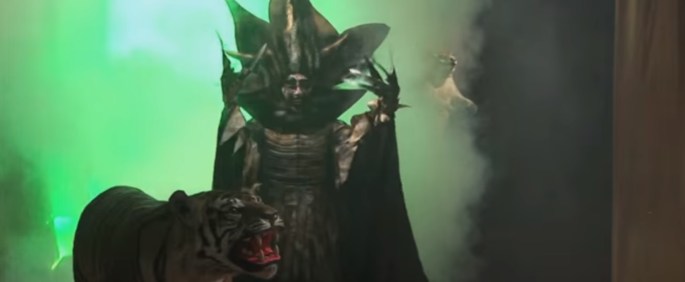
An enormously troubling “documentary,” Joshua Oppenheimer’s bizarre and surreal The Act of Killing is unlike anything I’ve ever seen. And that’s always a good thing. But, with subject matter as sad and as disturbing as this, it’ll take a particular type of viewer to want to bear witness to it. This is one of those “I’m glad I saw it once but I’m really glad I never need to see it again” type deals. Strong medicine as they’d say. Focusing on the 1965-66 U.S.-assisted Indonesian genocide of up to 2.5 million “communists” at the hands of Suharto, the film is a boundary and medium pushing provocation designed to repel and fascinate in equal measure. Because the movie primarily consists of grotesque re-enactments of the various slaughters, re-enacted by the very death squad members and gangsters who carried out the killings, this tactic lends the project a distinct vibe that becomes something of a tutorial horror show.

2

The various murderers, still free to this day and some still holding strong political or military influence within the country, confess to their crimes directly to the camera, most of them proud of what they did, talking about how they were inspired by violent Hollywood movies, never fully reflecting on what it was that they actually were doing. That is, until the end, where one of the executioners, dressed and playing a tortured prisoner during one of the bits of staged madness, goes through what one might consider as a “mild crisis of conscience.” To put it lightly. It’s a sight that I’ll never forget, as I’ve never seen someone seemingly choke up their own rotten soul. Exec-produced by Werner Herzog (naturally) and Errol Morris, The Act of Killing is a film that stares at true evil directly in the face, and because nothing seems to be learned by these “human” monsters, the end result feels as hopeless as it does spellbinding.

1

TONY GILROY’S THE BOURNE LEGACY — A REVIEW BY NICK CLEMENT

1

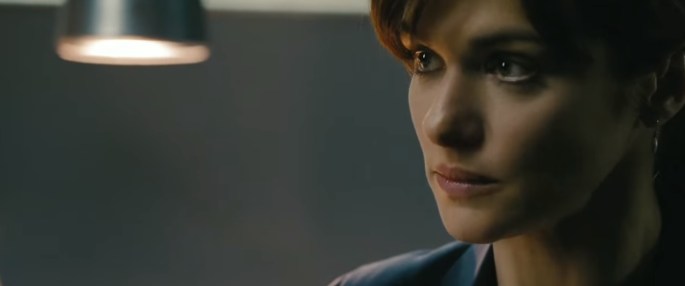
I know it’s an unpopular opinion but I think The Bourne Legacy is pretty damn awesome. It doesn’t carry the same visceral “shaky-cam” aesthetic as the previous entries, but on its own terms, this is an effective and subtly stylish movie made by one of the chief architects of the series. Those first 20 minutes are heady brilliance, and I loved how writer/director Tony Gilroy connected the last act of Ultimatum to the very start of his universe expanding continuation, taking all of the elements that we’d come to expect from this run-and-gun template, and bringing something — GASP! — new to the table in terms of story and character. Jeremy Renner was a perfect addition to the franchise, and it seems a shame that this film didn’t do an additional $50 million domestic, as we’re unlikely to see any more hybrid tales with his Aaron Cross character. Super-hot Rachel Weisz was smartly cast as his scientist ally, and on a purely superficial level, it must be said, her haircut and glasses combo in this film are nearly painfully sexy. The story was so well done and exciting that I never missed Matt Damon at any point, as Gilroy was able to pay respect to the previous films while charting a new course of action.

3

Oscar Isaac, who at one stage was Gilroy’s top pick for the lead role, got some terrific moments in that ominous log cabin, while the entire snow-set prologue was a refreshing and dynamic way to begin the film’s dense narrative. There’s also that glorious shot that spans the length of Ed Norton’s conference room table desk, where you see all of the various black-op programs that the government is involved in — Blackbriar, Treadstone, Outcome — I eat all of this stuff up. Norton, Stacy Keach, Scott Glenn, and Corey Stoll all added reliable support. I’m not sure why so many critics had so many beefs as it really feels like nitpicking for the sake of nitpicking. The final chase provides the visceral thrills, the chilling mid-film set piece with Željko Ivanek was startling and eerie, and Renner’s steely determination complimented the introverted work that Damon brought to the previous adventures. Robert Elswit POWER all over this movie, there’s a superb score by James Newton Howard, and Gilroy’s brother, John, handled the tight and crisp editing. This is a very underappreciated actioner.

2

ANGELINA JOLIE-PITT’S BY THE SEA — A REVIEW BY NICK CLEMENT

4

By the Sea was always going to present itself as a challenge to pretty much anyone who encountered it. How could it not? A very personal and artful piece made by the most glamorous Hollywood couple imaginable, with the wife directing and the two magnetic personalities producing and starring, it’s clear that both Angelina Jolie-Pitt and Brad Pitt wanted to do something serious as artists with this Euro-flavored and retro-tinged relationship drama. And even if it didn’t really say anything new for this well-traversed milieu, the exquisite production values, strong performances, and erudite sense of direction by Jolie-Pitt, who definitely proves that she’s a film scholar and admirer of contemplative and provocative items from yesteryear, make this well worth watching. Set off the stunning coast of France and feeling as if it were set in the early 70’s, By the Sea explores a damaged marriage between a mentally fractured wife (Jolie-Pitt), racked with jealousy and suspicion as her drunkard, failed-writer husband (Pitt, with sleazy mustache) has seemingly had some sort of affair of the flesh if not the heart.

1

They attempt to reconcile at a glorious hotel right along the ocean, and become almost immediately distracted by the alluring couple sharing the room next door, a vivacious pair on their honeymoon (the beyond sexy Melanie Laurent and super-handsome Melvil Poupaud), who are prone to frequent sexual adventure that can be spied upon via a secret hole in the wall. This is a film where sex and intimacy are essentially at the crux of its themes, and in this department, Jolie-Pitt pulled a 70’s and said, hey, they’re just breasts, let’s get some skin on screen, and show some passionate onscreen lovemaking. All of this is captured by the estimable cinematographer Christian Berger (The White Ribbon), who mainly utilized natural light during filming, and was able to capture one radiant and luscious image after another. Ellen Mirojnick’s stylish yet smartly subdued costumes suggested great wealth and taste, rather than empty tackiness. Jon Hutman’s elegant and extra-classy production design seals the entire aesthetic package with a golden bow.

5

As with any film about infidelity, there comes a point in the narrative where the two emotionally challenged leads must explode, and while this happens to a certain degree in By the Sea, I was surprised by how calm and measured everything was, and how it didn’t resort to easy histrionics in order to make its point. The film explores grief from both sides, and because Pitt’s husband character is so quiet and introverted (and half in the bag or totally wasted), you do wonder at times what he’s thinking, which is a nice thing for the viewer to not have it all spelled out. Pitt has easily become one of the most underrated actors of his generation, continuing to etch one distinctive performance after another. Jolie-Pitt gets to show why she’s one of the most exotic women ever to be filmed by a camera, as she smartly used her real-life persona to create an image in everyone’s head of exactly the sort of tortured soul she was presenting on screen.

2

And when it comes to their big love scene, while I think it could have been even more bold in terms of the on-screen action, they projected a carnal sense of passion that needed to be explored within the terms of the story. I think what surprised me the most about By the Sea was how sedate it was when compared to the film’s rather morose theatrical trailer which seemed to promise a much more overwrought viewing experience. The ending is also rather surprising given all that’s come before it, and feels almost out of place considering the heavy lifting that had preceded the final beat. Critics had their knives sharpened because that’s what paid movie critics get to do, be snarky and flippant and bitchy, and I think it’s a joke how this movie was treated by its distributing studio, and by the apparent taste-makers who should be discussing a provocative adult drama that actually has something on its mind rather than relegating it to also-ran status.

3

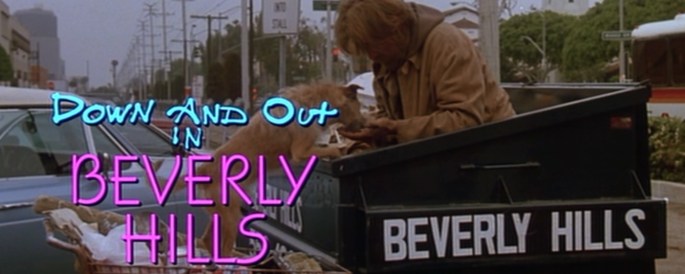
PAUL MAZURSKY’S DOWN & OUT IN BEVERLY HILLS — A REVIEW BY NICK CLEMENT

5

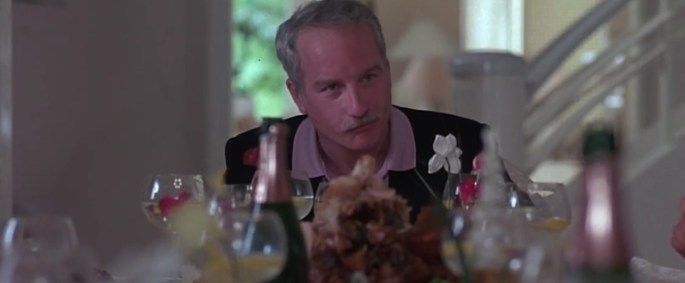
Almost 30 years later and Paul Mazursky’s incisive and always amusing social-class comedy Down and Out in Beverly Hills still holds up. Mazursky was a filmmaker who was always interested in people and their flaws and what it means to be human in a world that often overlooks people and their problems. I love how the opening credits closely resembled those from Harry & Tonto; Mazursky was a filmmaker in love with people’s faces and the untold stories that they tell. Everyone in the cast was perfect; Nolte as the grizzled homeless man looking for a second chance, Dreyfuss as the angry Richie-Rich who needs something to justify his existence, and Bette Midler as the spoiled wife who just absolutely needs to have a dog psychotherapist visit their family pet. Donald McAlpine’s crisp and clean cinematography kept an appropriately upscale vibe. What people found funny in one generation can sometimes feel stale and incredibly unfunny a few generations later – this is definitely not the case with this timeless gem. Released in late January of 1986, I wonder if the studio thought it would become as big of a hit as it did (it grossed nearly $70 million domestic).

2

OLIVER STONE’S NATURAL BORN KILLERS — A REVIEW BY NICK CLEMENT

1

In August of 1994, Oliver Stone released his defining masterpiece, Natural Born Killers, all across theaters nationwide, to a chorus of controversy. I can remember my father taking me to see it on the big screen at the impressionable age of 14, with my love for film just starting to bud; the impact it made on me would be forever lasting. I had never seen anything remotely like it, and to this day, few films have come close to matching the raw, primal, explosive intensity that it offers. I can remember my mind literally expanding as the images seared themselves into my cerebral cortex, providing me with a glimpse of madness that I couldn’t fully comprehend. It was at that point when I truly realized what a filmmaker could be capable of, and despite the fact that many layers of the story went over my head during that initial screening, over the years through countless viewings, I’ve come to understand what Stone was saying with this anarchic vision of a society gone berserk. The impact it made on modern filmmaking and up-and-coming-filmmakers is as bold and as hugely important as the impact made by Pulp Fiction, with both films being co-authored by Quentin Tarantino, which should tell you something. And to think that Pulp Fiction would be released roughly 6 weeks later – truly mind-boggling!

3

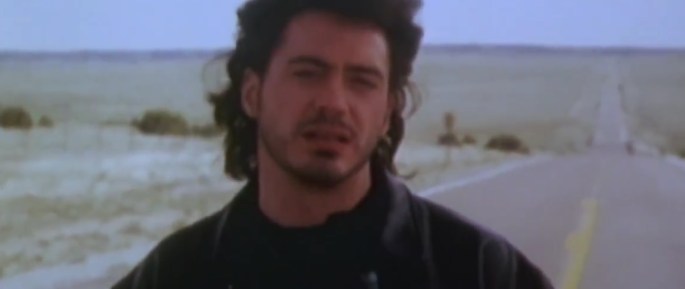
Birthed by the indelible pen of Tarantino and masterfully shaped by Stone and his writing partners David Veloz and Richard Rutowski, Natural Born Killers is a crushing, beyond-angry satire of the media, our culture, television in general, and our collective desire for bloodlust. Taking aim at the then-just-emerging trend of reality TV and 24/7 tabloid crime reporting, Stone and his team utterly destroyed our country’s obsession with criminals and mass-murders, painting a damning portrait of things to come. Woody Harrelson and Juliette Lewis, in career topping performances, are Mickey and Mallory Knox, two mass-murdering lunatics (not without their own set of ideals, naturally) who cut a bloody swath across the country on a Bonnie and Clyde-styled crime spree, while a psychopathic cop, played with demonic glee by Tom Sizemore, gives pursuit. Once captured, Mickey and Mallory incite a prison riot inside of warden-from-hell Tommy Lee Jones’s maximum security facility, and kidnap a morally bankrupt Geraldo Rivera-esque crime-TV reporter named Wayne Gayle (the utterly amazing Robert Downey Jr. at his slimy, faux-Aussie best) as they videotape their insanely violent escape. That’s a general story description, but like the best of gonzo-outlaw cinema, the plot is just a clothesline for the unique artistic expression on the part of the filmmakers, and it’s in this film that Stone went truly nuts as a signature storyteller.
4

Working with the legendary cinematographer Robert Richardson, the film has a hyperventilating and excessively stylized visual aesthetic, implementing 35mm, 16mm, 8mm, black and white, animation, various lens distortions, off-key filters, and expressive lighting patterns that give the entire film a purposefully ragged vibe in an effort to create maximum visceral impact. The audience is kept off balance all throughout the movie, the pace hurtling forward like a freight train, with flashbacks, flash-forwards, flights of fancy, and moments of extreme bloody violence that all add up to what might be considered hallucinatory, fever-dream cinema. Hank Corwin and Brian Berdan’s in-your-face editing went for the jugular at all times, yet everything remained coherent amidst the narrative insanity. The soundtrack is also an all-timer, filled with offbeat and inspired musical cuts to go along with the aggressive rock and roll underpinnings. It’s easy to state that a film like Natural Born Killers will never, ever get made again; it was the textbook definition of “lightning in a bottle,” ahead of its time in so many ways, the perfect combination of a filmmaker armed with perfect subject matter and a society at the exact place in its history ready to be skewered into oblivion. As Roger Ebert said in one of his numerous articles on this most important motion picture, “Seeing this movie once is not enough.”

2