GARETH EVANS’ THE RAID 2 — A REVIEW BY NICK CLEMENT

1

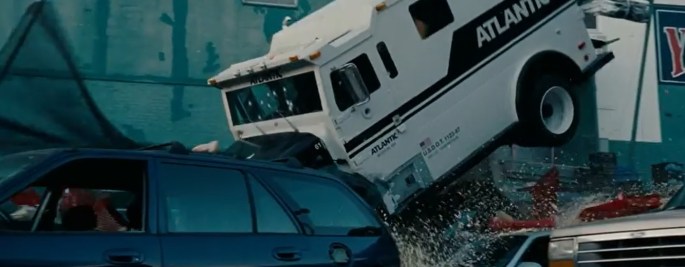
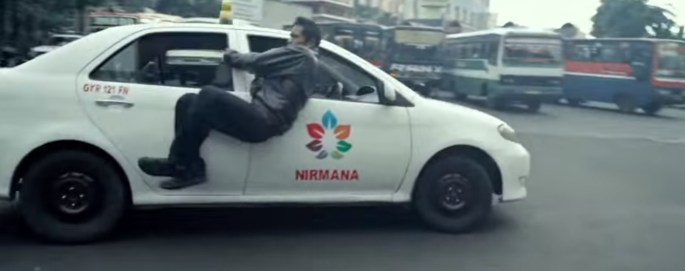
When I left the theater after seeing The Raid, I said to myself that it was the best action movie I had seen. Nothing could prepare me for how intense and focused that film would be, and it made me excited all over again to be a lover of action movie cinema. When I left the theater after seeing The Raid 2: Berandal, I was nearly in tears, not because I was sad, but because I was overly ecstatic, as I had seen something that actually bested what the first film had accomplished. Within the realm of the shoot-em-up action thriller, I have never seen anything as unrelentingly amazing as The Raid 2: Berandal, and my guess is that I won’t see anything better than it until director Gareth Evans delivers the third chapter in this extra-assaultive series of films. Out of all of the genres that one can pick from, the Action Film is easily my favorite. More than most types of cinema, it exists to exhilarate and to transport, and when in the hands of a master like Evans, the results are nothing short of extraordinary. This film completely and utterly eviscerates the competition; American movies pale in comparrison to this blood-drenched effort. There’s nothing else that even remotely comes close to matching the cumulative level of bad-assery that you’ll find in The Raid 2. It’s two and a half hours of punching, shooting, maiming, garroting, car-chasing, slicing, dicing, hammering, base-ball-batting, kicking, and shanking. And yes, if you can believe it, there’s more plot to choke a horse, with developments that make sense, and a fully sympathetic lead character you entirely root for.

2

Picking up mere moments after the obscenely bloody events of The Raid, this sequel ups the ante in every regard — characters, plot-lines, set-pieces, and the overall level of lunatic abandon when it comes to the mind-blowing action sequences. You’ll see one of the very best car chases ever captured by cameras in The Raid 2, and you’ll also see the single most vicious and bloody one-on-one fight that I could ever possibly imagine. Honestly – after the stuff done in this film – I’m not sure what else needs to be attempted with this sort of thing. But leave it to Evans to try, as he’s currently working on The Raid 3. This is legendary action cinema, taking cues from genre masters like John Woo, Takashi Miike, and Paul Greengrass, mixing an undercover-cop-in-prison narrative ala The Departed with classic tribal feuds straight out of a Japanese Yakuza picture. Iko Uwais is a living legend, and the same can be said for Yayan Ruhian; these guys ostensibly have zero limits and are willing to go above and beyond what’s physically expected from a human being. The Indonesian setting makes for an exotic backdrop for all of the insane bouts of mayhem, with the impossibly agile cinematography covering all of the action from the most eye-popping angles possible. This is a movie where you feel every punch, hear every bullet whizz past your ears, and every single scene seems to have been designed to top the last. This is outstanding action cinema that will be very, very tough to beat.
3

MIKE FLANAGAN’S HUSH — A REVIEW BY RYAN MARSHALL

1

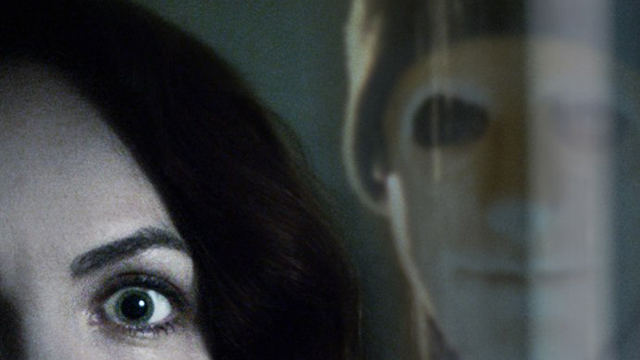
There’s a considerable appreciation to be had for a solid, mostly intelligent genre exercise such as Mike Flanagan’s HUSH. Sometimes, smart and inspired is enough, and ever since his well-above-average debut (ABSENTIA), Flanagan has been hard at work giving his audience just that and something a little more to boot. There are almost zero pretensions to be found in this short, simple, efficient, and surprisingly clever home invasion yarn; it’s merely a welcome addition to a familiar (often to a fault) genre that doesn’t really aspire to reinvent the wheel so much as it does to have its fair share of fun breathing new life into it by challenging conventions and expectations in near-equal measures.

A deaf writer alone in the woods with, save for a couple neighbors she’s quite friendly with, only her thoughts as company is terrorized one night by an intruder (John Gallagher Jr.) whose motivations are certainly more ambiguous than his identity – this is the simple but convenient logline of Flanagan’s film if there ever was one. Immediately, the viewer is thrust into the unique world of its protagonist, only to be taken out of it as soon as the assailant makes his presence known, and for the remainder of the run-time we are (mostly sonically) taken in and out of these two respective points of view. It actually sounds LESS ambitious on paper than it is in execution, though this ends up being one of the film’s most striking features.

Kate Siegel turns in commendable work as the heroine, who we learn from the back of one of her published novels has been living with her particular ailment since the age of 13, and sharing writing credits with Flanagan himself seems to have provided the proceedings with a refreshingly non-self-congratulatory female touch. HUSH empowers its protagonist without practically begging the audience to sympathize with her plight, which registers as something of a surprise in today’s cinematic landscape, and the narrative doesn’t rely on the usual slasher idiocy to remain constant (the film not really exploring the motivations of the intruder doesn’t strike me as idiocy so much as a desire to keep things interesting); instead, the mistakes made by Siegel’s Maddie Young are for the most part logical and notably human given the situation she finds herself in. A bit of naivety on the part of this particular character is believable, and the scribes have a grand old time building up both her external and internal worlds only to creatively break them down as they go on into the night.

The manipulation of space here is also most impressive. A single-location thriller is like a strange and dangerous dance, but it’s one that Flanagan seems comfortable to temper with, and for good reason. His visual language is thoroughly immersive, following the majority of Maddie’s more urgent actions on Steadicam, bringing to mind the Italian Giallo without the expected flashiness (the lighting set ups here are evocative and appropriate, but never invasive). The soundscape is also genuinely effective – and with such minimal dialogue it’s got to be – but even more impressive than the film’s technical achievements are its confrontations with cliché. Flanagan displays a certain obsession with Maddie’s material possessions and seamlessly integrates a certain number of them into her fight for survival. For example: an exceedingly loud fire alarm with bright flashing lights introduced in one of the earliest scenes is brought back in a creative way later on – and there’s even a fairly clever subversion of the old lost pet trope. Even a sequence in which the voices in Maddie’s head run through the various escape routes throughout the house is ultimately justified by the aforementioned information delivered via book jacket, though it at first serves to catch the viewer off guard when they least expect it to.

While overall, Flanagan isn’t aiming for anything more than a film that amounts to precisely the sum of its parts, there’s something to be said for it getting there in the end with such a thoroughly organic grasp on form. It’s clear from the get-go, and from his debut (I regrettably missed OCULUS but intend to fix that ASAP), that Flanagan has a lot of love for the horror genre and wishes only to contribute in positive ways to its future whilst injecting it with much-appreciated intimacy and emotional honesty. HUSH is the kind of taut home invasion thriller that the world could certainly use a little more of – that being one which understands that sometimes the only way to truly progress is to not make a big deal out of doing so, to raise awareness for genre issues of importance (in this case, strong female representation in horror is a big one) in a quiet, coherent manner. Ultimately, it makes for surprisingly thoughtful and consistently engaging Saturday night-type viewing; a film that is significantly more interesting in its technique than in its conception. Keep a look out – it may just sneak up and surprise you.


PAUL MAZURSKY’S ALEX IN WONDERLAND

1

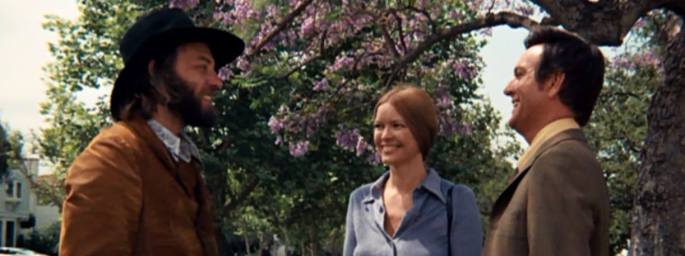
Somewhere in Movie Heaven, there exists a double bill with Richard Rush’s The Stunt Man and Paul Mazursky’s Alex in Wonderland. I’ve seen this film a few times now, and it’s never not entrancing or fully engrossing. Released in 1970, this was Mazursky’s eagerly awaited follow up to his hugely successful Bob & Carol & Ted & Alice, with the story centering on a movie director named Alex Morrison (Donald Sutherland, incredible), who is stressing out over what to do next after his first movie was a huge success. Sounds a bit like reality for Mazursky, no? Co-written with Larry Tucker, Mazursky used his second feature as a venting and homage session, crossing his real life insecurities as a filmmaker with the age old narrative conceit of an artist struggling with a crisis of artistic conscious. He even cast himself as a Hollywood producer (in one of the film’s best scenes), further upping the satirical spin to the picture. Federico Fellini and Jeanne Moreau also made cameos which boosted the wink-wink inspiration factor, with Mazursky and Tucker even explicitly referencing 8½. The heady narrative dabbles in the past, present, and possible future, with thematic nods to cinema history in general explored all throughout, while the script constantly tackled the almost impossible balance that artists face between family life and “the biz.” Ellen Burstyn played Alex’s put-upon wife while László Kovács handled the varied, dreamy, and always interesting cinematography. This is a seriously cool movie that gets better each time I revisit.

2.jpg

GEORGE ROY HILL’S SLAP SHOT — A REVIEW BY NICK CLEMENT

2

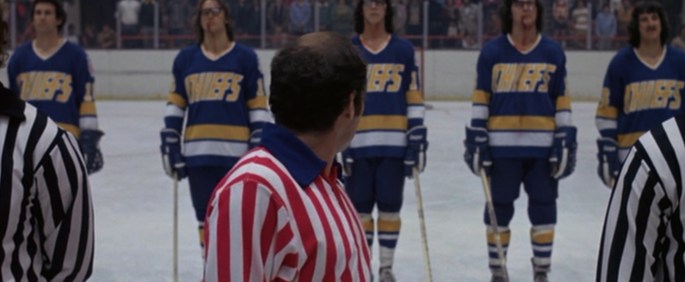
One of the funniest movies ever made. I also played hockey for 15 years so that might have something to do with my obsession over this film. The screenplay is absolutely genius, operating as both brilliant sports satire and multi-pronged buddy film within the context of the underdog narrative. Every single laugh is either born out of character traits and personality or because of the organic quality of the plotting. Nothing is forced in Slap Shot, with George Roy Hill’s smooth yet rough-house direction somehow being a perfect match with the extraordinarily vulgar screenplay by Nancy Dowd, who also wrote Hal Ashby’s tragic Vietnam drama Coming Home. Everything about Slap Shot is note-perfect, from how astute it is about the game it so lovingly showcases, to every single performance, both big and small, nuanced and over the top. Paul Newman was perfectly cast as the broken-down player-coach, and would go on record as saying that making Slap Shot was one of the most fun times he ever had shooting a film. Michael Ontkean was so damn good, all rugged charm and sweaty-macho posturing, with serious ice-hockey skills to match his roguish on-screen aura. The prolific and amazing cinematographer Victor J. Kemper knew precisely how to frame all of the on-ice action so that every shot, every face-off, every goal scored felt believable and true to the sport. The Hanson brothers inject serious idiocy into the proceedings, with the various brawls that they instigate resulting in huge laughs. The final sequence is an all-timer, and honestly, there isn’t one thing about this movie on a creative level that I don’t agree with or love.

3

HAL ASHBY’S COMING HOME — A REVIEW BY NICK CLEMENT

1

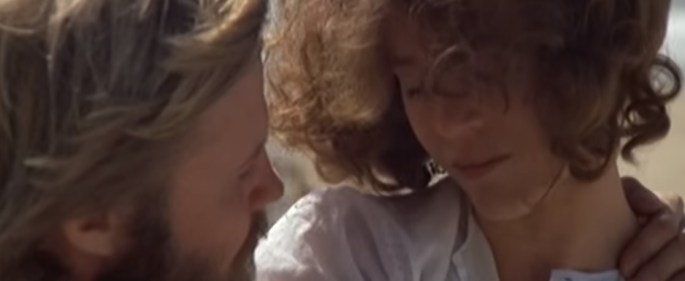
Coming Home is one of the most shattering Vietnam films ever crafted, concentrating not on battlefield heroics or action, but on the emotional and psychological turmoil that veterans would face upon their return home. Starring Jon Voight, Jane Fonda, and Bruce Dern in three of their greatest performances, this is a searing drama, something that’s impossible to forget once it’s been seen, further cementing director Hal Ashby’s confidence as a storyteller during that glory decade for him as a filmmaker. He was a storyteller who was interested in human behavior and the consequences of our actions, and each of his films, no matter how compromised, demonstrated this humanistic quality. This is a heartbreaking film, showing three extremely vulnerable characters reaching their tipping points as humans, and because the screenplay by Waldo Salt and Robert C. Jones was so honest and sensitive, the actors were able to really invest themselves in their roles, thus painting forceful portraits of lives constantly in flux.

2Voight plays a paralyzed veteran who is helped by a volunteer therapist (Fonda), and Dern is Fonda’s battle-scarred husband who returns home with too many inner demons and no way of receiving the help that he needs. The soundtrack, as per usual for Ashby, is an incredible and evocative mix of now-greatest hits that date the film, not in a bad way, but in an organic fashion, thrusting the audience into the politically and socially charged environment of the story, while Ashby never lost sight of the intimate story details and the awkwardly beautiful relationship that Voight and Fonda embark upon. The final act of Coming Home is startling and scary and almost overwhelming in its intensity. Shot for $3 million and grossing over $30 million in the United States, the film struck a chord with audiences, and would go on to snag Oscars for Best Actor (Voight), Best Actress (Fonda), and Best Original Screenplay (Salt, Jones, and original story creator Nancy Dowd). Voight also won Best Actor at the Cannes Film Festival.
3

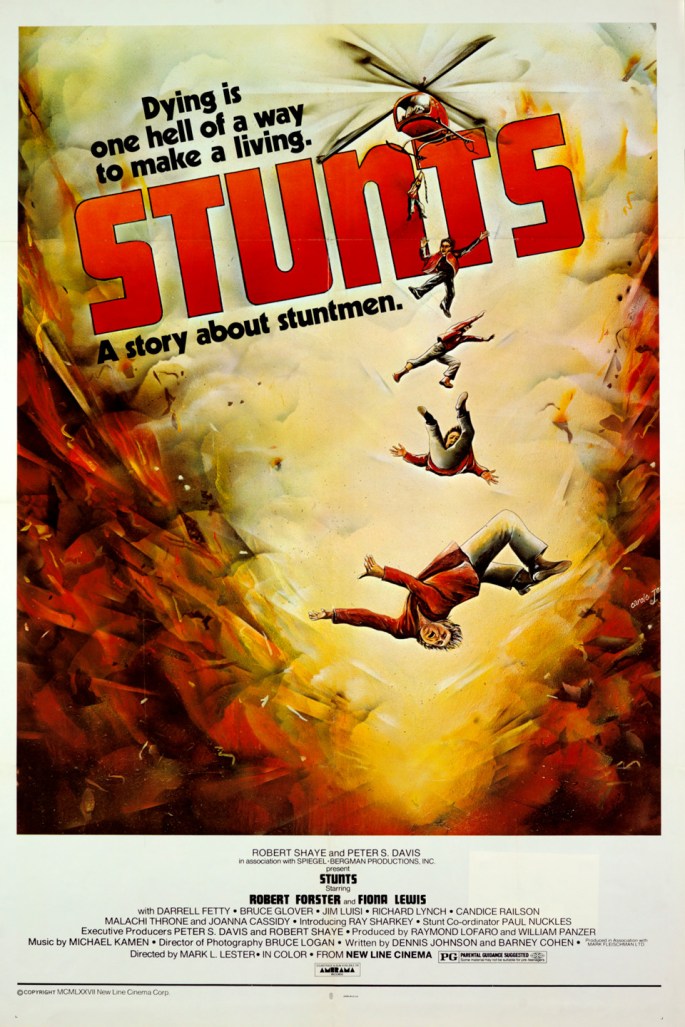
MARK L. LESTER’S STUNTS — A REVIEW BY NICK CLEMENT

stunts

Mark L. Lester’s 1977 action flick Stunts takes its B-movie premise and injects some satirical Hollywood commentary to match the dare-devil sense of adventure that the title promises. Pre-dating Richard Rush’s The Stunt Man by a few years, and certainly no where near as existential or surreal, Lester’s movie has a nifty premise — someone is killing off all of the stuntmen on the set of an action-adventure movie — with a young Robert Forster projecting all sorts of steely resolve as the brother of one of the dead stuntmen who shows up looking for answers. The accident scene with Forster’s brother is especially sketchy and rather nasty in execution. Made in the days before CGI and excessive blue-screen techniques, all of the set-pieces have a great sense of rough, physical action, and while the plotting is more or less what you might expect, there are a few surprises thrown in for good measure. Bruce Logan’s crisp and measured cinematography took full advantage of the various meta possibilities that the film-within-a-film narrative afforded, while capturing the action with a clear sense of spatial geography and an emphasis on lots and lots of car crashes. The filmmakers made terrific use of the legendary Madonna Inn (if you’ve never been then book a trip!) and as usual, Forster brought that amazing sense of gravitas, even as a relative up and comer, that so few current actors possess. Lester’s rather amazing and prolific career includes the iconic 80’s blockbuster Commando, and the extreme cult classic Class of 1984. Michael Kamen’s energetic score set an appropriately jaunty vibe with some streaks of menace peeking out from around the corner. Stunts has the distinction of being the first fully funded New Line Cinema production, after 10 years of being the premiere indie distributor in town. Available on DVD; recently screened via TCM HD.

JOHN FLYNN’S THE OUTFIT — A REVIEW BY NICK CLEMENT

1

Gritty 70’s action doesn’t get much more crisp and clean than John Flynn’s The Outfit, which was adapted from the Richard Stark/Donald Westlake novel and released in 1973, and starred Robert Duvall, Joe Don Baker, Karen Black, and Robert Ryan as the chief baddie. Concerning a low level criminal (Duvall) who upon release from prison discovers that his brother has been murdered after a bank heist gone awry, the script concocted by director Flynn takes on the form of a hybrid revenge movie, with Duvall teaming up with Baker for some serious bouts of ass-kicking, and the two of them slowly realizing that they may be in over the heads. Shot with rough and tumble smarts by cameraman Bruce Surtees and featuring a peppy musical score by Jerry Fielding, this is a ripping actioner made with style and attitude in all the key places, mixing black comedy (those final moments…!), vicious action, and constantly shifting plotting into a fantastic stew of noir-ish fun. Flynn was apparently a huge fan of Westlake’s “Parker” novels, and despite some chatter to the contrary, never intended The Outfit as a 1940’s period piece they way some had claimed. The studio initially wanted a lighter ending, but Flynn insisted on staying true to the violent and pulpy material. The Outfit served as the screen debut for actress Joanna Cassidy.

2

LUIS LLOSA’S THE SPECIALIST — A REVIEW BY NICK CLEMENT

specialist

Hollywood has seemingly abandoned the slick and disreputable big budget actioner, and I’m slowly realizing how the 90’s were essentially the last decade that really took full advantage of the big spec-script sale which would then lead into the over-inflated star vehicle. I love The Specialist. It’s obviously not a great movie, but it’s massively entertaining, featuring a trio of bad guy performances from a maniacal James Woods, an extra-sleazy Eric Roberts, and a hysterical and way over the top Rod Steiger. Stallone was rather quiet in this one, as an explosives expert who is drawn into considerable danger by his lusting for a super-hot Sharon Stone, playing Roberts’ trophy girlfriend, while his ties to Woods which stem for their CIA operative days have left them mortal enemies. Stallone and Woods go at each other’s throats all throughout the cliche and predictable narrative, while the epic and gratuitous sex scene between Sly and Stone is one for the books, featuring action in an out of the shower, and more than one moment of laugh-out-loud corniness. The cheese-ball yet extremely plot-heavy script by Alexandra Seros, who also wrote the tepid La Femme Nikita remake Point of No Return for director John Badham, was based on the novel by John Shirley, and has all sorts of terrific howler lines as well as some really nasty tough-guy talk, while the entire production was overseen by legendary producer Jerry Weintraub.

The action, all well staged by famous B-movie filmmaker Luis Llosa (Sniper, Anaconda, various Roger Corman titles), is slick and violent and explosion-happy, with the entire film given a phenomenally luxurious yet still gritty visual veneer by the tremendous cinematographer Jeffrey Kimball, who shot Top Gun and True Romance for the late, great Tony Scott. Every single shot in this film is gorgeous, with Kimball lighting the radiant and ultra-sexy Stone like a true cinematic Goddess, while the Miami setting at least allowed for the excuse to lather all the stars in faux-sweat and body oil, all in an effort for maximum gloss. Jack Hofstra’s tight editing kept a fast pace and the entire picture was bolstered by John Barry’s exciting score. A decent hit at the domestic box office but totally trashed by critics who couldn’t be bothered to see the film for what it is — a good old stupid-fun time at the movies — this is one of those mid-90’s efforts that signaled the downturn in American interest in Stallone’s output, but would become a massive financial success overseas, just as almost all of his films have been. While certainly not revolutionary on any level, this is a solid and undemanding time waster that I’ve watched repeatedly throughout the years, and it’s a reminder of how tame and prudish the studios have become with their inclusion of violence and sex in pop-corn action fare.

ROBERT ALTMAN’S BREWSTER MCCLOUD — A REVIEW BY NICK CLEMENT

1

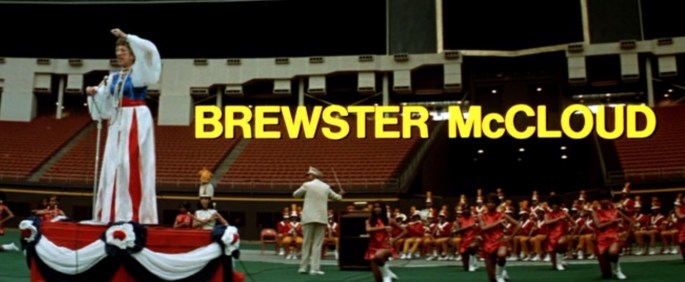
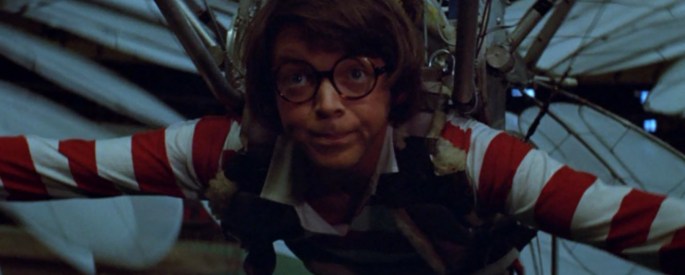
Absolutely one of the more peculiar and beguiling films that I can think of and absolutely the product of the 1970’s, and in particular, the fertile and restless mind of filmmaker Robert Altman, the strange and silly and all-together funky Brewster McCloud feels like a movie that was willed into existence by a group of very stoned people all looking to make one of the ultimate “How Did This Get Made” feature films. Released in 1970 and starring a pre-Harold and Maude Bud Cort as the bizarre titular character, the plot revolves around a possible lunatic living in the Houston Metrodome who is building a pair of mechanical wings in the hopes of taking flight. Right from the beginning when the MGM lion roar is replaced by René Auberjonois’ voice saying “I forgot the opening line,” you know you’re in for something weird and wacky.

2

And because Altman had just had a massive hit with M*A*S*H (his next film would be McCabe and Mrs. Miller), he was essentially allowed to make whatever film he wanted, and thankfully, his eccentric sense of humor and overall oddball leanings helped to birth Brewster McCloud with screenwriter Doran William Cannon and dual cinematographers Jordan Cronenweth and Lamar Boren. Mix in a serial killer plot, Michael Murphy as an obsessed cop, kooky Shelley Duvall as Cort’s possible love interest, sexy-strange Sally Kellerman, a crazy car chase, and one of the more surreal endings to a movie that I can think of, and you have the genuinely whacked-out Brewster McCloud, a film that could never get made today, or really, at any other point than when it was. Also, take special note of the various Wizard of Oz references scattered all throughout the picture.

3

BEN AFFLECK’S THE TOWN — A REVIEW BY NICK CLEMENT

1

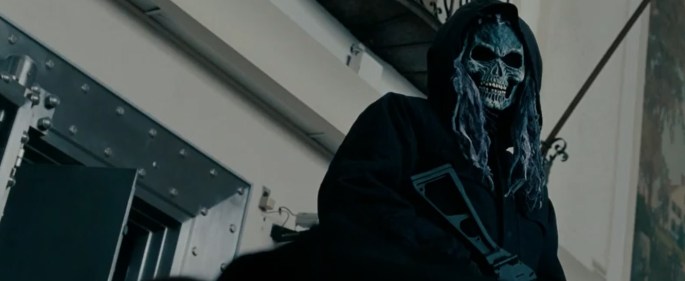
I am a huge fan of hot-blooded crime cinema, and one of the better recent genre entries is most definitely Ben Affleck’s high-voltage cops and robbers drama The Town, which proved that his extra-sharp directorial debut Gone Baby Gone was no fluke. Adapted with foul mouthed gusto and extra atmospheric flavor by screenwriters Peter Craig, Aaron Stockard, and Affleck from the Chuck Hogan novel Prince of Thieves, and directed by Affleck in minor-Michael Mann mode, this film became a big audience favorite in the fall of 2010, paving the way for Affleck’s Oscar-winning Argo a couple of years later. The action pivots on a group of dangerous but disciplined bank robbers led by Affleck, in what’s likely a career best performance, who operates a mostly solitary life, until he falls in love with one of his hostages that he takes during a daring mid-morning heist. Will he be able to call it quits with his criminal life, and is it possible for a good woman to love a bad man? It’s also got terrific action sequences and a dynamite car chase through the narrow streets of Boston that is genuinely hair-raising, furthering underscoring how truly rare it is to get a piece of R-rated, cracker-jack entertainment like this one that never insults intelligence levels at any point.

2

The deep supporting cast was absolutely incredible, with Jeremy Renner receiving an Oscar nomination for his pugnacious yet sympathetic work as Affleck’s volatile #1 buddy and partner in crime, Jon Hamm as a dogged FBI agent hot on their tail, and the sexy and sweet Rebecca Hall as Affleck’s somewhat reluctant love interest (what an amazing run of films she had with The Prestige, Frost Nixon, Vicky Christina Barcelona, Please Give, Red Riding 1974, Iron Man III, Closed Circuit, Everything Must Go, Transcendence, and most recently, The Gift). Filling the edges of the pulpy narrative are Blake Lively doing her best white-trash-hot routine as Affleck’s townie plaything, Chris Cooper, Titus Welliver, Victor Garber, and a scene-stealing Pete Postlethwaite as a local crime boss with a penchant for flowers. Affleck has released two different director’s cuts which are even more expansive with the character beats and various arcs and which feature darker endings, while all versions of the film showcase Robert Elswit’s ground-level yet totally electrifying camerawork, especially during the extra-loud and intense shoot-outs, which certainly tip their hat to Mann’s benchmark masterpiece Heat. Originally developed as a directing project for Adrian Lyne, the film was shot on location in Boston, and became a sizable box office hit around the world. This is a very satisfying piece of work in all respects.

3