JACK CARDIFF’S DARK OF THE SUN — A REVIEW BY NICK CLEMENT

1

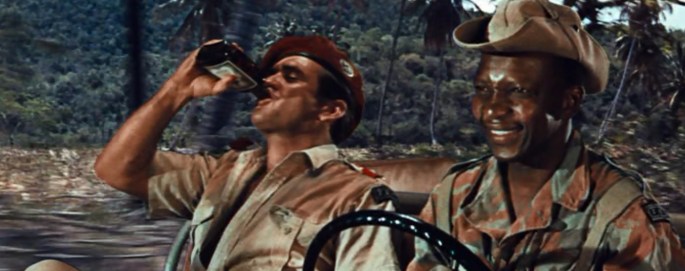
Spectacular. Absolutely spectacular. The amount of overall ass-kicking on display in this reckless, exceedingly entertaining action-adventure film from 1968 can’t be underestimated or denied. For nearly 100 straight minutes, director Jack “I’m More of A Man Than You Are” Cardiff brought the full-throttle action with hardly any relenting, and yet was still able to dole out important character beats and have everything make coherent sense thanks to a terse, extremely macho screenplay by Adrian Spies and Ranald MacDougall, who based their work on Wilbur Smith’s novel. Rod Taylor gave one of the most masculine performances that I’ve ever seen as a Soldier of Fortune who accepts a dangerous job in the Congo — guard a train that’s carrying $50 million in diamonds that needs to make an extremely dangerous journey through the jungle with hostile rebel troops armed and at the ready for battle. And make no mistake, most of the blunt-force narrative consists of massive combat scenes on and off the train, tremendous shoot-outs with huge body counts, hand-to-hand violence galore, and as the all-time great one-sheet suggests, you DO get to see men fighting with chainsaws.

3

The full-bodied, richly textured widescreen cinematography by Edward Scaife is glorious, the rousing musical score by Jacques Loussier is bold and triumphant, and the extremely tight editing by Ernest Walter kept a rip-roaring pace but still allowed for a few small grace notes. Jim Brown tore it up as Taylor’s right-hand man on the battlefield, while Kenneth More played a hard-drinking doctor who provides key help along the ride. Peter Carsten turned in a very memorable performance as a former Nazi who wants to help the group, and the beyond sexy Yvette Mimieux was on full display as an innocent caught up in all of the madness. Critics lambasted the film for it’s excessive sequences of violence and torture (the rape and pillaging of the village at the film’s midsection is utterly insane to witness) but now the movie is rightfully seen as a lost classic. Quentin Tarantino sampled musical tracks from Dark of the Sun for his WW2 film Inglorious Basterds, and even cast Taylor as Winston Churchill. Dark of the Sun was shot on location in Jamaica, and was also known as The Mercenaries in parts of Europe. Available on Warner Brothers Archives DVD label.

2

BRYAN SINGER’S THE USUAL SUSPECTS — A REVIEW BY NICK CLEMENT

1

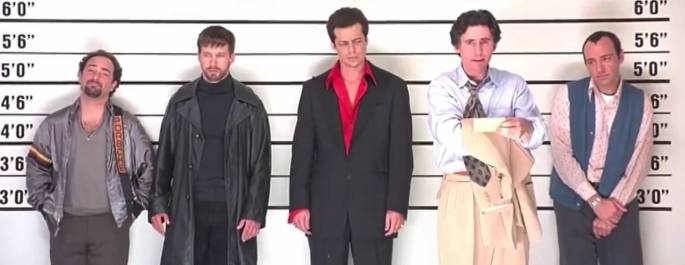
“The greatest trick the devil ever pulled was convincing the world he didn’t exist.” This fantastic line of dialogue, a quote from Charles Baudelaire, is uttered more than once by Kevin Spacey in The Usual Suspects, and pretty much sums up Bryan Singer’s smashing crime picture, which was his second feature film after the little seen Public Access. And in my opinion, The Usual Suspects stands as his best, most satisfying film to date. It’s odd that after The Usual Suspects and Apt Pupil that Singer became a blockbuster comic-book movie director (The X-Men, X-2, Superman Returns, Jack the Giant Slayer, X-Men: Days of Future Past, and X-Men: Apocalypse) with only 2008’s crisply efficient WWII thriller Valkyrie as the other traditional or realistic film that the filmmaker has attempted. Elegantly written by Christopher McQuarrie, The Usual Suspects is an example of low-budget neo-noir done correct, with a twisty, serpentine screenplay that never stops pulling the rug out from underneath the viewer until the very end, but most importantly, adds up and makes sense when all of the pieces are closely examined. McQuarrie’s previous background in private detective work and criminal law also bolstered the film’s authenticity, both in the spoken word and in the small details that fill the edges of this elaborately gripping thriller. And it’s one of those films with a doozy of a twist ending that at the time was nearly impossible to predict, even for the most astute of viewers. Part of that had to do with the relatively unknown quality that Spacey possessed 20 years ago (he’d go on to take the Oscar for Best Supporting Actor for his incredible work in Suspects), and part of it had to do with McQuarrie’s ultimately ingenious screenplay (for which he was bestowed the Oscar for Best Original Screenplay), that tells a convoluted tale that all comes together in the final moments with striking clarity and immense narrative force.
4

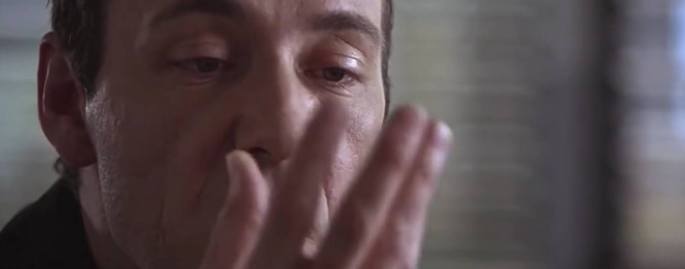
The Usual Suspects is the story of five criminals, all pulled together to do a job for a mysterious gangster, known only by his now famous name, Keyser Soze. After we’re treated to a string of small jobs to establish each man’s particular set of skills, the group encounters a force to be reckoned with. All of the criminals have in one way or another screwed over Soze in previous crime related jobs, and now it’s time for them to repay him, or else. They are tasked with taking over a docked ship at the Port of Los Angeles, in an effort to secure and destroy $91 million dollars of heroin that Soze doesn’t want to end up in the hands of a rival criminal enterprise. Gabriel Byrne is the group’s stoic leader, Dean Keaton, a former corrupt cop who is trying to give up the life of crime in an effort to settle down with his lawyer girlfriend. Spacey is Roger “Verbal” Kint, a half-paralyzed con-man who sits in the office of detective Kujan (a fantastic and surly Chazz Palminteri) and spins a story about the group’s misgivings and various illegal operations and how they all ended up on the boat that left Kint’s entire crew dead or missing. Also rounding out the group are the volatile thief McManus (Stephen Baldwin), McManus’ partner Freddy Fenster (a baby-faced and hilariously accented Benicio del Toro), and Todd Hockney, a skilled hijacker played with crusty attitude by Kevin Pollak. Pete Postlethwaite showed up as the mysterious Kobayashi, Keyser Soze’s legal rep and business associate, and coerces the gang of criminals into the big job for his boss, which will either make them all rich or leave them all dead. Each actor is given more than one moment to shine, with Byrne cutting an imposing portrait of an angry, morally complicated man who while thinking he’s in control, is constantly reminded that he’s not. Baldwin delivered the best performance of his career (I know that’s not saying much!) and del Toro gets some of the film’s biggest laughs, due in no small part to his manner of speech and fun with the English language. But it’s Spacey who totally owns this picture, skillfully portraying a pathetic man who is in way over his head, but who as we all know by now, is really pulling the strings like a magician behind the curtain.
3

Shot with supreme, noir-drenched style by cinematographer Newton Thomas Sigel (who would later go on to lens Three Kings, Drive, and Confessions of a Dangerous Mind, to name only a few), with dynamic editing and an absolutely propulsive musical score supplied by the uber-talented John Ottman (it’s insane to think about how many trailers have borrowed Ottman’s amazing musical cues from The Usual Suspects), The Usual Suspects succeeds as has visual flair AND dramatic substance, with a couple of action scenes thrown in to spice up the proceedings. But this film is mostly about its characters and how they speak and interact with one another, and how words are used as importantly, and as memorably, as guns, affording the picture a cerebral streak that allows it to tickle your brain every time you watch it. Singer patiently allows the non-linear story to unfold, never rushing anything, but also keeping the film moving at a brisk pace; there’s not one scene of narrative fat or superfluous style on this movie’s cold and calculating bones. It would be great to see Singer tackle something of this sort again, to see him go smaller and more sophisticated. Even the biggest of directors seem to want to change it up every now and again, so it’s curious to observe Singer’s career trajectory, and I think it’s sort of sad how Singer’s talents have really only been transferred to the world of popcorn escapism, because he’s clearly more talented than his later work implies. Shot in a reported 35 days on a budget of $6 million, it’s fascinating to think how Singer has never returned to the smaller-scaled waters of his absolute best film. And I love how the big finale is foreshadowed multiple times before it ever arrives; it’s a testament to everyone’s abilities that the twist was able to take almost everyone by surprise on their first viewing. Because upon further re-visits, you can see how Spacey was able to pull it all off, even noticing some discrepancies which would give away the big reveal if you’re able to spot these secret-breaking instances. I loved all of the dark humor, the tough-guy posturing, the rapid-fire nature of the dialogue, and how it’s the sort of film that obfuscates the truth for as long as humanly possible, and then when the big reveal comes, not only is not a cheat, but it’s something that elevates the film to a new realm, and makes for a wildly satisfying experience because you’re able to see how you were hoodwinked by the filmmakers.

2


WERNER HERZOG’S FITZCARRALDO — A REVIEW BY NICK CLEMENT

1

Fitzcarraldo is nothing less than a herculean achievement in filmmaking. Directed with a serious sense of epic scope yet still with a fine eye for intimate detail by the masterful and eclectic storyteller Werner Herzog, who seems to be attracted to madness in all of its permutations, in the way that a fly is a attracted to animal droppings. Surreal, grand, in love with itself and the very idea of cinema, Fitzcarraldo is one of a few masterpieces for this most eccentric filmmaker, and stands as one of the true awe-inspiring feats that the medium has known. Just thinking about the nuts and bolts logistics of this film gives me a headache, and it goes without saying that a production such as this one would never, ever get attempted in this CGI-infested day and age. The very lack of artifice is what gets me about this movie; it feels as organic as it could possibly get, with the exotic surroundings producing an earthy sense of time and place. Released in 1982, Herzog’s wild narrative centers around an obsessive entrepreneur with dreams of becoming a rubber baron, a role inhabited by the director’s spiritual cousin Klaus Kinski, in a maniacal and wholly committed performance of intense bravado. Already reeling from previous business failures and prone to very large ideas, he becomes overwhelmed with a crushing desire to spread the sounds of big opera all throughout the Peruvian jungle; his dream of a massive opera house nestled in the middle of indigenous territory must be met.

2

He enlists hordes of natives to help him lug a massive steamship over the steepest of hills in the middle of the Amazon, seemingly unafraid of the various dangers that could cause calamitous ruin. The film is an adventure, a romance, a study of dogged determination, and a sly portrait of the exploitation of human beings for one individual’s personal gain and existential triumph. Based on events surrounding the life of Carlos Fitzcarrald, Herzog was wise to root his story in something tangible, but he never became slavish to history, as so much of the movie feels like in the inner-workings of Herzog’s unhinged and esoteric mind, totally unleashed and splashed all over the screen. The gorgeous Claudia Cardinale was fantastic in the role of Kinski’s adventurous companion and lover, a brothel owner with smart business sense, bringing warmth and heart to an already passionate story that feels as lived-in as a movie could ever possibly feel. Thomas Mauch’s can’t-believe-your-eyes cinematography conjures up one spectacular image after another, filling the frame with vibrant color and a strict sense of unfettered naturalism. Mauch also collaborated with Herzog on the magisterial Aguirre, The Wrath of God and early charmer Even Dwarfs Started Small, and clearly the two men had a superb working relationship, more than likely consisting of some sort of artistic shorthand as their partnerships are some of the most ever-lasting in Herzog’s overwhelmingly amazing filmography. Iquitos POWER. I literally feel this movie in my bones every single day. Enrico Caruso POWER.

3


ROB BOWMAN’S THE X-FILES: FIGHT THE FUTURE — A REVIEW BY NICK CLEMENT

1

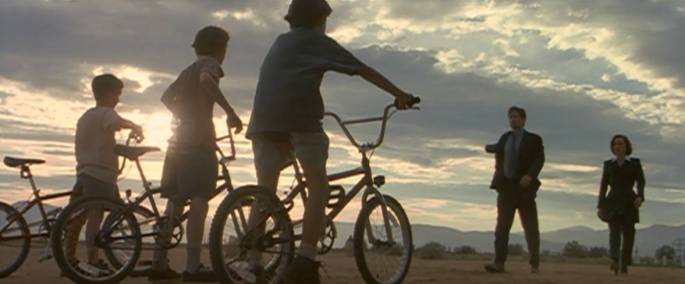
The X-Files: Fight the Future is easily one of the best transitions ever for a TV show to feature film. Directed with supreme style and smarts by series veteran Rob Bowman and sporting absolutely fantastic widescreen cinematography from veteran shooter Ward Russell (Days of Thunder, The Last Boy Scout), who utilized a rich color palette in full 2.35:1 widescreen and made smart use of the excellent locations chosen for the story. I absolutely loved the Neanderthal/Quest for Fire-esque opening sequence with the first alien encounter – raw, nasty, primal, and scary. Series mastermind Chris Carter took full advantage of the inherently cinematic possibilities with his iconic material, and along with Frank Spotnitz and undoubtedly many others, crafted a fabulous continuation of the central alien mythology plot-line, while jacking everything up visually and thematically. I’ve gone back to this movie for years, not just out of my love for The X-Files in general, but because, on its own, it’s a damn good movie. Fine, some of it might be impenetrable to the casual viewer or non-fan, but even in those instances, the gripping set pieces, tremendous production design, and excellent performances should alleviate any concerns.

2

Bowman and Carter threw in nods to various political thrillers from the 70’s, most notably Alan Pakula’s masterpiece The Parallax View, and all throughout, there’s an unnerving vibe that fills each scene, from the ominous back-room deals with the Syndicate, to the sub-Antarctic government base that forms the absolutely smashing action-oriented finale. All of the regular faces from the TV show were present in the film, while the filmmakers brought in some excellent supporting players like Martin Landau, Armin Mueller Stahl, Blythe Danner, and Terry O’Quinn. The opening domestic terrorism bombing sequence is rivetingly staged, while the mid-film action set piece inside those incredibly sketchy domes out in those corn stalks was expertly shot, cut, and directed. And when those bees are released, the scene kicks it up a further notch. David Duchovny and Gillian Anderson were at their best here as Mulder and Scully, and their “almost-kiss” moment registered as one of the absolute best moments in the series, big screen or small. Everything about this movie clicked, which you can’t say for the decade later follow up, The X-Files: I Want to Believe, or last year’s reboot. I’d love for them to get back on the big screen with another alien-centric narrative, as that’s where I’ve always felt the heart of this series rested.

3


J. LEE THOMPSON’S THE AMBASSADOR — A REVIEW BY NICK CLEMENT

3

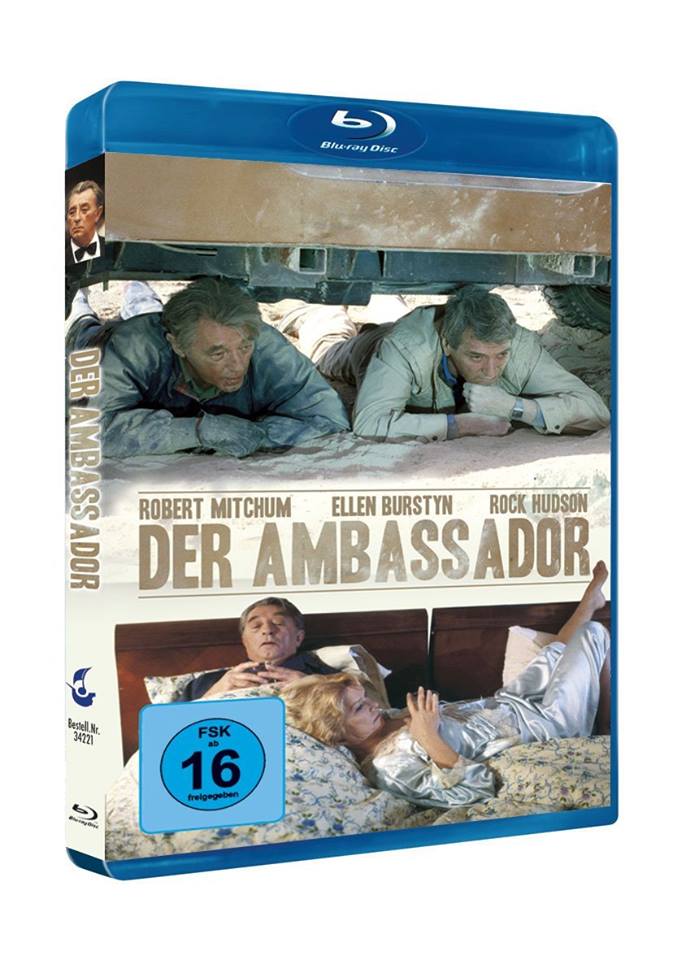
The Ambassador is very likely one of the better Cannon Films/Golan-Globus productions. This was one of eight collaborations between the notorious producers and action maestro J. Lee Thompson (The Guns of Navarone, Death Wish 4, Kinjite: Forbidden Subjects, The White Buffalo), and overall it’s got to be one of the most earnest political action thrillers that I can think of. This film really thought it had some quick and easy answers for peace in the Middle East; you have to admire the sense of chutzpah at work here. Starring Robert Mitchum, who seemed half (if not fully) in the bag for most of the film as the U.S. Ambassador to Israel who becomes entangled in various conspiracies both personal and international, the film’s script was written by Max Jack (with uncredited work provided by Ronald M. Cohen), and was mildly based on the Elmore Leonard novel 52 Pick-Up (they borrowed the sex-film blackmail subplot but that’s about it), which itself would be officially made by Cannon Films as a feature film by John Frankenheimer a few years later. 2Rock Hudson, in his final screen performance, had lots of fun as Mitchum’s slick and lethal right-hand man and security advisor, and doesn’t look like someone suffering from the AIDS virus, as he had to have been sick during production. The pairing of these two legendary old-timers brings a level of gravitas to the proceedings. Ellen Burstyn was great as Mitchum’s world-weary and cheating wife, and it must be said, at 52 years of age, she looked super sexy in her topless scene. Donald Pleasence got some solid supporting bits, while the entire production as a whole felt more robust for your typical Cannon feature. You have to hand it to the producers — they knew how to court talent and how to package all of the ingredients in order to make a sale. Create that tagline, get that verbal commitment, craft a quick and sexy poster — BOOM!

5

Crisply edited by future big-time cutter Mark Goldblatt (Terminator 2, True Lies, Bad Boys 2) and shot by a then up and coming Adam Greenberg (Terminator 2, Alien Nation, Snakes on A Plane), veteran director Thompson never paused for a moment, keeping a fast pace with minimal distractions, and building to a crescendo of over the top and ridiculous bloody violence that reminds you of who was in charge of this unique, slightly odd, but undeniably entertaining obscurity. The almost two-in-one musical score felt out of place and not in tandem with the rest of the elements. Reportedly, Mitchum and Hudson fought with each other all throughout the shoot, which was filmed on location in Israel. Telly Savalas was at one point attached to the role that Hudson eventually took, and it’s entirely possible that the film may also hold the record for the longest opening text scroll of all time.

1

JONATHAN LEVINE’S 50/50 — A REVIEW BY NICK CLEMENT

1

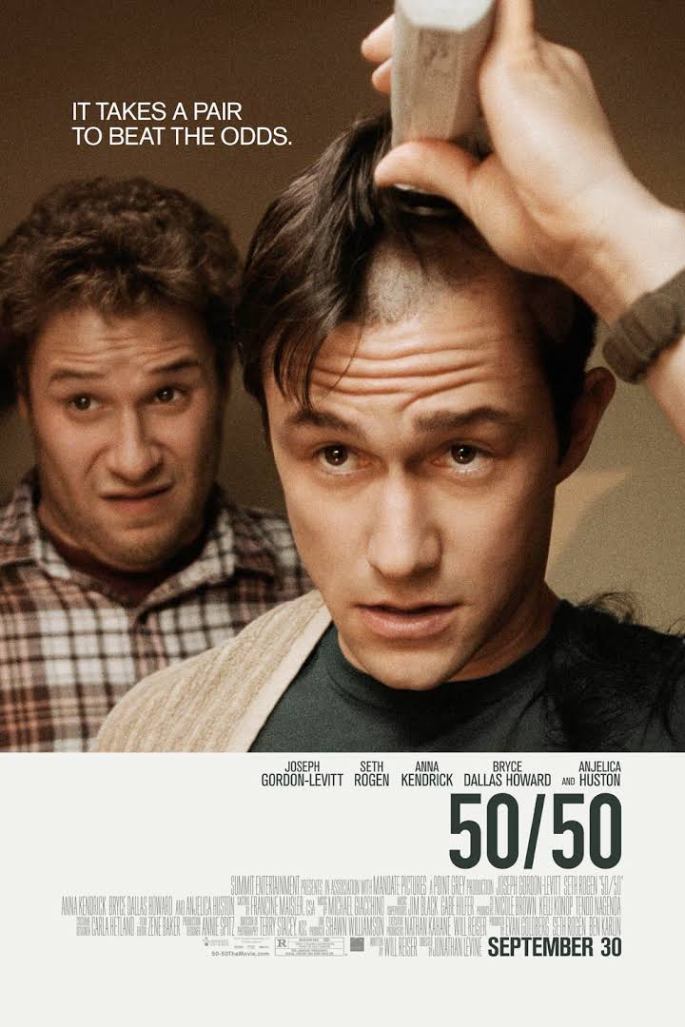
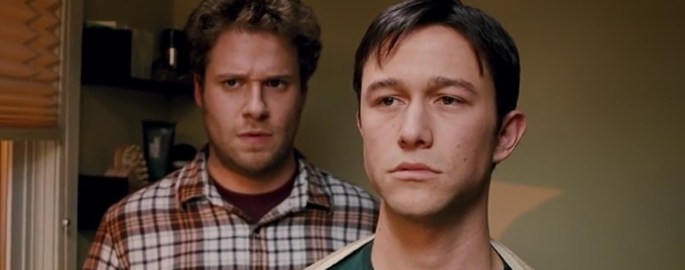
50/50 is an honest and funny film that dares to stare cancer in the face and laugh at the issues that it creates. I was not prepared for how accomplished this film would be. This is a true story, one that’s sad but oddly uplifting, and lead actor Joseph Gordon Levitt was absolutely perfect in his role – understated, never going too hard for the emotions, always feeling 100% natural. Seth Rogen was spot-on here as Levitt’s best friend who has to deal with the fact that his buddy has been given 50/50 odds of survival after being diagnosed with cancer. He’s always able to make us laugh with his affable stoner routine, but when Rogen wants to get serious, as he did here and in Sarah Polley’s obscenely underrated Take This Waltz, he can be very effective. And for 50/50 to work at all, it needed a lot of genuine humor, as there’s nothing remotely funny about the situation that JGL’s character is facing. Unfortunately, cancer has become one of those almost universal things in the world, and if you haven’t been affected by it personally, then you probably know someone who has, perhaps a friend, family member, or a close loved one. There’s a moment in the film where JGL makes a startling confession to his therapist (the always lovely Anna Kendrick, who exudes confidence and smarts and warmth in everything she appears in) that he just wants people to stop bull-shitting him and tell him straight up that he’s going to die. It’s a great moment of acting and direction and it was then that the movie grabbed me by the heart.

2

Director Jonathan Levine has had an interesting career, starting with the cult horror item All the Boys Love Mandy Lane, the 90’s marijuana-infused period piece The Wackness, and the cute and quirky zombie rom-com Warm Bodies; he’s a tough filmmaker to pin down. But as you watch the film unfold, you notice a seriously talented hand guiding this graceful movie, and it’s all the more impressive to learn that Levine was a last minute replacement for another filmmaker who apparently left the project over creative differences. The humor and pathos are well balanced, nothing goes over the top, and Levine’s unforced manner in which he directs his actors adds to the organic quality to the entire piece. Terry Stacey’s intimate and measured cinematography is stylish but never ostentatious, and the editing is sharp as a tack. And it’s got a killer soundtrack – I don’t remember a collection of semi-older-pop songs in a movie that’s as good or as well selected as the ones sampled here. Michael Giacchino’s score is subtle yet highly effective, and that right there is why 50/50 works as well as it does. It never hammers you over the head with how inherently sad the entire scenario is, and because Levine doesn’t wallow in anything for too long, nothing ever becomes maudlin in the way that lesser movies dealing with this subject matter have been.

1.jpg

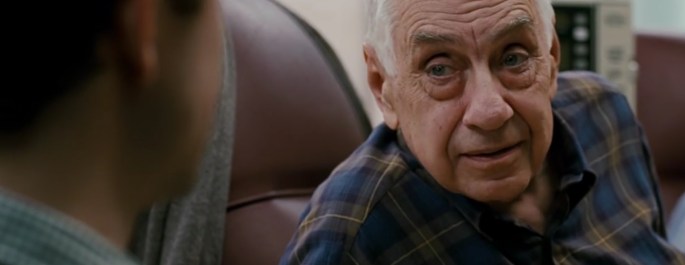
But the best asset of the entire piece is Will Reiser’s tender screenplay, who based the work on his own experiences, with JGL portraying him on screen. While comfortably predictable in some respects, he gets so much right in the little details, and for the first time in a long time, I felt that the voices of the thirtysomethings in this film were 100% believable depictions of actual people living in the here and now. The dialogue felt true to the times and to the people speaking, and the frequently colorful (and often times laugh-out-loud-funny) vulgarity was just what friends would say to each other. Confusing and stressful interactions with doctors were skillfully handled, and tearful and painful discussions with parents are heartrendingly examined (Anjelica Houston nails a few scenes as JGL’s mom). Plus, there’s this terrific scene where JGL, Rogen, Philip Baker Hall (really good in an uncharacteristic role) and Matt Frewer all get high on medicinal marijuana, and I swear, the way it’s shot and cut – you feel like you’re getting a contact high because of Levine’s aesthetic. I absolutely love this movie. You laugh in all the right spots, you choke up when necessary, and the film has a quietly powerful quality that’s very tough to convey with words. And without spoiling anything, the ending is fair and earned and completely believable. This is a potent slice of filmmaking that deserves a higher profile.

3


BERT GORDON’S THE FOOD OF THE GODS — A REVIEW BY NICK CLEMENT

Food_of_the_gods

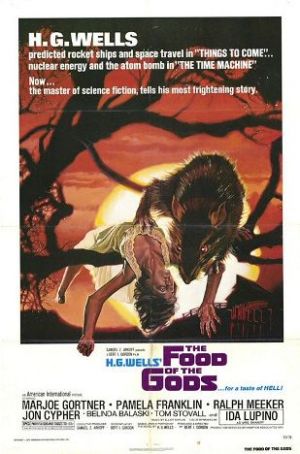
Undoubtedly one of the silliest, most aggressively ridiculous movies I’ve encountered, The Food of the Gods was released in 1976 and was mildly based on the H.G. Wells novel The Food of the Gods and How It Came to Earth. Written, produced, and directed with lunatic glee by shlock-master Bert Gordon, a conossieur of rear projection giant-themed C-movies (Village of the Giants, Attack of the Puppet People, The Amazing Colossal Man), The Food of the Gods centers on a mountain town that experiences a series of attacks by mutated animals that have ingested a mysterious substance, and it happily lurches from one scene to the next with an amazing grasp of its own idiocy firmly intact. Each performance is terrible in its own special way, the directing is haphazard, the “special effects” are bargain-basement atrocious and absolutely hilarious to behold, and the musical score and sound effects completely bonkers. And yet the movie remains a pisser all throughout, exactly because of how shitty-amazing it is as a whole. The finale involving a siege of plus-sized rats attacking a house followed by cinema’s chintziest flood has to be seen to be believed. Everyone HAD to know what a piece of crap they were all making, and when they all saw the finished effects work and the stupid looking killer animals on display (THOSE CHICKENS POWER), they hopefully all had a laugh. The final moments are actually fairly dark and clever. A Samuel Z. Arkoff Production of an American International Pictures Release.

food-of-the-gods-poster

MICHAEL RITCHIE’S DIGGSTOWN — A REVIEW BY NICK CLEMENT

diggstown

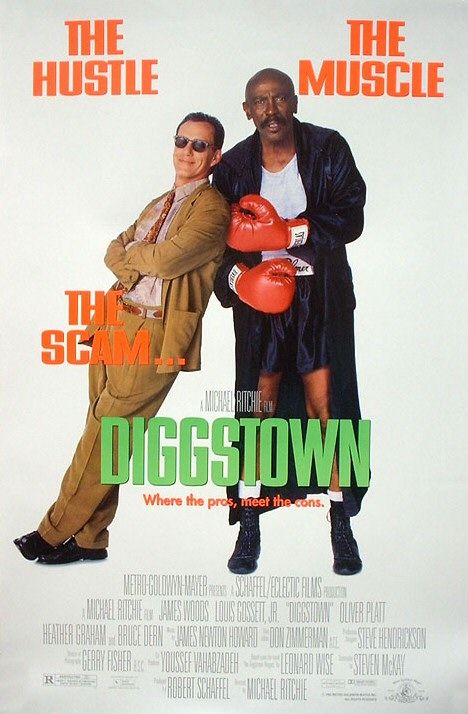
Diggstown represented a minor but still fairly sweet comeback for filmmaker Michael Ritchie, who had an impossibly amazing run of movies in the 1970’s, only to see his great fortune totally abandoned in the 1980’s with minor exceptions. Also known as Midnight Sting, this extremely funny and always clever little comedy bombed miserably at the box office when it was released in August of 1992, grossing less than $5 million, despite solid critical reaction. Seriously, just take note of these films that Ritchie dropped during his glory period in the 70’s: Downhill Racer, The Candidate, Prime Cut, Smile, The Bad News Bears, Semi-Tough, and An Almost Perfect Affair, which is the only one of that group that I’ve not seen (rectifying this fact very soon.) That’s a remarkable string of feature films, mixing genres and styles, with something new and fresh to say with each narrative. And then, I can only suspect drugs and liquor took their toll, because how does one go from those insane heights to these dastardly lows: The Island, Student Bodies, The Survivors, Wildcats, The Couch Trip, and The Golden Child?

If nothing else, Diggstown reminded audiences that Ritchie still “had it,” as he got great performances out of a surly and macho cast, with James Woods delivering a sly and extrenely entertaining performance as a slick criminal who seeks to concoct a boxing scam in a small pugilist-obsessed town down in Georgia. Louis Gossett Jr. was absolutely fantastic as Woods’ old friend who gets roped into the humorous and potentially dangerous scheme, while Bruce Dern provided menacing support as the local baddie who runs the town with an iron fist and who is feared by everyone. Oliver Platt, Heather Graham, Jim Caviezel, and Randall “Tex” Cobb rounded out the solid cast. Diggstown features a jaunty musical score by James Newton Howard, low-key cinematography by Gerry Fisher (The Exorcist III, Highlander), and snappy editing by Don Zimmerman (Cobra, Ace Ventura: Pet Detective); it’s a studo comedy with some personality. After Diggstown, things got even worse for Ritchie, with a career ending string of bombs including the woeful Cops and Robbersons, The Scout, The Fantasticks, and A Simple Wish. Similar in some respects to the artistic trajectory of Hal Ashby, Ritchie’s filmography will continue to fascinate for years to come, as it includes some of the most severe highs and lows that I can think of for a filmmaker.

WES ANDERSON’S THE ROYAL TENENBAUMS — A REVIEW BY NICK CLEMENT

1

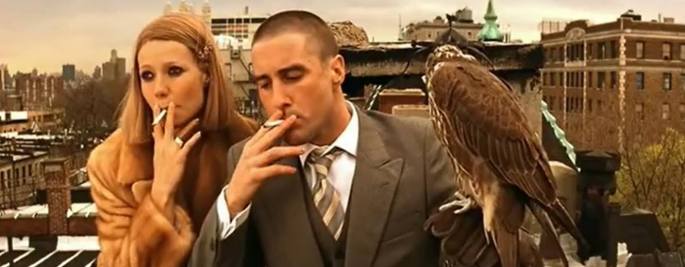
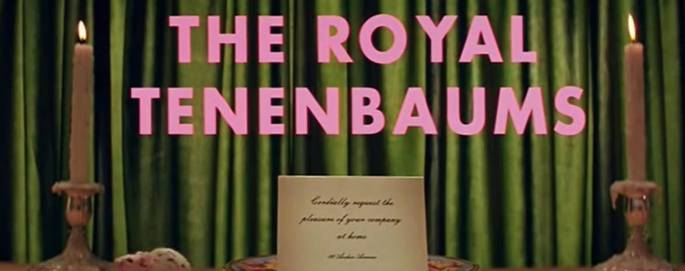
It’s a daily struggle to decide which Wes Anderson film is my favorite – Rushmore or The Royal Tenenbaums. I’m a massive fan of Anderson’s cinematic dollhouse aesthetic, and even if I prefer the early years to the more recent pictures, each film he’s made has been lovingly crafted and filled with a particular brand of imaginative, melancholic whimsy that feels distinctly him. The Fantastic Mr. Fox is a beguiling creation and a total laugh riot, while The Life Aquatic with Steve Zissou remains one of the most all-around enjoyable films I can think of (I’m due a revisit…) But the maturity on display is what strikes me when I revisit The Royal Tenenbaums, and I get such a kick of how it feels like Anderson riffing on Orson Welles’ The Magnificent Ambersons (such a superb, grossly undervalued motion picture).

3

The film hit that sweet spot with all of the members of its starry cast because each role was tailor made to their specific qualities as performers, a trait that marks each and every movie that Anderson has made. Gene Hackman, to my knowledge, was never this loose or funny in a movie (with the possible exception of Superman IV: The Quest for Peace), and the crusty old man of the house that he portrays was totally in line with his apparently no-bullshit philosophy on life. Ben Stiller, Owen Wilson, Luke Wilson, Gwyneth Paltrow, Angelica Houston, Danny Glover, Seymour Cassel and Kumar Pallana – each and every one of them were given numerous moments to shine, earning our respect, our laughs, and our tears. Alec Baldwin’s tickle-your-ribs narration seals the deal.

4

Robert Yeoman’s colorful and precise cinematography nailed Anderson’s uncanny sense of mise-en-scene, while the musical score by Mark Mothersbaugh was nothing short of marvelous. This film hits some very intense peaks and valleys from a narrative standpoint, looking at familial dysfunction and deep-rooted darkness with a dryly hilarious sense of humor, and I can’t help but notice something new each time I watch it. It’s also got some EXCELLENT Mescaline humor. Coming after the quirkfest of Bottle Rocket and the more polished but no less eccentric Rushmore, The Royal Tenenbaums still stands as Anderson’s finest work overall, his most complete, and the film that well and truly announced a very particular cinematic worldview from a truly sly and exuberant voice.

2

ULU GROSBARD’S WHO IS HARRY KELLERMAN AND WHY IS HE SAYING THOSE TERRIBLE THINGS ABOUT ME? — A REVIEW BY NICK CLEMENT

1

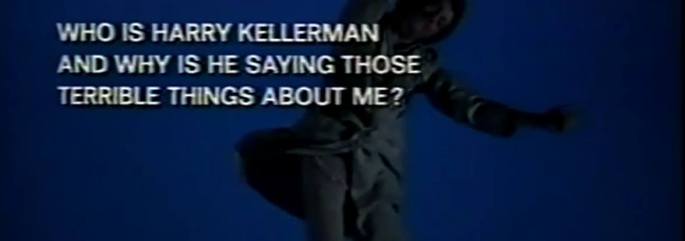
I wonder how many times the Birdman guys watched Who Is Harry Kellerman and Why Is He Saying Those Terrible Things About Me? Released in June of 1971 – the idea that this was a summer movie(!) – this is one of the strangest movies I’ve seen in a long time, and I am constantly intrigued by all of its ingredients, and I find myself returning to it more frequently than not. A stream of conscious narrative that jockeys back and forth in tone and intent, I have a feeling that cocaine might have been a large part in this film getting made back in the day. Directed by Ulu Grosbard, written by Herb Gardner, and starring Dustin Hoffman in one of his loosest, weirdest roles, the film’s suicide-obsessed structure is one of those “all in one day” stories, but this time, what’s happening on screen can never fully be trusted because of the dreamy nature to Victor Kemper’s stony visuals and the oblique nature of the storytelling. Hoffman plays a paranoid rock music composer who is having a really bad week due to a mysterious man named Harry Kellerman who has been spreading lies and rumors about him.

3

What follows is a shaggy-dog story of a man losing his grip on reality, while the witty script continually sends pointed zingers in the direction of the entertainment industry. The ending is beyond bold to contemplate and would be unthinkable in our post 9/11 world, and the film’s got some extremely quirky credits (Shel Silverstein did the musical score) and a hippie-tinged soundtrack that gives off some funky-good vibes. I’m pretty sure that critics had no idea what to say about this movie when it was released and that audiences were annoyed and baffled. Barbara Harris was fantastic in her handful of scenes with Hoffman, who for his part, created a wobbly portrait of a fractured man, resulting in a turbulent inner core to the film. Jack Warden has some memorable scenes opposite Hoffman has his shrink. A Cinema Center Films production in association with National General Pictures. Who is Harry Kellerman also holds the distinction of having the longest title to a movie that was nominated for an Oscar, with Harris receiving a Best Supporting Actress nod.

2