TOM TYKWER’S PERFUME: THE STORY OF A MURDERER — A REVIEW BY NICK CLEMENT

2

If you aren’t familiar with the eclectic and amazingly distinctive body of work from filmmaker Tom Tykwer, you should get to know it fast. His films, which include Run Lola Run, Winter Sleepers, Heaven, The International, The Princess and the Warrior, Three, Soul Boy, and segments of Cloud Atlas, are almost impossible to easily classify or describe, often mixing various genres and stylistic ingredients which add up to extremely original pieces of work. One of his best and certainly most underrated efforts is Perfume: The Story of a Murderer, a project previously attempted by no less than Stanley Kubrick, Ridley Scott, and Martin Scorsese, a story so wild and crazy and totally off the reservation that it required overseas financing to ever see the light of day (this film was produced with $60 million in German coin). Perfume, much like the rest of Tykwer’s body of work, is a heady mixture of existentialism, surrealism, fantasy, violence, and sexuality. This is a film that made over $150 million outside of the United States, yet only around $4 million here. Just watch it and you’ll likely see why. It’s something of a bizarre masterwork, and while maybe not perfect, it’s so bold and audacious that I guarantee you’ll be fascinated, if not repelled. In a good way. I think. Yeah, you’ll probably be repulsed at times, but always engrossed. Because you’re never too sure where all of this is going, there’s something very exciting about watching this creepy yet undeniably stylish movie unfold.
5

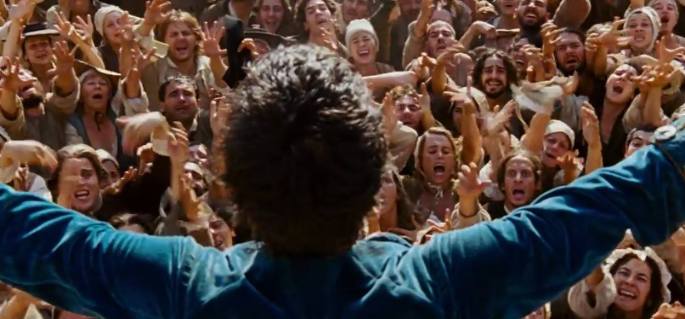
The film is based on the 1985 novel by Patrick Suskind, and the action is set in 18th century France, during the time of the plague and general misfortune, not to mention amazing hygiene! The pensive yet seductive Ben Whishaw is Jean-Baptiste Grenouille, something of an olfactory specialist, a man driven to homicide and obsessive behavior in an effort to find the perfect scent. So what does he do? He starts killing the country’s virgins, becoming more and more possessed by the idea that a pure sexual being emits the greatest bodily odors, which can then be processed into intoxicating perfumes and fragrances. If what I’m describing sounds insane, well, it all sort of is just that – insane with ideas, textures, smells, tastes, costumes, grungy locations, and the endless possibilities that come with a truly unpredictable narrative. And then just wait for the amazingly funny and erotic finale, where an about to be hung for his crimes Grenouille may be able to escape certain doom by creating a mad orgiastic frenzy amongst a crowd of spectators – it’s something you just have to see to truly believe. I viewed this film in the theater on opening weekend in Los Angeles, and since its initial release have watched it numerous times on Blu-ray and DVD (a region free Blu from Germany provides a gorgeous transfer). It’s a film that mostly escaped the movie going landscape but it’s a work that deserves to find a passionate audience.
3

MARK RYDELL’S CINDERELLA LIBERTY — A REVIEW BY NICK CLEMENT

1

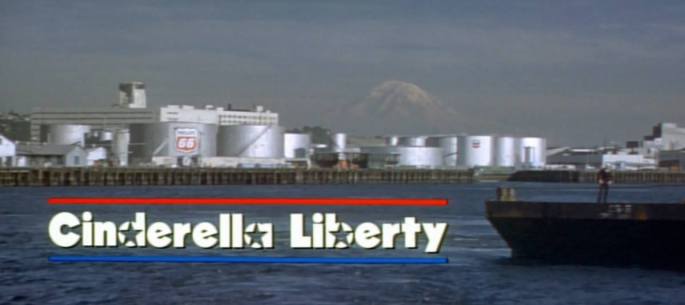
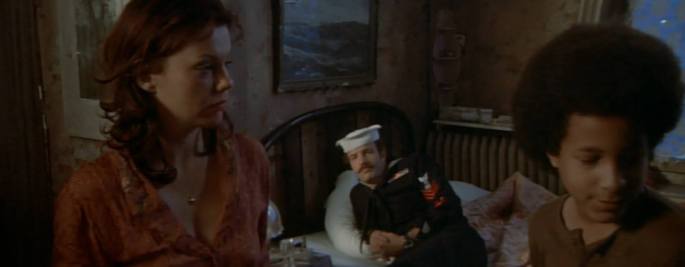
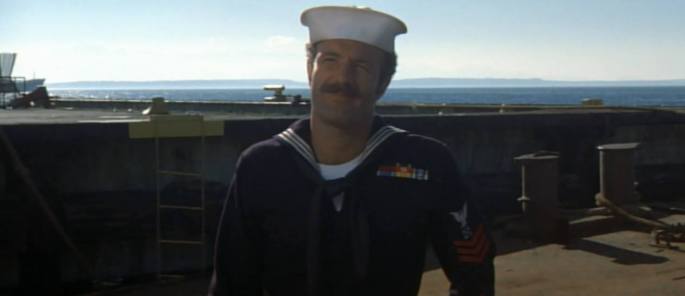
Cinderella Liberty is a potent 70’s drama with an outstanding performance from James Caan, displaying a warm and comforting side that was sort of rare to encounter consider all of the intense roles he gravitated towards. Marsha Mason, in her second big screen outing, was Oscar nominated for her emotionally complex role that might have been a total failure in the hands of a less attentive and attuned performer. Sensitively directed by Mark Rydell, the film was written by Darryl Ponicsan, who adapted his own novel, and centers upon a slightly shy sailor (Caan) on shore leave who meets and falls for the wrong woman (Mason), an unstable, pseudo-hooker who has a 10 year old bi-racial son at home, who is barely receiving any sort of traditional parenting. Caan feels something almost instantly for Mason and her son, despite both of their rough edges, and he works to better their lives in ways that may seem far- fetched to some, but to me, rang true because of how honest Caan’s performance was, and how powerful Mason delivered her big scenes, of which she has a few.

2

This being a product of the 1970’s, it doesn’t end tidy, there are off-color remarks galore in the funny and unpredictable screenplay, and there’s ample T&A on display considering the milieu (seedy Seattle, with bars and strip clubs being a major highlight). The final act has a plot point that will hit hard for some people, and at that point in the story, the narrative mildly shifts gears a bit and becomes an interesting portrait of people trying to put all of their pieces back together despite knowing it may be impossible to keep them in tact forever. Eli Wallach and Burt Young both delivered extremely memorable supporting turns. The score from John Williams is jaunty and pensive in equal measure. Netflix carries the DVD for rental-at-home customers, and the older transfer still does a fine job showing off Vilmos Zsigmond’s appropriately dark and grubby 2.35:1 cinematography, filled with glorious grain and period filmic look. I love when movies were shot on Eastman Kodak celluloid! Cinderella Liberty is also available as a streaming option via YouTube’s HD rental service, and is also available to stream via Amazon.

3

BRIAN DE PALMA’S SNAKE EYES — A REVIEW BY NICK CLEMENT

1
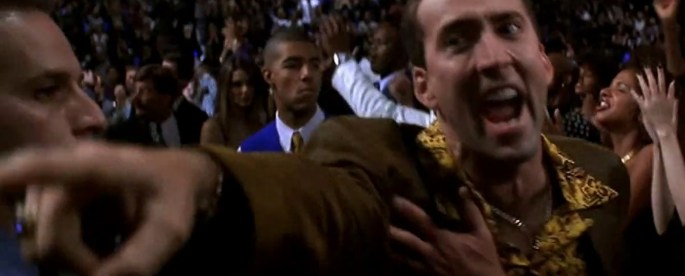
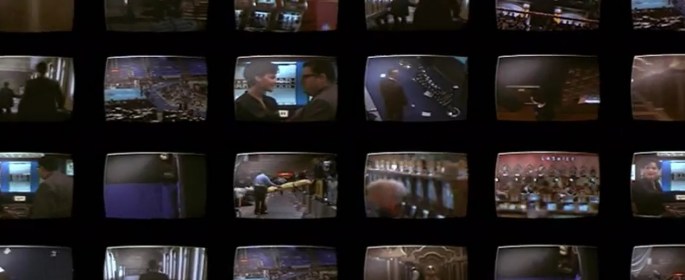
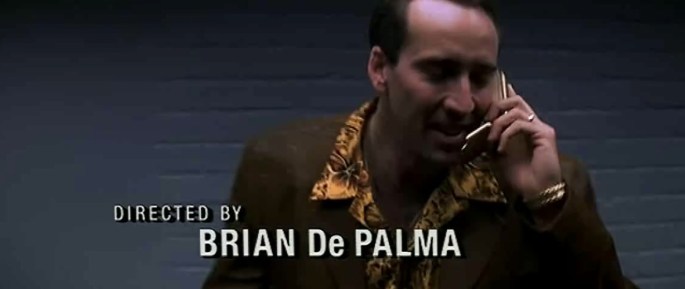
Snake Eyes is electrifying filmmaking from Brian De Palma, who at one point in his career was billed in voice-over during trailers for his films as the “modern master of suspense,” a title he totally earned. The opening 20 minutes of this film are so stunning that we could only hope to get sequences of pure filmmaking like this in every single movie in every single calendar year. And even if many people seem to find fault with the final act, I don’t, and never did; while the “Hand of God” tidal wave sequence would have been cool to see from a visual perspective, the climax works just fine as it is, and wraps everything up the way it should. Also – the absolute final scene between Nicolas Cage and Carla Gugino stings with moral complexity and ends on an untraditional note of uncertainty — shades of 70’s storytelling peeking through the cracks of a big-budget, late 90’s thriller.
4
 A sleazy and chest-hair-proud Cage was completely on fire in this film, totally flamboyant and awesomely over the top as a morally bankrupt Atlantic City cop who gets in way over his head at a heavy weight title fight which is taking place at a casino during a hurricane. Oh, and the United States Secretary of Defense is on hand for the bout, and wouldn’t you know it, he’s about to get assassinated in the opening reel. What follows is a battle of wits between Cage, his sketchy military “friend” played by Gary Sinise, and various interactions with a rogue’s gallery of supporting actors including Michael Rispoli, Stan Shaw, Kevin Dunn, John Heard, Joel Fabiani, Luis Guzman, Mike Starr, David Anthony Higgins, Chip Zien, and Eric Hoziel. The alluring Gugino perfectly fit the prototypical De Palma heroine, delivering a sexy and crafty performance as Cage’s reluctant helper, and red-head Jayne Heitmeyer made a very memorable appearance during a crucial portion of the visually audacious protracted opener.
2
Ryuichi Sakamoto’s bravura score amplified every single sequence – it’s true sonic glory and one of my favorite soundtracks to any De Palma film. And don’t get me started on how much Stephen H. Burum POWER is contained in this film. This was the second to last film that the vastly underrated cameraman shot for De Palma, and in tandem with the legendary stedicam operator Larry McConkey, he crafted one of the most visually muscular and all-together exciting cinematic atmospheres I can think of. From the two or three extended takes that comprise the utterly gripping and fabulous opening sequences, including McConkey pulling off a Dutch angle while operating the rig, Snake Eyes contains passages of purely visual filmmaking that should serve as sequences worthy of study. From De Palma’s obsessive love for the split-screen and overhead photography to his undying fascination for femme fatales and the tropes of the Hitchcockian thriller, Snake Eyes played to the director’s unmatched strengths, while the script, which was concocted by De Palma and big-money-scribe David Koepp, had tons of fun with genre conventions and the upending of our expectations in key instances.
3
De Palma, like few other directors, really knew how to explore paranoia within the narratives to his films, and all of the actors in Snake Eyes brought a level of mystery to their performances. Bill Pankow’s razor-sharp editing knew precisely how long to hold on every single moment, keeping an intense edge present all throughout. And then there’s the film’s elegant and totally amazing theatrical trailer, which is cut and scored with the precision of a diamond. Released in August of 1998, the film was a modest success at the United States box office, a solid worldwide hit, and a massive audience favorite on VHS/DVD/cable. The Blu-ray absolutely pops off the screen. Even in a throwaway genre picture, De Palma brought a sense of pure cinema and consummate craftsmanship to the table.
6

JOEL POTRYKUS’ BUZZARD — A REVIEW BY NICK CLEMENT

1

There aren’t many movies like Buzzard. This film takes chances, daring the audience to turn it off at times, and features one of the more angry antiheroes that I’ve seen in a movie since Observe and Report. Also taking some visual and thematic cues from Taxi Driver, Joel Potrykus’ movie feels dangerous by design, showcasing 20-something angst in a very visceral fashion. Joshua Burge gives nothing less than a tour de force performance, really going for broke in the final act, but because his character is so relentlessly sullen and more than likely psychotic, it creates this great dichotomy for the viewer: You’re forced to get to know someone who you might not otherwise want to get to know. Burge plays an office temp who is so apathetic towards his own existence that he can barely get through the day without some sort of mental rage flip out. He fills his time by ordering office supplies to his temp jobs, then stealing the supplies to sell back to pawn shops. Then there’s his favorite — close a checking account only to immediately open a new one to make the promotional $50. Things get out of control when an illegal check cashing spree goes upside down, with Burge seeking refuge in the basement of his friend’s house with increasing amounts of paranoia seeping in.

2

And then there’s that old Nintendo Power Glove that he’s been retrofitting into a Freddy Krueger-esque hand weapon. Where this wild narrative goes is for you to discover, but I will allow that very little of anything expected happens during the course of the 90 minutes. There are some shades of societal anger that reminded me of Joel Schumacher’s Falling Down and the film’s anarchic spirit recalls some passages from David Fincher’s Fight Club. But Buzzard isn’t on a level that’s as grandiose as those films, and the film’s low budget and general rough and tumble aesthetic really helps to magnify every single aspect of this crazy little movie that had snuck totally under my radar. Potrykus also appears as Burge’s pseudo-friend; their various interactions are absolutely hysterical. Buzzard made its premiere at the SXSW Film Festival in 2014, before receiving a very small theatrical release in early 2015. Available to stream via ITunes, YouTube and Amazon, while Netflix carries the DVD for disc-in-the-mail subscribers. Dark comedies don’t get much more dark than this one.

3

SIDNEY LUMET’S PRINCE OF THE CITY — A REVIEW BY NICK CLEMENT

4

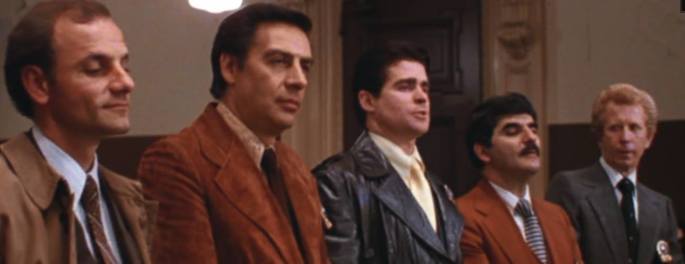
Few did gritty NYC movies better than Sidney Lumet and it’s amazing how his greatest films (many of which were in the 70’s and 80’s) don’t feel like they’ve aged one bit – excellent storytelling will always be excellent storytelling. Morally complex, epic in narrative scope, intimate with its fine details, and having a filmic sweep that rarely graces the cop genre, Prince of the City is easily one of the best, most absorbing cinematic policiers ever crafted. Treat Williams should have been a much bigger star — his fiery, totally riveting performance as a conflicted and corrupt cop investigating internal police transgressions is one for the ages, with one of the best character arcs for any protagonist within this well traveled milieu. Jay Presson Allen’s authentic and minutiae rich screenplay rings true in every scene, and with Lumet’s steady directorial hand guiding us through the many plot threads, the viewer is never lost within the proceedings, despite a no-hand-holding approach by the filmmakers. The great Polish cinematographer Andrzej Bartkowiak’s hand held, extremely naturalistic cinematography amps up the tension resulting in a film that gives off a “fly-on-the-wall” quality.

5

And then there’s LOOK AT THIS CAST POWER — Jerry Orbach, Bob Balaban, Lindsay Crouse, Lance Henriksen, James Tolkan(!), Richard Foronjy, Cynthia Nixon, and Alan King(!), along with tons of perfect character actors with lived-in faces that gave every scene that realistic quality that all of Lumet’s films always possessed. Sadly, Prince of the City was basically ignored by audiences (it recouped its $8 million budget but that’s it), and while certainly getting critical respect at the time, it’s stature as a pinnacle of the genre has been cemented over the years. And with fewer and fewer big-screen cop films getting the greenlight from studio execs in recent years, a film like this deserves to be treasured. The film was nominated for Best Original Screenplay, and despite not being available on home media format, there’s a four hour cut that has made the television airwaves over the years. Let’s hope that someone puts out a much needed Blu-ray release of this seminal American film, with any and all versions. The WB 2-disc DVD does a nice job with image quality and sound so at least we have that for the time being.

6

MARCO BRAMBILLA’S DEMOLITION MAN — A REVIEW BY NICK CLEMENT

1

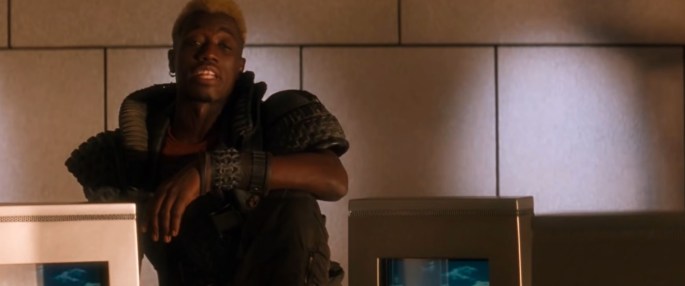
I can’t even believe this movie is real. But it is. And it’s glorious. Every super-high-concept-inch of it. A true product of 1993. Was blown away when I saw the film in theaters. The script by Daniel Waters, Robert Reneau, and Peter Lenkov is absolutely wonderful, balancing smart satire with the expectations of a summer blockbuster, despite the film being an October release. Though apparently heavily edited from its initial, more violent cut, this is a wild and rollicking action adventure that had a futurist sci-fi angle with reverse rules and strange interpersonal dynamics. Concerning two men on opposite sides of the law — one a super-cop (Stallone), the other a super-villain (Snipes) — who are cryogenically frozen only to wake up in a future society they no longer recognize or understand, the film becomes one of the more wacky and insanely fun romps from this era, primarily due to the great star performances from both leads, and a deep supporting cast including Sandra Bullock, Nigel Hawthorne, Benjamin Bratt, Rob Schneider, David Patrick Kelly, Denis Leary, Jack Black and Jesse Ventura in small background roles, and personal favorite character actor Bob Gunton, who can do smug better than anyone on the planet.

2

Well reviewed by critics and a worldwide box office hit, Demolition Man has gained immense popularity throughout the years; it was a staple HBO item back in the day, and it can’t be underestimated how massive it was on VHS and DVD. It’s stunning to think that this was director Marco Brambilla’s only major directorial highlight, with his only other credit being the ill-fated Excess Baggage. A pioneering visual installation artist, Brambilla took his skills as an intense imager maker and brought a distinct and extremely unique style and eye to one of producer Joel Silver’s more subversive audience pleasers. And because the tonally adventurous script always seemed like it was dipping one toe into weirdness and one toe into the familiar, you’re left with a film that carries a curious, playfully violent attitude that feels almost impossible to replicate. Features a robust score from Elliot Goldenthal, terrific cinematography by Alex Thomson, and razor sharp editing by Stuart Baird. I am beyond pleased that this film hasn’t gotten the reboot treatment.

3

JOHN MCNAUGHTON’S MAD DOG AND GLORY — A REVIEW BY NICK CLEMENT

1

The 1993 oddball comedy Mad Dog and Glory is a truly fun and special little movie, but that’s been underrated director John McNaughton’s stock-in-trade for his entire career: Make films that fly just a tad under the radar but then become huge genre influences down the line. His brilliant and utterly startling 1986 debut Henry: Portrait of a Serial Killer is still one of the most chilling examinations of evil ever put on film, and which introduced the world to the amazing actor Michael Rooker. Five years later, he followed up with the sci-fi curiosity The Borrower, which I’ve not seen, but which sounds VERY interesting. Then, two years later, he dropped genre-bender Mad Dog and Glory, which really announced the mark of a majorly unique voice.

mad_dog_and_glory

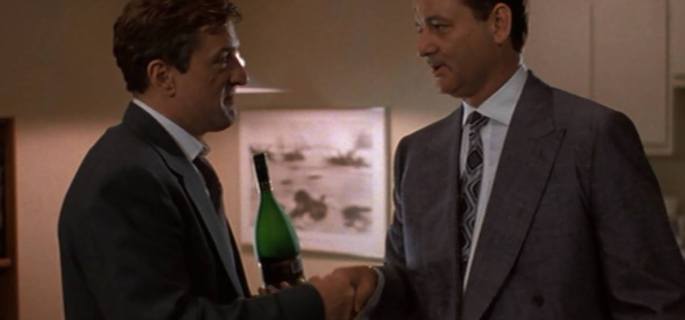
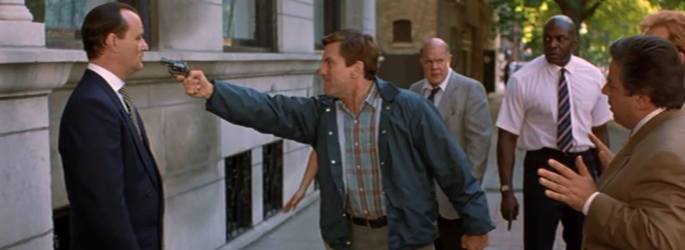
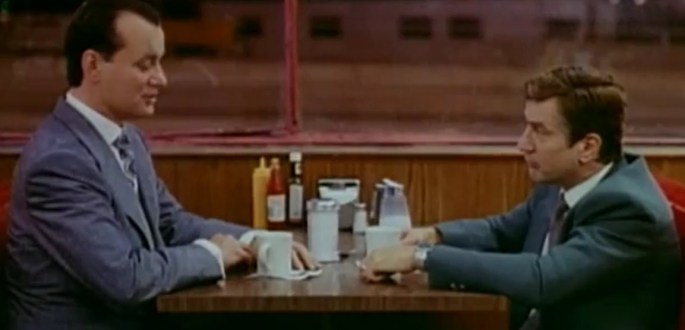
There’s only one problem; audiences aren’t receptive to the quirky mix of violence, comedy, and pathos. Despite strong critical support (Ebert and Canby were notable supporters), the film died in theaters, but has over the years found a well-deserved cult following. Executive produced by crime genre master Martin Scorsese and written with the usual sense of tough guy banter and attention to character and plot detail by Richard Price (Clockers, Ransom, Sea of Love, The Wire), the film tells the story of a lonely and depressed cop (Robert De Niro), who saves the life of a NYC gangster (Bill Murray), and who become unwitting frenemies through a variety of circumstances. Murray wants to repay De Niro for saving his life in the form of female companionship, so he offers one of his girls to him as a “gift,” the beguiling, radiant, impossibly young Uma Thurman, thoroughly lovely and exceedingly funny and pre-face-destruction.

2

What follows is an unconventional romance between De Niro and Thurman, an unconventional friendship between De Niro and Murray, and scene after scene of inspired comedy and drama. The notion of casting De Niro as the hapless guy and Murray as the confident gangster was a stroke of genius, but for whatever reason, people didn’t buy into the idea. Which is a pity, because Mad Dog and Glory works so well, and would go on to inform later De Niro movies like Analyze This and the misbegotten Showtime, which paired him with Eddie Murphy. It’s a bummer that De Niro and Murray haven’t worked together since because the two of them shared great, natural, and easy-going chemistry, bouncing off one another with great comedic timing and scene-balancing generosity.

3

McNaughton deftly mixed graphic violence with big laughs in a way that few are able to do, and despite the film having a compromised finale (rewrites and reshoots were required which delayed the final product by a full year), so much of this movie comes up aces so often that it’s easy to look past the traditional ending to what was otherwise anything but traditional as a whole. The fantastic supporting cast includes David Caruso, Mike Starr, the recently deceased Tom Towles, Kathy Baker, Jack Wallace, and Richard Belzer, with screenwriter Price making a cameo as a detective. After Mad Dog and Glory slipped in and out of theaters, five years would pass with McNaughton working only in television before his next feature, the notorious and wildly entertaining neo-noir high-school-sex-romp Wild Things, which would reunite him with Murray, and still stands as a juicy, sexy, hot-blooded genre entry.

1

BOB FOSSE’S ALL THAT JAZZ — A REVIEW BY NICK CLEMENT

1.jpg

Directed with a hefty, grinning dose of chuck-it-all, piss-and-vinegar-abandon, Bob Fosse’s All the Jazz is movie magic. Exasperating, nasty, lighting-fast, dark-hearted movie magic but movie magic all the same. Using the framework of a heightened, pseudo-autobiographical narrative with diversions into fantasy and utilizing the trappings of the movie-musical in exciting ways that are rarely ever attempted, this is a sensational piece of storytelling and filmmaking, with Roy Scheider dropping an Atomic Bomb of a performance as a stressed out, over-sexed, over-drugged, loose cannon of a director, a man simultaneously mounting a large-scale Broadway show and putting the editorial touches on his latest movie. Things aren’t going correct with either project, women keep coming and going at the worst of times, and his young daughter clearly needs her father for support. Alan Heim’s frenetic yet coherent editing in this film is spectacular, all jagged patterns that underscore the fragility and hostility of Scheider’s fractured mental and spiritual psyche, while the frenzied, energetic cinematography by Giuseppe Rotunno, filled with extreme close-ups and doc-style jitters, added a level of vitality to every single sequence.

2

Clearly a personal statement about the artistic process and what it can do to the artist in question, this is a film that could only have been made by Fosse, and All the Jazz serves as his celebration of both mediums, film and stage, and as his own cautionary tale for everyone else to follow in his artistic footsteps. This is a film that’s about the rush and excitement of success, about how some people have a burning fire raging inside that can never be extinguished, and because Scheider’s performance is so completely full-throttle at every moment, you get the sense that Fosse found exactly what he was looking for in his choice of leading man. The restoration wizards at The Criterion Collection have done an utterly superb job with their 4K transfer, stripping away any blemishes and pictorial imperfections, but still allowing the Blu-ray disc to have that special, old-school filmic quality that I adore and miss in relation to modern films, which increasingly look less and less like actual movies, and more like video games. The sound pops with clarity and balance, and the special feature line-up is a treasure trove of goodies.

3


JAMES GUNN’S SUPER — A REVIEW BY NICK CLEMENT

1

Out of all of the cinematic output from writer/director James Gunn, my favorite thing he’s done is Super, his low-tech “superhero” deconstruction which was released in 2010 to mixed reviews and scant box office returns. Which is a shame, because this film has more wit, both verbal and visual, than most “comedies” that get released on a weekly basis, and it demonstrated that Gunn is one the best when it comes to mixing tones within the narrative. Like a less slick and expensive Kick-Ass, Gunn’s film centers on superheroes who don’t have any superpowers, and gets tons of comedic mileage out of poking fun at the various idiocies that these overblown movies tend to revel in, while still sticking with its playing-for-keeps attitude.

2

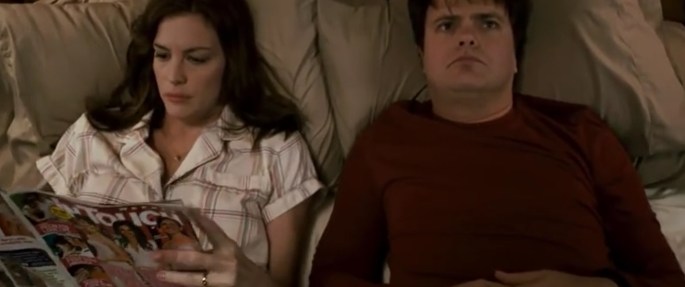
Starring the fantastic Rainn Wilson as a meager guy pushed to his emotional and physical brink by various external forces, the plot hinges on him becoming a regular-guy vigilante named The Crimson Bolt, intent on taking out society’s trash (murderes, rapists, pedophiles, etc.) any way he sees fit. Gunn’s wild little film, which feels like Falling Down on crystal meth, has a great supporting cast, including the phenomenal Ellen Page as Wilson’s unhinged sidekick, Liv Tyler as Wilson’s wife, Nathan Fillion, Michael Rooker, Gregg Henry, Rob Zombie as The Voice of God, and an extra-smarmy Kevin Bacon as a truly nasty chief villain. Taking full advantage of its hard-R rating, this is a super-charged, super-funny, and super-violent satire that has generous doses of devilish black comedy, strange sexual hijinks, and rough-house action sequences that truly bring the pain.

3

MICHAEL BAY’S THE ROCK — A 20th ANNIVERSARY RETROSPECTIVE REVIEW BY NICK CLEMENT

16

The Rock remains the best film that Michael Bay has made. It might not have the action-bombast of Bad Boys 2, the satirical edge of Pain & Gain, or the overwhelming intensity of 13 Hours, but the film simply works on every level as a tremendous piece of audience pleasing, late 90’s, high-concept action filmmaking that has only gotten better over the years as countless genre entries have come and gone. Directed with slick and gritty efficiency by Bay, who was in major Tony Scott mode with his first big-time blockbuster after 1995’s surprise hit Bad Boys, The Rock features a trio of big, brawny star turns from Nicolas Cage (the reluctant hero), Sean Connery (doing a riff on Bond), and Ed Harris (the morally conflicted villain), with a ridiculous supporting cast in tow. Made back when you could make such a picture for a somewhat affordable price tag and far more reliant on practical effects than excessive CGI, this is exactly the sort of movie we aren’t getting in cinemas these days, and that’s a damn shame, because when done correct, you get summer popcorn fun like this.

55

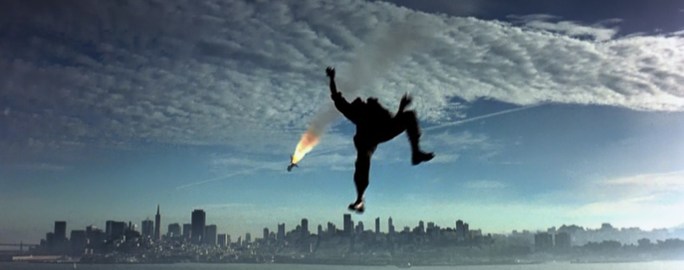
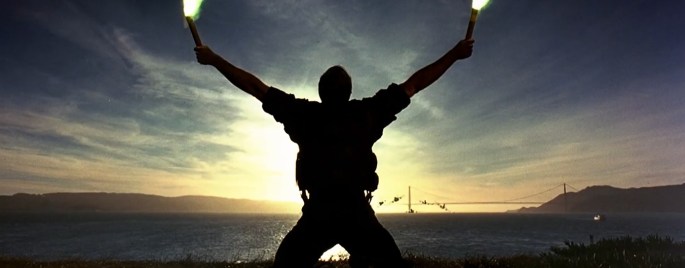
Successfully merging the buddy picture with formula elements from Die Hard, Bay was able to tap into his lightning-quick visual sensibilities, creating a super glossy San Francisco in 2.35:1 anamorphic widescreen; while viewing this film on the Blu-ray format, one marvels at the filmic quality to the entire presentation. Bold, saturated colors dominate the endless horizon, almost always seen at sunrise or sunset, a classic visual motif that has been a signature shot for Bay in almost every single one of his features (if not all…), as John Schwartzman’s gorgeous cinematography set a modern standard that so many would ape in the following years. Richard-Francis Bruce’s dynamic editing was in perfect synch with the loaded visuals, while the tremendous musical score by Nick Glennie-Smith, Harry Gregson-Williams, and Hans Zimmer is a bonafide all-timer, becoming sampled by numerous trailers over the years. The action was huge, from a breathless car chase throughout the crowded S.F. streets, to the all-out assault on Alcatraz that comprised much of the second and third acts.

8

The impact that The Rock has made on the action movie landscape is nearly indescribable, and stands as one the greatest Simpson-Bruckheimer collaborations, primarily because of its script. As written by David Weisberg, Douglas S. Cook and Mark Rosner (with additional uncredited work done by Aaron Sorkin, Jonathan Hensleigh, Quentin Tarantino, Dick Clement, and Ian La Frenais), the film presents a semi-plausible yet still over the top scenario that’s just believable enough, but far-fetched to the point that the audience can disengage a bit and watching something extremely cinematic unfold. The decision to ground Harris’s chief baddie, General Hummel, in a fog of moral confusion and militaristic outrage has been one of the key ingredients to the overall success of The Rock, as it gives the film an edge in the character department. Because you’re able to understand General Hummel’s anger, his reason for action is all the more drastic and exciting. Harris brought his usual brand of steely intensity to every scene, and as a result, The Rock bristles with menace whenever Harris appears. But beneath the hostility were shades of confusion suggesting a complexity not normally afforded a gene picture such as this.

12

And then when you combine the Odd Couple-esque pairing of Cage and Connery, who honor the time-tested tradition of great buddy pairings, the narrative takes on yet another angle and runs with it all the way to the finish line. Cage got all the overtly funny lines, and would pave the way for his ascent into action hero mode with this quirky and sympathetic performance. And Connery, clearly having a blast playing a version of 007 within the more visceral confines of an R-rated picture, was all class at all times, bringing vigor and elegance to his role of an imprisoned spy who gets to use his old skills one more time to save the day. When you look at the list of actors in the supporting cast, the mind does somersaults: Michael Biehn, William Forsythe, David Morse, Tony Todd, Philip Baker Hall, John Spencer, John C. McGinley, Vanessa Marcil, Claire Forlani, Stuart Wilson, Danny Nucci, Philip Baker Hall, Bokeem Woodbine, David Greg Collins, Gregory Sporleder, Brendan Kelly, David Marshall Grant, Xander Berkeley, and Jim Caviezel as F/A-18 Pilot. Bay had all the ingredients here – a disciplined screenplay, a phenomenal cast of actors, producers who knew exactly how to maximize every situation, and a populace of moviegoers who were extremely interested in this sort of decadent, big-budget cinematic pyrotechnics show. It still feels like yesterday that I went to see this film on opening night and then the next afternoon; 20 years have breezed by.

1