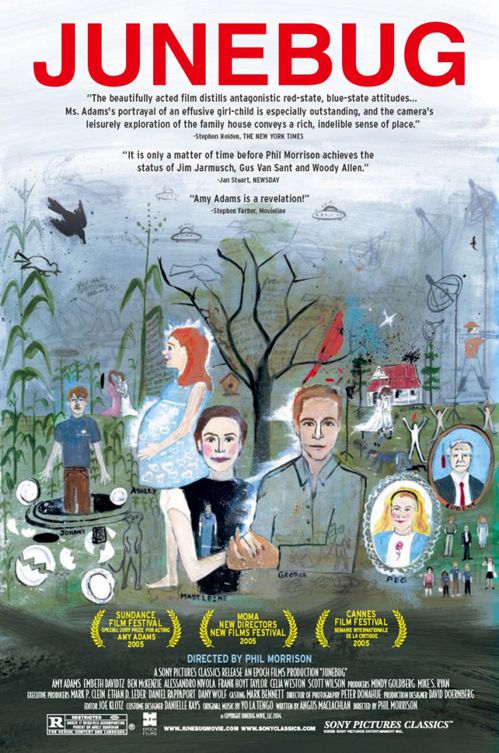
PHIL MORRISON’S JUNEBUG — A REVIEW BY NICK CLEMENT

junebug.jpg

If you haven’t seen Phil Morrison’s terrific independent film Junebug, seek it out on disc or via streaming options immediately. It’s a little gem, and provided a big launching pad for Amy Adams, who delivered a remarkable performance which netted a first Oscar nomination for this most wonderful talent. Working from a beautifully observed and emotionally sensitive script by Angus McLachlan, Morrison weaved a sad and funny southern-fried tale of dark familial dysfunction that will make you cringe one moment and laugh out loud the next. Never condescending or at any point making fun of the characters, Morrison’s subtle direction worked perfectly with McLachlan’s lived-in portrait of distinct American values and a particular lifestyle. The story revolves around George, played by Alesandro Nivola, who takes a trip down to North Carolina with his wife Madeleine, played by Embeth Davidtz. She’s an art dealer specializing in offbeat pieces who is drawn to the incredibly weird paintings of a racist and possibly crazy artist, who also happens to live near her husband’s family. Having only been married for six months and having never met his parents, Madeleine is taken back by the culture shock of staying with his family and his brooding, sullen brother Johnny, played by Benjamin McKenzie. The ensemble cast is perfection all down the line. Adams is astonishing as Johnny’s immature pregnant wife; it’s a performance that is so believable you’ll be convinced it’s not really acting. But to see how Adams has blossomed as a performer, from Enchanted to The Fighter and everything else in between, it’s further proof of how much range she possesses and how skilled she is as an actress. George’s mother, who almost instantly disapproves of Madeleine, is played by the great Celia Weston, who steals every scene she appears in. And the great character actor Scott Wilson is George’s quiet, wood-working father, the sort of many who values the amount of words that leave his lips, preferring to take a step back and experience life as a whole rather than a series of broken up pieces. I don’t want to reveal any plot points or spoil anything in this little film. It’s moving, hilarious, and poignant without being overly sentimental, extremely well-paced and directed, and truly deserves a higher profile.
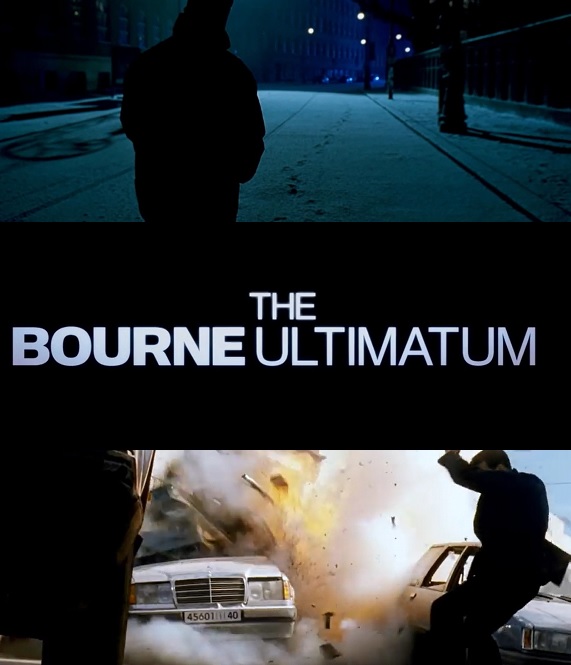
 

PAUL GREENGRASS’ THE BOURNE ULTIMATUM — A REVIEW BY NICK CLEMENT

ult

Paul Greengrass is one of my absolute favorite action movie directors, and The Bourne Ultimatum is easily my top choice in the series. Greengrass got his start in British documentary television and exploded on the feature scene with the inexorably intense Bloody Sunday, which is about as compelling as fact based cinema can get. He then moved to the second film in the Bourne franchise, The Bourne Supremacy, which was an excellent follow up to Doug Liman’s terrific first installment. Then, Greengrass directed one of the most unforgettable pieces of filmmaking I have ever seen, the 9/11 drama United 93. That film, though extremely tough to watch, is an extraordinary piece of storytelling, totally riveting and down-right scary at times. It’s some of the best pure direction that I’ve seen in a film, so it was no surprise to see that he would get Oscar nominated for his powerful achievement. Building on his famous brand of shaky-cam style that he used in his fist few movies, the work he did on United 93 is monumental, and he brought the same level of verisimilitude to The Bourne Ultimatium, which was critically acclaimed and did massive box office. Matt Damon kicked a ton of ass in the lead role yet again, and the many story threads developed in the first two pictures were all tied together in an extremely satisfying way.

But what blew me away the most about The Bourne Ultimatum was how Greengrass ratcheted up the intensity from the very first scene. It’s like being on a rocket ship for two hours; the film never stops to catch its breath, it’s refreshingly spare with dialogue (what little is said is all that needs to be said), each action set-piece existed in service of the story, not in place of it, and the hand-held cinematography by Oliver Wood was downright sensational even if a few shots sort of defy normal cameraman logic. And the incredible car chase through NYC was absolutely stellar, up there with some of the better screen pursuits of all time, and really demonstrating how hard it must be to coordinate a massive action sequence during the day in the Big Apple. Greengrass always brings his audience into the action whenever possible, using fast cuts and hectic camera movements not as a distraction, but rather as a way to make the viewer feel as if you’re in the middle of the action. I understand that many people don’t like this filmmaking aesthetic. And that’s fine. There are tons of classically shot action films I could point you in the direction of. But in terms of modern stylistic brilliance within the overcrowded action genre, Greengrass is at the top of the list, and I’m not surprised that so many other filmmakers have adopted his inherently visceral style.


DAVID CRONENBERG’S A HISTORY OF VIOLENCE — A REVIEW BY NICK CLEMENT

history_of_violence_xlg

I love the psychological underpinnings of David Cronenberg’s A History of Violence. Josh Olson’s casually deceptive screenplay in tandem with Cronenberg’s typical obsessions with duality, sex, and graphic violence made for a truly memorable crime thriller, a film with a smart subversive streak running under the surface. There are so many stand-out scenes in this film, especially during the final act, when William Hurt comes in and blows the doors down with a show-stopping portrayal of pure evil. I love the moment when Maria Bello lies to the cop in the living room, and then she and Viggo Mortensen, who gave a brilliant performance, proceed to smack each other around, which leads to one of the roughest, most vigorous big-screen sex-scenes, the two of them banging each other on the hard, old, wooden steps of their house, with Bello taking out her frustrations on Mortensen, as he begins to slowly unravel, becoming the man he’s tried so hard to leave behind. And then right after this intense moment of physical sexuality, you have this fantastic shot of Bello sitting up in her bed, with the moonlight creeping into the room, and you can see the indentations on her back from those wooden steps, which have clearly left an indelible mark on her in more ways than one. Mortensen is his usual tremendous self, never giving up any of the inherent mysteries that his character is holding deep inside, allowing the revelations to be slowly parsed out via facial expressions, body language, and the manner of his speech. Ed Harris was the definition of nasty, with a calmness to match his explosive rage and violent tendencies. Hurt’s absolutely magical and darkly hilarious performance during the film’s obscenely awesome climax seals the deal on this thematically probing piece of work. I love how Cronenberg and Olson were able to take various elements from crime and noir and spin them into a unique brew that hits various tones and notes all throughout the twisty and twisted narrative. Peter Suschitzky’s matter-of-fact yet stylized cinematography rarely calls overt attention, but is still extremely clever in its use of angles, composition, and color palette. This is just a terrific movie all around and one to catch up with if you’re not familiar.


MCGEHEE & SIEGEL’S WHAT MAISIE KNEW — A REVIEW BY NICK CLEMENT

maisie

What Maisie Knew is one of the most perceptive, honest, and devastating films that I’ve ever seen to involve a young child as its lead protagonist. Onata Aprile’s performance is utterly, unexpectedly extraordinary, projecting a sense of maturity well beyond her years (she was six years old at the time of filming), and is nothing less than wholly compelling as a young girl caught in the middle of a bitter and selfish custody battle between her two absolutely thoughtless parents (Julianne Moore and Steve Coogan, both chillingly excellent). Expertly directed by the extremely talented combo of Scott McGehee and David Siegel and sensitively yet caustically adapted by Carroll Cartwright and Nancy Doyne from the classic Henry James novel, this film had an absurdly low profile release despite enormously positive critical reaction, but because it’s actually about something important and believable and absolutely true to life, most people couldn’t be bothered to check it out.

I can think of so few movies where the performance of a child in a leading role was this exquisite (the brilliant Italian film I’m Not Scared also features some remarkable performances by youngsters), and it’s because of Aprile’s phenomenally observant quality as an actress that the viewer is thrust into her awkward and sad headspace, resulting in a film that pulls zero punches and affords no easy answers or tidy conclusions. Alexander Skarsgård and Joanna Vanderham both offer fantastic supporting turns, amplifying the high-stakes game of emotional fireworks that the narrative becomes, while creating layered characters which helps to solidify the interpersonal dynamics of the story, which is entirely focused on words and feelings and moments of intense anger and strife. This is a tremendously underrated film, that rare picture made for adults but expressly told through a child’s POV, and easily in the top five productions ever to be funded by modern schlock distributors Millennium Entertainment, now going by the name of Alchemy. But regardless of where the money came from to produce What Maisie Knew, this is the sort of effort that deserves more cinematic visibility, and will prove to be unforgettable to those who get a chance to see it.


JOHN HILLCOAT’S THE ROAD — A REVIEW BY NICK CLEMENT

road

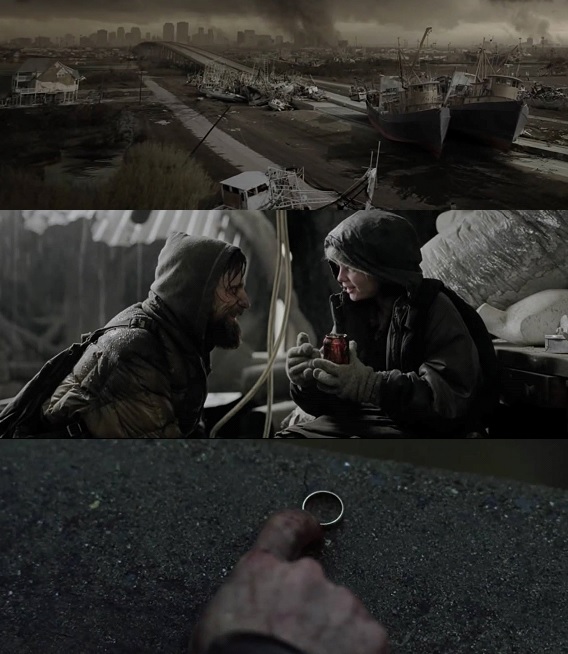
John Hillcoat’s nasty and chilling adaptation of Cormac McCarthy’s The Road was the best, most powerful film from 2009. Ever since I first viewed it I knew it would be impossible to forget. This is an emotionally riveting experience, a film that’s not likely to be embraced by all viewers, but I found it to be brilliant on pretty much every level. The snubbing that this film received, both by its distributors, and the Academy, was despicable. This is a masterful piece of post-apocalyptic fiction, a film that’s appropriately grim and bleak, but one that contains slivers of hope for humanity even during the darkest of moments. Viggo Mortensen’s quietly devastating performance as The Father was yet another incredible piece of work from this actor, who has strangely been missing from the screen for the last few years it seems. Kodi Smit-McPhee, making his debut performance, held his own quite admirably as Mortensen’s confused and scared son; the two of them hit some dramatic high notes of raw, honest, emotional intensity and their chemistry as father/son was palpable in every scene. Hillcoat (The Proposition, Lawless, the outstanding Triple 9 which is currently in theaters) and screenwriter Joe Penhall (the fantastic and deeply underrated Enduring Love) weaved a furiously dark tale of survival at the end of the world, smartly adapting Cormac McCarthy’s blistering novel, without ever resorting to cheap sentimentality as a buffer between all sorts of disturbing yet thought provoking narrative content.

Nick Cave and Warren Ellis’s moody score (they also did the brilliant music for The Assassination of Jesse James by the Coward Robert Ford) combined perfectly with the stunningly desolate cinematography by Javier Aguirresarobe, and Chris Kennedy’s intricately detailed and decrepit production design truly brought the viewer into this haunting, nightmarish world. I thought about the ending of this movie for days after I first witnessed it, and even after countless viewings, I’m still left shaken up by it. The film ends as it should, but it leaves you wondering so many things, but in a great, enriching way. This is the kind of introspective and sad piece of cinema that not a lot of people want to sit through, and I get that. But for me, films like The Road are why I love the power of the cinematic form. The Road is one of the best and most interesting films to deal with the idea of the apocalypse, and I just wish it had found a larger audience on the big screen and more support from the company that distributed it. When a film is as uncompromising with its vision in the way that The Road was, it becomes a challenge to market the story to a broad audience, hence the terribly misleading action-oriented trailer that pulled a major bait and switch. Whenever I watch The Road, I constantly ask myself how I would react in the situations that unfold during the story. What would I do if confronted with these odds? The Road doesn’t offer easy answers. It’s mysterious but accessible, and the way that Hillcoat and Penhall dispense with clues and signs as to the who/what/where/when/why of the desolation is subtle and eerie. I adore this strong and powerful piece of contemplative work, and it’s one that I’ll re-visit for many years to come.

***SERIOUSLY SPOILER FILLED SIDE-BAR INVOLVING MULTIPLE FILMS – PROCEED WITH CAUTION***

I love to ponder the idea of mixing movie worlds. After the events of David Michod’s astonishing The Rover, Guy Pearce, who would be out of reasons to stick around in the Australian outback, and given that The Rover features only a partial collapse of society, hitches a boat ride to the East Coast of America. He’s not there for more than a few months, when, BANG!, whatever happens to destroy society in The Road happens, and he’s now in a similar situation as he was in The Rover, just in a different part of the world. Viggo and his son traverse the coastline and make it to that beach, where, wouldn’t you know it, Guy Pearce from The Rover shows up, old and sloppy with some other people in tow (a family? Stragglers?), and he adopts Mortensen’s son. Boom. I love this.


STEVEN ZAILLIAN’S SEARCHING FOR BOBBY FISHER — A REVIEW BY NICK CLEMENT

bobby fisher

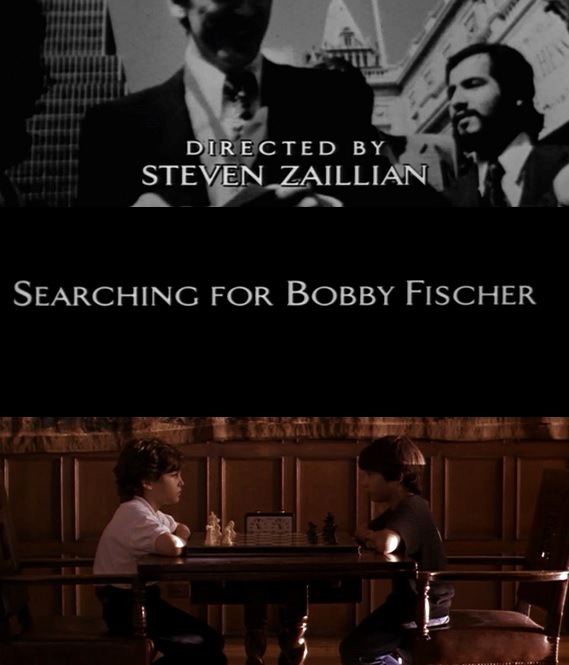
I absolutely adore Steven Zaillian’s directorial debut Searching for Bobby Fischer. Zaillian has a nearly flawless track record as a big-gun Hollywood screenwriter, and his directorial efforts have also been excellent (A Civil Action and the underrated All the King’s Men), but his first film is a nearly perfect, humanistic piece that zeroes in on character in a way that few dramas ever dare, especially when considering that the film is told through the POV of a 10 year old chess prodigy, who likely has some developmental and social anxieties, if not outright disorders. I’ve been obsessed with this film for over 20 years. I viewed it in the theater at 13 years of age, it was a go-to film when it endlessly played on HBO back in the day, and throughout the years, I’ve turned to this great, unassuming, patient work at least once every 365 days on my well-worn DVD, because it reminds me of how effective a simple story can be when the acting is extra-precise and when the writing compliments the direction and vice versa. It also helps to have had Conrad Hall calling the shots behind the camera; this is yet another beautifully textured and composed piece of work from one of the most legendary of cinematographers ever to grace the medium. The plot centers around a kid named Josh who is discovered to be a chess whiz by his parents and family members. They encourage his passion and gift, which leads him to an extremely intense and strict instructor named Bruce (played with devilish charm by Ben Kingsley), who pushes young Josh both emotionally and psychologically to be the best chess talent he can be, along with never forgetting how to be a decent person along the way, without sacrificing a competitive edge.

Bruce continually hypes up and compares Josh to chess great Bobby Fischer, allowing the youth to develop the idea that one day, he might be as great as that iconic yet mysterious figure. There’s also an affecting subplot between Josh and a speed-chess hustler named Vinnie, perfectly captured with great spirit and flair by Laurence Fishburne. And let’s not forget about the incredibly moving family dynamics between Josh and his parents, played by the brilliant team of Joe Mantegna and Joan Allen, both of whom radiate warmth and respect and support for their son, even under the most trying of situations and circumstances. And over the course of the film, it’s remarkable to witness Josh become his own person, after so many others have projected what they want him to be or to become, without ever asking Josh what it is that he really wants to do. The lead performance from then eight year old Max Pomeranc is nothing short of sensational; there are adults who have been acting for years who don’t come close to the complexity that he delivered in this challenging piece of work. It’s also interesting to note that Pomeranc was an actual chess player before filming began (even appearing on a Top 100 list for his age group, according to Wikipedia), and that he never went on to act in another substantial film again. But he’ll always have his tremendous performance in this amazing film to hold close to his heart. Zaillian has long been a considerable talent, expertly balancing his artistic sensibilities with the demands of the studios who are always courting him for big adaptations or structural work on their blockbusters. It’s not hard to see why. This is a great film and Zaillian is a class act.


JOHN HILLCOAT’S TRIPLE 9 — A REVIEW BY NICK CLEMENT

1

Triple 9 is my kind of movie. But I expected that. This is a John Hillcoat film. Hillocat has only made movies that I have loved. The Proposition, The Road, Lawless, and now this nasty, 70’s-flavored cop film that has streaks of Lumet while possessing an aggressively stylish and modern aesthetic hand. Matt Cook’s hard boiled screenplay involving corrupt cops, heists gone awry, and shifting allegiances surprises all throughout, unexpectedly killing off characters with blunt force, made even more impactful by Hillcoat’s always incredible sense of grim fatalism. There’s zero fat on the narrative yet the story is still full bodied. The star studded cast all clearly had a blast playing in this scuzzy milieu, with Kate Winslet as a Russian-Jewish gangster stealing the entire picture from an appropirately glum and intense Casey Affleck and an extremely riled up Chiwetel Ejiofor. Aaron Paul does drugged-out despondency better than anyone, Anthony Mackie goes hardcore, and Clifton Collins Jr., yet again, delivers a robust and extremely memorable supporting performance, totally dominating the screen and adding yet another terrific character to his rogue’s gallery. Oh wait, and then there’s Woody Harrelson, completely OWNING the film every time he appears, bringing a sense of humor to the otherwise heavy subject matter. Theresa Palmer, it must be said, has a stunning backside. And Michael K. Williams gets the cameo of the year. Triple 9 is also brimming with fantastic car chases and ear-ringing shootouts that explode with dangerous intent. The throbbing muscial score by Atticus Ross is a perfect match for the purposefully ragged cinematography and editing, creating brilliant chaos that still remains coherent. And then there’s the last shot, which, for my money, is an instant classic for this type of material. If you love violent cop films with hardened, unrepentant characters who aren’t easy to root for, if you yearn for more R-rated genre entries like this that harken back to the old days, then go out and see Triple 9.

MICHAEL MANN’S THIEF — A REVIEW BY NICK CLEMENT

thief.jpg

A Jerry Bruckheimer production. A film by Michael Mann. Damn, does that sound pretty sweet. It’s interesting to note how very different these two creative forces would become over the years, but their 1981 collaboration cemented two very distinctive stylistic talents who would pave the way all throughout the decade for other filmmakers who would become obsessed by their explosive action elements and urban nocturnal elegance. James Caan delivered one of his greatest performances in this gritty yet slick neo-noir which Mann based on the 1975 novel The Home Invaders by Frank Hohimer, who in actuality was real-life criminal John Seybold. Tuesday Weld co-starred as Caan’s girlfriend, with an amazing supporting cast including Willie Nelson, James Belushi, Robert Prosky, Dennis Farina, and Tom Signorelli peppering the film with lively, extremely memorable moments. This was Mann’s auspicious feature film debut after time spent on docs and TV programs, displaying a sensationally strong grasp of filmmaking technique and intent, with some of his now-obsessive visual traits firmly in place from the start.

The scene in the coffee shop between Caan and Weld is an all-timer, one of the single best moments of acting in Caan’s career, and further serves to demonstrate just how forceful and commanding he was as a leading man, while being able to convey his own special brand of sympathy. And one gets the sense that, while totally acting as its own great piece of storytelling, Mann was warming up and setting the stage for bigger, more epic pieces of filmmaking, while establishing his love for hardened, morally ambiguous protagonists who straddle both sides of the law while displaying an intense concentration on their job by following a meticulous set of personal and professional codes. These have been the recurring themes in Mann’s work that has stretched from the near operatic (Heat) to the grounded docudrama (The Insider) to the quasi-experimental studio thriller (Collateral) to the expressive and impressionistic genre treatise (Miami Vice). William Peterson made his feature debut in a very small part. After debuting at the Cannes Film Festival, Thief would slip in and out of theaters mostly unnoticed, despite receiving strong reviews from critics. Tangerine Dream’s hypnotic score only amplifies Mann’s uncanny sense of atmosphere and mise-en-scene.

RON SHELTON’S COBB — A REVIEW BY NICK CLEMENT

cobb

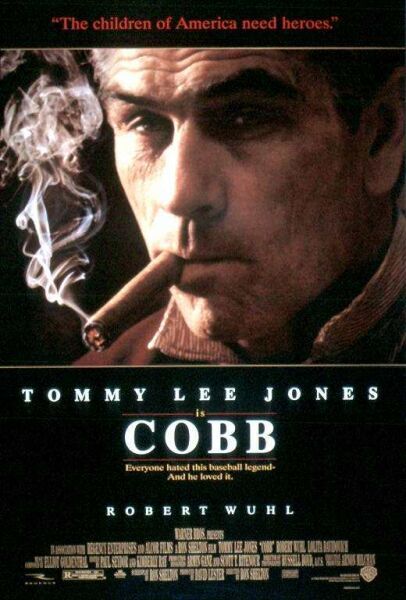
Except for a handful of people, everyone hated Cobb when it was released in 1994. It got savaged by almost every critic and it died a very quick death at the box office, grossing less than $2 million domestic. My dad took me to see it when it played at a local college campus theater during its second run (Trinity College in Hartford, which is still equipped with 70mm projection), and I’ve long been fascinated by its dark edges, its morally compromised center, and its stubborn refusal to play it safe for the biopic genre. Some filmmakers might have tried to soften Ty Cobb’s life story for the sake of potential audience sympathy and empathy, but not writer/director Ron Shelton — he’s too smart for those type of cheap tricks. By almost all accounts, Cobb was a racist, a drunkard, a drug addict, a wife beater, a general all-around asshole who also happened to be one of the greatest baseball players ever to pick up a glove and bat, a man with a ferocious desire to win at all costs, with a dangerous sense of reserve and purpose that outright scared other human beings. Shelton’s rather brilliant creative decision to totally limit the baseball action (you quickly glimpse Cobb on field in a few flashbacks and highlight footage) allowed for a more introspective narrative, thus taking the game out of the man, but never the sense of sport or competition.

Robert Wuhl, as Cobb’s autobiographer Al Stump, and Lolita Davidovich were both excellent in vivid supporting turns, while the production benefited enormously from Russell Boyd’s burnished and elegant lensing and the lived-in production design by Amin Ganz and Scott Ritenour. And then there’s Jones as Cobb, giving one of his greatest performances, unafraid to be unrepentantly nasty, and going for the emotional jugular in almost every single sequence. His fiery back and forth with Wuhl remains volatile all throughout the angry screenplay, providing a unique sense of awkward camaraderie and legendary reverence between subject and author.

Shelton had an absolutely tremendous run of sports films in the 80’s and 90’s, with the classic baseball comedy Bull Durham, the crowd-pleasing yet still subversive blockbuster White Men Can’t Jump, the challenging and unforgiving Cobb, the utterly lovely Tin Cup, and the underrated Play it to the Bone (which would make for a great double feature with Michael Ritchie’s unfairly neglected Diggstown), before moving into the cop genre in the 90’s and 2000’s with the superb Dark Blue, the humorous Hollywood Homicide, and scripting duties on Michael Bay’s at times hallucinatory Bad Boys 2. The Paul Newman political comedy Blaze is a fun and curious offering that found release in 1989. Roger Ebert’s personally conflicted review of Cobb is one of the most interesting pieces that he ever wrote, and is worth checking out.

EDWARD ZWICK’S PAWN SACRIFICE — A REVIEW BY NICK CLEMENT

1
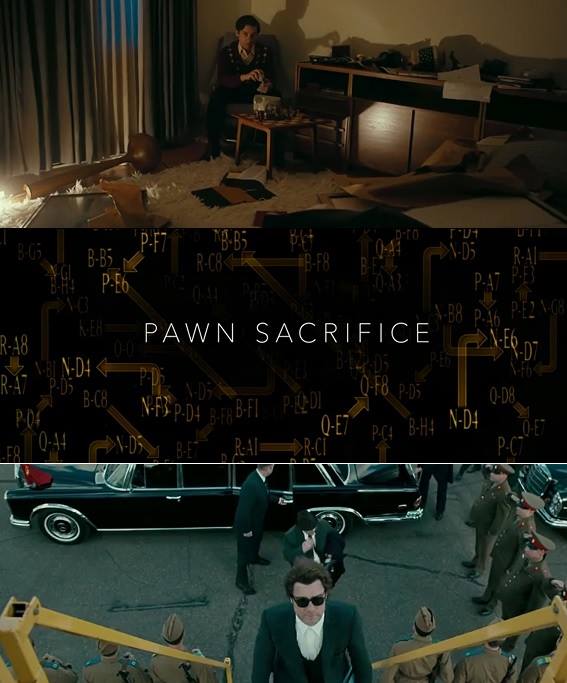
Pawn Sacrifice is a down-the-middle Hollywood biopic of infamous chess sensation Bobby Fisher. Squarely directed by Edward Zwick (whose Civil War epic Glory remains his career highlight), the film is content to be solid at almost every turn without the desire to go beyond the expected. It’s confidently crafted, very well acted by Tobey Maguire as Fisher and Liev Schreiber as his arch nemesis Boris Spassky (who are surrounded by deep and classy supporting cast), and is helped by the swift editing of Steven Rosenblum who keeps the pace moving without feeling rushed. The production design is evocative of the cold war setting, and Maguire’s descent into madness is certainly communicated well by the choices in Bradford Young’s smooth cinematography, the sharp use of sound, and Maguire’s innate ability as an actor to burrow deep into a character’s inner turmoil. But the film never went beyond the traditional, and considering how legitimately messed up Fisher was as a human being, the narrative might’ve been structured in a different fashion to allow for an even more introspective approach to the material.  Granted, the story they chose to tell narrowly focused on the intense rivalry between Fisher and Spassky, but still, I was hoping for something a bit larger in emotional and narrative scope. Considering the screenwriting talent involved (Steven Knight, Stephen J. Rivele, and Christopher Wilkinson), one might have expected something more robust and distinctive. The various chess matches are routinely staged, lacking directorial zest that might’ve spiced up the action; Zwick seemed curiously removed from this film to a certain extent, never bringing the panache from something like Defiance or Blood Diamond or the exuberance from his underrated romantic dramedy Love and Other Drugs. Pawn Sacrifice is a comfortable Saturday night movie, undemanding yet entertaining, but might’ve been more rewarding had it wanted to really get down and dirty.