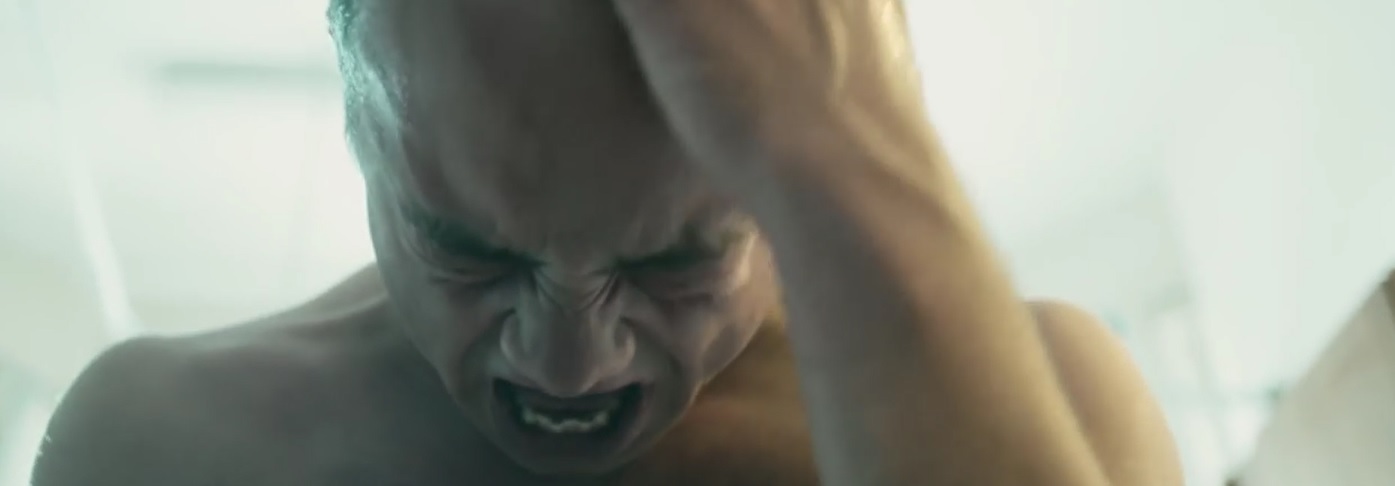
Exeter marks a return to the straight-up horror genre for slice-and-dice specialist Marcus Nispel (The Texas Chainsaw Massacre, Friday the 13th, Pathfinder, Conan the Barbarian). This gonzo, surprisingly funny, high-energy, EXTRA-gory horror flick puts a simple and fresh spin on the classic exorcism narrative and throws in some twists along with a supreme sense of style. A bunch of teenagers have decided to turn a run down children’s mental hospital into the makeshift location of a rave, and after doing some excessive partying, a group of friends splinter off and begin to get into some seriously messed up situations with the ghosts of dead children. Possessions ensue, exorcisms are attempted, people can no longer be trusted, the bodies start to hit the floor, and the film goes totally nuts in the final act, featuring one of the nastiest bits of horror movie violence I’ve seen in a while. This isn’t my normal cinematic milieu, and I’m not as well versed in this sort of material as so many others clearly are, but I was drawn to the project by Nispel (long an effective stylist drawn to hardcore material) and the involvement of the great character actor Stephen Lang, who gets the film’s best scenes and lines of dialogue. One of those talents who spruces up any picture that is lucky enough to cast him, Lang clearly had a blast getting down and dirty with this bit of extreme nastiness. Shot on a low budget but never looking anything less than spectacular, Nispel and cinematographer Eric Treml bathe the film in saturated colors, lens flares, and jet blacks with cool blues, employing hand-held cameras with variable shutter speeds, creating a visceral effect that puts you in the middle of all of the limb-lopping, glop-filled fights and kills that Nispel so clearly has a ball in staging. One bit, involving the loss of half of one’s face, is, for the lack of a better word, horrifically memorable. Production designer Guy Roland and set decorator Sarah Hill Richmond had fun with the scuzzy and threatening solo location, and the editing by Blake Maniquis never rests for a moment but never overwhelms the picture with incoherence. For fans of this sort of extra-grisly yet still playful horror madness, Exeter should more than easily hit the mark.
Author: nlclement
WERNER HERZOG’S BAD LIEUTENANT: PORT OF CALL NEW ORLEANS — A REVIEW BY NICK CLEMENT
This is an unhinged, deranged movie, filled with scenes that are so oddball and offbeat and at times rather transgressive that you just have to stare in awe at the screen, wondering what it is exactly that you’re watching. Why they chose to recycle the Bad Lieutenant title for this movie will never make any sense to me, at least creatively. It had to have been done by one of the “money guys,” as there were a lot of them on this picture. The film should have simply been called Port of Call: New Orleans. That’s all that was necessary. Why bother evoking Abel Ferrara’s outlaw masterpiece when your film isn’t close to being a remake or sequel? It’s different in every way — atmosphere, plot, style, intent — the only thing they really share in common is that the lead character is a loose-cannon cop. Here, you get Nicolas Cage totally unleashed, smoking crack pipes and sticking guns in the faces of elderly and infirmed women, sexually pleasuring a female in the street in front of her boyfriend, and tending to a zonked-out Eva Mendes who looks like 10 tons of shit (on purpose) in this scuzzy yet incredibly stylish riff on genre material. And much of the zaniness has to be attributed to director Werner Herzog, here an amazingly inspired gun-for-hire choice, probably taking his paycheck and funding his next 10 small documentaries or personal projects that we’ll never hear about.
Seeing Herzog run through the conventions of the modern cop thriller was wonderful because he seemed happy to upend your expectations at various turns, and he afforded his ace production team the chance to run wild with distinct locations (Tony Corbett handled the gritty production design), snazzy photography (shot by Herzog’s regular collaborator Peter Zeitlinger), and a jazzy musical score (crafted by the always awesome Mark Isham). It’s a film that shouldn’t be taken 100% seriously (I see it as a black comedy more than anything else, like Ridley Scott’s underrated Hannibal in some respects), but because Herzog puts an emphasis on the strange (those iguanas!) while still having a firm grasp on the procedural aspects of the plot, the entire concoction becomes this bewildering brew of new school and old school, with Cage popping like a top for two hours, never relenting for a moment, in essence going for broke the entire damn film. The eclectic supporting cast includes Val Kilmer, Shea Whigham(!), Fairuza Balk, Brad Dourif, Jennifer Coolidge, Shawn Hatosy, Vondie Curtis-Hall, Tom Bower, Michael Shannon, and Xzibit. That the film was shot entirely on location in South Mississippi and Louisiana in the aftermath of Katrina only upped the surreality factor. Despite not doing big box office (it was barely released), the film received hugely supportive reviews from critics (Ebert and Dargis were massive fans), and it will certainly find its rightful place amongst instant cult classics from the modern age. Herzog was nominated for the Golden Lion at the Venice Film Festival. Shoot him again — his soul is still dancing POWER.
GERARDO NARANJO’S MISS BALA — A REVIEW BY NICK CLEMENT
It doesn’t matter how many times I view it – Gerardo Naranjo’s Miss Bala is a provocative blast of unpredictable action-drama storytelling, a movie that truly takes ZERO prisoners. I would dream of spoiling ANY of this film, but I will warn: This is mean and nasty and ugly-gorgeous, with a dénouement that’s in no way shape or form “happy.” But the filmmaking is flat-out expert all throughout (director Naranjo needs to make another film ASAFP), the script is succinct and raw and thrillingly topical, the lead performance from the stunningly beautiful Stephanie Sigman is something of a tour de force (she’s soon to be seen in the newest Bond adventure, Spectre), and the various shoot-outs and action sequences are Mann-esque in their immediacy and violent consequences (the visceral sense of sudden violence in a film like in A Prophet also comes to mind). Centering on a Mexican beauty queen (Sigman) who is kidnapped and forced to become a drug smuggler for a South of the border cartel, this is a film that explores the insanely violent criminal underworld currently infesting Mexico, with an exceedingly sad (yet inevitable) final sequence that will send a chill down your spine, elevating the film beyond just another stylish shoot ’em up, albeit one with the unique beauty queen angle. Trust me…just check out the trailer which I’ll link below and try telling me that it doesn’t look beyond exciting and completely wild. I dare you. This is one that deserves a big audience. Available as a DVD, but sadly, no Blu-ray is yet available.
DANNY BOYLE’S MILLIONS — A REVIEW BY NICK CLEMENT
It must be exhausting being Danny Boyle. Judging by his frenetic yet coherent filmmaking aesthetic, he must never stop moving, thinking, twitching, or doing. He’s a restless artist, interested in telling propulsive stories through a break-neck sense of pacing and stylistic ferocity. His “kids movie” from 2004, the obscenely underrated Millions, is one of the edgiest, most subversive PG-rated efforts that I can think of, and a film that explodes with a creative burst of technical energy and narrative surprise. This delightful piece of work centers on eight year old Damian (the terrific Alex Etel), a Catholic school student who lives with his father (the wonderful James Nesbitt) and his brother Anthony (Lewis McGibbon, excellent), and whose mother has recently passed away. Then, one day, while allowing his active imagination to take center stage (he’s constantly having surreal discussions with various saints from throughout history), he has the happiest of accidents: A cash-stuffed duffel bag somehow lands directly on top of his cardboard fort, seemingly thrown from a passing train. Unsure of what to do with the money at first, Damian shows Anthony his discovery, and the two brothers decide to keep it a secret. Which proves hard. Very hard. And then, somewhat menacingly, they must contend with the original owner of the duffel bag, who has some very good reasons for wanting all of his money back. The exceedingly imaginative script was adapted by the writer Frank Cottrell Boyce (who also wrote the novel), who fills the narrative with surprise after surprise, tons of great dialogue, and a willingness to bend the expectations of a children’s film at almost every turn. This is the only Danny Boyle film not to be rated R (at least that I can think of off the top of my head) and yet it still feels totally within his cinematic worldview; this is a lightning-quick piece of storytelling that’s clearly in love with the endless possibilities that the medium can offer on a visual level. The tremendous cinematographer Anthony Dod Mantle shot the film in a gorgeous yet gritty fashion, injecting bold color and photographic expressiveness to convey feeling and mood. Etel’s dialogue-heavy performance is one of the best I’ve ever seen from a youngster on screen, and because Boyce’s smart screenplay is so deep where it counts, you come to adore both Damian and Anthony and their father, resulting in a film that feels extremely heartfelt while also clearly made with a zest for form and technique. This is easily one of Boyle’s best films and the one that gets the least amount of acclaim or attention.
TERRY MCMAHON’S PATRICK’S DAY — A REVIEW BY NICK CLEMENT
Terry McMahon’s blistering drama Patrick’s Day is unquestionably one of the best films I’ve seen all year. This Irish film, which debuted at various film festivals before finding general release earlier this year in its home country, deserves to find a wide audience here in the states, but thanks to a zero theatrical release (as far as I can tell) strategy and the lack of any streaming or physical media options, the only way one can see this is to do something illegal on the internet (which I don’t do) or own a Region Free disc player and purchase the Region 2 DVD from Amazon UK (which I did). Intelligent, romantic, deeply troubling, and all together devastating, few films that I can think of feel more timely or of the moment than this one; mental illness is a massive issue all around the world, and McMahon’s multilayered narrative takes a harsh look at parenting gone wrong and a system that consistently fails those that it’s looking to rehabilitate. It’s a shame that the awareness levels for this movie feel as low as they do – I talk about movies all day long, and if it weren’t for one of my FB buddies, Richard Finlay, I might not ever know about this tour de force hidden gem. Sometimes, the most potent and effective of films come from the places you’d least expect. Maybe it’s because I’m not familiar with the actors or that I didn’t know what to expect with this film that it hit me as hard as it did. Whatever the reason, when movies are your passion, and something this consistently thoughtful and daring comes along, you feel like screaming from the top of your lungs to all who’ll listen – this is a tough, draining, but essential piece of work.
The narrative centers on Patrick (the incredible Moe Dunford), a mentally ill 26 year old man who is out for his annual birthday amusement park excursion with his wildly overbearing mother Maura, the fabulously evil Kerry Fox. Patrick gets separated, and ends up back at the bar of the hotel where he and his mother are staying. There, he meets-cute with a suicidal flight attendant named Karen (the excellent Catherine Walker), an incredibly damaged person in her own right, who rather impetuously strips Patrick of his virginity, which opens up an entirely new world for the previously buttoned-up grocery store clerk. Mom is none too pleased with these developments, and the rest of the story hinges on her attempts to destroy the relationship that her son is building, despite the obvious sense that it might be something that’s helping him. Dunford is extraordinary as the titular character, evoking deep personal pain all throughout the movie, while still mixing in a sense of hopeful optimism that he might finally be connecting with another human being. Walker is vulnerable, a lost and drifting soul searching for meaning, and because the character has been written in a slightly cryptic fashion, she’s forced to use her body language and expressive eyes to convey some character beats that were not on the page. And in a performance that sits right next to Jackie Weaver’s brilliantly amoral work in David Michod’s crime drama Animal Kingdom or Hye-ja Kim’s sinister matriarch in Joon-Ho Bong’s exquisite thriller Mother, Fox is nothing short of mesmerizing as Patrick’s confused, pained, and ultimately misguided caretaker, never once realizing that her actions may be doing more harm than good. In one of the film’s more upsetting moments, Fox tares down a wall filled with framed pictures of Patrick from each of his birthdays from throughout the years, and it’s in this explosive moment that you finally realize that the overall toll that’s been taken on this woman is almost too much for one person to handle.
As a writer/director, McMahon clearly has a distinct point of view that he sticks with during the visceral and turbulent events of Patrick’s Day, and it’s clear to me that he’s definitely bothered by the idea that many people, from family members to the professionals who are supposedly “experts,” don’t do the proper things when it comes to taking care of those who are in need. Shot in a semi-subjective fashion by the fantastic cinematographer Michael Lavelle, the filmmakers draw the viewer into Patrick’s fractured psyche, and by shooting in a heightened, artistic fashion, the film carries a dream-like quality that extends all the way to the final shot, which might leave some viewers with more questions than answers. But as with all great art, it’s always best to leave people with something to think about and ponder rather than spell everything out for easy digestion and consumption. McMahon should be commended for never taking the cheap way out of any of the difficult corners that he puts his fragile characters in, always allowing the story to rationally unfold from scene to scene, even when the actions on the part of some of the characters make you wince with anger or even disgust. Who should say when someone else is allowed to fall in love? If a person has mental issues, does that mean that they aren’t capable of feeling love, or being loved by another person? And when is it ever acceptable to introduce rehabilitation methods, in this case shock treatment, in an effort to “fix” someone? Patrick’s Day will be a film that will test the limits of some viewers, as it goes to some dark yet truthful areas in search of enlightenment and answers, even if some of those answers will forever be out of reach. McMahon has crafted a brave and intimate and surprising piece of cinema, and I absolutely cannot wait to see what he does next.
THE WORK OF RUSS ALSOBROOK — BY NICK CLEMENT
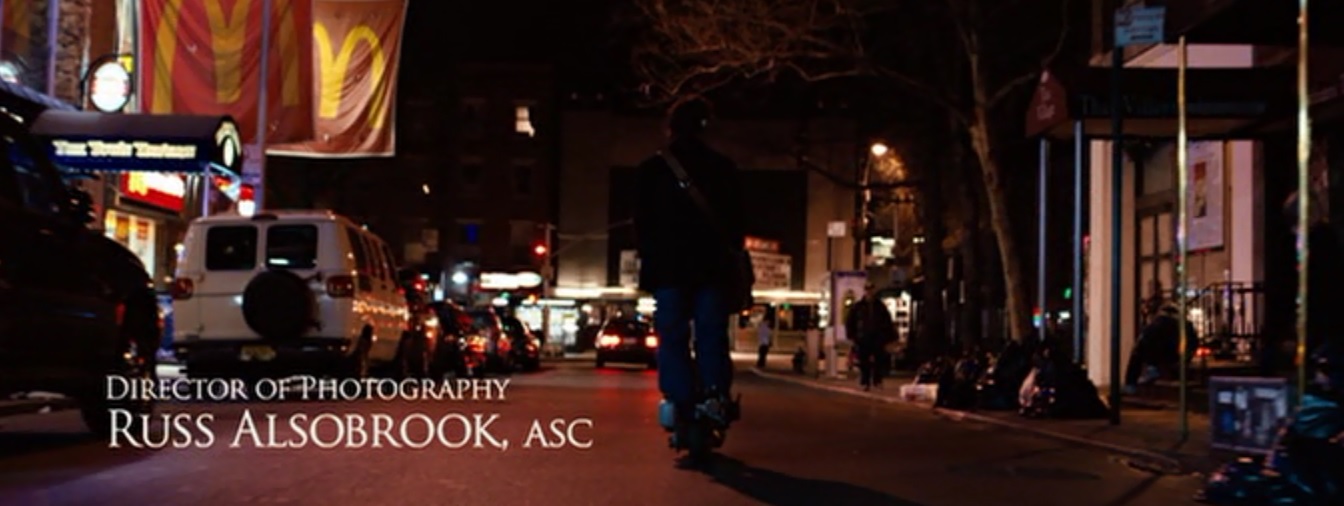
Cinematographer Russ Alsobrook has had the chance to work in comedy and drama, both on the big and small screen, with credits that range from high-profile studio assignments to smaller, indie-minded hidden gems, always bringing a casual sense of style to all that he shoots. He’s cemented a close partnership with filmmaker Mike Binder, collaborating with him on the Hollywood satire Man About Town, the fantastic and deeply underrated post 9/11 drama Reign Over Me, and last year’s provocative Kevin Costner drama Black or White, as well as the HBO series The Mind of the Married Man. Knowing how to cover comedy is super important, as you need to understand timing on the part of the actors, as well as where to place the camera in order to get maximum laughs out of any given comedic moment. It’s no surprise that he’s been drafted by the Judd Apatow factory for two tours of duty (Superbad and Forgetting Sarah Marshall), with other credits including last summer’s Melissa McCarthy hit Tammy and the David Wain crowd pleaser Role Models. But Alsobrook is also that sort of talent who can jump from a funny sequence to one that’s totally dramatic, with total ease, making his work all the more textured and varied. He’s a unique talent in the sense that he clearly responds to comedic material and knows exactly how to frame a joke, but can also gravitate towards dramatic material with just as strong of a sense of place and unobtrusive style.
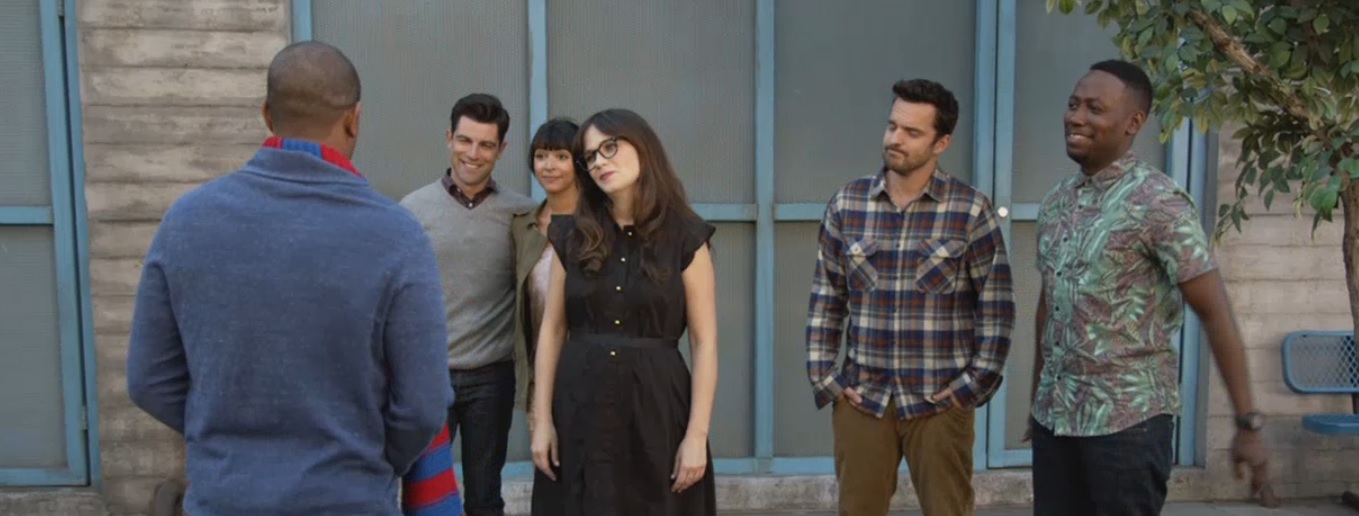
Reign Over Me is one of those delicate films with a tone that moves back and forth between funny and sad, and Alsobrook knew exactly how to get into the headspace of Adam Sadler’s emotionally damaged lead character. Just watch as Sandler floats through the nocturnal NYC streets on his scooter during the film’s opening segments, oblivious to all that’s around him, almost begging to be hit by a car. In these moments, Alsobrook’s grainy and dreamy digital cinematography captures the spiritual anxiety of a man who is at a serious crossroads in his life. The film is wildly undervalued, and Alsobrook’s elegant sense of style was a big part of the film’s success. One of his largest accomplishments as a craftsman has to be his continued work on the smash FOX comedy series The New Girl, which stars Zooey Deschanel alongside a terrific cast including Jake Johnson, Max Greenfield, Hannah Simone, Lamore Morris, and Damon Wayans Jr. There’s a sense of family on the show, and over the course of 98 episodes as cinematographer (and a bunch as director), Alsobrook has given the series a warm and fluid visual style that’s in perfect tandem with the playful material. And earlier this year, Alsobrook’s versatile work was seen on the big screen in Mike Binder’s thoughtful race relations drama Black or White, which starred a fantastic Kevin Costner as a hard-drinking grandfather trying to keep custody of his granddaughter. Alsobrook had a chance to shoot a multifamily portrait of life in Los Angeles, and be brought to the film a classy polish while never getting to ostentatious about his aesthetic, always the mark of an astute talent.
ROBERT ALDRICH’S EMPEROR OF THE NORTH — A REVIEW BY NICK CLEMENT
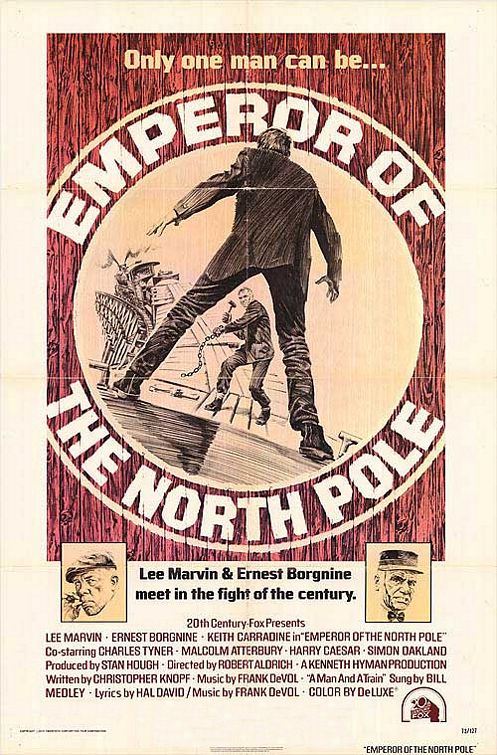
Emperor of the North, aka Emperor of the North Pole, is an exceedingly masculine film. You can smell the cinematic machismo dripping off of Lee Marvin and Ernest Borgnine all throughout this beefy action-adventure from man’s man director Robert Aldrich (The Dirty Dozen, The Flight of the Phoenix). Released in 1973, this stunningly photographed train adventure is set during the height of the great depression, and centers on a wise hobo named A-No.-1 (Marvin) who battles it out with a sadistic train conductor named Shack (Borgnine). Shack doesn’t allow any transients to catch a free ride on his train, and he’s more than happy to smash a bum in the head with his hammer and throw them under the wheels to their death. There is a rugged physicality to this film, and almost all of it feels authentic and shot on location on real trains. The crisp Oregon backdrops lend verisimilitude to all of the action, while the stunt-work is consistently ridiculous, with numerous leaps and tumbles and dust-ups all preformed organically and with a minimum of fuss. There’s a crude sensibility and rough disposition to this film at times, with Christopher Knopf’s straight forward and tough-talking screenplay (with uncredited story contributions by Jack London) containing some real gems of dialogue, with the final moments of the film carrying a witty and defiant streak of ironic, introspective humor. Keith Carradine’s memorably skeevy performance as Cigaret was his second overall, and he brought an uneasy charm to his role as that of a rookie train-rider who crosses paths with the taciturn Marvin, who utterly destroys as the surly A-No.-1. The supporting cast includes solid turns from Charles Tyner, Matt Clark, Liam Dunn, and Malcolm Atterbury, while Frank De Vol’s triumphant score pounds away during the action, but smartly relents in key spots. Cinematographer Joseph F. Biroc, a frequent Aldrich collaborator, really shot the hell out of this motion picture, with certain sequences sort of defying technical logic considering the era that the film was produced in, while the entire endeavor feels dangerous while looking beautiful.
SPIKE LEE’S 25th HOUR — A REVIEW BY NICK CLEMENT
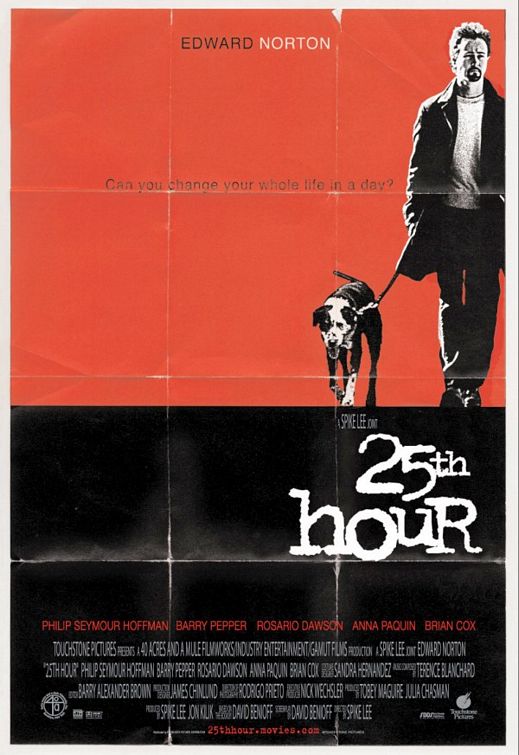
Angry. Vital. Reactionary. Honest. Masterpiece. Spike Lee’s 25th Hour, from a brilliant screenplay by David Benioff, is easily one of his best films, and unquestionably my personal favorite joint from this quintessential NYC filmmaker. Released in the shadows of 9/11, this searing drama features one of the greatest performances from Ed Norton in his entire career (which says a lot in my estimation), and incredible supporting turns from Philip Seymour Hoffman, Barry Pepper, Rosario Dawson, and Anna Paquin. One of the first films to directly confront the horrors of 9/11 both visually and thematically, Lee and Benioff crafted a ferocious film that rests on its riveting narrative and sexy-gritty visual style (the versatile Rodrigo Prieto handled the striking cinematography), with Terence Blanchard’s haunting score filling the background. Brian Cox is late-in-the-game devastating as Norton’s father, who has to contend with the fact that his son is about to head to prison for a major drug charge. The film pivots on Norton’s character getting pinched for dealing, and following him over the course of his last day of freedom, as he settles scores, examines friendships, and comes to terms with his girlfriend (the super sexy Dawson giving a rich and emotionally affecting performance). I can remember seeing this film opening night at the Hollywood Arclight back in 2002, with a totally sold out crowd, and the stunned silence at the end also contained a palpable level of tension that you could cut with a knife. The film gets under your skin, purposefully, picking at the ills of society like a bloody scab; Norton’s “Fuck You” speech in that bathroom mirror is still one of the most sensational bits of cinema that I’ve ever seen. I’d never spoil it out of context, as it’s truly a moment that needs to be experienced organically, but let’s just say that what flows from his mouth is shattering, pointed, and disturbingly true. The film was met with a somewhat muted critical response and it performed decently, for its budget, at the box office – more should have been made of this film at the time of its release. I think that people were too shell shocked to realized what they had been given, and over the years, my hunch is that many people have discovered this gem for what it is – a reflective cinematic mirror from a very specific time and place that tells a universal story against an uncertain backdrop of personal despair. It’s time that this film got the attention that it deserves, as it stands as a blistering piece of contemporary social commentary that feels cut from the open wound of a society struggling to find its footing. Available on Blu-ray. Buy it.
SYDNEY POLLACK’S THE ELECTRIC HORSEMAN — A REVIEW BY NICK CLEMENT
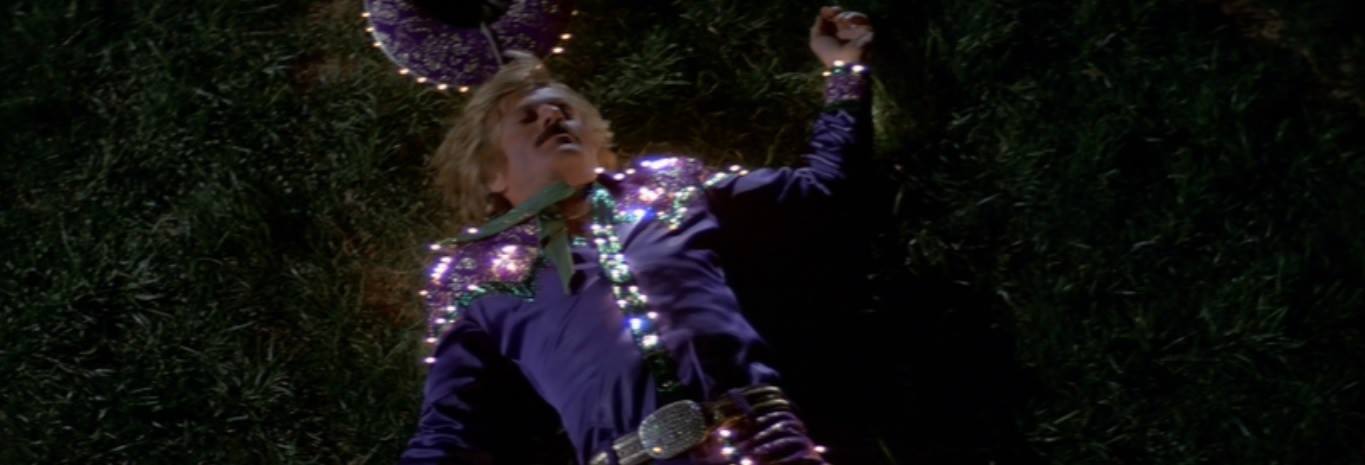
Sydney Pollack’s The Electric Horseman is my sort of 70’s, honkytonk, pseudo-Western fun. You get a sloppy drunk Robert Redford in the opening act, all glammed-out in his garish light-up outfit atop his horse, making kissy-faces and stealing glances with a sexy Jane Fonda, while a fantastic supporting cast including Valerie Perrine, Wilford Brimley, Allan Arbus, John Saxon, Nicholas Coster, and Willie Nelson (who provided the country western score and lots of sly laughs) peppers the background with flavor. Redford is a past his prime rodeo champion who has resorted to a humiliating job as a promotional pitch-man for a breakfast cereal company, making appearances in a tacky Las Vegas show. He’s then tasked with performing alongside a $12 million horse, which he later discovers is being drugged so that it would be complacent, and he high-tails it into the desert, disgusted by what he’s witnessed. Meanwhile, Fonda, playing an eager TV reporter, hears about the incident, and pursues Redford, looking for her big story. The movie is a comment about big corporations, a satire on the conventions of the western, and a genial romance between Redford and Fonda with some action-adventure thrown in for good measure. The Electric Horseman has an old-fashioned atmosphere and tone (even for 1979!) and it sort of shambles on to its happy but still bittersweet finale. Pollack’s solid direction keeps this oddly charming film watchable all throughout, while the peppy and romantic score from Dave Grusin immediately set a playful mood. Great cinematography by Owen Roizman.
HAROLD BECKER’S CITY HALL — A REVIEW BY NICK CLEMENT
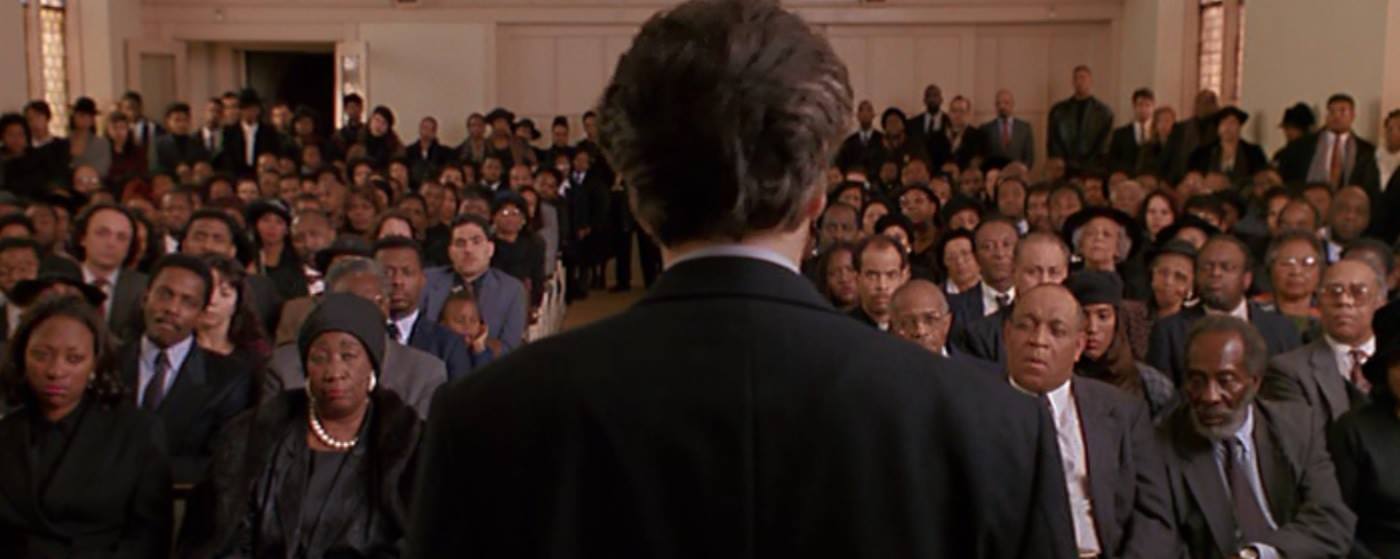
Harold Becker’s excellent and supremely underrated 1996 drama City Hall is always a great re-watch and it definitely deserves a Blu-ray upgrade. It’s a comfort-blanket type film for me – I just like watching it. This came out during the “Screaming Mad” Al Pacino era (Scent of a Woman, Carlito’s Way, Heat, Donnie Brasco, The Devil’s Advocate, The Insider, Any Given Sunday) and his forceful, emotionally invested performance as the beleaguered mayor of NYC is one of his most underappreciated. Boasting a roster of big-gun studio screenwriters (Bo Goldman, Paul Schrader, Nicholas Pileggi, Ken Lipper), the dialogue is smart, the plotting is believable, and the themes are still topical. Also, it’s another fantastic instance of massive Character Actor POWER: Danny Aiello utterly owns his scenes, and then you have the likes of Martin Landau, David Paymer, Richard Schiff, Nestor Serrano, Larry Romano, Anthony Franciosa, Tamarie Tunie, Lindsay Duncan, and John Slattery(!) filling the edges with colorful supporting work. John Cusack and Bridget Fonda are solid if outmatched by the gusto of Pacino, who looked purposefully tired and haggard with a voice that sounded coarse and strained, which all added to the realistic nature of the character and his endless pursuit of justice. This is one of those sturdy, dramatically effective movies that didn’t register with critics or at the box office, and for some reason, still has never found the due respect that it deserves during its endless cycle on the cable channels and in DVD bins. It might not be brilliant, but it’s endlessly watchable, and as usual for Becker, there’s an unforced steadiness to his directing that keeps everything moving along at a brisk clip, aided by the classy stylings of cinematographer Michael Seresin. Boasts a superb score by Jerry Goldsmith.