THE FOX & THE HOUND — A REVIEW BY FILMMAKER AND GUEST CRITIC DAMIAN K. LAHEY

FoxAndTheHoundPoster

“The Fox and the Hound” (1981) dir. Ted Berman, Richard Rich, Art Stevens

One of Disney’s more adult efforts, ‘The Fox and the Hound’ is an endearing morality tale depicting the negative long term effects of tribalism. Todd, a fox and Cooper, a hound become childhood best friends only to realize as they grow older that they must adhere to the roles of their respective cultures and cannot be the friends they once were.

The filmmakers do a remarkable job at the outset of developing the friendship between the young hound and the young fox. It is extremely genuine. A tad hammy but not false. This foundation holds the film together. Cooper is derided by his peers for befriending a fox but is given the benefit of the doubt because of his youth. The older hunting dog Chief and the master, Mr. Slade, are metaphorically unabashed racists as the film brazenly makes its case that bigotry is not inherent in the young but is instead learned by one’s elders and their culture. This film is also astute enough to point out that even the seemingly enlightened woodland creatures who befriend Todd are just as responsible for the general state of things. While they may acknowledge that societal prejudice is wrong, their refusal to do anything about it makes them benign accomplices all the same.

It should be noted that ‘The Fox and the Hound’ features to-die-for voice work by Mickey Rooney, Kurt Russell, Corey Feldman, Sandy Duncan, Pat Buttram and Pearl Bailey. Hard to imagine what this film would have been like without them.

Much has been made about whether or not Chief should have been killed. The new blood at Disney working on the project argued vehemently the Chief should be killed but the old guard voted them down. I certainly agree that the film would have had more narrative bite (ha!) if Chief had been killed. As it stands the retribution seems a little wonky even for Disney logic but it doesn’t raise much of an eyebrow. In my opinion it was a small price to pay in order to get the film’s message across.

Life is unfair, people. And as this film shows us, most of life is spent within the grey areas as opposed to the blacks and whites. Even the most dramatic moments in our lives end in neither clear victory nor defeat. When Cooper stands up to Mr. Slade at the end of the film, refusing to betray Todd – it is merely a truce of sorts. It is no victory for multiculturalism nor defeat for isolationism. There is merely a mournful acceptance that the fox and the hound cannot coexist for many frustrating reasons. But for a brief period of time, Todd and Cooper proved that they could. Society, my friends, can be a very oppressive force. One that influences people far too often to betray their more noble instincts for the ‘good’ of the pack. We could all be more mindful of this.

TheFoxandTheHoundStill

STANLEY KRAMER’S INHERIT THE WIND — A MINI-REVIEW BY NICK CLEMENT

2

Stanley Kramer’s timeless drama Inherit the Wind still has the capacity to rouse and startle, and remains scarily relevant in today’s increasingly Idiocracy-leaning society. Co-written by blacklisted screenwriter Nedrick Young and Harold Jacob Smith, the film was based on the play by Jerome Lawrence and Robert Edwin Lee and inspired by the famous “Scopes Monkey Trial” in 1925, where creationism vs. evolution was up for debate. Starring Spencer Tracy, Fredric Marsh, Gene Kelly, Dick York, Donna Anderson, Claude Akins, Harry Morgan, and Elliot Reed, there’s not a bad performance in the entire bunch, and the film’s black and white photography by Ernest Laszlo is consistently dynamic, which was no small feat considering that much of the action takes place in a courtroom. I was introduced to this film by my father early in my formative movie-buff years, and I’ve revisited it numerous times as it always provides an intellectual punch, and serves as a potent reminder of how mixing religion with law is a terrible idea.

3

BARRY LEVINSON’S TIN MEN — A REVIEW BY NICK CLEMENT

2.5

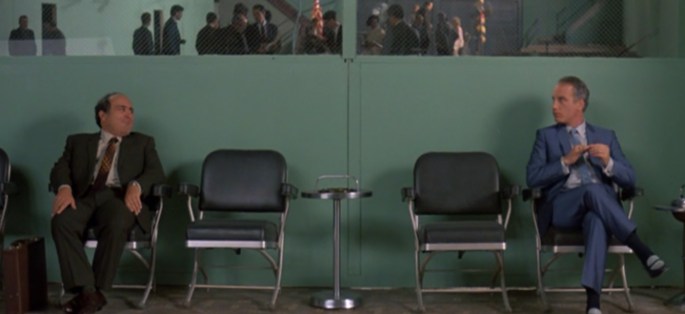
I’ve been a big fan of director Barry Levinson (Wag the Dog, The Natural, Rain Main, Bandits, Bugsy) over the years, and one of my favorites from him is his 1987 dramedy Tin Men, which features a trio of fantastic performances from Danny DeVito and Richard Dreyfuss as competing aluminum siding salesman who cross paths with each other, and Barbara Hershey as the woman who they compete for. Levinson wrote the humorous and fond-memories screenplay (it’s the second of his four “Baltimore Films”, with the others being 1982’s Diner, Avalon in 1990, and the very underrated Liberty Heights in 1999) and it’s abundantly clear that he’s always had a great ear for dialogue, especially in the films that he’s set in his home state of Maryland. Peter Sova’s unfussy cinematography is stylish without calling attention to itself, Stu Linder’s crisp editing keeps the comedic timing sharp and on-point from all the actors, and the wonderful supporting cast includes J.T. Walsh, Bruno Kirby, Seymour Cassel, John Mahoney, and Jackie Gayle. The Fine Young Cannibals contributed to the soundtrack and made an appearance during a nightclub sequence, and the film ended up grossing $25 million in theaters off of strong critical notices. Tin Men is currently available on DVD and via Amazon streaming and feels like the sort of film that a present day studio executive would laugh you out of their office for pitching to them.

3

RANDY MOORE’S ESCAPE FROM TOMORROW — A REVIEW BY NICK CLEMENT

1

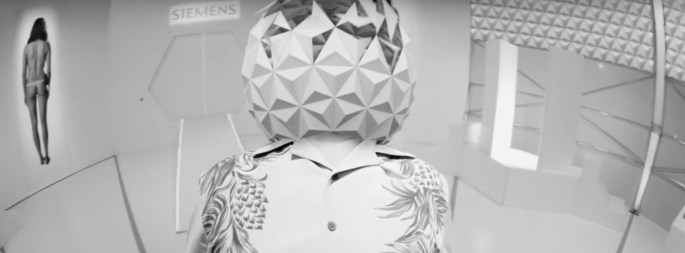
Escape from Tomorrow is a work of cinematic madness. This willfully deranged little freak-out was written and directed by Randy Moore, and because this was his debut feature, the film feels even more radical than if a more seasoned filmmaker had attempted something similar. The narrative pivots on a recently unemployed father (Roy Abramsohn, totally out of control) who takes his family to Disney World for the ultimate vacation, only to have the entire experience spin out of control due to his increasingly sketchy hallucinations and perverted sexual visions. The vast majority of this film was shot guerrilla style on the grounds of Disney World and Disneyland, without permission or permits, which obviously is a no-no and only amps up the anxiety of the entire picture; Moore also fled to South Korea to complete the visual effects and editing process so as to remain undetected by Disney and their lawyers.

2

There’s a bizarre streak a mile wide in this film, with lots of bad-trip imagery which will certainly startle the most jaded of viewers, while overall the film clearly would speak to someone like David Lynch, as the surreal nature of the entire piece really needs to be seen to be believed. I can’t truly describe this one. But trust me, you’ve not seen anything like it. Escape from Tomorrow premiered at the 2013 Sundance Film Festival, and was personally chosen by the late Roger Ebert for inclusion in his film festival, Ebertfest. This is pure outlaw cinema that will delight those looking for something that could possibly leave some scars. Available on Blu-ray/DVD and various streaming providers, but beware, this film will most certainly not be for everyone, but for adventurous cinematic souls who have a thirst for the wild side, Escape from Tomorrow could become an instant obsession.

3


JOHN MCTIERNAN’S NOMADS — A REVIEW BY NICK CLEMENT

2

Action-adventure auteur John McTiernan (Die Hard, Predator, The Hunt for the Red October, Die Hard with A Vengeance) made a unique and striking debut with the fun and freaky supernatural horror film Nomads in March of 1986, announcing himself as a major action director in the making, and showcasing the formation of his often imitated muscular visual aesthetic. Starring Pierce Brosnan as a French scientist with a background in nomadic history, the zesty script cooked up by McTiernan mixed biker culture, Inuit mysticism, and the expectations of the vampire genre, and threw all of the ingredients into the cinematic blender, resulting in a strangely compelling slice of B-movie fun. The film features an awesome musical score by Bill Conti, while Lesley-Anne Down matched solidly with Brosnan, who found himself on leading-man turf for the first time in a big motion picture after years of work on the hit TV series Remington Steele. Despite not making a dent at the box-office, the film got McTiernan noticed by the industry, and critics spotted his signature style beginning to emerge; rumor has it he got the Predator job after Arnold Schwarzenegger saw a screening of Nomads and thought the atmospheric touches be brought to the film would perfectly suit the sci-fi in the jungle tale which would become iconic.

1

JAMES FOLEY’S AT CLOSE RANGE — A REVIEW BY NICK CLEMENT

1

Few thrillers from the mid-80’s are as underrated as At Close Range, which features two blistering performances from Christopher Walken and Sean Penn as a father/son unit repeatedly tested via a life of crime, and a final act of nearly unbearable tension and intensity. Written with emotional heft by Nicholas Kazan (Fallen, Reversal of Fortune) and directed with gritty integrity by James Foley (After Dark My Sweet, The Corruptor), Orion Pictures distributed this severely low profile gem in April of ’86, and while critics embraced it, the film failed to find a theatrical audience. But over the years, and as the two main stars continued to gain in popularity, Foley’s red-hot drama has become a major cult classic, with the supporting cast, including Mary Stuart Masterson, Chris Penn, David Strathairn, Candy Clark, Crispin Glover, Eileen Ryan (the real life mother of the Penn brothers), and Kiefer Sutherland, adding lots of colorful background to this already volatile mix of crime, violence and family dynamics. Juan Ruiz Anchia’s star cinematography painted a bleak portrait of lived-in hostility, while Howard E. Smith’s exacting editing left no fat to pick off of the bones of the grim narrative. At Close Range was nominated for the Golden Bear at the Berlin Film Festival, and is currently available on DVD as a two-fer with the superb cop film Colors, and also on Blu-ray.

3

JIM JARMUSCH’S PATERSON — A REVIEW BY NICK CLEMENT

3

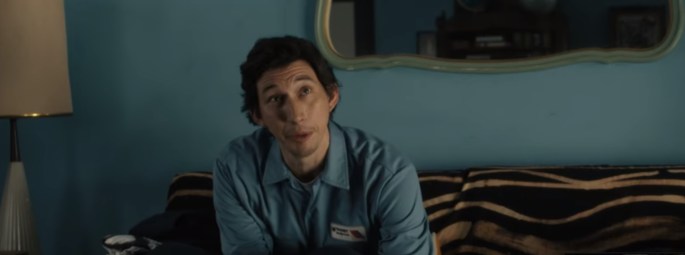
Jim Jarmusch’s low-key and elegant film Paterson is another feather in the cap for this idiosyncratic auteur, starring an intensely committed Adam Driver as a New Jersey bus driver named Paterson, who happens to live in the city of Paterson. The film is part fantasy, part meditation, and all wonderful, with an observant eye for visual detail (the great Frederick Elmes is the cinematographer) and containing honest verbal wit that mixes with personal introspection into something that feels unique and quietly moving. The gliding editing patterns established by cutter Affonso Gonçalves are incredibly smooth, and result in a film that feels as if it’s drifting across the screen, much like the many characters, both big and small, that inhabit the frame. Jarmusch’s style has certainly evolved over the years but he’s always had a firm grasp on the peculiarities of people and how they approach their life.

paterson_ver2_xlg

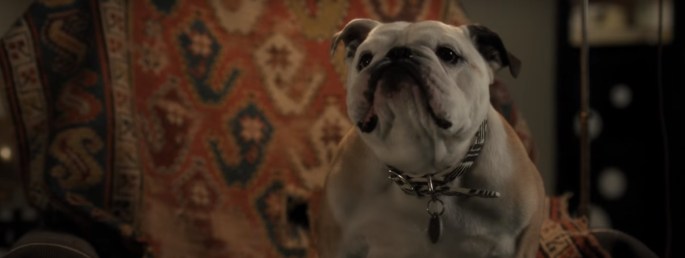
Paterson has a very predictable routine. He wakes up every morning, has his cereal, kisses his spirited wife (the superb Golshifteh Farahani) goodbye, and heads out for a day on the deteriorating streets of the city. On his breaks, he jots down poetry in his notepad, which appears on the screen as text, and can be heard via Driver’s dry voice-over (the real-life poet Ron Padgett crafted the various poems heard during the film). After work, he has dinner with his wife, who is always focusing on something new to fill her day, and then he takes their dog for a walk, grabs a beer, chats with the bartender (Barry Shabaka-Henley) and goes to sleep. He’s a man content with rigidity. Or is he? He doesn’t seem to get mad, and when the story turns tragic in the form of a personal disaster, Paterson’s response to the events is humorous, sad, and strangely enviable.

2

The film isn’t interested in a traditional plot, as Jarmusch is too concerned with his characters and their flights of fancy and their dreams and aspirations to care about the artificial rigors of contrived plotting. Instead, the audience is treated to a character and mood piece, where Driver appears in nearly every scene, his unique physical characteristics somehow tamped down from what we’ve seen previous, with flat-lined energy that results in a heavily modulated yet still emotionally affecting performance. If all of this sounds like as much fun as watching paint dry, well, I won’t lie, this movie won’t be everyone’s favorite cup of cinematic tea. It’s quiet, the film is comprised of numerous long-takes, and by design, the circular nature of the narrative keeps things on a very even keel. But if you’re looking for something artistic and thought provoking, definitely check it out.

1

JAMES CAMERON’S TERMINATOR 2: JUDGMENT DAY — A REVIEW BY NICK CLEMENT

3

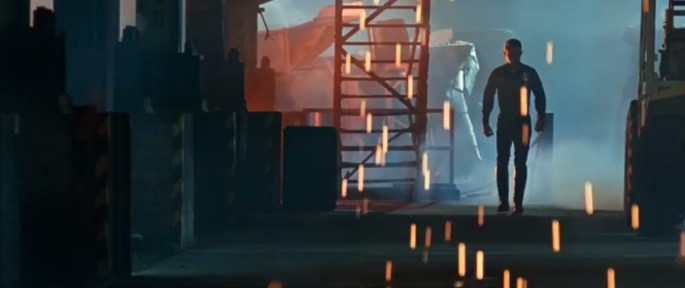
I was 11 years old when my father took me to see James Cameron’s masterpiece Terminator 2: Judgment Day on the big screen over the Fourth of July weekend. This was not just “seeing a movie,” but rather, this particular cinematic experience was a true mind-blower, and over the years, I’ve returned to this seminal piece of filmmaking more times than I can count, as I feel that it delivers the perfect combination of character, plot, emotion, and action. Co-written by Cameron and William Wisher, this film works as well as it does because you care about everyone you need to care about, and because of the way that all members of the cast and crew knew exactly the type of movie that they were making — sci-fi pulp with a big heart and a maximum budget. As per usual, Cameron reinvented the special effects game with the liquid-metal visual motif and overall state of the art use of CGI which was beautifully fused together with location shooting and plenty of practical effects. These were the days when filmmakers weren’t crafting the entire film on a green-screen stage, and “filling it in later.” There’s a level of visual and narrative artistry on display in T2 that is striking to observe, especially when compared to recent, ultra-synthetic blockbuster laziness which pollutes movie screens on a weekly basis.

2

I’ve no need to describe the plot or mythology to the Terminator series, and it goes without saying just how extraordinary Arnold Schwarzenegger was in the lead role, how menacing Robert Patrick was as the T-1000, and how gripping Linda Hamilton’s performance comes to be by the conclusion. Edward Furlong was able to project just the right amount of innocence mixed with his inherent edginess as a teen actor, and everyone in the supporting cast did stellar work. Adam Greenberg’s gleaming widescreen cinematography is a constant treat for the eyes, the dynamic editing by Mark Goldblatt, Conrad Buff, and Richard A. Harris keeps a ruthless pace to the story without ever sacrificing coherence, the epic production design by Joseph C. Nemec is wondrous, and Brad Fidel’s massive musical score must be considered one of the best of all-time. Shot over the course of a 186 day schedule for a reported $102 million (the most expensive movie ever made at the time), T2 would smash the global box-office upon its theatrical release, receive four Oscars and glowing critical notices, and would end up having a staggeringly successful afterlife on home media formats. This is easily one of the greatest movies that I’ve ever seen, and my personal favorite from Cameron by a long shot.

1

JOHN FRANKENHEIMER’S 99 & 44/100% DEAD — A REVIEW BY NICK CLEMENT

1

Obviously not the greatest movie ever made by legendary filmmaker John Frankenheimer (The Manchurian Candidate, Ronin), I still can’t help but be fascinated by the comic-book-inspired insanity of his odd-ball curiosity 99 and 44/100% Dead. Released in 1974 and starring Richard Harris as a love-struck hit-man caught in the middle of an escalating gang war, the film was written by Robert Dillon (the phenomenal Prime Cut from director Michael Ritchie, and the massively undervalued The French Connection II, also directed by Frankenheimer), and has a tone that veers all over the place, and features bad-guys with guns and knives attached to prosthetic limbs, some crazy car chase/stunt work, and a general vibe of “anything can happen” that allows the film to be exceedingly entertaining if a bit sloppy around the edges.

2

Henry Mancini’s wild musical score meshed with the sometimes frantic camerawork by Ralph Woolsey; Harold Kress’s choppy editing may have been by design. I can think of very few other films that match this effort’s overall sense of manic energy, and while coherent, there’s something simply bizarre about the entire production that should speak to cult film enthusiasts everywhere. And yes, apparently the film’s title is a play on the old Ivory soap commercial slogan. This is a completely wild piece of work that has a distinct personality, which can’t be said for most genre fare. Available on DVD from Shout! Factory as a double-dip with The Nickel Ride (rager coming soon for that one…!)

3

KRISTIAN LEVRING’S THE SALVATION — A REVIEW BY NICK CLEMENT

3
Currently streaming on Netflix and not for the squeamish, Danish filmmaker Kristian Levring’s The Salvation is a ferocious variation on the Death Wish formula, except set in the old, lawless west circa 1864, with old-school nods to John Ford and Sergio Leone peppered throughout the story, while still feeling resolutely modern and tack-sharp. The blood-boiling screenplay by Levring and Anders Thomas Jensen concerns a stoic family man played by Mads Mikkelsen (channeling some of that internal rage from Valhalla Rising) whose wife and son are killed by convicts; Mikkelsen then charts a course of violent revenge against the men who destroyed his family. It’s a simple story, forcefully told, with a minimum of fuss, and bracing shot of vigilante justice.
2
 
The ace supporting cast includes the gorgeous and tough Eva Green, Eric Cantona, Alex Arnold, Douglas Henshall, Jonathan Pryce, and an oily, sneering Jeffrey Dean Morgan as the ultimate baddie (he really seems to revel in playing lethal killers). Jens Schlosser’s piercing widescreen cinematography never shies away from any of the on-screen brutality and is frequently gorgeous in a potentially violent yet lyrical manner, while the South African locations convincingly doubled for the American plains. Kasper Winding’s musical score tips its hat to the work of Ennio Morricone and is never overbearing, opting for silence in key sequences. This is a thoroughly bad-ass piece of work that genre fans should be taking note of.
1