BODEN & FLECK’S SUGAR — A REVIEW BY NICK CLEMENT

1

Husband and wife writer/director team Anna Boden and Ryan Fleck knocked it totally out of the park with Sugar, a wonderful film about baseball, America, and how a particular immigrant’s first experiences in this country are shaped around our national pastime. This was their follow up to Half Nelson, their startling school-teacher/crack-addict drama debut, which announced a new voice in independent cinema. The cinema-verite style combined with intense, raw performances (Ryan Gosling’s bravura work should have gotten the Oscar) made for a searing portrait of man coming to pieces. In Sugar, Boden and Fleck take the same pseudo-doc style aesthetic, but have made a film as optimistic as Half Nelson was bleak. They also changed their aesthetic approach, ditching the rough and tumble look and feel of Half Nelson, instead opting for a gorgeous, colorfully saturated cinematography palette put in place by their regular cinematographer Andrij Parekh, who also shot Blue Valentine. And while baseball is a major aspect to Sugar, the film is ultimately about an immigrant’s strange and life-changing journey, making this touching and sometimes challenging film so much more than a “baseball movie.”
2

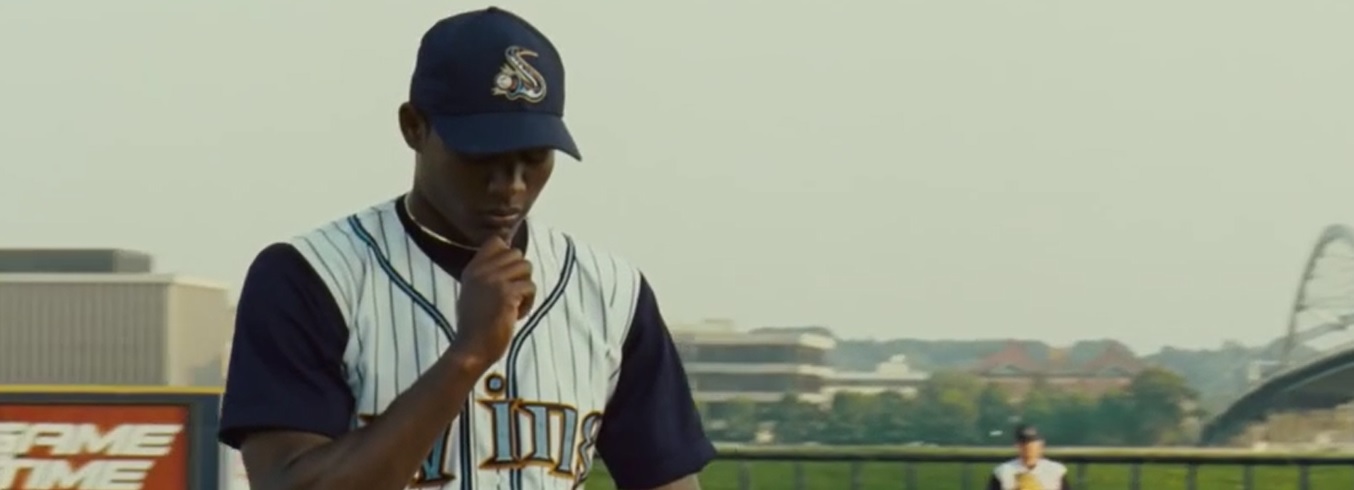
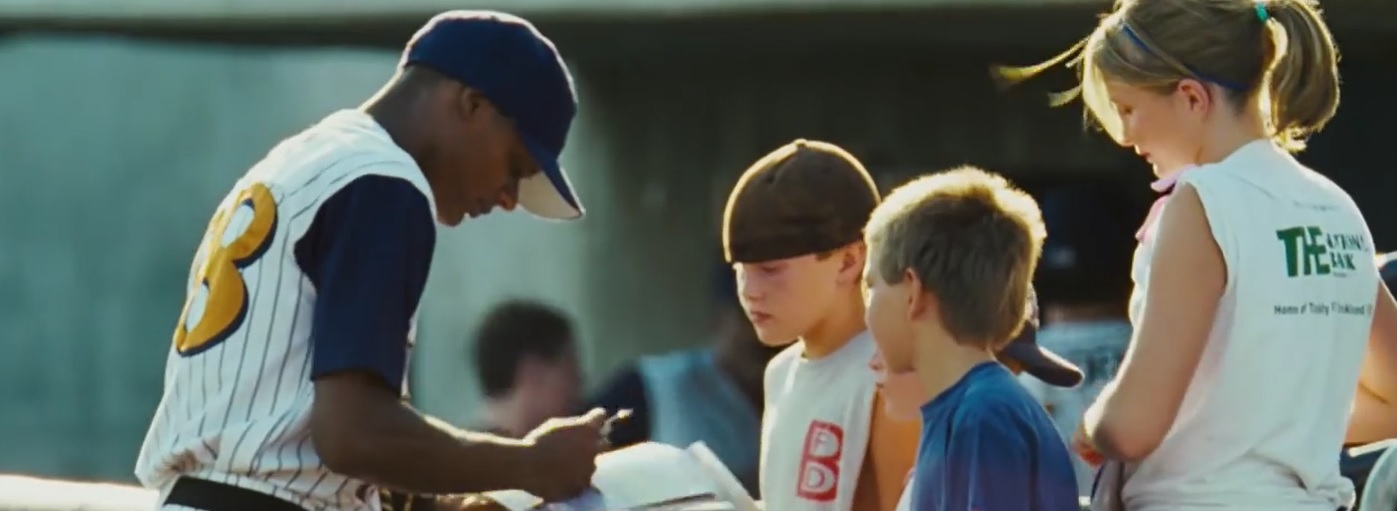
The film can be seen as three distinct pieces. In the opening segment we meet Miguel “Sugar” Santos (the fantastic Algenis Perez Soto, a baseball player who decided to give acting a shot) on his home turf in the Dominican Republic. He’s a hot-shot pitcher, a phenom in the making, someone who the MLB scouts are pegging could go all the way. We observe his mostly poor surroundings, and we see how he’s the treasure of his family, the one person who everyone else thinks will bring the family some fortune. It’s a lot of responsibility, and the film is keen to observe that for many young baseball players in the Dominican Republic, this sort of thing is a regular occurrence. Boden and Fleck shoot the scenes in the Dominican Republic in a rougher fashion, especially when compared to the lush camera style and warmer colors they employ when the action shifts to Iowa, where Sugar has been called up to AA ball. Here, the film becomes a fish out of water tale, as Sugar adapts to middle-of-the-U.S.A. living, all the while trying to keep his spot on the team, in the hopes of becoming a pro. The last section, the part I will discuss the least, takes place in a major American city, and these scenes take on a life of their own, in both dramatic function and style. It’s important to note that the third act of this movie has been completely left out of the trailers, which sort of make the film out to be something that it isn’t.
3

I guess what I’m trying to get across is that Sugar is exceedingly rich, with lots of genuine emotion and feeling running throughout its veins. The film never stinks of elitist condescension when it comes to the plight of the immigrant; Fleck and Boden’s clear-eyed doc-style keeps the film grounded and realistic. The baseball scenes are handled skillfully, but never in a show-off manner. Soto, who was recruited for his baseball skills and handsome looks, delivers a quietly powerful performance as the titular character. A man of few words (for multiple reasons), Sugar represents all that’s possible for people when they have a certain talent. And he learns that in the end, it’s not necessarily how you use that talent to succeed in life, but rather how you use your talents to broaden your horizons and experience life to the fullest. Fleck and Boden and ace shooter Parekh, keep a close, observant eye on everyone in the film, whether it be through long tracking shots or simple camera set ups which maximize the dramatics of the scene. Sugar isn’t just a simple sports film, and those people who are looking for a movie where it all comes down to the final pitch in the bottom of the ninth inning are going to be disappointed. Instead, with Sugar, Fleck and Boden crafted an exceptionally engaging movie that strikes many interesting, unpredictable, and satisfying chords. It was one of my favorite films from 2008, and I eagerly await their new gambling drama, Mississippi Grind, which hits theaters later this year.
JOHN MCTIERNAN’S PREDATOR — A REVIEW BY NICK CLEMENT

1

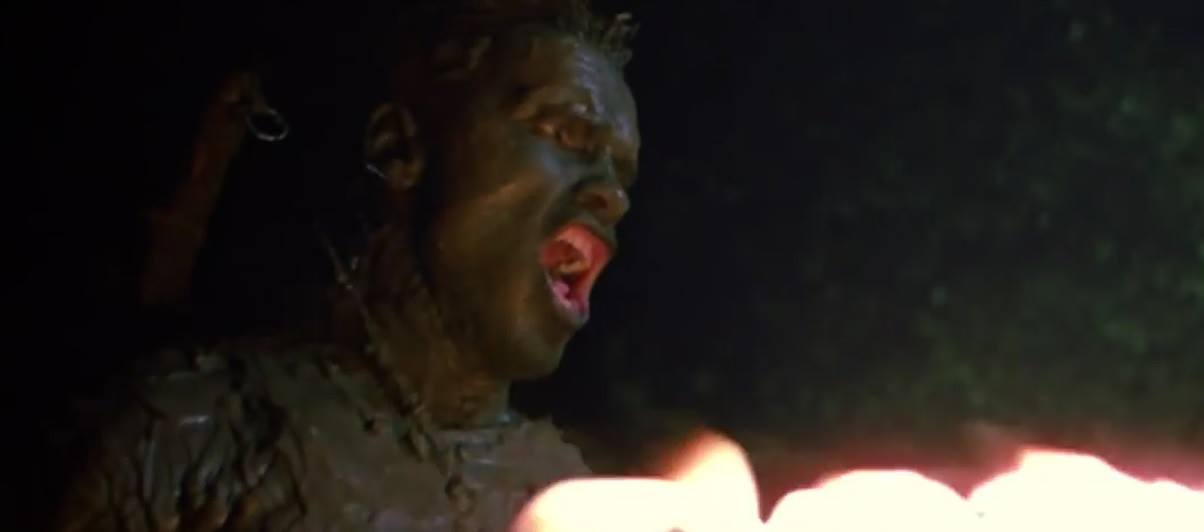
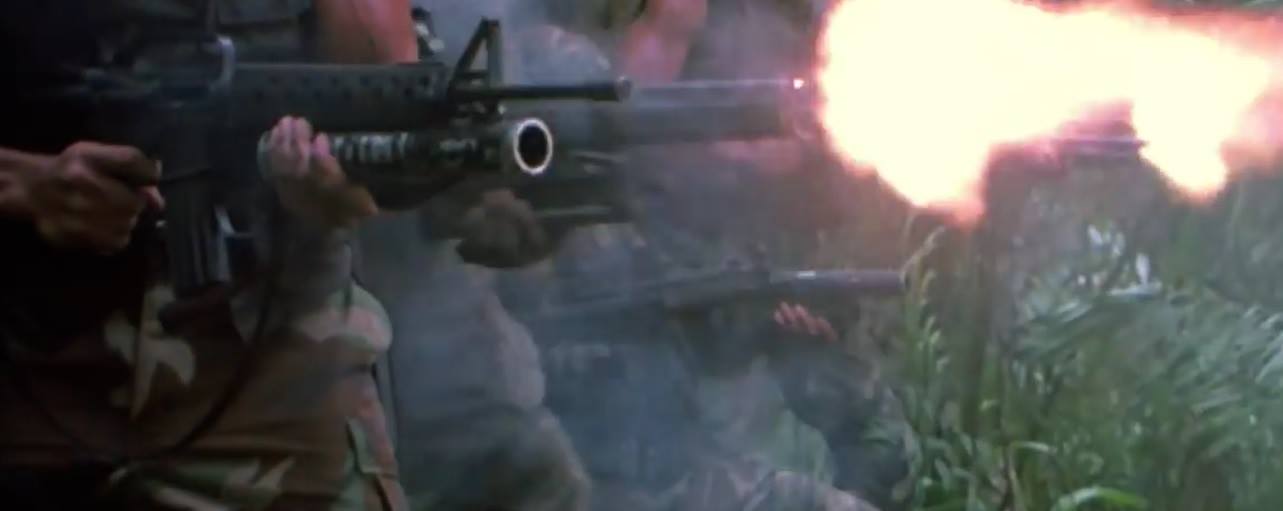
John McTiernan did so much to shape the modern studio action picture, and it’s wild to look at his resume and see how many classic titles he has to his credit: Nomads (his creepy and odd ghost story debut), Die Hard (quite possibly the best American action movie of all-time), Die Hard: With a Vengeance (as good as threequels will ever get), The Hunt for the Red October (an unimpeachable classic), The Last Action Hero (sue me, I love this incredible action movie deconstruction from genre MASTER screenwriter Shane Black) and The Thomas Crown Affair (one of the best remakes around). Sure, he’s had rough times, mostly due to studio interference (The 13th Warrior and his Rollerball remake were not career highlights because of studio meddling, despite typically great scenes of action), but it’s inescapably true that he’s one of the finest pure action directors of all time. And his genre-hybrid Predator, mixing action and comedy and horror and science-fiction, still stands as one of his best works, a movie filled with non-stop action, macho humor, incredible physical locations, rugged cinematography (the great Donald McAlpine captured the jungle in all its exploding glory with testosterone fueled imagery that has the power to elicit gasps and laughter), and a massively engaging central performance from Arnold Schwarzenegger, who hit all the proper notes of aggressive man-of-action, cheesy drama, and of course, his own brand of signature one-liner humor that never suffered thanks to the witty and inventive screenplay from Jim and John Thomas. The two writers threw tons of stylistic ingredients into the cinematic blender, and because of McTiernan’s fantastic use of space and coherent sense of action, the resulting effort is one of the most satisfying and exciting action films from the 1980’s.

No need in rehashing the plot; if you haven’t seen this movie by now I question what planet you call home base. I’ve always loved the main conceit of Predator, in that another, way more advanced species would drop off their young in order for them to train and hunt, with humans as their mostly defenseless prey. It’s such a classic sci-fi idea, and when joined at the hip with the military action adventure scenario, the film carries a whiff of unpretentious high-concept that would be tough to pull off now and generate the same level of thrills and enjoyment. While I liked the Steven Hopkins directed sequel from 1991 more than most, look no further than Alien vs. Predator as an example of a potentially good idea run amok. The practical and early visual effects, while clearly dated, are still awesome in that nostalgic, pre-CGI fashion that genre efforts from the 80’s all had. The pseudo-sequel from 2010, Predators, the more I think back on it, is sort of underrated; I should give that one another viewing. But on Predator, the filmmakers had to resort to real stunts and real explosions and real props before the onslaught and reliance of the computer, and there’s an honest physicality to the entire production that feels sturdy and realistic. And that’s because this film was legitimately shot in the jungle – deep in the jungle – and it shows.

McTiernan’s films all have a sense of rough and tumble action, and I’ve long loved his mixing of hand-held and stationary camerawork, always filling the widescreen frame with detail and high-powered images that feel lush and expensive. The supporting cast is a rogues gallery of manly-men performers, with everyone bringing their scenery chewing A-game: Carl Weathers, Bill Duke, Jesse Ventura, and Sonny Landham, all impossibly juiced, jacked, and ripped beyond belief, carrying the world’s largest machine guns, and destroying everything in sight. And let’s not forget action movie author extraordinaire Shane Black as the group’s wise-cracking purveyor of comedy relief; he also did well with his firearms when called upon. And of course, goes without saying, the hulking Kevin Peter Hall was man-in-suit perfection as the titular beast, and the one-on-one face-off with Schwarzenegger at the end still stands as one of the best final fights ever. The camp-site raid at the half-way point is utterly staggering in its balls-out awesomeness, with shell casings galore, bodies flying through the air, and enough fireballs to choke a horse. It’s almost impossible to think that this was a $15 million production back in the day – that wouldn’t even cover the catering costs if a re-make was attempted in this day and age! I’ve long been a huge fan of this definitive piece of movie magic for years, and it’s terrific to note how well it’s held up as the decades have progressed.

2

FRED DEKKER’S THE MONSTER SQUAD — A REVIEW BY NICK CLEMENT

1

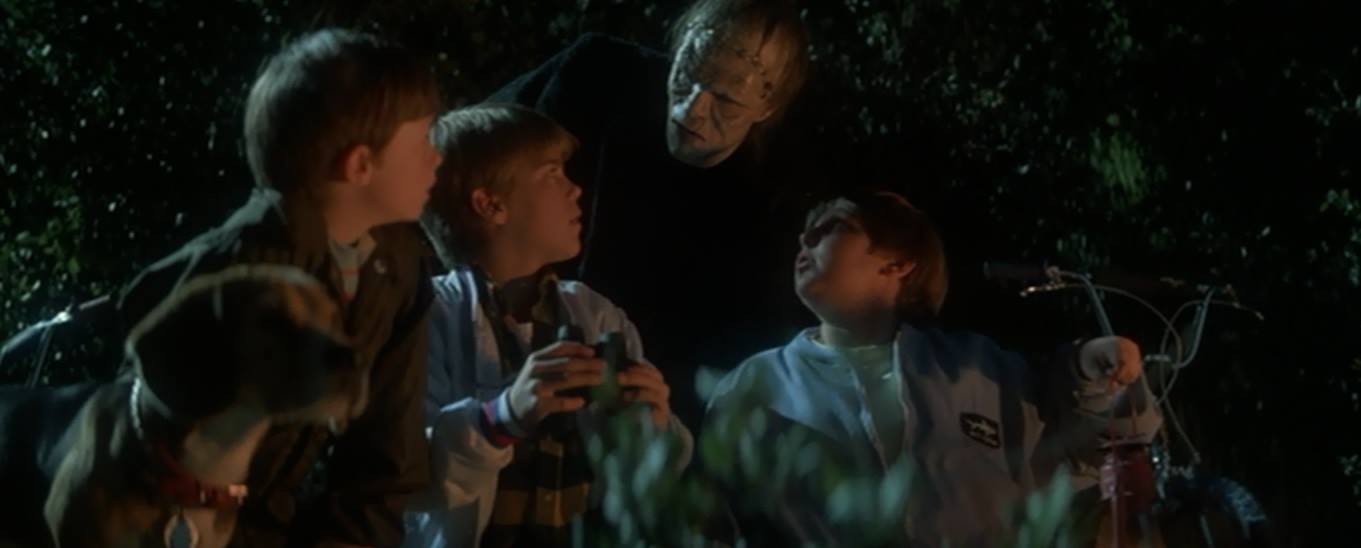
The Monster Squad was a pivotal film from my childhood, and looking back on it now, it’s really easy to see why. Independently produced and released by TriStar Pictures in 1987 (I was seven…) and given the then-golden rating of PG-13 when it actually meant something, I was taken to the theater to see this film by my parents, who probably didn’t know there’d be some wonderful, envelope pushing humor (for the time) that I’d become completely obsessed with for months to follow, and some genuine scares for youngsters. Co-written by Shane Black (Lethal Weapon, Predator, The Long Kiss Goodnight), executive produced by Peter Hyams (Capricorn One, 2010, Busting), and co-written and directed by Fred Dekker (Night of the Creeps), this is a kick-ass, totally awesome movie for the kid inside of all of us, made by smart grown-ups who never looked down on the childlike fascination that they must’ve know the film would inspire, especially from those of us who were raised on a steady diet of monsters, ghouls, and assorted nasties of the night. With fantastic make-up effects from Stan Winston (Terminator, Jurassic Park, Iron Man), the film involves a group of pre-teen boys who form a Monster Club in their back-yard. This is the same sort of idiocy I used to pull in my days of horsing around outside in the summer, so it was very easy for me to latch onto the narrative.

The kids meet their ultimate match when they discover that, naturally, Dracula, Frankenstein, The Wolfman, The Mummy, and the Gila Monster are all living in their neighborhood, all in cahoots with each other, all hell-bent on world domination, all being fueled by Dracula’s quest to find some sort of green amulet that controls interdimensional travel. And wouldn’t you know it – it’s up to the group of intrepid youngsters to stop them! All of the child actors did a great job, even if none of them went on to do anything major other than solid TV work in the future. But no matter — those kids were the Monster Squad — and that would have been enough for me! There’s also a solid, late 80’s supporting cast featuring Stephen Macht and Mary Ellen Trainor as the lead kid-hero’s parents, Tom Noonan(!) as Frankenstein, the sensational Duncan Regehr as Dracula, Jon Gries doing a super job as Wolfman, Stan Shaw as a cop, and Leonardo Cimino as the immortal “Scary German Guy.” Seriously…this movie is just so much FUN, and despite the critical swats and box office indifference back in the day, it’s formed a massive cult following (VESTRON VHS POWER), and over the years, more and more kids from various generations have discovered this low-budget gem ($12 million according to Wikipedia) that was high on humor and horror without ever becoming intensely gory or over the top.

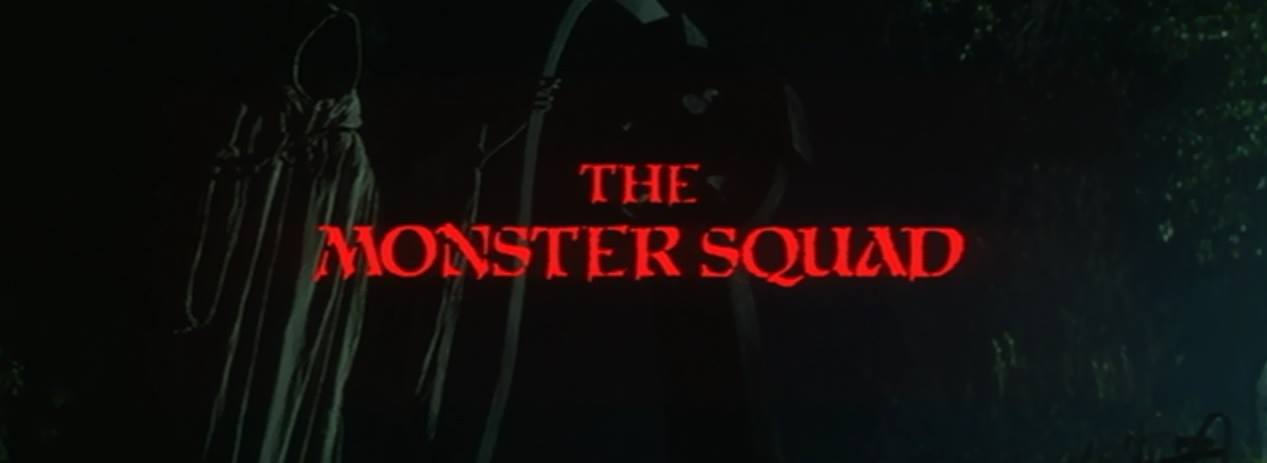
Bradford May‘s shadowy and full-bodied 2.35:1 widescreen cinematography captures all of the various monsters with a fantastic sense of atmosphere and genre classicism, and the various action sequences, especially the climactic battle on the old set from Back to the Future, Gremlins, and To Kill a Mockingbird, have an integrity to them that’s rather smashing to notice in retrospect. It’s also a film that relied on traditional, old-school monster transformations (love the editing when showing Dracula shape-shifting and the practical werewolf effects are rather stunning) which, for me, will always trump the latest CGI advancement. The opening credit sequence which showcased Van Helsing tracking his lethal prey before getting swallowed up into Limbo is a loving recreation of old school monster movie and genre influences, shot with candle and moonlight and displaying a daring, violent attitude during the opening moments. This film always had an edge – it was that “cool movie” that some kids loved but others weren’t allowed to see – and I’ll always cherish it, even I there’s slicker (more cynical) “kiddie” product out there. The Blu-ray special edition is loaded with special features and sports an excellent image and sound transfer.

2

RENNY HARLIN’S THE LONG KISS GOODNIGHT — A REVIEW BY NICK CLEMENT

1

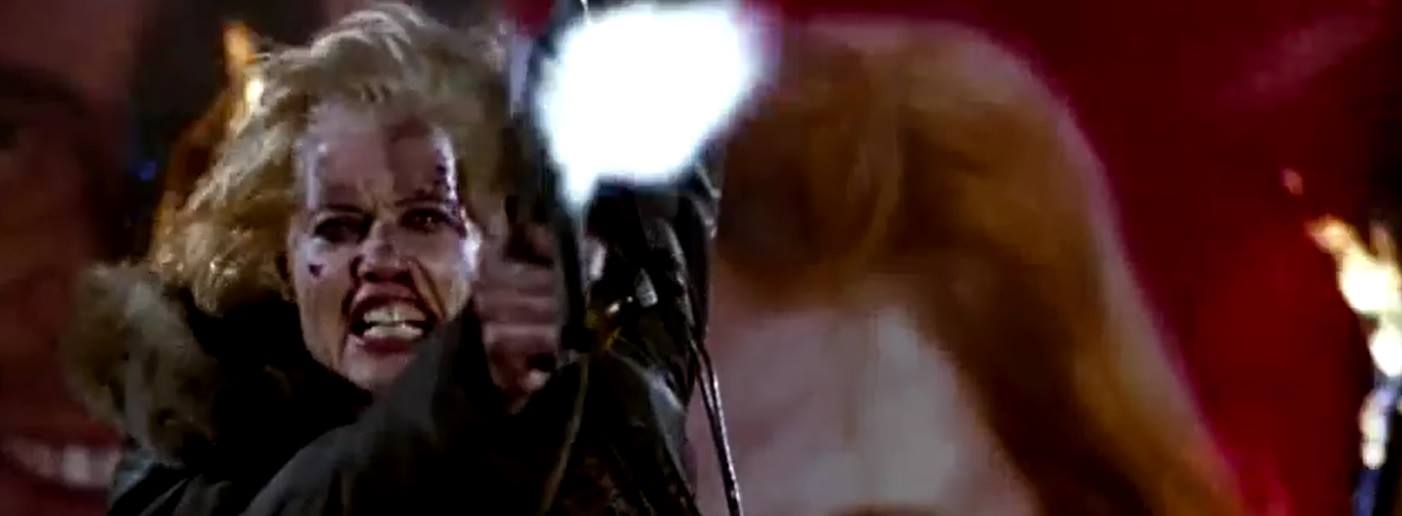
I’m a massive fan of Renny Harlin’s output as an action director and this is one of his best. It’s probably Shane Black’s most underrated screenplay – it’s hysterical and violent and nasty and clever and witty and totally off its ass. Geena Davis was never sexier or as commanding on screen, and she paired beautifully with Samuel L. Jackson, who delivered one of his snappiest post Pulp Fiction performances as a sleazy private investigator who has to help Davis regain her memory and take up her old profession – that of a secret and deadly spy who has a team of mercenaries coming after her to wipe her out for good. A terrific supporting cast including Brian Cox, David Morse, Craig Bierko, Tom Amandes, and Melina Kanakaredes was on display, and as per usual for a big-budget Harlin action flick, the tech credits were utterly superb. Guillermo Navarro’s dynamic widescreen lensing was in perfect tandem with Harlin’s signature slick-and-gritty style (always felt that he was one of the better shooters of action, taking a page from Tony Scott’s handbook at times), and William Goldenberg’s propulsive editing proved to be a perfect match for Alan Silvestri’s appropriately bombastic and triumphant musical score. Black pocketed a big pay day for this spec script, and while the film wasn’t a smash hit in theaters, I know I can’t be alone in loving this wild and crazy late 90’s actioner that took full advantage of its hard R-rating, and it also has the added benefit of taking place at Christmas (a Black staple) and featuring action in the SNOW, which I always LOVE.

2

HANNAH FIDELL’S A TEACHER — A REVIEW BY NICK CLEMENT

2

Hannah Fidell’s piercing and provocative teacher-student, psychological-sexual thriller A Teacher is a forceful and stylish writing and directing debut. Taking an observational, sometimes clinical approach to an illicit (by the standards of modern society…) affair between a late 30’s high school English teacher and her 17 year old male student, Fidell has managed to craft a uniquely suspenseful tale of obsession and lust, while never forgetting to showcase the mental ramifications that a mismatched pair like this would eventually face. This is a slow-burn, 75 minute showcase for lead actress Lindsay Burge, who appears in nearly every scene, giving nothing less than an intensely powerful performance as the older woman who knows better but simply can’t help herself. When the film opens, the lovebirds are already in full swing, and I loved how Fidell just dropped the audience into the middle of the situation without a ton of easy to identify context. We’re off to the races from scene one, as the film spotlights any number of steamy and erotic sexual trysts between Burge and Will Brittain, the well-cast younger man who has the challenging role of a high school senior caught between his hormonal desires and his apathy. Things become very heated towards the final act, with a whammy of a final shot that refuses to soften any of the previously displayed hard edges; this is a work made by a filmmaker who wants her characters to feel something, be it pain, joy, anguish, or surprise. The visuals have a lightly heightened quality to them as cinematographer Andrew Droz Palermo aims to put you in the headspace of Burge, who etches such a believable portrait of woman spiraling out of control that you can’t help but empathize with her, even if there’s some part of you that feels that what she’s doing is wrong. Raising interesting questions of morals and responsibility while never overly judging the characters, Fidell has whipped up a strong and serious work that seems to have flown over the heads of most critics and under the radars of most viewers. This is a good one.

1

CURTIS HANSON’S L.A. CONFIDENTIAL — A REVIEW BY NICK CLEMENT

2

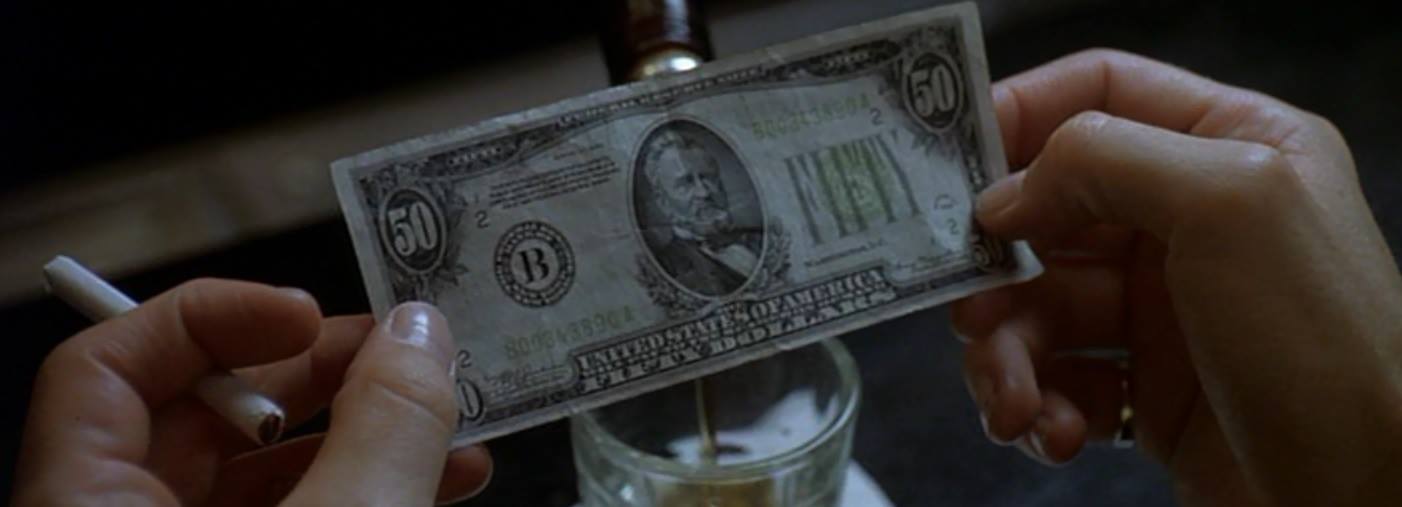
Curtis Hanson’s 1997 neo-noir L.A. Confidential is a brilliant film. It pays respect to an entire genre while simultaneously doing its own thing as a piece of art and entertainment. This striking piece of work would start that glorious run for Hanson in the late 90’s/early aughts (Wonder Boys, 8 Mile, and In Her Shoes would follow), but this is clearly his finest effort as a filmmaker, and it’s a movie that just gets better and better every time you take in a viewing. Who would have thought that two young and relatively unknown Australian imports – Guy Pearce and Russell Crowe – would make such PERFECT 1950’s Los Angeles cops? The way they played off each other in this film was riveting, with Kevin Spacey as the ultimate comic foil to Pearce’s intensity and Crowe’s ferocity. Kim Basinger, in an Oscar-winning performance, is the heart and soul of the dense, incident-packed narrative (Hanson and Brian Helgeland won Oscar’s for adapting the seminal novel by James Ellroy), and the chemistry she shares with both Pearce and Crowe is electric. Dante Spinotti’s lush and muscular 2.35:1 widescreen cinematography is propulsive, slick, and gritty when necessary, and the way he captured the final shoot-out at the motel by moonlight is nothing short of sensational. Jerry Goldsmith got invited back to the play in the crime noir genre, crafting a thundering and magnificent musical score (his notes here sit right next to his legendary work on 1974’s Chinatown), and the insane supporting cast includes seemingly every actor of the moment back in the day: James Cromwell, Ron Rifkin, Danny DeVito, David Strathairn, Paul Guilfoyle, John Mahon, Simon Baker, and Darrell Sandeen. I can remember seeing this film on the first weekend that it opened in wide release (these were the high school days!) and I immediately knew that I’d seen something special. Naturally, budding movie lunatic that I was, I’d go back the following weekend for more. And over the years, I can probably think of few films I’ve revisited more than this one. It’s fabulously entertaining, exceedingly stylish, every plot thread fits oh-so-snug, and the film’s numerous and often times bloody action sequences have a distinct visceral integrity without ever becoming gratuitous or unnecessary. It’s a shame that Hanson has been quiet over the last few years as I truly miss his classy and skillful cinematic touch.

1

JOE CARNAHAN’S THE GREY — A REVIEW BY NICK CLEMENT

1

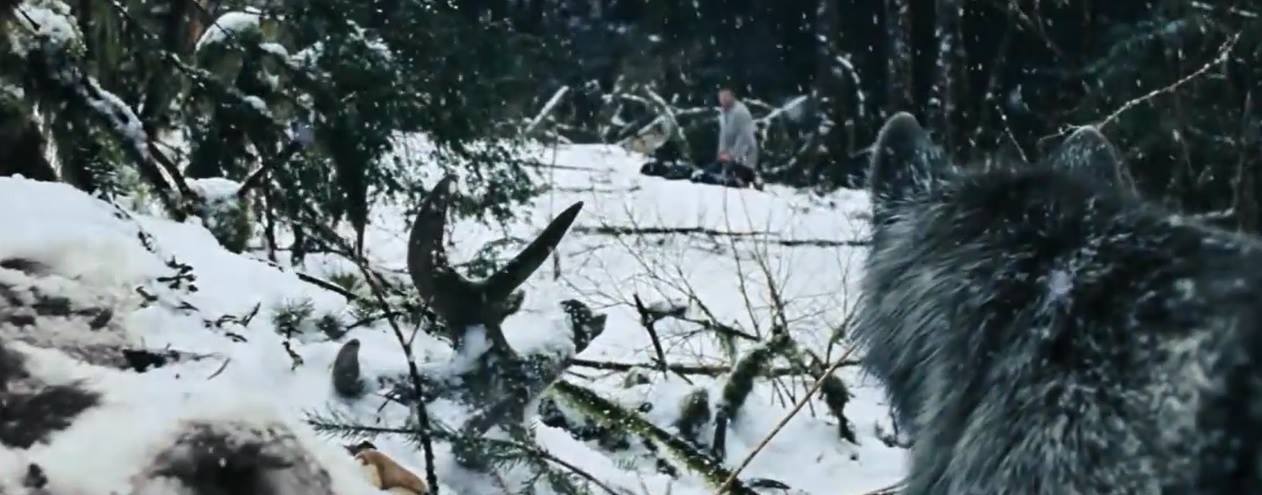
Joe Carnahan’s The Grey is macho, brutal poetry, a film that wears its bruised, wounded heart on its heavy-flannel sleeve. This is a force of nature cinema experience that leaves me crushed every time I experience it. Quiet, oppressively cold, and deeply introspective, this is an intense, Jack London-esque tale of machismo in the face of all-but-certain-death. Had this movie been released at the end of 2011 the Oscar nominations would have been different, as Liam Neeson’s towering performance would surely have been recognized with a nomination. Jumping into this project almost immediately after the death of his wife, he couldn’t have known how real life would have informed his aching, forceful work in The Grey. When the final 10 minutes of this film arrives, there’s a major twist, and it makes the entire film even that much more moving and powerful. I’m aware of the fact that many meat-head audience members were near riotous over the fact that The Grey wasn’t some sort of WWF-style smack-down between the guy from Taken and a pack of rabid wolves. With certain movies, the job of Hollywood marketing teams seem to be to hoodwink potential ticket buyers into thinking they’re lining up to see one type of movie, and this is what happened when people saw the ads for The Grey – they saw guys running away from wolves and Neeson throwing up his dukes so they expected a near constant wolf-brawl. Yes, some of this stuff does happen, just not in the way you’d think it would happen. Carnahan wasn’t going for the cheap and easy with this unflinchingly emotional piece of work. And when things do get rough, they’re believably rough, with chilling consequences. And besides, the wolves in this movie are as much metaphorical creations as they are living manifestations of animals; to literalize every single thing we see in a feature film is to do a disservice to the artists who are asking more of us as viewers. Carnahan is a 70’s influenced filmmaker, and in this film, he was deeply interested in character as much as bloody action. His eclectic output over the years has been interesting to observe and as a filmmaker he’s hard to pin down; my guess is that he likes it like that. I’ve long felt that he’s a filmmaker constantly at odds with the money-guys, as he’s always seems interested in digging beneath the surface of things, no matter the genre or aesthetic style. He’s due to have that film that truly blows him up and I can’t wait for that day. With The Grey, I was not prepared for how still and patient the filmmaking would be one minute, and then how visceral and violent it would get the next. It’s a gut-punch type movie, a piece of work that will likely haunt anyone who encounters it. Featuring one of the most harrowing depictions of a plane crash ever captured on film and ending on a note of tremendous ambiguity and narrative power, The Grey isn’t a film for the weak stomached or weak willed.

2

SOPHIE HUBER’S HARRY DEAN STANTON: PARTLY FICTION — A REVIEW BY NICK CLEMENT

2

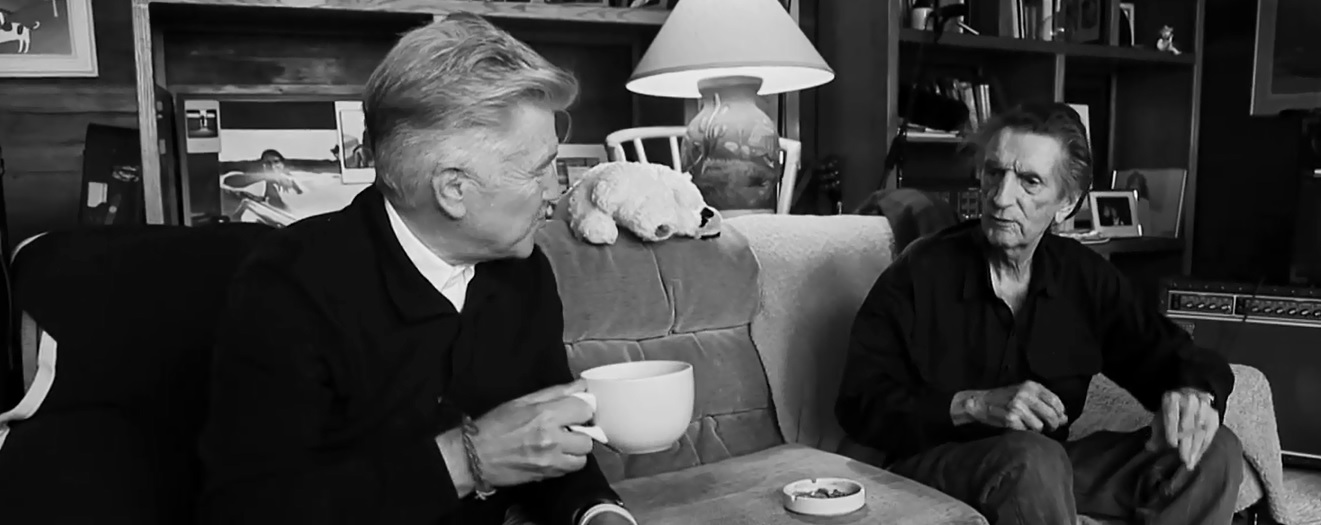
It’s positively insane to think about the fact that legendary actor Harry Dean Stanton has never been nominated for an Oscar over the course of his 250 screen performances. It’s essentially Crimes Against Cinema, and when you look at his IMDB page, one is left gob-smacked by the names he’s worked with: Ridley Scott, Lewis Milestone, John Carpenter, Stuart Rosenberg, Harold Becker, Joss Whedon, Monte Hellman, David Lynch, Bill L. Norton, Lou Adler & Tommy Chong, Sam Peckinpah, John Milius, Arthur Penn, Ulu Grosbard, Alex Cox, Wim Wenders, Nick Cassavettes, Sean Penn, Terry Gilliam, Martin McDonagh, and Gore Verbinski. And that’s just the tip of the ice-berg! He’s been one of the most important, valuable, and versatile character actors that the acting profession has ever had, and I can think of no better salute to him as an artist than Sophie Huber’s graceful and heartfelt documentary Harry Dean Stanton: Partly Fiction. This is a wonderful film about a passionate artist, and it goes to some surprisingly dark and soulful areas of Stanton’s life, while also celebrating his utterly extraordinary filmography. Seamus McGarvey’s stylish, silky smooth, black and white cinematography is perfectly mixed with bold color snippets and a variety of clips from Stanton’s eclectic performances, and it’s during the sequences with David Lynch and Kris Kristofferson and Sam Shepard where the film really hits some terrific notes of friendship and professional camaraderie. Huber’s direction is sensitive to her subject yet probing in all of the appropriate ways, and when you get to hear Stanton sing some renditions of classic American folk songs, you sense his disappointment that he never took his music career to the next level (he openly laments this fact), while still getting the sense that he’s a man with lots of life to live despite his youth obviously in the rear view mirror. His amusing anecdotes are great fun to listen too, as he’s always giving of the sense that he’s young at heart. And that’s the message that Huber sends with this poignant, thoroughly engaging documentary about one of cinema’s most prized possessions. This unique item was filmed at Stanton’s home and at his favorite Los Angeles watering hole, and one is left with the utmost respect for this living legend.

1

THE WORK OF SEAMUS MCGARVEY — BY NICK CLEMENT

1

I have long been enamored with the work of Oscar nominated cinematographer Seamus McGarvey, as for the last 25 years, he’s been putting his stylish, distinctive mark on motion pictures with some of the best filmmakers that the industry has to offer. He can seemingly do it all: small family drama (The War Zone), massive Hollywood blockbusters (The Avengers, Godzilla, 50 Shades of Grey), challenging art films (We Need to Talk About Kevin), true life drama (World Trade Center), moving documentaries (Harry Dean Stanton: Partly Fiction, Los Angeles: Skid Row is My Home), character based comedy (High Fidelity), and most notably, four incredibly impressive outings behind the camera with filmmaker Joe Wright, who ranks as one of the most exciting and visually dynamic young directors currently working. Their collaborations – Atonement, The Soloist, Anna Karenina, and Pan (judging the latter solely on its glorious trailer) – have all been fanciful and exquisite, showing a clear mastery of movement, form, and camera placement, while always forging ahead with bold aesthetic choices that push the form in unique visual ways. And if one simply takes a look at his long and varied resume, it’s abundantly clear that his talents have been put to great, eclectic use on a variety of interesting and challenging pieces of work.

4

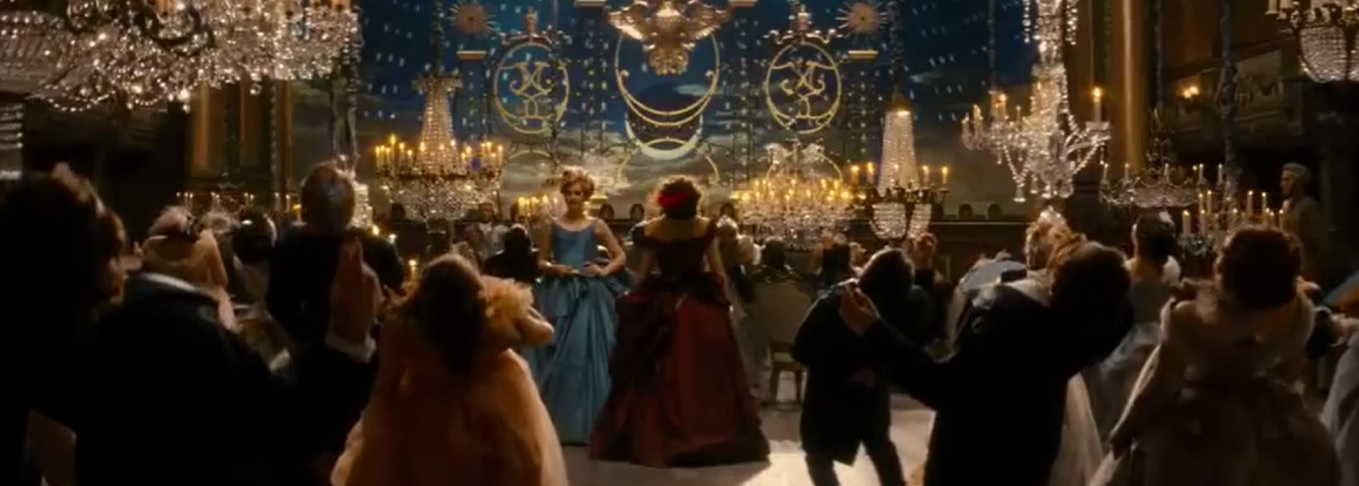
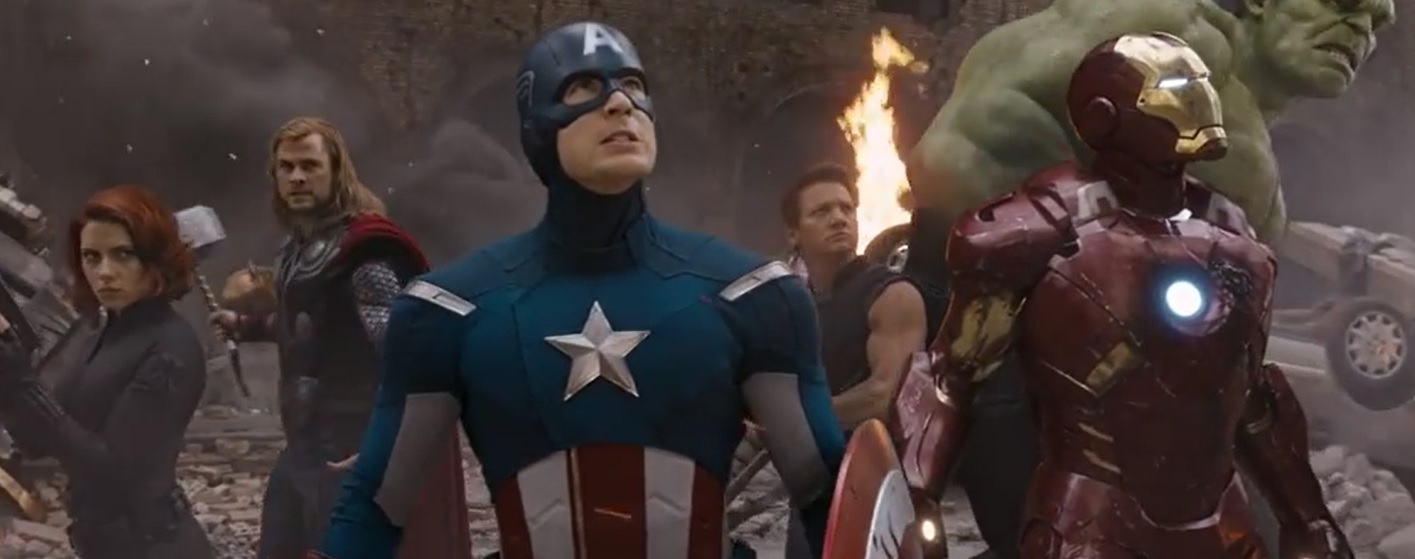
The work that McGarvey pulled off during Anna Karenina is nothing short of breathtaking, constantly asking the question “How’d they do that!?” while each ravishing scene unfolds, and through his sensual, highly attuned sense of light and texture, he gave the emotionally chilly narrative of Anna Karenina hot-blooded visual juice that kicked up the entire production – it’s a criminally underrated film featuring stellar work from Keira Knightley. In The Avengers, he was responsible for shooting one of the most anticipated summer movies in decades, and I can’t help but feel that the iconic “hero shot” of all the superheroes on the street of NYC in that circle is one of the best ripped-from-the-pages-of-a-comic-book images I’ve ever seen. And then there’s that insane bit of madness at the airport in Godzilla, where the audience is treated to a humongous wide shot of exploding airplanes and helicopters from within the interior of the terminal, as Godzilla and the U.S. Military stage an attack on a fantastical beast – when Godzilla’s massive foot comes crashing down into frame during this sequence, McGarvey was able to maximize the audience’s sense of how large the radioactive beast might actually be in real life, bringing true size and dimension to an image that features a CGI creation, something that in other, lesser refined works might have come across as rubbery or wonky within the realm of the real world. No matter the genre, the size of budget, or the narrative intent, McGarvey’s images have that long lasting, timeless appeal, where you just know that someone truly exceptional was calling the shots.

ROMAN POLANSKI’S CHINATOWN — A REVIEW BY NICK CLEMENT

2

Roman Polanski’s masterpiece Chinatown is one of those movies that one should really view at least once a year, if only to be reminded of how perfect a film can be when all of the elements are in such perfect cinematic harmony. Robert Towne’s truly serpentine screenplay is incredibly layered yet never opaque, and even when the characters frequently explain the plot it never feels forced or manufactured to help the audience; it feels organic to the situation at all times. Jack Nicholson’s smirking, sly performance gets tons of mileage from that famous nose bandage, and Faye Dunaway’s porcelain doll features were perfectly captured by John A. Alonzo’s amazing camerawork. Seriously – this movie looks INCREDIBLE, with one bravura shot and sequence after another. Studying this movie solely on a formal and compositional level would truly be an experience. The final sequence is still crushing in all the proper ways, with John Huston doing some nasty and creepy character work all throughout. And I love how the cynicism of Towne’s script still feels vital to this day. Jerry Goldsmith’s classic score punctuates the drama at all times, and the way that Polanski effortlessly brought all of the elements together is truly a master class of direction. The film looks pristine on Blu-ray.

3