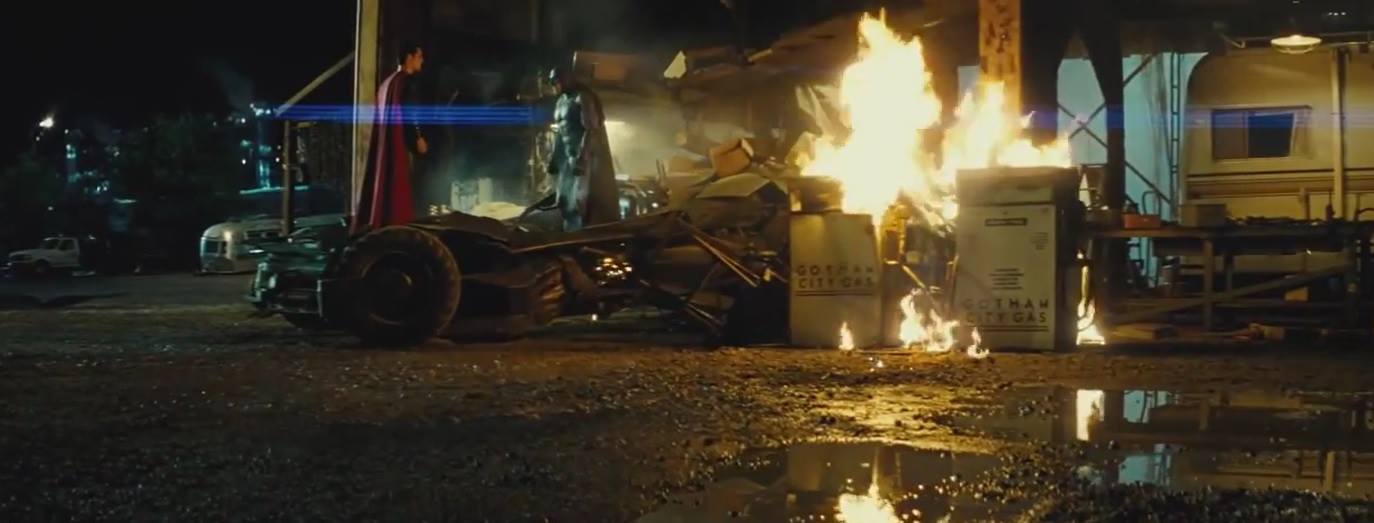
Move over, Marvel. There’s some REAL ass-kickers coming to town. You’ve had your bright, cheery, primary-color fun with your tongue planted firmly in your cheek for a while now, and personally, while I’ve mostly been a fan of the product, I’m ready for something different. It’s now time to see huge filmmakers with gritty visions take on the DC universe, which I was always way more of a fan of as a kid. I’m SO excited to see the superheroes that I personally obsessed over for years finally get a chance to explode in a massive way on the big screen courtesy of filmmakers like Zack Snyder and David Ayer and Patty Jenkins and James Wan and more to come. Batman vs. Superman looks like a dream come true, and Suicide Squad looks edgy, punk, different, and totally unhinged for this genre. Get here. Just GET HERE. I am so excited to see this world unleashed on the big screen; we’re even going to get a new Green Lantern which could really be special if correctly handled. After Nolan’s TDK trilogy and the utterly amazing Man of Steel from Snyder, we’re at the dawn of a new, more intensely dramatic age for the superhero movie. It’s time to treat the genre with serious, adult-minded thrills while still delivering the sensational action that has invaded our dreams ever since we saw similar images on the pages of comic books. DC FILMS POWER!!! Bring it on and do it with gusto!
Author: nlclement
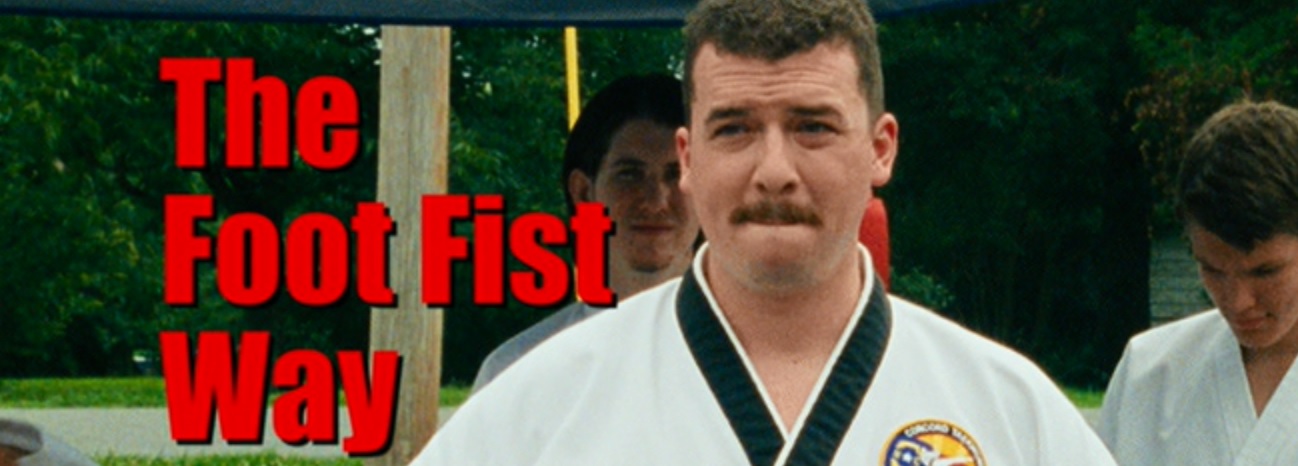
JODY HILL’S THE FOOT FIST WAY — A REVIEW BY NICK CLEMENT
The aggressive, purposefully awkward comedy style of cinematic provocateur Jody Hill simply can’t be denied. Before he’d become a mainstream force with HBO’s Eastbound and Down and predating his extraordinarily transgressive studio comedy Observe & Report, in 2006 he released the phenomenally funny, super low-budget laugher The Foot Fist Way, which, if you aren’t familiar, could easily become the comedic discovery of the year for you as a viewer. The action centers on the insanely clueless Fred Simmons, played by Danny McBride in what amounts to his crowning achievement as an actor, a blissfully moronic, fourth-degree black belt in Taekwondo who runs his own small-town dojo in North Carolina. In classic McBride/Hill fashion, Simmons thinks of himself as a tough-guy hot-shot, full of big speeches with empty bravado, prone to tooling around in his Ferrari while always looking for new potential students. Everything is shattered after he learns that his wife Suzie (the fantastic Mary Jane Bostic) has manually relieved her boss after a night of heavy drinking at an office party. With his confidence and ego destroyed, Simmons sets out on a path of manly redemption, but this being a Jody Hill movie, stuff gets insanely outrageous and just a bit nasty. To try and get himself back on track, he attends a martial arts expo in an effort to seek out his long time idol, B-movie action star Chuck “the Truck” Wallace (Ben Best, Hill and McBride’s frequent creative collaborator, who also co-wrote the script), who actually turns out to be a hilariously pathetic loser with an axe to grind. The Foot Fist Way piles on conflict after conflict, incident after incident, some of it sexually scandalous, some of it harmless, some of it violent, all of absolutely priceless. McBride’s signature, loud-mouth, white-trashy antics have rarely been captured better than they were in The Foot Fist Way; he’s one of the ultimate cinematic buffoons and I love how he was going to be a director before David Gordon Green insisted that he take a small part in All the Real Girls. The final act of The Foot Fist Way is a total pisser (literally and figuratively…) and I’m constantly amazed by Hill’s fearless sense of what he thinks might be acceptable to his audience to laugh at. He’s primed to explode on a massive level at some point – he’s due his Hangover-type success – and I have a feeling we’ll be hearing a lot more from him in the coming years. If The Foot Fist Way was one of those little movies that snuck by, take it from me, this is one of the most enjoyably asinine films in a looooooong time.
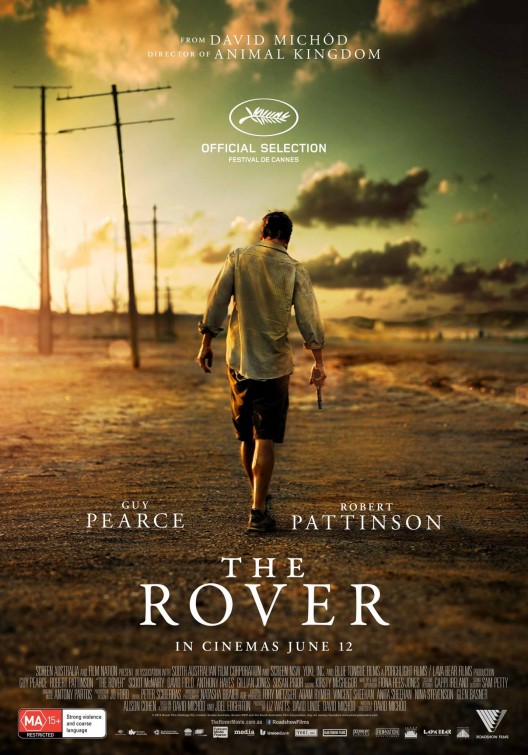
DAVID MICHOD’S THE ROVER — A REVIEW BY NICK CLEMENT
FAVORITES OF 2014 #10 The Rover (David Michod, dir.)
Bleak. Grave. Arid. Desolate. Angry. Internal. Methodical. Australian writer/director David Michod (the superb Animal Kingdom) has crafted a haunting companion piece to Cormac McCarthy’s The Road with The Rover, a gut-punch movie with streaks of jet-black humor for people who are fascinated by nihilistic, end-of-times scenarios. We’re not sure exactly what has gone down in society but life is on the downward slope in The Rover – nobody has gas or oil, while food and water seem to be in short supply. The streets are seemingly lawless except for military types roaming from town to town, and there’s a general air of despair that feels as if it’s there for good. Guy Pearce is yet again fantastic as a man on a mission and with one purpose in life – to get back the car that’s been stolen from him by a gang of dimwitted thieves. That’s all you need to know about the “plot” of The Rover, because it’s less about ticking off story points and more about the sun-scorched way this sad and introspective movie is unraveled from a normal-narrative-defying point of view. Pearce is raw, dirty, quiet, and doing some serious acting with only his eyes; you can’t look away when he’s on screen. His emotionally ravaged and quietly forceful performance as a man with literally nothing to lose is as haunting and affecting as anything I’ve seen in recent memory (Robert Redford’s legendary work in All is Lost comes to mind but that’s about it). His weathered face and sullen eyes, framed often times in close-up, dominate the widescreen space, conveying more than written words could ever provide. Michod knows that Pearce’s mere presence is enough, and the patience with which Michod tells his deceptively simple story is striking to witness. And there lies the genius of Michod’s storytelling technique – dole out just enough information verbally but allow the unspoken to fill in the blanks. Natasha Braier’s expansive yet controlled 2.35:1 widescreen cinematography captures Michod’s penchant for sudden, graphic violence with an unflinching eye, while also showcasing the dusty, dangerous, ominous vistas of the Australian outback. The aesthetically heightened shooting style is matched by the exacting editing patterns by Peter Sciberras, and the PTA-esque musical score, filled with discordant chords to keep you off kilter, allows for a constantly intense mood. And Robert Pattinson yet again proves he can act, playing a slow-thinking pseudo criminal who crosses paths with Pearce, after his brother (the always awesome Scoot McNairy) has left him for dead after a botched robbery. There’s nothing happy to be found with The Rover – this a film about bad, desperate people in tough, deadly situations. One gets the sense that Michod made exactly the film he set out to make, having to make no concessions to anyone, with nobody standing over his shoulder taking notes or offering suggestions. Stark and pare, The Rover is a great piece of contemplative cinema, with an absolutely devastating final shot that destroyed me for days.
SHANE CARRUTH’S UPSTREAM COLOR — A REVIEW BY NICK CLEMENT
I’m not even going to attempt a detailed plot description or thematic analysis of Shane Carruth’s staggeringly artistic and beyond heady Upstream Color. This is a film that’s likely to mean one thing to one person and then something completely different to another. I’ll post a trailer in the comments, and if you haven’t yet already seen this weird and entrancing film, check out the coming attraction, and then decide if it looks like something you’d “like.” If it is, see it im…mediately. If it isn’t, see it immediately. See what I did there? This is one of those films that has to be experienced more than simply viewed; it’s about everything and nothing and all that comes in between, and the way that Carruth daringly throws out any sense of narrative normalcy is startling to witness and positively engrossing for those of us who liked to be continually challenged by what they’re watching. To say that Carruth is a one man show would be a understatement as this 2013 effort was written, directed, produced, shot, edited, and scored by Carruth, who also plays one of the leads.
The story involves two people, Kris (Amy Seimetz) and Jeff (Carruth), whose lives are unknowingly and bizarrely affected by a foreign parasite. The organism has some sort of trippy, three-stage life cycle, where it moves from humans to pigs to orchids. If what I’m describing sounds icky and gross, well, it is and it isn’t, and then the film becomes something else entirely. Upstream Color is like if Terrence Malick sat down and did a lot of hallucinogenic drugs and then decided to make a film. I have a feeling that this movie, no matter how visually spellbinding or thematically rich it may be, will simply be too off the reservation for most people. I hope I am wrong. Carruth’s debut film, the time travel procedural Primer, is one of the coolest films to ever involve the notion of a real-world time machine, and it’s clear that he’s a filmmaker who is interested in tons of ideas, both big and small, and that he’s obsessed with the many aesthetic possibilities that filmmaking can afford. Both Seimetz and Carruth deliver fascinating performances which constantly probe at the idea of identity and helplessness through the prism of nature and the notion that we’re all connected in some odd, metaphysical way. This is a film that could probably play immediately after The Tree of Life and it would feel like some sort of beguiling off-shoot or by-product of Malick’s indomitable masterpiece.
ERIC RED’S 100 FEET — A REVIEW BY NICK CLEMENT
In 2008, horror-thriller maestro Eric Red (Bad Moon, Cohen & Tate, Body Parts) released his nifty chiller 100 Feet, which stars a beyond intense Famke Janssen. This is one of those classically told ghost movies that isn’t afraid to get bloody and nasty (no surprise given the filmmaker’s previous genretastic output!), and at the risk of spoiling the wicked fun, I’ll simply allow that the narrative pivots on a woman under house arrest (Janssen) who becomes terrorized by the demonic spirit of her abusive husband (Red favorite Michael Paré) who she killed out of self-defense. Co-starring Bobby Cannavale, Ed Westwick, Patricia Charbonneau and Kevin Greer, this is a straight-up, effective, gruesome-at-the-finish thriller (seriously, the end set-piece is all sorts of messed up and wildly horrific) with a terrific lead performance from Janssen, who in movie after movie has proven to be highly capable of delving into any role in any genre and running away with her part. She’s sexy, she’s vulnerable, she’s got an edge when needed, and because Red’s focused screenplay keeps her at the center of all the action, you invest heavily in her character. There’s an affecting psychological angle to the proceedings too, with Janssen’s character going through all sorts of mental anguish over the off-screen actions that have landed her under house arrest, and because she’s in virtually every scene of the film, you become all the more attached to her and her precarious situation. 100 Feet works as well as it does because Red understands the value of true suspense, and then when his big moment of shocking violence occurs, the impact is made all the more startling because of how well placed and timed the scares are. While shot on a low budget, there are some nifty bits of gore involving the ghostly spirit, and in a fun secondary role, Cannavale brought just the right amount of antagonism to his part of a disapproving cop who has to keep tabs on Janssen. Let’s hope that Red has more juice left in the cinematic tank because his brand of hardcore cinema needs a major resurgence.
KATHRYN BIGELOW’S BLUE STEEL — A REVIEW BY NICK CLEMENT
Blue Steel is a tough, no-nonsense, solidly entertaining 80’s cop film bolstered by Kathryn Bigelow’s heightened sense of kinetic, stylish direction, all the more strengthened by the crisply efficient and downright nasty screenplay co-written by Bigelow and Eric Red (The Hitcher, Near Dark, Cohen & Tate). Released in 1989, the film received solid reviews from critics but failed to make a big impact at the box office, which is a shame because it’s the sort of police yarn that rarely gets made outside of TV procedurals these days — the stripped down cop story with zero pretensions and all sorts of gritty integrity. Shot by future Michael Bay and Zack Snyder cinematographer Amir Mokri and fully utilizing that glorious old-school slow-motion technique, Blue Steel has that awesome, oh-so-80’s slick-and-gritty feel, made popular by the likes of Bigelow and craftsman like Tony Scott and Renny Harlin. Starring Jamie Lee Curtis as a female officer who has to contend with a serious psychopath (played with devilish relish by the late Ron Silver), the film has a fantastic supporting cast including Clancy Brown, Tom Sizemore, Richard Jenkins, Kevin Dunn, Philip Bosco, Elizabeth Pena, Matt Craven, Mike Starr, and Louise Fletcher. Brad Fiedel’s score is incredible, amping up the tension in almost every instance; he’d later go on to score Terminator 2: Judgement Day and True Lies. The film gets very intense, exploring dark sexual violence (later glimpsed in Bigelow’s Strange Days) through the prism of a backwards love story, and the various bloody shoot-outs have that R-rated heft that’s so clearly lacking in most modern action films. Red and Bigelow’s script steers clear of moralizing, presenting a black and white world of good vs. evil and I’ve always loved the gripping sense of resolve that Curtis’ character brought to the narrative; she’s a woman of action, and no matter how beaten down, she’s not going to stop until she gets her man. The German import Blu-ray, it should be noted, is Region Free, and offers an excellent picture transfer and audio upgrade.
THE ZELLNER BROTHERS PRESENT GOLIATH — A REVIEW BY NICK CLEMENT
I’m a cat lover, so I was naturally intrigued by the poster for the offbeat and totally unique micro-budget indie Goliath, which was released in 2008 by the Zellner Brothers, with David writing and directing and his brother, Nathan, handling producing duties. The film tells the story of a nameless man (played by David Zellner in a wonderfully strange performance) who is finalizing his bitter divorce (“It was just two fingers!” POWER) and is struggling with the fact that his cat, the titular Goliath, has gone missing. In an effort to recover his lost kitty, he sets out on a desperate search all around town looking for his buddy, while also getting tangled up with a local sex offender, naturally equipped with a voice-box(!), who may or may not have something to do with the missing cat. This is a very funny, frequently asinine little film that runs a quick 80 minutes and offers up some truly inspired bits of inspired lunacy. There’s some strange violence in the final act, with some awesome mental flip outs on the part of Zellner’s coming-apart-protagonist. It’s a priceless performance, down to the finely manicured moustache, and the way he interacts with people in this film can only be described as awkward at best if not entirely bizarre. There’s also an undercurrent of dark rage that pops up throughout the narrative, resulting in some wild tonal switches in the narrative. Willfully distinctive, frequently hilarious, and all together unclassifiable, Goliath is quirky movie that marches to the beat of its own drum.
JUDD APATOW’S TRAINWRECK — A REVIEW BY NICK CLEMENT
Trainwreck is yet another consistently funny movie from the Judd Apatow factory, but this time, he’s not the on-screen credited writer – that distinction belongs to fearless star of the moment Amy Schumer, who more than proves she can play in the vulgar big leagues of the polished studio comedy. There’s nothing revolutionary about the narrative – it’s the same story you’ve see in countless romantic comedies, except this time, the norms and expectations are reversed and upended to some degree, with Schumer’s bracing sense of sarcastic deadpan on total display all throughout. She’s matched perfectly by Bill Hader, who is a comic genius in my estimation; his timing is virtually peerless and he’s able to elicit laughs just by being in a room. There are a FLOOD of hysterical cameos from a roll call of actors, celebs, and sports stars, with Lebron James and John Cena both getting HUGE laughs and the lovely Brie Larson doing the dramatic lifting as Schumer’s more responsible sister. If you’ve seen the ads, you know the film revolves around a promiscuous and socially rebellious woman (Schumer) who finally meets her match in the form of a sports physician (Hader) – there’s a “meet cute,” some montages, some arguments and misunderstandings that need be cleared up – but the way that all of it plays out has a great sense of heart and a near constant sense of aggressive humor and charming spirit. And I will say, Schumer does deliver in her few dramatic moments, grounding the piece with a level of emotional believability that counterbalances some of the over the top aspects to the horseplay. Apatow has also always been a comedy director who actually CARES about how his films look; Jody Lee Lipes’ 2.35:1 cinematography is pleasantly pleasing without ever being flashy, as his work also demonstrated on Afterschool and Martha Marcy May Marlene. And I’d be remiss in mentioning MASSIVE Tilda Swinton POWER as Schumer’s over the top boss – who knew she was that hot?! The finale is well conceived, the laughs are nearly endless either in an out loud or quietly-to-yourself manner, and it’s hard to resist a movie that has an awesome male-on-female oral-sex joke right at the top of the narrative. Also, lots of Dave Attell and Colin Quinn POWER.
STEVEN SPIELBERG’S MINORITY REPORT – A REVIEW BY NICK CLEMENT
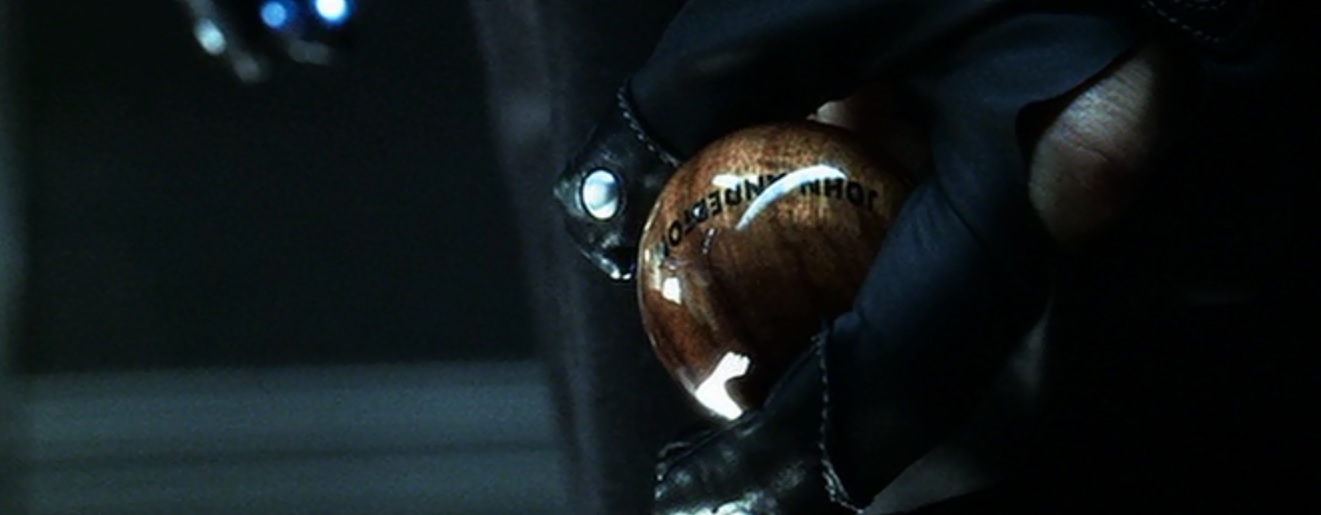
Minority Report is the most underrated movie ever to have a 90% Rottentomatoes score with a $350 million worldwide box office haul. For some reason, not enough people give this movie credit and I’m not sure why. It’s a visual marvel from top to bottom, the blending of the core sci-fi and detective elements were perfectly calibrated by screenwriters Scott Frank and Jon Coen, you got a terrific Tom “Movie Star” Cruise performance before he truly went off the Xenu deep-end, the supporting cast were all outstanding, Janusz Kaminski’s glassy-smeary-amazing cinematography looks beyond sharp and high-contrasty in the luscious blu-ray format, and the score from John Williams was one of his most unsung and propulsive. The vision of the future that this film painted felt tangible and realistic and it’s funny how some of the technology that the source material and film would go on to predict is eerily prescient. Like the best neo-noir science fiction hybrids (Dark City also comes to mind), Minority Report knows exactly when to riff on genre while simultaneously inventing its own set of rules and aesthetic guidelines that helped to turn it into one of Steven Spielberg’s most thoughtful blockbusters, a film with as many ideas as it does breathtaking action scenes. The production design in the film is truly extraordinary, and the mostly seamless visual effects compliment and heighten the narrative rather than overpower it with needless bombast. The jet pack chase and fight with Cruise battling it out with the various agents and crashing through the apartment complex is pure BEARD POWER, with visual humor to punctuate the seriousness of the situation, while always exhibiting a childlike sense of wonder and mentality that anything is possible. And even if the ending still needed some extra tweaking (I think another 20 minutes was warranted), this is one of those consistently smashing entertainments that pushed the boundaries of the PG-13 rating, telling an adult story that asked you to use your brain in order to figure out all of the exciting pieces.
STEPHEN HOPKINS’ BLOWN AWAY — A REVIEW BY NICK CLEMENT
Back in the summer of 1994, there were three big action films to hit the marketplace: Speed, True Lies, and sandwiched in between, was the underrated Blown Away, which suffered the worst box office fate of the bunch but still delivered more than enough thrills and excitement to qualify as an action-packed blast of unpretentious entertainment. This movie is so much fun in an old-school, traditional manner (it just FEELS, in a great way, like an MGM movie), shot with lots of style by director Stephen Hopkins (Predator 2, The Ghost and the Darkness) and acted with intense ferocity by Jeff Bridges and Tommy Lee Jones, as a Boston bomb squad officer and a mad Irish bomber respectively. Jones is running wild on the streets of Boston, blowing up anything and everything he can find, all in an effort to exact revenge on his old friend Bridges, who both went through IRA/terrorist issues which are dealt with in black and white flashback. Bridges is the noble cop who always seems to know which wire to cut – the blue one or the red one. While the plotting is mostly predictable, the film knows exactly what it’s doing with its numerous action scenes, and it must be pointed out, that the film features the SINGLE GREATEST DONE-FOR-REAL EXPLOSION ever captured on film. There’s no debating this. I fucking LOVE movie explosions. I’ve made it a point to STUDY them throughout my life. This one is top-dog. When Jones’ old shipyard boat goes kablooey at the climax, you literally can’t believe what you’re watching and that the two fearless stuntmen weren’t killed or burned to death. The image has REAL camera shake, glass windows in downtown buildings were blown out, and total radio silence in and around Boston Harbor was kept for 10 miles so no interference could occur with the destruction of the balsa wood ship. Peter Levy’s cinematography is terrific all throughout, and the brisk editing keeps the pace moving fast. Kino has just released an excellent special edition Blu-ray of this extremely fun, throw-back type action thriller that was more old-fashioned than audiences may have been expecting. Hopkins provides a great, info-filled commentary, and the picture transfer is very crisp and clean, retaining that awesome, slick-and-gritty 90’s film stock look, with that final explosion looking all sorts of epic and awesome in full 2.35:1 widescreen (previous DVD releases were non-anamorphic). Alan Silvestri’s score is appropriately bombastic and thoroughly exciting. Forest Whitaker, Suzy Amis, Ruben Santiago-Hudson, John Finn, and Lloyd Bridges all offer memorable support. Cuba Gooding Jr. has literally 30 seconds of screen time in one scene. Jay Roach (Meet the Parents) got original story credit!