JODY HILL’S OBSERVE & REPORT — A REVIEW BY NICK CLEMENT

2

I love how writer/director Jody Hill thinks. He’s a cinematic devil. And I mean that lovingly. He finds stuff funny that most normal people don’t find funny, and for whatever reason, I continually respond to it. Check out his extremely dark yet incredibly funny debut The Foot Fist Way – there’s stuff in that movie that is painfully hilarious. People have told me how I’m weird and just a tad bizarre with some of my likes and dislikes in the comedy genre. I think this is why I found Hill’s most recent cinematic excursion into comedy’s heart of darkness, 2009’s Observe and Report, to not only be one of the funniest films of the last 15 years, but some sort of strange, transgressive, unhinged masterwork that despite its crude surface exterior, has something perversely subversive to say about the fringes of society in America. And that’s what Hill’s specialty is – the fringe elements – whether it be Danny McBride’s delusional karate instructor in The Foot Fist Way or McBride’s gleefully unaware baseball player in the epic comedy TV series Eastbound and Down. The trailers were misleading for Observe and Report; the studio tried selling a dirty Paul Blart: Mall Cop. Well, the fact that there were two comedies that centered on mall-cops in development at the same time was just a natural-for-Hollywood coincidence, because Observe and Report couldn’t be any more different than Paul Blart. Observe and Report is like some sort of wild mixture of Falling Down, The King of Comedy, Taxi Driver, and Hill’s The Foot Fist Way.
1

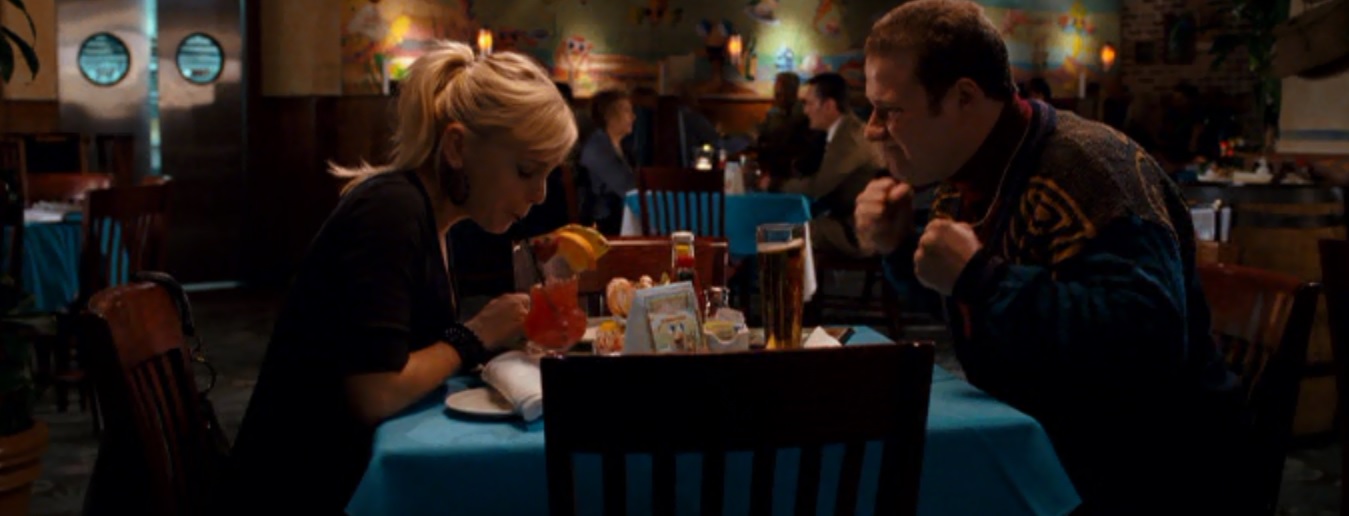
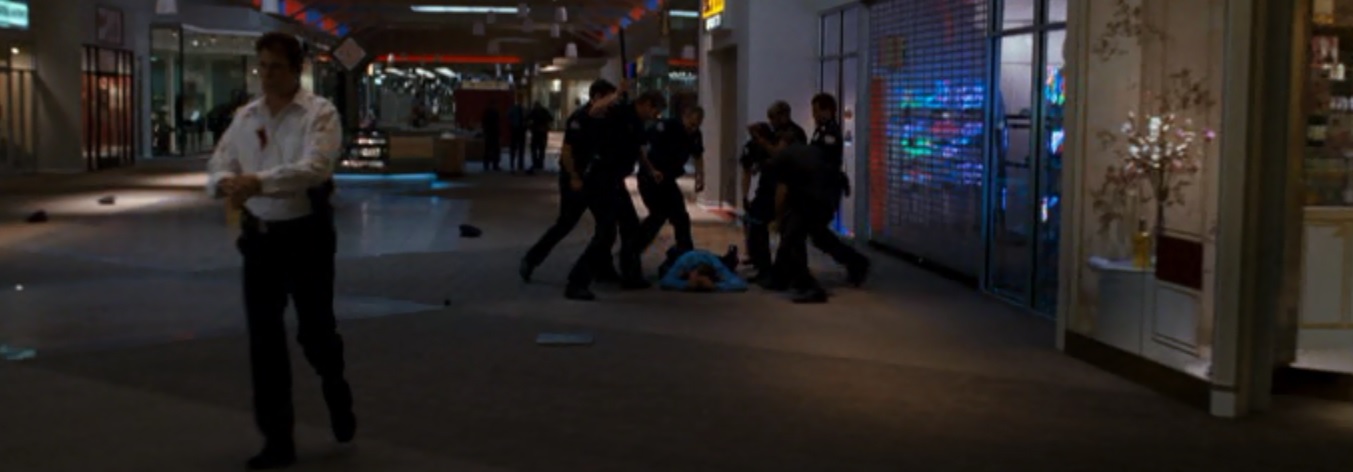
Seth Rogen did a complete about-face in this film, squashing the lovable stoner character we’ve all come to love, and ripping into the role of the morally bankrupt, bi-polar Ronnie Barnhardt, a sociopathic mall security officer who fashions himself as judge, jury, and executioner. Literally. The plot involves a serial-pervert who has taken to flashing the female mall shoppers in the parking lot, opening up his trench coat and wildly exposing himself. Lovely! Ronnie goes head-to-head with a slimy detective played with evil glee by Ray Liotta who is investigating the case and can’t be bothered with Ronnie’s idiocy. Danny McBride pops up in a priceless cameo as a crack dealer. But the best part of Observe and Report may just be the utterly brilliant Anna Faris, playing the object of Ronnie’s affections, the slutty cosmetic-counter girl Brandi, who ends up getting flashed, and mentally scarred for life. Faris, in a performance that is nothing less than a small tour de force, gets some of the film’s best material; her date-night with Ronnie is one of the more questionable things ever to be featured in a film that is asking its audience to laugh. Ronnie uses her fears as a potential way into her heart (oops, I mean pants), all the while trying to put a stop to the flasher’s reign of terror, while also finding time to abuse a multitude of drugs and beat the crap out of skateboarding punks who love to loiter in the parking lot.
3

Hill is obsessed with the socially awkward and having you look directly into the face of humiliation, the face of dead-beat America, the ethically bankrupt souls of individuals who are completely delusional and who cannot be helped, and then having you laugh at them AND with them, while the characters slip deeper and deeper into their own self-destruction. The finale of Observe and Report stands as one of the craziest endings I’ve seen, bracing in its casual violence, with the power to literally take your breath away; even coming close to spoiling it would be a crime. I almost hesitate to call this film a “comedy” as it’s certainly no feel-good Apatow production. There’s no overt sentimentality, the characters aren’t classically “likable,” and the way that the humor is derived from scenes depicting violence, racism, homophobia, and sexual deviance will test the limits of many viewers. I found it to be the most daring, the most original, and the ballsiest studio comedy since Team America: World Police. We need more movies from Hill as I can think of few other risk takers and envelope pushers quite like him. The Legacy of a Whitetail Deer Hunter can’t get here soon enough!
LYNN SHELTON’S HUMPDAY — A REVIEW BY NICK CLEMENT

1

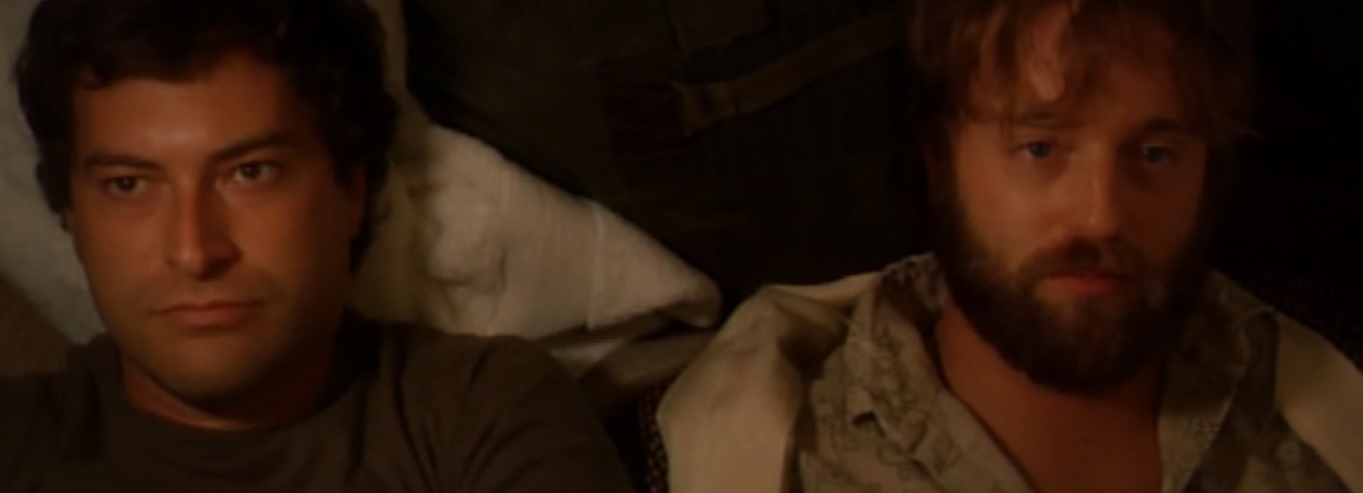
The 2009 comedy Humpday is Lynn Shelton’s masterpiece as a filmmaker and storyteller, a movie so attuned to its dynamic characters and point of view that it almost hurts to watch it. Ever since I saw this movie roughly five years ago, I’ve constantly been reminded of how brilliant and funny it is, and after revisiting it recently, I was blown away to find that the surprises still surprise – this is one of those under the radar gems (Shelton specializes in those) that deserves to be seen by as many people as possible. It’s the sort of film that shatters the notion of male sexuality in ways that few pieces of art dare to ever explore, and because the lead performances from Mark Duplass and Joshua Leonard are so precise and heartfelt, I find it impossible to believe that this film couldn’t leave a lasting impression on any viewer. Shelton’s films always explore society and the people living on the fringes of our landscapes, and as usual, her innate sense of emotional complexity is in full stride here, as her improvised story goes to some seriously awesome and complicated places. It’s the sort of film that will tell you a lot about yourself as a person while you watch it, because while the scenario that gets played out will seem far-fetched to many (including myself upon first knowledge of the project), you buy into it because of everyone’s conviction in the material and how naturalistic and honest everything feels.

2

The premise is very simple in idea but beyond layered in execution and intent. Two heterosexual male friends, Ben (Duplass) and Andrew (Leonard), reconnect after 10 years of not hanging out. Old friends, guys who go way back, these are two men who know each other very well, but have allowed their lives to take them on different paths in recent years. But when they see each other, it’s like it was yesterday that they were chilling out, and it’s a natural fit for the two of them to be in each other’s orbits. One night while at a party with lots of old pals and after some solid drinking and puffing, Ben and Andrew end up in one of the most interesting “I Dare You” situations that they’ve ever encountered: Would they be able to have one night of sexual relations with each other, which would of course be filmed, as a way of creating an “art project” that they could then submit to a local film festival for consideration. Ben, naturally, has to discuss this idea with his wife Anna (Alycia Delmore), but he doesn’t really tell her the truth, which leads to its own set of interesting developments. But most importantly, this rather groundbreaking slice of sex comedy dares challenge our preconceived notions of what male friendship is all about, what its limitations are, and how two straight buddies might be able to convince themselves that one night of homosexual relations would do nothing at all to their long lasting friendship. That the film consists of numerous scenes of Ben and Andrew discussing their “date” in great detail should be of no major shock; but rather, it’s HOW they discuss their idea that makes this film as sharp as it is.

3

There isn’t one false step in this movie, not one bad scene, not one moment where you feel that this isn’t exactly what all of the creative parties had intended to do. In countless modern sex comedies, the idea of two women casually having a sexual tryst has been repeatedly shown in movie after movie, so it’s no surprise that the “hook” of Humpday is likely to provoke and potentially shock casual viewers, if not, however sadly, offend. This is a progressive film that looks at sex and friendship in a unique and soul-stirring way, and while it’d be a crime to reveal how the movie ends, I’ll allow that it’s note perfect, taking things to their logical conclusion if these two particular men just so happened to be involved in this highly delicate and potentially life changing experiment. Duplass and Leonard were totally unafraid with their performances, registering a sense of friendship that feels deep and well observed at all times. And as usual, Shelton brought her terrific eye for small details of humanistic comedy at almost every possible moment, and even has a terrific extended cameo as one of the party goers on that fateful night of dares. If you haven’t see Humpday, or were wishy-washy on it for whatever reason, I highly recommend this marvelous, incredibly funny film to anyone who is unfamiliar.

DRAKE DOREMUS’ LIKE CRAZY — A REVIEW BY NICK CLEMENT

2

If you’ve ever gone through a long distance relationship, chances are you’ll be able to relate to the central themes in the 2011 film Like Crazy from up and coming filmmaker Drake Doremus. This is one of my favorite movie romances in a very long time, and it’s the sensitivity and the honesty that Doremus brought to this tale that really resonated with me. I’m a softie at heart, so when I see a film that feels as open and emotionally naked as this one, I pay close attention and can’t help but get swept up in the complexities of the story and the decisions that the characters make. Starring the fantastic trip of Anton Yelchin, Felicity Jones and Jennifer Lawrence, the film tells the story of Jacob (Yelchin) who meets Anna (Jones), but there’s a problem – she’s a British foreign exchange student who is deported after her visa lapses. Then, after their budding romance is put to the test via the long distance, Jacob meets Samantha (Lawrence), a beautiful co-worker, while Jones develops a relationship of her own back on her home turf. What will become of the central relationship and how will the characters navigate the tricky waters of young love? Doremus, for me, never missed a beat with this sensitive, loving, subtly gorgeous movie that stresses off the cuff cinematography along with a naturalistic screenplay (co-written by Doremus and Ben York Jones) that was heavily improvised by the actors based off a 50-page outline (per Wikipedia…) And I wouldn’t be surprised because there’s an unforced quality to the acting, and the dialogue often times stings with truth that might never have been able to be scripted. Jones is extraordinary in her part, registering every single emotion you could think of, while Yelchin has never been better on screen, conveying confusion and intense feeling all throughout. And it goes without saying, Lawrence brings her sunny, sexy, vibrant personality to the sole of Samantha, creating a woman you want Jacob to fall in love with and treat well. Everyone in this film has terrific chemistry with one another, which only makes all of the entanglements harder to judge and compare; as with life, the heart does strange things at all times. And then there’s the fantastic soundtrack that frequently comes into play, with Paul Simon POWER all over the place for extra coolness and sense of wise elegance. After premiering at the Sundance Film Festival in 2011 where it won the Grand Jury Prize, the film found a small theatrical release and has hopefully continued to keep audiences engrossed over the last few years via Blu-ray, DVD, and streaming. This is one of those small but tremendously affecting movies that will hit many people very hard, very fast, and will stick around in the memory long after the film has concluded.

1

LYNN SHELTON’S TOUCHY FEELY — A REVIEW BY NICK CLEMENT

1

Touchy Feely is more awkward, dark hilarity from Lynn Shelton, with the added benefit of something more cerebral happening from this emotionally probing filmmaker. Not that her work hasn’t been thoughtful in the past, but rather, her 2013 effort evoked some of the same extra-heady feelings that I get while watching Todd Haynes’s 1995 masterpiece Safe, aka the “environmental allergy movie” with a near-possessed Julianne Moore. Working again with Rosemarie DeWitt (fantastic as always) while adding Ellen Page (terrific), Scoot McNairy (consistently brilliant) and the wonderful scene stealer Josh Pais (pricelessly funny), Shelton has crafted an interesting, insular world of repressed, challenging characters who are all looking to break out of their shells and do something with their lives. One of the many things that I appreciate about Shelton’s storytelling style is her almost perverse sense of disdain for overt exposition; you have to work to understand the people in her films, with bits of information doled out in unexpected ways, while she asks you the viewer to do a little mental work and fill in the blanks in an effort to form the full picture. Not everything needs to be spelled out for you, which is why I think I respond so well to her work. All of her films feel improvised or semi-improvised and there’s a looseness to her aesthetic that has always hit the sweet-spot for me, even as her films have gotten more and more visually polished.

2

DeWitt is Abby, a successful and prototypical massage therapist, running a beautiful spa in Seattle (Shelton’s home state and favored filmic location). Her shy and slightly odd brother Paul (Pais), is a dentist with a struggling practice, while her boyfriend Jesse (McNairy) seems unsure of what to do with himself as a person. Paul’s daughter, Jenny (Page), is always trying to think the best for her father but knows that he’s just not comfortable in his own shoes; their relationship is very touching to observe. But then something odd starts to happen – Abby develops a revulsion to skin (hard to be a masseuse, no?!), Paul develops a “healing touch” for people with constant tooth pain thus blowing up his business into the stratosphere, and Jesse thinks it’s a great idea for Abby to move in with him, despite his unclear direction in life. All of this is done in a way that feels never overly determined and mildly improvised at times, though from what I gathered, this effort had much more of a traditional script from Shelton than her previous films, which had almost solely relied on well structured improvisational dialogue. The entire film feels like some sort of heightened, bizarre fairy tale, and while it never gets “mystical,” there’s an air of Zen and a constant sense of emotional and spiritual searching that the narrative gives off.

3

The always terrific character actor Pais completely steals the show in Touchy Feely, and in a sane world, he would have been nominated for a Best Supporting Actor Oscar a few years ago; it’s annoys me that he didn’t get the full and proper recognition he deserved, and how these types of performances are sadly overlooked year after year by the Academy. McNairy, as noted earlier, seemingly can do no wrong, and has fast become one of my favorite actors. He’s exhibited amazing taste in material and the filmmakers he’s chosen to work with have all been quality and diverse, and here, he gets to add another interesting portrait to his gallery of low-key character based work. And Page again reminds how effective she can be in these small, personal movies, which is the common theme all throughout Shelton’s career – she’s a filmmaker interested in human interaction and the many ways that we verbally and visually communicate with each other on a daily basis. Because so much of the drama that’s at the center of Touchy Feely is the sort of internal angst (existential to some degree) that might be hard to convey, the film is even more interesting because of how well attuned DeWitt is to the material and to the large and small aspects of her inherently flawed and interesting character. Touchy Feely has been the most divisive film from Shelton in terms of critical reception, and it’s not hard to see why; it’s a unique item that doesn’t play by the normal rules at times, showcasing a lead character who can sometimes feel abrasive (by design) and mentally out of control. And while it’s not my personal favorite out of her oeuvre, it’s yet another distinct, intimate movie from Shelton that focuses on people and human behavior rather than empty CGI or a narrative that we’ve seen 100 times before.

JOHN MCLEAN’S SLOW WEST — A REVIEW BY NICK CLEMENT

2

“There’s more to life than survival. Jay Cavendish told me that. I owe him my life. Ho for the west.” Writer/director John Maclean’s stunning film debut Slow West has more than one line of dialogue like the one that I quoted above, and it’s within his poetic prose that this slim but never too brief slice of nastiness in the lawless West finds a confident footing as one of the most exciting first features that I can think of. Starring the fantastic trio of Michael Fassbender (honestly – this guy couldn’t be bad if he tried), Kodi-Smit McPhee (one of the best young talents around), and my current favorite cinematic scumbag Ben Mendelsohn, this is a violent, fatalistic movie that has ZERO narrative fat, looks strikingly beautiful, and has a dark sense of humor about itself that proves to be one of its strongest virtues. And at 79 minutes long, there’s not one wasted moment or frame, with an overall sense of narrative economy that’s bracing to behold, with a formal design that’s eye-catching and subtly stylish (Robbie Ryan handled cinematography duties). Centering on two crusty bounty hunters (Fassbender and Mendelsohn) going after the same human reward with a young lovebird in tow (McPhee), loyalties are tested, friends are uneasily made, and the unsparing and bloody truths of travelling through hostile territory in the late 1870’s are frequently explored with a rising body count and a penchant for the starkly visceral shoot-out. Maclean directs with crisp efficiency, the performances are all spot-on, and the confidence in the material speaks to potentially exciting stuff in the future for Maclean. Jed Kurzel’s atypical score for the genre added a fresh spin to the proceedings, and the location work made this low-budget item feel much larger than it ever could be due to the independent nature of the project. Fassbender has a hardened machismo that is perfect for his quick-to-shoot gunslinger, while Mendelsohn gets to be his usually awesome and slimy self, always looking as if he needs a bath and a meal. And McPhee continually demonstrates that he’s a terrific actor; it’ll be very interesting to see what sort of roles he takes on in the future. This is a small gem that will delight viewers who are looking for some quick and explosive entertainment.

3

JEAN-PIERRE JEUNET’S THE YOUNG AND PRODIGIOUS T.S. SPIVET — A REVIEW BY NICK CLEMENT

2

Seriously – at this point – The Weinsteins, in particular Harvey, need to be stopped. Someone has to drive over to their offices and put a banana in the tail pipe or something because I’m done with their asinine shenanigans. One of their latest casualties: Jean-Pierre Jeunet’s glorious and never released in the United States family film The Young and Prodigious T.S. Spivet. I call it a family film because at its heart, it’s all about family, but this being a Jeunet picture, you know you’re in for something subversive and all together unique from frame one and this overwhelmingly ravishing movie is no exception. Taking his storybook filmmaking aesthetic to new and boldly imaginative heights, this feels like an amazing mixer of his already fanciful storytelling techniques with nods to Wes Anderson, classic American iconography, bits of the whimsical spirit of Michel Gondry, along with a dollop of Spielbergian sentimentality that’s a perfect fit for the tonally wild final result. I simply can’t understand the fascination that the Weinfucks, oh I’m sorry, Weinsteins have with continually meddling with major movies from major filmmaking talents (James Gray, Bong Joon-Ho, and Wong Kar-wai are some recent directors who have battled it out with the legendary “producers.”) It’s almost as if they go out of their way to buy everything up and then just dump or bury it so that nothing can compete against their new QT film or whatever British prestige picture they have up their sleeve in any given year. It’s getting really, really tired.

3

Based on the book by Reif Larsen, the epic yet intimate narrative involves a 10 year old science prodigy in the making named T.S. Spivet (the incredible Kyle Catlett making his film debut, and having a TON asked of him as a performer). He lives on a gorgeous, Babe-style farm in Montana, and he’s obsessed with maps and inventions and figuring out the practicality of everything around him. His eccentric mother (Helena Bonham Carter, looking uncharacteristically beautiful yet still full of her trademark quirk) is obsessed with beetles and bugs; his father, the perfectly cast Callum Keith Rennie, is a “cowboy born 100 years too late;” and his 14 year old sister has aspirations of becoming Miss America but isn’t allowed to have a phone in her room. And then there’s the matter of T.S.’s twin brother Layton, who has tragically died in a gun accident, an accident that T.S. feels partly responsible for. Then, his life is changed one day when the Smithsonian calls, telling him that he’s won the ultra-prestigious Baird award, as he’s seemingly invented the world’s first perpetual motion machine. So what’s an intrepid kid living in Montana to do when nobody around him truly understands his numerous mental gifts? He does what any forward thinking young chap would do – he sets off by himself for Washington, D.C., hopping aboard freight trains, hitching rides with tractor trailer truck drivers, and using anyone and anything to his advantage in any possible way.

4

That’s all I’ll allow for the plot, because like every film that Jeunet has crafted, there are constant surprises in store, with his amazing sense of visual wit and overwhelming attention to detail within his mise-en-scene being almost second to none in my estimation. Shot after shot, the film looks like an utter treasure, with Thomas Hardmeier’s elegant and honeyed widescreen cinematography popping with vibrant color and depth of field, with something always interesting to look at in all areas of the frame. Jeunet is a grab-bag guy, a man in love with the endless possibilities of cinema, and as usual, his obscene production design (handled by Aline Bonetto) is stuffed with endless bits of visual information that both inform the story and boost the atmosphere. And then there’s the craft, DIY-inspired special effects and flights of fancy that amp up the pleasure-zone factors; it was filmed in 3-D which must’ve been a total treat to experience. This film was NEVER released in ANY fashion in the United States. Fuck you, Harvey Weinstein. Fuck you. The Cinema Godz cast shame upon you and your company. It should be considered a CRIME AGAINST CINEMA to get a film this wonderful and unique all the way to the end line and then not have it get a chance to see the light of day in a country where there would have been plenty of people to enjoy it. The only way that this movie can be seen is if you have a Region Free Blu-ray player, or if you feel like downloading it online illegally. I don’t do that stuff, and normally I’m against that practice, but in this case, I encourage everyone to do what they can to see this masterful piece of moviemaking.

WILLIAM EUBANK’S THE SIGNAL — A REVIEW BY NICK CLEMENT

1

Intriguing right from the start (if a bit purposefully confusing) and building an impressive head of steam throughout 90 semi-perplexing minutes, William Eubank’s supremely stylish sci-fi mind-teaser The Signal is one of those flicks that keeps you at arm’s length for much of its duration, only to finish with a whammy of a twist ending that most people won’t see coming (I didn’t). Trading on some beats from other genre entries but still doing enough to feel fresh and zesty and alive with possibilities, this low-budget effort benefits from Eubank’s background as a cameraman, as the 2.35:1 widescreen framing is stunning, with cinematographer David Lanzenberg opting for a bold, saturated color palette and harsh, washed-out desert tones that amp up the creep factor while maxing out the style department. Seriously – this film looks 100X bigger than it actually was – I can only imagine what Eubank could do on a massive canvass from on a visual level. Without giving too much away about the oblique yet thoroughly engaging narrative, The Signal plays with the idea of the alien close encounter in a way that really hasn’t been done before – but you may not realize that fact until the very end. Upon deeper inspection, it’s a film that operates on multiple levels and gives you some really interesting bits to chew on and contemplate. Brenton Thwaites is a very appealing young actor who does a really good job at being exasperated, and when finally presented with his moment of truth, he registers with true force and sincerity. There’s lots of nifty special effects and tons of powerful imagery, making this a highly enjoyable “calling-card” movie for Eubank. I’m disappointed that this film didn’t find a larger theatrical audience last summer, but I have a feeling that over time, it will gain the audience it deserves via the DVD and Blu-ray and streaming market. Low on budget but high on unnerving ideas and glorious style, The Signal is one that truly got away – check it out if you’ve previously missed it!

2

DAVID ZELLNER’S KUMIKO, THE TREASURE HUNTER — A REVIEW BY NICK CLEMENT

1

Inspired by the urban legend surrounding the real life suicide of Tokyo office worker Takako Konishi (go to Google…), David Zellner’s bizarre, enigmatic, and totally masterful oddity Kumiko, The Treasure Hunter is easily one of the most spellbinding films of the year, a motion picture almost impossible to classify, and the very definition of a film where the less you know about it the better off you’ll be when you see it. This was my first Zellner Brothers experience and it won’t be the last; I’m stocking up my Netflix queue with whatever I can get my hands on, and I’ve discovered some funny short films online (Sasquatch Birth Journal #2 is priceless!) which seem to indicate a general level of cinematic idiocy that I can really get behind. I love it when a movie takes me totally by surprise, and when a filmmaker confidently mixes a variety of tones with the express goal of creating something wholly unique and startling. That’s what this film is – wildly original, deeply stylish, mentally stirring, and at times, thematically troubling when it isn’t being irreverently funny. And it’s yet another small movie from this year that trounces the big-budget competition; I’m finding it harder and harder to come up with any solid reasons to see whatever piece of uninspired nonsense that the studio system is hurling my way.

2

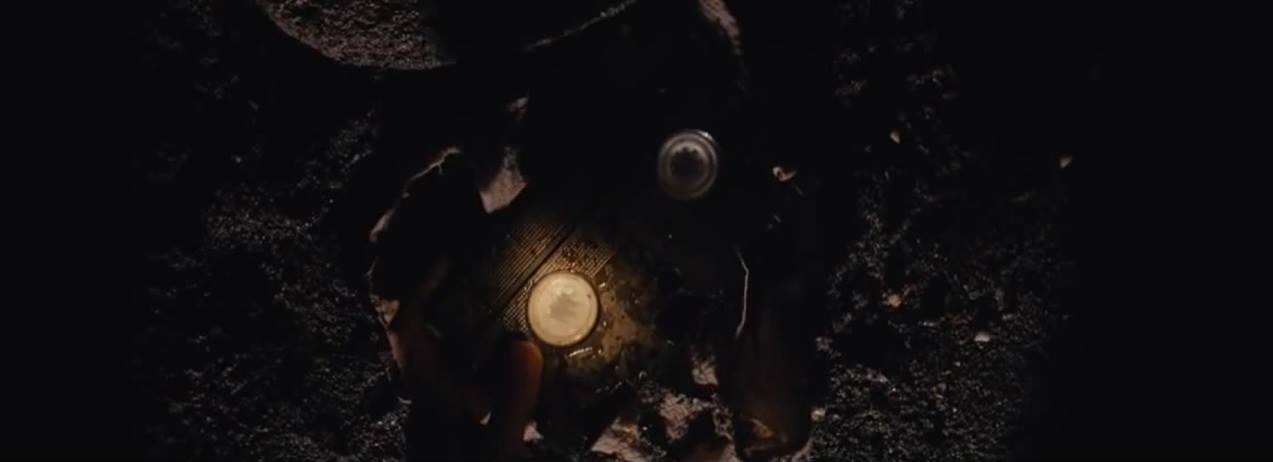
Kumiko, The Treasure Hunter, which was co-written by David Zellner and his talented brother Nathan, stars the fascinating actress Rinko Kikuchi as a mentally ill Japanese office worker, “still” unmarried at 29 (much to the chagrin of her overbearing mother), who discovers a degraded VHS copy of Joel and Ethan Coen’s celebrated film Fargo. The narrative details, with much humor, painful sadness, and creepy unpredictability, how she misinterprets the film for real life, leading her on an asinine and quixotic quest to find the money that Steve Buscemi’s character had buried out in that snowy field near that wire fence before he got fed to the wood chipper. The film is all about Kumiko’s quest and the interesting people she meets along the way (a segment with a helpful cop played by David Zellner himself and some scenes with a widowed woman are particularly strong and affecting), and the way the Zellners have framed their story leaves little doubt in the viewer’s head that they’re dealing with a lead character who isn’t thinking clearly. And what’s more, the subtle ways that the filmmakers fill you in on this fact are awesome to notice and discover. The script is limited with its dialogue, as the Zellners prefer to tell their story with a focus on allowing their indelible images to propel to narrative forward, resulting in a work that feels dreamy and one that’s constantly challenging reality.

3

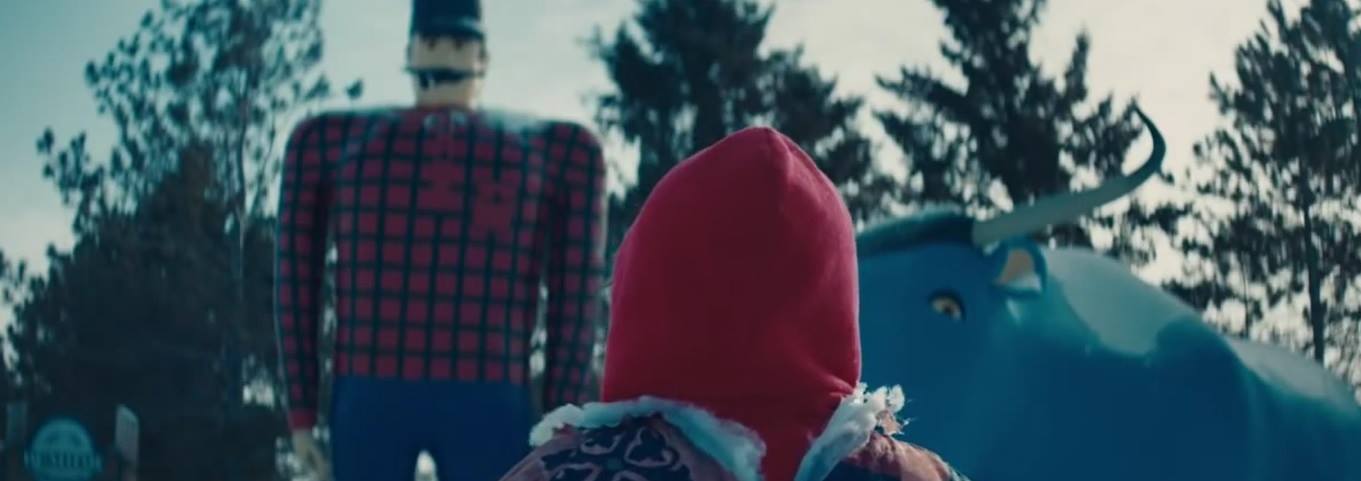
The film has an amazing visual look, with the 2.35:1 widescreen cinematography by Sean Porter always putting something interesting in the frame, with Kumiko’s red hoodie cutting across the blown-out white expanses of the Minnesota winter landscape in extremely memorable fashion. Melba Jodorowsky’s fluid editing allows the film to move along at a brisk pace without ever feeling rushed, and the eclectic and offbeat musical score by The Octopus Project never leaves any doubt that you’re watching something willfully absurd yet sincerely heartfelt. The film is essentially about loneliness and isolation, and how one woman is committed to doing SOMETHING with her life, regardless if that something is rational or not. The Zellners have made an absurdist film to a certain degree, and yet, there’s emotional impact because of Kikuchi’s mesmerizing portrayal of a woman who has lost all sense of normalcy, desperate for this one thing to come to fruition. You never know where this movie is going, it’s impossible to guess how it will end, and I absolutely LOVED the final section, which will likely frustrate and annoy those who need everything spelled out for them in order to be satisfied with a movie. I’ve never seen anything that remotely comes close to resembling this bizarre and completely transfixing film, and it’s yet another indication of how there are some truly great movies out there to be seen if you’re willing to look a bit harder at all of the available selections.

YANN DEMANGE’S ’71 — A REVIEW BY NICK CLEMENT

2

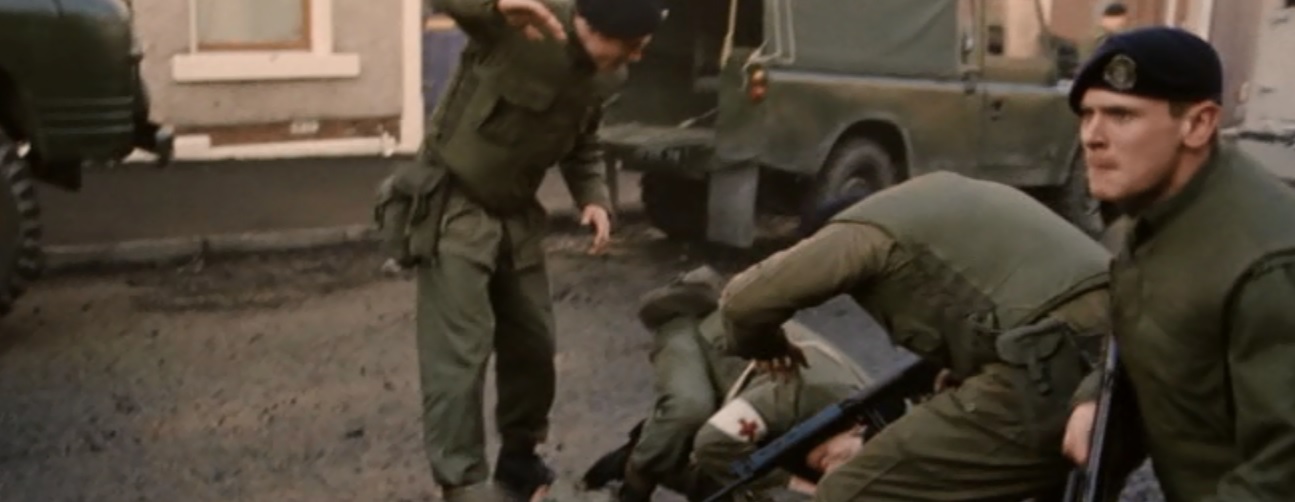
Yann Demange’s riveting thriller ’71 is one of the most hard core, cut from real life docudramas that I’ve ever seen. Taking a cue from the run-and-gun filmmaking aesthetic of Paul Greengrass (Bloody Sunday feels like a spiritual cousin in many respects), this is a blistering anti-war statement focusing on a bloody and violent riot in the streets of Belfast during The Troubles in 1971, and how a left behind British soldier (the phenomenally intense young actor Jack O’Connell) has to contend with all sorts of dangerous elements over the course of one hellish night in an effort to stay alive as a group of radicalized demonstrators are looking to do him in for good. This film has tremendous camerawork that goes for the visceral in every moment, the sound design is excellent, there are surprises left and right from the gripping narrative, and Demange exhibits a firm grasp of no-fat linear storytelling that grabs you by the throat from the opening seconds and never lets up for 95 minutes. Agonizing to watch at times, incredibly suspenseful, and dispiritingly sad by its conclusion, the film is aided immensely by O’Connell’s vigorous performance. He’s now demonstrated in three films (Starred Up and Unbroken being the other two) that he is one of the premiere young talents to emerge on the acting scene in quite some time. He always looks different, he’s got a fantastic set of eyes that seem to posses a laser-like intensity, and he’s able to convey vulnerability and confidence in equal measure. As far as military themed thrillers go, this one is at the very top of the list.

3

DRAKE DOREMUS’ BREATHE IN — A REVIEW BY NICK CLEMENT

2

Internal, quiet, and a film that’s constantly searching for answers, Breathe In is a wonderful, heavily improvised drama that places a strong concentration on mood and atmosphere and the lingering moments after a conversation ends, while endlessly stressing the emotionally suspenseful moments of its character’s lives. This is a very different film from writer/director Drake Doremus after his no less accomplished debut Like Crazy, which for me, still ranks as one of the best college/long distance relationship movies that I’ve seen. He’s again delivered a serious and dreamy look at relationships with Breathe In, but this time, instead of college students, Doremus’ tale centers on the possible May-December romance of a married man and a high-school exchange-student whose sudden presence in a suburban family’s home shakes everyone to their core. Using off the cuff dialogue to propel the plot forward was an interesting way to have the actors confront the highly complex situations that the characters find themselves in, and even if the final act isn’t as perfect as the previous two, the performances, especially those of the consistently excellent Guy Pearce and the continually alluring Felicity Jones make up for any potential shortcomings in the story department. This is a very good movie, extremely well observed from almost every angle, and further demonstrates Doremus’ inherent interest in people and their emotionally fragile states (Like Crazy did this sort of thing extremely well; it’s such an underrated film). The probing, expressive cinematography, classical music score, and the overall sense that “anything can happen” keeps you engrossed, and it can’t be said enough – Guy Pearce is one of our absolute best actors currently working, and he turns in an exceptionally challenging performance as a man driven to mental madness over his shortcomings as an individual and the knowledge of the pain that he might be capable of inflicting on those who love him. And Jones is every bit his equal, hitting all her notes of guarded sexuality and emotional vulnerability, creating a woman who is very much in control of her surroundings but still doesn’t quite grasp the ramifications of the scenario she helps to create. Amy Ryan and Mackenzie Davis offer excellent support. Doremus is clearly a filmmaker to look out for in the future.

3