TWIN PEAKS: THE RETURN

twin-peaks-img4

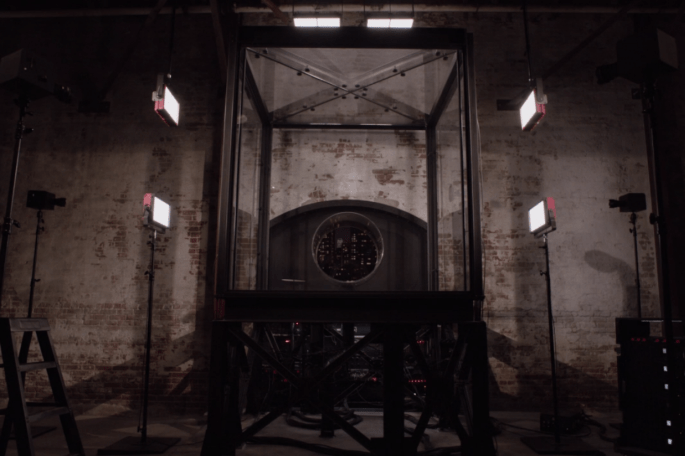
David Lynch appeared to take his considerable toybox and go home after the brave foray into no budget digital filmmaking and self distribution—please don’t forget that he attempted this with Inland Empire long before every Tom Dick and Harry grabbed a camera at Best Buy and broadcast themselves around the globe—resulted in mixed to poor critical reception and little by way of box office.  He had his painting, his music, his American Spirits and his own brand of damn fine coffee, which is to say most fans increasingly had little to no hope he’d get busy lensing his own unique brand of fiction again.  Flash forward twelve years, or for the die hards, twenty five, and a minor miracle has started to roll out before our eyes:  18 new hours of Mark Frost co-written, David Lynch directed Twin Peaks.   The beyond influential show returned in May, flush in the middle of television’s so called Golden Age, a time when expectations for cinematic sweep on the small screen have never been higher.  We’re six episodes in and it’s time for a reckoning:  Is Twin Peaks as good as it was when it unknowingly launched so many serialized dramas?  The answer to this question rests entirely on how big a fan you are of the mind and sensibility that dreamed the whole thing up.

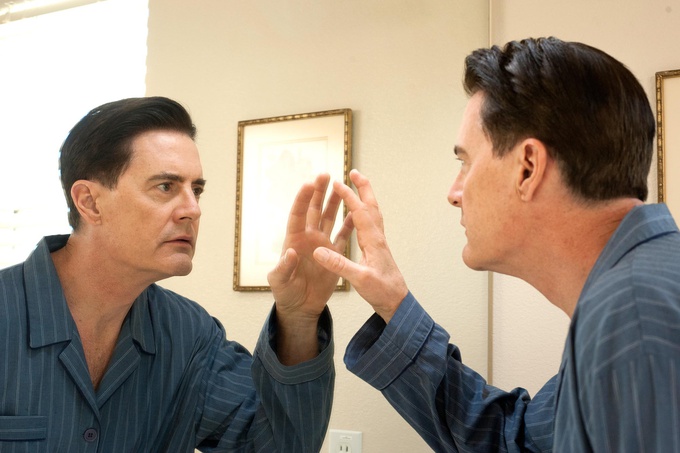
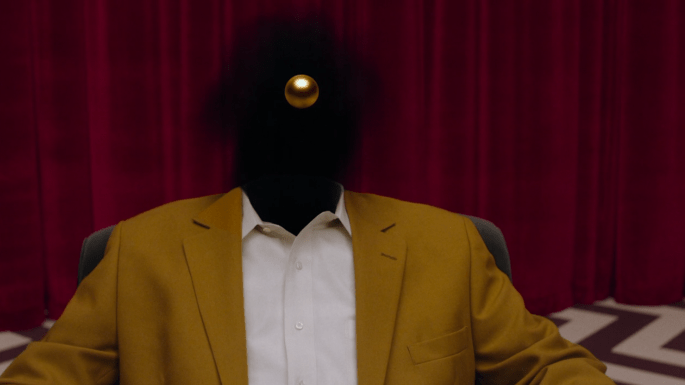
Which is to say, Lynch managed to convince (although he almost didn’t; he famously quit the revival over a budget dispute, but the cast and fans came together online to make sure the production would continue) Showtime to fund 18 new hours of his own uncompromising, post 2000 id to sneak into our homes under a well known brand.  Twin Peaks: The Return is both familiar and alien, probably close to impenetrable if you’re not steeped in the original show and its prequel, and a delight for those of us who appreciate a surprise and a challenge.  Familiar faces show up with regularity, but the most familiar, that of Kyle McLachlan’s Special Agent Dale Cooper, is split into multiple roles in keeping with where he was left back in 1990 (trapped in the mystical Black Lodge, with an evil clone of himself let loose upon the world).  Over the first few episodes we jump around to places as far flung as Las Vegas, New York and South Dakota, meeting new characters and finding new mysteries that, on first blush, have nothing to do with the small town in the Pacific Northwest that harbors so many secrets.  Lynch cracks that toybox open and draws from everything he’s ever made, one minute staging an interdimensional breakout of our hero that feels like a mashup of Eraserhead and Inland Empire; the next, he’s channeling Blue Velvet’s horrific Frank Booth by way of Frank Silva’s Killer Bob—in the body of Kyle MacLachlan yet again.  And make no mistake, this is MacLachlan’s show.  He’s been given so many new notes to hit that it puts the viewer in a near-constant state of disconcertion—just the way Lynch intends, no doubt.  He’s taken a career-defining role and blown it open in all sorts of new directions, so far turning it into an even better crowning achievement than the magnificent original character was.

Catching references to earlier episodes, the film, and other Lynch works is a good piece of the fun, but the proceedings are once again grounded by Mark Frost, a seasoned television writer who maintains the ability to bring his partner in crime just close enough to terra firma that we’re clearly seeing a large and well-conceived interlocking mystery slowly spreading out.  We’ve had multiple murders, with a larger variety of law enforcement entities investigating them, and an increasingly large set of bad guys as well—some clearly not of this earth.  Each week brings a new twist, an old friend, and quite likely a road that will lead many characters back to Twin Peaks itself.  In addition to the mystery, though, there’s perhaps more humor than we’ve ever seen, dashes of the soapy drama that sucked in average viewers oh those many moons ago, and several striking moments of sentimentality that underline Lynch’s very idiosyncratic but near complete mastery of tone.  This new beast can switch between comedy, horror, steamy sex and indescribable surreality, all in the space of a scene or two.  In short, David Lynch is back in action, doing what he does best, and not caring one iota if you like it or not.  So far it’s a bravura reimagining and expansion of what fans knew and loved, or perhaps hated, about the original.  It’s clear that Lynch has keenly watched his progeny develop must-see serialized dramas like Breaking Bad and Mad Men (both of which are visually referenced throughout), mashed up the best instincts behind those shows with his extremely unique perspective and obsessions, and we the audience are all the better for it.
twinpeaksDougieBlackLodge

Wonder Woman

WW2

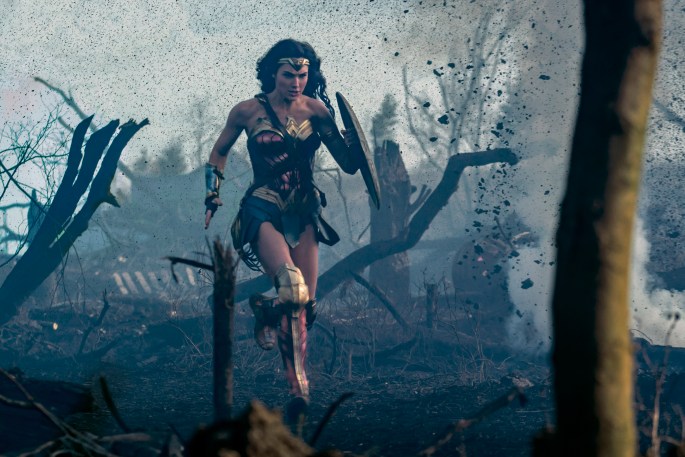
The road’s been rocky for the fledgling DC comic books extended cinematic universe (tagged with the clunky acronym DCEU), with a dark, violent Superman reboot, a controversial introduction of everyone’s favorite Gotham City orphan all grown up, and a deplorable studio hack job forced on David Ayer’s antihero romp.  One of the shining moments agreed on by almost all fans was the inclusion of Wonder Woman in Batman v Superman: Dawn Of Justice, raising expectations for a solo adventure that’s finally being released to the world this week.  There’s some very good news for Time Warner, DC and anyone else who’s paying attention, which is that actress Gal Gadot continues to make a riveting heroine.  Every minute she’s onscreen, you can’t take your eyes off her; heroic, beautiful, strong, and warm, she’s a marvel and the long wait to see the character front and center on film is rewarded by the casting and performance alone.  As for the rest of it, your enjoyment will vary depending on how interested you are in slipping on the fraying comfort jeans of the now typical superhero origin story.

Set in a nostalgic milieu that occasionally borders on Captain America:  The First Avenger copyright infringement, Wonder Woman starts with our heroine’s journey from the magic island where her Amazonian tribe, created by Zeus himself, lives in a literal bubble to the raging battles of World War I going on everywhere else.  The door to the real world is opened by a man, but at no point are we ever led to believe anyone has the presence and agency that Gadot’s Diana Prince has.  The screenplay does a wobbly but noble job of ruminating on the role of male aggression and violence in the world, offering Wonder Woman up as a have-your-cake-and-eat-it-too alternative to their historically destructive tendencies by engaging in the destruction at a higher level than any of the boys have ever been capable of.  Director Patty Jenkins does a fairly good job of trying to embrace and squeeze the most of the quiet moments, sometimes nailing the burgeoning romance between Diana and Chris Pine’s Steve Trevor but other times allows explication scenes to drag for no particularly apparent reason.  She does manage to simultaneously ground and celebrate this historic character, who arrives at a lovely ‘why we fight’ philosophical end point by the final reel that feels honestly earned.

The film does suffer from a variety of familiar beats, with standard bad guys (spoiler alert for the historically challenged, there are Germans and they’re up to no good), a predictable twist that ends in one of the more disconcerting bad guy casting jobs the genre’s ever seen, and of course a series of fight sequences that roll out with a scheduled regularity that one can set their watch to.  But those action scenes, clearly influenced by the hand of co-writer and producer Zack Snyder, crackle and pop with every bit of proud slow motion swagger and high speed collision you’ve come to expect from big budget comic book fare in the digital age, and it’s fairly apparent that most if not all of these going forward are going to end with the inky darkness of night, punctuated by fire.  But again, Gal Gadot commands the frame from start to finish, so it’s tough not to be caught up in her confident jaunt through her first full film.

WONDER WOMAN

Guardians Of The Galaxy Vol. 2

full-teaser-trailer-guardians-of-the-galaxy-vol-2-696x464

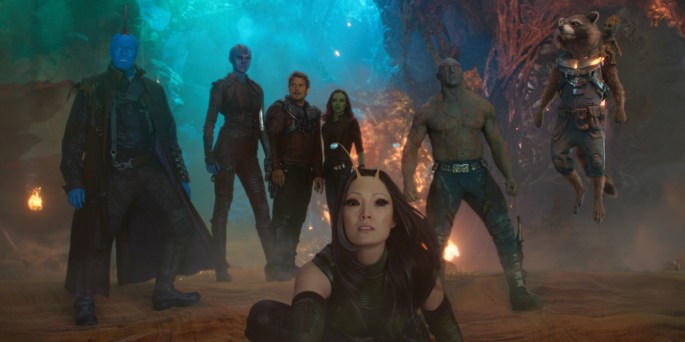
More than a few fanboy eyebrows were raised when the ascendant Marvel Studios announced they were turning something of a second tier comic book property, Guardians of the Galaxy, into a major motion picture with a summer release and attendant lofty expectations.  Stranger still, they chose the auteur behind Humanzee and PG Porn (Google it), the rebellious and decidedly underground James Gunn.  This filmmaker was coming off a no budget postmodern R rated take on caped crusaders, and probably wouldn’t have gotten a sniff of this assignment were it not for the influence of MCU Phase 2 associate mastermind Joss Whedon, a friend of Gunn’s who saw a devilishly perfect fit with the misfit supersquad that featured such diverse heroes as a talking raccoon and a friendly, vocab-challenged tree. Fast forward past the first film’s incredible box office performance and top tier consideration in the Marvel canon, and one can barely imagine Star Lord, Gamora, Drax, Rocket and Groot being handled by anyone else.  Gunn’s sympathy for cheeky misfits and deep connection to the source material were evident the first time around, but does he have what it takes to continue the story and improve on the original with an inevitable Volume 2?

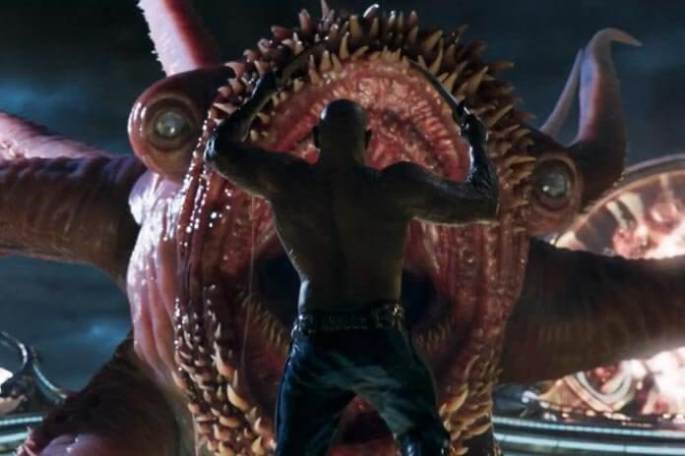
No spoilers: Absolutely.  This is a quintessential sequel; it keeps and improves upon everything fans of the original liked, expanding on themes, scenes and character arcs that crafted a surprise hit the first time around.  The comedy may be more plentiful too, with Drax continuing his evolution as a connoisseur of laughs, Baby Groot predictably adorable, Rocket holding the universe at bay with constant one liners and Star Lord’s semi-false bravado.  Gamora has plenty of moments too, most of which involve corralling her stable of unruly boys and getting them to focus on the task at hand—said tasks usually involve huge dollops of intergalactic mayhem, of course.  An early job for hire goes south in any number of ways, and things get even more complicated when Star Lord’s father, having discovered his son’s whereabouts thanks to the explosive events of the first film, arrives and takes a few Guardians back to his impressively crafted planet.  In typical dramatic fashion, things aren’t quite what they seem and we’re propelled into a raucous third act that has all the action and heart you’d expect from the franchise.

Gunn successfully mines the complicated concepts around family that he used to bring the team together in the first place as Star Lord sorts out his parentage and the other Guardians solidify their bonds; turns out the family you choose may have more to do with your success in life than the one you’re born to.  His love for the entire ensemble shines through with strong character work for some secondary players as well.  One mild but notable step backwards might be found in the soundtrack department; Tyler Bates’ score only stands out when he’s revisiting the strong themes of the original installment, and the much anticipated Awesome Mix Volume 2 plays more like a sunny but indistinct melodic wash instead of the punchy, unpredictable collection of hooks in Volume 1.  That said, the film delivers in all other departments, not the least of which is the glorious visuals, for the most part improving on the first.  This is the rare film I’d recommend seeing in 3D, as almost every digitally rendered frame takes full advantage of the technology as few other blockbusters do.  The entire cast appears to be having a grand time, including newcomers like Kurt Russell as the aptly titled Ego and Pom Klementieff as the empath Mantis.  No surprise here, Marvel has crafted another charming, exciting winner.

Guardians-of-the-Galaxy-Vol-2-full-team

Kong: Skull Island

Kong-Skull-island-700x300

Remakes and monster movies continue to be reviled in many corners of the filmgoing public, which is surprising considering both are practically as old as the form itself.  King Kong debuted on the silver screen not long after silver screens themselves took their initial bow, so the royal title remains apt to this day.  The creature’s climb up the Empire State Building remains iconic, not only for the audacity of the image but the promise of the fantastic that cinema itself offered newly minted movie fans—the very idea that walking into a theater would take you away from reality and show you things you’d never see anywhere else.  Clearly the great ape was built to last, as he’s turned up in one form or another over the years, most recently in Peter Jackson’s 2005 laborious love letter to the original.  Fast forward 12 years and Time Warner, fresh off the relatively successful Godzilla reboot, is looking to craft its own interconnected series of blockbuster films just like all the other remaining major studios, hence Kong: Skull Island is set to be released (somewhat tentatively in March instead of tent pole-y in May).  Is it a successful undertaking?  The short answer is yes and no, and a somewhat longer answer follows.

First of all, you’re not going to get the coy buildup towards monster mayhem that Gareth Edwards’ Godzilla offered, although you do get a credit sequence similar enough to that films’ that you’ll pick up on the universe building intentions right off the bat.  Once Kong arrives, he’s in full view and he’s rampaging just the way you want him to, smacking down uninvited guests on the titular island and throwing down with its fellow oversized inhabitants on the regular.  This all commences after fifteen minutes of highly perfunctory character introduction and motivation establishment.  At times the dialogue and reasoning feels like it’s being generated by a scripting software app, but at least Kong: Skull Island assembles a relentlessly charming cast, from handsome Tom Hiddlesworth to Oscar winner Brie Larson to affable John Goodman and badass Samuel L. Jackson.  A lesser group would have probably sunk the proceedings, as several of them—especially the purported leads, Hiddlesworth and Larson—are so underwritten it’s safe to say the film could have marched through its explosions without their presence.  Fortunately Goodman and Jackson are given a bit more to do, the former harboring a belief in the fantastic that’s not explained right off the bat and the latter adopting the warmongering swagger of Duvall’s Colonel Kilgore by way of Melville’s Captain Ahab.  They each have what the film comes closest to offering as far as character arcs go, and Jackson especially stands out.  The best story and performance hiding in between the flying bullets and crashing helicopters belongs to John C. Reilly, a punchy World War 2 veteran looking to return to civilization with our band of heroes.  He gets the strongest lines from a script that struggles to find any rhythm outside of the genre tropes we all expect.

On the plus side, Kong and his monstrous neighbors are lovingly (and of course digitally) rendered, and Larry Fong’s camera guides us around location sets ranging from Hawaii to northern Vietnam with grace and awe.  Once director Jordan Vogt-Roberts (an interesting choice given the indie film and television comedy background he brings to the table) stumbles through the early expositional scenes, he does a fine job staging the carnage, chases and explosions, of which there are many.  And Kong himself, in keeping with the typical incarnations of the character, really is just a hero in screaming ape’s clothing, there to provide deus ex machina services when the other creatures get too problematic.  There are enough tributes, visual and otherwise, to make fans of the previous films feel right at home on Skull Island as well.  In short, this is a fine action setpiece delivery system if that’s what you’re in the mood for.  A perfectly fine if not transcendent slice of fantastic escapism, with the inevitable promise of more to come if enough tickets are sold.

kong-skull-island-legendary-530x298

John Wick Chapter 2

johnwick2_0

The journey of the gun bobs and weaves through Hollywood history with expected gusto; from Westerns to Hitchcock thrillers to Eastwood and Bronson, time and again they’ve helped define heroes, create villains, and put bloody ends to countless fictional conflicts.  Growing up watching Mel Gibson, Sylvester Stallone and a horde of wannabe toughs shoot their way through a two hour narrative I figured they’d define heroics onscreen forever, but a funny thing happened—as Sly himself pointed out not long ago, Michael Keaton showed up with that damn cape in 1989, and the comic book revolution was on.  It took another decade for the effects to catch up to the ideas, but by the time X-Men came out in 2000 it was clear that the multiplexes were undergoing a sea change.  Not that the guns have disappeared, but they tend to get incinerated by laser beams from Iron Man’s hand before they can do much damage.  Two years ago, a scrappy Keanu Reeves vehicle steeped in 70s and 80s tough guy cinema and decidedly against the superhero grain called John Wick became a surprise hit, and this past week saw the inevitable sequel roll out.  No capes to be found in either of these movies.  To quote RoboCop baddie favorite Clarence J Boddicker, we get plenty of guns, guns, guns.

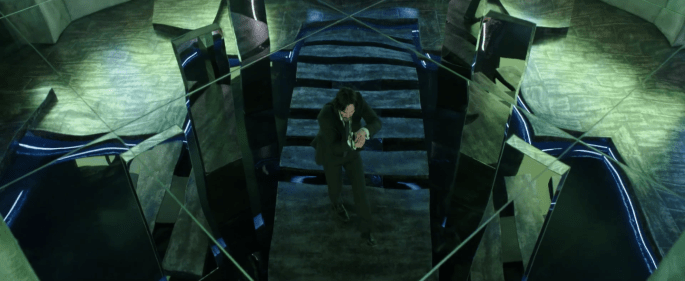
First, a spoiler alert:  No animals are harmed onscreen in John Wick Chapter 2, unlike with the PETA revenge porn story of the original.  John has a new dog who briefly provides companionship, not drama, this time around.  Unlike the slow and occasionally mystifying  burn of the opening of the first movie, JW2 kicks off with several bangs and crashes as a loose end you may have forgotten gets tied up, then we get down to the business of once again dragging the noble hitman out of retirement to vanquish small armies of men in black suits sporting walkie talkie earpieces and large rifles.  The contrivances by which this takes place are more or less effectively laid out, delivered by a deft confluence of new baddies and old friends from the original.  To go into details wouldn’t necessarily spoil the fun, but it would also be beside the point.  We’re here to see Reeves run around kicking, punching, stabbing and oh yes, shooting his way through Europe and New York City, everyone knows it, and the filmmakers provide it in spades.  The cheeky alternative universe of crime and very special hotel rules is on full display, with several fun new layers and, by the end, an easy to adopt idea that in the Wickverse, Uber and Lyft side gigs have been replaced by the occasional assassin job.

Perhaps the unintentional strength of a film charged with delivering over the top murderous mayhem is that, this time around, we don’t get the puppy excuse.  In fact, in a key scene involving John’s return to work as well as the film’s denoument (which yes, fans, doesn’t just leave the door wide open for a third chapter, it demands it) both pause to remind you that Wick isn’t a hero, he’s a devil.  From the very beginning of John Wick Chapter 2, we see the lead try to once again exit his life of crime by employing the one thing he’s good at, murderous ultra violence.  The clear contradiction is an honest one and the filmmakers don’t flinch from it; John’s a bad man, and he doesn’t get the happily ever after that the first movie briefly tricked us into thinking he’s due.  I don’t want to make it sound as if Chapter 2 is a leaden antihero slog, because the primary goal remains action packed entertainment, and we get plenty of it (some of it quite funny, in keeping with the original’s often glib meta tone).  But living in an age where gun violence has gone from a gleeful gallop across the movie screen to horrid true crime stories on the nightly news, it wouldn’t quite sit right to have John get to have his cake and it eat too, and one gets the sense from this latest installment, not to mention the direction it’s heading, that director Chad Stahelski and writer Derek Kolstad understand this as well.

john-wick-chapter-2-sequel-trailer-images-screencaps-30

The Lego Batman Movie: A Review By Tim Fuglei

the-lego-batman-movie

As we approach the 80th anniversary of The Caped Crusader joining the public consciousness, his popularity couldn’t be stronger.  We’ve seen two unique and highly successful cinematic versions played by Michael Keaton and Christian Bale in the last 30 years, countless animated versions, a new live action take introduced last year featuring Ben Affleck, and of course the comics themselves.  Tough to put a finger on just what it is about Batman that appeals to so many, since spending time with a brooding, dark vigilante doesn’t exactly scream four quadrant appeal.  That said, many incarnations of the character over the years have been lighter, and perhaps none more so than the Lego style crime fighter voiced by comedian Will Arnett two years ago.  The overly husky bravado of his voice welds perfectly with a self aware and decidedly friendlier take on Batman, balancing tribute and parody expertly throughout The Lego Movie.  Time Warner knows a winner when they own one, so a solo outing for him was inevitable.  Ironically, the genuinely strong The Lego Batman is all about giving up the brooding loner status the character’s been cast with in recent iterations and embracing what we all know Bruce Wayne lost as a child:  Family.

A triumphant, unstoppable and broadly loved Batman comes tearing in to thwart yet another Joker scheme in the opening reel, but we’re quickly shown no amount of lobster thermidor and screenings of rom coms in Wayne Manor can quite fill the hole left by his departed parents.  Dutiful butler Alfred is there to do his part as always, Jim Gordon’s retirement gives way to daughter Barbara taking the reigns, and a plucky orphan named Dick Grayson (Dick:  “My name’s Richard but everyone at the orphanage calls me Dick.” Bruce:  “Yeah, kids can be cruel”) soon winds up in the picture with ceaseless optimism and a desire to help.  Barbara wants Batman to work with the police, Robin is clearly up for being the most obedient sidekick in sidekick history, and even The Joker himself schemes a huge plot of mayhem just so Batman will admit that their twisted bromance is, in fact, a thing.  As you can imagine, the story and players seesaw between disconnection and coming together like a group of kids playing with the namesake toys themselves; I’ll skip the spoilers but based on the rating and target audience you can assume this adventure doesn’t end with anything approaching the cynicism that punctuated Nolan’s Dark Knight trilogy.

The voice cast can’t be celebrated enough; they bring the plucky script to life and even feature a familiar face or two in the credits (here’s looking at you, Billy Dee Williams).  Arnett’s windbag of a superhero delights at every turn, careening from piloting an endless stream of increasingly radical vehicles to composing his infamous brooding metal anthems, and Michael Cera is perfect as the wide eyed orphan who has his back.  Rosario Dawson brings Barbara Gordon to life as smart, tough, capable and caring, while Zach Galifianakis’ Joker is decidedly more Cesar Romero than Heath Ledger.  It’s all highly appropriate for a kid’s film that bathes the black-clad hero in a full palette of bright colors instead of the gun metal gray we’ve grown used to.  As you can imagine, the action is nonstop and the stakes are always more fun than high (any eruption of gunfire is soundtracked with “pew pew pew!”), culminating in an appropriately ridiculous, over the top final battle (or two).  At the end of the day, a healthy dose of self satire combined with a thorough understanding of the character’s history and legacy come together to recapture a degree of childhood fun that has been lost as the scowl in the cowl has headed closer and closer to an R rating at the multiplex.  Here’s to another 80 years, Batman, and may those who play in your cinematic sandbox continue to celebrate all of your aspects, including the silly ones as The Lego Batman Movie faithfully does.lego-batman-movie

DOCTOR STRANGE–A REVIEW BY TIM FUGLEI

null

Countless clickbait headlines roam around the internet on the back of Marvel Studios and their 14 blockbuster films, begging readers to enjoy conjecture, rumor, even falsehoods about their upcoming properties.  It seems people can’t get enough of producer Kevin Feige’s massive comic book to screen empire. They are the undeniable box office champions of the cosmos in 2016, with no sign of slowing down assuming they can gracefully age their current stars and add new ones to an expansive interlocking series of hero and villain yarns the likes of which has never been seen elsewhere (so far, that includes from their primary competition over at DC/Warners).  After the expansive and somewhat tedious Captain America: Civil War, which along with the preceding Avengers sequel and Batman V Superman: Dawn of Justice tried, as if on a dare, to cram as many superheroes together in one bloated cinematic run time as possible, Marvel now has given its fans a more traditional, fleet origin story for one of its prized properties, the Sorceror Supreme himself, Doctor Strange.  Steven Ditko’s creation for Marvel Comics back in the 1960s introduced a psychedelic element to the printed kingdom that is almost the exact opposite of the technology-rooted Iron Man that launched the movie universe. The result is a fun ride with a new ensemble to enjoy, as always loaded with recognizable Hollywood faces and now spiked with visuals that put to shame even the most cosmic exercises they’ve already attempted.

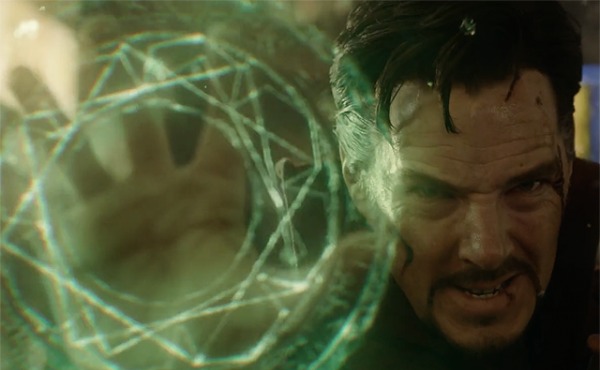
Benedict Cumberbatch puts on his best American accent (which, to be fair, is probably not THE best American accent you’ll ever catch a Brit on screen passing off on us, but it ceases to be a distraction quickly which is a victory in itself) and introduces us to Steven Strange, superstar surgeon and arrogant citizen of the galaxy.  A surprisingly common modern danger sends him literally off the rails in his sportscar, and before we’ve barely gotten to know him his hands are useless in an operating theater.  Modern medicine fails him, of course, and the action switches to Nepal, where he’s tipped off there may be a solution outside of the Western world.  Chewitel Ejiofor’s Mordo and Tilda Swinton’s Ancient One take him under their wing after a false start or two, and we’re on the way towards the once proud doctor becoming a mighty magical warrior.  They are of course in need of more soldiers in helping to protect Earth from mystical foes, and said foes (led by the ever icy Mads Mikkelsen) are of course rallying to bring death and mayhem to all, justified by the Marvel Cinematic Universe’s standard villainous logic of bringing about some form of twisted golden age through allowing evil to take the reins.

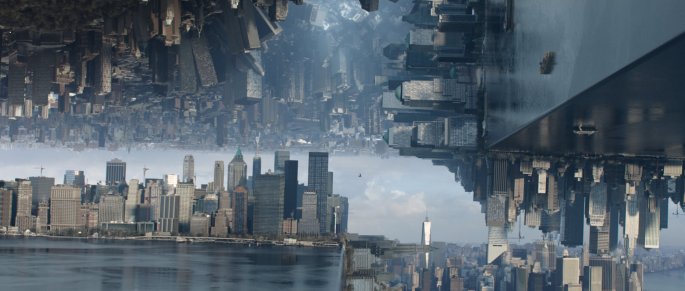
If this all sounds a bit familiar for those of us who’ve been consuming comic books on celluloid for years now, it is.  However, Doctor Strange has many things going for it that help override the familiarity of yet another “promising miscreant called up to greatness” starter story for a new character.  First is Cumberbatch, who may hold several copyrights on charming snarkiness, and he manages to make a potentially unlikable protagonist fit right in alongside the likes of Tony Stark and Peter Quill.  The rest of the cast do their characters credit too, from Ejiofor’s steadfast moralist to Swinton’s playful master magician harboring a secret or two.  Rachel McAdams has a somewhat thankless role as a former love interest of Strange’s, but their easy chemistry and her humorous annoyance with the mystical goings on that the Doctor brings into her hospital make every scene she’s in a fun one to watch.  So as usual, Marvel remembers that character counts, and give you just enough to care as threats increase.  Above and beyond this, director Scott Derrickson delivers what is easily the best looking Marvel film to date, with Inception-style world bending taken several levels above what anyone’s put on screen before.  This also feels like one of the more action packed entries into the MCU; once the story really gets going, we’re treated to a grand mashup of martial arts and supernatural powers slamming characters around in high combat style.  And unlike many other entries in the genre, a clever path to victory is well developed and used to save the day instead of One Last Big Fight.  With a quick runtime of 115 minutes, the film doesn’t overstay its welcome while adding the standard Marvel post credit teasers to prepare audiences for what’s coming next with these heroes and more.  Finally, Derrickson and his co-writers Robert Cargill and John Spaihts show an understanding of and love for the source material that represents the true bedrock of this studio’s success.  All in all, another entertaining ride from the Marvel Movie Machine, giving us the equal parts familiarity and newness that the brand promises and delivers like clockwork.

dr-strange