BLAIR WITCH: A REVIEW BY TIM FUGLEI

blair-witch-1

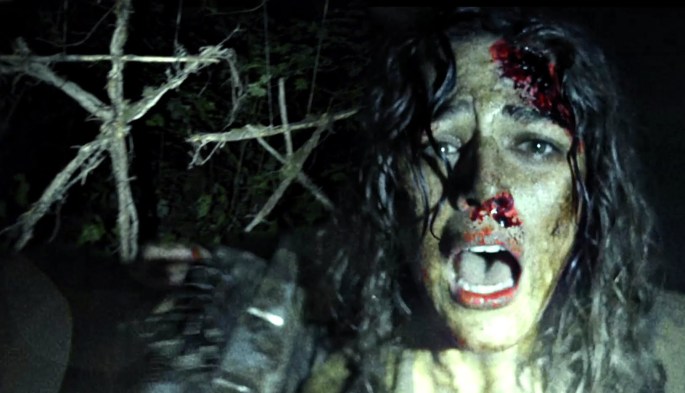
Few could have predicted the ‘broadcast yourself’ era, and fewer realize it was predicted by a no-budget indie smash film that cruised across pop culture like a steamroller before most people had personal phones, much less YouTube accounts.  Back in 1999 The Blair Witch Project was sold to audiences with a desperate selfie video of an aspiring documentary filmmaker who was about to die a horrible death, apologizing for her actions and begging forgiveness.  It was gripping stuff that launched a thousand copycats—a whole genre unto itself of microbudget ‘found footage’ frights—and never really had any true challengers to its first jolt to the zeitgeist.  Fast forward your camcorder to 2016, where indie cinema of the nineties has given way to studio tentpoles and remakes, wherein we of course get a return to Burkittsville (sorry, only one way tickets) helmed by the talented filmmaking duo of Adam Wingard and Simon Barrett.  Responsible for the successful indie thrillers You’re Next and The Guest, not to mention a sneaky brilliant anti-marketing campaign that harkened back to the clever promotion of the original, thus raising expectations  (the film was publicly titled The Woods until a San Diego Comic Con reveal earlier this year), the pair have lovingly crafted Blair Witch as a direct sequel to the 17 year old horror classic.  Unfortunately love and talent don’t trump genuine creativity, and the new film embodies most criticisms you’ll hear these days about slavish fan service and the attempts to create a franchise out of every successful movie ever made.

Not to say we get poor effort here.  Wingard and Barrett know thrills, pacing and how to entertain, and they definitely know their source material.  Gushing in fandom during a live Q&A session after the screening, they discussed everything from the deep mythology to their clever Easter Eggs sprinkled throughout (keep an eye open for a blink-and-you’ll-miss-it cameo from the original camera itself, supposedly one of the most expensive props on the production), so believe me when I say there truly is a lot of love up on the screen throughout Blair Witch.  We’re introduced to a larger group of players led by the kid brother of Heather, the first filmmaker to fall victim in the Maryland woods.  Despite huge search parties, no remains or house were ever found after the last collection of footage went viral, so James (James Allen McCune) harbors hope that his sister is still out there, and as luck would have it his new friend/love interest Lisa (Callie Hernandez) is an aspiring documentary director! Together they will assemble friends and bravely repeat every mistake the other doomed crew made, and then some.  Modern technology enables all filmmakers involved to capture multiple angles in a much richer fashion than the single camera of The Blair Witch Project, and thanks to years of self obsessed iPhone footage littering the internet the audience doesn’t even stop to throw out the loudest criticism of the genre—why would anyone still be filming this as the situation goes to hell?  In 2016, of course they would.

Sadly all of these ingredients don’t add up to the original magic.  A small group of non-actors allowed to improvise almost every scene in the first film is now replaced by a large ensemble of professionals clearly following a script.  Additions of digital quality sound jolts and lighting end up subtracting from the immersive experience that cast a spell on audiences back in the day.  And in trying to amp up the third act, Wingard and Barret commit an unforgivable sin that undermines every suggestive horrific joy we all loved the first time around—they show us the monster.  Amp up that third act they do, but instead of achieving thrills with new terrors, they simply continue to ape the exact three act structure of The Blair Witch Project, which is ultimately Blair Witch’s downfall.  Figuring out a creative way to get a different group of people fiddling with their smartphones into peril and not slavishly repeating most of the beats that were much fresher in The Blair Witch Project would have served the movie well, but safe choices are made through the film, leaving the viewer stewing in a musty brew of nostalgia and disappointment.
blair-witch-2


WAR DOGS–A REVIEW BY TIM FUGLEI

war-dogs-movie-review-jonah-hill-miles-teller-2016

Martin Scorsese’s 1990 gangster opus Goodfellas ushered in a modern cinematic genre tweak I’ll call the American Scoundrel Biopic.  A true story of American Exceptionalism gone wrong, narrated in cheeky, self-congratulatory tones, cut through with flashy montages documenting quick rises in fortune and immense falls from grace set to a rock and roll soundtrack filled with familiar hits, it’s a form that Scorsese has revisited to more or less successful effect several times throughout his career.  Others have jumped in as well, from Ted Demme’s Blow to Adam McCay’s The Big Short we’ve been treated to brisk, glib takes on what it means to job the system and pay the price—it’s a familiar enough form that we’ve even gotten comedic satires of it like McCay’s Anchorman: The Legend Of Ron Burgundy.  Director Todd Philips, best known for his Hangover comedies, offers up War Dogs as his ASB entry, and I’m glad to report it’s a very solid one, with strong central performances and the sadly ever-relevant issues of war profiteering and global malfeasance on its mind.  The style may be as familiar as a favorite old pair of jeans, but Philips and his performers make you glad to slip into them one more time.

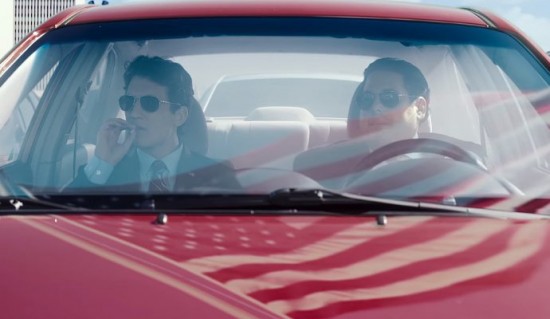
We are introduced (in montage, with voiceover, natch) to David, played affably by Miles Teller, a Jewish kid trying to make good in the world but not blessed with the greatest business sense—his plot to make millions by reselling high end bedsheets to retirement homes doesn’t have an interested market base to peddle to, and his personal massage services do little aside from goosing his desire for a successful materialistic life.  News of his wife’s impending pregnancy only heightens this instinct, and fate steps in to deposit childhood friend and professional shoulder devil Efraim back into David’s world.  Efraim, portrayed with gusto by the ever surprisingly charismatic Jonah Hill, has figured out how to weasel his way into the middle of arms deals and is looking for a partner.  David is quickly drawn in by a few wins, and we’re off to the races.  The exceedingly murky morality behind their chosen field of work—supplying guns and ammo to war zones in the Middle East—swirls around the proceedings with a sense of impending doom, as the pair’s brazen strategies are half thought out at best and their luck in evading violence or exposure as hucksters simply can’t last forever.  It doesn’t in real life, and it certainly doesn’t in ASB films.

If all of this sounds familiar, well, much of it is, but Philips has a few tricks up his sleeve that insure War Dogs sits towards the top of the pile in this particular genre.  First and foremost, the filmmaker’s comedic chops are on full display throughout the film, it’s a damn funny ride, moreso than any of its brethren that come to mind.  Even though the story actually happened a decade back, its resonance is strong as the West continues to be embroiled in military actions across miserable deserts half a world away.  In the tale of David and Ephraim, taken from a Rolling Stone article on their exploits, Philips has also found a razor sharp metaphor for US interventions abroad:  Occasionally well meaning, often misguided and ultimately leaving blood on many sets of hands.  Finally, he’s coaxed a career defining performance out of Hill, whose Ephriam is Zelig-like in his chameleonic  charming of everyone in his life and Patrick Batemen-esque in his sociopathic reduction of said people to pawns being moved around on his personal chessboard.   Teller’s David is a sympathetic straight man who the viewer rides shotgun with, but Ephriam is the cackling black hole we find ourselves sucked into whenever he’s on screen.  War Dogs is a smart, funny story of greed and guns, delivered with all the trimmings of American Scoundrel Biopics.

jonah-hill-and-miles-teller-are-pro-money-in-war-dogs-e1472095918503

PODCASTING THEM SOFTLY PRESENTS A VISIT WITH THE STANLEY KUBRICK ARCHIVES


SK-PosterPano

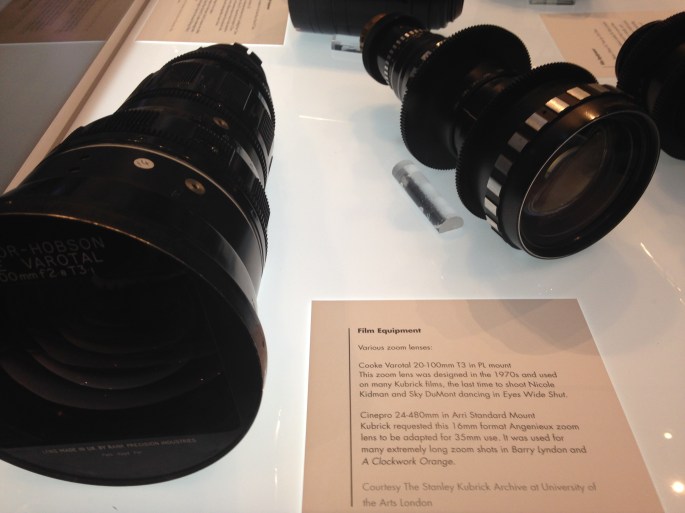
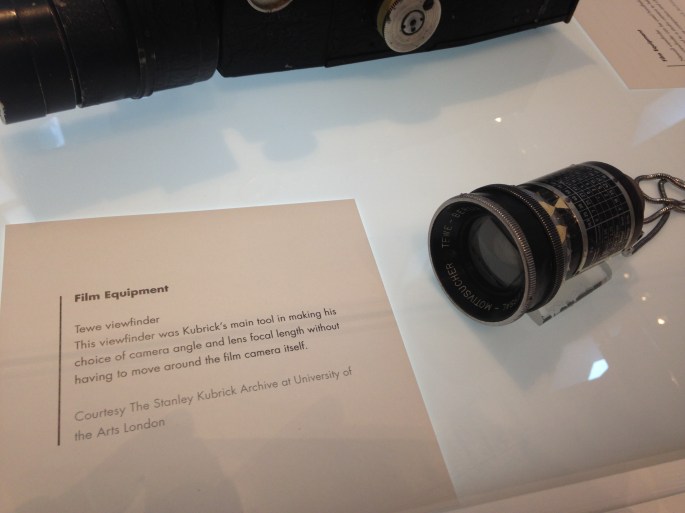
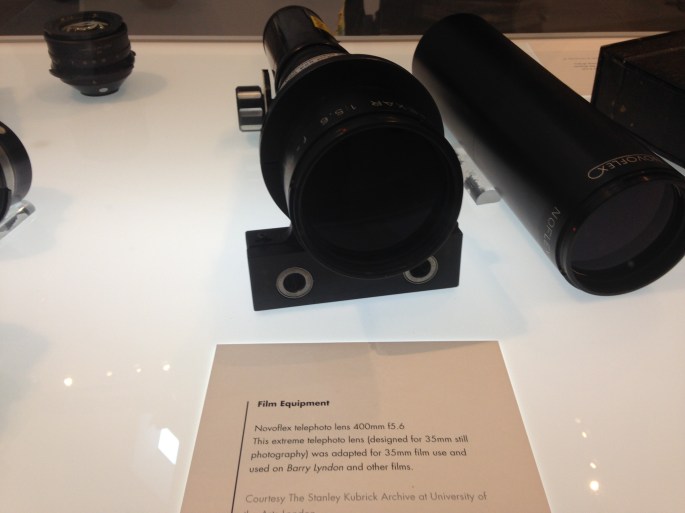
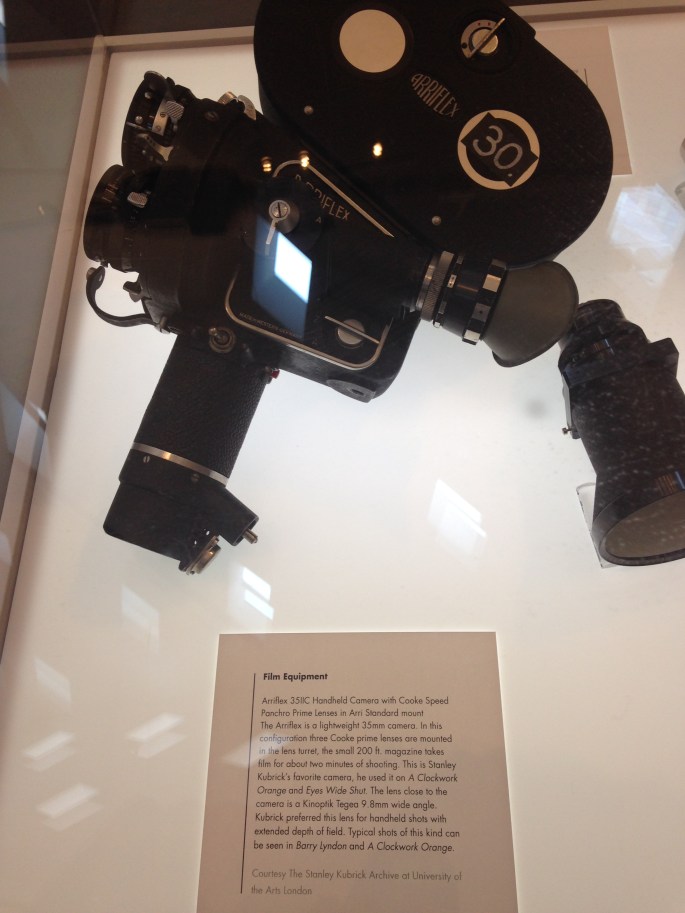
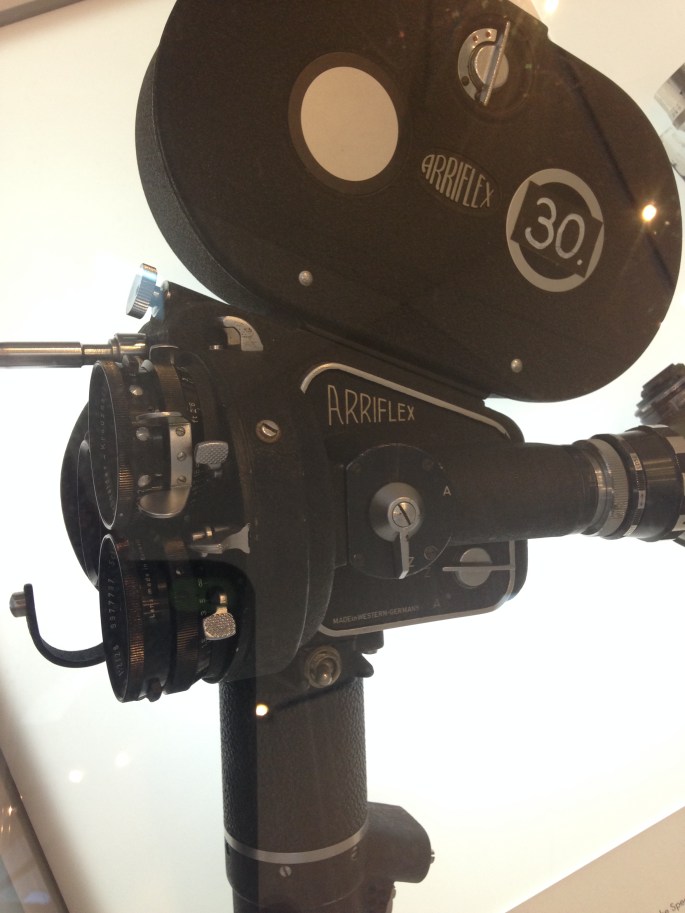
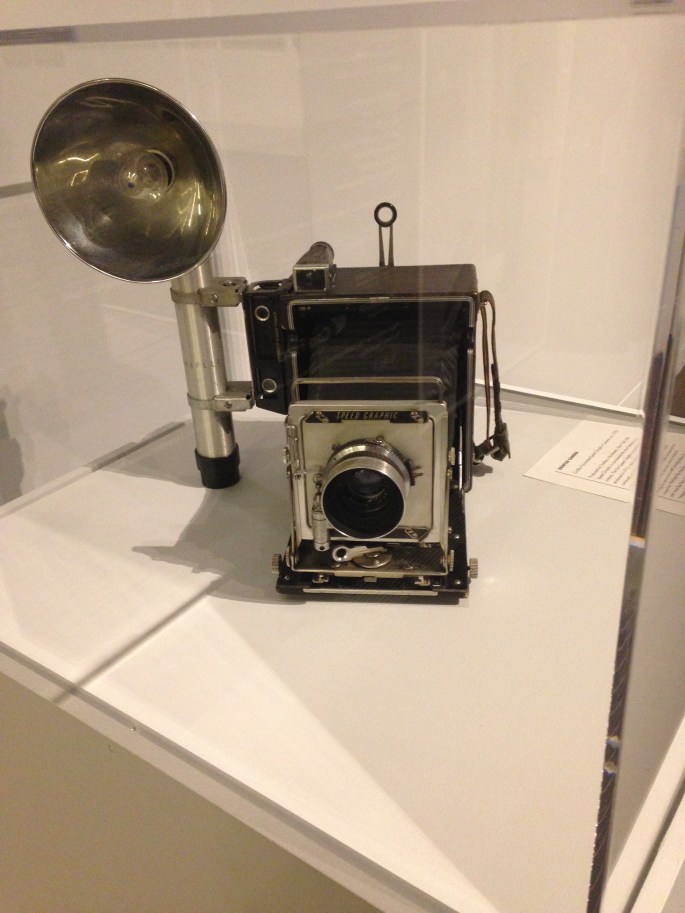
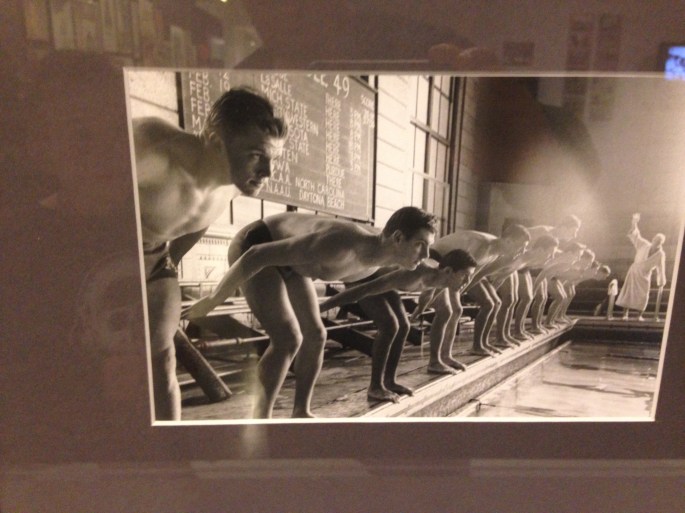
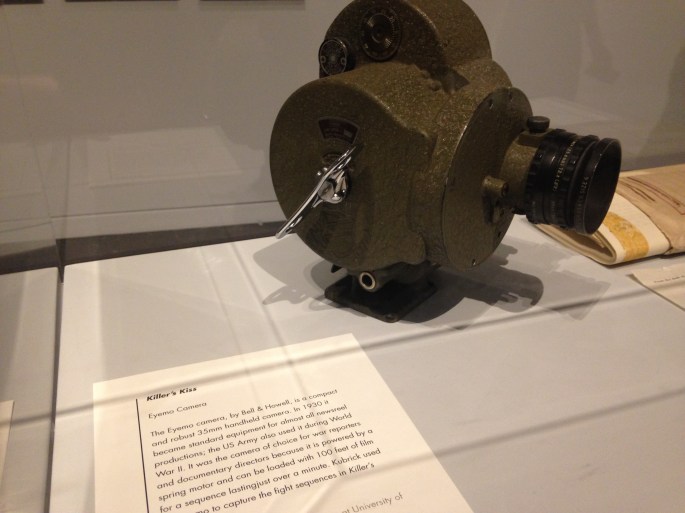
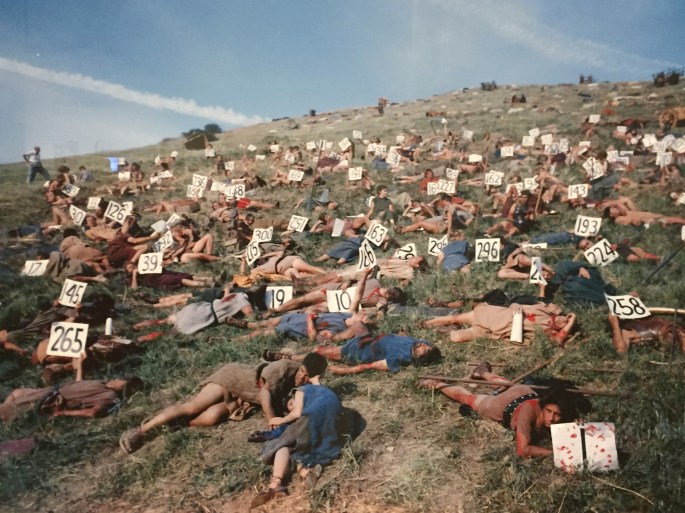
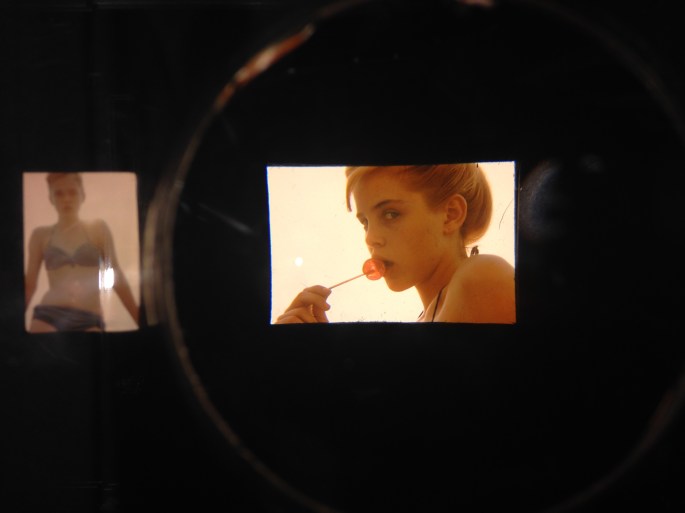
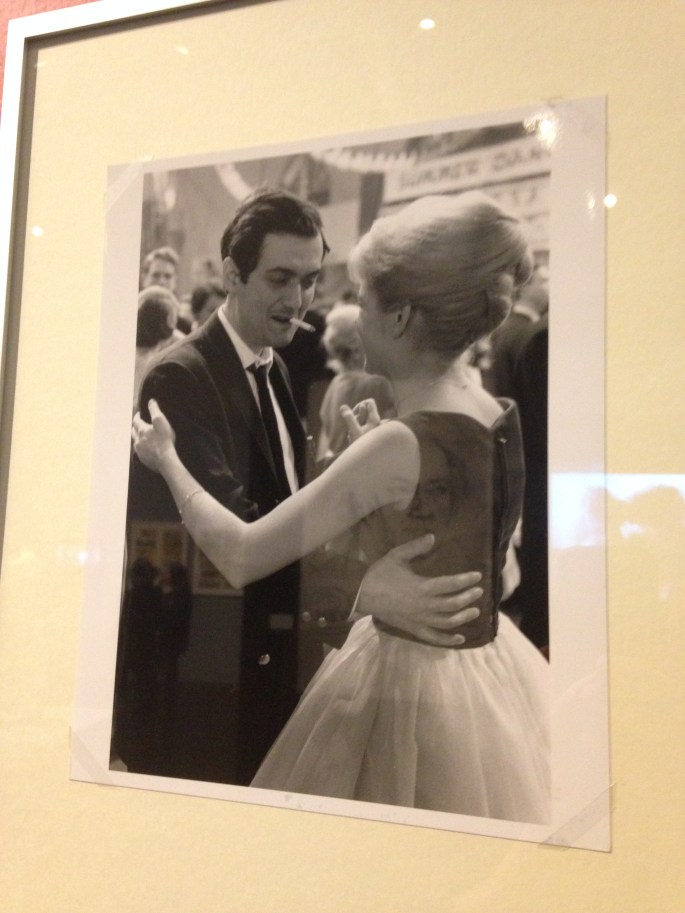
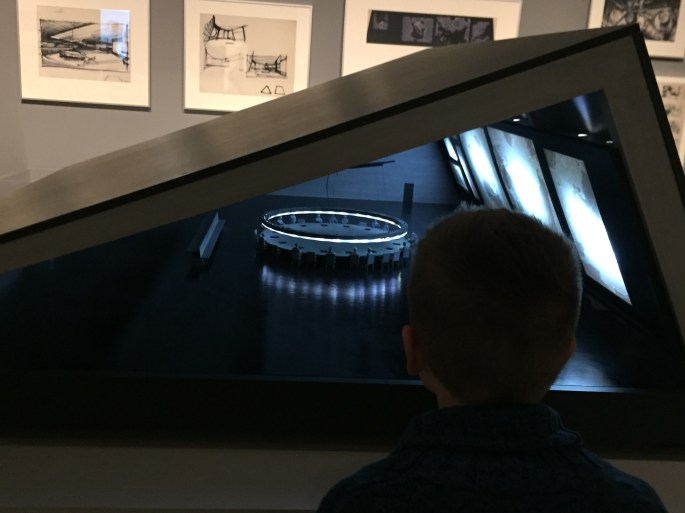
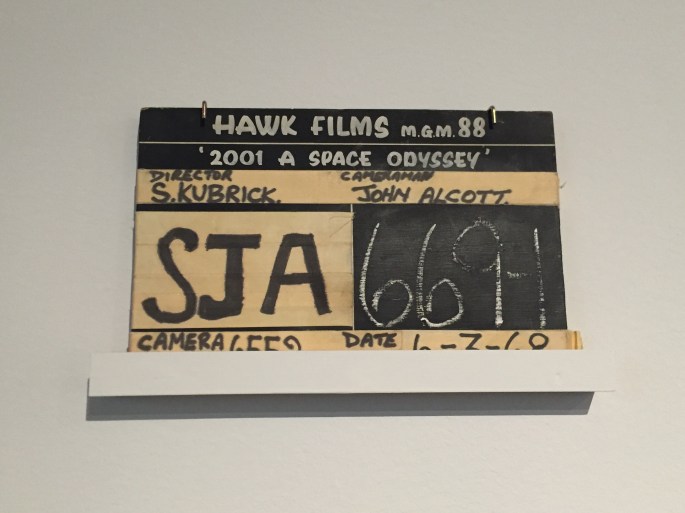
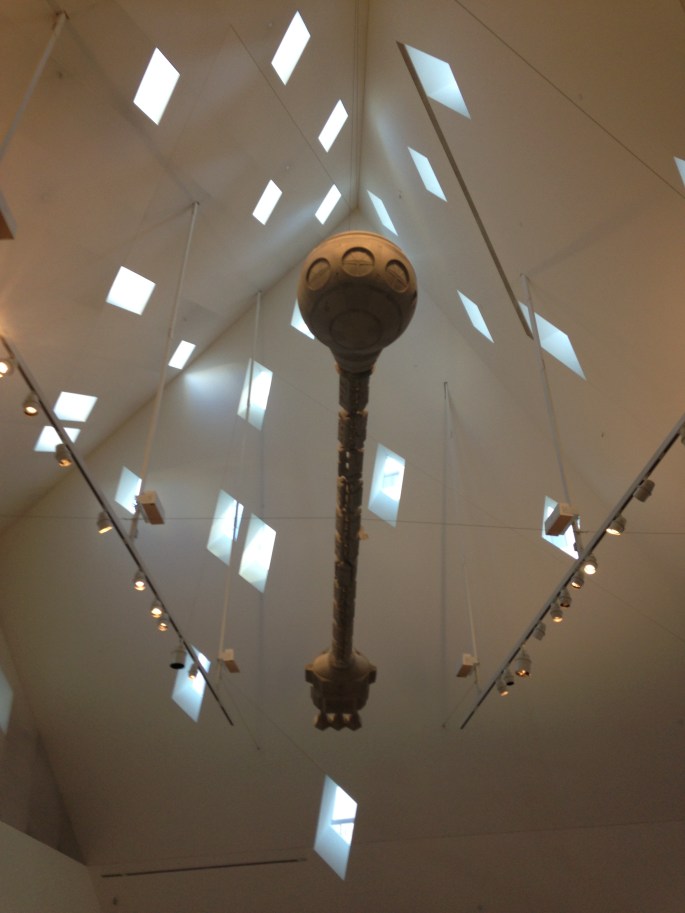
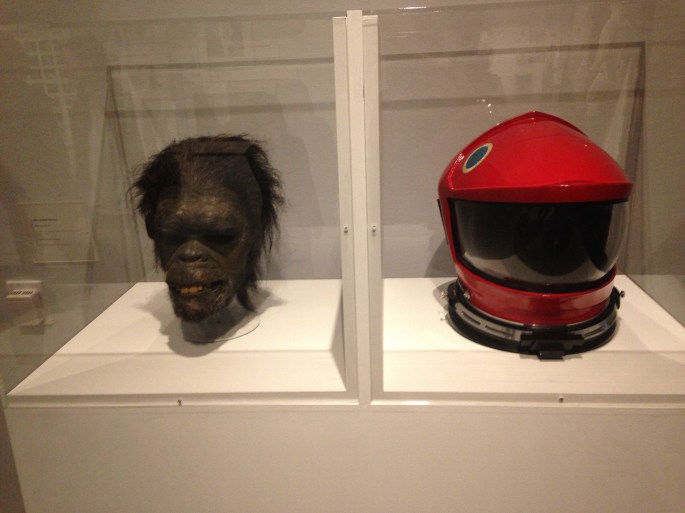
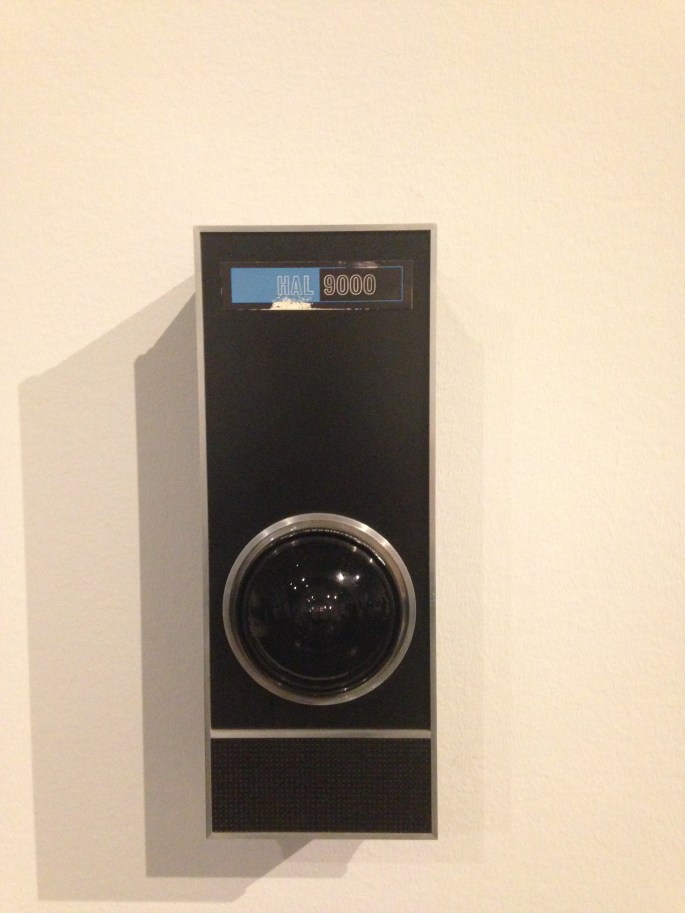
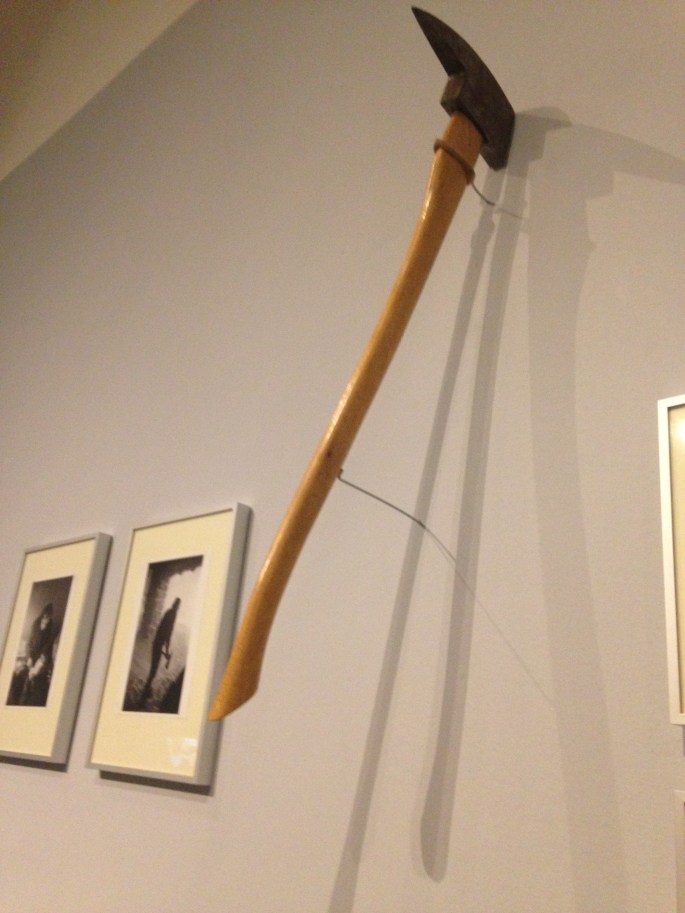
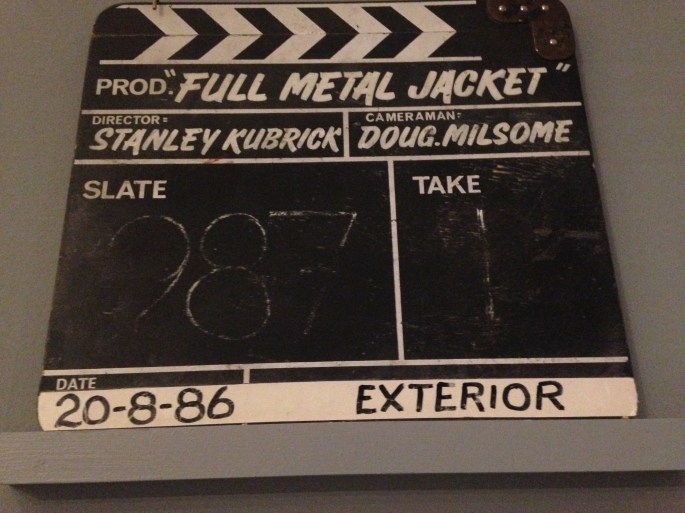
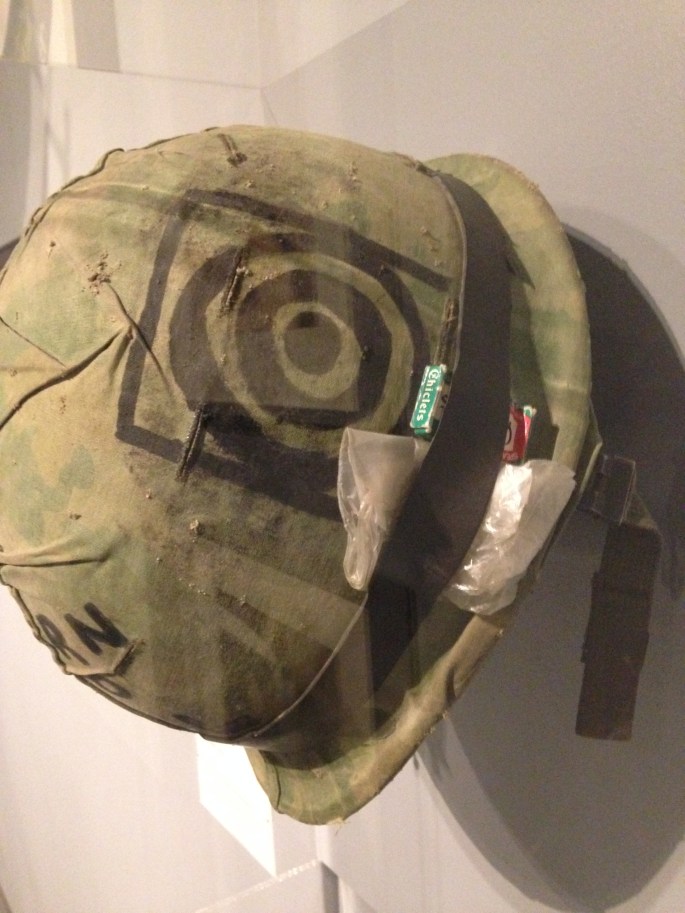
The Contemporary Jewish Museum in San Francisco, CA is offering a stunning treat for cinephiles through October 30, 2016–a large swath of the legendary Stanley Kubrick Archives is on display for the public to enjoy.  Your humble correspondent, camera in hand, recently had the opportunity to spend some time with this monument to the work of a man many consider the greatest filmmaker of all time.  We begin our visual tour with some of Kubrick’s most beloved camera equipment, move on to several early shots for Look Magazine, and then finish with the invaluable memorabilia from the movies themselves.

SKZoomLensesEWSBLCO

SKTeweViewfinder

SKNovoflexLensBL

SKArriflexCOEWS

SKArriflexCloseup

SKLookCamera

SKLook1

SKLook2

SKLook3

SK-KKEyemoCamera

SK-TKillingScriptpage

SK-PoGProductionSchedule

SK-PoGCartoon

SK-SpartacusCostumes

SK-SpartacusDead

SK-Lolita1

SK-Lolita2

SK-Lolitarecord

SK-LolitaDance

SK-DrSKubrickSellers

SK-DrSMiniaturewarroom

SK-DrSsurvivalgear

SK-2001 Title card

SK2001ship

SK-2001MaskHelmet

SK-2001Hal9000

SK-2001StoryBoard

SK-2001StarChild

SK-COcane

SK-COstatue

SK-COdiagram1

SK-COLudwigVan

SK-BLcamera1

SK-BLstoryboard

SK-BLcostumes

SK-Shining title card

SK-ShiningSweater

SK-ShiningAx

SK-ShiningMaze

SK-ShiningKnifePicture

SK-ShiningTypewriter

SK-Shining Dresses

SK-FMJ title card

SK-FMJ BTK1

SK-FMJ BTK2

SK-FMJ BTK3

SK-EWSCruiseCostume

SK-EWSMasks2

SanFran 128

SK-NapoleonCardIndex1

SK-NapoleonCardIndex2

SK-NapoleonLibrary

SK Chess Set

SKDirectorChair


THE NEON DEMON-A REVIEW BY TIM FUGLEI

Neon Demon 2

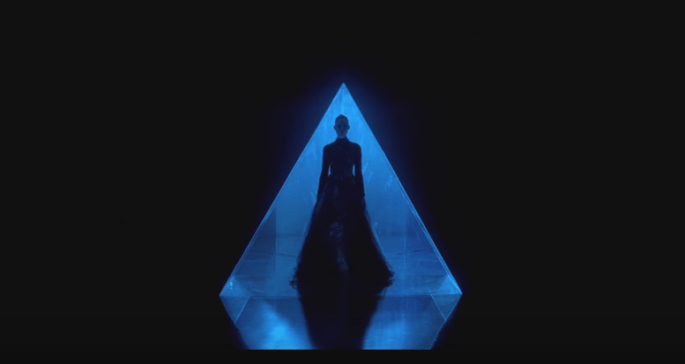
George Miller made one of the wiser decisions in modern film history when he recognized his limitations in the feminism department and brought Vagina Monologues scribe Eve Ensler on as a consultant to his franchise-rebooting summer smash Mad Max: Fury Road.  Nicolas Winding Refn, always a willing collaborator (in one of many examples, he let Bryan Cranston write his own death scene in Drive), has done one better and co-written his latest film, The Neon Demon, with the talented Mary Laws and Polly Stenham, and the results are nothing short of stellar.  The work is a grim meditation on society’s focus on beauty, spiked with unease, biting humor and a story that may well be Refn’s most fully realized.  In the wrong hands, this material could easily play as misogynist fantasy (something we already have an abundance of in Hollywood), but here the writers have stuck the landing on crafting a surprising and clever tale that reveals its intent slowly while satirizing our surface obsessions with almost limitless style.  In the dog eat dog world of the fashion industry, Refn has found the perfect metaphor for how chasing the ideal of beauty at all costs can devour us whole.

Speaking of style, the visual variety is Refn’s calling card,  and he’s outdone himself with The Neon Demon.  Applying his Kubrickian pristine framing and penchant for Lynchian dreamlike interludes to an industry based entirely on how things look, the director has crafted a near-flawless playground for his considerable talents.  Even better, it’s not mere eye candy—there is purpose and progression to every image he shows us, and within those images is some of the strongest work he’s drawn from his actors to date.  Each raised eyebrow, pregnant pause or quick sigh is loaded with meaning, and you won’t find a bad performance from any member of the cast.  Not to say the likes of Elle Fanning and Jena Malone simply gaze at each other for the duration; Refn and his co-writers have come up with some of the most stinging dialogue you’ll hear at the movies this year, sometimes uproarious and often sharp as a razor.  Nods to other genre films abound, from the older likes of Repulsion and The Hunger to more recent additions to the canon such as Under The Skin and The Witch, yet the film very much stands on its own two perfectly sculpted legs.  And in keeping with a current delightful trend of 80s-style synthesized scores, collaborator Cliff Martinez turns in some of his best work.

I’ll avoid diving into any great detail on the story, because to discuss it would be to rob the experience of its building momentum and payoffs.  Fanning is a simple waif from the south named Jesse who’s deposited herself in a seedy Los Angeles motel with dreams of modeling superstardom; as she points out to the lone sympathetic male character in the movie, she’s never been good at anything, but she’s always been pretty.  With an almost vampiric relish, everyone who enters Jesse’s orbit obsesses over her innocent beauty and either tries to claim it for themselves or resents it with feverish jealousy.  She quickly rises through the ranks of the modeling world, growing in experience and ego, seemingly supercharged by the attention and desires of all around her.  Where her powers lead her is the business of the third act, of which I will say little although those who find the first two more or less devoid of the R in Refn will be glad to hear that the last 10 minutes generated more walkouts at the screening I attended than any other I’ve ever been to, so patience will be rewarded–depending on your definition of reward, that is.  While the male characters are, with one exception, generally vile, this movie is squarely focused on women’s relationships with each other and how the ever elusive ideal of physical perfection shapes them, frequently for the worse.  The Neon Demon, bitter, beautiful pill that it is, may be Refn’s finest work to date.

Neon-Demon 1

Lemonade–A Review By Tim Fuglei


beyonce-lemonade-film-fire

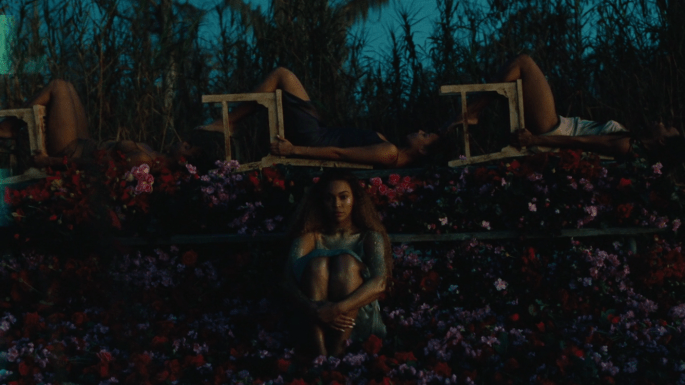
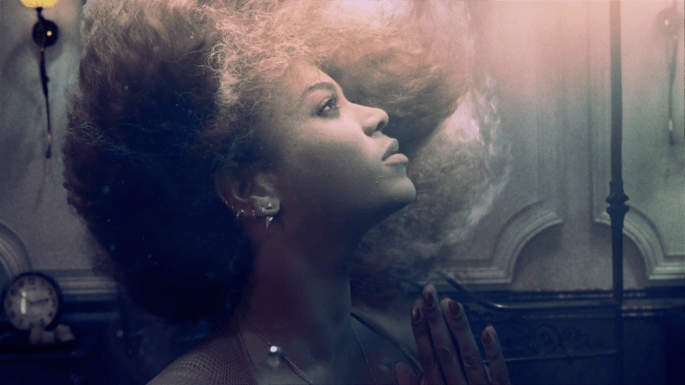
When Beyonce took the stage during the halftime show of Superbowl 50 this past February and played her surprise single, Formation, pundits and fans made vague noise about politicizing the event (how dare black women show up to this, the most first world of parties, and act powerful!); few realized the song and accompanying video were merely a warning, barely an inkling of what was coming.  It was both a prequel to and ultimately the next chapter in a project the world now knows as Lemonade.  The artist was laying the groundwork for a stunning piece of art with this performance, a “Visual Album” that takes the conceit of infidelity and stretches it between strikingly personal and hugely sociopolitical extremes throughout its thoughtful, hypnotic 58 minutes.  The story is simple, but the charges are damning:  Just like her man did her, America done women of color wrong, and it’s time for a reckoning.

beyonce-lemonade-thatgrapejuice

I don’t think Beyonce intended to drop this film/music hybrid (we used to call them “videos,” and one of the many levels this project delights at is the nostalgic one for when 4 minute music/art film mashups were a lovely, ubiquitous standard in the industry) in its entirety mere hours after the world lost Prince, but it simply underscores the awesome power of Lemonade that it serves as a de facto handing of the torch from one towering black icon to another.  Not only that, it flips The Purple One’s ultra-stylized, sex-crazed male fantasy world on its head to expose the downtrodden but resilient backbone of the African American community.  The backbone that gets taken for granted and loses too many men, boys, children to violence, poverty, hopelessness.  This story isn’t about partying all night and winning all day; no, this is the story about worrying all night and working all day, every day.  The way this film gracefully unfolds its visual tone poem about the challenges of being a black woman in America and rounds into a rallying cry for them to embrace their strength, their hope, and their unexpected power is a marvel to behold.

beyonce-lemonade-film-chairs

Make no mistake, this is indeed a Film, capital F.  Despite the many modern pop culture touchstones on display in these interlocking images paired with music, I was most struck by its fealty to the likes of Russian legend Andrei Tarkovsky and his masterpiece Zerkalo (aka The Mirror), or Terrance Malick with his career topping Tree Of Life.  Hushed poetry, an often somber journey through personal and political history, all told with languidly presented and immaculately framed visions flush with elemental power (all four on frequent display), delivered via clever juxtapositions of color stock with black and white.  An expansive group of directors joined up with Beyonce to realize Lemonade, and while there are plenty of unique individual moments, the cohesiveness of the project is fluid and stunning.  Like any great pop star, Beyonce is the hero of a thousand masks, inhabiting characters of both an idealized and familiar nature, so the viewer feels as if they’re walking beside her while gazing upon the shining star at the same time.  She’s diving deep within herself to find the story she wants to tell, then she’s playfully striking out against those who’ve wronged her; next she’s even appropriating the gangster mantle to angrily threaten her enemies.  Escalating into (and always never far from) a celebration of the goddess-like power women of color have and should celebrate, Lemonade almost threatens to become a fairly simplistic sermon.  Then, like all things in life, it gets more complicated than revenge clichés, than anger, than even self respect.  The world is a tough place—we are solemnly reminded by none other than Malcom X how tough it is for black women, and we are brought to tears by a late sequence paying tribute to the young black lives our nation has lost—and in order to survive, there has to be room for introspection, for understanding, and forgiveness.  The great arc of this story bends towards this lovely redemption, but it also ends with a repeated call to arms, hinted at in Mobius strip form by the opening notes of Formation playing as the credits roll.

beyonce-lemonade-women

Did I mention the music?  Oh, there is wonderful music.  Sassy, sexy, forlorn, funky, menacing, magnificent, rootsy, rocking, Lemonade covers the spectrum and does it all with graceful aplomb.  Again, Beyonce has collected a wide variety of talent in order to bring a depth and variety of sound to the project the likes of which we haven’t heard at these heights of popular music in many years.  Discovering what aural delight is around the corner to swim around and beside the imagery is a surprisingly bewitching exercise; I finished the film and immediately started it over again, and enjoyed it twice as much the second time around.  Unfortunately some film lovers appear to be put off by the singer’s notoriety and aren’t giving the experience its due because the musical corollary to artistic cinema can’t be hit singles; I hope those who feel that way put their prejudices aside and give the songs a fair shot too—that’s all they’re asking for, and they’ll give so much in return.  To sum up, Lemonade strikes one as a blast of pure art from a parallel universe where Toni Morrison had pipes on loan from Heaven and went to USC Film School with Lucas and Coppola.  Accomplished pop art like this doesn’t come along all that often, and in fact despite the familiar trappings mentioned above and the seemingly shopworn life lesson the title refers to, Lemonade carries the striking jolt of something truly sweet and new.

beyonce-lemonade-film-water

BATMAN V SUPERMAN: DAWN OF JUSTICE–A REVIEW BY TIM FUGLEI

batman-v-superman pts main pic

Joss Whedon and Zack Snyder are endlessly different auteurs, but I feel like the pair should share a cup of coffee soon, perhaps a hug or two while they’re at it.  There aren’t many humans on the planet who have been charged with launching and maintaining massive cinematic empires based on well known comic book superheroes, and the pressure to not only land a billion dollar big fish in the studio boat but set sail for a five to ten year plan of interconnected blockbuster releases can be nothing short of isolating.  When Whedon stuck the critical, audience and box office landings with The Avengers, he was immediately drafted into the Marvel Studio army to oversee the next “phase” of their media empire (i.e. ghost write on three films and create a television pilot) and of course make a sequel that could best the success of his previous film, merely one of the Top 5 box office champions of all time.  Snyder, on the other hand, found much more mixed results with Man Of Steel, Time Warner/DC’s attempt to launch a parallel universe with their own well known and beloved characters.  It made money but didn’t garner the broad acceptance and confidence that the studio hoped it would, although to be fair, Warner Brothers has clumsily juggled two of the most popular characters in comic book history for several decades now.  Whedon went on to pour his heart and sensibility into Avengers:  Age Of Ultron, which made huge piles of cash but left the internet sourly arguing its merits or lack thereof, and now Snyder is faced with similar angry cybermobs as Batman V Superman:  Dawn Of Justice hits theaters this weekend.  The number of levels at which an audience can find fault with this kind of exercise is almost unlimited, but Snyder, much like Whedon, has poured his soul into the exercise and come up with an epic, challenging and entertaining film.

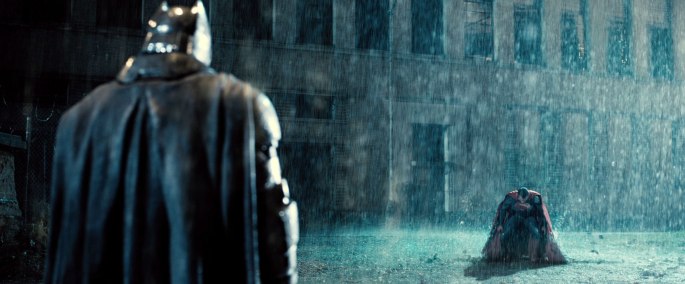
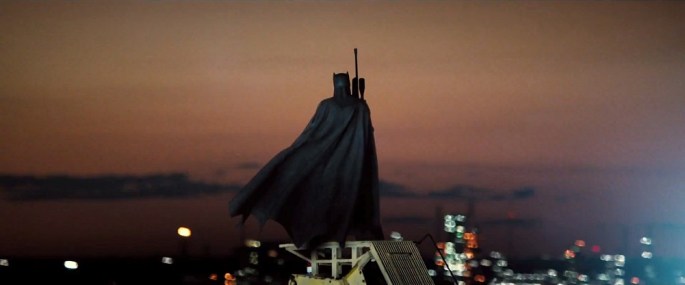
As if helming a film called Batman v Superman:  Dawn of Justice wasn’t daunting enough for the director, he and writers David Goyer and Chris Terrio get to retell the origin story of Bruce Wayne, one that has literally been told almost countless times on screens large and small.  Snyder wisely dives right in, crafting one of his signature slow motion montages filled with pristine imagery in a wordless opening credit sequence that properly sets the stage for the smoldering rage of Ben Affleck’s very Dark Knight, scored with devastating beauty by Hans Zimmer.  Then we’re transported to Metropolis as Superman and General Zod waged their destructive day long war, but we now see the events from the angle of Bruce Wayne, who finds himself almost completely helpless in trying to rescue his employees from one of many collapsing buildings.  As if the Batman wasn’t already a walking, breathing grudge, the anger he now feels for these godlike aliens is etched across his face in almost every shot of the film and echoed through his wholly uneasy dreams.  Affleck’s lantern jaw and frequently unsung acting chops have rarely been put to better use—he’s the first Batman we’ve seen who, in keeping with many iconic iterations of the character from the comic books, is a perpetual rage engine, always fighting the feeling of helplessness that was imprinted on his soul the night his parents died with an angry grimace and an eager fist.

Batman-V-Superman-Trailer-Rifle-Rooftop-Cape

At this point, and certainly from some of the marketing, one would think this isn’t a true sequel to Man Of Steel; far from it, I’d argue that this is one of the finest Superman films to date.  The questions raised by his seemingly limitless abilities and complete lack of oversight from any authority flow from the first act of the movie through the finale, and the consequences of wielding such power are explored not only through his conflict with Batman but via the truly mad yet thorough schemes of Alexander Luthor, played with cunning charm and more than a hint of barely contained insanity by Jesse Eisenberg.  Henry Cavill, sporting an impressive jawline himself, continues to bring grace to a young, evolving Superman, starting the film as a bedrock of confidence bordering on cockiness but soon finding himself put through many degrading tests and sacrifices by the time the closing credits crawl.  Each new challenge to his invulnerable physique and seemingly unimpeachable mission chips away at the Man of Steel like no other film has ever dared to, and it’s something of a marvel to behold.

I’d be remiss to leave out mention of Wonder Woman, although her crowd pleasing action beats of the third act and a bit of cat and mouse with Bruce Wayne in the early going are fun but ultimately slight.  Back to the laundry list of world building Snyder was handed by the studio, we are also given quick introductions to several other iconic DC characters, which starts to make the whole endeavor feel a bit wobbly on its narrative axis but fortunately doesn’t tip it over.  It’s no secret that this director is divisive; I’ve found his career thus far to be a mixed bag, and despite a predilection towards enjoying anything featuring the guy who can leap tall buildings in a single bound, found Man of Steel to be uneven in many departments.  Fortunately Batman v Superman plays like a synthesis of all of the good things Snyder is capable of, with many of the bad ones left behind in his older films.  There’s gorgeous imagery, such as the sublime sight of one of our heroes gracefully landing with a rescued woman in Juarez or a young crime victim being buoyed upwards by a flock of bats; his partnership with DP Larry Fong has never been stronger.  Hans Zimmer continues his brilliant work in the series, bringing back some of his stellar themes from Man of Steel and adding fantastic new ones for Bruce Wayne, Batman and Luthor.  And while the film takes its time to let the characters interact through other means than violence, when it’s time for action Snyder’s muscular talents for that end of the story are on full, swaggering display.  Much like the successful comic book films over at that other studio often do, the filmmakers here reach back into a treasure trove of DC comic book stories to put together an epic romp of a tale, and even have the chutzpah to visually nod to multiple previous big screen iterations of these heroes.  And, as noted earlier, Snyder is continuing the story of Superman, allowing the character to grow, be challenged, suffer doubt and loss, and really become quite a bit more interesting to observe than this indestructible Dudley Do-Right often is.  Like many other fans of this growing franchise, I can hardly wait to see what direction they take the character in next.


AN EVENING WITH OLIVER STONE AND U-TURN

OStone

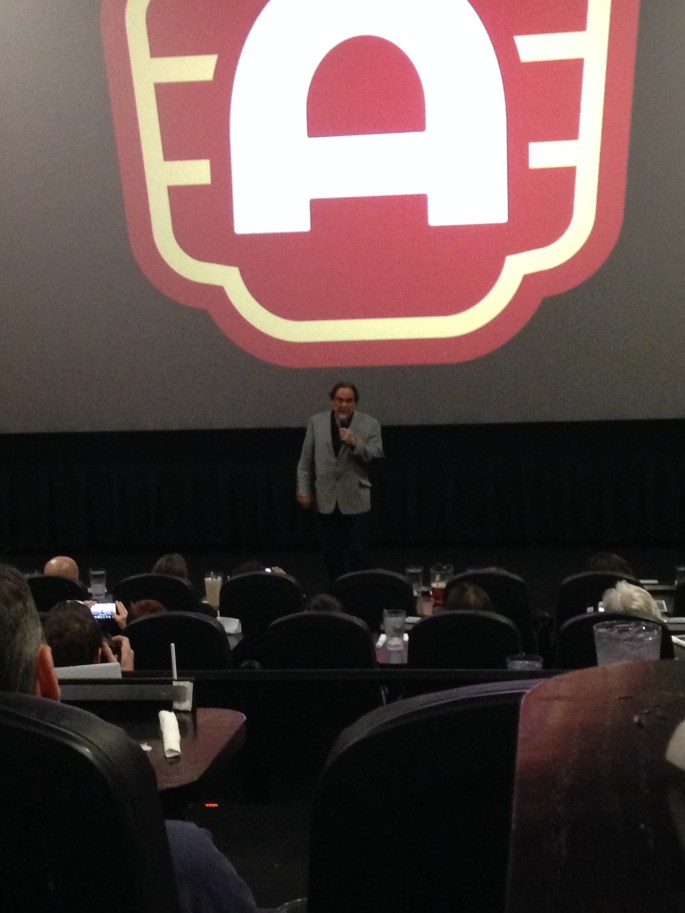
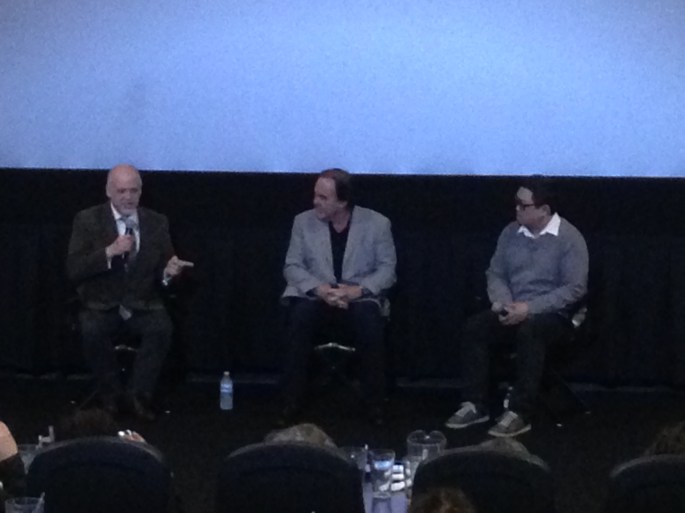
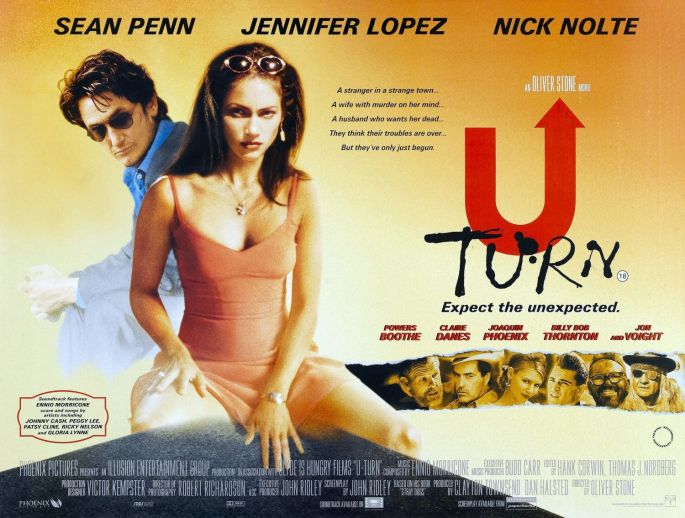
This past Sunday, the sleepy suburb of Littleton Colorado was once again favored by the scheduling magic of the Alamo Drafthouse.  Polarizing mad genius Oliver Stone stopped in to present two of his 90s highlights, Natural Born Killers and U-Turn, with film critic and author of the upcoming “The Oliver Stone Experience” Matt Zoller Seitz in tow to run Q&A sessions after each show.  I was fortunate enough to attend the U-Turn screening, not only for the chance to gain insight on the work from the filmmaker himself but also for the chance to give the overlooked film a second chance.  Its initial run seemed shoehorned into a glut of neo noir exercises that came out prior to the turn of the century, neither registering as the worst nor the best of them, but as Stone himself pointed out, it felt like his core audience simply didn’t appreciate him swimming in the same waters as young upstarts of the day such as Quentin Tarantino and the Coen Brothers.  The revisit proved a minor revelation:  The story, familiar as it may be to genre fans, is airtight and reverential/referential to the best of the bunch; the cast is top notch and finds many (we’re looking admiringly down our noses at you, Billy Bob Thornton, Nick Nolte, and the pre-phenomenon Jennifer Lopez) turning in some of their nastiest, best work; Stone’s obsessions and talents clearly meld with John Ridley’s source material (you may know the writer’s name from his more recent work, like 12 Years A Slave);  Sean Penn’s cocky rube drags the audience along towards the inevitable double and triple crosses, which Stone gleefully paints with a bloody brush across a rocky, desolate canvass.  There’s a ton of fun to be had with U-Turn, and even more in hearing Oliver Stone discuss its place in his filmography.

Zoller Seitz quite nicely described Stone as “The Poet of The Id,” but the writer/director didn’t appear to be feeling up to any lofty titles when this project came along.  Burned out from creating Natural Born Killers, the mixed reception to Nixon, and extensive revisions put into publishing the novel he started as a 19 year old, A Child’s Night Dream, he told our audience he was simply looking for a fun time and perhaps a decent paycheck off a low budget investment.  In typical Stone fashion, even an attempt at relative film production normalcy derailed quickly—Bill Paxton, signed on to star as star-crossed tennis pro Bobby Cooper, dropped out at the last minute, and the entire project almost dove off a cliff (as several protagonists ultimately do in the film itself, referencing the so-called “Arapahoe Leap” suicides of Native Americans in the region as European settlers corrupted the land).  Thankfully Sean Penn agreed to take the role, and heartily threw himself into what Stone described as “the sleaziest work he’s ever done.”  The actor wore the same single blue shirt throughout the entire 42 day shoot and collected so many cuts and bruises, fictional and otherwise, that the director had an official Wound Continuity Diary for the star to keep track.  Through rewrites, Stone slowly but surely evolved the boilerplate noir into an almost Lynchian meditation on small town Americana and its seamy underbelly; he noted that the incestuous relationship at the miserable heart of U-Turn is the type of thing that can live and even thrive in the obscurity of rural areas that coast by on apple pie surface clichés.  There’s brain damage from incest, Stone stated, and pointed out that Nolte’s character is a representation of exactly that.  This wasn’t in Ridley’s book or screenplay but the filmmaker felt it was not only appropriate to the proceedings, but also brought a slice of Bunuel-style surreality to the film, a shot of seriousness and lunacy in equal measure.

StoneZoller1

He continued by discussing the inevitability of Bobby’s downward spiral, pointing out that Billy Bob Thornton’s grease-drenched mechanic and Jon Voight’s Tiresias-like blind seer give the young hustler plenty of warnings, but of course they all go unheeded as karma continues to wind up for its third act wallop.  The director said he found U-Turn to be a classic American narrative, that of a man coming to a corrupt town and either fighting to make things right or falling to the place’s corrosive effects.  Citing Sergio Leone Westerns and Dashiell Hammet’s Red Harvest in making the point, Stone also ultimately feels it’s a Greek Tragedy.  Turning to audience questions, he reinforced his headstrong and no-holds-barred reputation when discussing collaborating with Ennio Morricone on the score and Robert Richardson on the cinematography.  Calling the former a “prick,” Stone said he was a fan of Morricone’s work on 1900 and appreciated the love theme he crafted for U-Turn, but didn’t find the rest of the score effective and dragged the Italian master back to the U.S. from his European home (a trip the scorer apparently despises) and showed him a Tom and Jerry cartoon to illustrate what the film needed.  Suffice to say the two won’t be working together again, and Stone closed that anecdote with this backhanded compliment:  “I’m glad he got the Oscar this year, even if it’s for his worst score.”  Difficulties with Richardson started before the shoot, as the director told the crowd that the cinematographer didn’t like the dark direction of the story and called it a “disgusting, depressing movie.”  Stone’s choice to use reversal stock furthered the stress on their partnership, as they could barely secure insurance for the production based on this decision.  While noting the irony of Richardson’s going on to lens plenty of blood for the likes of Scorsese and Tarantino since, he simply summarized that “it was a marriage for 10 years, and then it was over.”

Oliver Stone went on to answer a variety of queries from the crowd about who some of his favorite filmmakers are–Kubrick, Fellini, Godard, Coppola, Friedkin, as well as recent Oscar contenders Innaritu and McKay—and what a few surprising favorite films as of late are, including the likes of Man From U.N.C.L.E., Battleship and Zoolander 2 (“Malick is a fan too!” “Farrell’s never been better as the pure embodiment of evil!”).  He discussed working with Edward Snowden on his upcoming biopic of the controversial American, saying that the expat is in very good spirits, working hard on a Constitution For The Internet and giving plenty of input on the screenplay.  Snowden’s seen a rough cut of the film and while initially trepidatious about the project he was quite happy with the results so far.  For a man who watches few films, Stone feels that Snowden has an excellent sense of storytelling so he was pleased with the feedback.  In conclusion, Stone seemed to be answering a plea for advice from a young filmmaker in the theater flippantly—“get a good night’s sleep…eat well…”—but quickly turned serious.  “As a director, it’s like you’re running a giant party.  It’s exhausting.  There will always be impediments to your vision, with some actors taking your direction and others rejecting it…there will be compromises all the time, but you always have one last opportunity to cement your vision, and that’s in the editing room.”  With that, the cinematic lion concluded this portion of the program and left a satisfied crowd pondering his comments and enjoying U-Turn in an expansive new light.

1997_-_U-Turn_Movie_Poster_2

TWIN PEAKS POWERCAST No. 4: AN INTERVIEW WITH JOHN NEFF

Blue Bob

When David Lynch set about making a home studio in the late 1990s, he liked the work studio engineer John Neff did in designing it so much that he hired him to run it.  Thus began a partnership that lasted over two albums, three films, a website and a one-off concert in Paris for the ages.  Nate and Tim had the pleasure of picking the talented and generous Mr. Neff’s brain for loads of anecdotes about working with Lynch, projects that almost came to pass, the origins of some of Lynch’s most challenging work, and more.  Truly a David Lynch insider, this is essential listening for any fan of this enigmatic genius.

THE WITCH–A REVIEW BY TIM FUGLEI

Witch Black Bill

It’s hard to be a horror movie lover.  For many the genre is a guilty pleasure that most audiences publicly express disgust with, and to say the critical community usually sports Jason Voorhees-sized knives when crafting their cutting reviews is an understatement.  Weaned on Cronenberg, Carpenter and many others, I’ve long defended it as being every bit as probing, diverse and smart as any other category of cinematic storytelling, yet like fellow fans I find the best defenses of most horror films to amount to things like “the monster was cool even though the acting is terrible” or “that one scene is great, if you can get through the first 40 minutes and ignore the idiotic ending.”  Having a well reviewed entry come out, one that sweeps through festivals with universal praise and is immediately acknowledged as a chilling classic can be a rare treat, one the world received in 2015 with David Robert Mitchell’s It Follows.  Almost exactly one year later, Robert Eggers’ The Witch hits wide release with similar lofty goals, and it achieves them through a brutal, relentlessly dark descent.

The Witch works as something like a companion piece to Alejandro Gonzalez Innaritu’s The Revenant, as early European settlers in each find constant danger in the beauty of a young America.  While the latter is concerned with man pitted against nature and indigenous inhabitants, the former throws man into the ring with pure evil itself, and the fight feels overwhelming, unfair and lost from the beginning.  We first meet William and his family as they are about to be banished from their settlement, with the patriarch making it clear that he finds this collective to lack the proper amount of faith to justify their flight from England.  He’s a deeply principled Christian who is unknowingly driving his family directly into the belly of the beast as their wagon ventures into the untamed forest for a supposedly more spiritual existence.  Soon after we are introduced to the witch herself, who bolsters her powers with a ritual that gives the audience a dreadful precedent to base our expectations on how the rest of this journey for William’s family will play out.  No friendly Wiccan here; this conception is, as promised at the beginning of the film, a folklore driven nightmare.  As is absolutely necessary in successful horror, we are fed a bitter balance between unsettling suggestion and horrid imagery, served here with stately framing and flawless natural lighting plus the requisite swelling score when things are about to go bad, which is to say regularly.  Eggers is a first time writer/director who swaggers cruelly and confidently into the job like the jaw dropping third act character cameo of the denoument, seemingly born to craft this compelling and thoroughly awful tale.
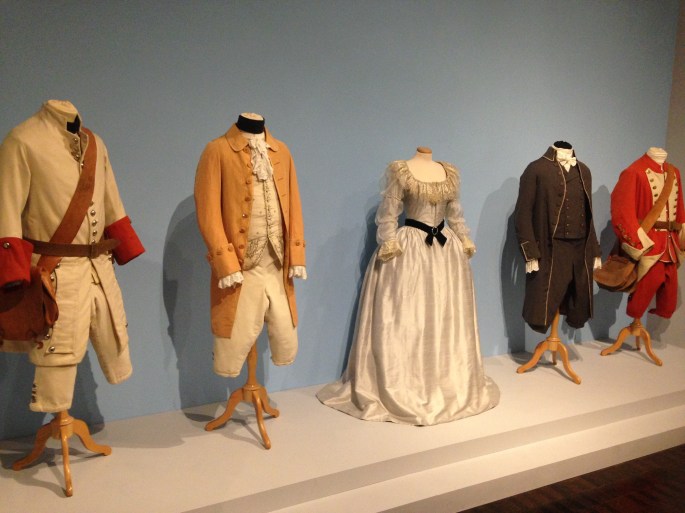
Oddly, The Witch is as much about the internal disintegration of a sympathetic family unit as it is a scare-the-audience horror film, and its success on all fronts falls both to the filmmaker and the cast.  Ralph Inseon’s William is surprisingly relatable as a man trying to do the best for his family, albeit by 1630s Calvinist standards; his wife Katherine, played by Kate Dickie, would do anything for her children, if only she knew of anything that would actually help them.  Son Caleb (Harvey Scrimshaw) strives to please his father and live up to his ideals while trying to deal with his burgeoning sexuality in a literal and figurative wilderness, and young Mercy and Jonas, given great child actor turns by Ellie Grainger and Lucas Dawson, simply try to be naturally exuberant children in the midst of a barren existence that promises nothing but peril.  Then there is Thomasin, the oldest daughter of William’s family whose burgeoning womanhood, a familiar and dangerous theme in horror, forms something of a backbone to the proceedings.  Anya Taylor-Joy takes this central role and runs with it, all the way to the campfire-kissed pitch black ending.  The march toward said finale has an increasingly bloody inevitability to it.  This family simply isn’t equipped with anything approaching the tools to defend themselves; a central scene where they vainly flail about to make plans to escape and try to save one of their own exemplifies how helpless they truly are.  Apologies for being intentionally vague, but the “pleasures” of The Witch are best experienced firsthand.  This film boldly lives up to its hype, a modern horror masterpiece that will linger in your dreams like a curse.

the-witch_trailer_2015

LOST HIGHWAY: AN APPRECIATION BY TIM FUGLEI

Lost-Highway-david-lynch-11179820-1024-429

To say David Lynch has elicited a head-scratching moment or two in his career is akin to carrying on about the wetness of water; even at his most commercial, an air of mystery and the surreal lurks at the edges, and at his most personal, nightmare logic and a dreamy take on the familiar are pervasive.  Having soured on answering to studio heavy-handedness after Dune, much like Kubrick did after Spartacus, Lynch has gone on to craft stubbornly individual cinema and television, much to the delight of his many followers.  In 1997, after having alienated a large contingent of drive-by Twin Peaks fans with the “valentine wrapped in barbed wire” prequel to the television series, Fire Walk With Me, he unleashed Lost Highway onto an unsuspecting public, and heads were scratched like never before.  The film starts with an oppressive, almost claustrophobic quiet and dread, then builds to a frenetic, hallucinatory finale that is shot through with pure madness.  In between, we are shown murder and sex, as well as rebirth and metamorphosis.  Noir tropes abound, set to one of the most varied and contemporary soundtracks of Lynch’s career.  Even if you’ve strung a narrative together in your head by the end, the closing shot remains a source of debate.  In other words, hardly an easy two hours of escapism at the multiplex.  That said, stringing a narrative together is a valuable and, if you’ve been paying attention to how this director tells stories throughout his career, highly rewarding exercise.

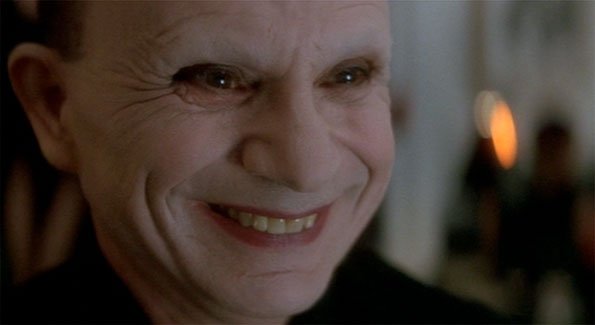
First of all, the idea that one part of the film is fantasy while the other is “real” needs to be set aside.  We are, after all, watching a film, not our neighbors in the real world walking their dog down the street.  Film is fiction, and Lynch is always asking his audience to go on a journey into the unreal.  Even what can be construed as the foundational happenings in Lost Highway are weaving in and out of reality; we’re told early on that we are being led by a particularly unreliable narrator who likes to remember things his own way.  This is Fred, the protagonist albeit hardly hero of the tale.  He has more in common with the ill-fated Leland Palmer than some of Lynch’s more traditional leads played by Kyle Maclachlan; his double life teetered between respectability and murderous rampages, and Fred’s is on the verge of crossing over those boundaries as we meet him.  Reminiscent of Killer Bob in Twin Peaks, our eyes are first drawn to the lanky doppleganger of a shadow that follows Fred around his home as he grows to suspect his wife Renee of infidelity, and soon see this dark side, the evil that men do (or are about to do) personified as The Mystery Man.  Robert Blake’s relentlessly eerie performance is wide-eyed and shot through with delight at the thought that Fred will succumb to his worst instincts, and his appearance in conjunction with the video tapes that start showing up are our first clues that even at this early stage of the game, Fred and Lost Highway are not telling us a straight story.  Nothing about the supposed external threats presented by Blake’s character or the videotapes make sense, nor should they:  They are fragments of Fred’s frayed psyche informing and inspiring the heinous act to come.

To continue piecing together Lost Highway’s labyrinth descent, it’s oddly appropriate to fast forward to Lynch’s later film, the celebrated Mulholland Drive.  A bit of a Frankenstein Monster itself, Mulholland Drive was originally conceived as a Twin Peaks style serialized mystery, but after fearful ABC Network suits decided it was too dark for a post-Columbine audience and pulled the plug Lynch was given the funding and opportunity to turn it into a feature film.  Instead of tacking on a whodunit ending, he followed Lost Highway’s lead and recast the tale as a doomed romance that ends in murder, with the perpetrator once again fleeing reality for a large part of the movie until whatever strands of reality exist come slithering, then crashing, through the façade.  The order of operations is different—Mulholland Drive starts with the escapist dream of “Betty,” who envisions a lively Hollywood yarn with her former girlfriend re-cast as an amnesiac best friend, and then we are shown snapshot scenes of how Betty’s true self, Diane, actually loved and lost and arranged to have her ex murdered.  Lost Highway, on the other hand, begins with what can be briefly referred to as Fred’s reality and then jumps into the fantasy in its second act, when Fred reimagines himself as the young hotshot mechanic Pete, surrounded by willing lovers and fast cars, being the focus of a cheating blonde’s affection instead of the scorned cuckold husband.  Like Rita in Mulholland Drive, even a seemingly game and pliable imagined version of the object of his desire named Alice quickly breaks down and declares herself as unattainable as Renee was.

As usual, Lynch surrounds himself with high quality cohorts.  Peter Deming’s lensing is sublime, capturing the inky blacks and blood reds of the opening as well as the sun-dappled Los Angeles Fred imagines Pete is adventuring through, with whirlwind, heat and flash defining the chaotic imagery of the finale.  Angelo Badalamenti turns in yet another classic score, filled with everything from the fiery jazz of Red Bats With Teeth to the appropriately sad Haunting & Heartbreaking to the devastating Fred’s World.  He’s joined this time by the likes of David Bowie and Trent Reznor, who provide a thrilling opening and a brutal finale, respectively.  Longtime editor Mary Sweeney is razor sharp, and co-writer Barry Gifford adds the Pinter-esque sparseness of his prose in much of the simple but mysterious dialogue. Memorable performances abound, and not just from the aforementioned Blake and Bill Pullman playing against type as Fred—Robert Loggia lights up the screen as rage-fuelled Mr. Eddy/Dick Laurent, Balthazar Getty and Natasha Gregson Wagner stick the landing as young lovers caught up in a much meaner game than either could imagine, Gary Busey manages his sanest appearance in front of a camera in several decades, and even Richard Pryor and Henry Rollins show up for memorable cameos.  The heavy lifting throughout is done by Patricia Arquette, who even by the rough standards of existence most women find in Lynchland has a relentlessly tough row to hoe.  Playing not one but two objects of mad desire, she is a sexual fantasy and lurid crime victim, and one can’t help applaud her fortitude in pulling Renee/Alice off (she famously called Lynch “Satan” on set at one juncture of the shoot, indicating the roles certainly took a toll).

In all, it’s a typically dense film for Lynch, perhaps one of his most complicated on the surface, yet driven by a fundamental emotional simplicity at its core.  We are witness to a cycle of jealousy and pain, followed by violence and confusion, and that final shot mentioned above leaves the door open to the cycle continuing, as Fred appears to be morphing yet again, perhaps into Pete, perhaps into something new.  For me, the pounding soundtrack and swarm of police cars combined with the smoke and flashing lights around Fred has always felt symbolic (as many moments in the final act do as Fred reemerges) of the killer finding a final home on the electric chair, but who knows?  Even with a relatively clear overarching story, Lost Highway will always hide at least a few secrets away, like a smiling Mystery Man who’s just glad to watch his companions stumble about in confusion.

losthighway1