Indie Gems with Nate: Phantom

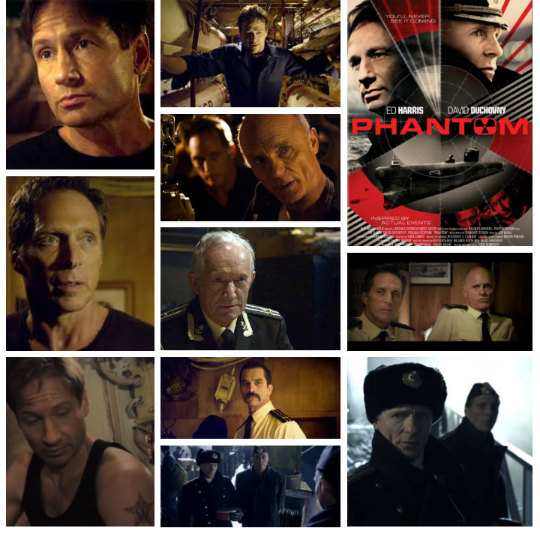
The submarine film seems to have died off a little bit since semi recent entries like Kathryn Bigelow’s K-19 and Tony Scott’s Crimson Tide, which is why it’s nice to see an effort like Phantom come along. Spare, streamlined and straight to the point, it chronicles the fate of a Soviet submarine crew tasked with transporting a deadly nuclear missile during the Cold War, and the dangerous KGB stowaway who will stop at nothing to gain control of the ship and hijack the warhead. Now, this is one of those films set in Russia but with an all American, English speaking cast, so as long as you can get past that without whining, you’ll enjoy it. What a cast it is though!! Ed Harris brings grizzled nobility to the role of the captain, handpicked for this mission by unseen forces who know of his disgraced past and are betting on him to fail. David Duchovny has always had a bit of slimy, subversive danger to his aura, and he’s in full blown wrecking ball mode as the ruthless rogue agent bent on seizing the vessel and no doubt causing all kinds of global problems in the process. William Fichtner is a supporting standout (when is he not?) as Harris’s resilient second in command, and the crew is populated recognizable faces including Jason Beghe, Jonathan Schaech, Dagmara Dominzyck, Kip Pardee and Sean Patrick Flanery. Throw in an intense cameo from Lance Henriksen and you’ve got one hell of a lineup of heavy hitters onscreen. The intrigue is somewhat cloaked, and the mutiny goes both ways, accented by plenty of palm sweating scenes of suspense, a mandatory staple in any submarine film. Lower budget, yes, but centered on story and character as opposed to action, and notable for a surprisingly esoteric end sequence that I did not expect. Recommended.  

COURTNEY HUNT’S FROZEN RIVER — A REVIEW BY NICK CLEMENT

1
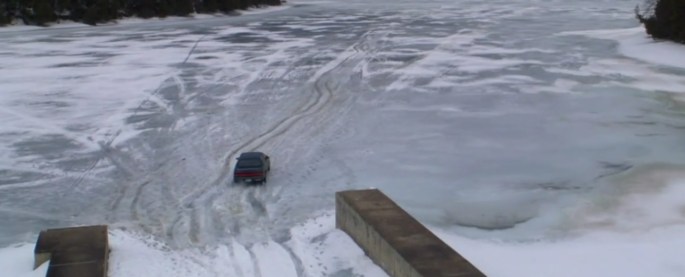
Courtney Hunt’s quietly electrifying debut Frozen River was everything cinema should be – thought provoking, risk-taking, strange and new, and extremely powerful. So why has it taken Hunt nearly a decade to get a second feature up on movie screens? Anchored by Melissa Leo’s Oscar nominated and totally blistering performance as a woman nearing her emotional breaking point, Frozen River subverts its genre roots (it’s a thriller but uniquely so), and by its conclusion, provides a strange tableau of hope amidst a grim and excessively cold background of despair. The plot revolves around the smuggling of illegal immigrants over the Canadian/NY border in Mohawk territory, with shades of Wages of Fear/ Sorcerer thrown in for good measure. What transpires is unpredictable, believable, and hugely cinematic, with every creative contributor nailing their role so that the entire piece feels tightly contained, economical, and exacting.
2
 
Co-starring Native American actress Misty Upham as the woman who brings Leo’s character into the smuggling ring, Frozen River takes it time mounting an intricate, intimate story that reflects upon the problems of these two women, who while coming from very different social circles, are very much alike. There is a distinct feeling of tension running throughout every scene of Frozen River; you never know what’s going to happen from moment to moment. Simple plot strokes become major developments, and Hunt’s expertly conceived original screenplay (which was Oscar nominated) never sags for a second, allowing all of its characters to come full circle, and for the plot to connect all of its dots in a richly satisfying way. The desolate cinematography by Reed Morano truly conveyed a bitterly cold landscape that sends a reflexive shiver down your spine. The ending packs a serious punch and it’s something you’ll want to discuss right away.
3

American Honey – A Review by Kyle Jonathan

American Honey

2016.  Directed by Andrea Arnold.

hero_american-honey-tiff-2016

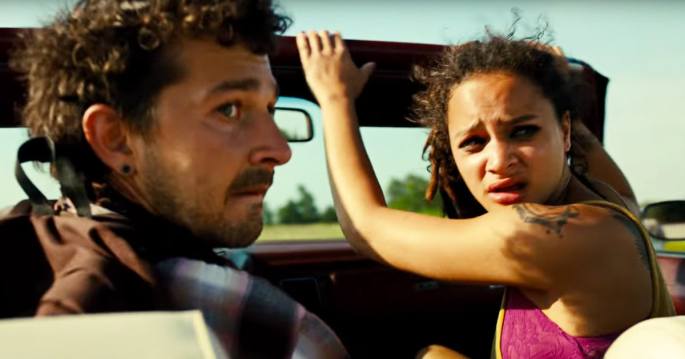
Andrea Arnold’s masterpiece, American Honey, is not only the Millennial anthem, it is one of the most important films of the decade.  Saturated with candy wrapper visuals, a cacophony of auto-tuned hip hop, and massive sexual appeal, American Honey is the story of the underprivileged side of a lost demographic, an America without purpose masquerading as road trip revelry.  Using blistering symbolism, relevant characterizations. and brutal audacity, this is one of a handful of films that defines a generation.

Star is a teenager who joins a rag tag tribe of lost souls caravanning across America selling magazine subscriptions.  As she becomes inundated in a culture of erotic mores, drug abuse, and exploitation, Star finds love, hope, and a complacent sense of self.

americanhoneysashashia-0-0

Arnold’s script is both a sordid coming of age tale and a terrifying reflection on the waywardness of youth in distress.  Borrowing classic elements from Beat poetry and Rivette’s Paris Belongs to Us and then transfusing them with a counterfeit understanding of the American Dream, the result is a world in which it’s always apparent that something is very wrong and its characters could care less.  The group’s mammoth transport, a white passenger van becomes a surrogate mobile coffee house, eschewing politics and philosophy in favor of tattooed mythology and marijuana laced diatribes.  You can almost feel the ghost of Kerouac looming over the proceedings, encouraged by the rebellion and yet saddened by the lack of purpose, with the central ensemble travelling endless roads without a physical or spiritual destination.

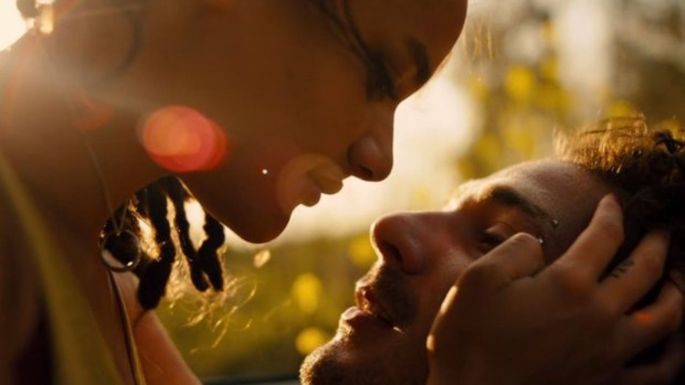
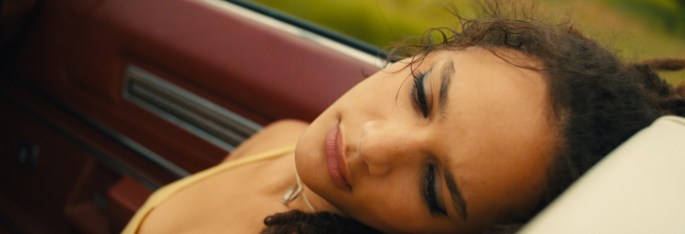
Arnold picked the majority of the cast by interviewing drunk teenagers and loners while prowling spring break locations.  Sasha Lane was chosen to lead as Star, with her intricate performance being memorable for her ability to balance sexual mystique, danger, and conviction all while battling the uncertainties of adult life.  She’s supported by Shia LeBeouf, who gives the performance of his career as Star’s forbidden lover, Jack.  This is a story about the forgotten, and LeBeouf throws his soul into his portrayal, using the hardships of his career to show Jack as a hungry street hustler whose armor of cool protects a lonely and restless heart desperate for an escape, a errant Peter Pan for a social media Neverland .  His chemistry with Lane is scorching, with some of the most raw and poignant love scenes ever filmed.  It’s easy to see how these two hearts find one another, as they both yearn for more amidst the reefer smoke, and yet, submit to a continual charade of hard partying and felonious behaviors as a welcome distraction from the world outside the van.

ah-cover2-1-1400x480

Robbie Ryan’s cinematography is poetically unhinged.  Filmed in 4:3 ratio, without widescreen, the film is presented as if the viewer is watching the film on their cell phone, an accusatory detail that also keeps the action uncomfortably close, simulating the idea that these neglected children are everywhere in the land of the free and exorbitantly rich.  Despite the framing choice, there are some remarkable shots of the beautiful Oklahoma landscape, filled with colorful wildlife and golden sunsets.  These images are opposed by their urban counterparts, with murky puddles and discarded canines populating the dingy motel underground in which Star is imprisoned.  One of the most beautiful sequences involves a lakeside bonfire with the kids jumping across the flames in true Lost Boys fashion, with the actors’ joys and fears intermingling into a hive mind of reckless euphoria.

The soundtrack is an MP3 onslaught of country and hip hop, and each song’s timing is perfectly chosen, almost always generating from a native source in the film, keeping everything within the personified turbulence.  Running at a colossal 163 minutes, American Honey takes its time with what it has to say, using the musical cues to highlight the cosmetic approach used to hook the kids into an indentured life, using the promise of tangible wealth as a carrot to cyclical servitude.  This is a generation who have been constantly reminded about the greatness that came before them.  They have no cause to unify them except for the intoxicated promises of their superiors, empowering them with a larger than life bravado.  There are several cringe worthy sequences in which characters put themselves into peril, either by getting into a stranger’s car or by going to a place they shouldn’t, and it’s difficult to tell if the characters truly believe their untouchable, or (more likely) that they just don’t care.

rs-245871-american-honey00

In limited release currently, and hopefully heading to Video on Demand soon, American Honey is one of the best films of the year.  Arnold’s cautious manifesto takes a concept that could have been overshadowed with violence and cynicism and instead presents it as a dysfunctional love story on the forgotten back roads of America.  Featuring tattooed outcasts who are forced to carve out their own identities in a transient community of grifters, most accept this condition as a natural consequence of their place in the financial order.  What’s more terrifying than the complete submission of the wayward sons and daughters is that those who understand that the game is rigged would rather keep playing on the off chance that they might luck into some part of an American Dream that left them in the dust long ago.  A hypnotic affliction rather than a traditional movie going experience, American Honey mutates Charles Peguy’s famous quote into something more personal, perfectly summarizing its intent:

America belongs to no one.

Highly.  Highly Recommend.

telecharger-american-honey-2016-films-complets-1257x640

From Dusk Till Dawn 3: The Hangman’s Daughter- A Review by Nate Hill 

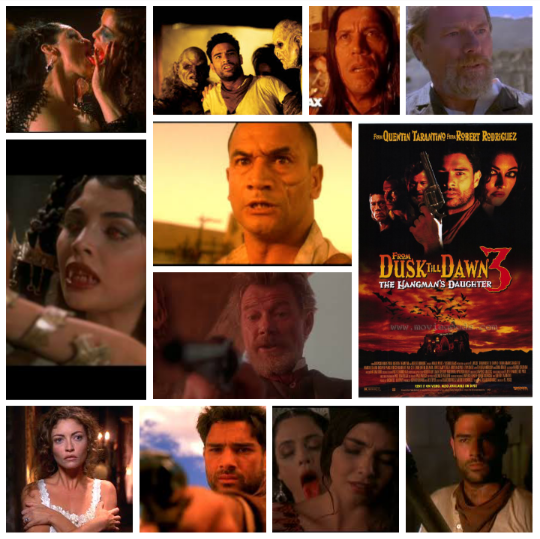
Some franchises feel stale and wrung out by the time the third effort comes along, but not From Dusk Till Dawn. In fact I’d even be so bold as to say that despite not having quite such a budget and resources as the original Tarantino/Rodriguez splatter party, this prequel almost has more in the way of imagination. The first came out of the gate roaring and paved the way, the second was a more mellow heist orientated flick that incorporated the horror elements in as it went, but the third does something altogether different. It’s a period piece, set a hundred years in the past, sometime around the Mexican/American war. When notorious outlaw Johnny Madrid (Marco Leonardi) dodges the hangman’s noose and escapes, he brings abused daughter Esmerelda (Ara Celi) along and scrambles for the state line. The ferocious hangman is none too pleased, given the menacig scowl of Maori bad boy Temuerra Morrison, who played Jango Fett in another prequel we all love. Rounding up a posse, he hunts Madrid and his scurvy gang through the terrain. Madrid is unknowingly headed for a far worse danger though, when he and Esmerelda run straight into the iconic Titty Twister bar, dressed up like a frontier whorehouse this time around. Also along for the ride are a group of wagon travellers including a young newlywed couple (Rebecca Gayheart and Lennie Loftin), oddball Ezra (Orlando Jones) and the real life writer Ambrose Bierce, played with alcoholic grit and gallows humour by Michael Parks. Bierce is famous for actually disappearing somewhere in that area back then, and I like how the film cleverly weaves fact and fiction, putting in a commendable effort to make the turn of events fascinating beyond just a servicable horror level. Danny Trejo also returns, as he must, playing pretty much the same character he did in the first and second, never mind the fact that he keeps dying (you can’t really kill Danny, everyone knows this). I love the formula for these films; they always start out with a slower paced, pulp/crime style narrative that suddenly explodes into creature FX, blood orgies and vampire mayhem without much warning. The first was the bank robbers on the run with hostages, the second was the heist crew and the third is a rousing Desperado style actioner that morphs into the horror we all know is coming. Well produced with a lot of love and some real thought put into the story, exciting and provides more than enough for any horror fan. Definitely the better of the two sequels. 

The Adaptations & Cinematic Adventures of Joe R. Lansdale by Kent Hill


This slideshow requires JavaScript.


It has often been my custom to seek out and devour everything an author has written, once said author’s work has completely overwhelmed me.

My first brush with the man from Nacogdoches came in the form of a chap book in one of those slowly disappearing, (at least in Australia anyway) dust-ridden book exchanges, where the yellowing pages of the regarded and discarded writers of ages are stowed.

The store that I frequented, I often did so with my Grandmother, while still a boy. She (my Grandmother) was the most voracious reader in the family, and would go to the store often after reading a great pile of books to exchange them for new ones. Gran would always ask the proprietor to save some of the credit from her returns for me, to pick up an armful of comic books.

It was on a rainy day in February, three summers and a thousand years ago it seems, that I went to the old store by myself, ready with a pile of freshly digested comics, ready to swap them for more.

As I scanned the racks I saw, at far end of one of the shelves, wedged between two war comics, a thin, slightly discoloured book entitled: On the far side of the Cadillac Desert with Dead Folks. Now, that title alone is a grabber – I don’t give a shit what you say. Eagerly I dove in and found myself so entranced that it took the hand of the proprietor, shaking on my shoulder, to break the spell the story had on me. Turns out I had been standing there for a good forty-five minutes reading.

Without hesitation I handed over the comics in my other hand and said I wanted nothing but the thin, little volume. The owner tried to tell me I could take it plus the comics, but I had neither need nor interest for comics that day. I shoved the Dead Folks into my pocket and cycled home as fast and as recklessly as I could – once there, I read the incredible find over and over, till the weekend faded away.

Some weeks later, and after countless repeated readings of the Cadillac Desert, I found myself beset by another grey and rainy Saturday. I was rushing into the city library via the side entrance. My breath was all but gone as I had been racing, narrowly escaping the oncoming downpour. Dripping on the carpet with my hands on my knees I looked up, as my breath returned, at the bottom shelf of the aisle closest to me. I remember clearly staring at the row of books there and noticing that they were all by the same author; the guy who penned my current obsession, Dead Folks. I snatched up as many books as my library card would allow me to leave with. My first encounter had been powerful, but now my love affair with Lansdale was really about to take flight.

Okay, I know this is a film website, so when Joe finally granted me the opportunity to interview him, I knew we would be chatting about those works of his that had found their way from words to pictures.

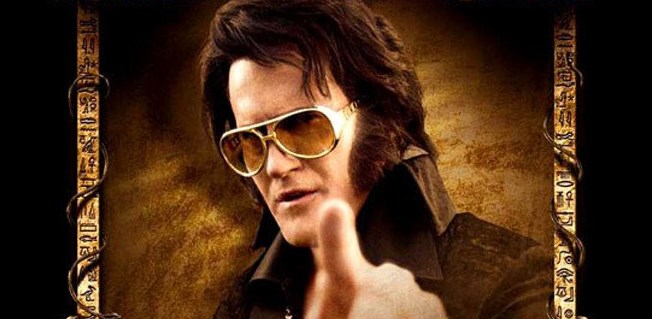
Like most writers of his calibre, Joe has had several of his works adapted for the screen; one of the more famous of these being Don Coscarelli’s Bubba Ho-Tep. But it does not end there, with Elvis and JFK taking on a through-the-asshole-soul-sucking-mummy, no sir. Joe’s work has a natural cinematic inflection in its voice and has been, and is continuing to find its way to audiences via the medium of film and television.

What follows is my encounter with the ultimate mojo-storyteller himself, as we examine, albeit briefly, those works of his that have found new life, beyond the printed page.


KH: Some writers are quite precious when it comes to certain of their works being adapted, some often resistant at first when those movie folks come a knockin’, are you one such author?

JL: I’m mixed. If I have involvement in it as a producer, I want that to be taken seriously. They can do what they want, but I prefer they listen to me before they decide. I understand how it works, that said, I had one instance where I was banned from the set because I thought they were messing it up. Most of that seemed to have come out in the wash. Also, sometimes you get caught up in the moment when you are involved because I’ve spent years with certain books and characters and then someone comes along who is a hired hand that suddenly knows more about your characters than you do, and knows that, and doesn’t want you to have any say because they can’t go their own way. In fact, you hear, books and movies aren’t the same thing, as if you don’t know that, but most changes in books come out of pure neglect, and the fact that people making the films often don’t want it to be credited to the original creator. All things are changed, but frequently, this idea that they have to be changed a lot, overrides common sense. I also feel like dialogue wise I know how my characters talk better than they do. Creators ought to be more involved. There’s a place where you have to step aside. If I just option or sell something and didn’t make a producer agreement up front, then I’m going to let that one go. It may not have anything to do with liking is less or more, it’s just, for whatever reason, one where I made the agreement up front not to be involved. If they want to do what they want to do, then I want to be paid adequately. One reason I like independent films, they are frequently more interested in it being what you want it to be. Hollywood is a machine, and it’s an age-old thing that they don’t like the writers who create the works, because they know more about them than they do.

KH: Do you exert or do you have creative stipulations when your work is adapted for the screen?

JL: Sometimes I do, but you can’t always, and sometimes you just take the money and go on. It also depends on how much bullshit I’m up to standing at the moment. I might be working on something else that has my full attention, and there just isn’t time or energy to bother with it, but I have turned down many things because I didn’t like the folks involved. You learn as you go.

KH: When I read the foreword Coscarelli wrote for your collected Drive-In books, I have been curious as to how much development was done on his attempt to make a film version?

JL: Not much was done. It has had interest now and again over the years, once by Greg Nicotero, but nothing came of it. He got involved with the Walking Dead and that took all his time.

KH: You seem to have a solid collaborative rapport with Don, he having made Incident on and off a mountain road and Bubba Ho-tep?

JL: Don did an excellent job. Both things he did were very close to the originals. He gets me.

KH: So you were you pleased in both cases with these adaptations?

JL: I was pleased.

KH: It has been documented that you wrote a script for an animated Jonah Hex plus you have you written for the comic, what did you think of the Jonah Hex that finally made it to the big screen with Josh Brolin in the title role?

JL: You know, I haven’t seen it. I read the original script which was much closer to the comic I wrote, and I liked that, but that’s not the one that got made. There are so many reasons things can foul up. I don’t know if it did, not having seen the film that got made, but I can attest to liking that original script quite a bit. Sometimes everything can be done right and it can still go wrong.

KH: You’ve had some short films made of your work, The Job and Drive-In Date which you also scripted. How did these productions come about?

JL: I no longer remember, to be honest.

KH: Then we come to Christmas with the Dead and Cold in July, films independently financed. Was that a necessity or you not want too many studio cooks in the creative kitchen?

JL: That really had to do with the fact my son wrote the script, which I liked a lot, based on my story. My wife and I put up money for it. It’s low budget, and those roots show, but it’s fun.

KH: I’ve heard the wind talk of Bill Paxton and his hankerin’ to adapt The Bottoms. If you can tell us, what is the status of that project?

JL: Bottoms is supposed to happen next year, and it looks as if it will right now, but I never say go until it’s go time. But it looks good.

KH: Aside from what has been written, has there been any other of your works that have been optioned both recently and in the past?

JL: A lot. Dead in the West was optioned a number of times and bought by a French company that never made it, and won’t let anyone collaborate with them on it. No idea what went on there. Big Blow Ridley Scott has, and I wrote a screenplay for it, but it has interest in being made from time to time, but so far it hasn’t happened. Numerous short stories have been optioned, so many I’ve lost count. The Drive In, as I mentioned, The Pit is under option, Edge of Dark Water, The Thicket with Hollywood Gang and Peter Dinklage. I’m working to direct one of my stories myself, as a feature. It’s called The Projectionist and is based on a long story coming out in December in In Sunlight and In Shadow, edited by Lawrence Block, all the stories based on Edward Hopper paintings. We’ll see what comes of that.

KH: Are you pleased with the adaptation of Hap and Leonard the series?

JL: I loved the first season of Hap and Leonard, and I haven’t seen the second, but I’m hopeful. I love the actors in it.

KH: The first piece of yours I ever read was the chap book release of On the far side of the Cadillac Desert with Dead Folks. I think this would make a great flick, has anyone ever posed the question of adapting it?

JL: On the Far side had an option once, but nothing came of it, and there are bites now and then, but none that hang on.

KH: Have you ever been commissioned to adapt the works of another author or to produce an original work for the screen? (Aside from the TV scripts you are credited with.)

JL: I’ve been approached about it, but have passed. I did write a screenplay for a French director once. He had an idea he presented to me, but we parted over creative differences. He had an imaginary idea in his head that he didn’t manage to pass on to me, or I failed to understand what he was passing. I really shouldn’t have gotten involved with it. I thought it might be fun, but had my worries early on, and I was right. It wasn’t a good idea and I shouldn’t have gotten involved.

KH: You have published screenplays like those in Shadows West, any of these ever peaked filmmaker interest?

JL: Yes. But nothing came of it.

KH: Are there any stories or novels of yours you hope will ever make it to the big screen?

JL: Paradise Sky, but I’d be nervous.

KH: Most writers have selected movies which were an inspiration for certain of their works or the body of their writing in general. What and who are some of the films and filmmakers that have fuelled you?

JL: Fiction has primarily fuelled my writing approach, but certainly I’ve learned from many movies, too many to name. Directors like John Ford, John Houston, Sam Peckinpah, Clint Eastwood, The Coens, Don Siegel, so many.

KH: Well sir, once again, from this very big fan it has been a pleasure.

JL: You’re welcome.


Champion Joe is the only one of my literary idols not currently pushing up daisies. He continues to be a hero, whose new work I wait for with baited breath, an inspiration to whom I have dedicated my own work to, and a writer that I hope will fuel future cinematic adaptions I assure you, I’ll be first in line to see.

If you don’t know the man – then you should know the man!

http://joerlansdale.com/
ROBERT ALTMAN’S THE PLAYER — A REVIEW BY NICK CLEMENT

the-player

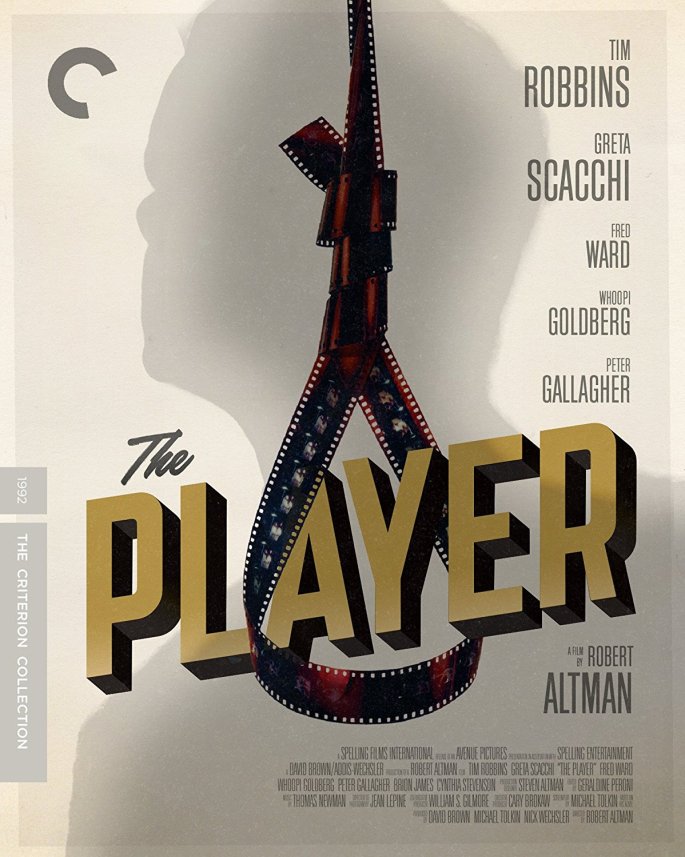
The Player is my favorite film by Robert Altman. It was also the first film I saw by this cinematic master, and I became instantly fascinated at the ripe age of 14 by this super-smart satire of Hollywood and the various entanglements that make up a day in the life of a big time studio executive. Tim Robbins was perfectly cast as a paranoid producer that kills a fledgling screenwriter who he things has been stalking him; this movie frays the nerves while retaining a sly comedic vibe, a tone that’s nearly impossible to pull off. But that’s what Altman and his creative team did, picture after picture – subvert your expectations, play around with genre, and toy with your feelings while delivering a totally unique viewing experience. Michael Tolkin’s acerbic, keep-you-guessing screenplay (based on his book) knew exactly how to nail all of its satirical targets while still providing the viewer with an emotionally complex piece of storytelling with flawed characters who explore genuinely intriguing moral territory.
The cameos are endless and rather hysterical at times, the use of overlapping dialogue is completely brilliant (par for the course with Altman), the sex scene between Robbins and ultra-hot Greta Scacchi is the epitome of steamy, and the roll-call of supporting players is too long of a list to mention here; no stone was left unturned by the casting department. Thomas Newman’s sublime score is both ominous and playful, which is no easy feat, while cinematographer Jean Lepine provided a casual sense of heightened style that’s very much worth studying; the use of zooms are rather remarkable. Geraldine Peroni’s adroit editing juggled multiple characters, endless speaking parts, simultaneous plot threads, and did it all with grace and relaxed confidence. The opening tracking shot is a thing of intricate beauty. Impeccable timing, and unforced humor, while the finale stings in that special way that has made Tinsletown one of the most famous places to dissect and mock – the smart ones get away with it. The somewhat recently released Criterion Blu-ray is perfection.

the-player

B Movie Glory with Nate: Gunshy


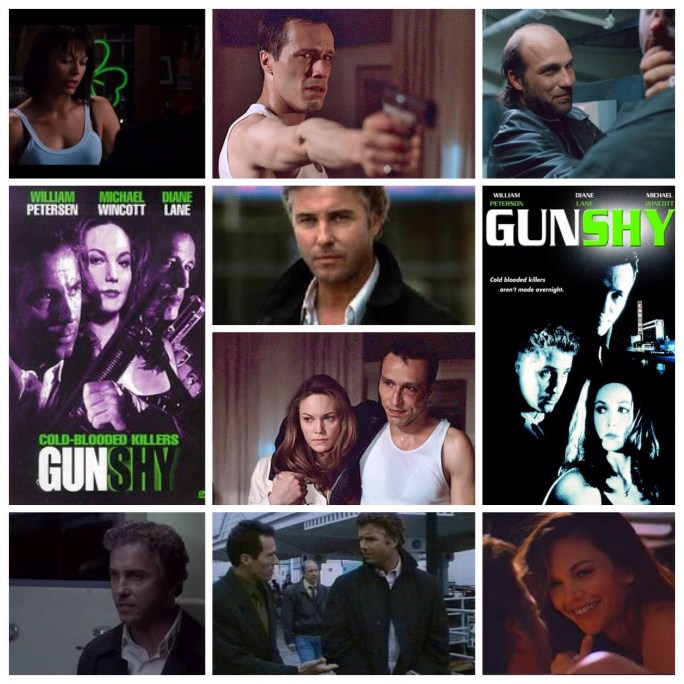
Looking for a moody Atlantic City crime drama that isn’t Boardwalk Empire? Well you’re gonna get a review of one, anyway. Gunshy may not have all the bells and whistles of a studio produced film, and admittedly is a little tattered around the edges as a result, but it’s still a solid, quaint little fish out of water story about a man out of his depth and in deep water with some dangerous people. Jake (William L. Peterson) is a failing journalist who yearns to live on the edge, mired in the doldrums of a creative sinkhole. After his boss (R. Lee Ermey cameo) fires him, he heads to the one place that offers unconditional solace to us writers all over: the bar. After an altercation with a violent scumbag (Meat Loaf offering up ham to go with his edible moniker), he meets an event more violent individual in the form of Frankie (Michael Wincott) a volatile mob enforcer. Frankie takes a shine to Jake, and in particular is fascinated by his literacy and knowledge of the written word. Frankie offers a bargain: show him the world of books and intellectual fare, and he will navigate Jake through the seedy world of organized crime, teaching each other a thing or two along the way. The plot thickens when Frankie’s girlfriend Melissa (Diane Lane, stunning as ever) drives a wedge between them, effectively creating a romantic triangle. These three leads take subpar material and make it shine, especially Wincott who rarely gets a lead role, but steals every scene with his childlike curiosity contrasted with violent tendancy. The boardwalks do make an appearance here, and they just beg to be filmed, really. In a genre centralized mainly in L.A. or New York, I’d love to see more pieces set in the baleful, windswept oceanfront locales of Atlantic City. There’s numerous supporting turns including Musetta Vander, Kevin Gage as a cop who harassed Frankie on the daily, and intense Michael Byrne as his gruesome gangster boss. It’s silly in places and clunky in others, but when it works, it works, mainly thanks to the great turns from Wincott and Lane, who seem very naturalistic and unforced as a couple. Give it a go.

TOMORROWLAND – A REVIEW BY J.D. LAFRANCE

tomorrowland-2015-trailer-disney-britt-robertson

In this cynical and jaded world in which we live in idealism and optimism are often mistakenly equated with naiveté or stupidity. This may explain why Tomorrowland (2015) tanked so spectacularly at the box office and was roasted over the coals by critics. Based on the Walt Disney theme land of the same name, the film champions dreamers and creativity. Hoping for a repeat of the successful adaptation of the Pirates of the Caribbean ride into a wildly popular movie franchise, the studio brought in director Brad Bird, fresh from the box office hit Mission: Impossible: Ghost Protocol (2011), screenwriter Damon Lindelof (Prometheus), and cast George Clooney to anchor the film in a supporting role opposite Britt Robertson (The Longest Ride) as the young lead. The studio certainly had all the right elements in place but dropped the ball when it came to marketing Tomorrowland, which is staggering when one realizes how many millions of dollars were spent promoting it in a cryptic way that was completely unnecessary. After all the dust has settled and the post-mortems have been made, the question remains, is the film any good? Obviously, the answer is very subjective. I, for one, loved it.

The film starts in the past – the 1964 New York World’s Fair to be exact as young John Francis Walker (Thomas Robinson) gets off a bus lugging a track bag containing a jetpack he invented. Frank shows it to a man named David Nix (Hugh Laurie) with the hopes of winning $50 in a contest. Alas, Frank admits that his invention doesn’t exactly work. Nix asks him what its purpose is and how would it make the world a better place to which the young boy responds, “Can’t it just be fun? … Anything’s possible.” Nix doesn’t understand what that means and Frank tells him, “If I was walking down the street and I saw some kid with a jetpack flying over me I’d believe anything’s possible, I’d be inspired. Doesn’t that make the world a better place?”

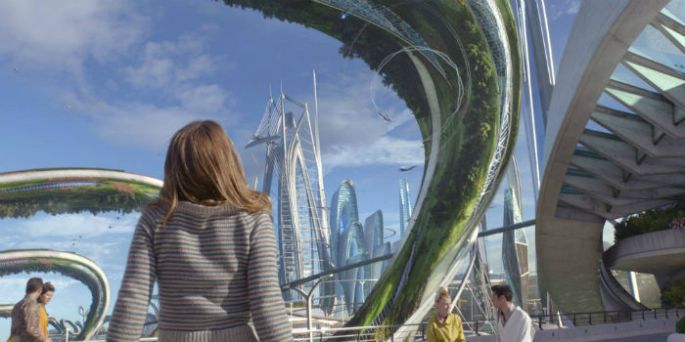
Therein lies the film’s central theme and overriding message: anything is possible if you have the imagination to think of something and the perseverance to make it happen regardless of those that tell you no. Armed with this determination and a small pin with the Tomorrowland logo on it, given to him a by little girl named Athena (Raffey Cassidy), Frank sneaks aboard the “It’s A Small World” ride and finds himself transported to a futuristic cityscape known as Tomorrowland. It’s a wondrous utopia that Bird takes us briefly through when Frank, with the help of a robot and a moment of well-timed clumsiness, gets his jetpack to work and flies around so that we (and he) can admire this shiny chrome and glass paradise.

After this brief teasing taste of this world, we are taken back to the present and meet Casey Newton (Robertson), a young woman that uses gadgets she assembled to delay the demolition of a NASA Launchpad thereby prolonging the inevitable loss of employment that will befall her father (Tim McGraw), an engineer. Casey is a dreamer that believes “the tiniest of actions could change the future,” as she tells her little brother Nate (Pierce Gagnon). She explains to him that it is hard to have ideas and it is easy to give up.

During the day, Casey endures classes taught by doom and gloom teachers and is surrounded by apathetic classmates. At night, she continues her one-person crusade to save her dad’s job until she’s finally caught in the act and arrested. Her father bails her out and among her possessions she finds a Tomorrowland pin. Touching it instantly transports her to the futuristic place; however, it only lasts for a few minutes and then no longer works. Naturally, she wants to experience more of this world and finds a store in Houston, Texas that claims to have a pin for sale. The store turns out to be a trap and Casey is rescued by Athena who looks like she hasn’t aged a day since 1964. She promises to take Casey back to Tomorrowland and save it, adding cryptically, “They built something they shouldn’t have.” In order to do so, they have to travel to Pittsfield, New York where Frank (Clooney), now all grown-up, lives like some crazed recluse, and has the ability to transport them to Tomorrowland. It won’t be that easy because Frank is no longer the optimist he once was; he’s now a bitter man existing on the fringes of society.

Britt Robertson plays the film’s protagonist and has the difficult challenge of portraying an irrepressible optimist surrounded by cynics without coming off as a caricature. She does this by instilling Casey with a passion for adventure fueled by curiosity and imagination. There is a sincerity to her performance that feels genuine while also having a knack for physical comedy, like when she figures out what the pin does through trial and error, and verbal comedy, like when Casey first meets Frank and they trade insults.

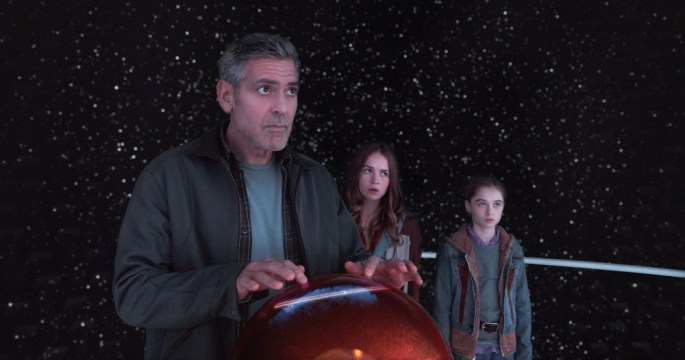
Not usually cast in summer blockbusters, George Clooney is excellent as a man who has given up hope and lost his idealism. His world-weary crabbiness acts in sharp contrast to Casey’s youthful optimism and their initial scenes together have an amusing tension as she isn’t sure if he can be trusted and vice versa. As the film progresses and they spend more time together, Casey begins to chip away at Frank’s cynicism.

Hugh Laurie plays the film’s antagonist, but wisely doesn’t portray him as such. Nix believes in what he’s doing is right and that’s what makes him dangerous. Laurie brings just the right amount of condescension to the role so that you want to see Casey and Frank defeat him. Raffey Cassidy plays quite the scene-stealer as Athena, with her posh British accent and direct way of talking. Her diminutive stature also makes her an unlikely action hero and yet she gets to jump around, beating up evil robots. Athena, Frank and Casey make for odd traveling companions as they go from Florida to New York to France.

Thanks to Claudio Miranda’s atmospheric cinematography and the best visual effects money can buy, Tomorrowland is a visually stunning film. Naturally, the Tomorrowland scenes, populated by people flying around in jetpacks, hovering trains and rockets, is the most impressive-looking, but a close second is Paris where Miranda bathes the Eiffel Tower in warm light as it is transformed into a massive Steampunk vehicle fueled by Nikola Tesla’s technology. When post-mortems were conducted on why Tomorrowland failed commercially and critically, one reason cited was that not enough time was spent in the titular place. This seems rather odd when we are given substantial teases early on and then the last 40 minutes takes place entirely in the futuristic city. There is something to be said for the less is more approach and the screen-time devoted to Tomorrowland is just right.

While most films are largely immune from film criticism these days, especially with the passing of Roger Ebert, writers just don’t have the influence they had many years ago, some reviewers foolishly attempted to argue that Brad Bird’s film, along with his others, espoused the beliefs of notorious conservative thinker and writer Ayn Rand. Other critics rose to the film’s defense and rightly pointed out that Bird wasn’t inspired by Rand but actually Walt Disney, which make much more sense.

If anything, Tomorrowland’s high profile commercial demise only confirms in the minds of Hollywood studio executives’ minds that to bankroll original films is folly and that they should go on cranking out reboots, remakes and sequels. One can already see this in Bird’s next gig – a return to the safe confines of Pixar to make a sequel to his beloved animated film The Incredibles (2004). It is also disheartening to see a film featuring a smart, resourceful female protagonist fail, especially in the current climate where Hollywood insiders scrutinize the success of every aspect of a film (or lack thereof) and analyze what it means.

XXX TOMORROWLAND MOV JY 0179 .JPG A ENTThat being said, Bird and his collaborators should be commended for getting this passion project made. Tomorrowland exists and will have the chance to outlive its detractors, where its box office failure will eventually mean little, and go on to inspired like-minded dreamers that find themselves identifying with Casey as opposed to the Nixs of the world. Bird’s film is a rare wakeup call against the negativity that permeates our culture, from the doom and gloom headlines that dominate any given news cycle to fashionable pessimism that permeates our culture.
ANTHONY MANN’S WINCHESTER ’73 — A REVIEW BY NICK CLEMENT

2

One of my favorite Westerns and containing one of my favorite performances from James Stewart, the 1950 film Winchester ’73, from director Anthony Mann, is a hugely entertaining saga of cowboys and Native Americans and while not as thematically dense as some of the other genre efforts from that decade, still stands as a robust piece of escapism that has sturdy re-play value and a great sense of humor. Starring a terrific ensemble including Shelley Winters, Dan Duryea, Stephen McNally, Millard Mitchell, Charles Drake, Will Greer, and with early performances from Rock Hudson, Tony Curtis, and James Best, the trigger-happy narrative centers on highly prized rifle and the various people who come into contact with it, with potent adventure subplots that up the excitement all throughout the fast paced 90-minute run-time. This was the first Western that Stewart and Mann would team up on, with the director taking over the film from initial director Fritz Lang, who left the project over creative differences with Universal Pictures. The witty and incident-packed screenplay by Borden Chase and Robert L. Richards (from an original story by Stuart N. Lake) never stopped for a moment, and with Stewart fronting the film with total gravitas and authenticity, the entire film is just too good to resist.

1

Daybreakers: A Review by Nate Hill


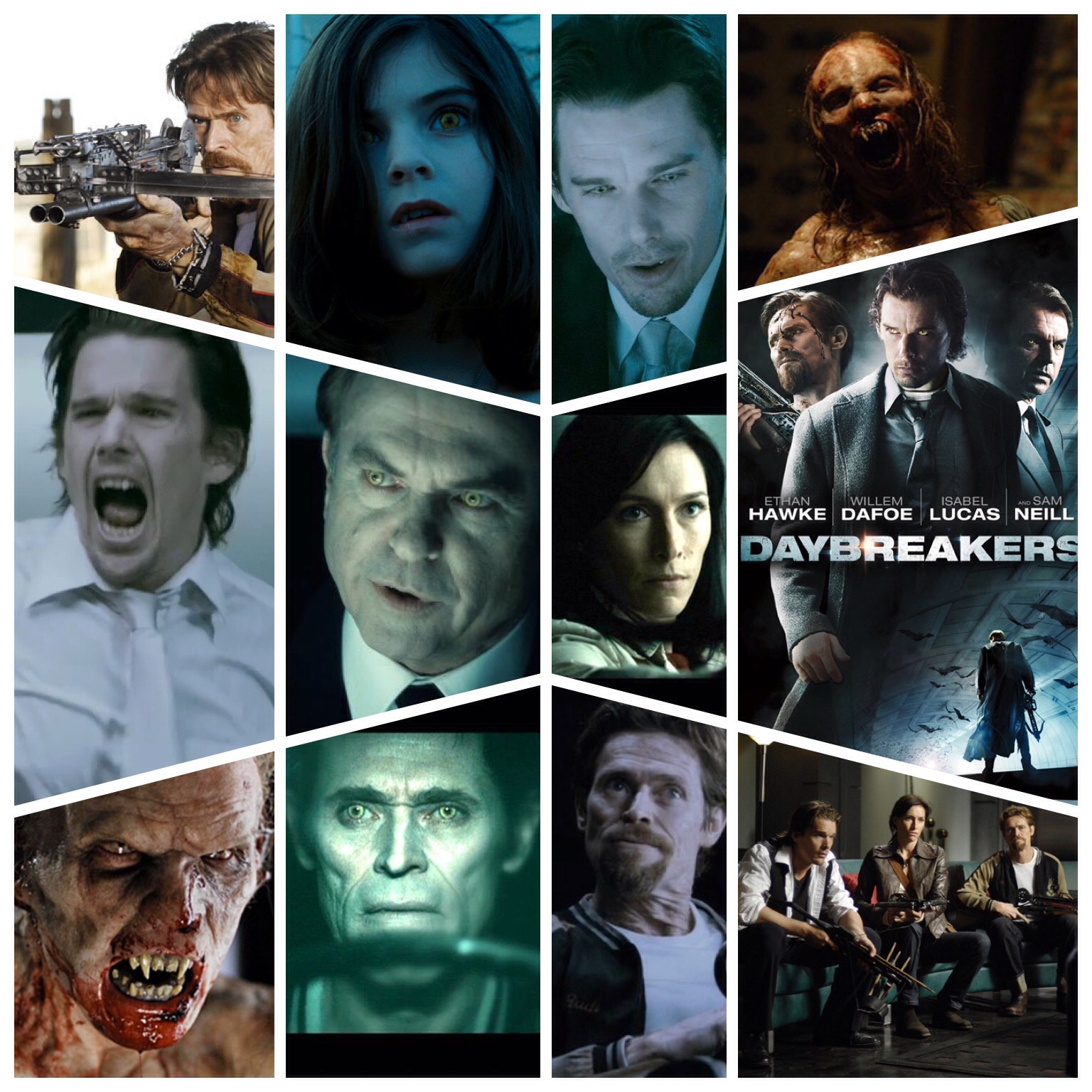
As each genre evolves, it has to find new and creative ways to stay alive and entertain it’s audience. The vampire genre has come a long way, from the grainy film stock showcasing a theatrical Bela Lugosi, to the slick, throat ripping Baltic nocturnal terrors of 30 Days Of Night. No other corner of horror (except perhaps the zombie arena) has worked so hard to reinvent, rework and revamp (hehe) it’s aesthetic than the bloodsuckers realm, and it’s in that area that Daybreakers is a huge success. Not necessarily the most groundbreaking or incredible outing as a film alone, it breaks impressive new ground in the vampire genre and had me wondering why no one had come up with such ideas sooner than 2009! In the year 2019, ninety five percent of the world’s population are now vampires, following an outbreak decades earlier. The remaining five percent of humans keep an understandably low profile and continue to dwindle in this harsh new world. There’s just one problem: vampires need blood to thrive, and once the last human is drained, they face a serious problem. In this lore, a vampire deprived of sustenance turns into a savage berserker that will attack anyone and everyone in pure feral mania. Vampire scientist Edward Dalton (Ethan Hawke) searches endlessly for an artificial blood substitute, partly out of an instinct to preserve a race that was never his own, and partly out of compassion for the humans he once called kin. Corporation executive Charles Bromley (a downright creepy Sam Neill) hordes the scarce resources, and chaos threatens on the horizon if a solution is not found. A bombshell drops, however, when Dalton stumbles across a rebel band of humans who claim that they were once vamps, until some variable turned them back into fleshy human critters. Led by hotshot renegade McCormac (Willem Dafoe dialling up the grit) they see a glimmer of hope in Dalton, not to mention his scientific prowess. Bromley sees the end of days and gets dangerous with his power, Dalton and newfound friends work to overturn the Vampire order, and gore splatters all over the screen in a sleek, entertaining and supremely gory film that should have a little more infamy. The R rating is gloriously wrung out as gallons of blood are thrown, flung and dripped all about the place and a real sense of supernatural, apocalyptic danger is attained with the story. Neill is an inspired choice to play a vamp too; Even when he’s playing a gold hearted protagonist (remember how ominous he got with the raptor claw in Jurassic Park?), there’s a semi dormant aura of menace that always dances in those Aussie eyes. Dafoe is at his best when his playing around in the genre theme park, and he’s having a barroom blast here, getting to play the ultimate badass. There’s a reverence for humanity here too, attention paid to a last ditch effort to save our race from a predatory one that is just trying to survive as well. Terrific stuff.