SIDNEY LUMET’S THE HILL — A REVIEW BY NICK CLEMENT

1

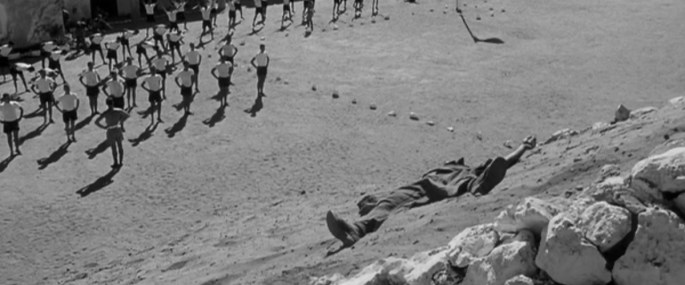
This is a fantastic movie and an extremely unique entry in the everlasting prison film genre. Rigorously directed by Sidney Lumet and released in 1965, The Hill is one of those “they don’t make ‘em like this anymore” type dramas, a true product of its time, and yet still totally relevant and exciting in this day and age. Starring a phenomenal Sean Connery in a decidedly un-Bond performance as a former tank operator who is sent to the stocks after assaulting his superior officer, The Hill centers on a British army prison stationed in North Africa during WWII, and evokes a sense of stark realism and fatalistic danger all throughout. Featuring a rock-solid supporting cast featuring Harry Andrews (absolutely brilliant), Ossie Davis (very memorable and scene-stealing), Ian Bannen, Ian Hendry, Roy Kinnear, Michael Redgrave and Alfred Lynch, everyone gave ultra-committed performances in what were clearly very hard working conditions; you feel everyone’s pain in this film. The lean and to-the-point screenplay by Ray Rigby, which was based on the play co-written by Rigby and R.S. Allen, never wasted a word, and Lumet’s precision-tooled filmmaking style allowed for a zero-fat narrative with an excellent sense of physical locations and the importance of conveying spatial distance between key portions of the massive, sprawling set.

2

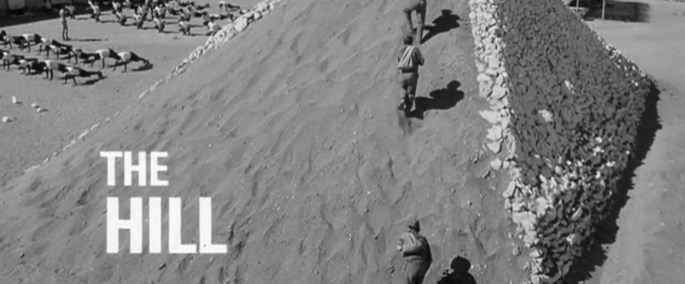
The title refers to the main form of punishment for the dishonorable soldiers, a massive sand hill that requires constant attention and which more than occasionally leads to someone collapsing from sheer exhaustion. The reality of the situation that these characters face is never lost on them, and the narrative allowed for some interesting interpersonal dynamics to take root. Shot with ultra-clarity in silky black and white by cinematographer Oswald Morris, The Hill looks magnificent on the WB Archives DVD; I can only imagine how it might appear on a restored Blu-Ray. This is a brutal, unflinching film, looking at an extremely grim aspect of war that is sadly unavoidable, and because Lumet’s focus was so sharp, every single moment hits very hard during this exceedingly tough piece of cinema. You feel the excessive heat in every shot, and because the film centers on rather unpleasant material, this might be an endurance test for some viewers. But in general, this is yet another motion picture that confirms Lumet’s master-status in the pantheon of great filmmakers.

3

Robert Zemeckis’s Flight: A Review by Nate Hill 

When I saw the marketing and trailer hype for Robert Zemeckis’s Flight, I was strongly under the impression that when I got around to seeing it I’d get a conspiracy style thriller. Some aviation intrigue, maybe a little government corruption, valiantly unveiled by Denzel Washington’s hotshot pilot protagonist. How very wrong I was. To my credit, it wasn’t my fault, but that of the severely misleading marketing. But then, how do you market a film like this? Hell, it’s a wonder it even made it past the pitching stage! The airplane related fiasco one sees in the previews is but a tiny segment that acts as at catalyst for one of the most searing and honest portraits of addiction I’ve ever seen. Washington is Whip Whittaker, senior pilot, ladies man, assured professional and severe drug and alcohol user. Whip snorts and guzzles day and night, including during the job. He’s functional and hides it well, but thats just another facet of his problem. When an onboard malfunction causes crisis on one of his flights, he takes a giant leap of faith, spectacularly landing the airplane upside down and essentially saving every passenger’s life. End of story? Not really. From there the film throws a curveball, as we dig deeper into Whip’s life, habits and history. An inquiry is launched into his mental state during the event, led by a stern and silky voiced Melissa Leo. His superiors do everything to defend him, but it becomes clear that he has been coming apart at the seams for sometime now, and the incident was one of the final rips. It’s a journey into one man’s refusal to admit his problems, and the often extreme ways in which life holds up a mirror in front of us and demands acceptance. Kelly Reilly is superb as a damaged girl he meets who tries to take his hand and lead down the way to fixing what is broken, but he’s pretty damn far off the path. John Goodman is his charismatic self as Whip’s groovy drug dealer, and Bruce Greenwood reliably steals scenes as an airline official determind to defend Whip to the bitter end. Washington is heartbreaking, especially in the scenes of alcohol abuse, which are tough to watch. He’s never had a character arc quite like this, and it’s one of the most special, vital gifts of acting he has ever given us. The look, feel and tone of the film is anything but gritty or depressing. It has a glossy, aesthetic sheen to it that barely hints at the commotion and strife which befalls it’s lead character. Perhaps this was Zemeckis’s intention: dazzle us out of the gate with crisp frames and bright cinematography and then blindside us with the darker elements, showing us in the process that such issues can befall any one of us in society, no matter how outwardly successful, confident or in control we seem. The film is as complex as it’s protagonist and begs the audience to empathize with him on his journey, despite the glaring shortcomings we observe. It’s one of the most human stories I’ve ever seen; two hours spent with a realistic person who is assured, broken, confused, scared, stubborn, strong willed, weak and deeply wounded all at the same time. Washington paints the picture for us momentously, and it’s the best work he’s ever done. You don’t get too many films like this released by the studio system, and this one is some kind of miracle.  

PETER YATES’ BREAKING AWAY — A REVIEW BY NICK CLEMENT

breaking_away

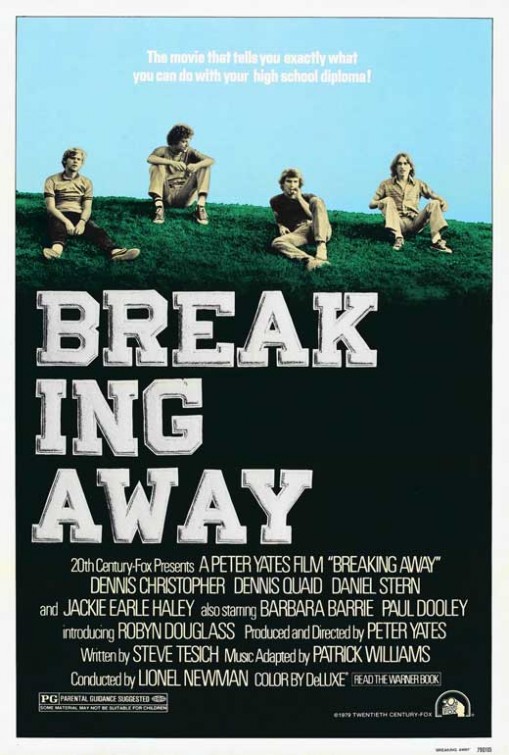
Inspiring, triumphant, and extremely well-observed, the 1979 Peter Yates drama Breaking Away features some great early performances from Dennis Christopher, Dennis Quaid, Jackie Earle Haley, and Daniel Stern as a group of friends who have recently graduated high school and are trying to figure out what path to take during the next chapter in their lives. Every moment of this naturalistic film feels unforced and organic, with the Oscar-winning screenplay by Steve Tesich hitting themes that were both universal and personal, all in an effort to evoke a very specific time and place and atmosphere for these young and searching individuals. Set in Indiana, the film has a wonderful sense of Americana without ever feeling cloying or overly sentimental, while Matthew F. Leonetti’s graceful cinematography captured all of the action, both big and small, with a humanistic edge and without a trace of artifice, while the biking scenes are all thrillingly shot without ever going over the top. The final act cuts to the heart of the message of the story — never give up and never underestimate yourself — and after watching it you feel as if anything might be possible. Grossing $20 million off of a $2.3 million budget, the film would become a hit with critics and audiences, and would receive multiple Oscar nominations in addition to Tesich’s win. Former Playboy bunny Robyn Douglass nearly shattered the camera lens with her exceedingly photogenic qualities, and there’s also some early John Ashton and Hart Bochner POWER for good measure. Yates was a unique helmer, capable of big action (Bullit), intimate drama (John and Mary), stoner-weirdo-fantasy (Krull), and seemingly everything else in between. A short lived TV series would follow in 1980-81.

THE LORD OF THE RINGS: THE FELLOWSHIP OF THE RING – A REVIEW BY J.D. LAFRANCE

rings1

It was the film many thought would never happen and that languished in development hell for years, bouncing from studio to studio until New Line Cinema took a very big gamble with filmmaker Peter Jackson who, at that point in his career, was known for making slapsticky low budget horror films (Braindead) and had one art house hit (Heavenly Creatures). He wasn’t someone you would necessarily entrust millions upon millions of dollars on making a trilogy of fantasy films – not the most commercially successful genre (Willow, anyone?). Jackson was also tackling The Lord of the Rings, the much-beloved series of books by J.R.R. Tolkien – get it wrong and you’re going to have legions of very unhappy fans.

However, Jackson was a fan too and he had a vision, which, with the help of his co-screenwriters Fran Walsh and Philippa Boyens, and an army of collaborators, brought The Lord of the Rings vividly to life. The first film, The Fellowship of the Ring (2001), was a massive critical and commercial success and would be followed by two even more successful sequels, The Two Towers (2002) and The Return of the King (2003). Everyone has their favorite film of the trilogy and for me it’s the first one because it has an intimate feel rendered on an epic scale, if that makes any sense. In other words, The Fellowship of the Ring is about a small group of characters, the Fellowship, and the journey they undertake.

Jackson establishes this intimacy early on with Bilbo Baggins’ (Ian Holm) birthday celebration. The Special Extended Edition version takes its time introducing the hobbits and their world. Jackson uses warm, inviting colors and folksy music to convey that the hobbits are a friendly, down-to-earth people who live in a tight-knit community where everyone knows each other. Most importantly, we are introduced to Frodo (Elijah Wood), the hero of this epic tale. For it is he who Bilbo entrusts with the last remaining Ring that he must to take Mordor to destroy so that it doesn’t fall into the hands of the evil Sauron.

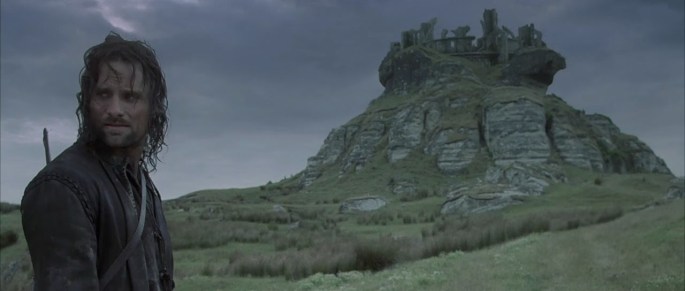
The Shire sequences also establish the dangerously seductive lure of the Ring, the origins of the quest and the creation of the Fellowship as led by the mighty wizard Gandalf the Grey (Ian McKellen). Aside from Frodo, fellow hobbits Sam (Sean Astin), Merry (Dominic Monaghan) and Pippin (Billy Boyd) join him on his journey. The group starts simply enough and over the course of the film others join their ranks, including Aragorn (Viggo Mortensen), a human ranger, Legolas (Orlando Bloom), an elvan archer, Gimli (John Rhys-Davies), a grumpy dwarf, and Boromir (Sean Bean), a human fighter. At heart of the Fellowship (and really all three films) is the friendship between Frodo and Sam. It is Sam who looks out for Frodo and sticks with him for the entire quest.

There are all kinds of parallels, story structure-wise, between The Fellowship of the Ring and Star Wars: A New Hope (1977). The Tolkien books were an obvious influence on George Lucas’ films. The main characters from both films are plucked from obscurity, a remote rural environment to go on a dangerous quest and are mentored by an elderly wizard type. Hell, Han Solo and Aragorn are characters cut from the same cloth and are both given cool introductions to establish their respective badass credentials.

Jackson manages to get some career-best performances out of many cast members. Elijah Wood, Sean Astin and Orlando Bloom, in particular, have never done anything better since (or before for that matter, except maybe for Wood and his chilling turn in Sin City) and this film launched a series of very eclectic leading man roles for the always watchable Viggo Mortensen (it doesn’t get more diverse than disparate roles in Hidalgo and Eastern Promises). Both Ian McKellen and Christopher Lee give the film some serious class and loads of genre credibility. It is Wood and Astin that anchor this film and give it its heart. The relationship between their two characters epitomizes most noble aspects of friendship and of the Fellowship. This only deepens in subsequent installments.

Once our heroes begin their journey, Jackson establishes a riveting urgency as they are pursued by the nightmarish ringwraiths and a vicious army of orcs. And yet this only strengthens the camaraderie among the hobbits and the rest of the Fellowship despite its dysfunction in the form of Boromir. However, when it matters and when faced with dangerous opponents, they work as a team as evident in the exciting and visceral battle against a monster in Balin’s Tomb and the even grittier battle against the orcs at the film’s climax.

Contrary to popular belief, Peter Jackson did not have a lifelong ambition to adapt Tolkien’s books into films. Producer Saul Zaentz owned the film rights for years and gave them to Jackson when he and Fran Walsh met with him and expressed their passion for the project. Zaentz sold the rights to Miramax who wanted to make only one film with Jackson. Disney was the financial backer but they didn’t believe in the project, refusing to give Miramax the money to make it. Harvey Weinstein, head of Miramax, gave Jackson three weeks to find someone else to make the film and in 1998, New Line agreed to make it into three films. Jackson originally proposed two films but it was New Line’s idea to make three.

In order to cut down on costs, Jackson decided to film all three films back-to-back over a grueling 274-day shooting schedule on location in remote areas of New Zealand in more than 100 locations with 20 major speaking roles and 20,000 extras. At the height or production, the film crew swelled to 1,300 people with seven units shooting multiple elements simultaneously. Jackson and company were at the mercy of New Zealand’s notoriously mercurial weather – unseasonal snowstorms and overnight flooding but in the end, the filmmakers accomplished what they set out to do and the proof is in the impressive final results.
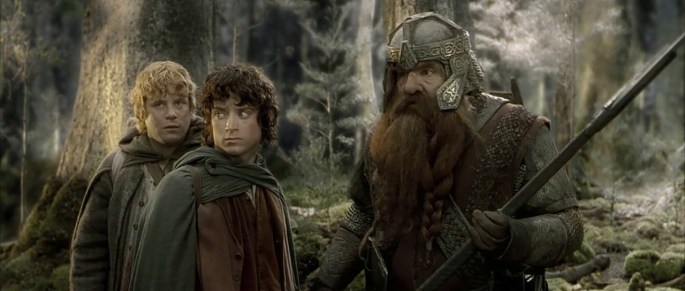
rings2The Fellowship of the Ring is one of those rare films that lives up to its mountains of hype. Jackson tells an engaging story and crams as much of the source material as possible into the film. Sure, certain characters and subplots have been cut-out but that is the nature of a feature film adaptation. Maybe, someday, someone can turn it into a mini-series so that everything can be included. Until then, we have Jackson’s magnificent films to enjoy.
HAL ASHBY’S THE LANDLORD — A REVIEW BY NICK CLEMENT

1

The Landlord was Hal Ashby’s first film, and it was based on the 1966 novel by Kristin Hunter, with an adaptation by Hunter and influential American writer/director Bill Gunn, whose film Stop is something of unreleased cinematic legend. Beau Bridges starred in the leading role as a moneyed landlord of an inner-city tenement, a man totally oblivious to the fact that his renters are low-income residents who value the rule of the street before anything else. He’s got an idea to have all of the residents evicted, thus allowing for the chance to overhaul the crumbling building with the plans of creating a luxury home for himself. Featuring a supporting cast which included Oscar nominee Lee Grant, Louis Gossett, Jr., Diana Sands, and Pearl Bailey, and shot by the legendary cinematographer Gordon Willis, The Landlord served as a clear launching pad for Ashby’s interest in class distinction, social values, and the unique ways that interpersonal relationships shape the world around us. The film was produced by Norman Jewison (Ashby had served as his editor on four previous pictures), and now seems like some sort of lost cinematic relic, overshadowed by bigger, splashier films on Ashby’s incredible resume. But it still packs an emotional and humorous punch, while also serving as a fairly scathing and satirical indictment of a particular type of person at a particular juncture in American history.

2

The Art Of The Steal: A Review by Nate Hill 

Heist flicks are sneaky affairs, but that doesn’t mean that awesome ones like The Art Of The Steal should just tiptoe past everyone’s radar with no hubbub. When subpar stuff like Now You See Me is breaking waves and this one collects dust before a year since it’s release, you know somethin ain’t right. It’s actually probably just budgeting and marketing, to chalk it up simply. Despite the cast (what a lineup) this one barely made a blip on the sonar when it came out a couple years ago. It’s great fun, with a crusty lead performance from Kurt Russell as Crunch Calhoun, an ageing motorcycle daredevil who used to moonlight as an art thief. He is lured out of ‘retirement’ by his sleazy brother Nicky (Matt Dillon crosses off another notch on the old scumbag belt with this role) with the proposition of one last score, involving his old crew and the theft of a historical artifact owned by a hilarious Terence Stamp. Other members of their crew include a crafty Jay Baruchel and Kenneth Welsh as salty ladies man Uncle Paddy. Twists and turns lace the plot, as they should in these types of films, but it’s the bawdy sense of humour that won me over. More than anything else this is a comedy, situational in nature and willing to give each weirdo of the bunch their own demented moment to shine. It’s Russel’s show though, a burnt out Evel Knievel type of dude who gets a face full of nonsense from his brother, edging him to the end of his rope. Russell owns it, egged on by the raucous chorus of characters accompanying him, and the nasty arc from Dillon that is the only piece which subverts the mostly lighthearted tone. Fun, little seen stuff that deserves a wider audience.  

Devil In a Blue Dress: A Review by Nate Hill 

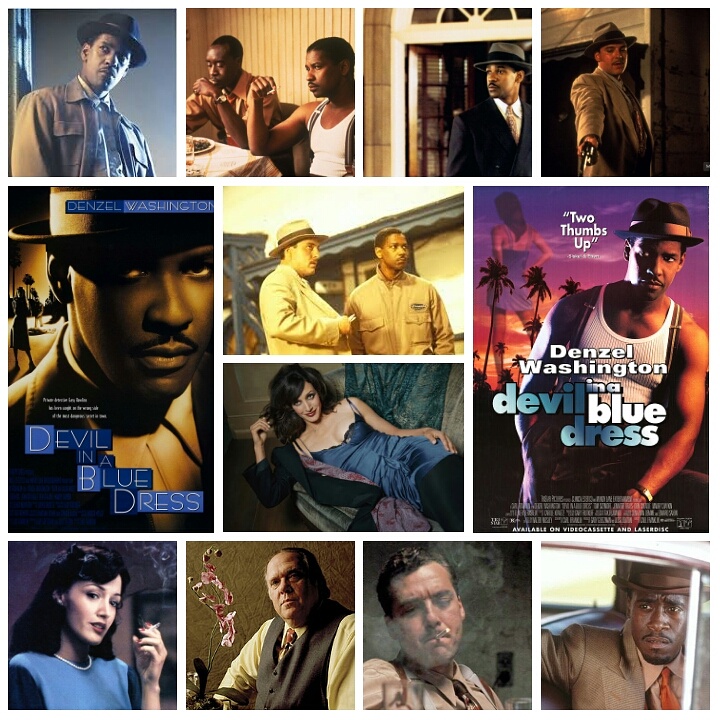
Devil In A Blue Dress takes the classic Raymond Chandler mystery form and uproots it just a smidge, setting it in the African American community of 1948 Los Angeles, with terrific results. Noir takes on a double meaning (naughty pun) as WWII vet turned private eye Ezekial “Easy” Rawlins (Denzel Washington) finds himself mired in the quick sands of corruption, coersion and murder most foul after taking on a job that’s led him straight to the dirtiest little secret in town. After he accepts a missing persons inquiry from mysterious DeWitt Allbright (Tom Sizemore, first shady and then downright scary when we see what he’s really about), he finds himself searching for a girl named Daphne (Jennifer Beals) a runaway with ties to a very powerful politician (Maury Chaykin makes your skin creep and crawl) with some seriously disturbing extra curricular activities. Rawlins recognizes danger when he sees it and tries to back out, but by then he knows too much and it’s way late in the game. Now he must navigate the scene like the pro he to escape not only with answers, but perhaps his life. Washington gives him the underdog treatment, a worn out gumshoe who still has some grit left, enough for one last ride in any case. There’s an L.A. Confidential type feel to the plot in the sense that it ducks some conventions in order to service true surprise from its audience. Sizemore is a charming viper as the kind of dude you never want to trust (isn’t he just the best at playing that?) and Beals subverts the damsel in distress archetype by injecting her performance with a jolt of poison. In terms of L.A. noir this baby is fairly overlooked, but holds its own to this day. Watch for Don Cheadle as well.  

HAL ASHBY’S 8 MILLION WAYS TO DIE — A REVIEW BY NICK CLEMENT

8 mill

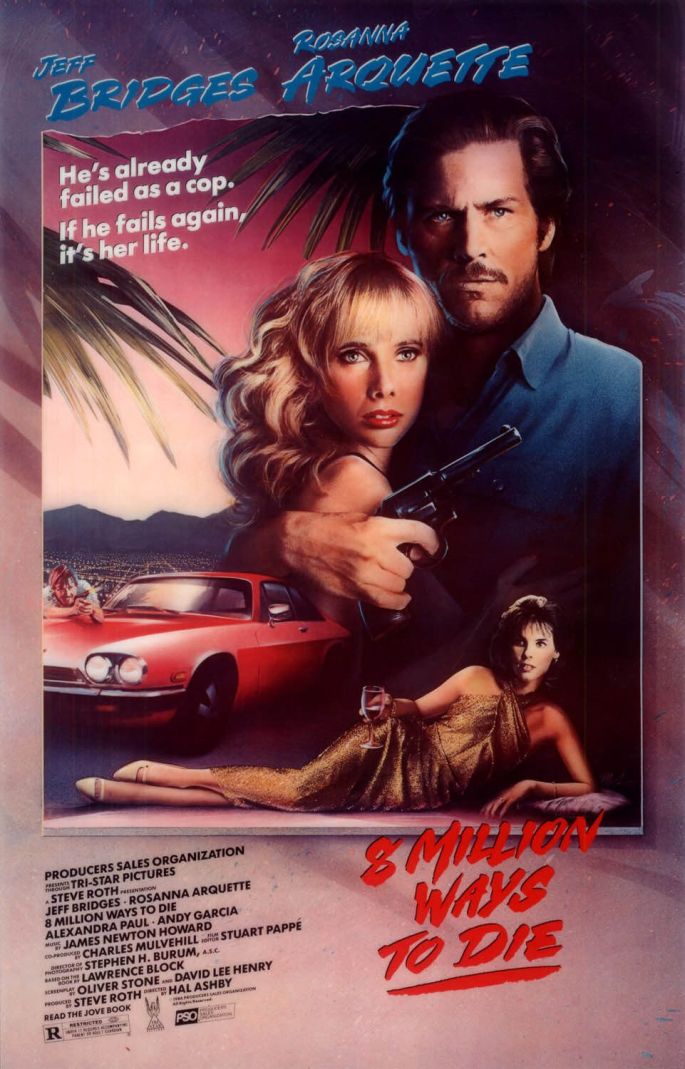
It took me a few viewings to totally appreciate Hal Ashby’s barely released 1986 film 8 Million Ways To Die, which was the eclectic helmer’s unique spin on the crime film, and would serve as his final major motion picture. This was the first attempt to cinematically adapt the Matt Scudder detective story series from author Lawrence Block, with a gritty screenplay coming from future auteur Oliver Stone, and uncredited rewrites taking place by Robert Towne and R. Lance Hill (who ended up using the pseudonym David Lee Henry). Starring Jeff Bridges, Rosanna Arquette in one of her best and sexiest performances, and an extra-volatile Andy Garcia in one of his first leading roles and in total scene stealing mode, the movie died a very fast box office death, and was met with savage reviews from critics. It’s still not even available on American DVD or Blu-ray, with only a Region B DVD currently available. The film has a scattershot narrative that’s both pulpy and energetic, and yet still feels compromised in some instances. But there’s still something fascinating going on within the narrative and with certain aesthetic choices made by Ashby. Stephen H. Burum’s sinewy and seedy cinematography stressed an alternatively shadowy and sometimes neon-inflected color palette, while the excellent music from James Newton Howard kept an appropriately shifty and dangerous sonic ambiance. The filmmaker was reportedly fired from the movie before it was finished, which might explain why the film feels so choppy in spots, as he wasn’t allowed to collaborate on the final editorial process. It’s an odd yet entertaining film, with some cool moments, but exists as a curious “What if?” on Ashby’s legendary filmography.

MICHAEL CIMINO’S SUNCHASER — A REVIEW BY NICK CLEMENT

1

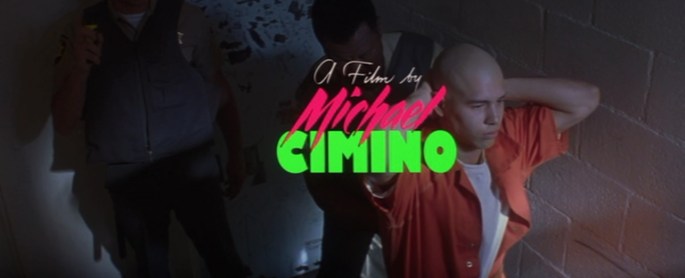
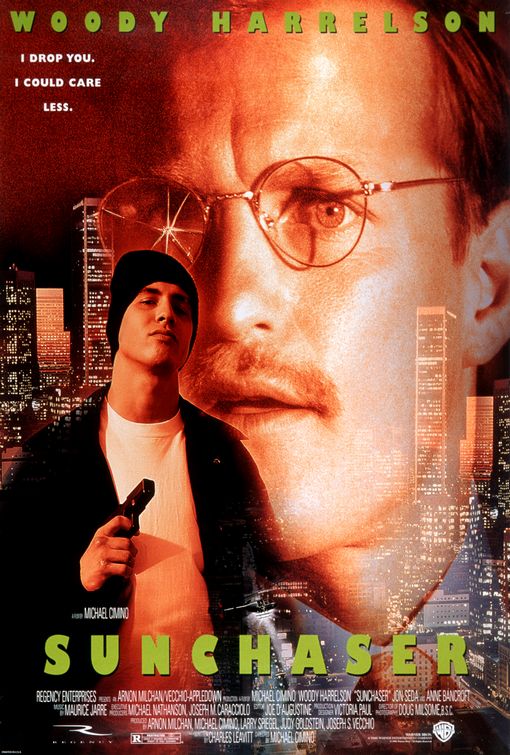
I’ve wanted to screen Michael Cimino’s last theatrical effort, 1996’s Sunchaser, ever since it went straight to video after playing for one week in one theater and grossing $21,508. So with the recent passing of this much discussed filmmaker, I figured it was finally time to experience his swan song as an artist. This is an ambitious film, and while I greatly preferred the first hour to the second, there’s no denying that a sense of pure cinema ran through Cimino’s blood, and that he was born to make movies, even if the extraordinary promise of his first three films didn’t lead to the totally exalted career that he might have otherwise attained. All of his features post Heaven’s Gate were mired in behind the scenes controversy, and yet he leaves behind such an eclectic and overall surprising body of work that it’s hard not to understand why he’s beloved by so many.

4

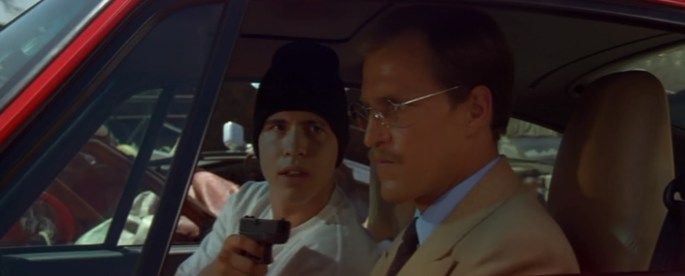
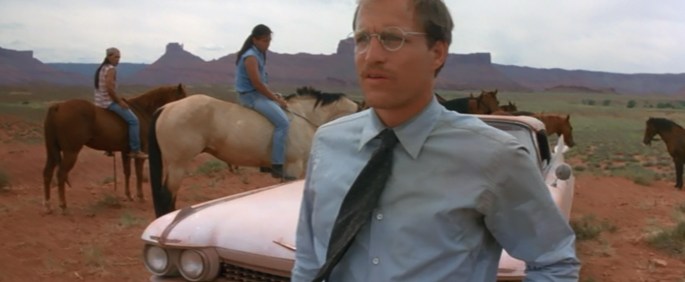
Starring Woody Harrelson as a yuppie Los Angeles doctor who is about to hit it big time at his current hospital with a big departmental promotion, the film centers on his kidnapping experience at the hands of a 16 year old juvenile convict (John Seda, who looked more like he was in his early 20’s), a street thug sent to the joint for the brutal murder of his abusive stepfather. The twist – the killer is suffering from terminal cancer, and once overhearing that he has one or two months left to live, decides to kidnap his good doctor with the plans of travelling to Arizona so that he can meet up with a Navajo Medicine Man at a supposedly sacred mountain lake. And even when the screenplay gets heavy-handed, as it frequently does, and strains logical credibility, as it frequently does, there’s something fascinating and hard to pin down about this unique yet frustrating effort.

3

Biting off more than it could properly chew, Charles Leavitt’s overheated and oddly constructed script was a strange if potent beast, with wild shifts in tone working in tandem with a half-predictable, half-unexpected narrative that certainly sacrifices logical honesty in favor of being outright cinematic, especially during the final act. Harrelson was smartly cast against type as a buttoned up man who slowly beings to unravel (this was a few performances after his seminal work in Natural Born Killers), while Seda, despite looking much older than what the story called for, was absolutely fantastic and beyond intense in his part, totally anguished and dangerous one moment and then strangely sympathetic the next. The bold and extremely dynamic 2.35:1 anamorphic widescreen cinematography by Douglas Milsome (Full Metal Jacket, Breakdown) stressed open spaces and went for the visceral at all times, with certain driving scenes recalling Friedkin and Mann, while the sequences at the Grand Canyon carried an immense sense of geographical splendor. I’d hate to see how this movie looks in the pan and scan format because they shot this film SUPER wide.

sunchaser

The overly bombastic musical score by Maurice Jarre was at times head-scratching in its decision making, but added a further level of creativity to the proceedings. At a price of $30 million, the film became such a financial wipe out that it clearly served as the final nail in the coffin for Cimino as a filmmaker, studio based or independent. And even if Sunchaser isn’t entirely successful (the quick glimpses of social commentary feel strangely tacked on, with lingering shots of second hand action by unimportant characters included here and there), it still contains that hot-blooded sense of inherent filmmaking that all of Cimino’s work possessed, which immediately makes it better and more interesting than a majority of the films that are being released today. Despite the negative domestic response, Sunchaser was nominated for the Palm D’Or at the 1996 Cannes Film Festival. Available on DVD to purchase or rent.

2

Safe House: A Review by Nate Hill 

Safe House is cut from the same cloth as many a spy movie, but this horse doesn’t have quite as much piss and vinegar as other ones in the stable, notably the Bourne trilogy. It’s more of a slow burn, peppered with a few purposeful action sequences and quite a lot of time spent with Denzel Washington’s world weary spook Tobin Frost, a veteran operative who has gone severely rogue after escaping the grasp of a nasty CIA interrogator (Robert Patrick). He’s soon in the hands of rookie agent Matt Weston (Ryan Reynolds) who has been left to guard an agency safe house in Europe, now overrun with shadowy special ops dudes out to snuff Frost. The two of them are forced on the run together, and attempt to smoke out those behind the chaos, who turn out to be a little closer to home than they thought (don’t they always, in these types of movies?). Weston is young, naive and idealistic, Frost is bitter, jaded and ready to burn the agency down around him for what his career has made him do. They’re a formulaic pair made believable by the two actors, both putting in admirable work. Brendan Gleeson is great as Westons’s dodgy handler, Vera Farmiga shows moral conflict in those perfect blue eyes as another paper pusher in Langley, and Sam Shepherd smarms it up as the CIA top dog. It was nice to see Ruben Blades as well, who doesn’t work nearly enough, and watch for a sly cameo from Liam Cunningham as an ex MI6 agent. It’s not the greatest or the most memorable film, but it does the trick well enough, has a satisfying R rated edge to its violence and benefits from Washington being nice and rough around the edges. There’s a downbeat quality to it to, as Weston watches the futility inherent in the life of a spy unfold in Frost’s actions, which are leading nowhere but a self inflicted dead for a cause that’s bigger than both of them, but ultimately leaves them in the dust. Solid, if just above average stuff.