SYRIANA – A REVIEW BY J.D. LAFRANCE

4648

If there’s one good thing that came out of George W. Bush’s presidency it was a wealth of politically and socially-minded art in response to his unpopular regime. Leading the charge, in Hollywood at least, was George Clooney who positioned himself as a vocal liberal celebrity with two high profile movies in 2005: Good Night, and Good Luck and Syriana. The latter film was written and directed by Stephen Gaghan, who wrote the screenplay for Steven Soderbergh’s Traffic (2000), and was loosely based on See No Evil: The True Story of a Ground Soldier in the CIA’s War on Terrorism, Robert Baer’s memoir of his days as a CIA operative in the Middle East.

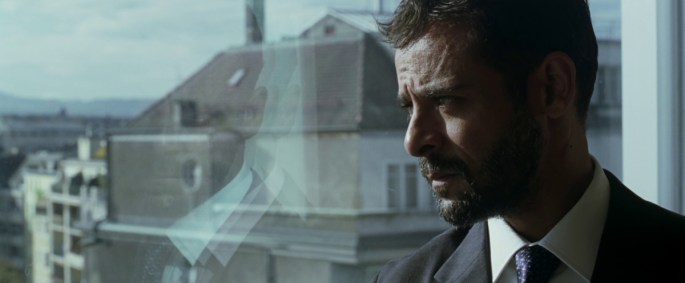
Structurally, Syriana follows the same template as Traffic with four distinctive yet also interlocking storylines presented in a non-linear fashion but containing all kinds of layers and complexities. The first one focuses on Bennett Holiday (Jeffrey Wright), an attorney working for a Washington, D.C. law firm whose job it is to make sure that the United States government approves a merger between two large oil companies, Connex and Killen, both of whom have lucrative oil drilling refineries in the Middle East. Connex is losing control of crucial oil fields in a kingdom ruled by the al-Subaai family. The emirate’s foreign minister, Prince Nasir (Alexander Siddig) has granted drilling rights to a Chinese company, which has pissed off the American oil industry and the energy interests of the U.S. government. In retaliation, Connex starts a not-entirely legal merger with Killen, an oil company that has recently won the drilling rights to key oil fields in Kazakhstan.

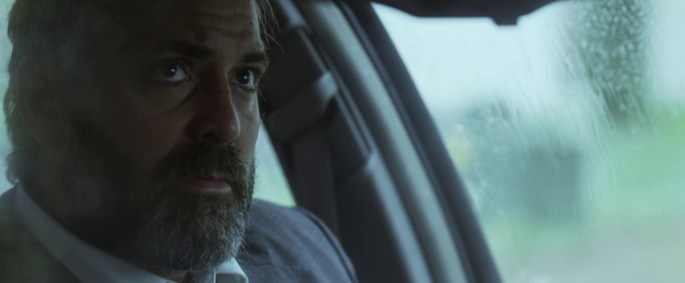
Robert Barnes (Clooney) is a veteran CIA Paramilitary Operations Officer who works in the Middle East collecting information on and preventing the trafficking of weapons by arms dealers. After one particular job in Tehran to assassinate two Iranian arms dealers, he suspects something is wrong after an anti-tank missile that was intended to take out his targets was diverted to an Arab. After writing a memo to his superiors that upsets them, he is given a desk job. He gets increasingly frustrated with his superiors because they have no idea what is really going on in the Middle East. So, they send him back into the field to kill Prince Nasir.

Bryan Woodman (Matt Damon) is an idealistic energy analyst based in Geneva, Switzerland. His superiors assign him to work as an economic advisor to Prince Nasir in the Persian Gulf out of sympathy for a tragedy in his personal life that was indirectly the fault of Nasir. Woodman soon finds himself caught up in a power struggle between Nasir and his brother for control of their ailing father’s vast empire. His younger brother is chosen as the King’s successor instead of Nasir who plans a military coup so that he can introduce democratic reforms to counter his father’s conservative government.

The last storyline shows how terrorists are cultivated. Saleem Ahmed Khan (Shahid Ahmed) and his son Wasim (Mazhar Munir) are fired from their jobs at Connex oil refinery in the Middle East because of a Chinese company outbidding Connex. This fosters a deep resentment towards these wealthy companies. It also makes Wasim and his friend easy recruits for a terrorist organization that appeals to their religious beliefs and provides them a structure and a purpose to their lives.

Since 9/11, the typical Tom Clancy spy movie blockbuster that was popular in the 1990s has been replaced with a more realistic and more immediately relevant type of film. With Syriana, Gaghan was interested in portraying “the world right now.” The inspiration for the film came from 9/11 and his lack of knowledge on the Middle East. “When 9/11 happened, it suddenly was a war on terror, which I think of as a war on emotions. It all started to click for me,” the screenwriter remembers. While working on Traffic, he began to see the parallels between drug addiction and America’s dependency on foreign oil. A few weeks after 9/11, Steven Soderbergh sent Gaghan a copy of Baer’s See No Evil. Soderbergh had bought the rights to the book and negotiated a deal with Warner Bros. Gaghan read the book and wanted to turn it into a film. It added yet another layer to the story he wanted to tell. He managed to convince the studio to give him an unlimited research budget and no deadline.

Gaghan met with Baer for lunch and they talked about turning the book into a film. The summer was ending and Baer was taking his daughter back to boarding school in Europe. According to him, “all the players in the Gulf spend August in the south of France,” and he invited Gaghan along to meet with some of these people. For six weeks in 2002, the two men traveled from Washington to Geneva to the French Rivera to Lebanon, Syria and Dubai, meeting with lobbyists, arms dealers, oil traders, Arab officials, and the spiritual leader of the Hezbollah. Gaghan did his own legwork, meeting with oil traders in London, England and lawyers in Washington, D.C.

1656Gaghan got an indication of the kinds of people he was meeting when in moments after arriving in Beirut in 2002; he was taken from the airport in a blindfold and hood and taken to visit Sheik Mohammed Hussein Fadlallah, spiritual leader of the Lebanese Shi’ite militia Hezbollah. Fadlallah was interested in films and decided to grant Gaghan an audience even though the screenwriter had not requested one. From there, Gaghan dined with men suspected of killing former Lebanese Prime Minister Rafiq Hariri and met with Former Defense Policy Board chairman Richard Perle.

Meeting Baer, Gaghan realized that the man had “gone out there and done and seen things that he was not allowed to talk about, and wouldn’t, but he was angry about and also trying to make amends for.” With Syriana, it was important for audiences to understand how a soldier looks at things and how someone at the top, close to presidents, also looks at things. While writing the screenplay, Gaghan claimed to be influenced by European films like Roberto Rossellini’s Rome, Open City (1945), Costa-Gavra’s Z (1969) and Gillo Pontecorvo’s The Battle of Algiers (1966).

Gaghan and his crew shot in over 200 locations on four continents with 100 speaking parts. At one point, Syriana became so complicated in terms of structure and content that Gaghan eliminated one complete storyline in post-production. The fifth storyline involved Michelle Monaghan playing Miss USA who becomes involved with a rich Arabic oilman. He found that he could not balance more than four stories.

In the little screen time he has early on, George Clooney does an excellent job showing the rusty compass that his character lives his life by. The actor has improved and refined himself with every subsequent role he has done and relies more and more on what is going on behind his eyes than falling back on his good looks. His performance in Syriana goes beyond the obvious Method trappings – the weight gain and growing the thick beard – to his expressive eyes and how he uses them to convey Barnes’ world-weariness. This role is one of his strongest and his Academy Award for Best Supporting Actor was well-deserved. However, Clooney took one for the team in the worst way. During the harrowing scene where his character was tortured, Clooney was hurled to the floor more than 20 times. During one take, he hit his head and began experiencing severe back and head pain. Doctors later discovered that the actor had ruptured his spinal fluid sac and needed multiple surgeries.

Woodman’s first scene with his family is brief but effectively sets up the close bond he has wife his wife (Amanda Peet) and his two sons. One boy is not keen the pseudo-bacon he’s told to eat and so Woodman tries a piece to show that it’s good and fails miserably. Matt Damon does a good job of selling his priceless reaction shot and offering a light moment that immediately makes us empathize and like his character and his family. Jeffrey Wright delivers an understated, minimalist performance. When Holiday meets with the superiors in his firm, he appears nervous – he’s in the big leagues, swimming with the sharks – rich, powerful men as embodied by Dean Whiting (Christopher Plummer) and malevolent good ol’ boys politicians (played with scary conviction by Tim Blake Nelson and Chris Cooper).

One of the film’s central themes is the strained relationships between fathers and their sons. Barnes’ son resents all the moving around that they do as a result of his old man’s job and this robs him of a normal life. Woodman must cope with the tragic death of his little boy. Holiday copes with his alcoholic father who disapproves of his son’s work and the effect it has on his well-being.

Gaghan’s direction reflects the stories in the film. Everything isn’t spelled out. There are a lot of gray areas with morally and ethically ambiguous characters whose motivations aren’t entirely clear. If, at times, it is hard to follow all of the characters in this film this is done on purpose in order to illustrate just how hard it is to keep track of all the players in the Middle East oil trade and their numerous alliances, both obvious and secretive, with corporations and governments. Trying to make sense of it all can be a confusing and frustrating experience.
4845The timing of Syriana couldn’t have been more relevant as it exposed the dirty dealings between the U.S. government, American corporations and various oil-rich families in the Middle East. Reading between the lines, it also sheds light on the real reason why the U.S. is in Iraq. It isn’t to democratize its people, as the White House party line would have us all believe, but because of their abundant oil resources and the money Bush and his cronies made from it. While this is nothing new to anyone who is well-informed, this film does act as a decent primer to the uninitiated.
Philip Noyce’s The Bone Collector: A Review by Nate Hill

image

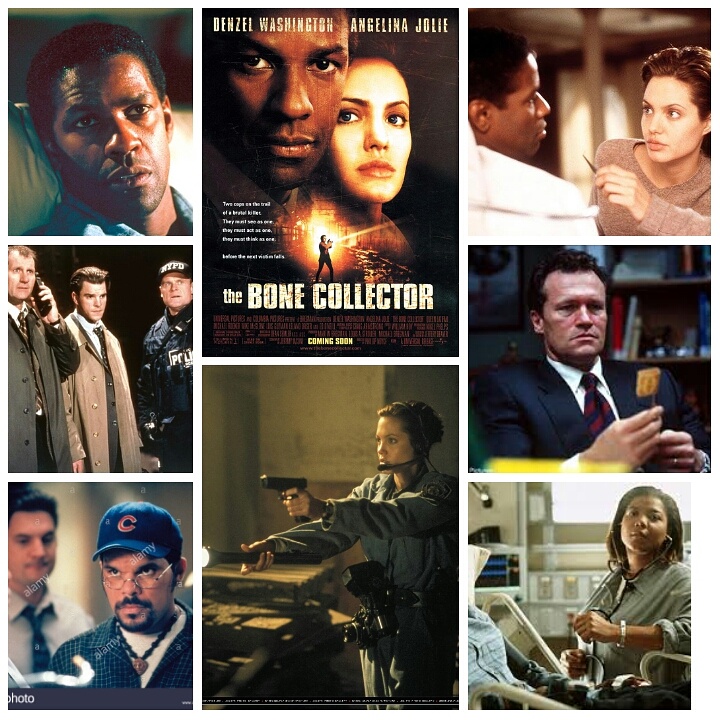
Philip Noyce’s The Bone Collector augments it’s atmosphere in the obvious hopes of evoking memories of David Fincher’s Sev7n (It’s even got an actor who also appeared in that film) which for the most part it nicely does. Story wise, however, it’s got entirely it’s own thing going on and follows the ever popular path of the serial killer whodunit. In this almost audience interactive sub-genre, we are routinely presented with a host of different characters, some following archetype and others not so much. The identity of the killer could literally be anyone we see onscreen at any time, even down to a tiny character who maybe shows up in one small scene. Then it’s up to the viewer to race the protagonist towards a correct conclusion, a game which I’ve never been all that good at lol. This time it’s Denzel Washington and Angelina Jolie who step up to the batters’s plate, hunting a very nasty individual who kidnaps people in locked taxi cabs and leaves them to die in various sadistic ways. Washington plays renowned criminal profiler and ex cop Lincoln Rhyme, left paralyzed from the neck down and bereft of any will to live following an accident. When his old cop buddy (Ed O Neil) shows up and pleads him to take a gander at the case files of the new killer, he reluctantly dusts off the old instincts and goes on the hunt. Problem is, he’s a turnip from the neck down and needs an avatar with whom he has a rapport with and can carry out the leg work, so to speak. He takes a shine to young patrol woman Amelia Donaghy (Jolie) who is showing early signs of the same forensic brilliance after she responds to the scene of one of the murders. She becomes an extension of him, and together they work to smoke out the killer and put a stop to his crimes, also bringing some kind of peace to Rhyme’s restless mind in the same stroke. They are hassled by the world’s most belligerent and obnoxious Police Captain (Michael Rooker in full on asshole mode) and helped by Rhyme’s kindly nurse assistant (a very good Queen Latifah). There’s also work from Bobby Cannavle, Leland Orser, Luis Guzman, Mike Mcglone and David Warshofsky too. Noyce is a solid and very slick director (he did wonderful work in the Jack Ryan franchise, as well as the very underrated The Saint), gamely shunting his aesthetic into the serial killer vs. Detective corner. It’s a decidedly grisly affair, despite the glossy sheen and big names, and almost veers into outright horror in places, but is always kept in line by the excellent chemistry and friendship between Jolie and Washington, who are both great on their own and as a team. Good stuff.

JOHN SAYLES’ LONE STAR — A REVIEW BY NICK CLEMENT

lone_star_ver1_xlg

I can remember my parents taking me to see John Sayles’ Lone Star 20 years ago and how it utterly blew my mind. I was in my cinematically formative years, devouring the works of Scorsese and Mann and Stone and Scott and Tarantino, and then my dad had me see City of Hope, Matewan, and Eight Men Out at home with him on VHS, and in tandem with Lone Star, I became a lifelong fan of Sayles’ uniquely humanistic approach to storytelling. He’s one of the most natural, unhurried, and totally relaxed filmmakers that I can think of, and this 1996 neo-noir crime gem is easily one of the best and most layered works. Set in a small Texas town and featuring a stellar ensemble cast featuring the always amazing Chris Cooper, a note-perfect Kris Kristofferson, the fabulous Elizabeth Pena, and Matthew McConaughey in one of his first big attention-getting roles, the story centers on murder investigation that stretches generations, and as usual for Sayles, themes of racism, class, and family are at the forefront of the narrative. The tone is contemplative and the performances are beautiful and tragic and honest, while as a filmmaker, Sayles was able to capture a very believable sense of place and atmosphere through strong work with the amazing cinematographer Stuart Dryburgh (Blackhat, The Secret Life of Walter Mitty). Leisurely paced with Sayles serving as his own graceful editor, the film is never boring, and at times gets downright sprawling, and it seems a shame that an outfit like The Criterion Collection hasn’t released this as the special edition that it truly deserves.

MICHAEL BAY’S BAD BOYS II — A REVIEW BY NICK CLEMENT

1.jpg

Michael Bay is capable of making great, completely rollicking action films. His particular brand of visual mania has frequently been spectacular, and at times utterly gob-smacking; he’s the king of the money shot, the emperor of the razzle-dazzle trailer. A premiere visual stylist who cut his teeth on snazzy commercials and music videos and clearly influenced by the aesthetics of Tony Scott and John McTiernan (to name just a few), he caught the eye of super producer Jerry Bruckheimer early on, and it’s clear that he’s proud of the loud and massively-scaled summer movies that he unleashes on the multiplexes. Throughout the years he’s been one of the most prolific and successful orchestrators of cinematic chaos that the film world has ever seen. Look no further than The Rock, Bad Boys, The Island, and the first Transformers movie – these are supreme pop-corn entertainments made by a guy who is out to stun his audience with one insanely detailed image after another. Armageddon and Pearl Harbor are both shamelessly entertaining in their earnest cornball hysterics, tapping into an apple-pie sense of Americana that’s hard to resist. I’m also a huge fan of his underrated Pain & Gain, which acts as a treatise on everything that a Bay movie can and should be, but because of the smart screenplay, there’s an element of social satire not seen in any of his other works. And I greatly anticipate his most recent effort, 13 Hours, as it certainly appeared to be his Black Hawk Down; it’s the first Bay film I’ve not seen in theaters and it pisses me off that my streak has been broken.

10

But when I want to re-live some over the top spectacle, I always come back to Bad Boys II, as I consider it to be the apex of Bay’s vulgar, jocular style, and one of the last balls-to-the-wall, R-rated studio action films that has seen a wide release. Explosive, racist, absurd, divorced from reality, and completely bonkers with its various action set pieces, the film, as friend and critic Paul Rowlands from Money Into Light once stated, is “like an un-ironic remake of Richard Rush’s Freebie and the Bean.” This couldn’t be more apt and knowledgeable. Taking the buddy-cop formula and going complete insane with a rather routine story and mostly serviceable dialogue in between some truly excellent zingers, Bay, Bruckheimer, and a zillion screenwriters, both credited and uncredited, dismantled this well-worn formula and went for broke with some massive-stakes action, all done with a minimum of CGI and loving affection for physical pyrotechnics. Every single moment in this film is jacked for extreme visceral impact, with the ultra-stylized and super saturated images scorching the eye-balls, while all of the almost-impossible to believe action was staged with a minimum of computerized artificiality. And as per usual for a Bay movie, whatever CGI was used is always photo-real, so that you’re never taken out of the moment for a split second.

2

Seriously – there have been very few big-budget action films to rival this one over the last 15 years. I am not talking on a story/dialogue level – it’s all perfectly standard, nothing more, nothing less, and it won’t win any unpredictability contests. BUT – the style – the ferocity – Amir Mokri’s aggressively sexy and super-glossy yet somehow still gritty cinematography – the confrontational attitude – the obscene stunts – THAT FUCKING CAR CHASE ON THE MIAMI CAUSEWAY – nobody has topped what Bay and Bruckheimer and all the various daredevils on this dangerous production did in this particular genre. Recent films like Mad Max: Fury Road and The Raid 2 might trump Bad Boys II  – no question. But from the standpoint of huge entities making a glorified 1980’s B-movie with 2000’s $$$, Bad Boys II is a total riot from start to finish. Will Smith and Martin Lawrence have a natural chemistry that is nothing short of special to watch unfold in scene after scene, and as per standard for Bay, his supporting cast deep and strong, with familiar faces and rugged, gruff physiques all on display. Bad Boys II is outlandish, it could care less what you think of it, and it loves itself through and through. Working the front desk at Jerry Bruckheimer Films when this film was in production will forever remain one of the key highlights of my Los Angeles experience.

9


Stephen Sommer’s Deep Rising: A Review By Nate Hill


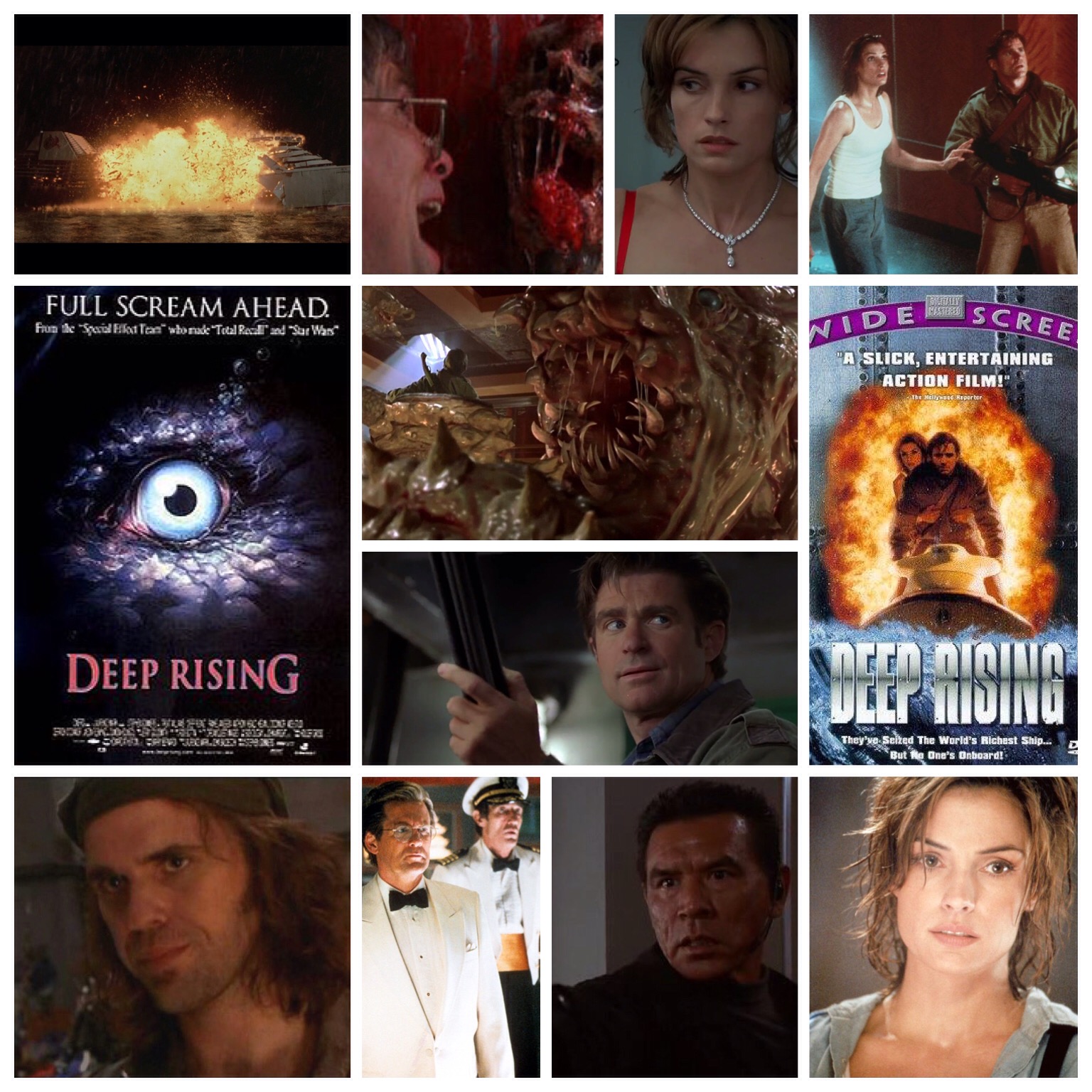
Stephen Sommers’s Deep Rising is some of the most fun you’ll have watching an overblown action horror spectacle, if that’s your type of thing. It plays the slimy underwater alien formula to the hilt, an epic and very funny gory swashbuckler that is sadly very underrated and not too talked about these days. It’s ridiculously watchable, insanely gory and punctuated by one liners and quips that work so well in the flippant context of the script. The story concerns a band of nasty sea pirates who plan to hijack the world’s largest ocean liner cruise ship, and all the riches onboard. They arrive to find the vessel empty of any passengers, and full of something they’ll wish they never came across. A massive and very icky underwater predator has eaten everyone onboard and now has turned its attention to the newcomers. They are picked off one by one in deliciously grotesque kills that show director Sommers in his little seen R rated mode. Treat Williams is a hoot as John Finnegan, a sort of cross between Indiana Jones and Bruce Campbell, a soldier of fortune and adventurer with a vernacular chock full of wiseass quotes and idioms that tickle the funny bone no end. He’s got a sidekick named Joey Pantucci (Kevin J. O Connor slays it) and a girlfriend named Trillian St. James (isn’t that the best name ever?) played by Famke Janssen in a fierce, sexy and capable turn as the chick with the gun that everyone loves. The trio make the film dizzyingly entertaining and you find yourself wishing you could hang out with them longer once it’s over. There’s a snivelling villain played by the always smarmy Anthony Heald, and the ragtag group of pirates are brought to life by distinct personalities such as Jason Flemyng, Cliff Curtis, Clifton Powell, Djimon Hounsou and the great Wes Studi. Sommers is a seriously underrated director. He spins loving odes to the adventure films of Old Hollywood with passion, wonder and the spark of imagination in spades. And what does he get? Critically and commercially spat on, time and time again, with some of his films not even getting a proper release (don’t get me started on the masterpiece that is Odd Thomas). Hollywood and the masses don’t deserve him and his toiling, thankless work, and yet he soldiers on. What a guy, and what a stellar filmmaker. This ones a testament, a rollicking, bloody piece of creature feature bliss that never fails to knock my socks right the hell off.
 Now What?!

INCEPTION – A REVIEW BY J.D. LAFRANCE

INCEPTION

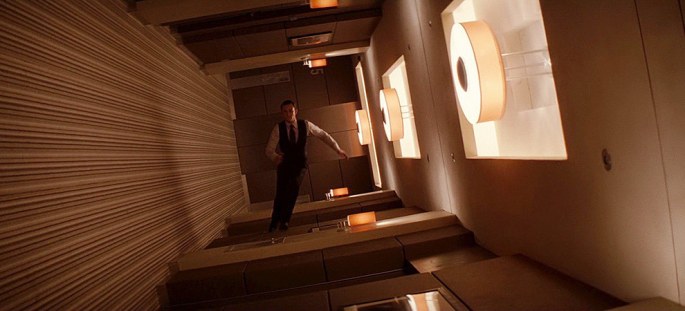
Ten years in the making, Inception (2010) was the culmination of Christopher Nolan’s career up to that point in time. This film mixed the ingenious plot twists of his independent film darling Memento (2000) with the epic scale of his Hollywood blockbuster The Dark Knight (2008). It took the heist genre to the next level by fusing it with the science fiction genre as a group of corporate raiders steal ideas by entering the dreams of their targets – think Dreamscape (1984) meets The Matrix (1999) as if made by Michael Mann. While Nolan and his films certainly wear their respective influences on their sleeve – and this one is no different (2001: A Space Odyssey, Blade Runner, Heat) – there is still enough of his own thematic preoccupations to make Inception distinctly his own. This film continues his fascination with the blurring of artifice with reality. With Inception, we are constantly questioning what is real right down to the last enigmatic image.

Dom Cobb (Leonardo DiCaprio) and his team extract thoughts of value from people as they dream. However, during his jobs, he is visited by his deceased wife Mal (Marion Cotillard), a beautiful femme fatale character that serves as an increasingly dangerous distraction from the task at hand. The film’s opening sequence does an excellent job establishing how Cobb and his team extract information from the dream of Saito (Ken Watanabe), a Japanese businessman, in a visually arresting sequence. He catches up with Cobb in the real world and offers him a new deal: plant an idea in Robert Fischer’s (Cillian Murphy) mind that will help break-up his father’s vast empire before it becomes too powerful, and do it in a way so that it seems like Fischer thought of it for it to work. This is something that has only been done once before and Cobb was the person that pulled it off but can he do it again? In exchange for completing the job, Saito will make the necessary arrangements so that Cobb can return home to the United States where his children live but where he is also wanted by the authorities in connection with his wife’s death. So, Cobb recruits a literal dream team of experts to help him pull off the most challenging job of his career.

Inception
delves into all kinds of aspects of dreams as evident in a scene early on where Cobb explains how they work, how to design and then navigate them. While there is a lot of exposition dialogue to absorb during these scenes, Nolan also keeps things visually interesting at the same time. This is arguably the most cerebral part of the film as he explores all sorts of intriguing concepts and sets up the rules for what we’ll experience later on – pretty heady stuff for a Hollywood blockbuster. And when he isn’t examining fascinating ideas, he’s orchestrating exciting and intense action sequences. There’s an incredible sequence where Nolan juggles three different action sequences operating on three different levels of dreams that are all impressively staged while also a marvel of cross-cutting editing. He anchors Inception with the character of Cobb and his desire to return home to his children while also dealing with the death of his wife. It gives the film an emotional weight so that we care about what happens to him. It also raises the stakes on the Fischer job.

Cobb continues Nolan’s interest in tortured protagonists. With Memento, Leonard Shelby tried to figure out who murdered his wife while operating with no short-term memory. Insomnia (2002) featured a cop with a checkered past trying to solve a murder on very little sleep. The Batman films focused on a costumed vigilante that waged war on criminals as a way of dealing with the guilt of witnessing his parents being murdered when he was a child. With The Prestige (2006), magician Robert Angier is tormented by the death of his wife and an all-consuming passion to outdo a rival illusionist. Inception’s Cobb also has a checkered past and is haunted by the death of loved one. Leonardo DiCaprio delivers what may be his finest performance to date, playing a complex, and layered character with a rich emotional life. Cobb must come to terms with what happened to his wife and his culpability in what happened to her. DiCaprio conveys an emotional range that he has not tapped into to this degree before. There’s a captivating tragic dimension to Cobb that the actor does an excellent job of expressing so that we become invested in the dramatic arc of his character.

Nolan populates Inception with a stellar cast to support DiCaprio. The indie film world is represented by the likes of Joseph Gordon-Levitt and Tom Hardy while also drawing from international cinema with Ken Watanabe and Cillian Murphy. Gordon-Levitt and Hardy, in particular, are stand-outs and their banter provides several moments of enjoyable levity during the course of this intense, engrossing film. And it wouldn’t be a Nolan film without his good luck charm, Michael Caine, making an appearance. As he has done in the past, Nolan plucks a once dominant actor from the 1980s, now languishing in relative obscurity – think Rutger Hauer in Batman Begins (2005) or Eric Roberts in The Dark Knight – and gives them a high-profile role. Inception gives Tom Berenger some well-deserved mainstream exposure after languishing in direct-to-video hell, reminding everyone what a good actor he can be with the right material.

Regardless if whether you like Inception or not, you’ve got to admire Nolan for making a film that is not a remake, a reboot, a sequel or an adaptation of an existing work. It is an ideal blend of art house sensibilities, with its weighty themes, and commercial conventions, like exciting action sequences. Capitalizing on the massive success of The Dark Knight, Nolan wisely used his clout to push through his most personal and ambitious film up to that point. With Inception, he created a world on a scale that he never attempted before and was able to realize some truly astonishing visuals, like gravity-defying fight scenes and having characters encounter a location straight out of the mind of M.C. Escher. It has been said that the power of cinema is the ability to transport you to another world and to dream with our eyes open. Inception does this. Nolan created a cinematic anomaly: a summer blockbuster film with a brain.

ADRIENNE SHELLY’S WAITRESS — A REVIEW BY NICK CLEMENT

1

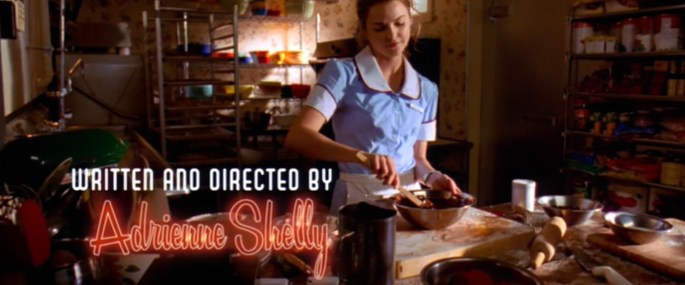
Waitress is a delectable rom-com, one of my favorite modern romantic fantasies from recent years, with a truly effervescent performance from Keri Russell, who, thanks to Adrienne Shelly’s warm and wonderful script, was given a role that didn’t skimp on edge and sass while still remaining 100% sympathetic. Shelly, who also directed with snappy visual pep and a great understanding of pacing, was tragically murdered in her apartment not long after the film was completed in 2006, thus never getting a chance to see the amazing success that her film would become (she also left behind an infant daughter and husband). The story centers on an adorable pie maker (Russell) who is stuck in a dead-end marriage to a total loser (Jeremy Sisto, reprehensibly excellent) and who spends anytime away from her kitchen at a local diner working as a waitress. Cheryl Hines and Shelly played her best friends, both of whom have their own relationship issues, while the likes of Andy Griffith, Lew Temple, Eddie Jemison as popping up in colorful supporting performances.

7

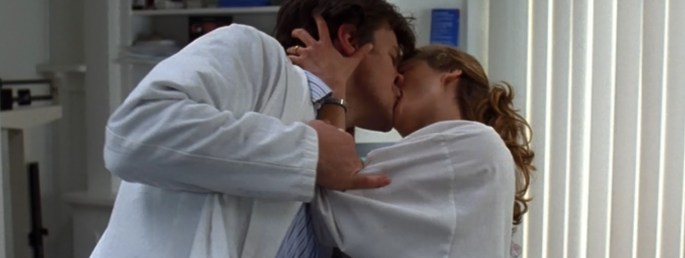
But the crux of the film lies in Russell’s love affair with a married doctor played by a super-charming Nathan Fillion, and how the two lonely souls find a deep connection, that despite being illicit is clearly something born out of true passion and love. At 105 minutes, there’s no fat on this film’s bones, with each scene forwarding the plot and all of the actors in total harmony with the tasty material. And then there’s the cut-ins of Russell making her pies; don’t attempt to watch this film on an empty stomach or with a depleted kitchen because your sweet tooth will be calling out for mercy. After debuting at the 2007 Sundance Film Festival, Fox Searchlight purchased the rights for distribution, and the film became a major summer sleeper success, grossing $22 million in theaters before finding a very long shelf life on cable and physical media. A newly launched Broadway musical based on the film has been greeted with much acclaim. It’s a travesty that Shelly’s life was cut so short. Her story is a further reminder to live life to the fullest.

2

Bram Stoker’s Shadowbuilder: A Review by Nate Hill

image

Bram Stoker’s Shadowbuilder is a completely awesome little horror flick that has gathered copious amounts of dust since it’s mid 90’s release. Forgotten and forsaken, it should have spawned an epic frachise in the vein of stuff like Wishmaster, but oh well, we’ve still got the original beloved entry. Now, just exactly how much of what we see in the film is based on actual Bram Stoker work is up for debate and a little beyond the scant research that I have done, but it’s a tidy little concept that’s executed with B-movie earnestness and a love for the spooky corner of cinema. The plot concerns a priest named Father Vassey, played by genre titan Michael Rooker. Vassey is probing the rural Midwestern belt of the US looking for an ancient demon that’s something like a shapeshifter who deeds on both darkness and human souls, which resembles a cloud of dust reflected through hundreds of chrystal prisms, from what i remember. He’s not your garden variety preacher, sporting two laser sighted semi automatic handguns which come handy in tight shadowy corners, and the jaded will to kick some supernatural ass, not so much in the name of the Lord (he doesn’t believe in god anymore) but more for a dark and personal crusade against the Shadowbuilder. The demon hovers around a young boy, hungering for a soul within that has the potential to both become a saint and also open a doorway to hell in one stroke. Vassey is a determind and resourceful badass, relying on nearby townsfolk for help and support, and Rooker sells the schlocky tone with remarkable gravity that is his trademark. He almost always plays extreme characters in tense narratives and keeps up the energy like clockwork. There’s a hilarious turn from a dread lock adorned Tony Todd (Candyman)  as Evert Covey, a backwoods eccentric with a penchent for rastafarian speech and a part to play in the drama once we realize he isn’t there solely for comic relief. This one is hard to find and almost no one has seen it, but I’m hoping my review will change that, because it’s it’s a little treasure and a fantasy horror classic for me.  

Walter Hill’s Streets Of Fire: A Review by Nate Hill

image

Walter Hill’s Streets Of Fire is just too good to be true, and yet it exists. It’s like the type of dream concept for a movie that you and your coolest friend think up after a bunch of beers and wish you had the time, money and resources to make yourself. It’s just cool right down to the bone, a beautiful little opus of 1950’s style gang trouble set to a so-good-it-hurts rock n’ roll soundtrack devised by the legendary Ry Cooper, Hill’s go to music maestro. It’s so 80’s it’s bursting at the seams with the stylistic notes of that decade, and both Hill and the actors stitch up those seams with all the soda jerk, greaser yowls and musical mania of the 50’s. Anyone reading up to this point who isn’t salivating right now and logging onto amazon to order a copy, well there’s just no hope for you. I only say that because for sooommeee reason upon release this one was a financial and critical dud, floundering at the box office and erasing any hope for the sequels which Hill had planned to do. I guess some people just aren’t cool enough to get it (can you tell I’m bitter? Lol). Anywho, there’s nothing quite like it and it deserves a dig up, Blu Ray transfer and many a revisit. In a nocturnal, neon flared part of a nameless town that looks a little like New York, the streets are humming with excitement as everyone prepares for the nightly musical extravaganza. Darling songstress Ellen Aim (young Diane Lane♡♡) is about to belt out an epic rock ballad in a warehouse dance hall for droves of screaming fans. There’s one fan who has plans to do more than just watch, though. Evil biker gang leader Raven Shaddock (Willem Dafoe, looking like Satan crossed with Richard Ramirez) kidnaps her as the last notes of her song drift away, his gang terrorizes the streets and disappears off into the night with poor Ellen as their prisoner. The locals need a hero to go up against Raven and rescue Ellen, and so estranged badass Tom Cody (Michael Paré) is called back to town after leaving years before. He’s a strong and silent hotshot who takes no shit from no one, and is soon on the rampage to Raven’s part of town. He’s got two buddies as well: two fisted, beer guzzling brawler chick McCoy (Amy Madigan), and sniveling event planner Billy Fish (Rick Moranis). That’s as much plot as you get and it’s all you need, a delightful dime store yarn with shades of The Outsiders and a soundtrack that will have your jaw drop two floors down. The two songs which Ellen sings are heart thumping legends. ‘Nowhere Fast’ gives us a huge glam-rock welcome into the story, and ‘Tonight Is What It Means To Be Young’ ushers us out with a monumental bang before the credits roll, and damn if Hill doesn’t know how to stage the two songs with rousing and much welcomed auditory excess that’ll have you humming for days. Paré is great as the brooding hero, and you won’t find too many solid roles like this in his career. He’s a guy who somewhat strayed off the path into questionable waters (he’s in like every Uwe Boll movie) but he pops up now and again I’m some cool stuff, like his scene stealing cameo in The Lincoln Lawyer. Dafoe clocks in right on time for his shift at the creepshow factory, giving Raven a glowering, makeup frosted grimace that’s purely vampiric and altogether unnerving. Him and Paré are great in their street side sledgehammer smackdown in the last act. Bottom line, this is one for the books and it still saddens me how unfavorably it was received… like what were they thinking? A gem in Hill’s career, and a solid pulse punding rock opera fable. Oh, and watch for both an obnoxious turn from Bill Paxton and a bizarre cameo from a homeless looking Ed Begley Jr.

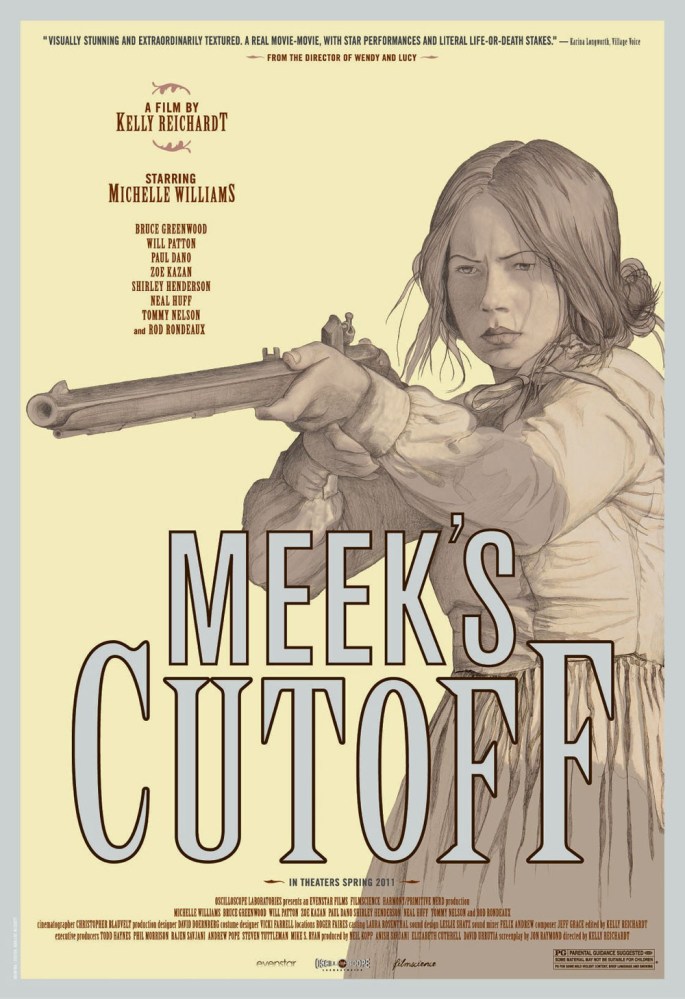
KELLY REICHARDT’S MEEK’S CUTOFF — A REVIEW BY NICK CLEMENT

meeks_cutoff_xlg

Meek’s Cutoff is a minimalist, austere western that appears to have been an absolute chore for the production team to film. Seriously. There’s absolutely no trace of present day life in this rocky, dusty, slow-burn item from super-smart filmmaker Kelly Reichardt (Old Joy, Wendy and Lucy, Night Moves), which is likely to appeal mainly to those of us who still have something resembling an attention span. Set in the 1840’s and loosely based on real events, the script by Jonathan Raymond concerns six pioneer settlers who end up getting lost with their befuddled guide, and as a result, risk death via starvation and/or dehydration. Sounds like a happy and light little film, yes? This is a harsh, brutal piece of cinema, all of it necessary and desperate and foreboding and ugly-beautiful. The fact that the guide, a perfectly hard-headed Bruce Greenwood, totally out to lunch and without any sense of direction, is as much of a mess as he is, lends the film a strange sense of black comedy. And the way that Reichardt continually reinforces the fact that all of the women in the party are intentionally being kept out of the plans and decision making, only hearing the particulars from a distance and at low audio levels, amps up the stress on the part of the viewer.

Michelle Williams is reliably excellent as the conscience of the film, the only member of the group willing and able to go up against Greenwood when absolutely necessary, and the entire piece has a sly feminist underpinning that separates it from modern entries in this extremely durable genre. There are a few more twists to the story that I won’t spoil, but I’ll add that the supporting cast, including Will Patton, Shirley Henderson, Paul Dano, Zoe Kazan, and Rod Rondeaux is totally ace across the board. Christopher Blauvelt’s smart and compact 1.33:1 cinematography subverts the traditional expectations of this milieu, instead opting for intimate compositions with an almost exclusive use of natural light, while Reichardt served as her own precise and judicious editor. Released in 2010 to great critical acclaim after premiering at the Venice Film Festival, Meek’s Cutoff is a formally challenging movie that proudly announces itself as one of a kind and is yet another unique, under the radar gem worth catching up with.