RICHARD LESTER’S PETULIA — A REVIEW BY NICK CLEMENT

1.jpg

Daring. Surprising. Dreamy. Experimental. Challenging. Funny. Form pushing. Convention shattering. Most of all – beyond sexy. Richard Lester’s 1968 drama Petulia, from a screenplay by Lawrence B. Marcus who adapted John Haase’s novel Me and the Arch Kook Petulia, must’ve shaken up everyone who encountered it in the late 60’s. Being a child of the 80’s, I was more familiar with Lester’s Superman II & III, with my father also showing me Robin & Marian and The Three Musketeers, so Petulia and other earlier, more celebrated works from this idiosyncratic auteur have eluded me up until this point. Now having seen it, I can honestly state that one should never underestimate this film’s importance on the cinematic landscape at the time of its release. The seismic waves it must have made with other filmmakers and editors and cinematographers in relation to the overall aesthetic that Lester brought to the table with Petulia simply can’t be ignored. Steven Soderbergh has often cited Lester as a massive inspiration, and it’s not hard to see why; Sodgerbergh’s hilarious idea to have Marvin Hamlisch score his masterful satire The Informant! predominantly with a kazoo was a novel touch, and something that Lester would likely approve of.

The jagged narrative of Petulia is delivered in non-linear fashion, peppered with flash-backs and flash-forwards, and tells a San Francisco set tale of lust, passion, rage, and deceit, all revolving around a surgeon (the magnificent and rigid George C. Scott), his ex-wife (Shirley Knight), his sultry lover (the phenomenal Julie Christie as the titular character), her abusive husband (the fantastic Richard Chamberlain), and Petulia’s father-in-law (Joseph Cotten, terrific in a scene stealing supporting performance). There’s a lot of plot in Petulia, all of it jumbled, but all of it still coherent, which is a testament to Lester’s ability to tell a multilayered story with clarity and focus while still being able to indulge his wilder stylistic impulses. This film was made by a sly Brit, who appears to be looking down upon the American way of life that was unfolding at the time, dishing out scornful resentment, and as such, there’s a cold, almost condescending attitude to some of the interplay between the characters. But that’s partly a reflection of the societal mood at the time, and the way that people from other cultures view those who are different.

And because this film was the product of such a turbulent period in time, with Vietnam raging on in the background and upheaval on every corner, Petulia brims with a sense of immediacy and a filmic vitality that other works rarely ever achieve. And yet most critics, with some exceptions (Ebert most notably), seemed put off by the film, potentially not wanting to agree with the bold and upsetting points that Lester made with this strange and uncompromising film. It’s a movie that looks at the intricacies of romantic relationships, peeling them back, examining the ingredients, and daring to look at flawed individuals who make decisions that may not be the best. With amazingly jittery and at times hallucinatory cinematography by future filmmaker Nicolas Roeg and a jaunty musical score from John Barry that includes tunes from The Grateful Dead and many others, Petulia enlivens the senses and puts the viewer into a trance-like state at times. The hippie-flavoring of this film really makes it stand out in the sense that it has such a unique, spontaneous vibe that leaves you feeling hopped up and ready for action. Petulia has so much on its busy, seemingly tortured mind: Sex, violence, materialism, love, marriage, anger, and above all, the need to take action in a world that’s constantly at odds with itself.

DAN TRACHTENBERG’S 10 CLOVERFIELD LANE — A REVIEW BY NICK CLEMENT

1
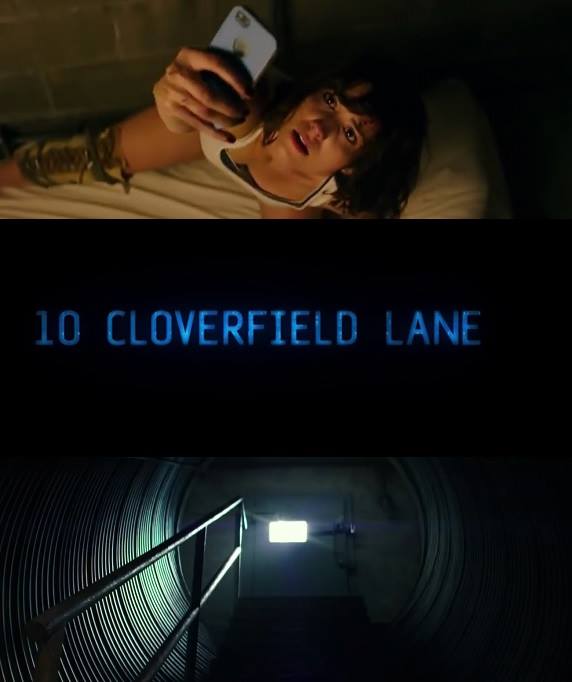
10 Cloverfield Lane is a fun and effective chiller that is disingenuously positioning itself as a sequel or side-quel or whatever you want to call it to Matt Reeves’ multiple genre-busting 2008 film Cloverfield. Much has been made about how Dan Trachtenberg’s 10 Cloverfield Lane originated as a totally separate project, having nothing to do with the JJ Abrams machine, but that execs caught wind of the financial implications that franchise branding brings to the table, and here you go — a nice little film that does a lot of things correct but that didn’t need to be tied to any pre-existing properties to remain fully enjoyable.
With that aside, the film features three very strong performances from the trio of Mary Elizabeth Winstead, John Goodman, and John Gallagher, Jr., all of whom give very distinct performances which complement each other’s work. Jeff Cutter’s cinematography is slick and smart, maximizing the cramped space that much of the film takes place in (you don’t leave that well-stocked bunker until the last 20 minutes), making great use of skewed angles to heighten the tension. The narrative rests on the idea that something may or may not be happening outside of Goodman’s farmhouse bomb shelter, with the potential madman being more dangerous than anything extraterrestrial that’s lurking in the cornfields.
There’s a TON of quick-thinking on the part of Winstead, and not that she couldn’t react to every situation in the manner that she did, but aspects of this movie were a bit too MacGyver for my tastes. And while certainly forceful and exciting, the musical score often times felt overbearing; sometimes, silence is the scariest possible thing imaginable. The highlight of the entire piece was the protracted opening sequence, clearly an homage to Hitchcock, in particularly Psycho, which set the ominous tone right from the start. I don’t want to say too much about the plot or where the story goes or who is who and what is what, but if you’re a fan of one-location thrillers this movie will do the trick, and if you’re looking for your next helping of monster-movie fun, you’ll likely leave satisfied, if you simply remember that this shouldn’t be treated, in any fashion, as a sequel to the found-footage original. Which, for my money, was a better, more innovative, far more biting piece of cinema.

WALTER HILL’S LAST MAN STANDING — A REVIEW BY NICK CLEMENT

last man

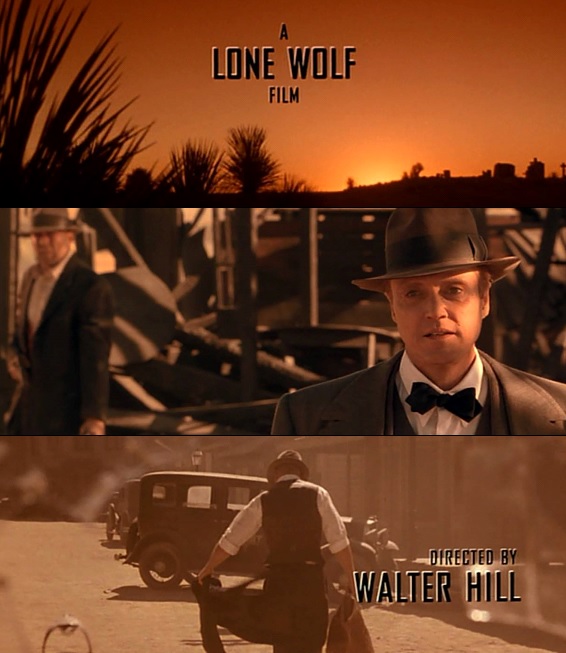
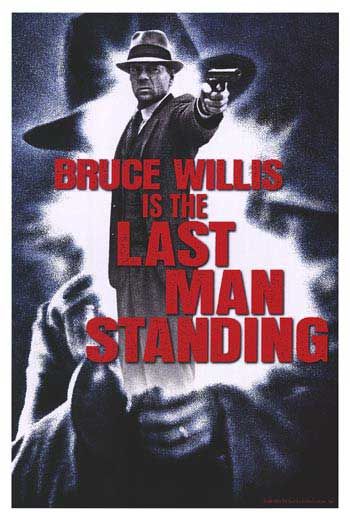
I’ve written about this film in the past, and yet I find myself consistently turning to it throughout the years because it’s so damn stylish and watchable. I don’t think Last Man Standing is Walter Hill’s best film, but that doesn’t stop it from being a fabulously entertaining, two-fisted shoot-em-up with Bruce Willis glowering his way through one phenomenally photogenic action sequence after another, emptying clip after clip into faceless bad guys who go crashing through walls and down the stairs and through lots and lots of windows, most of the time in Peckinpah-esque slow-motion. This was Hill’s rather knowing updating of Yojimbo with nods to A Fistful of Dollars thrown in for loving measure. I love the three-piece suits, the vintage cars, and the assorted fire-arms. I’m also a big fan of Hill’s tough and terse and surprisingly witty dialogue. Bruce Dern rules every single time he appears on screen, and Christopher Walken is extra-nasty as one of the numerous heavies that figures into the back-and-forth plot, while Michael Imperioli scored big-time in a funny, colorful supporting role. There’s a bit of extremely bloody gun play at the film’s mid-section that’s as explosive as almost anything else Hill has orchestrated from an action stand point, and in general, the film seems totally in love with it’s milieu and macho sense of purpose. The way Willis plays both sides in that dusty town is always enjoyable to revisit, and I loved how the film was really a western in gangster dress with Italians and Irish killing each other in Texas. The entire cast clearly had a blast, as the film is filled with a wide variety of character actors and familiar faces from the late 90’s. Unpretentious, sometimes excessively violent, and shot with golden-hued panache by Lloyd Ahern, this is one of Hill’s more underrated actioners, and it benefits greatly from Ry Cooder’s jazzy musical score. Last Man Standing got roasted by critics and died a quick death at the box-office, and that’s a shame, because I can almost guarantee that for fans of this sort of stuff, It’s more fun than you remember it being.

last_man_standing_ver1


VANISHING POINT – A REVIEW BY J.D. LAFRANCE

i002067

Vanishing Point (1971) is one of the great existential counter-culture films of the 1970s. Like the similar-minded films, most notably, Easy Rider (1969) and Two-Lane Blacktop (1971), this car chase movie features an anti-hero protagonist who equates the open road with freedom and staying in one place for too long with death. For years, it has quietly amassed a devoted cult following and several high profile admirers, chief among them filmmaker Quentin Tarantino and musicians like Primal Scream and Audioslave.

Kowalski (Barry Newman) is a hot shot driver burning the candle at both ends. He’s a thrill-seeking junky fueled by amphetamines and driving fast. His latest assignment is driving a white 1970 Dodge Challenger from Denver to San Francisco in fifteen hours. His fast driving soon catches the attention of the police which forces him to use his vast arsenal of driving techniques to evade them. Super Soul (Cleavon Little) is a blind African-American disc jockey who listens in on the pursuit of Kowalski and mythologizes the man while also warning him of trouble further down the road on his radio show.

The opening scene of the film features a collection of shots of old men in a small, seemingly deserted town out in the middle of nowhere. They all have grizzled looks of people who have lived hard lives with faces full of character. Gradually, we see more activity in the town as bulldozers rumble along, setting up for the confrontation with Kowalski. A CBS news truck shows up and then a highway patrol helicopter before Kowalski himself is revealed, chased by three patrol cars. This is the present and the rest of the film shows how he got to this point.

At first glance, the premise of Vanishing Point seems pretty slim. Admittedly, it is total B-movie material, however, Guillermo Cain’s (pseudonym for avant-garde Cuban novelist G. Cabrera Infante) screenplay sneaks in a subversive political subtext. Through a series of flashbacks it is revealed that Kowalski is a Vietnam War veteran who has had trouble adjusting to normal life back home. He’s seen police corruption first hand and mistrusts any kind of authority. Cain uses Super Soul as the mouthpiece for the film’s political stance. He cheers Kowalski on with an inspired rap: “The vicious traffic squad cars are after our lone driver. The last American hero. The demigod. The super driver of the golden west. Two nasty Nazi cars are close behind the beautiful lone rider. The police numbers are getting’ closer! Closer to our soul hero in his soulmobile!”

Barry Newman is Kowalski. Not much is revealed about his character except that his whole existence seems to revolve around driving cars from one destination to another. He portrays the man as a burn-out who’s been through a series of dangerous, risky jobs that fuel his need for speed. Through a series of flashbacks we find out he used to race dirt bikes and stock cars. He was also a cop who rescued a young girl from being raped by his partner. Newman has tired, seen-it-all-before eyes that say more than any words could. Kowalski is more than just a burn out; he is also a folk hero of sorts who is helped by the everyday people he meets along the way. There is something sympathetic about Newman’s performance; there is still a glimmer of humanity that years of disappointment have failed to eradicate. This is reinforced by a flashback where we see that Kowalski was in love once and even led a happy life but his girlfriend drowns in a surfing accident. This illustrates why he is so jaded and helps explain his reckless attitude.

Cleavon Little is good as Super Soul. It was his feature film debut and he makes the most of his screen time with an inspired performance. He delivers his dialogue in a way that feels like it was entirely improvised. He transforms Super Soul into some kind of hep, jive talking preacher of the counter-culture who rocks the microphone with his inspired raps. He acts as a Greek chorus of sorts, encouraging Kowalski and warning him of traps that the law has set up for him. The first appearance of his character says so much of social climate of the times. As he walks his seeing eye dog across town its denizens clearly look upon him with the same kind of disdain as in the scene in Easy Rider where Billy, George and Wyatt enter a diner and are scrutinized by the prejudiced townsfolk. However, Super Soul also pays for helping out Kowalski as a group white rednecks trash his radio station and beat him up. This racially motivated attack is bloody and brief and speaks volumes about race relations at the time.

Director Richard C. Sarafian and cinematographer John A. Alonzo create a film of pure, visual storytelling. The first ten minutes alone feature almost no dialogue. They know that the car is the real star of Vanishing Point and showcase it in dynamically shot sequences that perfectly convey speed and motion through driver point-of-view shots and kinetic edits. For example, one scene starts with a close-up of Kowalski’s license plate and then the camera pulls back suddenly to reveal his car speeding along the road. To convey the appearance of speed, the filmmakers undercranked the cameras. For example, in the scenes with the Challenger and the Jaguar, the camera was cranked at half speed. The cars were traveling at approximately 50 miles per hour but at regular camera speed they appeared to be much faster. There are liberal uses of zoom shots and the camera is often close to Kowalski’s car as if it is us who are chasing him. There are also fantastic long shots of the car speeding across the land that let us appreciate the vast, open spaces of Nevada, Colorado and California.

Stunt coordinator Carey Loftin performed many of the film’s breaktaking driving. He got his start in the business as a stunt double in the 1940s and 1950s, working on many B movies. He graduated to stunt driver on films like The Young Lions and Thunder Road (both in 1958). Just prior to Vanishing Point, he choreographed the legendary car chase in Bullitt (1968) and would go on to orchestrate equally famous vehicular mayhem in The French Connection (1971) and The Getaway (1972) before winning an Academy Award for his work on Against All Odds (1984). Barry Newman did a few of the minor stunts while Loftin set-up and performed the major ones in Vanishing Point. The actor learned from Loftin and was encouraged by the stunt coordinator to do some of his own stunts. For example, in the scene before the crash at the end of the film, Newman drove, performed a 180 degree turn on the road and went back, himself without Sarafian’s knowledge.

Loftin requested the use of the 1970 Dodge Challenge because of the “quality of the torsion bar suspension and for its horsepower” and felt that it was “a real sturdy, good running car.” Five alpine white Challengers were loaned to the production by Chrysler for promotional consideration and were returned upon completion of filming. No special equipment was added or modifications made to the cars except for heavier-duty shocks for the car that jumped over No Name Creek. Loftin remembers that parts were taken out of one car to make another because they “really ruined a couple of those cars, what with jumping ramps from highway to highway and over creeks.” Newman remembers that they 440 engines in the cars were so powerful that “it was almost as if there was too much power for the body. You’d put it in first and it would almost rear back!” For the climactic crash at the end of the film, Loftin used a derelict 1967 Camero stripped of its engine and transmission. A tow-rig set-up was used with a quarter mile of cable and with the motor and transmission out. Loftin expected the car to go end over end but instead it stuck into the bulldozers, which looks better.

After filming, Vanishing Point was cut from 107 to 99 minutes, completely removing a scene where Kowalski picks up a hitchhiker played by Charlotte Rampling that Newman felt gave the film “an allegorical lift.” It was cut because the studio was afraid that the audience wouldn’t understand. Newman recalls that the studio had no faith in the film and released it in neighborhood theaters as a multiple release only for it to disappear in less than two weeks. However, the film was a critical and commercial success in England and Europe, which prompted it to be re-released in the United States on a double bill with The French Connection.

A cult following began to develop thanks to a broadcast on network television in 1976. Vanishing Point has endured over the years. British rock band Primal Scream named their 1997 album after the movie and even recorded a song entitled “Kowalski” that features samples from Super Soul’s raps. Audioslave took their love of the film even further and brilliantly recreated and condensed the movie into a music video for their song, “Show Me How to Live.” The video incorporates actual footage from the movie and replaces Kowalski with the band. Vanishing Point would also go on to inspire other films and filmmakers. The two persistent highway patrolmen who pursue Kowalski only to crash their vehicle in the process anticipate two similar lawmen in the opening chase sequence of Mad Max (1980). Recently, Quentin Tarantino’s ode to grindhouse films, Death Proof (2007), features a chase involving Dodge Challenger that resembles the one in Vanishing Point with the three main protagonists referencing it by name several times. The film was even remade for Fox television in 1997 with Viggo Mortensen as Kowalski and Jason Priestly as Super Soul (?!). The characters were contemporized but the performances and, more importantly, the driving sequences and vastly inferior to the original.

Michaël R. Roskam’s BULLHEAD — A Review by Nick Clement

4

If you’re looking for a movie to really punch you in the gut and knock you flat, check out Bullhead, the 2011 Belgian film from rising star filmmaker Michaël R. Roskam (2014’s underrated crime drama The Drop, with Tom Hardy and James Gandolfini), as you’re unlikely to find cinema more uncompromising than this. Starring the excellent actor Matthias Schoenaerts as a cattle farmer with a dangerous and extremely sad personal secret, this is one of those films that could only have been made outside of the American studio system, and the less you know about it before viewing the better off you’ll be. Nominated for the Best Foreign Language Film Oscar in 2012, the narrative pivots on sketchy deals made by beef traders and morally questionable veterinarians, the loss of one’s own physical and mental self, and how loneliness can breed a special degree of hostility and rage. Multiple plot lines converge in Roskam’s twisty and twisted narrative, while the entire film is propped up on Schoenaerts broad shoulders, as he delivers an exquisitely pained performance that’s as emotionally visceral as it is outwardly violent. After demonstrating some serious range as an actor with vivid and memorable performances in this film, Rust & Bone, The Drop, Blood Ties, and Far From the Madding Crowd, I’m extremely psyched to see where this magnetic screen presence takes us next; this year’s A Bigger Splash looks like a juicy thriller and the unreleased in America WW2 drama Suite Francaise sounds very interesting.

THE INCREDIBLE HULK: A Retrospective by Joel Copling

Rating in Stars: *½ (out of ****)
Cast: Edward Norton, Liv Tyler, Tim Roth, William Hurt, Tim Blake Nelson
Director: Louis Leterrier
MPAA Rating: PG-13 (for sequences of intense action violence, some frightening sci-fi images, and brief suggestive content)
Running Time: 1:53
Release Date: 06/13/08

The most intriguing thing about The Incredible Hulk, a decidedly non-intriguing superhero movie, comes right at the beginning. Instead of regurgitating the story of the scientist whose experimentation with gamma radiation turned him into a green, supersized human with rage issues, heightened strength, and toughened skin (Perhaps screenwriter Zak Penn reasoned that, given the source comic book series, a television show of the same name, and 2003’s far superior but less popular Hulk, audiences weren’t clamoring for a re-telling), the whole origin story plays over the opening credits. What follows is constantly underwhelming.

It is an immediate sensation upon seeing how the action sequences are framed and shot by director Louis Leterrier and cinematographer Peter Menzies Jr. The beats are choppy and visually grimy, highlighting every bead of sweat upon the characters’ face to denote an exhaustion that is only the audience’s when every tired genre trope raises its head. The Hulk himself is hidden in shadow until the Big Reveal, upon which is disappointment that a character with such a crucial need for impressive effects work looks, instead, like computerized plastic. Then again, when the Other Big Reveal of his chief adversary happens, the resulting throwdown looks like something out of a PlayStation 2 video game.

The plot has all the scope of an extended chase and doesn’t have much more on its mind. Bruce Banner (Edward Norton), the scientist in question, has been in hiding in Brazil for several years under an assumed name and a false trail leading to his “death.” It happened when the Hulk took over, of course, but General Ross (William Hurt), the man who oversaw the transformation, knows he’s somewhere and is forever looking. The general’s daughter Betty (Liv Tyler) is already dating another man (Ty Burrell), whom she drops when Bruce manages to find his way Stateside after an escape from her father’s men.

One of those men is Emil Blonsky (Tim Roth), a military man who is actually a power-hungry adrenaline junkie with a raging death wish and no conscience. He desires what he sees in the Hulk and blackmails Samuel Sterns (Tim Blake Nelson, who is truly dreadful here), the doctor with whom Bruce has been communicating, to transform him into a similar beast. The result is an abomination in itself. Well, actually, he’s now the Abomination, a foe of the Hulk’s from the comic books, but let’s not break the fourth wall here. It’s an epic and enormously disappointing showdown in the works.

That’s basically everything to which the film both aspires and adds up. The actors don’t help, with only Hurt escaping unscathed (and even that is mostly because he adds outward dignity and poise to a character who doesn’t have any genuine depth). Norton’s behind-the-scenes annoyance at a cut he preferred being axed in lieu of this forgettable slice of nothing is evident on his face, Tyler exists to be saved and cry (a lot), and Roth attempts to ham it up as Blonsky while revealing his boredom with a role that eventually just becomes a computerized character. The Incredible Hulk is, indeed, far from it.

Ridley Scott’s American Gangster: A Review by Nate Hill


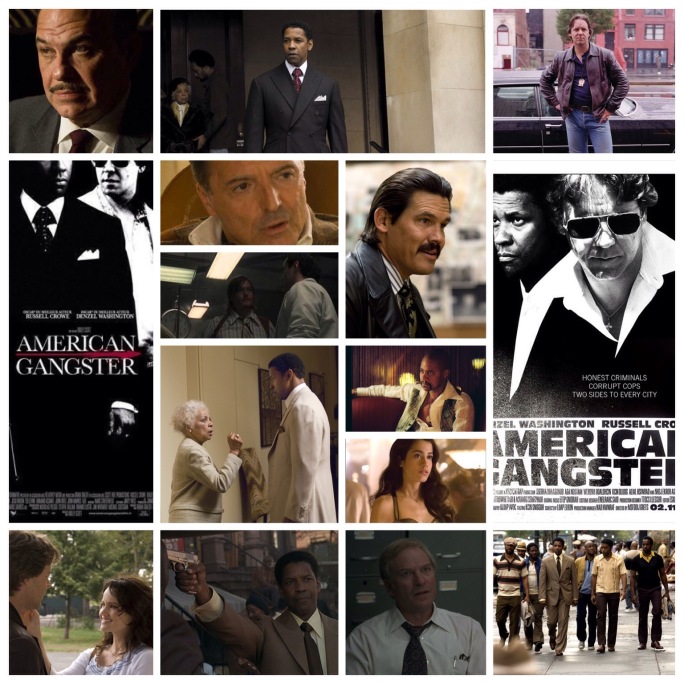
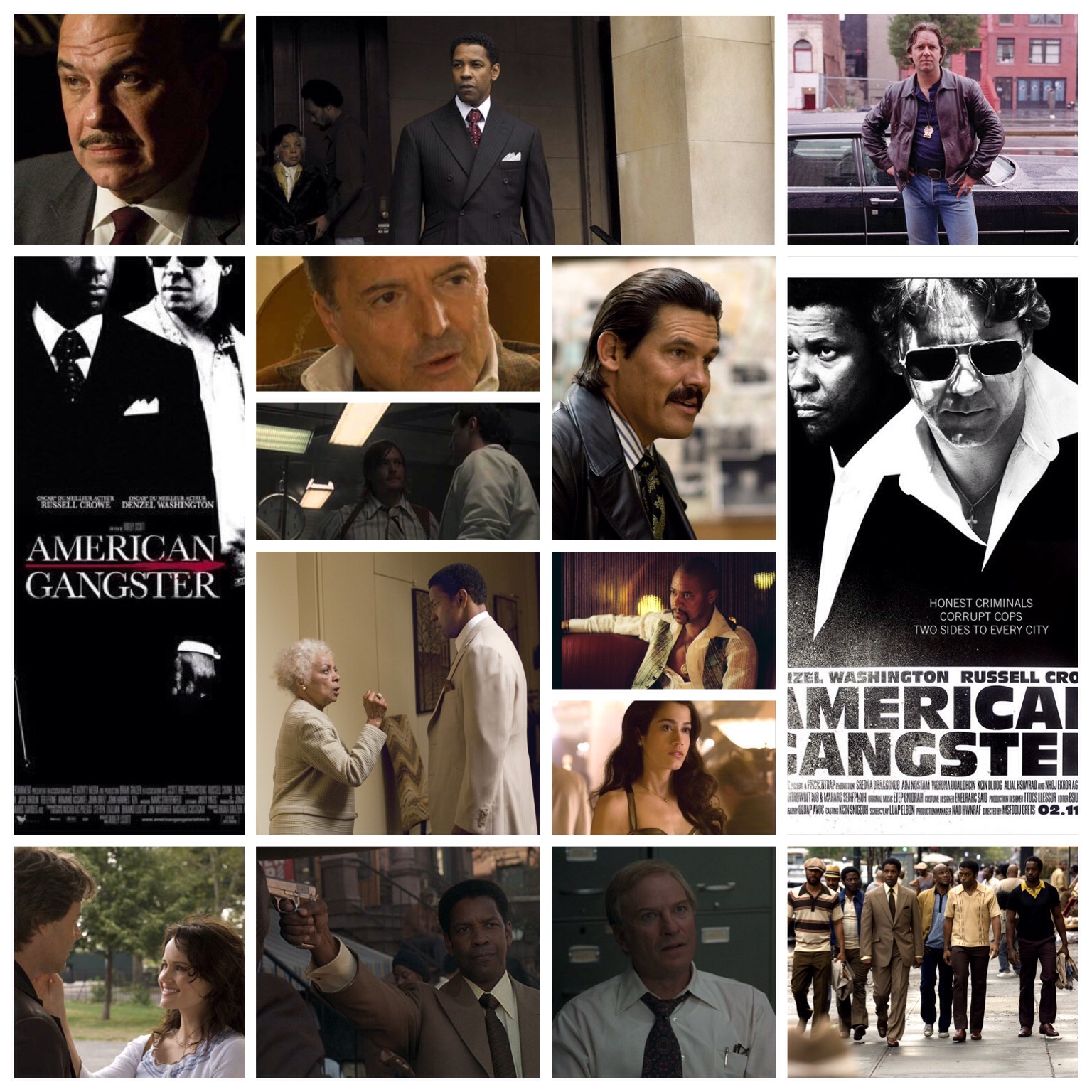
Ridley Scott’s vast, intricate crime epic American Gangster is one of the director’s finest achievement in film to this day. It’s sprawling in nature, expansive in scope but never chaotic or muddled. It always maintains a laser focus on its characters and story, thumping along at a rhythmic pace which swells and falls to the time of one of the most iconic stories in true crime. It’s Scott’s Heat, a titanic tale of cop vs. criminal in which neither are the villain or hero, but simply men adhering to rigid, ruthless principles moulded by the environments they have grown up in. Both men have an intense set of morals completely different from the other, yet equally as captivating. Russell Crowe is a troubled bruiser as Detective Richie Roberts, a cop so determined to convince himself of his own upstanding nature that he won’t take any illicit payoff in any amount or context. In contrast, every other aspect of his life is a shambling mess. Denzel Washington is quiet fury as Frank Lucas, an enterprising gangster and drug smuggler who rides the tidal wave of capitalism like there’s no tomorrow, flooding the streets of Harlem with pure heroin directly from the southeast Asian source, and rising swiftly to the peak of underworld infamy. The two are on an inevitable collision course, two juggernauts with different empires backing them who will stop at nothing. Lucas believes himself to be untouchable, shirking the flashy, preening nature of his peers and remaining out of the limelight, until cunning Roberts catches onto him. The rough and tumble world of New York in the 60’s and 70’s is lovingly brought to life by Scott, his cast and crew who go to impressive lengths in order to bring us that grit, realism and specific anthropological aura of another time, another setting. Speaking of cast, this has to be one of the most rip roaring collection of actors ever assembled, even to rival that of Heat itself. In Richie’s corner there is senior Detective Lou Toback (a sly Ted Levine, perpetuating the vague Michael Mann vibe even further), a scummy colleague (Yul Vasquez), and an off the books team of gangbusters including John Ortiz, John Hawkes and a mumbling RZA. He also clashes with his bitter ex wife (Carla Gugino) in an ugly custody battle for their young son. Over on Frank’s side of the hill are his huge extended family including Common, TI, Chiwetel Ejfor and Ruby Dee in one of the film’s finest performances as his strong willed, passionate mother, one of the only people who could talk sense into him and keep the animal inside at bay. Lymari Nadal is great as his bombshell Puerto Rican wife as well. His rivals include superfly-esque Nicky Barnes (Cuba Gooding Jr.) and a brief, hostile turn from Idris Elba. He also deals with the Italian mafia, personified by a hammy Armand Assante, an earnest Jon Polito and a slimy Ritchie Coster. One of the best performances of the film comes from Josh Brolin as positively evil corrupt narcotics detective Trupo, threatening everything that moves with his grease slick hair, porno moustache and silky, dangerous tone. As if that army of talent wasn’t enough, there’s also work from Kevin Corrigan, Joe Morton, Clarence Williams III in a powerful turn as an ageing Bumpy Johnson, and a blink and you’ll miss it cameo from Norman Reedus as well. What. A. Cast. The whole thing rests on Crowe and Washington, though, and both are like Olympian titans of crime and conflict, sweeping up everyone around them in a whirlwind of explosive violence, shifting alliances and the booming arrival of capitalism giving the American people in every walk of life a defibrillator jolt of economic change, laying the foundation for the world we live in today, one brick, one bullet, one business deal at a time. Scott achieves legendary heights with this one, a crime film for the ages that one can always revisit to see not how one hero cop took down a villainous drug lord, but how the forces which inexorably bind humans to various fates in accordance with their decisions swept up two extraordinary yet mortal men into historic infamy. In a word: Epic.

IRON MAN: A Retrospective by Joel Copling

Rating in Stars: **½ (out of ****)
Cast: Robert Downey Jr., Gwyneth Paltrow, Jeff Bridges, Terrence Howard, Leslie Bibb
Director: Jon Favreau
MPAA Rating: PG-13 (for some intense sequences of sci-fi action and violence, and brief suggestive content)
Running Time: 2:06
Release Date: 05/02/08

The casting coup at the center of Iron Man is the best and only chance the film takes in just more than two hours, and it almost makes the film work. This is a surprisingly insular superhero movie, the first of its own franchise and a stepping stone into a wider one that has now, eight years later, taken over the mainstream film world. The pieces are here for something that could examine both its titular hero and the human who inhabits the suit that (despite the fact that, as the hero points out, it is made of a gold titanium alloy) has inspired the moniker. The problem is that they never quite come together into something that breaks free of the constraints of a familiar origin story that leads to an equally familiar conflict.

But let’s get back to that casting coup. Robert Downey Jr. stars as Tony Stark, the heir to a multimillion-dollar company that shares his surname and produces everything from electronics to weaponry, with the latter being his biggest money-spinner yet. The film opens to the sound of an AC/DC track somewhere near the middle of the story as Tony is escorted to and from an exhibition of a new weapon called the Jericho missile (which is actually many tiny missiles inside a bigger one that self-destructs after its counterparts are engaged), only to be hit by a terrorist cell using his own weapons. As the title slams into place and disappears, we rewind to find him absent from an awards ceremony in his honor, instead playing the casinos.

We get an immediate sense of this man from the opening half-hour, the film’s strongest segment, which presents him as sarcastic to the verge of misanthropic. He isn’t quite unlikable, and therein lies why he is so likable. That is in large part due to Downey, who is smart enough to capture the man’s personality without relegating it to be merely a caricature. It’s a genuinely good performance that, unfortunately, only highlights the weaknesses of what surrounds him. The formula is simple and, as a result, restrictive: We are introduced to a hero, the hero is faced with conflict both internal and external in nature, the external conflict in the form of the hero’s first nemesis takes center stage.

That happens to be Obadiah Stane (Jeff Bridges), the man who created Stark Industries with Tony’s father, and if you think that’s anything remotely close to a spoiler, consider that everything Stane does is to his own (and, superficially, the company’s) interest. He wants Tony locked out, especially when, following Tony’s abduction and near-death experience (He places miniaturized arc reactor in the center of his chest to ward off shrapnel from the attack entering his heart), Tony shuts down the weapons manufacturing part of his company. He also becomes Iron Man, a hot-rod-red-suited metal figure whose use could also be turned into a weapon. This establishes what transpires during the climax.

It also simplifies everything else about Tony’s life–from his struggle not to be an arbiter of weaponry (ironic, as Stane points out, that he created a perfect weapon in response) to his relationships with personal assistant Pepper Potts (Gwyneth Paltrow) and military liaison James Rhodes (Terrence Howard) to action sequences that have some spark (such as Tony’s retaliation upon the terrorists, which introduces light humor into the mix with ease) but aren’t much more than flights of fancy. Downey is the film’s secret weapon, and he almost elevates Iron Man itself above its rudimentary nature.

JOHN CURRAN’S THE PAINTED VEIL — A REIVEW BY NICK CLEMENT

painted_veil

John Curran’s The Painted Veil came and went and that’s a shame because it’s a very well appointed period piece with multilayered performances from producers/stars Edward Norton and Naomi Watts. I think part of the issue might’ve been due to the fact that both characters are so selfish and rude to each other that it’s the sort of brittle drama that might not appeal to as many people had it been more traditional. And the fact that the production company behind the film went bankrupt after production – never a good thing. Watts plays a woman who is caught in an affair (Liev Schreiber is her suitor) by her husband (Norton), a virologist who forces her to accompany him to cholera-stricken China. Set in the 1920’s, the film has tremendous production value, benefitting enormously from the all-on-location shooting in China, with the great cinematographer Stuart Dryburgh (Blackhat, The Piano, The Secret Life of Walter Mitty) capturing the golden light against the lush greenery of the country. Watts’s confused wife is tested emotionally all throughout the film, as she and a volatile Norton go at each other with frustration and anger, mostly due to the fact that they weren’t a perfect match to begin with, let alone appropriate spouses.

Adapted from the classic W. Somerset Maugham novel by screenwriter Ron Nyswaner (Philadelphia), there’s definitely a literary quality to the dialogue and to the plotting, and it’s the sort of movie that picks up serious steam as it heads into the last act that makes its rocky beginning all the more rewarding. Not “rocky” as in poorly constructed, but rather, this is no lovey-dovey romance set against picturesque backdrops. Both lead characters are flawed, with the filmmakers not shying away from this fact or making it easy for the audience to latch onto them. Featuring a fabulous musical score from Alexandre Desplat that more than matches Dryburgh’s gorgeous visuals, The Painted Veil deserves a higher profile; at the moment there’s no American Blu-ray but a region free German import is available. But that’s sort of been the case with all of Curran’s films. His edgy Robert De Niro/Ed Norton thriller Stone and the introspective Mia Wasikowska drama Tracks were both terrific in their own ways, and his troubling script for Michael Winterbottom’s nasty The Killer Inside Me was very memorable. And his 2004 drama We Don’t Live Here Anymore strove for and found 70’s-esque grittiness with its story of marital discontent. He’s a continually interesting filmmaker and I look forward to seeing more from him.


JOHN CURRAN’S THE PAINTED VEIL — A REVIEW BY NICK CLEMENT

painted_veil

John Curran’s The Painted Veil came and went back in 2006 and that’s a shame because it’s a very well appointed period piece with multilayered performances from producers/stars Edward Norton and Naomi Watts. I think part of the issue might’ve been due to the fact that both characters are so selfish and rude to each other that it’s the sort of brittle drama that might not appeal to as many people had it been more traditional. And the fact that the production company behind the film went bankrupt after production – never a good thing. Watts plays a woman who is caught in an affair (Liev Schreiber is her suitor) by her husband (Norton), a virologist who forces her to accompany him to cholera-stricken China. Set in the 1920’s, the film has tremendous production value, benefitting enormously from the all-on-location shooting in China, with the great cinematographer Stuart Dryburgh (Blackhat, The Piano, The Secret Life of Walter Mitty) capturing the golden light against the lush greenery of the country. Watts’s confused wife is tested emotionally all throughout the film, as she and a volatile Norton go at each other with frustration and anger, mostly due to the fact that they weren’t a perfect match to begin with, let alone appropriate spouses.

Adapted from the classic W. Somerset Maugham novel by screenwriter Ron Nyswaner (Philadelphia), there’s definitely a literary quality to the dialogue and to the plotting, and it’s the sort of movie that picks up serious steam as it heads into the last act that makes its rocky beginning all the more rewarding. Not “rocky” as in poorly constructed, but rather, this is no lovey-dovey romance set against picturesque backdrops. Both lead characters are flawed, with the filmmakers not shying away from this fact or making it easy for the audience to latch onto them. Featuring a fabulous musical score from Alexandre Desplat that more than matches Dryburgh’s gorgeous visuals, The Painted Veil deserves a higher profile; at the moment there’s no American Blu-ray but a region free German import is available. But that’s sort of been the case with all of Curran’s films. His edgy Robert De Niro/Ed Norton thriller Stone and the introspective Mia Wasikowska drama Tracks were both terrific in their own ways, and his troubling script for Michael Winterbottom’s nasty The Killer Inside Me was very memorable. And his 2004 drama We Don’t Live Here Anymore strove for and found 70’s-esque grittiness with its story of marital discontent. He’s a continually interesting filmmaker and I look forward to seeing more from him.