DAVID JACOBSON’S DOWN IN THE VALLEY — A REVIEW BY NICK CLEMENT

1

I’ve been curiously drawn to the 2005 film Down in the Valley throughout the last 10 years, if for no other reason than I can’t seem to find too many movies quite like it. Starring a mysterious and characteristically magnetic Edward Norton as a modern day cowboy who “drifts” into town (the oh-so-cinematic San Fernando Valley) and changes the lives of the people he comes into contact with, it’s a strange film, dreamily stylish (Enrique Chediak is the cinematographer), and peppered with colorful and juicy supporting performances from an excellent Evan Rachel Wood, the always terrific David Morse, a sensitive Rory Culkin, and the legendary Bruce Dern. After making its debut in the Un Certain Regard section at the 2005 Cannes Film Festival, the film was released to mostly muted critical response and close to zero box office during a brief limited theatrical run; it’s still not available on Blu-ray with only a DVD and possible streaming options available. Writer/director David Jacobson hasn’t worked much since this film came and went, which seems to be a shame, because the film is an interesting if not entirely successful mood piece that’s heavily interested in character and skewing the expected conventions of the classic “Western” melodrama. Because the film is set in the present day, and it revolves around a delusional lead character (trying not to give too much away, here…), Jacobson is free to upend our common expectations, going in directions you won’t likely see coming, unafraid to present flawed main characters who you may empathize with if not sympathize with. Morse is really outstanding as Wood’s easily angered father who resents the heartfelt if not potentially dangerous Norton trying to make eyes with his sexually blossoming young daughter, with Jacobsen tipping his hat in all manner of auteur-lead directions, evoking Terrence Malick’s Badlands, the works of John Ford, and the occasional surreality of David Lynch or someone along those lines. This is a quirky, cool, and defiantly original piece of work that’s worth tracking down.

2

MICHAEL WINTERBOTTOM’S THE CLAIM — A REVIEW BY NICK CLEMENT

1

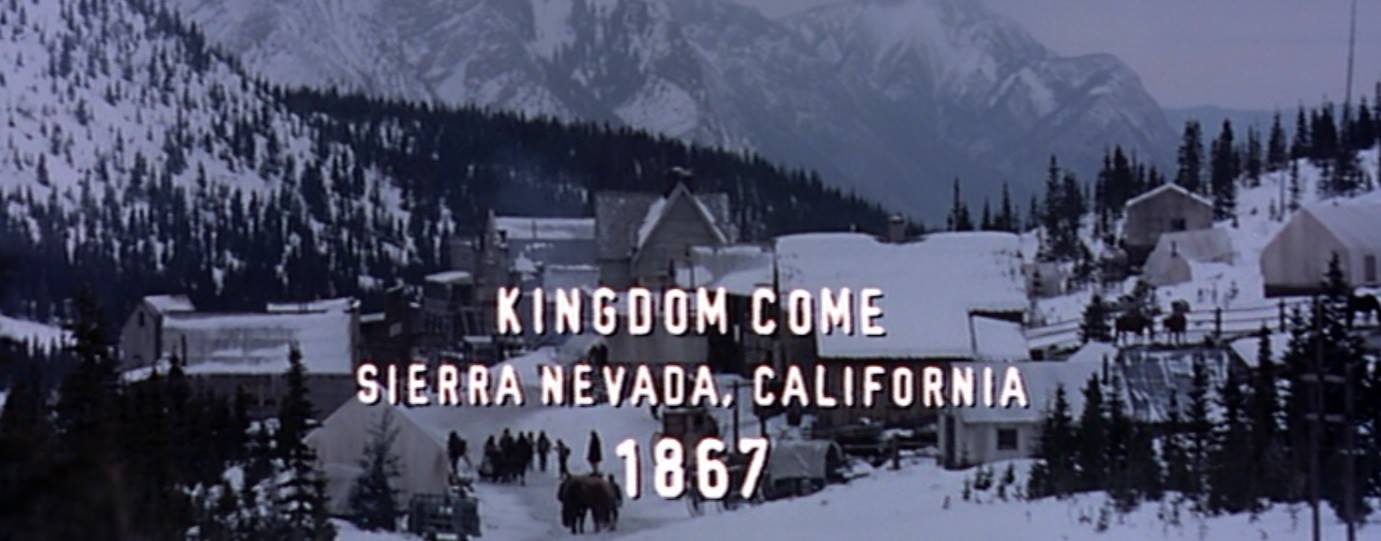
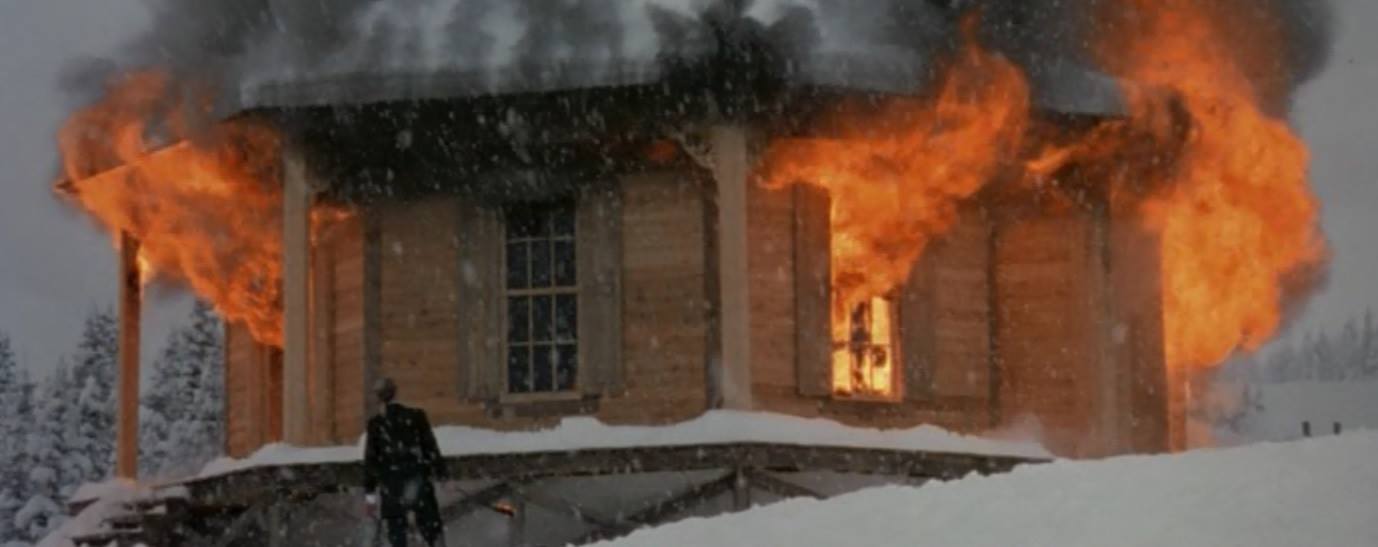
I’m a huge admirer of the filmmaker Michael Winterbottom, and his wildly underrated effort from 2000, The Claim, is a hugely impressive piece of work that’s begging for reconsideration and an upgrade to the Blu-ray format Alwin Kuchler’s muscular and expansive 2.35:1 widescreen cinematography painted a forbidding canvass of mountain life circa 1867, with the intelligent and morally ambiguous screenplay by Frank Cottrell Boyce (loosely based on the novel The Mayor of Casterbridge by Thomas Hardy) borrowing shades from Altman’s masterpiece McCabe and Mrs. Miller. Michael Nyman’s score is blustery when called for, and subtle most everywhere else, contributing greatly to the epic sweep of Kuchler’s full-bodied images. Winterbottom has always struck me as the British version of Steven Soderbergh, a restless talent interested in exploring every possible genre, refusing to be pigeonholed, always bursting with vitality and style and smarts. Peter Mullan is, as usual, fantastic as the strong willed ruler of Kingdom Come, the Northern California town that was crafted entirely for the film, only to be totally destroyed during the fiery final sequences (I’m spoiling nothing as this much his hinted at in the trailer). Sarah Polley, Wes Bentley, Milla Jovovich, and Nastassja Kinski are all excellent as the other main characters, all of whom cross paths with Mullan and get in the way of his perceived sense of happiness. This is narrative that hinges on jealousy, deceit, loyalty, love, business, and the ever burning quest that some people have to own and control all that they come into contact with. There are shades of Serena (an overall disappointment but not without its technical merits) and There Will Be Blood (one of the great films of the century) and other recent American period pictures detailing the harsh living conditions and the discovery of valuable resources (The Claim centers its dramatic action over the great California Gold Rush). The film was shot on location in Alberta, Canada, and it truly looks it – The Claim feels cold, remote, challenging, and daunting. This is an obscenely undervalued piece of cinema that seems to have snuck by way too many people. I can remember seeing it in a mostly empty theater in Los Angeles and thinking to myself that I was secretly being treated to one of the best films of that particular year.

2

RAMIN BAHRANI’S 99 HOMES — A REVIEW BY NICK CLEMENT

2

Ramin Bahrani has made five feature films thus far in his fascinating career, and all of them have been some of the best films of their respective years, with the trio of Man Push Cart, Chop Shop, and Goodbye Solo forming some sort of personal trifecta of small, less-is-more-inspired filmmaking, almost the American answer to the Dardenne brothers. His latest, the viciously angry social drama 99 Homes hits some of the same keys of maximized melodrama that his previous film did, the underrated At Any Price with Dennis Quaid and Zac Efron, while telling a topical, important, and thoroughly engrossing story that will likely be too intense and too real for some viewers. Concentrating on the financial and housing collapse of 2008 and centering the action in Orlando, arguably the epicenter of the sub-prime mortgage disaster zone, Bahrani and co-writer Amir Naderi have fashioned a compelling and provocative narrative that finds a struggling young man named Dennis Nash (an impassioned and excellent Andrew Garfield) learning just how far he’s willing to go to put food on the table for his son and mother, let alone a home over the heads. Michael Shannon is the real estate shark named Rick who has figured out how to take advantage of an already corrupt system, exploiting the failures and misery of others for his own financial gain; he sits at the same table as Gordon Gekko and Blake from Glengarry Glen Ross. The image of Shannon incessantly ripping his E-cigarette is one of the more searing visuals I’ve seen in any movie this year, and the effectively restless and propulsive music was scored by Antony Partos and Matteo Zingales, giving the film a level of anxiety that Bahrani ratchets up through his controlled and vigorous direction. Tackling topical themes and plotlines in works of Hollywood-based fiction can sometimes be a tricky proposition, but here, Bahrani and his skilled team knew precisely how to calibrate all of the elements.

The film kicks into high gear after Nash, his son, and his mother (the reliably fantastic Laura Dern) are evicted from their life-long home by Rick and two police offers, in an emotionally harrowing scene which is repeated throughout the story to underscore just how many people were affected by the greed and duplicity of financial managers, bankers, the federal government, and themselves. The superb cinematographer Bobby Bukowski can lay claim to having shot two of the most socially relevant and topical films of the year, with groundbreaking work done on Oren Moverman’s homeless drama Time Out of Mind, and incredibly intense lensing on 99 Homes. The film pulses with an immediacy, heightened by Bukowski’s smart widescreen framing, with the hazy Orlando sunlight offering the false promise of a happy day. The opening steadicam shot is nothing short of bravura, introducing the audience to the reprehensible but magnetic character of Rick, with Shannon shredding the screen with predator-like energy and endless answers to the various situations he’s found himself in. And while Garfield is undoubtedly convincing as a man pushed to his moral and ethical limits, all throughout, we’re constantly reminded that this is the Michael Shannon show, with this tremendous actor delivering an utterly ferocious performance that feels all too possible and realistic – you know there are plenty of people out there just like Rick, ready to swoop in and grab any and all of the pieces that they can line their pockets with; the agitated screenplay constantly stings and reminds us of how vulnerable many of us truly are at any given moment in life. This is the REAL horror movie for the month of October, and one of the best strengths of the film is its ending, which feels logical, understandable, and rational, as it takes into account everything that has come before it, with the final, mildly ambiguous beats suggesting nothing simple or happy for anyone. 99 Homes is tough but vital cinematic medicine that goes down smooth while leaving an appropriately bitter aftertaste. It’s one of the best films of the year.

3

A chat with actor Holt McCallany

I recently had the chance to speak with actor Holt McCallany, who has appeared in diverse films such as Fight Club, Alien 3, Gangster Squad, Brian De Palma’s Casualties Of War, Michael Mann’s Blackhat, Below, Run All Night, Bullet To The Head, A Perfect Getaway, Vantage Point, Alpha Dog, Men Of Honour, Three Kings, The Peacemaker and more. He’s also appeared in TV shows including CSI, Law & Order, Burn Notice, Criminal Minds, Blue Bloods, and starred in Lights Out for FX, playing boxer Lights Leary. He’s one of my favourites and a great talent. Enjoy! 

Nate: You gained some pretty high profile credits very early on in your career. Alien 3, Creepshow etc. How did you initially break into the industry? Any stories about the early days? 
My parents were both Broadway actors so I grew up in the theater. I never really considered any other profession. They were very supportive and helped me get started, but you find out quickly that no matter who your parents are if you don’t have talent you won’t last long in show business. One funny story I remember from the early days is auditioning for my first film Creepshow 2. It was a horror film by Stephen King that was a sequel to a successful film that had starred Ed Harris and E.G. Marshall and a number of very fine actors I admired. I auditioned to play a college frat boy but the producer offered me the role of an American Indian. I said “I can’t play an Indian, I’m a white Irish guy who was born in New York.” He said “You have good bone structure, we’ll give you make-up and a wig. Burt Lancaster did it.” I replied “But I have blue eyes!” The producer took a beat, looked at the director, then looked back at me and said “We’ll make you a half-breed.” I’ve never forgotten that. “We’ll make you a half-breed.”

Holt: Theatre vs. Film: How do the two compare for you, does one hold a higher spot or do you enjoy both equally? 

Holt: For me working on stage is a more satisfying experience. In the film world you can give a good performance but everything will come down to what they choose in the editing room. That’s the crucial stage in the process, and actors are usually excluded. I don’t think there’s one actor in the world who’s worked extensively the movie business and not had the experience of seeing a performance ruined in editing. It happens all the time and it’s very frustrating.

Nate: Blackhat: What was your experience working on a Michael Mann film ? 

Holt: Blackhat is a very good example of what I’m talking about. I worked hard for Michael Mann and gave him a good performance but in the cut he cut almost all of my stuff out of the film. I was so disgusted I didn’t even attend the premiere. The film was a commercial and critical disaster but that didn’t change the way I felt.
 Nate: Besides acting what other hobbies/interests do you have? 

Holt: I enjoy boxing and martial arts. I love to read and to travel. I like jazz. I’ll be the president of the jury at the International Film Festival in Brussels, Belgium this year and I’m looking forward to that.

Nate: You mentioned before on twitter that Lights Leary is your favourite role that you’ve played. Can you elaborate? Is there any hopes of ever seeing a movie/continuation of it? 


Holt: Lights Leary was a very well-written and complex character. It was unfortunate he didn’t get a second season because the people who watched the show seemed to enjoy it as much as I did. As far as a film version down the road I’d love todo it but it’s a long shot.

 Nate:Criminal Minds: Your portrayal of a veteran suffering PTSD was harrowing and very convincing. Did you do any research, and what kind of prep did that involve for you before you filmed? 

Holt: Yes I had the opportunity to speak to a number of vets about their experiences in Iraq. They were very open and I was grateful for their isights. I also got some hand-to-hand training for the action sequences from Amir Peretz, an expert in Krav Maga.


Nate: Who are some of your favourite films/actors/filmmakers? 

Holt: As a boy growing up my favorite actors were Burt Lancaster, Robert Mitchum, and Steve McQueen, of course Marlon Brando, and I was a big fan of Gene Hackman. I remember being fascinated by A Clockwork Orange when I was very young. I watched it so many times I could repeat all the lines. I would have loved to work with Stanley Kubrick, but I’m grateful to have had the opportunity to work with great directors like David Fincher, Clint Eastwood, David O. Russell, Walter Hill, David Twohy and many others.


Nate: Do you have any upcoming projects you are excited for and want to mention?

Holt: Yes I’ll be appearing in several films next year including Shot Caller opposite Nikolaj Coster-Waldau for director Ric Roman Waugh, Sully with Tom Hanks for director Clint Eastwood, Jack Reacher 2 with Tom Cruise for Ed Zwick, and a big action film called Monster Trucks. I have high hopes for all of them.
ALAN J. PAKULA’S THE PARALLAX VIEW — A REIVEW BY NICK CLEMENT

2

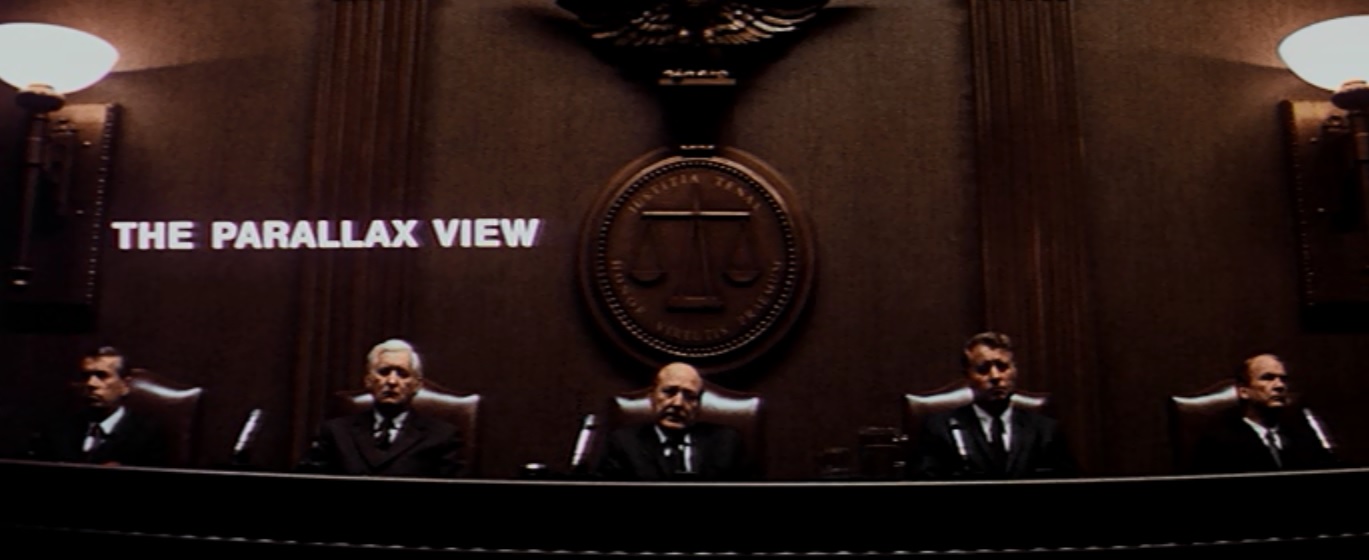
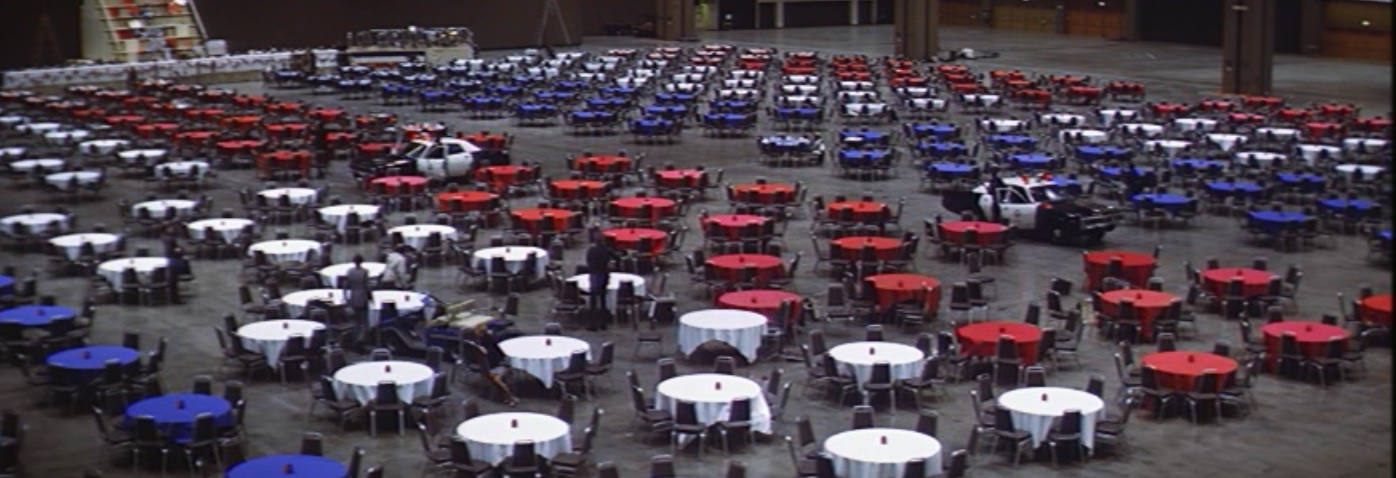
Alan J. Pakula’s The Parallax View is one of the best paranoid thrillers from the 70’s, taking its ambitious and chillingly layered narrative concoctions and making them just believable enough. I’ve watched this film countless times, and each time I revisit, I find a new detail that had previously been left undiscovered, and it’s clear that the film served as a major inspiration for future efforts like Peter Hyams’ The Star Chamber, David Fincher’s The Game, and Rob Bowman’s The X-Files: Fight the Future, to name only three. It seems insane to think that this film hasn’t been given the unnecessary remake that Hollywood seems to love to throw out, and my hope is that people are smart enough to leave this one alone. I’m sure some savvy filmmakers could craft a solid updating, but there’s something so incredibly 70’s about this film, from Warren Beatty’s look and attitude, to the cryptic plotting, to the downbeat finale. Gordon Willis shot the ever living hell out of this film, the diabolical screenplay by David Giler and Lorenzo Semple Jr. (with uncredited rewrites by Robert Towne) never lets anyone off the hook, and the beyond creepy musical score by Michael Small immediately sets a nervous, anxious tone that Pakula maintains for the entire duration. Effective supporting performances by Hume Cronyn, William Daniels, Paula Prentiss, Earl Hindman, William Joyce, Walter McGinn and Kelly Thorsden are on display, while Beatty anchors the film with class and the perfect amount of cockiness and uncertainty. And then there’s the ruthless finale, which feels both earned and inevitable, with the closing moments ranking as some of the iciest in cinema history. The Criterion Collection would be wise to put out a Pakula box set, as Klute, All the President’s Men, The Parallax View, and Sophie’s Choice are all worthy of that swanky stamp of approval, while it’s interesting to note that Pakula also crafted a bunch of dependable, thoughtful studio thrillers like Consenting Adults, Presumed Innocent, and The Devil’s Own; I need to finally catch up with Rollover, Comes A Horseman, and Starting Over. I’ll always be enamored with The Parallax View and with how Pakula and his team effortlessly pulled off all of the ingredients in this truly sketchy piece of work.

3

JEROME SALLE’S ZULU — A REVIEW BY NICK CLEMENT

6

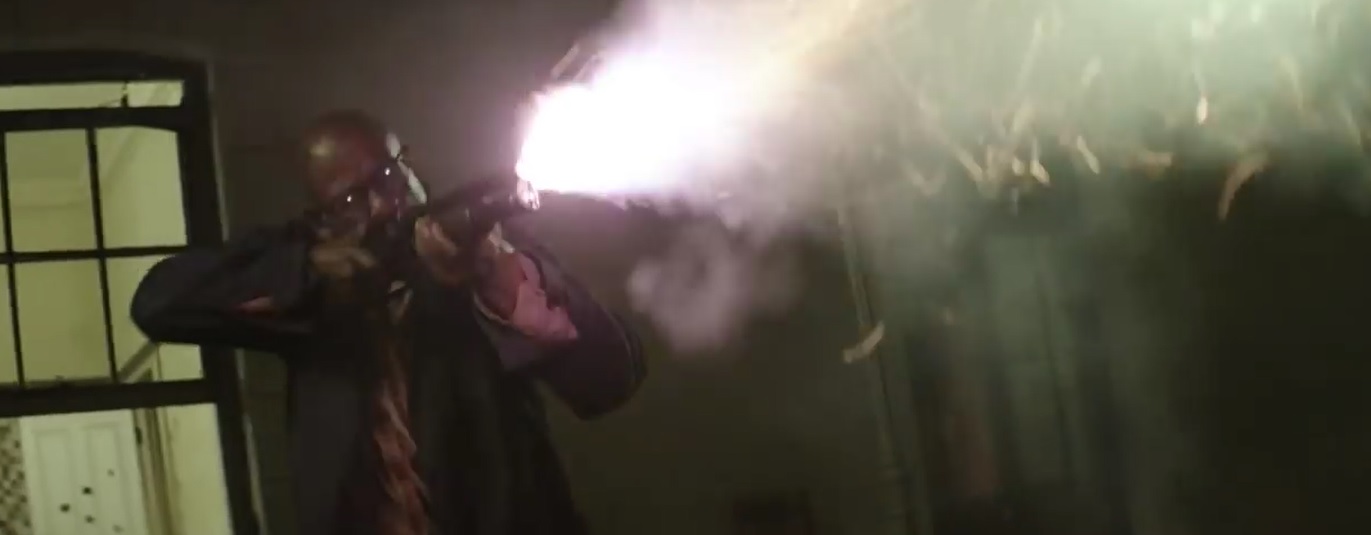
Damn. The 2013 French action thriller Zulu, directed by Jérôme Salle, is a knock-your-socks off piece of filmmaking. It’s violent – VERY violent – but not without purpose, and the twisty/twisted narrative (involving something called Project Coast which is beyond disgusting) takes familiar procedural elements and filters them against the dangerous and exotic backdrop of South Africa and various groups of drug-runners and gang-members. The racial unrest that has plagued South Africa for years is on full display in this exciting film, with the story touching on generational violence that has formed the attitudes and behaviors of the various characters. This is one of those international productions, like Metro Manila and Miss Bala and Sin Nombre, that takes you on a hellish ride, never interested in holding your hand, and plunging you into a volatile world of nightmarish scenes of human behavior. Orlando Bloom was really good here, and Forest Whitaker, as always, commands the screen whenever he appears. Stunning cinematography and fantastic location work contribute to the visually vibrant atmosphere, and while the script is probably too on-the-nose with its dialogue in a few spots, there’s a ferocity to the storytelling and filmmaking that puts most American actioners to shame. Excellent shoot-outs that don’t shy away from the bloody consequences of urban warfare. Available as a Region B Blu-ray only, which is rather pitiful, given that it deserves to be seen by a much wider audience.

3

ZACK SNYDER’S WATCHMEN — A REVIEW BY NICK CLEMENT

1

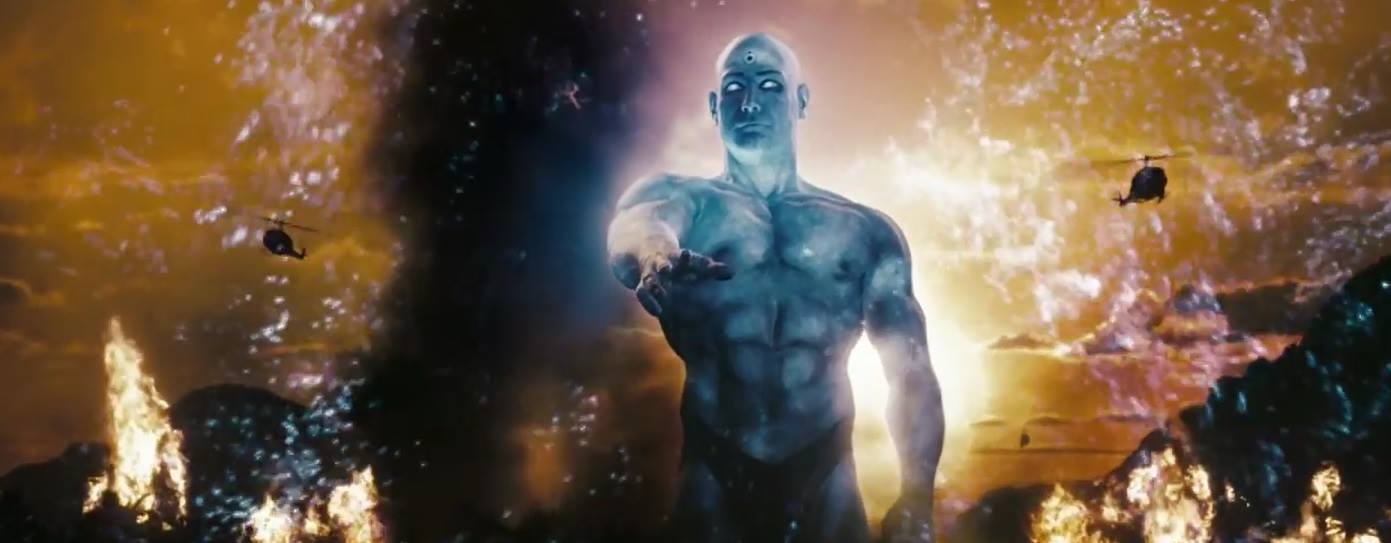
Watchmen is as bold, risk-taking, and ambitious as a major studio event movie starring actors in spandex suits is going to get. Without the runaway success that 300 became, divisive but undoubtedly gifted director Zack Snyder was never going to be allowed to make a $150 million hard-R comic book movie. Throughout the years, a diverse group of filmmakers including Joel Silver, Darren Aronofsky, Terry Gilliam, Paul Greengrass, and many others all tried – and failed – to bring Alan Moore’s wildly revered graphic novel to the big screen. The big-wigs calling the shots at Warner Brothers at the time of Watchmen’s production (the Alan Horn-era?) deserve some serious accolades, as this project could have been turned into a PG-13, watered-down version of its incredibly nihilistic source material. And it wasn’t. I’m not judging the film version against the graphic novel. They are two totally different mediums, and what works in one doesn’t necessarily translate to the other. The big changes were A-OK by me, and quietly frankly, made a lot of sense from a cinematic point of view. I’ve read the Watchmen source material, and I never thought for a moment that what Moore put on the page would be exactly copied and transferred to the screen; this was not going to be 300 all over again, with a film that literally feels TORN from the pages of its original inspiration. Back on opening weekend in 2009, I saw the film in the IMAX format and it was an overwhelmingly powerful visual experience. It was honestly too much to fully process on initial viewing, even with the benefit of having read the graphic novel beforehand. But over the course of multiple viewings and endless online discussions, I’ve been able to boil down all of the plot lines and key thematic discussions, with the visuals and action and special effects never losing their dynamic impact. Billy Crudup’s scenes as Dr. Manhattan are easily my favorite; the Mars interlude has an elegance to it that’s hard to describe.

I’m stunned by the overall sense of design and visual sophistication of the film, especially the opening credit sequence, which dispenses with backstory and motivation in such an economical and purely visual fashion that it’s nearly impossible not to become immediately engrossed. Set to Bob Dylan’s classic tune “The Times They Are A Changin’,” Watchmen opens up with a glimpse of our society that’s just a tad skewed from what we’re familiar with, all done in glorious Snyder-vision, showing the formation of the Minutemen, their eventual collapse, and the birth of the Watchmen, while providing a political timeline that expands upon this alternate universe – it’s visceral poetry in motion and one of the most startling openings to any film. Snyder seems to love the ability to literally turn a graphic novel into a living, breathing piece of moving celluloid, and Watchmen has a fantastic, surreal quality because much of it was done on practical sets and real locations, but also utilizing CGI environments and backdrops, giving the film a rough yet slick and totally heightened quality. With Watchmen, he took a supposedly “unfilmable” graphic novel and made it – at least to my eye – into one of the most uncompromising, demanding, and insanely brutal superhero films that’s ever been attempted. There’s so much to sift through – the alternate political timeline, the subversion of the superhero genre, the blending of film noir with science fiction – Watchmen feels like an uncanny amalgam of 2001, A Clockwork Orange, Blade Runner, Dark City, Sin City, The Dark Knight, and the works of Raymond Chandler. It’s a very heady brew, trippy and surreal at times, ironically campy in a few instances, always nasty, frequently kinky, and always interesting to experience. This is a one of a kind film that really stands alone within the space of the comic book film, and even though it’s not perfect, it’s so ambitious and at times downright hypnotic to watch that I find myself under its spell in no time whenever I put on the Blu-ray.

2

BEN WHEATLEY’S A FIELD IN ENGLAND — A REVIEW BY NICK CLEMENT

2

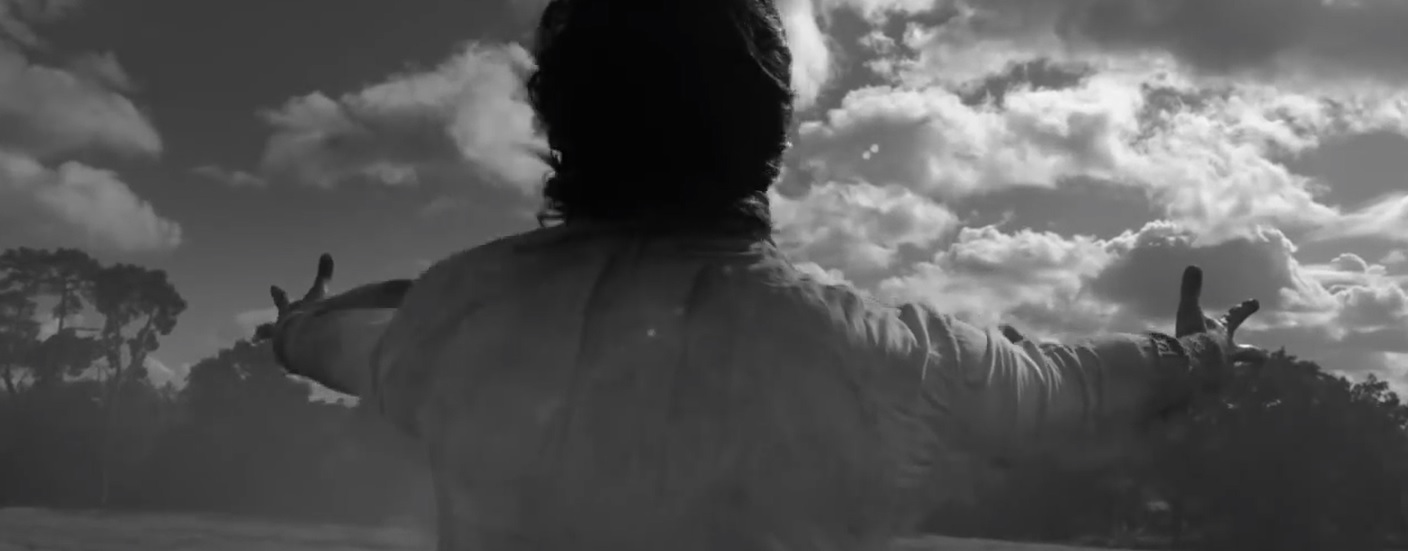
I’ve become quietly obsessed with Ben Wheatley’s fucked up, totally tripped-out piece of cinematic psychedelia A Field in England over the last year or so. Sightseers and Kill List are also both excellent genre subversions made with extreme skill and devilish wit, but this one stands alone and completely on its head as a wild piece of wholly original filmmaking that pushes the limits of personal, expressionistic storytelling to new, unhinged heights. A Field in England is pure madness, a descent into a strange and sometimes terrifying world of alternating perspectives, nightmarish dream-logic, and hallucinatory imagery that feels even more aggressively stylish because of the shimmery black and white cinematography. I won’t bother trying to explain the “plot” of this film – just watch the trailer. You’ll know within about eight seconds whether this is up your alley. For me, like other works such as Enter the Void and Under the Skin and Enemy, this is one of those films that begs for constant revisits, as no individual viewing will likely be the same as the next. There’s too much to explore, both thematically and aesthetically, for this to be a one-off experience. If you can take it. Again…my thinking is that for every person who loves this film, there will be 10 who hate it, or just can’t get into the groove that Wheatley hits in this perverse, sometimes upsetting, and always ferocious tale of men driven to the brink of insanity. Makes sense that the film would Drafthouse release; it’s also a work fully endorsed by Martin Scorsese. Wheatley’s next film, High Rise, sounds like more insane, extremely dark work from this challenging and provocative filmmaker.

3

DAVID ROBERT MITCHELL’S IT FOLLOWS — A REVIEW BY NICK CLEMENT

1

David Robert Mitchell’s It Follows is a clever psychological horror film that has a lot of thought and emotional depth buried under the genre trappings it so lovingly clings to. Essentially a commentary about the spread of sexually transmitted diseases, the narrative hinges on an unseen force coming to kill a group of teenagers who are “infected” by evil spirits, who target their victims based on sexual activity. These kids know that by having sex, they’ll be “infected,” and thus prone to the dangers of these supernatural entities, and yet they do what their hormones are telling them to do even though they know they shouldn’t. The film features some spectacular stedicam work, the direction is strong and smart, lead actress Maika Monroe (also effective in The Guest) is appealing and appropriately vulnerable, the sound design is sketchy all throughout, and the reliance on intelligent scares rather than cheap shock-tactics and excessive gore kept me engaged and interested. It’s also a film that abides by the golden cinematic rule of having a fantastic opening and closing scene. This is a really good “horror” movie for people who are looking for more than just a routine slasher flick.

2

My interview with actor Richard Fancy

I am pleased to bring you my recent chat with actor Richard Fancy, an immensely gifted man you may recognize as Mr. Lippmann from Seinfeld. He’s also appeared in shows like Mad Men, Ray Donovan, Carnivale, General Hospital, The Mentalist, Crossing Jordan, 3rd Rock From The Sun, Friends, Star Trek: Voyager, Numb3rs, Gilmore Girls and more. His film credits include Being John Malkovich, The Girl Next Door, Species, Oliver Stone’s Nixon, Hollywoodland, Shopgirl, Rob Zombie’s horror films Halloween and The Lords Of Salem, and more. Take a look:)
Nate: I don’t see much of your background or training on imdb. Care to share how you got into acting, what about the craft that appeals to you, and where you trained?
Richard: I knew I wanted to be an actor when I was fifteen. Like falling in love with someone, it’s really impossible to say “Why.” I began studying at fifteen (I was living in LA then) and, when I was twenty two, I moved to New York where I studied for a year with Uta Hagen. I spent a year studying in England, came back to New York and studied with Peter Kass, Uta Hagen (some more), George Morrison, John Lehne, Kristin Linklater, Lee Strasberg, Sharron Shayne and I recently became a professional observer with full working privileges at the Actors Studio here in Los Angeles.  
Nate: You have a very mischievous aura to your work, a gleeful vibe that is very memorable (the moment in Ray Donovan when you realize they’re pulling a fast one on you is a perfect example of this, and one of my favourite character beats of your work) ). Is this quality something you consciously developed in your work, or just organically happened out of your personality?
Richard: Thank you for the compliment about my gleeful vibe. I think what you are seeing is just my response to creating a particular character; that response will unavoidably reflect my own personality and whatever glee that gives off:-)
Nate: The Lords Of Salem: what was it like for you working on a Rob Zombie film, especially such an intense one? Fun experience?
Richard: I loved working for him. The films are intense; the set is the most relaxed, supportive atmosphere you can imagine. Rob (I’m sure you heard this before) is a great guy.
Nate: Carnivle: One of my favourite shows of all time. Your role, although brief, was very memorable for me. Did you have a sense of the story when filming that, were you given a lot to go on in terms of that psychiatrist and who he was dealing with? Have you seen the show and do you enjoy it?
Richard: I had a clear idea when I got to the set the way this psychiatrist would walk, talk; I wanted a moustache and spectacles. He should start out in too much control. I wanted there to be a contrast between the very obsessively organized person he is when we first see him and the nut he becomes. Scott Winant who was the director on the first episode I did was wonderfully supportive and collaborative. A splendid director.
Nate: You have a tremendous gift for comedy, as can been seen with your work on Seinfeld. Do you enjoy working in lighthearted, funny stuff like that? How was working laying Mr. Lippmann for you?
Richard: Everything depends on the script and the people you are doing it with. I loved doing Seinfeld; it was unique. But I enjoyed working with Scott Winant on creating the character I played in Carnivale every bit as much. And, I see something funny in almost everything. I guess it’s built into the way I perceive reality.
Nate: If you had to pick a few roles that you’ve played that have been your favourites, what would you say?
Richard: The roles that have been my favorites have been in intimate theater in Los Angeles. . Willy Loman in Death of a Salesman, Mr. Prince in Rocket to the Moon, Moe Axelrod in Awake and Sing and–now I’m doing Awake and Sing again, playing Uncle Morty. The intimate theater movement in Los Angeles has been producing extraordinary productions for thirty years now; Spring Awakening, a brilliant Los Angeles intimate theater production, just opened on Broadway to a huge rave in The NY Times. Intimate theater has unfolded here because LA is a place where there are a lot of excellent actors who work in film and TV and, itch to work onstage. If you play your cards right, you can see five brilliant intimate theater productions in this town for the price of a Broadway ticket. 
 Nate: Any upcoming projects, film or otherwise, you are excited for and would like to mention?
Richard: Right now I’m doing a play in Los Angeles. It’s Awake and Sing at the Odyssey Theatre (odysseytheater.com) and it is really worth seeing. It’s a great American play by Clifford Odets in an extraordinary production. It just got a critics choice in the Los Angeles Times.