JEAN-JACQUES ANNAUD’S THE BEAR — 25TH ANNIVERSAY REVIEW BY NICK CLEMENT

2

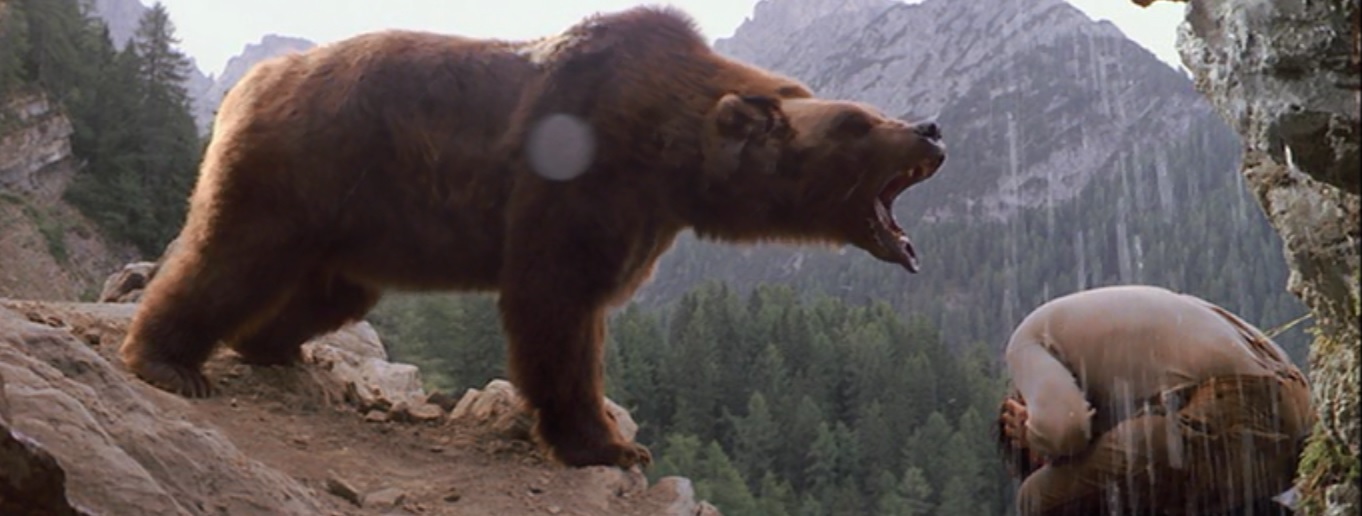
The Bear = the very definition of uncompromised, masterpiece-level filmmaking and storytelling. This is one of the most stunning achievements that I’ve ever seen. Of this I am certain. As a child, I was fascinated and consumed by this gorgeous piece of work, and as I’ve gotten older, my love for it has expanded in ways I can’t possibly describe. Guided by the elegant, extremely confident directorial hand of the eclectic French filmmaker Jean-Jacques Annaud, this is an “animal movie” that transcends that simple description; there’s nothing else remotely like it, in both original aim and final execution. The patience – oh the glorious patience(!) – that this film required in order for it to get made gives me a mini-migraine to contemplate. The magisterial cinematography from all-time great Philippe Rousselot produces one flabbergasting image after another. No CGI. No camera tricks. Just raw, primal beauty with an intrinsic understanding of how to use the 2.35:1 frame. American audiences were also introduced to the amazing character actor Tcheky Karyo as a result of this multi-national production, and while most of this film is silent, the few actors who do appear, Karyo most especially, cut convincing portraits of men doing what they know how to do, having been carved by the environment, but who still have the capacity to empathize with their prey.

The Bear is an almost incomparable work of naturalistic beauty, and for a long time, the only way to see this film on the Blu-ray format was via a German import. It’s now been released all over the world as a 25th Anniversary Special edition by Shout!, and the film should become essential viewing for anyone not already familiar. This is a powerful story of humans, animals, the bonds between both, and how the inherent feeling of struggle and survival is within us all. It’s also a universal story about the importance of friendship, stretching from species to species in equal, observant fashion. This film is so undervalued it almost makes me sick. Every child should be subjected to The Bear, and yes, while the harrowing and painful opening moments depicting the random cruelty of the natural world still sting to this day, it’s a piece of work that young minds should engage with because the overall message is so vital and forever-lasting. Included on this newly released Blu-ray is a 55 minute long, and totally vintage, making-of documentary, that’s almost as good as the film itself. You’re treated to an amazing amount of behind the scenes filming, and you get a chance to observe the intense training that the animals were put through. Seriously amazing stuff. And let’s not forget: Bear Cub Tripping on Mushrooms POWER. Bear Cub VIVIDLY DREAMING POWER. As I said in my first sentence: Masterpiece.

6

GABE POLSKY’S RED ARMY — A REVIEW BY NICK CLEMENT

3

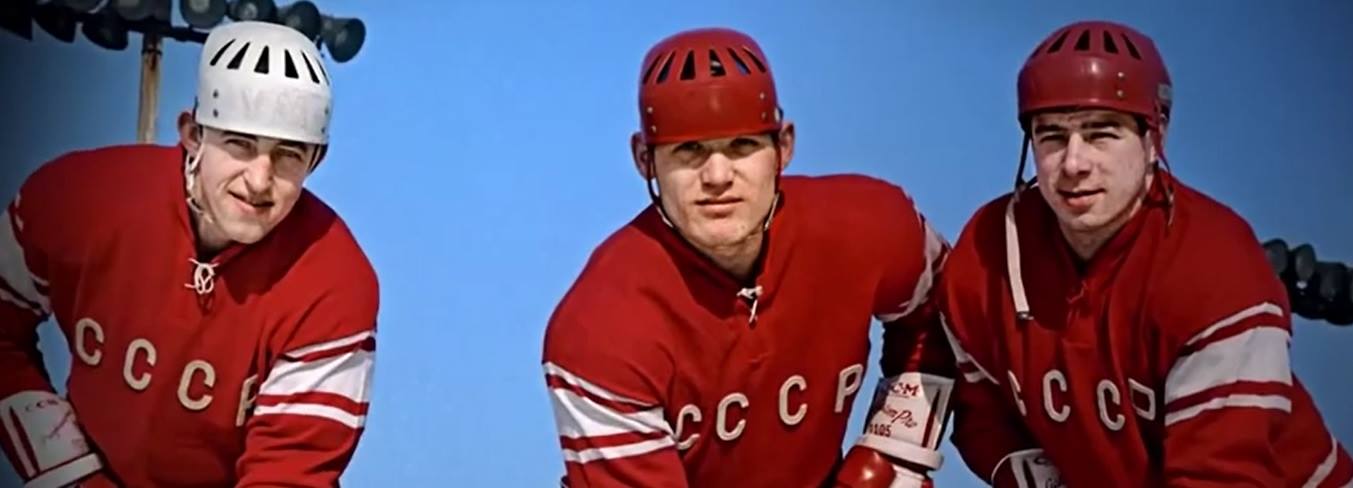
Fascinating on a historical level, riveting when it comes to the sport being discussed, and compelling in a deeply humanistic fashion, Gabe Polsky’s terrific documentary Red Army examines the intense Cold War relationship between Russia and America, and the various hockey players that were caught up in an international saga of greed, hubris, and outright dictatorship. Literally kept as slaves by their country, Russian hockey players back in that time period were revered by all and had to adhere to an intense training schedule that kept them away from their families for long periods of time. All of their insane treatment is detailed in this sad and scary film that highlights just how difficult it would have been to be playing under the Russian coaching regime back in the 80’s. Red Army primarily focuses on legendary defenseman Slava Fetisov and how he and his various teammates navigated the politically charged waters of worldwide sport during a time of immense uncertainty and volatility. Fetisov is quite the character, and while he provides tons of amazing information and anecdotes, on more than one occasion someone should have reminded him that he was there to make a documentary, not just to have his ass kissed; there are NO off limits questions when you’re the front and center focus of someone’s film. That being said, the exciting hockey footage that Polsky intercuts with his intelligent question and answer sessions with some of the era’s biggest stars commands the audience’s attention, and this is easily one of those movies where if you’re not a fan of the milieu, you’ll still enjoy the film because of how well-crafted it is on a formal level, and how interesting it is as a history lesson. And for any hockey fan or past or current player (I was lucky enough to lace up for 15 years), this will be a fabulous way to spend 80 minutes. And if you’re of a certain age, the names and faces on display will bring back waves of emotion and nostalgia. I know it did for me. Mike Vernon POWER in there, too.

2

DAVID FINCHER’S ZODIAC — A REVIEW BY NICK CLEMENT

1

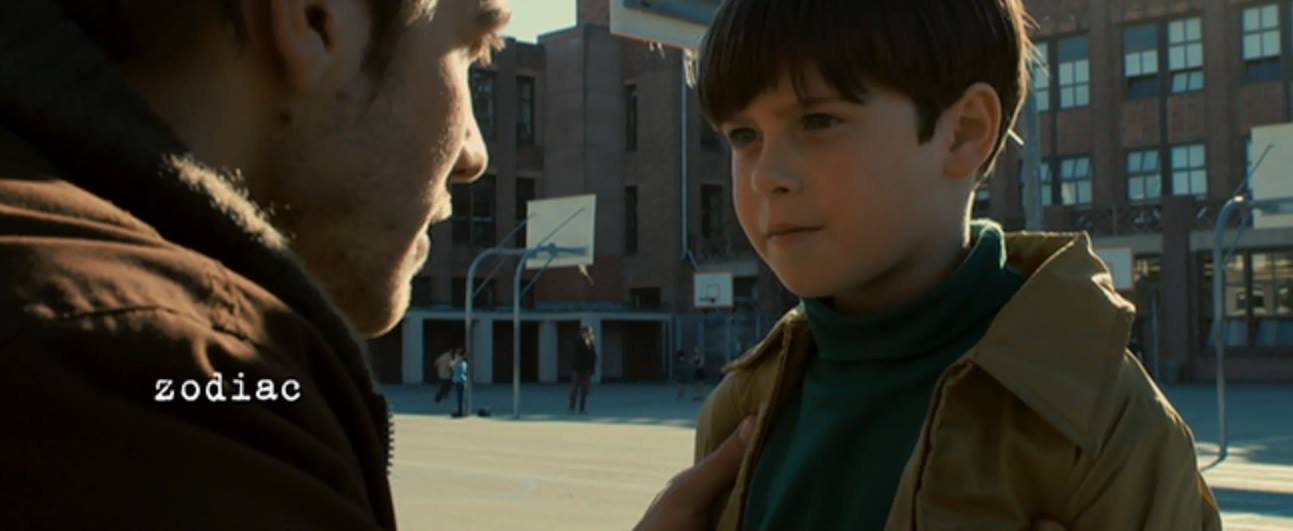
David Fincher’s quest to become the new Alan Pakula hit new heights with his riveting serial killer/investigative journalism thriller Zodiac, which might possibly be his greatest accomplishment yet as a filmmaker. I’m never sure, to be honest, what Fincher’s “best” film is — you could make the case for nearly all of them in one way or another. But with Zodiac, he tapped into our worst fears (that of a killer on the loose) and mixed the expected genre elements with an amazing sense of time and place, vividly recreating San Francisco during the late 60’s and early 70’s, as well as demonstrating a perfectionist’s eye in terms of both small and large narrative and visual details. The trio of Jake Gyllenhaal, Mark Ruffalo, and Robert Downey Jr. all did sterling work in this film, each of them carving out a unique portrait of obsessive behavior that would consume their characters at all times. The dense, phenomenally well-researched screenplay by James Vanderbilt (writer/director of the upcoming Dan Rather drama Truth) requires more than one viewing to accurately parse out all of the pieces of information, while Fincher’s steady, engrossing directorial aesthetic grips the viewer with paranoia and subtle style.

The late, great cinematographer Harris Savides (Birth, The Game, Elephant) gave Zodiac an amazing visual texture, with the digital photography augmenting all of the nighttime sequences with a realistic sense of light quality, while capturing the grisly murders with stark and brutal effectiveness on 35 mm film. The supporting cast hammered home all of their work with rigorous perfection, with standout peformances on display by John Carroll Lynch, Anthony Edwards, Brian Cox, Philip Baker Hall, John Getz, Dermott Mulroney, John Terry, Donal Logue, Elias Koteas, Chloë Sevigny, and Adam Goldberg. David Shire’s creepy musical score smartly used period-authentic pop songs with an unnerving ambient soundtrack to maximum effect, while Angus Wall’s fleet, razor-sharp editing kept the two hour and 40 minute film feeling light on its feet; rarely do “long” movies feel this quick. Despite excellent critical support, the film didn’t catch on with the Academy (maybe it was the March release date or the middling box office returns), and while 2007 was a landmark year for cinema in general, Zodiac being left out of the big dance feels incredibly short-sighted. This is one of Fincher’s most absorbing films, filled with three dimensional and vulnerable characters that you root for, while showcasing a mystery that literally has no ending.

2

PETER MEDAK’S ROMEO IS BLEEDING — A REVIEW BY NICK CLEMENT

1

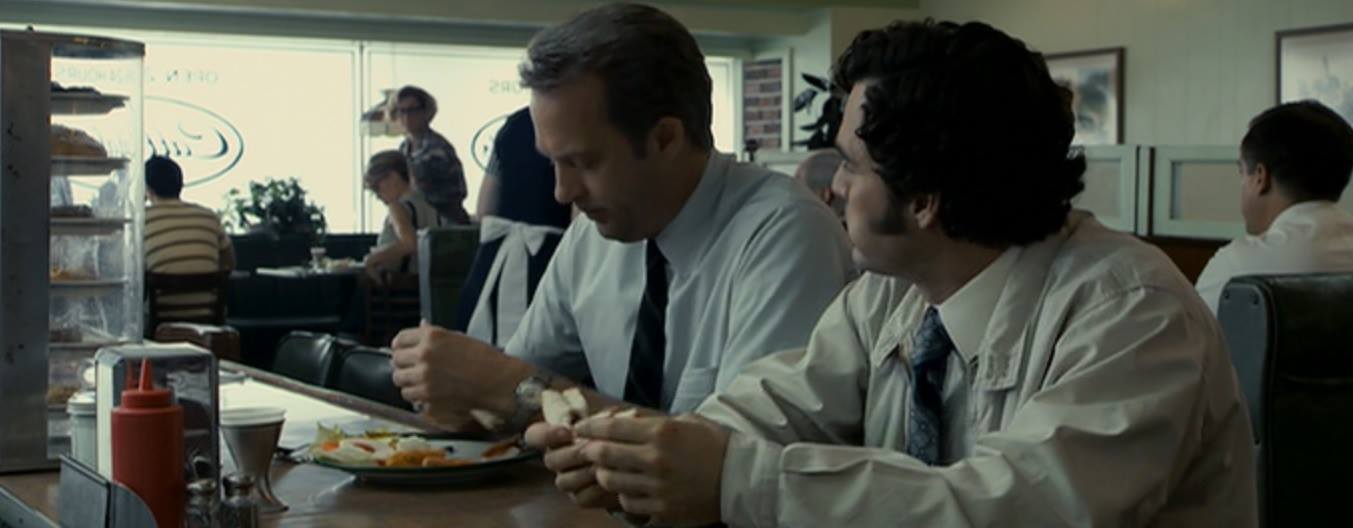
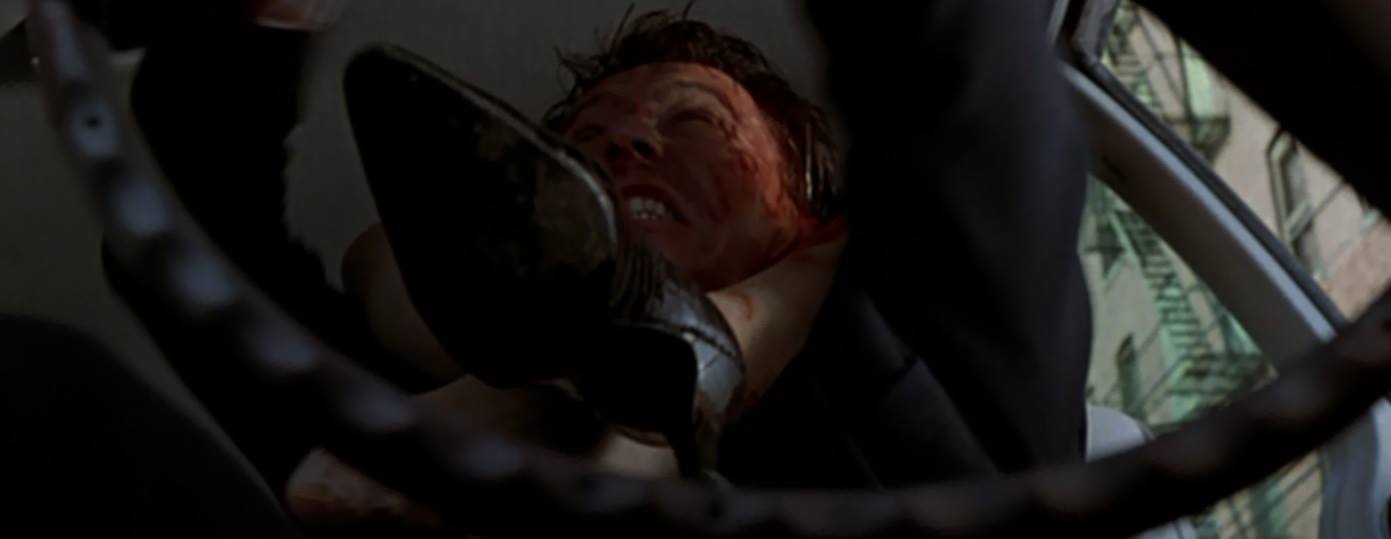
Peter Medak’s mean and nasty neo-noir Romeo is Bleeding is stylish, trashy, pulpy, B-movie bliss, overheated and wildly implausible, but always wickedly entertaining, and featuring a combustible Gary Oldman as a corrupt cop who gets in way over his head with one of the ultimate cinematic femme fatales, played with diseased relish by a lethally hot Lena Olin. She’s beyond dangerous, beyond sexy, and Oldman doesn’t stand a chance, while the lurid script by Hilary Henkin (Wag the God, Roadhouse) piles on a ton of violent action mixed with kinky sex and twisted humor, adding up to a unique package that never wimps out at any moment. Oldman had just wrapped Tony Scott’s mid-career classic True Romance before diving into his sweaty and feverish role in Romeo is Bleeding, and his work in this film feels like a logical warm-up to his iconic work in Luc Besson’s Leon (aka The Professional), which he’d shoot immediately after. Morally repugnant and totally out of bounds when compared to most thrillers these days, Romeo is Bleeding was beaten up by most critics at the time of its brief theatrical release, but I would have to imagine it has picked up a cult following in subsequent years. This is the sort of film that feels tailor-made for Twilight Time to do a Special Edition Blu-ray. Dariusz Wolski’s slick and gritty cinematography plays with genre conventions in a respectfully modern fashion, while Mark Isham’s trumpet-dominated score amps up the sleaze quotient to a high degree; music and image are in perfect tandem during this juicy little film. The fantastic supporting cast includes Annabella Sciorra, David Proval, Will Patton, Juliette Lewis, Tony Sirico, Dennis Farina, Ron Perlman, James Cromwell, Michael Wincott, and Roy Scheider as a leathered crime boss. Rome is Bleeding makes a perfect double-bill with Dominic Sena’s underrated thriller Kalifornia, another forgotten-about gem from the early 90’s that’s due for reappraisal.

2

A chat with writer and director Howard Goldberg

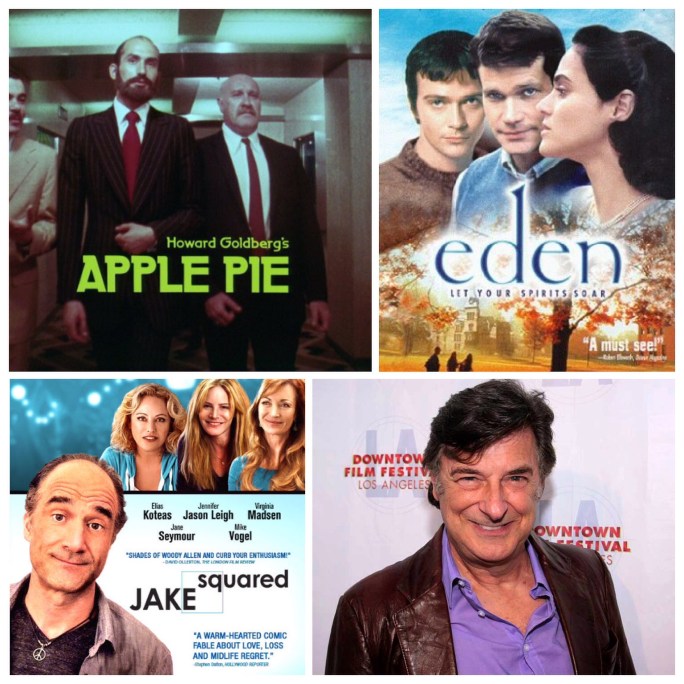
I am proud to present my recent interview with the incredibly talented writer and director Howard Goldberg, the man behind one of my favourite indie films of recent years, Jake Squared. He’s a great guy with a lot to speak about. Enjoy! 
Nate: Did you experiment with film when you were younger, make any shorts etc? What led you to writing and directing.


Howard: I was always a film buff. Whenever the subject of film came up people would always say, “Ask Howard. He knows everything about film.” I remember always thinking, “Man, they’re nut! Little do they realize, I don’t really know that much.” I thought I had a bit of a phony reputation. But, then one day, I was looking through this long list of the greatest films ever made and I realized I’d seen them all! I thought, “Wow!! I really do know a lot about film.”


 I started officially making films when I became a Film major at The University of the Arts in Philadelphia. I spent three glorious years there and made many short films – all pretty experimental in nature. Nice to see that after all those weird films, many years later I’m making really straight narrative films that are quite conventional in nature. Like “Jake Squared!” Oh wait, that’s right… “Jake Squared” is weird as all get out!


Nate: Care to talk a little bit about your writing process, envisioning characters on film, where your ideas come from, how your creative process works?


Howard: As Dorothy Parker said – “I hate writing. I love having written.” My writing process basically follows the time-honored tradition of sitting at the keyboard until my forehead bleeds. There are many writers who just spew it out, page after page after page. I am not, unfortunately, one of them. Hard work. Endless procrastination. Things percolating and stewing in my brain. Endless drafts. Great fun! But, “I love having written.” The end product is almost always worth the long process of getting there. At least to me!


Nate: I know how you feel, I procrastinate in my work as well. Interests, hobbies besides writing and filmmaking? I read that you have done sculpture as well, is that still something you are involved in?


Howard: For a long time, I was the only struggling filmmaker in New York who supported himself by sculpting. I know that sounds ridiculous, but it was true. I was working on screenplays and constantly trying to raise money and, at the same time, I had fallen into a lucrative career as a sculptor. I did many fine arts piece and (financially) more importantly, many commercial pieces, like for The Basketball Hall of Fame, the Clio Awards, etc., etc.


I have two hobbies – My kids (which is not really a hobby, but a calling) and collecting old watches.


Nate: Jake Squared: How did that idea come about, how was the process of making it for you, did the final project resemble what you envisioned when writing it? (I ask because I write as well, and having gone to film school have seen how vastly different ideas on paper can become when put through the wringer of filmmaking) Also, I must ask, is the film in any way autobiographical?


Howard: “Jake Squared” just evolved. It came out of many hundreds of pages of writing all kinds of thoughts about all kinds of things. Somehow, out of all these unconnected scribblings, a character started to emerge and take form. Writing such a seemingly freeform piece became like juggling 7 balls at one time. When it was finally done, I was very happy and very satisfied.


Making the film itself was a dream. It came together the most quickly of any project I’ve ever done. Once Elias Koteas had signed on the rest of the cast started falling into place. From the time he said yes to the time we started shooting was only about 4 months. Unheard of.


I am completely and totally thrilled with the film. In terms of the script I wrote and how I originally envisioned the film, I think it turned out even better than I could have hoped. There is nothing I look at in it and say, “Wow, I wish I had done this or that or this differently. To me it’s the best incarnation of the film I wanted to make that I could have made. That being said, some people adore it and some absolutely despise it. That’s a different issue entirely. Me? I’m perfectly happy with everything about it.


Is it autobiographical? Well, yes and very much no. Many of the characters and situations have some small part of me in them, but they also have thousands of parts of other people, their lives and their situations as well. All of the characters and situations are really fictionalized and dramatized composites of many people and places.


Nate: In an interview I heard you say you made Jake Squared free from the pressures and permissions of powers that be- essentially on your own. What resources did you use, casting, equipment etc to pull that off? Because it looks so polished, the editing is out of this world and it seems like every aspect just really came together (Get used to me gushing about the film lol I’ve seen in 4 times already since June :P)


Howard: Since I produced the film and put together all of the financing privately with no pre-conditions, I was able to do exactly what I wanted to do. I love to collaborate, so I had a remarkable team, from actors, to makeup and hair, set design, cinematography, editing, etc. and that’s what makes the film great. But, I got to choose them all, listen to their advice, and rebel in their help in bringing about and even making better my original vision But, the bottom line was always me and that’s what I liked. The film is 100% my own artistic vision – so if one were to love the film or hate it, the buck stops here.


That being said, I couldn’t have made it look like I did without my incredible team.


Nate: Do you have any films you are trying to get made now? Scripts, stories, anything in the works you want to speak about?


Howard: I’m trying to get a new film off the ground right now called “Once in Blue Moon.” I wrote it with my friend, Broadway composer and librettist Paul Gordon. It’s a modern day “Midsummer Nights Dream” that take place all in one night, a night of a Blue Moon, at a restaurant/bar/indie-alt music club. It’s about love and regret and angels and music.


I also am just finishing a new screenplay, tentatively called “Clear.” That one I couldn’t possibly describe yet as I’m still trying to figure it all out. But, it makes “Jake Squared” look like a straight narrative!


Nate: What are some of your favorite Directors, films, stories, anything that has inspired your own work?


Howard: Jean Cocteau, John Huston, Martin Scorsese, Preston Sturges and about 500 more!
Nate: Awesome, Howard, thanks for sharing! 
LEE TOLAND KRIEGER’S THE AGE OF ADALINE — A REVIEW BY NICK CLEMENT

2

Lee Toland Krieger’s The Age of Adaline is gorgeous looking nonsense, a sentimental and effective sci-fi romance that is entertaining in the moment, and gone the next. Shot in Fincher-vision with lots of piss-yellows and varying shades of brown and black, the film is eye-candy to the extreme, with beautiful and evocative production design by Claude Paré, and a terrific sense of how to fully utilize the 2.35:1 frame by cinematographer David Lanzenberg, who also photographed the exceedingly stylish thriller The Signal. The kooky story, which is narrated by Hugh Ross(!), involves a car accident and lightning strike that somehow prevents the well-dressed and extremely attractive Blake Lively from ever aging. So she spends the decades mostly alone, births a daughter, and never allows herself to fall in love (well, only a couple of times…). Throughout the years, she’s forced to repeatedly move in an effort to keep her strange secret hidden from anyone who she comes into contact with, only allowing the information to pass to her only child, played as a grown up by Ellen Burstyn. Harrison Ford has some strong scenes as one of her old romantic entanglements as he crosses paths with her 40 years later in a wonderful bit of contrived scripting. But to complain about the artificiality of this movie is pointless; it’s built on a massive suspension of disbelief that you have to accept right from the start. It’s a nice film, nothing spectacular by any means, but surprising in its level of artistic elegance and attention to visual detail.

1

RAMIN BAHRANI’S GOODBYE SOLO — A REVIEW BY NICK CLEMENT

1

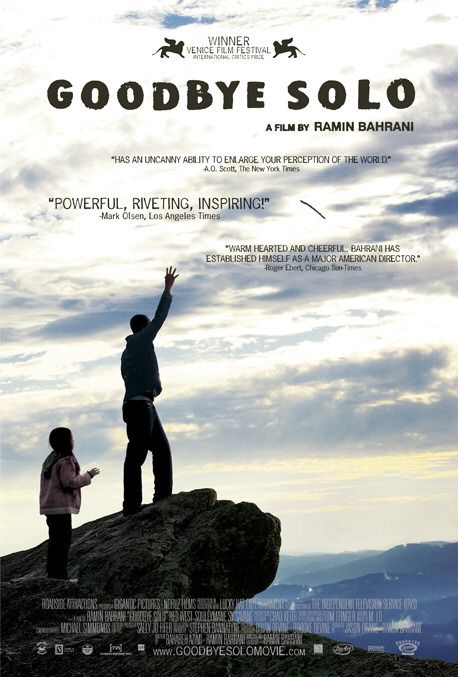
Ramin Bahrani’s Goodbye Solo is a quietly powerful film with two absolutely astonishing performances from its leads. Bahrani, who also directed the excellent Chop Shop, Man Push Cart, and the underrated At Any Price, currently has a new film out in limited release called 99 Homes, which centers on the financial crisis and home mortgage disaster of 2008. He’s interested in social commentary and human-scaled dramas which can thematically speak to anyone, a naturalist filmmaker with a style similar to Kelly Reichardt (Old Joy, Meek’s Cutoff, Wendy and Lucy, Night Moves), utilizing a deliberately slow pace, simple but effective camera set ups, limited artificial musical score, a noticeable lack of showy lighting techniques, all in an effort to achieve slow-burn and honest to the core dramatics. Goodbye Solo is about a North Carolina cab driver named Solo (the amazing Souleymane Sy Savane), a Senegalese immigrant, whose girlfriend is about to have a baby. One day, an old, sad looking man named William (Red West, incredible) gets in his cab and makes him an ominous offer: In one week, for $1000 cash, Solo will drive William to the highest point at a nearby mountain range, drop him off, and never look back. What develops over that week is an unlikely but exceptionally moving friendship between the two vastly different men. Bahrani’s emotionally taxing screenplay gives West and Savane some powerful scenes to play off of each other, with a finale that is perfectly understated but deeply felt. I was taken back by the honest and natural performances of both West and Savane, and probably because I wasn’t familiar with them before seeing the film, I was able to become invested in a way that might not have occurred had more baggage-laden talent been given the two roles. West is a guy who has been doing bit parts in movies for years (his personal story is fascinating…do a google search…) and he’s got one of those made-for-the-cinema faces that dispenses with back-story without the necessity for words. It’s a face that’s seen too much throughout the years, and because of West’s grizzled look and feel, he brings a level of intensity to William that remains present throughout the entire picture. Savane is the perfect antidote to West’s hardness; Solo could give Happy-Go-Lucky’s Poppy Montgomery a run for her money in the eternally optimistic sweepstakes. Always trying to help, always thinking with his heart (when sometimes he should be thinking more with his head), Solo is determined not to let William do himself in, even if it means sacrificing things that he holds dear. Bahrani was hailed by the late Roger Ebert as “America’s next great filmmaker” and it’s not hard to see why. He’s been making important, under the radar work for years now, and it’s time that he gets the full-on attention he deserves. If you’re not familiar with his work, I urge you to get acquainted. Goodbye Solo is a great film, one that will make you think long after you’ve finished watching.

BALTASAR KORMAKUR’S EVEREST — A REVIEW BY NICK CLEMENT

1

Other than the various physical locations on display during Baltasar Kormákur’s matter-of-fact mountain climbing film Everest, the star of the show is ace cinematographer Salvatore Totino, who clearly went to huge lengths to accurately portray the harrowing conditions that the various individuals faced during that infamous summit of the world’s tallest mountain. Every single shot in this film feels authentic, if there was any CGI used its seamless, and there are some sequences that defy understanding, as it truly seemed that people’s lives were in jeopardy. You also get some vistas of overwhelming beauty, with Everest’s sense of scale never lost on the viewer; this film feels epic in scope yet intimate in the fine details. We’ve seen over the top action films set on a mountain (Vertical Limit) and there have been some great docudramas (K2 and Touching the Void come to mind), but in Everest, the verisimilitude becomes one of the key selling points, with the audience never taken out of the picture due to hokey staging or poorly constructed moments of adventure. Totino’s visceral camerawork covers the action with a great sense of danger and exhaustion, never betraying spatial geography in order to get “a money shot,” always allowing for the natural beauty of the images to take center stage over camera tricks or a generally over-stylized aesthetic. The helicopter rescue sequence towards the end is riveting, with more than one instance of “how is this being done” running through my head while watching, and the last shot of the film has a poetically haunting quality that feels very resonant in light of all that has come before it. Totino’s work is Oscar-caliber, and my hope is that his smart and incredibly composed work gets the attention it deserves.

It’s a miracle that anyone survived at all, and the film certainly reinforces the notion that the will to live is buried deep within all of us, and when put to the test, we’ll do just about as much as we can in order to keep breathing for another day. But hey, when you reach the roof of the earth, you’re bound to face some challenges, if not stare death itself directly in the face. The fact that many climbers lost their life during this particular ascent is no surprise; the details of this story were first outlined in Jon Krakauer’s bestselling novel Into Thin Air. Kormákur and his screenwriters, William Nicholson and Simon Beaufoy, effectively set the stage during the brisk first act in a very traditional fashion, as we get to know the various people who have decided to pay a small fortune to risk their lives. The cast is led by an excellent Jason Clarke, one of the various group leaders who made it their job to bring people all the way to the top of whatever mountain they were scaling, but who prided himself in always bringing people safely back down. Death hangs over this film, as it does in so many man vs. nature survival dramas, and its inescapability can sometimes feel suffocating and overly sentimental. Not here. Kormákur doesn’t over-play the sudden moments where people meet their fate; they’re simply here one minute and gone the next. Yes, you get scenes were loved ones make their final phone calls, but from what I’ve read, all of this occurred in real life, making these sequences all the more emotionally accessible and relatable. Keira Knightley destroys her one “big” scene, eliciting tears because of how honest the entire moment feels, and because you know that she’s trying her hardest to be strong in the face of all but certain tragedy. Jake Gyllenhaal, Josh Brolin, John Hawkes, Emily Watson, and Robin Wright are all terrific in their supporting roles, but it’s Sam Worthington who really surprises during the final act, becoming the film’s heart and soul, handling his scenes with a direct emotional intensity that keeps the film from ever becoming maudlin. Everest gets the job done with class and respect.

2

NOEL MARSHALL’S ROAR — A REVIEW BY NICK CLEMENT

7

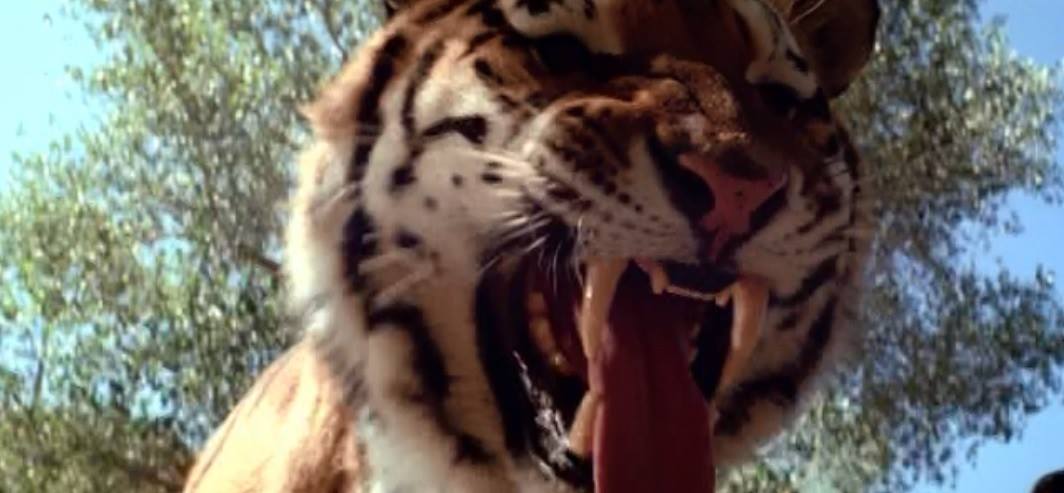
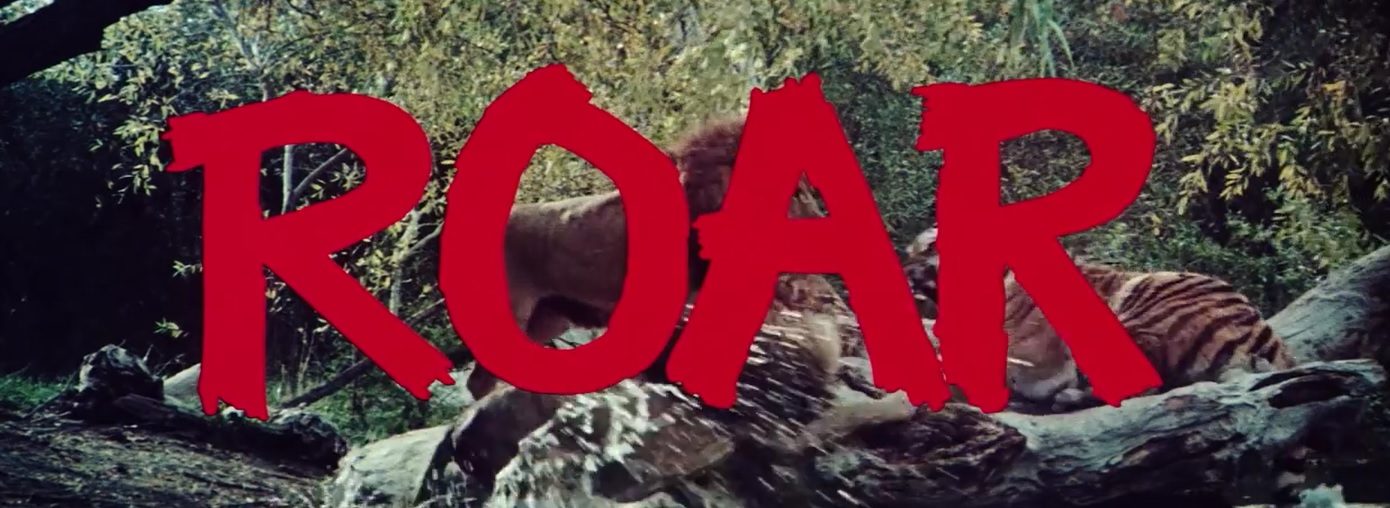
For me, the primary job of any movie is to show me something I’ve never seen and to take me to a place that I’ve never been. Well, I’ve never been to Africa, and I’ve never been surrounded by 150 lions, tigers, cheetahs, jaguars, panthers, and elephants. So you’ll have to excuse me when I say that Noel Marshall’s berserk, perverse, masochistic, fascinating, totally nuts wildlife “film” Roar is unbelievable. And I should also mention that I’m a life-long cat lover; big, small, wild, domesticated – it’s a species of animal that I’ve been intrigued with ever since childhood, and there isn’t a day that goes by where I’m not thankful to have my own little buddy, Gus, who is now looked upon differently after my obsession with this film started earlier this year. You literally feel like an outlaw while watching Roar, which has got to be the single most irresponsible piece of filmmaking that I’ve ever seen. Upon first viewing, you essentially hold your breath for 90 minutes, waiting the other paw to drop. Outside of Grizzly Man, I’m not sure that I’ve ever seen mental lunacy of this nature before captured on film. It’s a miracle that nobody was killed, but cinematographer Jan De Bont was scalped, and numerous members of the cast and crew suffered injuries, so there’s that I guess. And let me just say something about the camerawork in this movie – it’s wholly ASTOUNDING. I don’t understand how this movie was achieved. One bit. It makes no realistic sense. How De Bont was able to gather the shots he did I’ll never understand. Why anyone showed up on day #2 I’ll never understand. All I know is that you feel like a criminal while viewing this wild piece of work.

5

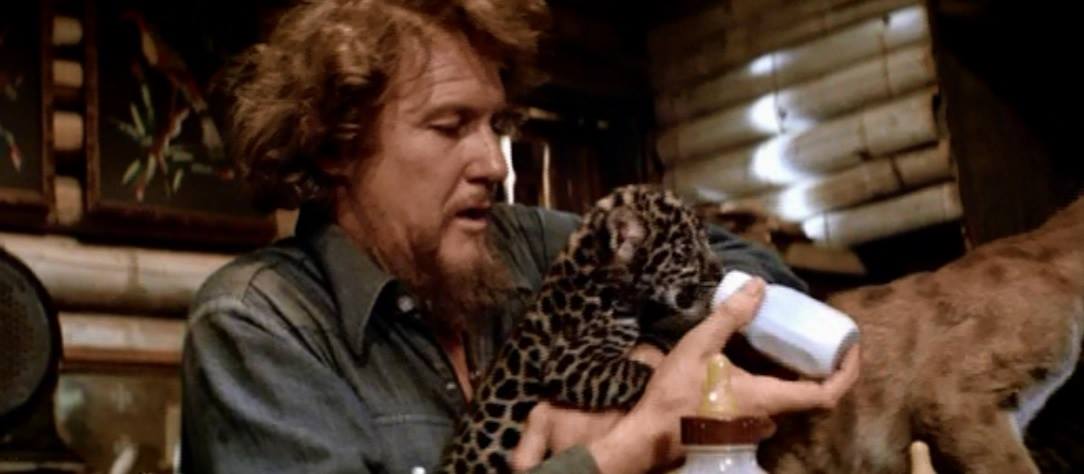
The entire thing is truly staggering in retrospect. If you’re not familiar with the premise of this movie, it seems that actress Tippi Hedren and her late husband Noel Marshall became big-cat enthusiasts after an African safari vacation back in the late 70’s. Upon returning to their Sherman Oaks estate, they started introducing lions and tigers and other exotic cats into their home life, allowing daughter Melanie Griffith to sleep with the animals, while their sons, John and Jerry, also became “friendly” with the beasts. It was customary to see a maid stepping over a fully grown male lion in the kitchen. PURE MADNESS. Marshall then had a genius if potentially deadly idea – why not make a movie that aims to highlight the plight of the wild cat, but also make a “monster” movie at the same time. So, he gathered an unhinged crew of daredevils, stuck Hedren, Griffith, his sons, and a few others into the scenery, and concocted an asinine narrative that centers on a wildlife preservationist (Marshall) bringing his wife and children (Hedren and the gang) into the jungle to visit him, only to have them terrorized by a gang of lions and tigers who proceed to trash and destroy the wooden house that they all “live” in. If what I’m describing sounds fairly psychotic, well, it is. And I don’t want to ruin any of the numerous surprises that this film has, but I will say that the sight of Hedren’s face covered in honey as a young jaguar licks it clean is something I’ll not soon forget. You can smell the fear on all of the “actors” in this film – the honest look of terror in their eyes is palpable, and despite everyone going on the record as saying that they “knew” these animals and that they were “comfortable” with them in the grand scheme of things, suggests an insane amount of hubris or a genuine, bonded relationship between human and animal that is simply extraordinary to ponder.

2

At the end of the day, it doesn’t really matter though. This movie got made (over the course of 11 years!), people went on to have prosperous careers (look at De Bont’s credits as both cinematographer and director!), and now the film is finding a second life as an oddball cult curiosity, with Special Edition Blu-ray dropping in November. I can guarantee you this – you’ve never seen anything like this movie, unless of course you were there to witness it being created in real time, or if you’ve tracked down a bootleg or the non-anamorphic DVD that’s floating around. It’s sensationally scary and almost too impractical to make sense of. Roar makes you feel like you’ve dropped acid when you absolutely know you haven’t been dosed. It’s a strangely personal piece of filmmaking that while shoddily directed (at times), is still somehow oddly coherent, a $17 million home movie that became a clear point of obsession for its makers. The unintended comedy of the mostly looped spoken dialogue only adds to the bizarre hilarity of the entire piece. Also of note: included on the straight-from-the-source-DVD that can be purchased on line is a vintage “making-of” featurette which includes some talking-head footage from “friend of the family” Richard Rush, sitting in this absurdly ostentatious living room, looking like Jack Horner’s older brother. It’s gold.

JAMES MARSH’S MAN ON WIRE — A REVIEW BY NICK CLEMENT


1

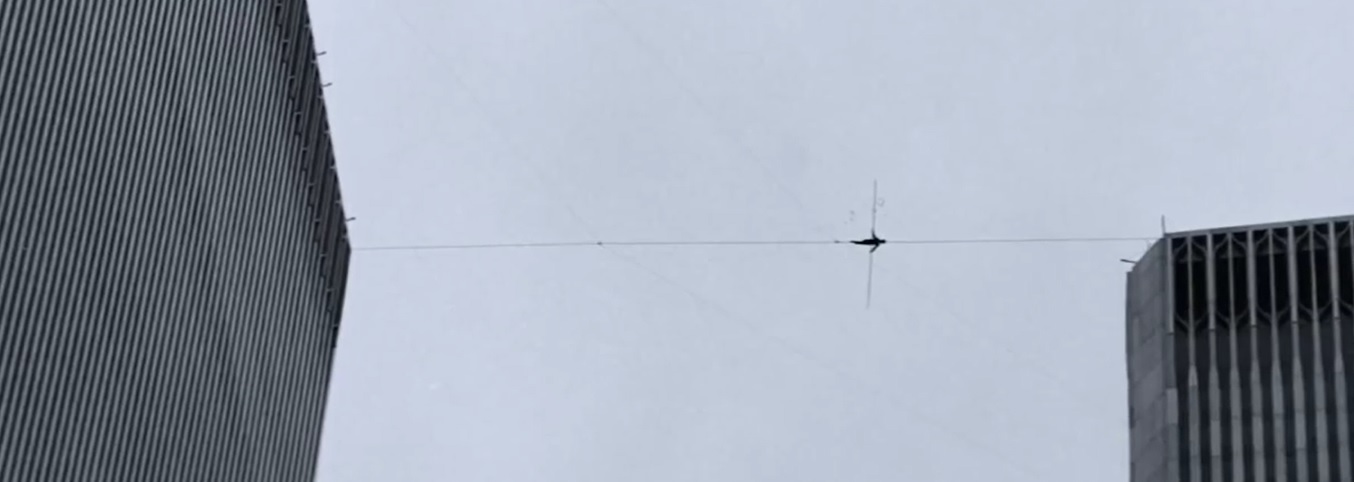
James Marsh’s spellbinding documentary Man on Wire is the sort of film that leaves you feeling queasy, enthralled, and alive. Queasy because of the physical insanity demonstrated by Philippe Petit. Enthralled because of how daring Petit was to do what he did. Alive because the film acts as a celebration of life. Petit, for those of you not in the know, pulled off what some people consider to be the “artistic crime of the century.” In 1974, along with a group of friends, he attached a wire from one World Trade Center building to the other, and tight-rope walked back and forth between the two buildings. Eight times. Over the course of 45 minutes. In this staggering documentary, which was expertly constructed by Marsh like a first-rate Hollywood thriller, the viewer is treated to video footage of Petit doing numerous other tight-rope walks (in Paris, London, Sydney) and practicing for his endeavor in NYC. Some may think that Petit is ill, a man with a certain death wish. Some may think he’s simply eccentric, a guy in love with life, unafraid of the fatal consequences that his obsession carries. And who knows, all of those scenarios could be true. It’s sort of baffling to me that Werner Herzog, the wild-man filmmaker that he is, didn’t get the rights to this story, as Petit feels as Herzogian of a character as there could ever be. In its own quietly moving way, Man on Wire becomes something extremely special: A testament to the power of one’s faith in themselves and the people around them, and how the most challenging of ideas can be realized if you have the drive and passion to accomplish it. Petit, who is considered to be one the first widely-known and publicly accepted modern street performers in Paris (he juggled, danced, tight-rope walked), is such a distinct character, that everyone else around him, no matter how interesting they are in their own respects, pales in comparison. During the course of the film, we’re introduced to all of his friends and accomplices, who divulge information about their scheme and about Petit in general. Jaw-dropping footage of his other tight-rope walks are shown throughout the film, with footage from a high-wire walk in Sydney being the most insane.

Petit didn’t just walk on the wire – he would lay down on it, bounce on it, even dance on it. When he devised his plan for walking in between the World Trade Center buildings, he knew it’d be the crowning achievement of his career. The way that Marsh amps up the tension using his framing device for the film is extremely clever, very stylish, and eerily subversive, as the film takes the form of a terrorist thriller. You see Petit and his men infiltrate the World Trade Center, wearing fake disguises and showing phony paperwork to gain access to the roof. Of course, after the world altering events of 9/11, this story takes on even greater significance, and there is a mournful quality to much of the footage we see of the World Trade Center being built. It will be impossible for us to look at photos and footage of the World Trade Center without thinking of 9/11, something that Marsh knew full well before setting out to craft this engrossing documentary. And because none of it is ever exploitive, Marsh brings out a soulful quality of New York that’s hard to describe in words. However, I wish Marsh had asked Petit about how 9/11 affected him, because it’s clear from the film that Petit was in love with NYC and the World Trade Center, and not to mention having a profound and lasting impact on his life. Maybe some questions are best left unasked? My only complaint is that nobody, for whatever reason, decided to film Petit’s walk across the World Trade Center. They snapped lots of still photos, but why weren’t they filming it like they filmed his other death-defying acts? In the end, what I loved so much about this film, and about Petit in general, is that this was a project that Marsh felt compelled to make, much in the same way that Petit just HAD to attempt what he did in NYC. He thought that the World Trade Center had been built so that he could walk in between them.

2