JEAN-PIERRE JEUNET’S THE YOUNG AND PRODIGIOUS T.S. SPIVET — A REVIEW BY NICK CLEMENT

2

Seriously – at this point – The Weinsteins, in particular Harvey, need to be stopped. Someone has to drive over to their offices and put a banana in the tail pipe or something because I’m done with their asinine shenanigans. One of their latest casualties: Jean-Pierre Jeunet’s glorious and never released in the United States family film The Young and Prodigious T.S. Spivet. I call it a family film because at its heart, it’s all about family, but this being a Jeunet picture, you know you’re in for something subversive and all together unique from frame one and this overwhelmingly ravishing movie is no exception. Taking his storybook filmmaking aesthetic to new and boldly imaginative heights, this feels like an amazing mixer of his already fanciful storytelling techniques with nods to Wes Anderson, classic American iconography, bits of the whimsical spirit of Michel Gondry, along with a dollop of Spielbergian sentimentality that’s a perfect fit for the tonally wild final result. I simply can’t understand the fascination that the Weinfucks, oh I’m sorry, Weinsteins have with continually meddling with major movies from major filmmaking talents (James Gray, Bong Joon-Ho, and Wong Kar-wai are some recent directors who have battled it out with the legendary “producers.”) It’s almost as if they go out of their way to buy everything up and then just dump or bury it so that nothing can compete against their new QT film or whatever British prestige picture they have up their sleeve in any given year. It’s getting really, really tired.

3

Based on the book by Reif Larsen, the epic yet intimate narrative involves a 10 year old science prodigy in the making named T.S. Spivet (the incredible Kyle Catlett making his film debut, and having a TON asked of him as a performer). He lives on a gorgeous, Babe-style farm in Montana, and he’s obsessed with maps and inventions and figuring out the practicality of everything around him. His eccentric mother (Helena Bonham Carter, looking uncharacteristically beautiful yet still full of her trademark quirk) is obsessed with beetles and bugs; his father, the perfectly cast Callum Keith Rennie, is a “cowboy born 100 years too late;” and his 14 year old sister has aspirations of becoming Miss America but isn’t allowed to have a phone in her room. And then there’s the matter of T.S.’s twin brother Layton, who has tragically died in a gun accident, an accident that T.S. feels partly responsible for. Then, his life is changed one day when the Smithsonian calls, telling him that he’s won the ultra-prestigious Baird award, as he’s seemingly invented the world’s first perpetual motion machine. So what’s an intrepid kid living in Montana to do when nobody around him truly understands his numerous mental gifts? He does what any forward thinking young chap would do – he sets off by himself for Washington, D.C., hopping aboard freight trains, hitching rides with tractor trailer truck drivers, and using anyone and anything to his advantage in any possible way.

4

That’s all I’ll allow for the plot, because like every film that Jeunet has crafted, there are constant surprises in store, with his amazing sense of visual wit and overwhelming attention to detail within his mise-en-scene being almost second to none in my estimation. Shot after shot, the film looks like an utter treasure, with Thomas Hardmeier’s elegant and honeyed widescreen cinematography popping with vibrant color and depth of field, with something always interesting to look at in all areas of the frame. Jeunet is a grab-bag guy, a man in love with the endless possibilities of cinema, and as usual, his obscene production design (handled by Aline Bonetto) is stuffed with endless bits of visual information that both inform the story and boost the atmosphere. And then there’s the craft, DIY-inspired special effects and flights of fancy that amp up the pleasure-zone factors; it was filmed in 3-D which must’ve been a total treat to experience. This film was NEVER released in ANY fashion in the United States. Fuck you, Harvey Weinstein. Fuck you. The Cinema Godz cast shame upon you and your company. It should be considered a CRIME AGAINST CINEMA to get a film this wonderful and unique all the way to the end line and then not have it get a chance to see the light of day in a country where there would have been plenty of people to enjoy it. The only way that this movie can be seen is if you have a Region Free Blu-ray player, or if you feel like downloading it online illegally. I don’t do that stuff, and normally I’m against that practice, but in this case, I encourage everyone to do what they can to see this masterful piece of moviemaking.

WILLIAM EUBANK’S THE SIGNAL — A REVIEW BY NICK CLEMENT

1

Intriguing right from the start (if a bit purposefully confusing) and building an impressive head of steam throughout 90 semi-perplexing minutes, William Eubank’s supremely stylish sci-fi mind-teaser The Signal is one of those flicks that keeps you at arm’s length for much of its duration, only to finish with a whammy of a twist ending that most people won’t see coming (I didn’t). Trading on some beats from other genre entries but still doing enough to feel fresh and zesty and alive with possibilities, this low-budget effort benefits from Eubank’s background as a cameraman, as the 2.35:1 widescreen framing is stunning, with cinematographer David Lanzenberg opting for a bold, saturated color palette and harsh, washed-out desert tones that amp up the creep factor while maxing out the style department. Seriously – this film looks 100X bigger than it actually was – I can only imagine what Eubank could do on a massive canvass from on a visual level. Without giving too much away about the oblique yet thoroughly engaging narrative, The Signal plays with the idea of the alien close encounter in a way that really hasn’t been done before – but you may not realize that fact until the very end. Upon deeper inspection, it’s a film that operates on multiple levels and gives you some really interesting bits to chew on and contemplate. Brenton Thwaites is a very appealing young actor who does a really good job at being exasperated, and when finally presented with his moment of truth, he registers with true force and sincerity. There’s lots of nifty special effects and tons of powerful imagery, making this a highly enjoyable “calling-card” movie for Eubank. I’m disappointed that this film didn’t find a larger theatrical audience last summer, but I have a feeling that over time, it will gain the audience it deserves via the DVD and Blu-ray and streaming market. Low on budget but high on unnerving ideas and glorious style, The Signal is one that truly got away – check it out if you’ve previously missed it!

2

DAVID ZELLNER’S KUMIKO, THE TREASURE HUNTER — A REVIEW BY NICK CLEMENT

1

Inspired by the urban legend surrounding the real life suicide of Tokyo office worker Takako Konishi (go to Google…), David Zellner’s bizarre, enigmatic, and totally masterful oddity Kumiko, The Treasure Hunter is easily one of the most spellbinding films of the year, a motion picture almost impossible to classify, and the very definition of a film where the less you know about it the better off you’ll be when you see it. This was my first Zellner Brothers experience and it won’t be the last; I’m stocking up my Netflix queue with whatever I can get my hands on, and I’ve discovered some funny short films online (Sasquatch Birth Journal #2 is priceless!) which seem to indicate a general level of cinematic idiocy that I can really get behind. I love it when a movie takes me totally by surprise, and when a filmmaker confidently mixes a variety of tones with the express goal of creating something wholly unique and startling. That’s what this film is – wildly original, deeply stylish, mentally stirring, and at times, thematically troubling when it isn’t being irreverently funny. And it’s yet another small movie from this year that trounces the big-budget competition; I’m finding it harder and harder to come up with any solid reasons to see whatever piece of uninspired nonsense that the studio system is hurling my way.

2

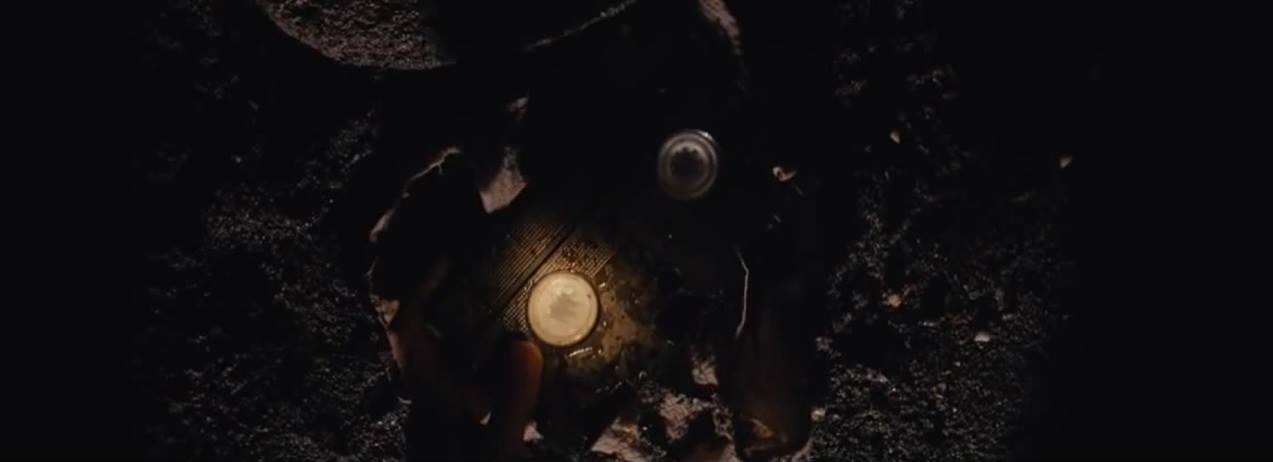
Kumiko, The Treasure Hunter, which was co-written by David Zellner and his talented brother Nathan, stars the fascinating actress Rinko Kikuchi as a mentally ill Japanese office worker, “still” unmarried at 29 (much to the chagrin of her overbearing mother), who discovers a degraded VHS copy of Joel and Ethan Coen’s celebrated film Fargo. The narrative details, with much humor, painful sadness, and creepy unpredictability, how she misinterprets the film for real life, leading her on an asinine and quixotic quest to find the money that Steve Buscemi’s character had buried out in that snowy field near that wire fence before he got fed to the wood chipper. The film is all about Kumiko’s quest and the interesting people she meets along the way (a segment with a helpful cop played by David Zellner himself and some scenes with a widowed woman are particularly strong and affecting), and the way the Zellners have framed their story leaves little doubt in the viewer’s head that they’re dealing with a lead character who isn’t thinking clearly. And what’s more, the subtle ways that the filmmakers fill you in on this fact are awesome to notice and discover. The script is limited with its dialogue, as the Zellners prefer to tell their story with a focus on allowing their indelible images to propel to narrative forward, resulting in a work that feels dreamy and one that’s constantly challenging reality.

3

The film has an amazing visual look, with the 2.35:1 widescreen cinematography by Sean Porter always putting something interesting in the frame, with Kumiko’s red hoodie cutting across the blown-out white expanses of the Minnesota winter landscape in extremely memorable fashion. Melba Jodorowsky’s fluid editing allows the film to move along at a brisk pace without ever feeling rushed, and the eclectic and offbeat musical score by The Octopus Project never leaves any doubt that you’re watching something willfully absurd yet sincerely heartfelt. The film is essentially about loneliness and isolation, and how one woman is committed to doing SOMETHING with her life, regardless if that something is rational or not. The Zellners have made an absurdist film to a certain degree, and yet, there’s emotional impact because of Kikuchi’s mesmerizing portrayal of a woman who has lost all sense of normalcy, desperate for this one thing to come to fruition. You never know where this movie is going, it’s impossible to guess how it will end, and I absolutely LOVED the final section, which will likely frustrate and annoy those who need everything spelled out for them in order to be satisfied with a movie. I’ve never seen anything that remotely comes close to resembling this bizarre and completely transfixing film, and it’s yet another indication of how there are some truly great movies out there to be seen if you’re willing to look a bit harder at all of the available selections.

YANN DEMANGE’S ’71 — A REVIEW BY NICK CLEMENT

2

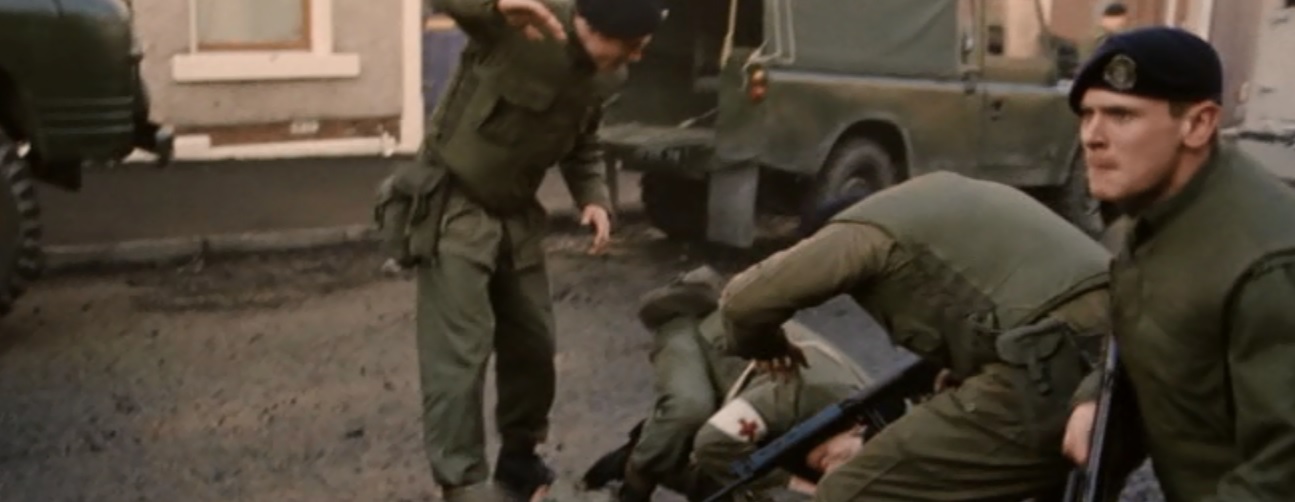
Yann Demange’s riveting thriller ’71 is one of the most hard core, cut from real life docudramas that I’ve ever seen. Taking a cue from the run-and-gun filmmaking aesthetic of Paul Greengrass (Bloody Sunday feels like a spiritual cousin in many respects), this is a blistering anti-war statement focusing on a bloody and violent riot in the streets of Belfast during The Troubles in 1971, and how a left behind British soldier (the phenomenally intense young actor Jack O’Connell) has to contend with all sorts of dangerous elements over the course of one hellish night in an effort to stay alive as a group of radicalized demonstrators are looking to do him in for good. This film has tremendous camerawork that goes for the visceral in every moment, the sound design is excellent, there are surprises left and right from the gripping narrative, and Demange exhibits a firm grasp of no-fat linear storytelling that grabs you by the throat from the opening seconds and never lets up for 95 minutes. Agonizing to watch at times, incredibly suspenseful, and dispiritingly sad by its conclusion, the film is aided immensely by O’Connell’s vigorous performance. He’s now demonstrated in three films (Starred Up and Unbroken being the other two) that he is one of the premiere young talents to emerge on the acting scene in quite some time. He always looks different, he’s got a fantastic set of eyes that seem to posses a laser-like intensity, and he’s able to convey vulnerability and confidence in equal measure. As far as military themed thrillers go, this one is at the very top of the list.

3

DRAKE DOREMUS’ BREATHE IN — A REVIEW BY NICK CLEMENT

2

Internal, quiet, and a film that’s constantly searching for answers, Breathe In is a wonderful, heavily improvised drama that places a strong concentration on mood and atmosphere and the lingering moments after a conversation ends, while endlessly stressing the emotionally suspenseful moments of its character’s lives. This is a very different film from writer/director Drake Doremus after his no less accomplished debut Like Crazy, which for me, still ranks as one of the best college/long distance relationship movies that I’ve seen. He’s again delivered a serious and dreamy look at relationships with Breathe In, but this time, instead of college students, Doremus’ tale centers on the possible May-December romance of a married man and a high-school exchange-student whose sudden presence in a suburban family’s home shakes everyone to their core. Using off the cuff dialogue to propel the plot forward was an interesting way to have the actors confront the highly complex situations that the characters find themselves in, and even if the final act isn’t as perfect as the previous two, the performances, especially those of the consistently excellent Guy Pearce and the continually alluring Felicity Jones make up for any potential shortcomings in the story department. This is a very good movie, extremely well observed from almost every angle, and further demonstrates Doremus’ inherent interest in people and their emotionally fragile states (Like Crazy did this sort of thing extremely well; it’s such an underrated film). The probing, expressive cinematography, classical music score, and the overall sense that “anything can happen” keeps you engrossed, and it can’t be said enough – Guy Pearce is one of our absolute best actors currently working, and he turns in an exceptionally challenging performance as a man driven to mental madness over his shortcomings as an individual and the knowledge of the pain that he might be capable of inflicting on those who love him. And Jones is every bit his equal, hitting all her notes of guarded sexuality and emotional vulnerability, creating a woman who is very much in control of her surroundings but still doesn’t quite grasp the ramifications of the scenario she helps to create. Amy Ryan and Mackenzie Davis offer excellent support. Doremus is clearly a filmmaker to look out for in the future.

3

JOHN CARPENTER’S ESCAPE FROM NEW YORK — A REVIEW BY NICK CLEMENT

1

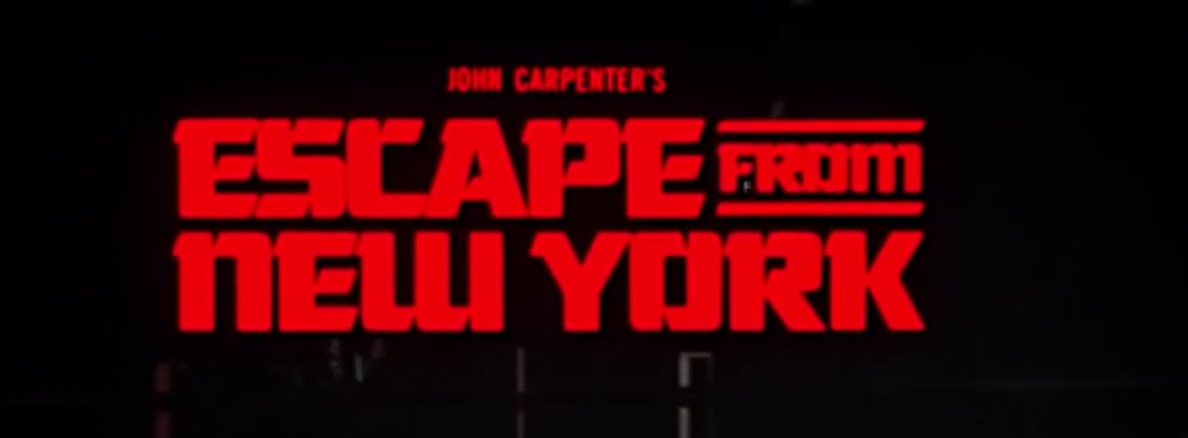
John Carpenter’s 1981 classic Escape from New York, which the filmmaker wrote in the late 70’s as a direct response to the Watergate scandal, was not a movie that I grew up repeatedly watching as a kid, even though I’m definitely a “child of the 80’s.” That being said, I was always aware of its existence, reputation, and while I had seen it once or twice during my youth at friend’s houses (it was one of “those” movies…), it was never a staple film for me during my formative years. All that being said, revisiting it just recently, I was struck by how awesome and low-tech and appreciably cheesy the film is, and I mean that in the best possible way. This is a film that should NEVER be remade — it was a post-apocalyptic movie that feels QUAINT by today’s over the top standards, and as per usual for Carpenter, the script and subtext were just as interesting as the onscreen heroics and action set-pieces. The R-rated violence was also terrific, with all sorts of beat-downs, shoot-outs, and a general air of smart-alecked nastiness leading the day.

2

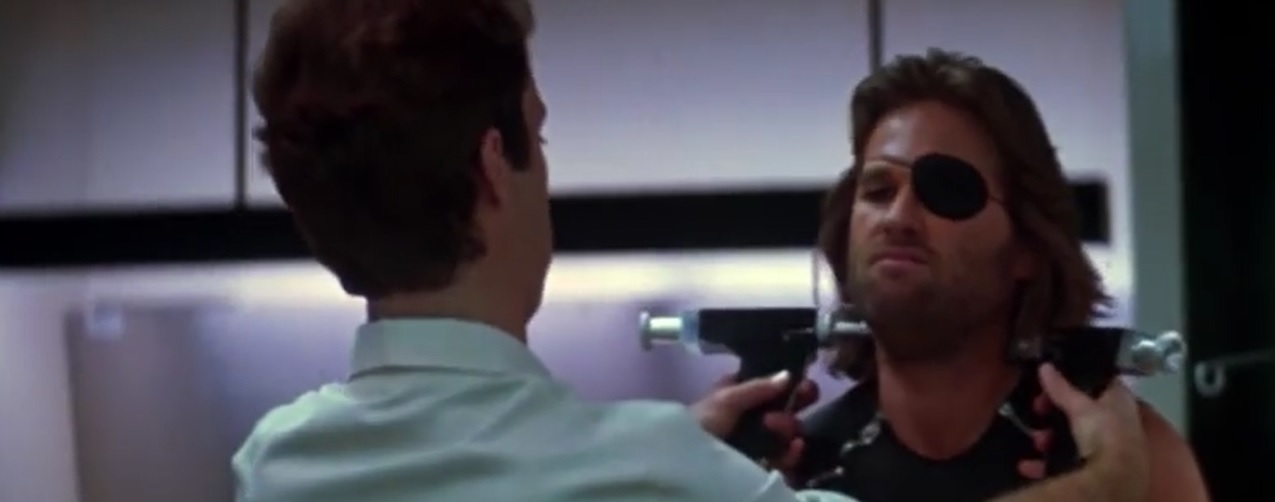
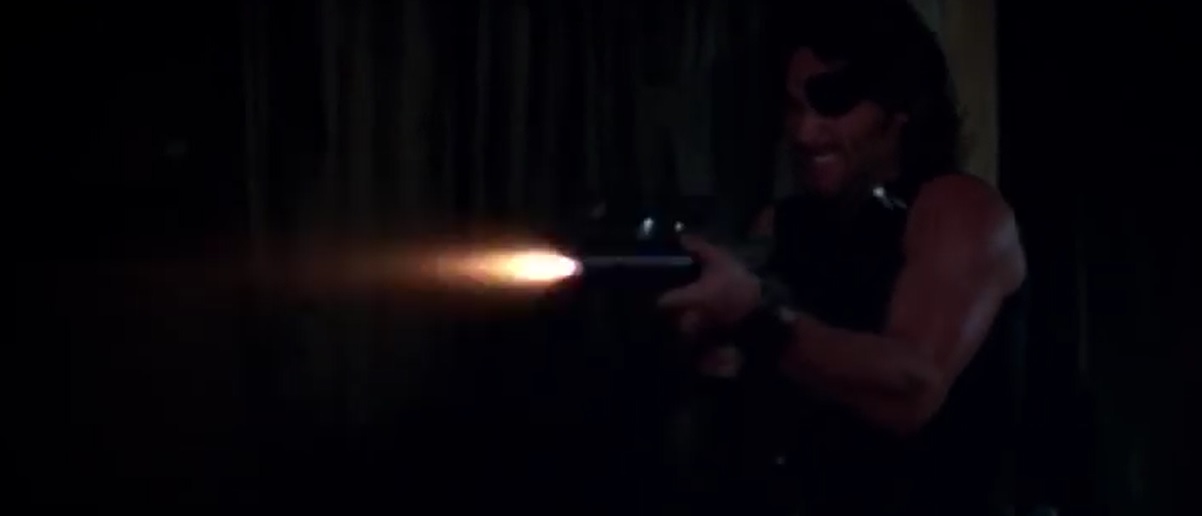
Make no mistake — Kurt Russell is Snake Plissken — there’s just no need to recast the role with some young flash-in-the-pan actor who could never, ever possibly replicate the steely-eyed gaze and incredible anti-hero flavor that Russell brought to his iconic performance. Because the film was made on a low budget, much of it is set at night, yet the darkly photogenic cinematography by 80’s master Dean Cundey has a perfect, rough around the edges feel which takes full advantage of the scuzzy production design and down-home-grubbiness of the entire film. And then there’s Carpenter’s fantastic original score, with that trusty theme music popping up in all the proper spots. The premise is simple: an ex-soldier/convict has 22 hours to find the President (Donald Pleasance) who has been stranded on the prison island of Manhattan after the crash of Air Force One. If he’s successful, he’ll be pardoned. If not, he’ll be killed.

3

With stripped down efficiency and an attention placed on violent spectacle laced with black humor, Carpenter moves from one sequence to the next with hard-core conviction. Co-written by Nick Castle of The Last Starfighter fame. Escape from New York has certainly become a cult classic over the years, but it’s interesting to note that the film was well reviewed and actually became a theatrical success ($25 million vs. a $6 million production budget), which sort of bucks the traditional definition of a “cult” movie. And let’s not forget endless Ernest Borgnine POWER and Harry Dean Stanton EXTRA POWER. Isaac Hayes, Lee Van Cleef, Tom Atkins, and Adrienne Barbeau are also all extremely memorable in supporting roles, and James Cameron worked on the cool matte paintings(!) and also served as an additional director of photography. Shout! Factory’s somewhat recently released Special Edition Blu-ray is a smashing success, featuring a transfer that retains the grit and grain of the original photography, and lots of special features to make any fan of this film grin ear to ear.

LYNN SHELTON’S WE GO WAY BACK — A REVIEW BY NICK CLEMENT

We Go Way Back

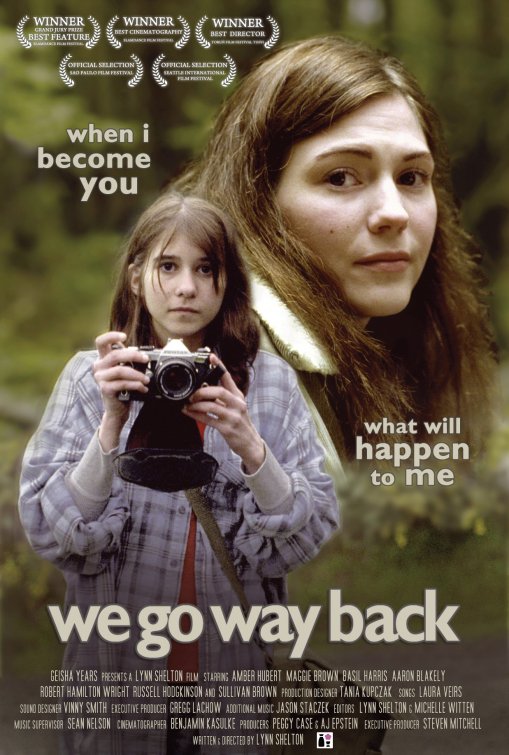
Watching a director’s first feature after you’ve seen the rest of their work is always interesting, because rather than seeing their natural progression as a storyteller and filmmaker, you view the debut with a different lens because you’ve come to know the artist through other efforts. Getting a chance to see Lynn Shelton’s We Go Way Back was one of those situations – I’ve become a massive fan of her work over the last six years, but only recently had the chance to see her confident, heady, and introspective first film that when viewed in retrospect, feels like an obvious and natural start for her as a creator of filmed stories. Yes, there are some first time filmmaking stylistic ticks that pop up here and there, but I’m all for formal experimentation – film is a visual medium first and foremost so I’m always down for jump-cuts and elliptical editing and stylish fades and transitions. Not that this is a Tony Scott film or anything, but Shelton definitely played with style more than most first time filmmakers who are crafting a low-key and completely character driven piece (i.e. no guns, car chases, explosions, for fancy vulgarity), and it’s within the expressive nature of her then emerging aesthetic that you can see how she’s arrived at a comfortable current spot with her overall style and intent as a moviemaker.

Shelton’s engaging and at times unnerving narrative pivots on a young woman named Kate (the excellent Amber Hubert, with a face of limitless possibility in terms of conveying angst), a fledgling Seattle actress who has just been offered her first starring role (under the direction of a possibly insane local theater director), but begins to essentially have an existential crisis and comes into contact with the physical manifestation of her 13 year-old self. Or so she thinks. This is a stream of conscious type film, with the opening scenes containing jumbled dialogue that mixes current day activities for the 23 year old Kate and the audible memories of her as a teen, with an Altman-esque sense of overlapping in an effort to immerse and quickly confuse. There’s also the recurring motif of Kate reading question filled letters that she had written to herself 10 years previous, all of which reflect on the various behaviors we see her engaging in during the story. The seemingly naïve questions that she has asked herself come to inform the decisions (some poor, some promising) that she makes during the narrative.

Not content to just make a “point and shoot” debut effort, Shelton infused the relatively brief runtime (75 minutes) with enough emotional pathos and cerebral questions to leave one with a rich cinematic experience, rather than a slight experiment with film school pretensions. Shelton’s sense of place is firm from the outset, using the physical surroundings as a character to a certain extent (a theme that’s been carried on in every feature since), while never losing sight of the dramatic task at hand – how to take the viewer through a personal, hopefully cathartic ride through the mind of a young woman who doesn’t know herself as well as she might like. And when viewed as a warm up to My Effortless Brilliance and then Humpday, We Go Way Back feels even more understandable and interesting within Shelton’s naturalistic if pensive worldview. The film won awards at the Slamdance Film Festival in 2006, clearly marking the arrival of a major new talent in American independent cinema, and will finally be available on DVD and Blu-ray later this year.

4

LYNN SHELTON’S YOUR SISTER’S SISTER — A REVIEW BY NICK CLEMENT

2

Your Sister’s Sister is another excellent, sexually awkward, low-budget indie from writer/director Lynn Shelton, who is shaping up to be some sort of quirky hybrid of Paul Mazursky and Woody Allen, a filmmaker interested in human behavior, how people interact and speak, what makes someone tick, and how humor can be derived from the most unlikely of places. This is her darkest film yet, and while there’s rough thematic material at play during the narrative, Shelton’s astute directorial hand is able to guide the story through tonal switches and surprise plot developments, with all of the results feeling at ease and well proportioned. From the exterior, this seems like a simple, small film, and while it’s intimate and low-key, it’s multilayered to the extreme, with great insight into the male and female mind, with a constant sense of emotional probing that is rare in mainstream (or semi-mainstream) filmmaking. And coming directly after her 2009 effort Humpday, Your Sister’s Sister felt like the next logical step for Shelton as a storyteller and filmmaker, as she was able to maintain her semi-improvised scenario, but this time, slicking up the tech package, and making a smoother, more aesthetically polished movie (the versatile and excellent cinematographer Benjamin Kasulke has shot all of Shelton’s films). Your Sister’s Sister is about sex and friendship and sisterhood and the bonds that people create (whether intentional or not) and because she’s set herself up with such a remarkable trio of main performers, the results feel effortless and wholly sincere.

3

Mark Duplass, Emily Blunt and Rosemarie Dewitt are all terrific in this dramedy of errors (so to speak…), and the way that all three get to have their own satisfying arcs without any of them feeling shortchanged is a testament to Shelton’s economical storytelling skills and her deft way of building flawed, three-dimensional characters who are all suffering, in some way, from their own crisis of conscience. Released in 2012 after premiering the previous year at the Toronto International Film Festival, Your Sister’s Sister centers on a woman named Iris (Blunt, refreshingly de-glamourized, nervous, edgy) who invites her best friend, Jack (the wonderful Duplass, hitting all the perfect notes of scruffy machismo), to stay at her mountain cabin so that he can “find himself” and just get away from all his troubles, as he’s still recovering from the sudden death of his brother a year previous. Once at the secluded cabin, much to his surprise, he discovers that Iris has a complicated sister, Hannah (the amazing DeWitt), who also happens to want to use the cabin has her escape from the pressures of the outside world. Before you can say “meet cute,” they two lost souls are doing shots, and then getting hot and heavy, but what Jack doesn’t realize is that Hannah is a lesbian, and there’s more to the story than he could ever know. And of course, in classic Woody-esque fashion, men and women can’t just be friends, and the mutual attraction between Jack and Iris bubbles up the surface in the final act, when all sorts of painful revelations are shared and discovered. And then there’s the sister connection that this film provides, and in the scenes between DeWitt and Blunt, Shelton demonstrates an inherent understanding of the complexities that two female siblings often times share with each other.

1

Your Sister’s Sister never misses a beat. For 90 perfectly calibrated minutes, Shelton brings you into a dramatically conflicted world for three compelling characters, and by keeping the location work insular and cozy, the viewer is able to quickly latch on to Jack, Hannah, and Iris, so as a result, the audience’s understanding of the character’s various faults and desires are all the more attainable and relatable. Duplass is spectacular in a tricky role, one that requires you to root for him AND to understand his faults, and as always, it’s an absolute joy to watch him on screen in anything he pops up in (he and his brother are also supremely accomplished filmmakers in their own right). DeWitt, who feels like a natural for Shelton’s easy-going style, creates a maddening portrait of anxieties and uncertainty, taking on the role of a confused woman who has a few morally questionable tricks up her sleeve. And while Blunt has taken on a lot of ass-kicking roles of late (Looper, Edge of Tomorrow, the upcoming Sicario), she brought her usual brand of sexy, sultry charm to the role of Iris, creating a person who feels very grounded and honest (this and her work in the underrated Sunshine Cleaning with Amy Adams feel like her most personal performances). And then there’s the ending, which for me, was the only possible way to finish up this contemplative movie; there are no easy answers in life, so why should Shelton have to tie a bow on the final moments of her story? Without spoiling anything, the film closes on a note of hopeful optimism, but considering all that has come before the denouement, I’m reluctant to say that there’ll be a big red bow on the top of life for all of the parties involved. Your Sister’s Sister is a fantastic movie that knows exactly how to play its cinematic hand.

KATHRYN BIGELOW’S NEAR DARK — A REVIEW BY NICK CLEMENT

2

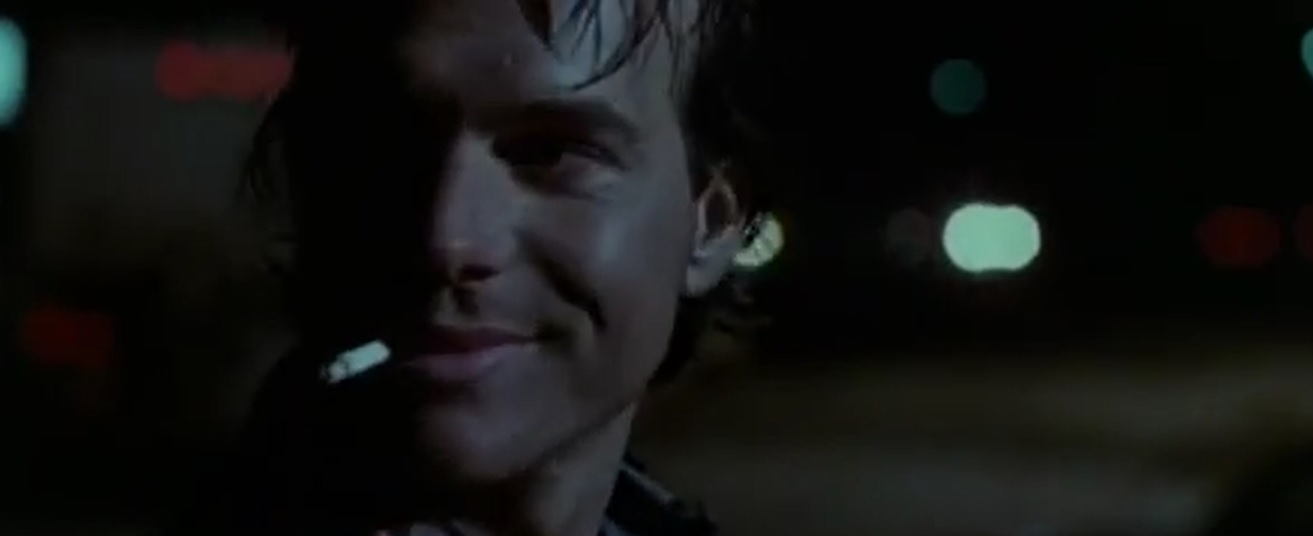
Kathryn Bigelow’s Near Dark is one of the rare vampire films that I truly love, and that fact is mostly due to the awesome cast and the fantastic script co-written by Bigelow and genre master Eric Red that operates as a sly contemporary Western that just so happens to involve nomadic blood-suckers. Bigelow’s visceral camera style was in full effect, as the action sequences pop with gusto, while Red’s usual brand of dark humor spiced up the already sharp screenplay, creating the perfect mix of humor, emotion, and scares. Bill Paxton is absolutely live-wire terrific in this movie and Lance Henriksen got a chance to be extra nasty and awesome due to the unique shadings of his character and how the story used familiar tropes but freshened them up so you’d constantly be surprised by what unfolded. Adrian Pasdar and Jenny Wright were solid in the “lead roles” but they were unavoidably outmatched by Paxton’s sleazy charm and Henriksen’s penchant for being casually menacing and entertainingly despicable. Red works in his love for big-rig tractor-trailers, Bigelow got to flex her muscles with some awesome shoot-outs and classically staged, non-CGI enhanced explosions, and the final 10 minutes or so have got to be some of the most intense stuff in the cinematic vampire realm, made all the more effective because we truly care about the characters and their situation. Twilight this is not! Tangerine Dream’s score is moody and sinister and all sorts of late 80’s genius, and because the subject matter is treated in a realistic fashion, the ending carries an emotional punch that you don’t get with every horror movie. I love looking at Adam Greenberg’s stylish nighttime cinematography, as he consistently played with shadow and perspective, and then you’d get an incredible day-time set-piece (such as the finale) where he’d subvert your expectations for the genre (something I’m always a fan of). And another thing — this movie is lean and mean — Howard E. Smith’s tight-as-a-drum editing leaves no fat on the filmic bones, and clocking in at a taut 90 minutes means there’s not one wasted moment. While a box office non-starter, the film was warmly embraced by critics, and has found a huge second life as a cult favorite in the years since its initial theatrical release in 1987. This is one of those vampire movies that has it all — great performances, terrific violence and gore, narrative themes which add heft to the overall scenario, and a definite love for blood and fangs and sequences of vampires going wild with angry, devilish delight.

1

MARCUS NISPEL’S PATHFINDER — A REVIEW BY NICK CLEMENT

2

Pathfinder is a fun, gory, beautifully photographed hybrid-movie from genre specialist Marcus Nispel, and it shows a clear affinity for the action beats and nature aspects from the films of Terrence Malick (The New World), Michael Mann (The Last of the Mohicans), and Mel Gibson (Apocalypto). Released in 2007, this is a unique item, a film that balances horror elements, sword and shield historical fiction, and Native American mysticism in an effort to conjure up something startling and different within the context of the period action film genre. The effectively blunt narrative sets up the action right at the outset, with Karl Urban’s monosyllabic performance in clear debt to the hulking bravado of Schwarzenegger in Conan the Barbarian (which Nispel would later update in 2011), and while the screenplay from Laeta Kalogridis typically jettisons surprise in favor of sturdy if clichéd dramatics, the star of the film is clearly the visually talented Nispel and his incredible cinematographer Daniel C. Pearl, who shoots in moody, highly textured widescreen, combining an almost monochromatic look to go along with the crimson red swaths of blood that fly all over the screen. This is a film in love with its violent spectacle, and the barbaric sights that are offered up take full advantage of the R-rating (and are even more intense in the unrated edition out on disc). Nispel clearly went to rigorous physical ends with this production (Herzog would blush at the mountain footage), which looks and feels twice as big as its reported budget ($30 million). And in this day and age of watered down, neutered action films, there’s a refreshing honesty to the carnage and bloodletting, all of which feels intensely cinematic; it’s an area that Nispel wonderfully excels at. And though his films have mostly done strong business worldwide for the last 12 years, he’s still waiting to deliver his BIG blockbuster film, and I have a feeling that his upcoming sea monster film (which has apparently been inspired by Nordic myth) might be that movie.

1