A Week of Monsters – Dracula

Dracula

1931.  Directed by Tod Browning.
dracula-0004-background_orig

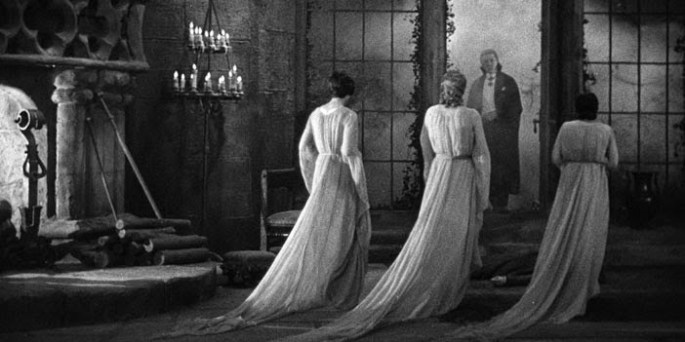
A love story steeped in esoteric secrets, Dracula is the flagship of the Universal Monster films.  An awkward marriage of the silent era and “talkies”, layered set designs and hypnotic cinematography combine to build an arcane illusion around Bela Legosi’s dark caricature at the center of the story.

Dracula is a well-known story tinged with Gothic horror.  From Russell Gausman’s menacing sets to Karl Freund’s legendary cinematography, Dracula is filled with an acrimonious air that chokes every scene.  The first act, which focuses on Renfield’s mental corruption, features lonely wide shots of a crumbling manse, a prison of the Count’s design, simulating an memorable experience of dread, beginning with a superstition laced presentation that slowly subverts expectations.  The fatal flaw is in Legosi’s often ridiculous delivery, audibly overstating the obvious for perceived effect while his classically trained body language is more than adequate, delivering some of the most iconic scenes in the history of the genre.  A looming eye of psychic control and an intense standoff between the hunters and the vampire display a uniquely American take on the German Expressionist legends that Dracula builds upon.  This however, creates a source of frustration as the nuances of Stoker’s text are glossed over in an effort to give the ludicrous central performance maximum screen time.

dracula1931g

The beauty of Garrett Fort’s script is in how it captures the romantic flourishes of the novel, both in the pursuit of Mina and in the harriers’ delicate dance with Dracula.  The mirror sequence is a masterful example of classical blocking and almost serves as the centerpiece, until Legosi’s bravado derails the mood.    There is virtually no perfect film.  Flaws can be found in anything, however Dracula suffers because the flaws of its essential performance almost outpace the artistic design, with the Spanish version (made simultaneously on the same lot at night) easily eclipsing the American cut because the crew shot after the Americans, allowing them to analyze the choices made and improve upon them.  Atmosphere is everything in Dracula and this is where the film manages to break free of its campy constraints.  Shadows enshroud ominous carriages while cautious villages dispense Crosses and well wishes before the darkness falls, transporting the viewer to a time when faith and folklore were weapons of the righteous.

Available now for digital rental, Dracula is a flawed endeavor that is ultimately liberated by an exquisite display of world building that not only ameliorates the damage of Legosi’s near fatal performance, but essentially sets the bar for American horror films with respect to ambiance.  Yet another essential entry into Universal’s sinister catalog, Dracula is a nostalgic shocker filled with technical wonders.

Highly Recommend.

Dracula_trailer_(1931).webm

Zach Snyder’s Sucker Punch

I’m already giggling picturing the cries of protest that will rise up when I post this review, but the hell with it, I really like Zach Snyder’s Sucker Punch. I never deliberately play the contrarian, I just seem to often gravitate towards films that have been maligned by the masses, and I can’t really help it. Now, in this film’s case, a few of the many and varied negative criticisms are somewhat warranted, yet blown out of proportion when you really take a good look at the story. The film is pure style, and although Zachary might have let his imagination run a little wild and clutter the whole affair with fanboy fantasies and video game visuals, there is a clear and discernible story beneath if one cares to look. Now, the only way that story is entirely comprehended is by watching the extended director’s cut, which includes an absolutely crucial, pivotal scene that’s should have never, ever ended up on the editing room floor for the theatrical version. Seriously, they we’re straight up asking for hostility and confusion by not keeping it in every cut of the film, it’s just common sense. Speaking of story, here we go: the film opens in breathless style and classic patented Snyder slo mo, with young Baby Doll (Emily Browning) trying to save her little sister from their tyrannically abusive stepfather. Outsmarted and shipped off to an austere mental institution, her journey is a sad, surreal and somewhat befuddling one, but there’s a method to the madness that might not be clear with only one viewing of the film. The asylum she is sent to is plagued by a sinister orderly (Oscar Isaac) who is abusing the girls in his care, and as a result, Baby Doll channels such horrors into a grandiose set of fantasy worlds, the base of which rests on a burlesque style brothel where she and others work for volatile pimp Blue (also Isaac). Joined by Amber (Jamie Chung), Sweet Pea (Abbie Cornish), Rocket (Jena Malone) and Blondie (Vanessa Hudgens), she blocks out the reality of what is happening and replaces the details of an elaborate, systematic escape attempt with impossibly epic, highly stylized adventures, each of a different theme or set in a vaguely familiar period of history. Battling medieval dragons, giant samurai golems with mini-guns, WWI zombie hordes in a gaunt, bombed out European landscape, it’s all a detailed rush of sound and fury that hits you like a ton of bricks, and although is far too much for the film to handle and still get its point across, it’s completely dazzling stuff, especially on Blu ray. Guided by a mysterious Wise Man (a kickass, rootin tootin Scott Glenn) who shows up in a different get up each time and mentored by brothel Madam of sorts Vera Gorski (Carla Gugino), each setting holds the key to move along a certain cog in their plan, correlating back down the line of delusions straight to the asylum, if a little tenuously. Now it all hinges on the arrival of the High Roller (Jon Hamm), a rich playboy who has come to the brothel to see Baby Doll dance, and probably more. Here’s where they fucked up royally: The scene I mentioned earlier is a monologue from him that is pretty much one of the most important parts of the film, capping off both realities beautifully, and without it, not only is Hamm relegated to basically a walk on extra, the entire final punch of the climax is rendered lost and neutered, not too mention quite uncomfortable in a sense. Whoever was in charge of that particular piece of the editing should be tarred, feathered and run off the studio lot by teamsters. With the scene left in on the extended version, however, the story is given both point and purpose, feeling like a complete vision with a little weight to go along with it’s Hindenburg sized bag of visual tricks. Not Snyder’s best for sure, but it’s in no way close to the turkey some people will have you believe it is. Whiners. Style over substance? Yes, I’ll definitely concede there’s an imbalance, but don’t try and tell me the whole thing is bereft of substance at all, because that is a lazily researched argument. The soundtrack is a treasure chest, I might add, with beautiful covers of Sweet Dreams and Sing Me To Sleep sung by Browning herself. 

-Nate Hill

BRIAN DE PALMA’S PASSION — A REVIEW BY NICK CLEMENT

2

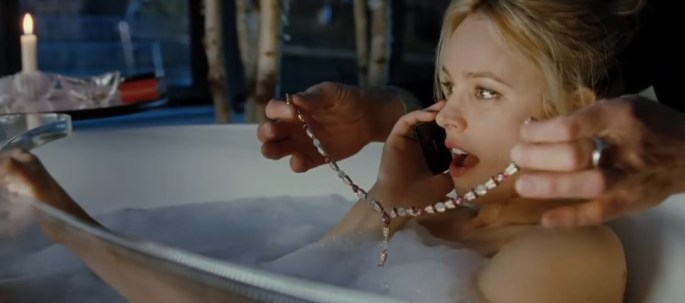
Brian De Palma’s sleazy, slick, and super-sexy neo-noir Passion from 2012 has all the director’s trademark ingredients: murder, deceit, jealousy, split-screens, Pino Donaggio, sapphic tendencies, stedicam shots that go on forever, dreams, twins, kink, 70’s, 80’s, and so much more. Rachel McAdams and Noomi Rapace absolutely killed it and clearly had lots of fun playing two highly sexualized women; they were both delectable pawns for De Palma to playfully mess around with. The film is a sort-of-remake of Alain Corneau’s 2010 thriller Love Crime, but with De Palma drastically changing the ending to his film. José Luis Alcaine’s shimmery cinematography took maximum advantage of the stylish production design and the gorgeous faces and bodies on display; his superb work with Pedro Almodovar no doubt left a strong impression on De Palma, as Alcaine’s innate understanding of how to light women is in full effect all throughout Passion, which was shot on 35mm film and mostly on location in Berlin. While not a masterpiece like Femme Fatale, Passion is an extremely fun and self-reflexive effort from the master of the macabre that shows that when provided the chance, he can still deliver over the top thrills with elegant visual panache.

3.jpg

A Week of Monsters – Frankenstein

Frankenstein

1931.  Directed James Whale.

frankenstein-review-banner

A definitive example of man playing God that moonlights as a tragic examination of how sons are defined by their fathers, James Whale’s Frankenstein is an adaptation of Mary Shelley’s legendary Gothic novel with a surprisingly dark adherence to the source material.  An unforgettable lead performance, unnerving set designs, and brooding cinematography combine to deliver a seminal film about the nature of identity and the dark wonders of parenthood.

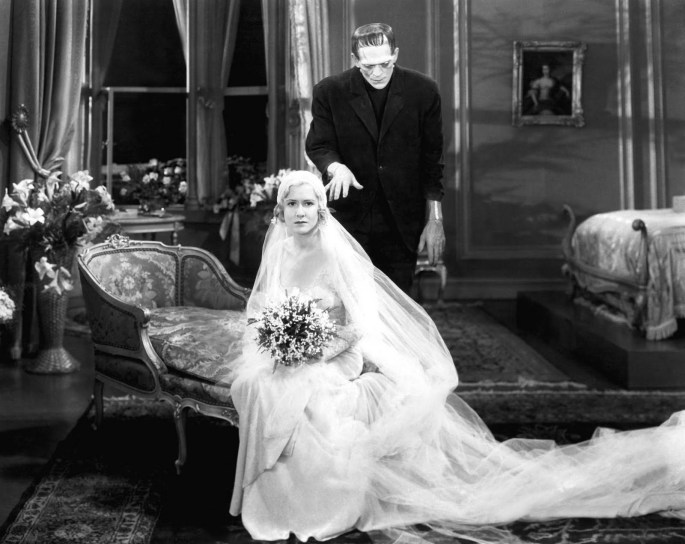
Dr. Frankenstein creates a living being from harvested corpses in the European countryside.  His creation quickly gets out of control, setting off a pulse pounding, sorrow filled manhunt that forces the Doctor to confront his vain attempts at omnipotence.  Boris Karloff stars as the Monster, a role that would jettison him to the heights of horror character acting.  His ability to communicate childlike awe through the hideous filter of an abomination is both terrifying in its power and pitiable in its summation.  Colin Clive supports as Dr. Frankenstein, the mad genius who dares disturb the universe.  His chemistry with Karloff is not given enough time to grow, but the fundamentals of their relationship are abundantly clear, bordering on satire.  Fathers often defend the deeds of their offspring while failing to grasp how their own actions were essential to the process and the doctor is no exception.

elizabeth_and_monster_a

Arthur Edeson’s eerie cinematography is transformative.  The tight, bizarre framing of the laboratory scenes are contrasted by the sharp angles of civilization.  The black and white colors become more defined as the story moves to the doomed marriage of the second act, reminding the viewer that there is always a cost by making everything appear real when compared to the fever dream sequences of the beginning.  Jack Pierce’s makeup design eschews the inhuman appearance from the novel in favor of something almost human, giving the creature the appearance of a monstrous savant, an unholy man-child whose hulking form is encased in a Spartan, but unforgettable pauper’s ensemble designed by Mae Bruce.

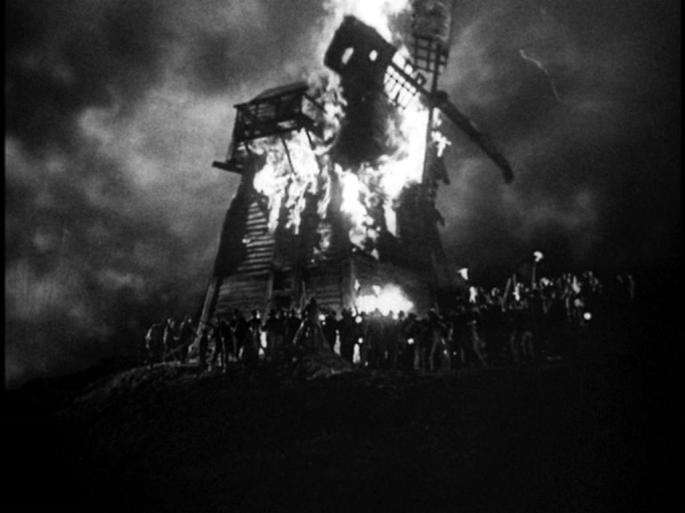
The screenplay captures the high notes of the novel, allowing for some darker, pre-Hays code departures including an accidental drowning and a harrowing showdown amidst a burning mill that would eventually be censored.  Despite the astounding technical elements, Frankenstein never gets to the heart of Shelley’s material, with everything riding on the monster’s massive shoulders, overshadowing the moments in between by rushing to creature’s next chilling appearance.  Whale’s directorial presence is minimal, letting his cast do the work and coasting to each set piece without ever grabbing the viewer by the throat.  At its core, this is a tragedy masquerading as a horror film.  This initially seems like a minor flaw, but future offerings in the series would unabashedly display the terrifying (in)human elements that are possible for such a film, a reminder of Frankenstein’s flaws.

Jobsenstein1

Available now for digital rental, Frankenstein is a classic horror film whose importance to the medium remains relevant today.  While falling short of its follow up, Frankenstein spins a familiar, but satisfying tale of mad science and the anathema of its design.  Featuring outstanding set pieces and a soulful central performance, this is an excellent starting point for exploring the Universal Monster canon or a spooky trip down memory lane during the Halloween season.

Highly Recommend.

706152150-frankenstein-film-boris-karlov-trailer-film-horror-film

KELLY FREMON CRAIG’S THE EDGE OF SEVENTEEN — A REVIEW BY NICK CLEMENT

3

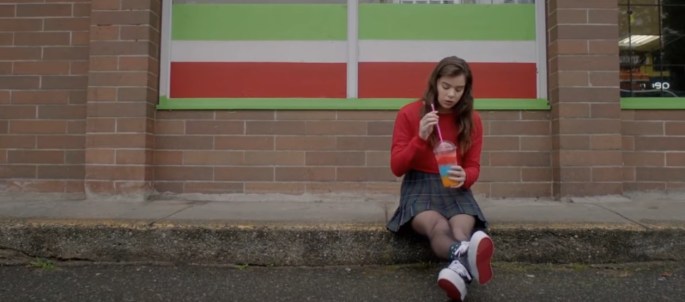
The Edge of Seventeen is a funny if overly familiar story of a female high school student learning to adjust to her new surroundings and the changing attitudes of the people around her. Hailee Steinfeld is unsurprisingly confident as the lead character, but for me, the real discovery of the movie was Haley Lu Richardson; if her agent is sharp, she’ll be landing some choice projects in the near future. Written and directed by Kelly Fremon Craig, the film is certainly perceptive in terms of modern teenage life, but I could have done without the more over the top plot shenanigans, and again, there was a whiff of familiarity and predictability to nearly the entire film. And while well written, some of the dialogue and the exchanges came off as too precious or self-labored; I didn’t truly believe the way some of the people spoke at times during this film.

2

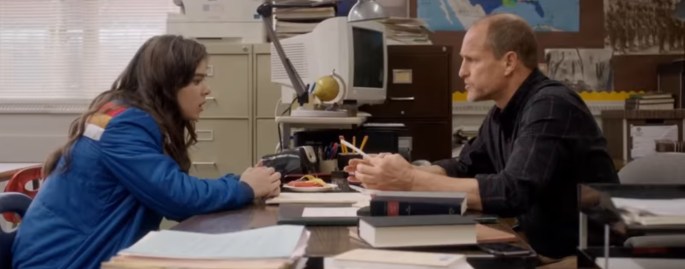
Woody Harrelson does some dryly humorous supporting work, while Kyra Sedgwick is given an odd role to play, that of a stressed-out single mom whose role in the narrative feels a little underdeveloped. For me, the big reveal from this movie is Richardson, who was charming and extremely photogenic and seemingly capable of much more than just the “best friend” role. Blake Jenner, who was also good in Richard Linklater’s Everybody Wants Some, is a hunk of All-American beef, with a mile-wide smile that reminds of a young Dennis Quaid, while Hayden Szeto delivered some awkward laughs. The film was produced by James L. Brooks, and was critically embraced last fall when it was released to decent if quiet box office results.

1

A WEEK OF MONSTERS – THE MUMMY

The Mummy

1932.  Directed by Karl Freund.

boris-karloff-zita-johann-the-mummy-1932-karl-freund


Remakes, reboots, and outright rip offs are something that has plagued the entertainment industry since its inception.  For the most part, these rehashes fail to rise to the level of their predecessors, however, once in a while, a unique take on the concept not only out paces its source material, it becomes a legend.  Karl Freund’s iconic Universal Monster film, The Mummy, takes the premise of Dracula and reskins it with an Egyptian location and a rag laden lover searching for his soul mate to present a tragic love story enshrouded in a noir horror package.  A nightmarish central performance, inventive lighting, and evocative cinematography combine to form a classic thriller that has been endlessly replicated over the decades since its debut.


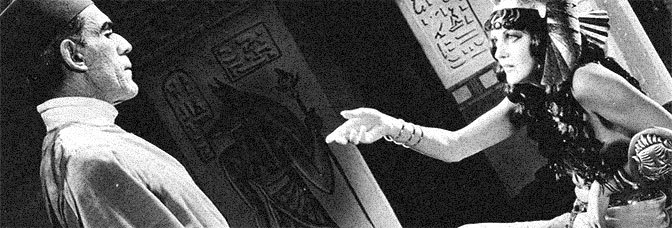
Cinematic legend Boris Karloff stars as the eponymous character.  His portrayal of the cursed priest has become a cinematic foundation, with his determined eyes and stoic mannerisms drawing the focus whenever he appears.  His chemistry with Zita Johann, who plays both his past lover and her present incarnation, was initially treated as a flippant afterthought, an understandable byproduct of John Balderston’s hammy script.  However, there is a guarded sense of commitment to the material that shines through whenever both actors are engaged that ties into the tragic heart of the familiar story, mimicking love’s ability to create worlds of amorous abandon for those it ensnares.

mummy1


Jack Pierce’s gruesome make up design is an essential part of this film, both in its memorable appearance and the difficulty by which it was applied.  Karloff had to endure hours of application before filming his mummy scenes in the middle of the night.  For the bulk of the film, his appearance is more restrained, but the attention to detail, the research undertaken by Pierce for authenticity, is undeniable during each scene with the titular creature.


Freund, who was the director of photography on Dracula and Metropolis, uses a variety of lighting techniques to frame his world in dark silhouettes and deep corridors, drenching the screen with shadowy undertones that heighten the mystique while bolstering the sense of dread that harries the proceedings. These distinct visuals are highlighted by Charles Stumar’s cinematography, which uses close framing to give The Mummy a distinct appearance, separating it from both its previous and future monstrous colleagues.  While the story takes beats from Dracula, it purposefully strays from the arcane underpinnings and slowly builds towards a final occult overload.

Ardath-Bey


Available now for digital rental, The Mummy is essential viewing.  While the cheesy dialogue is initially a turn off, Karloff’s masterful performance and Freund’s outstanding technical command are able to unnerve and delight in equal portions.  A minimalist horror film that showcases elaborate make up and costuming effects, this is one of the classics.  If you’re looking to revisit your childhood or get acquainted with the original before this summer’s remake, The Mummy is a remarkable early Hollywood experience.


Highly Recommend.

The Mummy 1932 update


GET OUT (2017) – A REVIEW BY RYAN MARSHALL

Effortlessly articulate in its unabashed social consciousness and fearless in its evocation of delectably dream-like ambience, “Get Out” is something of a miracle in terms of the modern cinematic circuit; a brooding, remarkably intelligent picture that pays its respects to the horror masters of old while making way for the new. That the latter in question is none other than Jordan Peele, one half of subversive comic duo Key and Peele, only serves to make the film’s enduring taste all the sweeter.

While Peele is hardly the most likely candidate that comes to mind when faced with the task of delivering grueling terror, he’s no stranger to the festering racial tensions that his debut actively confronts. In this case, Chris (Daniel Kaluuyah), an established photographer and all around exceedingly likably guy, is the vehicle and the catalyst is the family of his white girlfriend Rose (Allison Williams), who he is soon to finally meet over a weekend getaway in the country.

hero_GetOut[1]

While it’s safe to assume that Peele’s influences range far and wide, it’s perhaps most obvious that he’s taking significant pages from the Book of Polanski, as this turns out to be quite the enticing slow-burn. Rose’s family appears to be a jolly bunch – a little too jolly, in fact – and the presence of two African American servants who act as if they’re trapped inside their own bodies is certainly foreboding. Chris’ social isolationism and apprehension toward his partner’s kin plays well against old-timey interiors and a sequence of increasingly odd incidents, one example of which being a collision with a deer on the backroads early in the film, a harbinger of worse things to come, and another being a midnight cigarette break that turns into a trauma-bearing hypnotism session courtesy of Rose’s mother (Catherine Keener).

This is as rich and brave a brew as they come, but at its heart, “Get Out” is a scathing critique of liberal bigotry; a portrait of a toxic mindset which ultimately does more harm than good in spite of assuming the contrary. It’s decidedly serious stuff, though roughly half the fun is watching Peele and company flirt with conventions with such an obvious affection for genre blissfully in-tact. This is an exceptional entertainment that makes no attempt to conceal its intentions, and it shouldn’t have to; simply getting to the heart of the problem, and daring to challenge it like Peele does here, is more than enough.

get-out-trailer-screen2[1]

Besides, there’s plenty of intimate deception, nosebleeds, and blind man’s bingo to tide one over until the storm.  There’s also no shortage of humor to allow the darkness to go down a bit easier, most of it courtesy of Chris’ friend Rod (Lil Rel Howery) back home, but what’s admirable is how the film doesn’t once let its meticulously crafted guard down. Peele commits to his anger and anxieties all the way to the bittersweet end, and if nothing else, his passion is the unmistakable mark of vision.

If this is his entrance onto the scene, then it’s an unforgettable one; and if this is his voice, it’s been heard loud and clear. More terrifying than the film’s implications where racial politics are concerned – like the best the genre has to offer, “Get Out” envisions cinema as a mirror – is the fact that Peele can only get better from here on out. If it can even be argued whether or not he displays a master’s hand now, just wait a few years. He’ll surely attain it in no time.

STEVEN SODERBERGH’S HAYWIRE — A REVIEW BY NICK CLEMENT

4

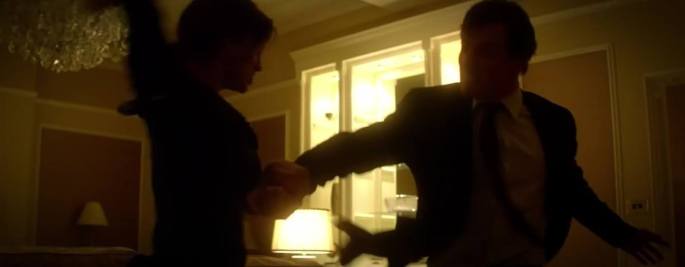
Haywire demonstrates Steven Soderbergh upending the conventions of the modern spy movie and the Bourne aesthetic, resulting in a cold, calculated, and wonderfully crisp action thriller that strips away any narrative pretense and bloat, favoring classical and exquisitely shot and cut fight sequences with a terse screenplay (written by Soderbergh frenemy Lem Dobbs) that only divulges exactly what you need to know and nothing more. Gina Carano, a former MMA star, isn’t a particularly expressive or emotive screen presence, but what she possibly lacks in charisma she more than makes up for with her intense physicality and grace-under-pressure-confidence during the film’s numerous high-throttle action sequences. Her hotel room blow-out with a game Michael Fassbender is one of the single best fight sequences in any movie. Insanely aggressive, visceral, dangerous, and a hoot to watch, the two of them slam each other around a hotel suite, crashing into tables and mirrors and walls, trading repeated blows, with a static, observing camera capturing each potentially lethal kick and punch with hard-core efficiency.

2

Carano is Mallory Kane, a black-ops soldier who’s tasked with doing a mysterious job by some nefarious government officials (Ewan McGregor, Michael Douglas, Antonio Banderas, Channing Tatum in one very nasty sequence) who are looking to use her as bait in a much larger plan of action. She doesn’t realize at first that she’s being set up, but when he makes heads of the situation, she’s off on the run, trying to put the pieces together with the help of a stranger (Michael Angarano) and her Tom Clancy-esque father, perfectly underplayed by Bill Paxton. As usual, Soderbergh acts as his own cameraman and editor (Peter Andrews and Mary Ann Bernard POWER), and the film carries a fleet, slick yet gritty, totally engrossing style that beautifully serves the various action set-pieces and cynical dialogue exchanges.

3

David Holmes’ score is jaunty, jazzy, and not the usual for this sort of genre fare; it’s one of my favorite recent scores to any film, a total play-thru on CD, riffing on Bond in some spots, and filled with tons of inspired 60’s and 70’s flair. As he did in The Informant! and on his TV show The Knick, Soderbergh opted for a unique use of nontraditional music in Haywire, which gave the entire film a bracing jolt of originality when compared to other genre efforts. And then there’s the final shot and line of dialogue – I’m not sure if I’ve ever loved two seconds of an action movie more than those moments. I can remember some people in my theatrical screening getting very annoyed by how Haywire finishes. Not me. The brevity of the entire piece is what I love so much, and the fatally sharp closing was a perfect way to fade to black.

1

Review: McLean’s ‘Belko Experiment’ is wickedly, indulgently familiar

Imagine being locked in a building with 79 of your other co-workers, ordered by a voice on a PA system to kill your co-workers.  Much like deer hunting season, the employee with the most kills, wins.  “Survival of the fittest” doesn’t even begin to describe Greg McLean’s black comedy/horror film, The Belko Experiment.

Filmed and set in Bogotá, Columbia, Belko Industries, an American company, has opened a corporate office on the outskirts of the city filled with a well-rounded mixture of corporate executives and worker-bees; staff members of all ages, races and stature.  James Gunn, who wrote and produced the movie makes effective use of his opening, establishing what’s to come with ‘Yo Vivre’ (I Will Survive) performed by Jose Prieto and sharp-witted dialogue. Cinematographer Luis David Sansans sets us up with short character moments, giving us enough time to get a glimpse in to each character so that we’ll remember them once the carnage starts.

Of course, once the rat race begins, each character tries to grandstand one another.  One tries to assert their authority (the brilliant Tony Goldwyn); another with their sexual prowess (the ever-indulgent John C. McGinley), while others try to maintain calm (James Earl) or their cool disdain (Michael Rooker).  Then, there’s the employee who does what’s expected of him (10 Cloverfield Lane’s John Gallagher Jr).   Much like the star-laden Disaster movies of the 1970’s, Belko has so many characters that it doesn’t matter who’s who. This is its underlying brilliance and its flaw:  it felt very familiar.

Coming in at a very lean 88 minutes, Gunn took advantage of the closed environment, building his tension, not only from the menacing voice overhead, but from each of the character’s fears.  Sansans is up to the challenge, finding angles and using colors to his advantage.  Much of the tension works because of his attention to detail.  The frenetic pace of the film could not have been achieved without the brilliant quick-cut work of Julia Wong (Red Riding Hood, Hercules).

“A fear of competition in a capitalist society” is a theme that runs throughout the narrative to demonstrate the superiority of a few, the result of which is a few well-timed and well-staged murders.  The stated grandstanding ultimately subverts the intended meaning of the film; gore is over-emphasized and our protagonist doesn’t firmly believe in it, it’s not in his nature.  I’ll freely admit that I related to the protagonist, but only to an extent: fear overrules our rationale decision making process, rendering our intelligence mute.  Even our protagonist displayed that ultimate trait, fumbling what could have been a strong horror narrative.

Following on the heels of Split and Get Out, Bloomhouse has locked on to a winning formula with low budget horror films, allowing for each to find their box office legs over the long haul.  Co-produced with MGM’s newly revived indie flag, Orion (complete with their 1980’s logo) and aimed at a very targeted audience, Belko has a reported budget of $5 million and it should continue to extend Bloomhouse’s winning streak.

Gunn’s story is timelier than ever:  it speaks a little too close to what our world is rapidly becoming.  Charles Darwin would probably find the familiar Belko frighteningly humorous.  It starts out very strongly, tightening its grip, gives us a little California Dreamin’ in the middle and is just loose enough to allow the audience to go along for the ride at the end.

Now in theaters, The Belko Experiment is Recommended.

Review of MY LIFE AS A ZUCCHINI

Featuring the voices of Gaspard Schlatter, Sixtine Murat, Michel Vuillermoz, Paulin Jaccoud, and Veronique Montel. Directed by Claude Barras. Rated PG-13. 66 minutes. 2017.

My Life as a Zucchini is a film of solemnity and quirk, of sadness and strangeness, that makes a significant impression in spite or, perhaps, because of its short length. At barely more than an hour, the film covers a surprising terrain of emotions within complex, well-rounded characters who are not what one expects from an animated feature. We are accustomed to the broad strokes. Animated characters, especially those who are children, are inherently innocent unless the film goes out of its way to underline their evilness. Here is a film that doesn’t coast on such assurances. These are remarkably vulnerable children at the center of this narrative, of which there is a thin one that kind-of, sort-of frames the central action. They mean well, but their spirits are utterly decimated by life’s cruel twists of fate. If they hurt others, that is because they are a product of their environment.

This is a roundabout way of saying that our story begins with young Zucchini (voice of Gaspard Schlatter) accidentally killing his mother by slamming an attic door on her head and sending her tumbling back down the ladder. The mom (voice of Natacha Varga-Koutchoumov) was a verbally abusive drunk, but he didn’t mean to do her any harm. She’s his mom, at any rate, and the incident changes the boy’s mood. His name, of course, isn’t actually the vegetable, but it’s what his mom called him. He keeps (or reclaims) it, much as he packs one of the hundreds of beer cans that were littered on the floor of their home and which he used to build various structures in what increasingly feels like a previous life. They are souvenirs of that past existence, certainly not of happier times, but as a reminder of them and as a keepsake.

After the mother’s death, Zucchini is transferred to the care of the state, his father having not been in the picture for some time. The officer who handles his case, a kindly man named Raymond (voice of Michel Vuillermoz), finds himself identifying with the boy during his stint with a home for damaged children. The two correspond while Zucchini becomes accustomed to life with a makeshift family of troubled youngsters as his siblings and with the likes of Rosy (voice of Veronique Montel) and Mr. Paul (voice of Adrien Barazzone) as their parental units. It’s a state of limbo while better plans are made for the children, but one gets the feeling that such plans are rarely fulfilled for this lot. That isn’t, of course, a reflection upon the children themselves, who are an eccentric lot as prone to compassion for others as anyone else, but their situations have made them into ticking time bombs with an emotional charge.

A few of them exist in the background, but it’s a tribute to the screenplay (by Germano Zullo, Morgan Navarro, and director Claude Barras, adapting the novel by Gilles Paris) that the few characteristic traits we receive are comprehensive ones. Ahmed’s (voice of Raul Ribera) mother was deported one day while the boy was at school, and he bursts from the structure asking if she’s returned every time a car door slams outside. Alice’s (voice of Estelle Hennard) father did “disgusting” things to her that have left her with a scar over her right eye and a tendency toward anxietal tics such as tapping her spoon or intentionally entangling herself in a jump rope. Simon’s (voice of Paulin Jaccoud) parents committed a crime that landed the both of them in jail and their son to the state support system.

They are characters defined by trauma, but the definition isn’t a simple one. That becomes plain upon the introduction of Camille (voice of Sixtine Murat), a new child at the institution. The girl witnessed her father commit suicide after killing her mother, and now her aunt (voice of Brigitte Rosset) verbally abuses and degrades her. The film’s final stretch, which involves an elaborate escape plan for Zucchini and Camille, with Simon’s initially reluctant help, is, on the face of it, an unnecessary addition of external conflict, but the effect is sneaky: The stakes for these characters extend far beyond the film’s story, and their escape from a life of waiting for a new destiny that seems unlikely to come is joyous to behold.

The film’s style contributes a lot to its effect, because such a sad story feels inherently oddball and, thus, absolutely right. The film is a stop-motion creation, featuring characters with unusual proportions, although Zucchini’s strangely sized and shaped head is the oddest of them all. There’s a cute factor to the animation here that is undeniable and attributable to the usual charm of seeing stop-motion in work. The story told with such a style would seem more apt for black-and-white live-action, so the rush of affection for its characters is heightened by such a representational shift. The oxymoron works in My Life as a Zucchini, which is uncommonly powerful for the animation medium, engrossing us in the lives of wounded characters and returning, to some of them, a bit of emotional agency. What a wonderful and sorrowful film this is.