MICHAEL RITCHIE’S SMILE — A REVIEW BY NICK CLEMENT

smile 3

Michael Ritchie’s 1975 quick-witted beauty pageant satire Smile is one of those casually deceptive films from that era, as it combined pitch black comedy and straight face observation over small-town American life and all of the intricacies that would surround an event like the one depicted in this timeless-feeling movie; it has aged extremely well, and clearly served as a blueprint for the more modern effort Drop Dead Gorgeous. Smile was part of that legendary run of films for Ritchie in the late 60’s and into the 70’s, which included Downhill Racer, Prime Cut, The Candidate, The Bad News Bears, and Semi-Tough, all classics in their own particular way. Starring Bruce Dern, Barbara Feldon, Michael Kidd, Geoffrey Lewis, Eric Shea, Nicholas Pryor, and future filmmaker Dennis Dugan, Smile also introduced some exceedingly beautiful and talented actresses, including Melanie Griffith, Annette O’Toole, Colleen Camp, and Caroline Williams, while also showcasing a variety of non-professional actresses who were cast because of their beauty queen experience. The comedy on display, which leaned on improv in some very funny spots, was all born out of situation, character, and real life, with Ritchie and screenwriter Jerry Belsen using their setting as a way of holding up a mirror to society and saying “Look how crazy we all are!” Conrad L. Hall’s naturalistic cinematography only sweetens the deal. Sadly, despite excellent critical notices, releasing studio United Artists didn’t have much faith in the film on a commercial level, and dumped into in the four theaters that it owned, so as a result, it became a cult classic before it could ever have the chance of being embraced by wider audiences. Almost 10 years after the release of the film, the material would be adapted for the stage, featuring songs by Marvin Hamlisch and Howard Ashman. Available on DVD.

2

Antoine Fuqua’s Training Day: A Review by Nate Hill 

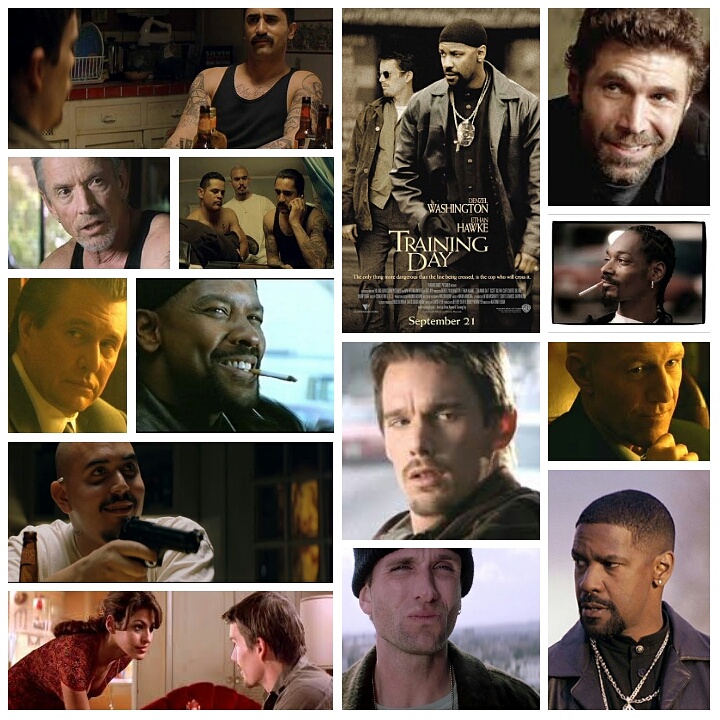
“To protect the sheep, you gotta catch the wolf, and it takes a wolf to catch a wolf.” This questionable sentiment is how rogue LAPD detective Alonzo Harris (Denzel Washington) justifies a heavy laundry list of dirty deeds, scary volatility, sociopathic backstabbing and a complete disregard for the badge that he wears on a chain like dog tags. And indeed, inner city Los Angeles can seem like a war zone, but its like he’s in fact more part of the problem than the dark angel of justice he sees in himself. Antoine Fuqua’s combustible crime drama Training Day rightly won Washington an Oscar for his unsettling runaway train of a performance, and he owns it down to the last maniacal mannerism and manipulative tactic. The film takes place over one smoggy L.A. day (hence the title) that feels like an eternity for its two leads, as well as all the colorful and often terrifying people they meet along the yellow brick road that’s paved with used needles and shell casings. Harris is tasked with showing rookie cop Jake Hoyt (Ethan Hawke) the ropes in his neighborhood, in the hopes that he’ll pass the test and achieve Narc status. Jake is prepared for a run of the mill crash course, but as soon as he’s treated to a verbal beatdown from Harris in the diner they meet at, he has a feeling it ain’t gonna be anywhere close to a normal day. This is just another day for Harris though, as he drags Hoyt by the scruff through drug busts, gang warfare, the worst neighborhood in town and pulls him deeper into his very dangerous world. Fuqua has a knack for getting the atmosphere of his settings just pitch perfect, and the feverish nightmare of the inner city comes alive, seemingly possessing the characters themselves until the atrocities just seem like a way of life. The trouble really starts when they run across Harris’s old drug lord buddy Roger (a wicked Scott Glenn in a role originally intended for Mickey Rourke), who proves a valuable asset later, though not in the way you might think. Harris introduces Jake to his equally crooked and scary team, including Peter Greene, Nick Chinlund and Dr. Dre who struggles in the acting department, especially in a room full of such heavy hitters. Jake is aghast at the horrors he sees and cannot believe the streets are like this. Harris devilishly assures him that this is the job, mutilating the symbol of his badge even more by justifying such behaviour as necessary. Tension reaches unbearable heights during a visit to a Latino gang household run by Cliff Curtis, Raymond Cruz and the eternally scary Noel Gugliemi. This is the heart of darkness fpr the film, a story beat from which there is seemingly no escape, until it becomes clear that Jake has somehow evolved a step up the food chain as far as LA goes, and is now ready to put down the dog who taught him, a dog who has long been  rabid. People complain that the final act degenerates into a routine action sequence. Couldn’t disagree more. With a setup so primed with explosive conflict, it can’t end up anywhere else but an all out man to man scrap, which when followed by no flat out action sequences earlier in the film, hits hard. Their inevitable confrontation is a powerhouse, especially from Washington, who finally loses his composure and yowls like a trapped coyote, his actions caught up to him. In a role originally intended for Tom Sizemore (who would have rocked it in his own way) I’m glad Denzel got a crack at it, for he’s absolute dynamite. Watch for Harris Yulin, Raymond J. Barry and Tom Berenger as the three senior LAPD dick heads, Eva Mendes as Alonzo’s girlfriend, Macy Gray as a screeching banshee of a ghetto whore and Snoop Dogg as your friendly neighborhood wheelchair bound crack dealer. Fuqua keeps attention rooted on the dynamic between Washington and Hawke, who is excellent in as role that could have easily been swallowed up by Washington’s monster of of a performance. Hawke holds his own, and the film is really about how two very different guys view a difficult area of town, how it changes them both, and ultimately how their moral compasses end up on a collision course. One of the best crime framas out there, and quickly becoming timeless.

RICHARD BROOKS’ LOOKING FOR MR. GOODBAR — A REVIEW BY NICK CLEMENT

looking_for_mr_goodbar_xlg

Wow. WOW. This is an intense film. I definitely wasn’t prepared for where this story would go. Richard Brooks’ bold and dark drama Looking for Mr. Goodbar had to have served as some sort of social wake-up call when it was first released in 1977. Embraced by critics and audiences, this cautionary tale of the singles scene offered up a period-appropriate glimpse at the changing sexual attitudes experienced by both sexes, but most strikingly, a free spirited female teacher who might not know exactly what she’s gotten herself into after a series of encounters with a variety of men. Featuring an absolutely blazing performance by Diane Keaton, in easily the most erotically charged work that I’ve seen from her as an actress, this rather nasty film sports a plethora of incredible supporting performances from Tom Berenger, Richard Gere, Howard Atherton, Richard Kiley, LeVar Burton, and Tuesday Weld. I had long heard of Looking for Mr. Goodbar and was super curious about it, so when it appeared on the TCM lineup this month, I totally flipped out.

I bet David Cronenberg loves this film, as it explores identity, the subversion of one’s true self, and how violence and sex are intrinsically linked. And because this film is not currently available on physical media or various streaming platforms and has become something of a talking piece among cinephiles, I am not going to discuss the plot any further for fear of any spoilers. What I will allow is that Keaton has nearly never been better, the cinematography by the great William A. Fraker conveyed casual menace in all of the best and most effective ways, and the startling opening title sequence, photographed in black and white by Kathy Fields was absolutely fantastic and immediately engrossing, bringing you into a sexy and shadowy world right from the start while the eclectic tunes of the era amped up the retro vibe. Uncompromising, startling, and more than a bit disturbing, Looking For Mr. Goodbar is certainly one of the more provocative films I’ve seen from any year in a long, long time.

MACHETE – A REVIEW BY J.D. LAFRANCE

danny-trejo-as-machete

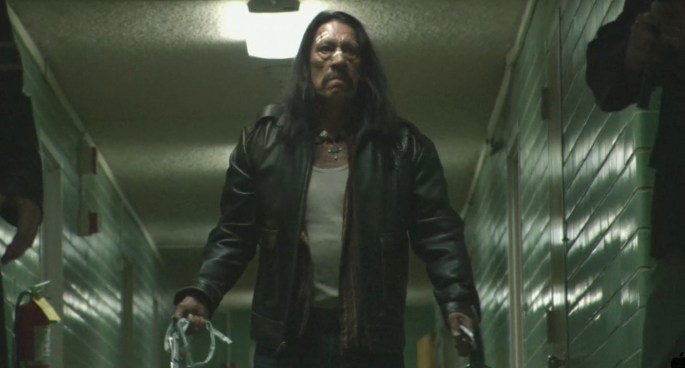
When he made his half of the Grindhouse double bill (2007), Robert Rodriguez also put together a trailer for a film he would like to see. And so, Machete (2010) was born – a Mexploitation action film about an ex-federale who is set-up, double-crossed and left for dead. However, the origins for this project go back even further to 1995 when Rodriguez made Desperado, the second film in his El Mariachi trilogy. It would be the first time (but certainly not the last) he worked with veteran character actor and professional badass Danny Trejo. He’s someone you’ve probably not heard of but have definitely seen. If you need a tough-looking tattooed henchman, he’s your man. While working on Desperado, Rodriguez envisioned Trejo starring in a series of action films as Machete but at that time the director did not have the clout to get someone to bankroll a Latino action film that didn’t feature someone with movie star looks like Antonio Banderas.

Rodriguez never forgot about his pet project and over the years cast Trejo in several of his films. Even though the Grindhouse films were a commercial failure, audiences loved the faux trailer for Machete. Rodriguez managed to convince a Hollywood studio to finance it with a modest budget and used his connections to assemble an impressive cast that included the likes of Robert De Niro, Jessica Alba, Steven Seagal, and “introducing” Don Johnson. However, what worked as a movie trailer be too much of a good thing as a feature film?

The prologue sets up everything we need to know about Machete (Trejo) – he’s a badass Mexican federale set-up by his corrupt superior and left for dead by local druglord Torrez (Seagal). It also sets just the right tone as we see Machete hacking and slashing his way through a house of bad guys with bloody abandon. Meanwhile, in the United States, a corrupt, ultra-conservative Texan senator named John McLaughlin (De Niro), campaigns on a platform of preventing illegal immigrants from crossing the border. He even employs a border vigilante group, led by the brutal Von Jackson (Johnson), to enforce his policies.

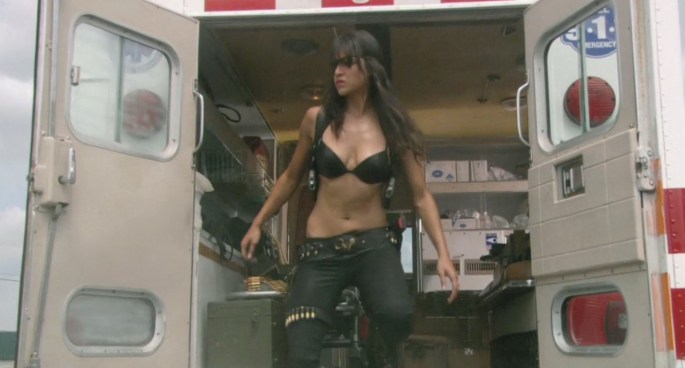
Sartana Rivera (Alba) is an upstanding Immigrations enforcement officer investigating the problem through legal channels and ends up crossing paths with Luz (Michelle Rodriguez), a no-nonsense taco stand operator who moonlights as a revolutionary operating an underground railroad of sorts for her Mexican brothers and sisters. Machete, now a day laborer (or, at least that’s his cover), is hired by Michael Booth (Jeff Fahey), a local businessman, to kill the Senator for $150,000. Machete is set up, shot and forced to go into hiding. With the help of Rivera and Luz, he plots revenge on the men that betrayed him.

It’s awesome to see Danny Trejo finally get to carry a film for once and play a character that doesn’t get killed off. He brings his customary intensity as the strong, silent man of action and in many respects the film is Rodriguez’s present to the actor as he has him take down tons of bad guys, look cool doing it, and hook up with many of the film’s lovely ladies, including Michelle Rodriguez, Jessica Alba and Lindsay Lohan! Robert De Niro is a lot of fun to watch playing a John McCain meets George W. Bush-esque xenophobic politician. It’s also great to see Steven Seagal as a powerful criminal and Machete’s arch-nemesis, not to mention appearing in a mainstream film that didn’t go straight-to-home video.

Michelle Rodriguez adds another tough chick role to her resume as she portrays the female Mexican equivalent of Che Guevara but with a dash of Snake Plissken. Another fun bit of casting is Lindsay Lohan playing the messed up celebutante child of Booth. She and Rodriguez have some fun riffing on her public persona and kudos to the director for not bowing to peer and public pressure about her party girl reputation and showing that regardless, she still has the acting chops. Rodriguez regulars Tom Savini and Cheech Marin show up in memorable bit parts as a deadly assassin and Machete’s ex-federale now-priest brother.

It’s no secret that Rodriguez is a filmmaker that wears his influences on his sleeve. For example, Desperado was an homage to the Hong Kong action films of John Woo and From Dusk Till Dawn (1996) and Planet Terror (2007) evoked the films of John Carpenter and George Romero. Growing up in the 1980s, Machete is Rodriguez’s love letter to the films produced by Cannon Films during that decade. They were responsible for cranking out an endless stream of generic action films starring the likes of Charles Bronson, Chuck Norris and Michael Dudikoff. In these films, the action stars were often a one-man army capable of wiping out the fighting force of a small country seemingly single-handedly. The same goes for Machete who is an unstoppable killing machine bent on revenge.

Machete is full of outrageous, over-the-top violence and inventively staged action sequences, like one scene where Machete bungee-jumps from one floor of a hospital to another with the aid of an evil henchman’s large intestine. In this respect, the film has the same gonzo, go-for-broke action that Rodriguez orchestrated in the underrated Once Upon a Time in Mexico (2003). Living up to his namesake, Machete finds all sorts of ways to kill the bad guys with a vast assortment of sharp weapons. Machete is a lot of fun and never outstays its welcome as Rodriguez knows how to keep things moving so that things never get boring.

michelle-rodriguez-as-luzMachete not only features all kinds of wild action sequences but also has something on its mind, commenting on the rampant immigration problems that continue to plague the states along the United States/Mexico border. Along the way, Rodriguez plays up and makes fun of Latino stereotypes (they are all day laborers and love tricked out cars) only to twist them into a rallying cry, a call for revolution that takes full bloom by the film’s exciting conclusion in a way that has to be seen to be believed. Best of all, Rodriguez has created yet another awesome Latino action hero. Forget Sylvester Stallone’s The Expendables (2010), Machete is the real deal and a no-holds-barred love letter to ‘80s action films. As great as it was to see many of the beloved action stars from the ‘80s and 1990s, I felt that Stallone’s film never went far enough. Rodriguez’s film doesn’t have that problem as it gleefully goes all the way with its cartoonish violence.

SIDNEY LUMET’S THE HILL — A REVIEW BY NICK CLEMENT

1

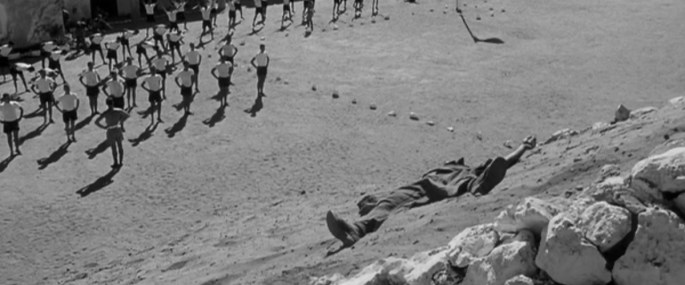
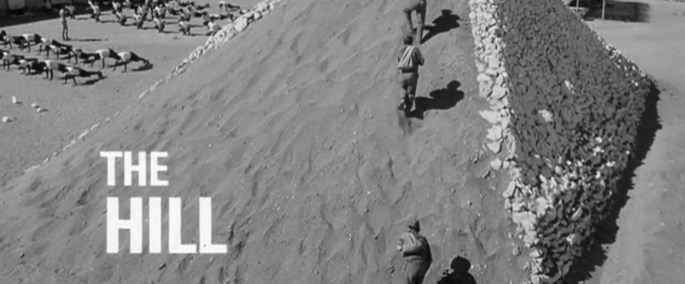
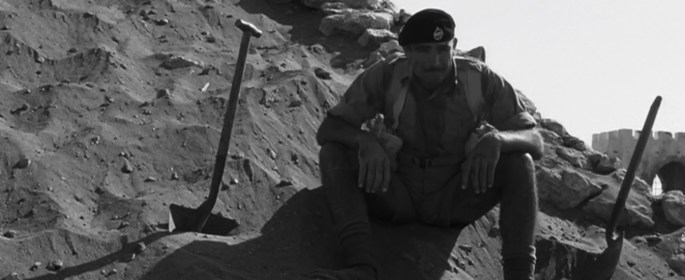
This is a fantastic movie and an extremely unique entry in the everlasting prison film genre. Rigorously directed by Sidney Lumet and released in 1965, The Hill is one of those “they don’t make ‘em like this anymore” type dramas, a true product of its time, and yet still totally relevant and exciting in this day and age. Starring a phenomenal Sean Connery in a decidedly un-Bond performance as a former tank operator who is sent to the stocks after assaulting his superior officer, The Hill centers on a British army prison stationed in North Africa during WWII, and evokes a sense of stark realism and fatalistic danger all throughout. Featuring a rock-solid supporting cast featuring Harry Andrews (absolutely brilliant), Ossie Davis (very memorable and scene-stealing), Ian Bannen, Ian Hendry, Roy Kinnear, Michael Redgrave and Alfred Lynch, everyone gave ultra-committed performances in what were clearly very hard working conditions; you feel everyone’s pain in this film. The lean and to-the-point screenplay by Ray Rigby, which was based on the play co-written by Rigby and R.S. Allen, never wasted a word, and Lumet’s precision-tooled filmmaking style allowed for a zero-fat narrative with an excellent sense of physical locations and the importance of conveying spatial distance between key portions of the massive, sprawling set.

2

The title refers to the main form of punishment for the dishonorable soldiers, a massive sand hill that requires constant attention and which more than occasionally leads to someone collapsing from sheer exhaustion. The reality of the situation that these characters face is never lost on them, and the narrative allowed for some interesting interpersonal dynamics to take root. Shot with ultra-clarity in silky black and white by cinematographer Oswald Morris, The Hill looks magnificent on the WB Archives DVD; I can only imagine how it might appear on a restored Blu-Ray. This is a brutal, unflinching film, looking at an extremely grim aspect of war that is sadly unavoidable, and because Lumet’s focus was so sharp, every single moment hits very hard during this exceedingly tough piece of cinema. You feel the excessive heat in every shot, and because the film centers on rather unpleasant material, this might be an endurance test for some viewers. But in general, this is yet another motion picture that confirms Lumet’s master-status in the pantheon of great filmmakers.

3

Robert Zemeckis’s Flight: A Review by Nate Hill 

When I saw the marketing and trailer hype for Robert Zemeckis’s Flight, I was strongly under the impression that when I got around to seeing it I’d get a conspiracy style thriller. Some aviation intrigue, maybe a little government corruption, valiantly unveiled by Denzel Washington’s hotshot pilot protagonist. How very wrong I was. To my credit, it wasn’t my fault, but that of the severely misleading marketing. But then, how do you market a film like this? Hell, it’s a wonder it even made it past the pitching stage! The airplane related fiasco one sees in the previews is but a tiny segment that acts as at catalyst for one of the most searing and honest portraits of addiction I’ve ever seen. Washington is Whip Whittaker, senior pilot, ladies man, assured professional and severe drug and alcohol user. Whip snorts and guzzles day and night, including during the job. He’s functional and hides it well, but thats just another facet of his problem. When an onboard malfunction causes crisis on one of his flights, he takes a giant leap of faith, spectacularly landing the airplane upside down and essentially saving every passenger’s life. End of story? Not really. From there the film throws a curveball, as we dig deeper into Whip’s life, habits and history. An inquiry is launched into his mental state during the event, led by a stern and silky voiced Melissa Leo. His superiors do everything to defend him, but it becomes clear that he has been coming apart at the seams for sometime now, and the incident was one of the final rips. It’s a journey into one man’s refusal to admit his problems, and the often extreme ways in which life holds up a mirror in front of us and demands acceptance. Kelly Reilly is superb as a damaged girl he meets who tries to take his hand and lead down the way to fixing what is broken, but he’s pretty damn far off the path. John Goodman is his charismatic self as Whip’s groovy drug dealer, and Bruce Greenwood reliably steals scenes as an airline official determind to defend Whip to the bitter end. Washington is heartbreaking, especially in the scenes of alcohol abuse, which are tough to watch. He’s never had a character arc quite like this, and it’s one of the most special, vital gifts of acting he has ever given us. The look, feel and tone of the film is anything but gritty or depressing. It has a glossy, aesthetic sheen to it that barely hints at the commotion and strife which befalls it’s lead character. Perhaps this was Zemeckis’s intention: dazzle us out of the gate with crisp frames and bright cinematography and then blindside us with the darker elements, showing us in the process that such issues can befall any one of us in society, no matter how outwardly successful, confident or in control we seem. The film is as complex as it’s protagonist and begs the audience to empathize with him on his journey, despite the glaring shortcomings we observe. It’s one of the most human stories I’ve ever seen; two hours spent with a realistic person who is assured, broken, confused, scared, stubborn, strong willed, weak and deeply wounded all at the same time. Washington paints the picture for us momentously, and it’s the best work he’s ever done. You don’t get too many films like this released by the studio system, and this one is some kind of miracle.  

PETER YATES’ BREAKING AWAY — A REVIEW BY NICK CLEMENT

breaking_away

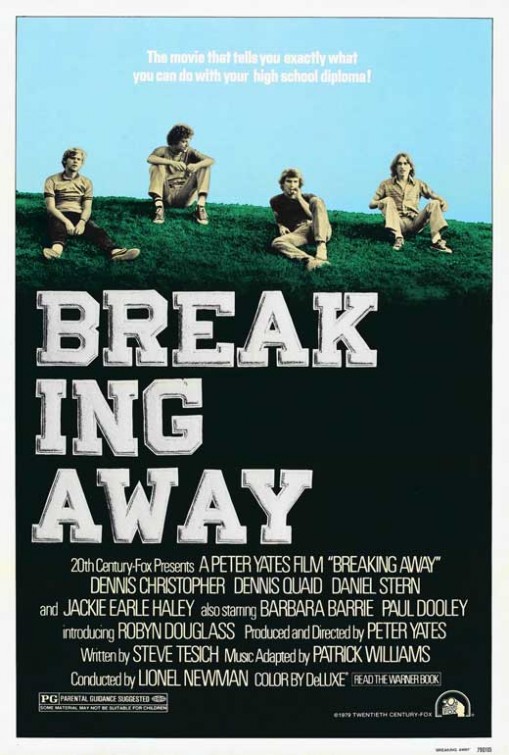
Inspiring, triumphant, and extremely well-observed, the 1979 Peter Yates drama Breaking Away features some great early performances from Dennis Christopher, Dennis Quaid, Jackie Earle Haley, and Daniel Stern as a group of friends who have recently graduated high school and are trying to figure out what path to take during the next chapter in their lives. Every moment of this naturalistic film feels unforced and organic, with the Oscar-winning screenplay by Steve Tesich hitting themes that were both universal and personal, all in an effort to evoke a very specific time and place and atmosphere for these young and searching individuals. Set in Indiana, the film has a wonderful sense of Americana without ever feeling cloying or overly sentimental, while Matthew F. Leonetti’s graceful cinematography captured all of the action, both big and small, with a humanistic edge and without a trace of artifice, while the biking scenes are all thrillingly shot without ever going over the top. The final act cuts to the heart of the message of the story — never give up and never underestimate yourself — and after watching it you feel as if anything might be possible. Grossing $20 million off of a $2.3 million budget, the film would become a hit with critics and audiences, and would receive multiple Oscar nominations in addition to Tesich’s win. Former Playboy bunny Robyn Douglass nearly shattered the camera lens with her exceedingly photogenic qualities, and there’s also some early John Ashton and Hart Bochner POWER for good measure. Yates was a unique helmer, capable of big action (Bullit), intimate drama (John and Mary), stoner-weirdo-fantasy (Krull), and seemingly everything else in between. A short lived TV series would follow in 1980-81.

THE LORD OF THE RINGS: THE FELLOWSHIP OF THE RING – A REVIEW BY J.D. LAFRANCE

rings1

It was the film many thought would never happen and that languished in development hell for years, bouncing from studio to studio until New Line Cinema took a very big gamble with filmmaker Peter Jackson who, at that point in his career, was known for making slapsticky low budget horror films (Braindead) and had one art house hit (Heavenly Creatures). He wasn’t someone you would necessarily entrust millions upon millions of dollars on making a trilogy of fantasy films – not the most commercially successful genre (Willow, anyone?). Jackson was also tackling The Lord of the Rings, the much-beloved series of books by J.R.R. Tolkien – get it wrong and you’re going to have legions of very unhappy fans.

However, Jackson was a fan too and he had a vision, which, with the help of his co-screenwriters Fran Walsh and Philippa Boyens, and an army of collaborators, brought The Lord of the Rings vividly to life. The first film, The Fellowship of the Ring (2001), was a massive critical and commercial success and would be followed by two even more successful sequels, The Two Towers (2002) and The Return of the King (2003). Everyone has their favorite film of the trilogy and for me it’s the first one because it has an intimate feel rendered on an epic scale, if that makes any sense. In other words, The Fellowship of the Ring is about a small group of characters, the Fellowship, and the journey they undertake.

Jackson establishes this intimacy early on with Bilbo Baggins’ (Ian Holm) birthday celebration. The Special Extended Edition version takes its time introducing the hobbits and their world. Jackson uses warm, inviting colors and folksy music to convey that the hobbits are a friendly, down-to-earth people who live in a tight-knit community where everyone knows each other. Most importantly, we are introduced to Frodo (Elijah Wood), the hero of this epic tale. For it is he who Bilbo entrusts with the last remaining Ring that he must to take Mordor to destroy so that it doesn’t fall into the hands of the evil Sauron.

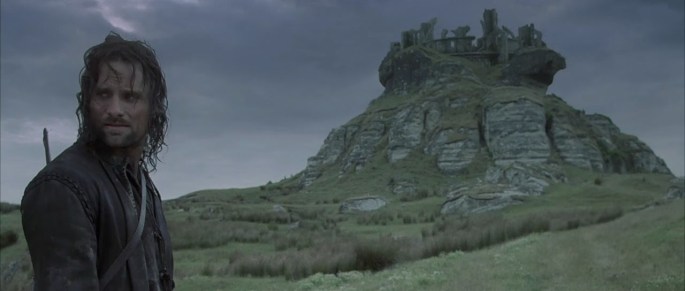
The Shire sequences also establish the dangerously seductive lure of the Ring, the origins of the quest and the creation of the Fellowship as led by the mighty wizard Gandalf the Grey (Ian McKellen). Aside from Frodo, fellow hobbits Sam (Sean Astin), Merry (Dominic Monaghan) and Pippin (Billy Boyd) join him on his journey. The group starts simply enough and over the course of the film others join their ranks, including Aragorn (Viggo Mortensen), a human ranger, Legolas (Orlando Bloom), an elvan archer, Gimli (John Rhys-Davies), a grumpy dwarf, and Boromir (Sean Bean), a human fighter. At heart of the Fellowship (and really all three films) is the friendship between Frodo and Sam. It is Sam who looks out for Frodo and sticks with him for the entire quest.

There are all kinds of parallels, story structure-wise, between The Fellowship of the Ring and Star Wars: A New Hope (1977). The Tolkien books were an obvious influence on George Lucas’ films. The main characters from both films are plucked from obscurity, a remote rural environment to go on a dangerous quest and are mentored by an elderly wizard type. Hell, Han Solo and Aragorn are characters cut from the same cloth and are both given cool introductions to establish their respective badass credentials.

Jackson manages to get some career-best performances out of many cast members. Elijah Wood, Sean Astin and Orlando Bloom, in particular, have never done anything better since (or before for that matter, except maybe for Wood and his chilling turn in Sin City) and this film launched a series of very eclectic leading man roles for the always watchable Viggo Mortensen (it doesn’t get more diverse than disparate roles in Hidalgo and Eastern Promises). Both Ian McKellen and Christopher Lee give the film some serious class and loads of genre credibility. It is Wood and Astin that anchor this film and give it its heart. The relationship between their two characters epitomizes most noble aspects of friendship and of the Fellowship. This only deepens in subsequent installments.

Once our heroes begin their journey, Jackson establishes a riveting urgency as they are pursued by the nightmarish ringwraiths and a vicious army of orcs. And yet this only strengthens the camaraderie among the hobbits and the rest of the Fellowship despite its dysfunction in the form of Boromir. However, when it matters and when faced with dangerous opponents, they work as a team as evident in the exciting and visceral battle against a monster in Balin’s Tomb and the even grittier battle against the orcs at the film’s climax.

Contrary to popular belief, Peter Jackson did not have a lifelong ambition to adapt Tolkien’s books into films. Producer Saul Zaentz owned the film rights for years and gave them to Jackson when he and Fran Walsh met with him and expressed their passion for the project. Zaentz sold the rights to Miramax who wanted to make only one film with Jackson. Disney was the financial backer but they didn’t believe in the project, refusing to give Miramax the money to make it. Harvey Weinstein, head of Miramax, gave Jackson three weeks to find someone else to make the film and in 1998, New Line agreed to make it into three films. Jackson originally proposed two films but it was New Line’s idea to make three.

In order to cut down on costs, Jackson decided to film all three films back-to-back over a grueling 274-day shooting schedule on location in remote areas of New Zealand in more than 100 locations with 20 major speaking roles and 20,000 extras. At the height or production, the film crew swelled to 1,300 people with seven units shooting multiple elements simultaneously. Jackson and company were at the mercy of New Zealand’s notoriously mercurial weather – unseasonal snowstorms and overnight flooding but in the end, the filmmakers accomplished what they set out to do and the proof is in the impressive final results.
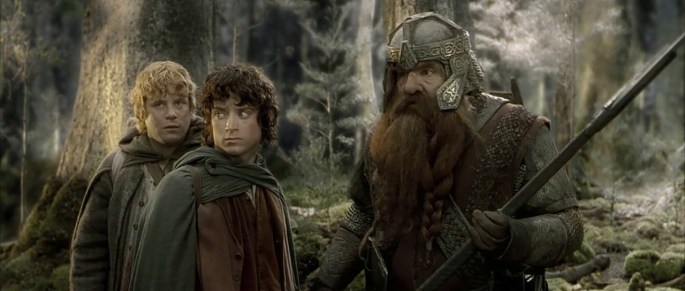
rings2The Fellowship of the Ring is one of those rare films that lives up to its mountains of hype. Jackson tells an engaging story and crams as much of the source material as possible into the film. Sure, certain characters and subplots have been cut-out but that is the nature of a feature film adaptation. Maybe, someday, someone can turn it into a mini-series so that everything can be included. Until then, we have Jackson’s magnificent films to enjoy.

HAL ASHBY’S THE LANDLORD — A REVIEW BY NICK CLEMENT

1

The Landlord was Hal Ashby’s first film, and it was based on the 1966 novel by Kristin Hunter, with an adaptation by Hunter and influential American writer/director Bill Gunn, whose film Stop is something of unreleased cinematic legend. Beau Bridges starred in the leading role as a moneyed landlord of an inner-city tenement, a man totally oblivious to the fact that his renters are low-income residents who value the rule of the street before anything else. He’s got an idea to have all of the residents evicted, thus allowing for the chance to overhaul the crumbling building with the plans of creating a luxury home for himself. Featuring a supporting cast which included Oscar nominee Lee Grant, Louis Gossett, Jr., Diana Sands, and Pearl Bailey, and shot by the legendary cinematographer Gordon Willis, The Landlord served as a clear launching pad for Ashby’s interest in class distinction, social values, and the unique ways that interpersonal relationships shape the world around us. The film was produced by Norman Jewison (Ashby had served as his editor on four previous pictures), and now seems like some sort of lost cinematic relic, overshadowed by bigger, splashier films on Ashby’s incredible resume. But it still packs an emotional and humorous punch, while also serving as a fairly scathing and satirical indictment of a particular type of person at a particular juncture in American history.

2

The Art Of The Steal: A Review by Nate Hill 

Heist flicks are sneaky affairs, but that doesn’t mean that awesome ones like The Art Of The Steal should just tiptoe past everyone’s radar with no hubbub. When subpar stuff like Now You See Me is breaking waves and this one collects dust before a year since it’s release, you know somethin ain’t right. It’s actually probably just budgeting and marketing, to chalk it up simply. Despite the cast (what a lineup) this one barely made a blip on the sonar when it came out a couple years ago. It’s great fun, with a crusty lead performance from Kurt Russell as Crunch Calhoun, an ageing motorcycle daredevil who used to moonlight as an art thief. He is lured out of ‘retirement’ by his sleazy brother Nicky (Matt Dillon crosses off another notch on the old scumbag belt with this role) with the proposition of one last score, involving his old crew and the theft of a historical artifact owned by a hilarious Terence Stamp. Other members of their crew include a crafty Jay Baruchel and Kenneth Welsh as salty ladies man Uncle Paddy. Twists and turns lace the plot, as they should in these types of films, but it’s the bawdy sense of humour that won me over. More than anything else this is a comedy, situational in nature and willing to give each weirdo of the bunch their own demented moment to shine. It’s Russel’s show though, a burnt out Evel Knievel type of dude who gets a face full of nonsense from his brother, edging him to the end of his rope. Russell owns it, egged on by the raucous chorus of characters accompanying him, and the nasty arc from Dillon that is the only piece which subverts the mostly lighthearted tone. Fun, little seen stuff that deserves a wider audience.