ALEX ROSS PERRY’S LISTEN UP PHILIP — A REVIEW BY NICK CLEMENT

3

Listen Up Philip is a black-hearted pisser, a dark comedy that loves the fact that it’s gloomy, sour, and mean. I knew nothing about the plot or intent of this film before viewing it, but had noticed the high Rottentomatoes score and that it had appeared on numerous top 10 lists, with Dargis really giving it a rave review in the NY Times. And I have to say, it’s SO much fun to be taken totally by surprise by a film. This is a small, deeply misanthropic movie, seemingly shot on 16mm film (?), with a grainy, jumpy, boozy visual style that in some scenes I wished had been opened up a bit wider. Inspired by the Duplass-mublecore-shakiness aesthetic and graced with more than a pinch of Woody Allen, writer/director Alex Ross Perry (Queen of Earth) has an incredible talent with words, as his screenplay is verbose, witty, and incredibly sarcastic — it’s tons of fun on the ears. The film centers on Philip, an alarmingly cruel writer played with almost too much ease by the great Jason Scwartzman, and I don’t think I’ll be alone in saying that his character reminded me of Max Fischer gone REALLY bad.

2

His second novel is on the horizon, and he just can’t keep any part of his personal life in order. His girlfriend Ashley (the incredible Elisabeth Moss, who in one scene allows her face to do some of the best acting I’ve seen in a while), is sick of their troubled relationship, and Philip, in a fit of desperation, bolts out of their NYC apartment so that he can spend time at the summer home of his idol, the prolific author Zimmerman, perfectly portrayed by a slimy and dickish Jonathan Pryce, all scotched-up and bitter from a life filled with resentment. That’s all I’m saying about the story, as there’s a lot more that happens than just that, with multiple shifts in perspective which was very unique.

4

But what I will say is that both Schwartzman and Pryce play too amazing assholes, men who are so full of themselves yet so phenomenally wrongheaded about everything, constantly making poor decisions and saying terrible things to people, that it’s sad to realize that there are probably lots of real-life people like these two guys out there. Listen Up Philip isn’t afraid to be casually mean, and the way that Perry is able to dole out humor in the bleaskest of emotional circumstances speaks to his erudite sensibilites. And I loved how the film ends on such an uncompromising note of despair and personal anguish – it would have been a cheat to finish in any other manner. Also, the dryly hilarious voiceover provided by Eric Bogosian(!) really seals the deal on this playfully mean-spirited look at emotionally stunted men and one woman who can hopefully brake free from all the bull-shit that’s thrown her way.

5

THE NINTH GATE – A REVIEW BY J.D. LAFRANCE

The-9th-Gate-the-ninth-gate-16058196-960-414

Critical and commercial reaction to Roman Polanski’s films has always been mixed at best. To say that they are an acquired taste is an understatement. The Ninth Gate (1999) is no exception. Despite what the film’s misleading trailer promoted at the time of its initial release, it is not a straight-forward supernatural thriller but rather showcases the auteur in a darkly humorous mood as he plays around with the conventions of the genre.

Dean Corso (Johnny Depp) is an unscrupulous book dealer whose motivation is purely for financial gain. He swindles a naïve couple from a set of rare and priceless books in an amusing scene that sets up his character beautifully. A very rich book collector by the name of Boris Balkan (Frank Langella) hires Corso to validate his recently purchased copy of The Nine Gates of the Kingdom of Shadows, one of only three copies that exist in the world. The book contains nine engravings which, when correctly deciphered and the interpretations properly spoken, are supposed to conjure the Devil. Balkan believes that only one book is authentic so he hires Corso to track down each copy and verify their authenticity. It seems like a simple enough task but as Corso soon finds out, someone does not want him to complete the job. He crosses paths with an odd assortment of characters, from a mysterious woman (Emmanuelle Seigner) who seems to help him in his quest, to another, more obviously evil woman, Laina Telfer (Lena Olin) intent on impeding his progress and quite possibly trying to kill him.

Polanski received the screenplay by Enrique Urbizu and was so taken by it that he read the book it was based on, El Club Dumas by Arturo Perez-Reverte. He liked the novel because, “I saw so many elements that seemed good for a movie. It was suspenseful, funny, and there were a great number of secondary characters that are tremendously cinematic.” The novel featured several intertwined plots and so Polanski decided to write his own draft with long-time screenwriting partner, John Brownjohn (they had collaborated previously on Tess, Pirates and Bitter Moon). Perez-Reverte’s book contains numerous literary references and a subplot concerning Corso’s investigation into an unpublished chapter of The Three Musketeers. Polanski and Brownjohn jettisoned these elements and focused on one particular plot line: Corso’s pursuit of the authentic copy of The Nine Gates. For Polanski, the story had “all the ingredients that I like. It’s a great dose of a certain kind of irony and humor, and a bit of the supernatural or metaphysical or whatever you call it. Suspense and a central character, which I found very appealing.”

Johnny Depp became attached to the project as early as 1997 when he met Polanski at the Cannes Film Festival promoting his directorial debut The Brave (1997) that was in competition. Initially, the veteran filmmaker did not think that Depp was right for the role of Corso because the character was 40-years-old. Polanski was thinking of casting an older actor but Depp was persistent and wanted to work with him. According to the director, Corso’s disheveled look was modeled after Raymond Chandler’s famous sleuth, Philip Marlowe and there is a hint of that rumpled cynical vibe that is the trademark of that character. Hints of friction between Depp and Polanski while working on the film surfaced in the press around the time of its North American release. The actor said, “It’s the director’s job to push, to provoke things out of an actor.” Polanski told one interviewer, “He [Depp] decided to play it rather flat which wasn’t how I envisioned it. And I didn’t tell him it wasn’t how I saw it.”

Polanski cast Frank Langella as Balkan after seeing him in Adrian Lyne’s version of Lolita (1997). The director liked how the actor could be “charming and disturbing at the same time.” Polanski cast Lena Olin as Liana Telfer because he needed “an actress who could give the impression that she’s an intellectual and, at the same time, a very sensuous woman capable of great bursts of violence.” Barbara Jefford was a last minute casting decision because the German actress originally chosen was struck with pneumonia and another actress could not learn the lines. Jefford came in with only a few days notice, learned her lines, and affected a German accent. Casting Jefford was a nice nod to her role in the Hammer Horror film, Lust for a Vampire (1971), where she played a countess who conducts a satanic ceremony to resurrect the body of her daughter.

Polanski admired the work of director of cinematography, Darius Khondji. “I love his lighting, because he knows how to make it both sophisticated and realistic. It keeps you on the fringe of fantasy so when you tip over into the supernatural, it doesn’t feel artificial at all,” he remarked in an interview. Khondji was also keen to work with the director. “I’ve always wanted to make a movie with a witchcraft or supernatural subtext – I love those kinds of stories. Roman is obviously one of the best directors in the world to work with in that genre.” Filming took place in France, Portugal and Spain during the summer of 1998.

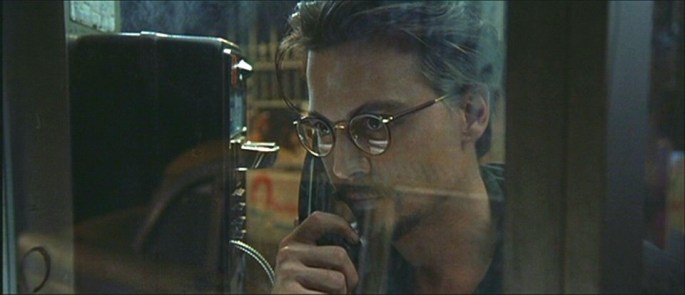
While the film’s slow, deliberate pacing turned off many, there is a method to Polanski’s madness. The gradual pacing draws one into this engaging world. Perhaps it is the European setting but The Ninth Gate has an otherworldly atmosphere that is well done. The attention to detail and Khondji’s richly textured cinematography is exquisite and contributes to the overall mood of this vivid world. For example, the New York City scenes have a very 1940s vibe to them, utilizing brown and blacks with a warm gold glow from the street lamps. This is, in turn, contrasted with the green and red in the phone booth when Corso is trying to contact Balkan.

hQFD1However, The Ninth Gate does not just have atmosphere going for it. Johnny Depp adds yet another intriguing character to his roster of unconventional roles. Corso is an unethical cheat who would do anything to make a buck. A rival describes him as a “vulture” and “unscrupulous” to which he freely admits to as he swindles four volumes of a rare edition of Don Quixote. He really does not care about others and yet, despite all of his reprehensible qualities, Depp’s natural charisma and charm make him kind of an endearing character that you care more about as he delves deeper into dangerous waters.

Balkan is a pompous windbag filled with self-importance but Frank Langella stops just short of being a cliched, moustache-twirling villain. He’s melodramatic and his presence is a nod to horror fans who recall his most famous role in Dracula (1979). Lena Olin’s dangerous Telfer widow evokes her femme fatale character from Romeo is Bleeding (1993). She smokes and even flashes a suggestive shot of her black garter-clad thighs in an attempt to seduce Corso and draw him into her web. She uses sex to get what she wants and when that fails she resorts to violence, attacking him in an animalistic frenzy.

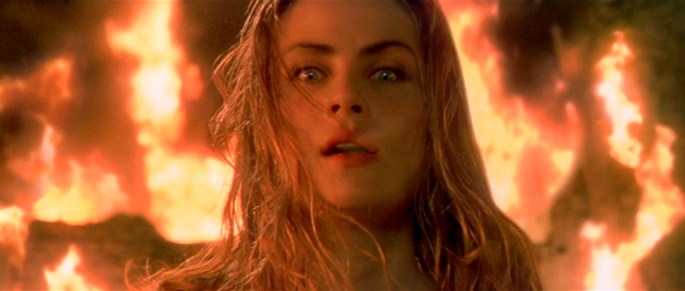
Emmanuelle Seigner plays a mysterious woman who constantly shadows Corso and sometimes helps him out when gets in dangerous situations. Her motives do not become fully apparent until the end and even then it is open to interpretation. She helps him get inside the Fargas house and flies with him to France. Who or what is she? At one point, she literally glides down a flight of stairs and saves Corso from getting a beating at the hands of Telfer’s henchman.

This movie is ample with clues, a puzzle waiting to be solved. For example, in Balkan’s lecture at the beginning of the movie, he suggests that all witches are evil and in league with Satan. The irony is that Corso sleeps through this important clue to Balkan’s real intentions. There is also the odd, disregard for The Book of Shadows, a book worth an estimated $1 million. It is placed in constant peril and is even flicked with ash when the Ceniza brothers analyze it.

As for the cliché aspects of the film, one should be less concerned at anticipating plot twists and predictable elements in favor of simply enjoying the ride. Polanski probably was aware of this and decided to have fun with them. There is Balkan’s “666” password, Corso’s perchance for getting the crap kicked out of him, and the one-armed woman book dealer that all contribute to a playful mood that punctuates the film whenever it runs dangerously close to being too pretentious or self-important.

Polanski approached the subject matter with a certain amount of skepticism as he said in an interview, “I don’t believe in the occult. I don’t believe. Period.” He wanted to have fun with the genre. “There is a great number of clichés of this type in The Ninth Gate which I tried to turn around a bit. You can make them appear serious on the surface, but you cannot help but laugh at them.” For Polanski, the appeal of the film was that it featured “a mystery in which a book is the leading character” and its illustrations “are also essential clues.” The film has a playful tone but Polanski knows when to reign things in. As the horror is heightened so is the film’s dark comedy during the climactic moments. The screenplay is in perfect synchronicity with the direction.

For a film supposedly steeped in literature, the text, and by that I mean the story, is irrelevant. There are many clues scattered throughout the film that suggest this to be the case. One has to understand that among the characters there is a hierarchy. At the bottom level is the Frenchman that Corso meets early on. He owns one of The Nine Gates but is not all that interested in it except for the craftsmanship of its binding. Then, there is the Baroness who has spent her life writing about The Devil but never considered the meaning behind the images in her copy of The Nine Gates. And, if you take her word, she had the best clue because she claimed to see the Devil when she was a child. At the next level is Laina who is aware that the book has some power but is still focused on the words and not the images. Above her is Balkan who knows that the text is irrelevant and that the pictures are crucial but incorrectly thinks that the key to summoning the Devil lies in them.

The Ceniza brothers have the ability to tinker with the power of the pictures. They are allusive figures that seem whimsical when Corso first meets them and then are gone when he visits their now defunct store at the film’s end but thanks to the movers who are disassembling the store he gets the final piece of the puzzle. Corso starts off at the bottom because the value of books are neither in the text nor in the pictures but in their binding and availability. By the film’s end he realizes that the power is not in the pictures but the quest itself. There is the mysterious woman who resembles one of the figures in the engravings and actually provides the final clue for Corso to reach the end of the quest. The final layer is the viewer. That makes nine players and eight levels of consciousness created by Polanski.
fhd999TNG_Emmanuelle_Seigner_037The Ninth Gate
was a refreshing change from the trend of mundane Hollywood supernatural schlock at the time (i.e. The Bone Collector, Stigmata, End of Days, et al.) that took itself way too seriously and tried too hard. Unlike those films, The Ninth Gate never falls into that trap. It contains some truly vintage Polanski black humor that, alas, North American audiences and critics alike did not appreciate. They wanted meat and potatoes filmmaking that he has always resisted in favor of subversive thrills and following his own muse come hell or high water.

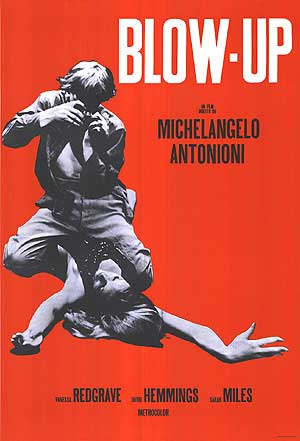
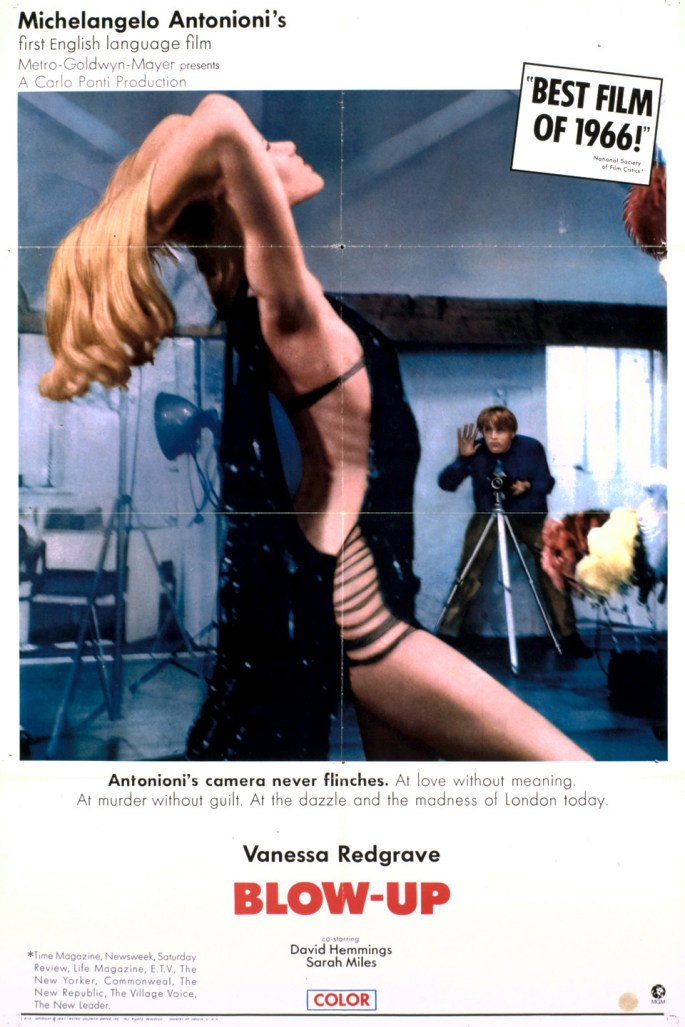
MICHELANGELO ANTONIONI’S BLOW-UP — A REVIEW BY NICK CLEMENT

0

Blow-Up is the very definition of “cool.” It will always be one of my absolute favorite films. It radiates sex and style and class and sophistication and the way Michelangelo Antonioni primarily used images to tell his story will always fascinate me to no end. You get David Hemmings in one of the quintessential screen performances and Vanessa Redgrave in all of her radiant splendor, not to mention an absurdly talented (and photogenic…) supporting cast. This was the first of three movies that Antonioni made for MGM (Zabriskie Point and The Passenger are the other two), and it remains one of the most influential, form-busting movies of its era, a wild romp through London’s swinging 60’s, with the outsized exploits of famed fashion photographer David Bailey serving as a character influence.

8

The plot was inspired by the short story The Devil’s Drool by Julio Cortazar, and the film features Hemmings as a cocky, womanizing photographer, and revolves around a series of photos that he snaps out in the park one afternoon, which may or may not contain the identity of a killer and a murder in progress. Brian De Palma would do a riff on this material with his classic 1981 thriller Blow Out, which starred John Travolta in one of his best performances as a movie sound mixer collecting sound effects near a river when he inadvertently witnesses and records the sounds of a car crash which may be more than it seems. But back to Blow-Up; this is a film I’ve viewed multiple times, always with a few years in between each viewing, and I love how it’s come to mean so many different things to me as a person each time I encounter it. The film has a bewitching nature, a dreamy quality, not hallucinatory, and it sort of resembles a methodical thriller without the conventional ending that we’ve all come to expect after years of Hollywood shoving plot contrivances down our throats.

99

Antonioni, a master filmmaker who loved to subvert his audience at every opportunity (I fucking love The Passenger, too), was clearly fond of the open-ended finale, a storytelling device that can be extremely effective when properly handled, but can also feel amazingly cheap and artificial in the hands of lesser filmmakers. Here, because Antonioni has set so much up and given the audience so many tantalizing bits to examine, the fact that the film ends the way it does shouldn’t provoke anger, but rather, further mystery with the potential for more discoveries on repeated viewings. Herbie Hancock’s jazzy score punctuates the film in all the proper ways, but what Antonioni excelled at best was silence, and how it can be used in so many ways to evoke so many emotions. The cinematography by Carlo Di Palma is absolutely brilliant, each shot informing the one previous and the one following, with an expert sense of camera placement, color, and space within the frame.

b70-830

And then there’s the parade of gloriously beautiful women that are trotted out for Hemmings to flirt, photo, and party with, with one extremely memorable sex scene clearly ranking as one of the best ever put on film. Damn this movie must’ve pissed so many prudes off! Hemmings gives a fascinating performance, filled with self-assurance then self-doubt, all the while displaying a unique resentment towards women despite his glamorous job, with a stare that could cut glass and shake anyone off their guard. He’s a man who has become jaded by his lifestyle, but when he’s offered the chance to do something with true meaning, he becomes re-energized by the possibilities that his craft allows and by the random nature of life itself. Blow-Up isn’t a movie where you’re going to learn all of the plot points in an easy fashion, and in many instances, Antonioni leaves his audience to interpret what they’ve seen and what he’s shown. For me, that’ll always be the mark of a GREAT artist – the rare ability to create something rich and complete while still allowing for room to grow and rediscover.

p1268_p_v8_aa

Bound: A Review by Nate Hill

image

Before the Wachowskis rocketed into the stratosphere of cinema with their big budget world building and brilliant, lofty ideas, they made Bound, a down n’ dirty, kinky little slice of mob pulp that’s as much fun as it is sexy, potent and dangerous. Gina Gershon plays Corky, a hard nosed opportunist with a keen eye for making money and a fondness for beautiful women. Jennifer Tilly is Violet, the bored wife of weaselly gangster Ceasar (a lively Joe Pantoliano), who has just come into a whole wacky of shady cash via his employer Mickey, played by one of the great character actors of his generation, John P. Ryan, who is sadly no longer with us. Ceasar has been given the money to launder, but Violet has other plans that involve double crossing him and making off with it. When she happens to wander into the gay bar that Corky frequents, sparks fly. And I really mean it, for soon enough the two are in bed together for one of the single most hot and heavy sex scenes you will ever see in a film. Seriously, you’ll want to open some windows for this baby. As soon as Corky gets wind of the money, the plot simmers as everyone makes a discreet mad dash for riches and no one is sure who is screwing over who. Gershon is tough, sexy as hell and leaves a faint trace of vulnerability in her excellent performance. Tilly is crafty and secretive, deliberately making people underestimate her until it’s too late. This was Ryan’s last film role, and he makes the most of it as a salty old thug with a dash of class, a touch of kindness and the unnerving tendancy to snap at the drop of a hat. Christopher Meloni is hilariously pathetic as his second in command who irritates everyone around him, especially Ceasar, who has a scary little temper of his own. One senses real danger for our two female leads, because despite the somewhat playful and often satirical tone towards tell gangsters, the Wachowskis have still fashioned them to be formidable and cruel, a wise tonal choice that grounds the viewer and distills geniune suspense. The characters are all brilliantly written and realized, so if you read this review thinking this was a trashy little lowbrow affair, it’s not. It’s It’s a real world tale that just so happens to take place in a lurid part of movie town, and contains one scorcher of a lesbian love affair that is as affecting in dialogue and body language as it is with sex. A special film, and not one to be missed.

JOHN IRVIN’S CITY OF INDUSTRY — A REVIEW BY NICK CLEMENT

city_of_industry

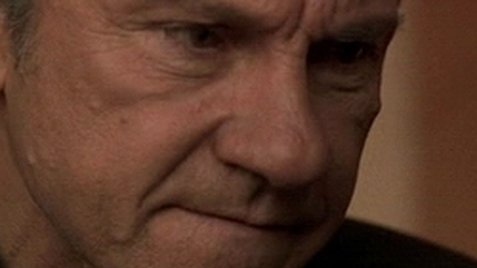
The crime genre is one of the most studied milieus in all of cinema, and in our rapidly changing Hollywood landscape, genuine genre fire-crackers like City of Industry are increasingly harder to find. Receiving an extremely small theatrical release before making its way to DVD and cable in 1997, John Irvin’s gritty, finely textured, and extremely seedy motion picture contains an oversized lead performance from Harvey Keitel as a career criminal who refuses to be taken advantage of by one his young underlings. After a viciously staged heist sequence where things actually go according to plan for Keitel and his crew (a nice spin on the classic idea of the robbery gone awry premise), the film switches gears into revenge territory, with Keitel looking to take down the menacing Stephen Dorff, a dangerous hot-head who tries to double cross Keitel and make off with the score for himself.

city-of-industry-movie-poster-1997-1010542729

Written by Michael Mann protégé Ken Solarz, the film does feel very much inspired by some of the plotting from Mann’s 1995 masterpiece Heat, taking the shape of a stylized, contemporary western where everyone is a shade of grey rather than simple black or white. A whiff of Reservoir Dogs can also be felt, but this distinctive film is definitely its own beast overall, and it serves as a reminder of how few down and dirty crime movies like these actually get made in today’s Hollywood landscape. Irvin, whose credits include The Dogs of War and Hamburger Hill, directed with an iron fist, but in the best sense of the phrase; there’s a no-nonsense quality to City of Industry that allows the bristling narrative to move with driving forward momentum, never pausing for extraneous or unnecessary beats. The rough and tumble outskirts of Los Angeles feel ominous and scary in this film, with Irvin and his astute cinematographer Thomas Burstyn never making any one image too pretty or overly manufactured, instead opting for a dank and murky vibe with flashes of red and blue.

1

City of Industry feels like a left over from the 1970’s, a crime film interested in character motivation as much as it is in showing off bloody shoot-outs or the expected explosive violence from a tale such as this. In fact, one of the best aspects to the film is how the script does a few things out of the norm, and it can’t be understated just how magnetic and powerful Keitel was in this role, which seemed tailor made to his sensibilities as an actor. The deteriorating industrial side of Los Angeles is also a major character in the film, with an atmosphere that suggests crumbling infrastructure and shady morals, which feels perfectly in tandem with the duplicitous characters. And because everything here was played straight and without a wink of self-conscious posturing or riffing, all of the developments in the story feel all the more tough and earned. Timothy Hutton was shrewdly cast against type, while Famke Janssen and Lucy Liu got some solid scenes as well. Elliot Gould made a colorful cameo appearance. An Orion Pictures release.

city_of_industry_ver2

TROPIC THUNDER – A REVIEW BY J.D. LAFRANCE

large20tropic20thunder20blu-ray6

For the years leading up to Tropic Thunder (2008), Ben Stiller had been coasting on his patented, one-note neurotic doormat shtick in films like Night at the Museum (2006), The Heartbreak Kid (2007), and others. What happened to the guy who could play a self-destructive junkie screenwriter in Permanent Midnight (1998) and a dorky romantic in There’s Something About Mary (1998)? Stiller, at times, is more interesting behind the camera as director of the Generation X comedy Reality Bites (1994), the black comedy about stalking and television, The Cable Guy (1996), and the hilarious fashion world satire Zoolander (2001).

With Tropic Thunder, Stiller returned to being behind the camera (and also in front of it) and decided to take on the Vietnam War sub-genre. In an odd way, we have Oliver Stone to thank for this film. Not just because he made Platoon (1986), which really popularized the sub-genre, but he also rejected Stiller when he auditioned for a role in the film. Stiller never forgot it and now he’s parlayed those feelings of rejection into a film that not only lampoons war films but Hollywood in general.

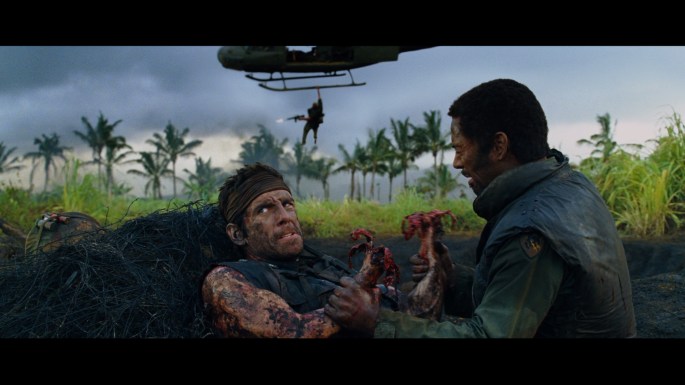
Tugg Speedman (Stiller) is an action film star on the decline, still flogging his Scorcher franchise – films that resemble a cross between something Tom Cruise might do and Roland Emmerich’s brain-dead special effects epics. Jeff Portnoy (Jack Black) stars in low-brow comedies filled with fart jokes that allow him to play multiple characters a la Eddie Murphy (Norbit, anyone?). Australian actor Kirk Lazarus (Robert Downey Jr.) is a five-time Academy Award winner who appears in “serious” films that win all of the important awards just like Russell Crowe.

They are all starring in a Vietnam War movie called Tropic Thunder that is currently being made on location in South Vietnam. The production is on the verge of being in the kind of trouble that almost consumed Apocalypse Now (1979) as Lazarus is upstaging Speedman. First-time director Damien Cockburn (Steve Coogan) can’t control his actors, which is causing the movie to go behind schedule, much to the chagrin of Les Grossman (Tom Cruise), the blustery, Harvey Weinstein-esque head of the studio.

In an effort to save the movie, Cockburn takes the five main actors to a remote jungle area to shoot a bunch of scenes guerrilla-style only to stumble across a rag-tag group of Vietnamese drug runners who assume that the clueless movie stars are actually DEA agents. At first, Speedman and his co-stars think that this is all part of the production but they (except for Speedman) quickly realize that this is for real.

Robert Downey Jr. was rightly praised for his hilarious performance as an actor who goes so deep into character that he undergoes “pigmentation alteration” surgery to darken his skin in order play an African American soldier. Downey’s commitment to the role is almost as dedicated as Lazarus’ and he gets some of the film’s best lines, including such gems as “Man, I don’t drop character ’till I done the DVD commentary,” and “I know who I am. I’m the dude playin’ the dude, disguised as another dude!”

It’s not too hard to figure out the real-life Hollywood power players that Stiller’s film satirizes with Cruise’s Grossman channeling the abusive reputation of the aforementioned Weinstein and Downey poking fun at the way-too serious on-and-off-screen antics of Crowe. Unlike all of those Scary Movie spoofs, Stiller understands that a good satire plays it straight on the surface. Admittedly, he’s got a much bigger budget to play with ($100 million+) than any two of those dime-a-dozen spoof movies so he’s able to hire the likes of A-list cinematographer John (The Thin Red Line) Toll and cast marquee name actors like Robert Downey Jr. and Jack Black instead of C-listers like Carmen Electra to make Tropic Thunder look like the slick war films he is sending up. Of course, the danger in doing this is to become the very thing you’re trying to parody, but fortunately Stiller doesn’t fall into this trap.

Every generation needs a Mel Brooks and Stiller takes up where the legendary comedian left off – before he became irrelevant and painfully unfunny. Stiller goes after the usual suspects of the genre: Platoon, Apocalypse Now, The Deer Hunter (1978), and even a sly reference to a scene from Predator (1987), but Tropic Thunder is more than a game of spot-the-reference that spoof movies tend to devolve into. It actually has something to say other than Hollywood is excessive. This is one of Stiller’s most ambitious film to date and demonstrated that he can play in the same big leagues that fellow comedian-turned-filmmaker Jon Favreau has also graduated to with Iron Man (2008). They both started off with very modest films and have shown a very definite learning curve with each subsequent film they’ve helmed. Tropic Thunder has everything you’d want from a big budget, R-rated comedy.

FRANCIS FORD COPPOLA’S THE COTTON CLUB — A REVIEW BY NICK CLEMENT

1

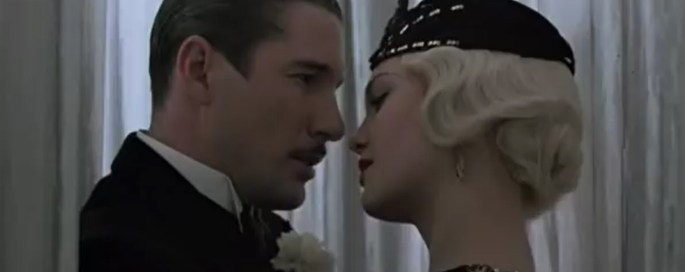
Despite being met with mixed critical response upon initial release and becoming a major financial wipeout, The Cotton Club is a massively ambitious epic, sprawling in its scope, and hugely entertaining, fusing the period gangster film with the movie musical in very unique ways. An absurdly plagued production on any number of levels (just head on over to Wikipedia…), this Francis Ford Coppola directed film has some of the greatest production design I’ve ever seen (courtesy of the legendary Richard Sylbert), and ludicrously photogenic cinematography from Stephen Goldblatt. Featuring an utterly insane cast including super suave Richard Gere, extra hot Diane Lane, Bob Hoskins, Laurence Fishburne, Lonette McKee, Nicolas Cage, Jennifer Grey, Gregory Hines, James Remar, Tom Waits, Diane Venora, James Russo, and tons of character actors from that era, The Cotton Club centers around Dixie Dwyer (Gere), a young musician who uses mob influence to advance his show-biz career, but ends up in a dicey situation when he falls in love with the sultry girlfriend of mob boss Dutch Schultz (Remar). Lane is the sexy object of desire, and she and Gere were both terrific. In fact, everyone gets a chance to shine in this expansive tale of friendship, love, rivalry, jealousy, murder, and betrayal.

2

The plot thickens when Dixie’s brother Vincent (Cage) decides to join in on the criminal antics, while various real life gangsters are intermingled into the busy plot which ratchets up the spectacle and suspense. The musical set-pieces are spirited and terrifically choreographed, with the smashingly authentic costumes by Milena Canonero lending the entire production a sense of gaudy splendor. And it goes without saying that the vibrant and jazzy musical score from John Barry is absolutely sensational, mixing show tunes and peppy musical numbers with somber melodies from the traditional score. When a film goes through as many difficulties as The Cotton Club did, by the time it’s ready for release, critics have already sharpened their knives, which is of course wildly unfair but pretty much standard operating procedure for those writing about film. Every movie is a struggle to get made, some more than others, so it always seems wrongheaded to bring any upfront negativity into a viewing when you’ve heard that things haven’t gone smooth on set. Judge the final product, not the process of getting the film made. Siskel and Ebert most notably included the film on their top 10 lists in 1984 and for good reason, as The Cotton Club is a celebration of all things cinematic, both large and small, and as always, the level of detail and craftsmanship that Coppola brought to the table was eye-opening to behold.

3


In Bruges: A Review By Nate Hill

  
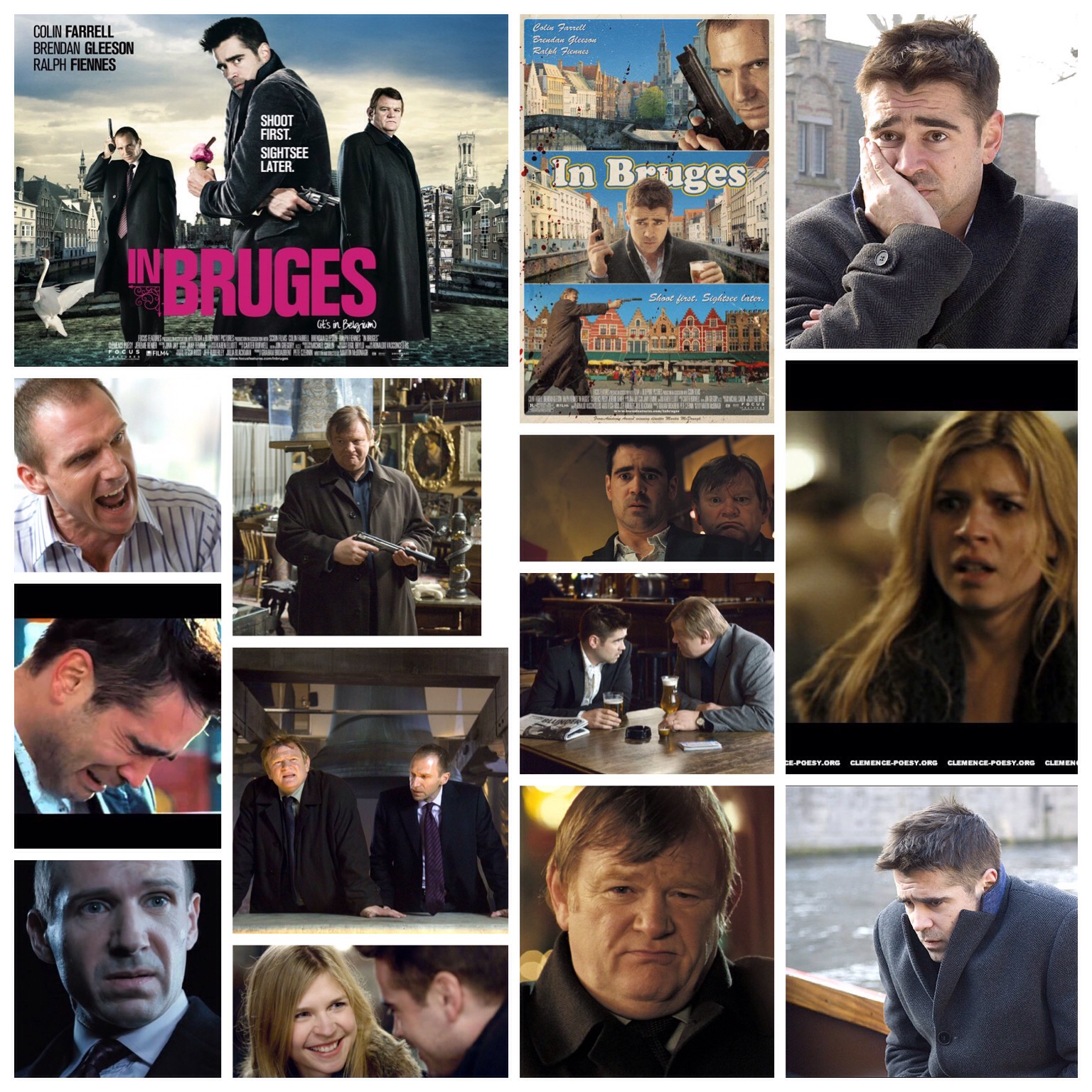
I can’t really say in enough words how much I love In Bruges. In fact there aren’t words in my language which can express how deeply in tune to it I feel every time I put the DVD in for a watch, which is at least every four months or so. The dual forces of comedy and tragedy have combined here using Martin McDonough’s genius scriptwriting as an avatar to create something raucously funny and profoundly moving. The comedy is of the spiciest and very darkest nature (my favourite), and the tragedy tugs at both the heart strings and the tear ducts, scarecly giving you time to wipe away the tears of laughter from the scene that came before. The best in UK crime fare, some of the most balanced, peculiar writing and fully rounded characters who are as flawed as human beings get. Colin Farrell delves deep and gives the performance of his career as Ray, a would be hitman who has fucked up bad, and now heads for Bruges (it’s in Belgium) with his mentor Ken (Brendan Gleeson, pure brilliance and humble class). Ken loves eccentric little Bruges, with its historical architecture and quaint townsfolk. Ray is bored to tears and pouts like a toddler. They meander around the town getting into all sorts of mischief including a dwarf (who has fascinating ideas about the ultimate race war), museums, cocaine, the Belgium film industry and more. Ray sets his sights on the gorgeous Chloe (), and Ken does his paternal best to keep him out of trouble while wrestling with his own gnawing guilt. The film gets a shot of pissy adrenaline when their boss Harry comes looking for them, in the form of a knock it out of the park funny Ralph Fiennes. Fiennes rarely cuts loose and bounces off the walls like he does here, and his Harry is a delightful creature to watch in action. Angry, petty, volatile, clever and out for blood, just a joy to behold. As playful as the script is, there’s a purgatorial sadness to Ray’s situation, a fateful sense that he’s been dumped in Bruges not just to fool around, get drunk and utter witty barbs in that brogue (which he does do a lot) but to deeply ruminate on his choices and ponder where his actions will lead him moving forward from his terrible deed. Maturity permeates each exchange between him and Ken, a fledgling and an old timer shooting the breeze about heavy topics which neither of them pretend to understand, but both are neck deep in. I always cry at certain scenes, always laugh my ass off at others, and never cease to be affected right to my emotional center and the marrow of my funny bone each time I watch this. Look for a brief cameo from Ciaran Hinds in the opening few minutes. Every second of this piece is filled with lush, thought provoking dialogue, awesomely un-politically correct dialogue that doesn’t censor a single impulse from its characters, and a yearning to explore the decisions which cause people to be labeled ‘good’ or ‘bad’, something that’s inherently complex yet feels lightly treaded on here. Masterpiece. 

Indie Gems with Nate: Dreamland


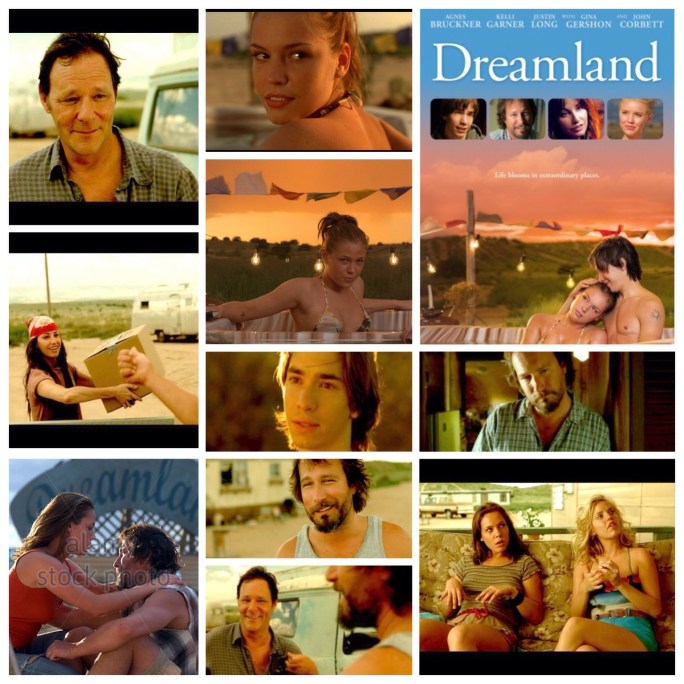
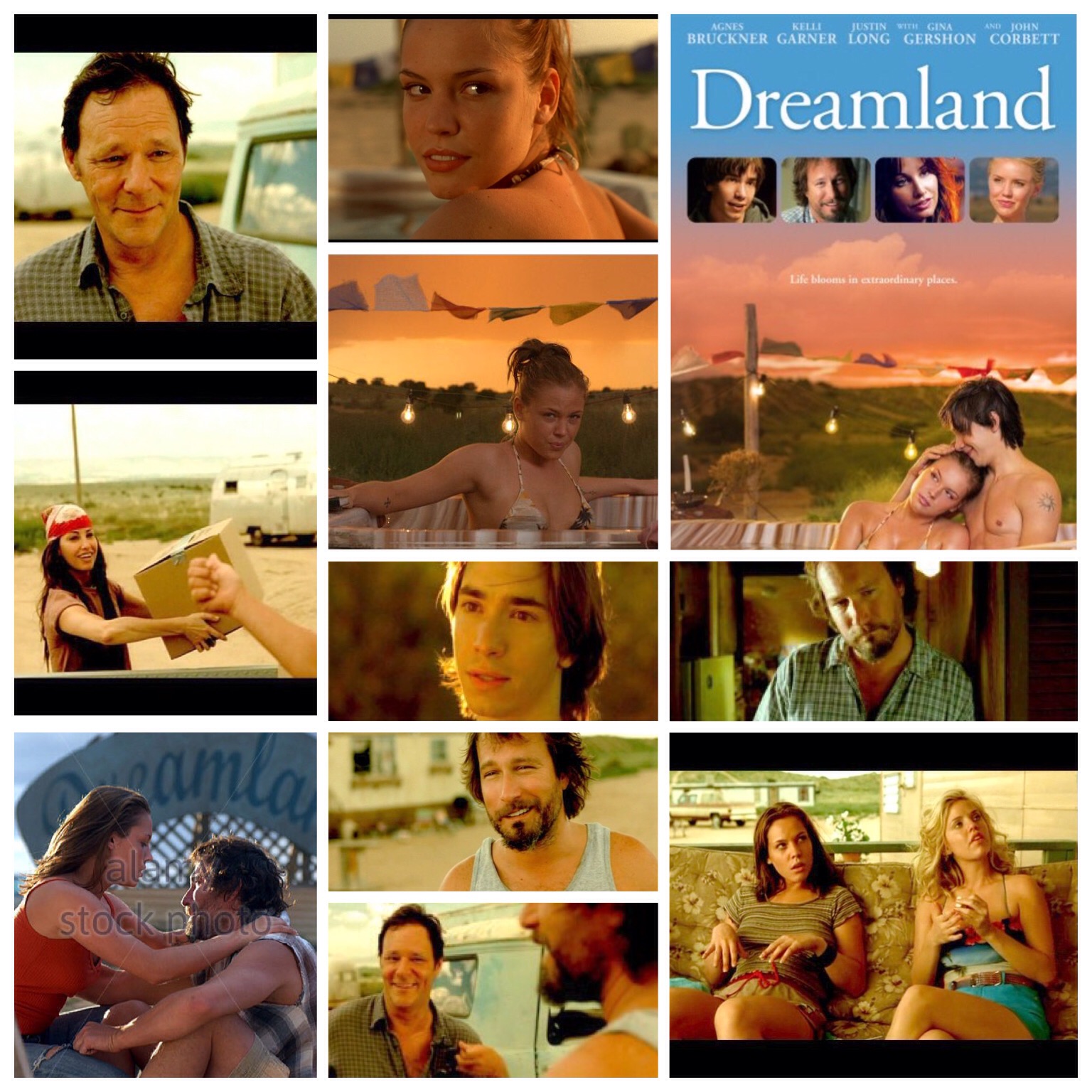
Dreamland is an introspective little indie drama concerning the life of Audrey (Agnes Brucker). She lives in a sleepy trailer park way out in the desert somewhere, far and away from anyone else. She longs for a life somewhere else, but is torn between that and caring for her agoraphobic father (John Corbett), who is severely broken following the death of his wife and her mother. Fresh life is breathed into their environment with the arrival of kindly Herb (Chris Mulkey), and his musician wife Mary (Gina Gershon). Along with them is Herb’s son Mookie (Justin Long is a tad miscast), who immediately has eyes for Audrey. The two strike up an easygoing romance that is tested by her rebellious nature, and the commitment she feels for her ailing father. Corbett is sensational, giving the best performance of the film as a damaged soul that needs caring for, and to find the strength to move on. Mulkey and Gershon are real life guitars strummers, giving their characters an authentic, earthy feel. The title matches the tone nicely; everything is non rushed, relaxed, laid back and dreamy, as one would imagine life out there might be. I was lulled into the hazy routines and moving relationships that bloom for these individuals out on the far side of nowhere. Great stuff. 

VOLKER SCHLONDORFF’S PALMETTO — A REVIEW BY NICK CLEMENT

1

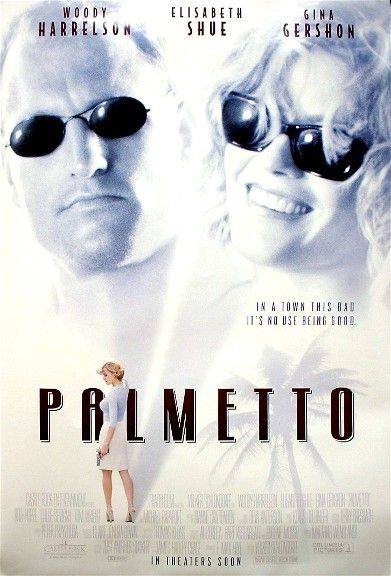
Palmetto is a twisty, lethal little neo-noir from 1998 that took familiar ingredients and threw them into a blender of Florida sunshine and juicy star-turns from a game cast who clearly had fun with the hot-blooded, morally treacherous material. Directed by the great filmmaker Volker Schlöndorff (The Tin Drum), the film failed to ignite a fire at the box office and received mixed to negative reviews, while serving as the director’s last American feature film. And while it’s hardly a brilliant film ,there’s so much fun stuff on display to remind you that Hollywood rarely makes them like this anymore. Taking a page from genre staples like The Big Sleep and Key Largo, the screenplay concocted by E. Max Frye, which was based on the novel by James Hadley Chase, concerns a falsely imprisoned journalist named Harry Barber (Woody Harrelson in one of his most atypical performances) who, upon release from the joint, crosses paths with the sexy but probably dangerous Rhea Malroux (the absolutely fantastic Elisabeth Shue in drop-dead sexy mode), a classic femme fatale who you just know is going to take poor Harry for a ride he’ll never forget. Rhea convinces Harry to help her in an extortion plot against her rich husband, but nothing goes according to plan, with multiple plot strands converging and everyone double and triple crossing each other without a moment’s notice. I still haven’t looked at a 55 gallon drum the same way since this film. Cinematographer Thomas Kloss took advantage of his lush surroundings, bathing the film in warm colors and sun-dappled imagery so that the audience felt the sticky humidity all throughout the constantly shifting narrative. A game supporting cast including sultry Gina Gershon, Michael Rapaport, Chloe Sevigny, Rolf Hoppe, Tom Wright, and the always awesome Marc Macaulay all contributed to the sweaty thrills. This overlooked item would make a nice double feature with the underrated Bob Rafelson crime-noir Blood & Wine with Jack Nicholson.