Martin Scorsese’s The Departed is knock-out entertainment. Yes, he’s made better movies. But this one is just terrific on so many levels. William Monahan’s flamboyantly vulgar screenplay popped in every scene, and the performances from the deep cast were all wild and crazy and unhinged and robust. Maybe too robust in the Jack Nicholson department, but hey, if he wants to bring a bag of sex-toys to the set why not let him!? I love the violence in this movie, the cynical nature of the narrative, the final beats with Whlberg and Damon, that fucking rat scurrying over the window sill, but what really keeps bringing me back to this movie whenever I pass it by on the HD movie channels is the salty, profane dialogue that feels like masculine poetry when put into context with the cop genre. A sly and smart updating of 2002’s Infernal Affairs, The Departed allowed Scorsese to just sit back and have a ball with a bloody, nasty genre piece, made without epic pretense, instead focusing on the intimate nature of a criminal organization and undercover cops, while also allowing for smart character moments to shine through. Vera Farmiga was super sharp and oh-so-sexy in this film, and I love her pointed scenes with an impotent Damon — hilarious! Craft contributions from Howard Shore, Michael Ballhaus, and Thelma Schoonmacher were all ace. Wahlberg doing a zipper-mouth-fart on Sheen’s desk in response to Leo’s reference of Hawthorne POWER, Baldwin Patriot Act POWER, and James Badge Dale outta nowhere at the end POWER.
PTS Presents Artisan Workbench with Charles de Lauzirika

Podcasting Them Softly is extremely excited to present a chat with four-time Saturn Award winner Charles de Lauzirika. Charles is one of the home video market’s most sought after producers of exclusive behind the scenes content, having worked with an insane roster of filmmakers including Ridley and Tony Scott, Jean-Pierre Jeunet, James Cameron, Michael Bay, the Coen brothers, and David Fincher, just to name a few. He’s also an emerging writer/director, having completed his feature debut, the indie thriller CRAVE, back in 2012. A massive movie buff with an encyclopedic knowledge of cinema, it was a blast getting a chance to talk with him, and we hope you enjoy!
ERICK ZONCA’S JULIA — A REVIEW BY NICK CLEMENT
Tilda Swinton’s hypnotic, bravura performance in Erick Zonca’s twisty, lurid and passionately directed indie kidnapping drama Julia is one of the most fearless pieces of acting I’ve come across. She tears into her damaged-goods role with such gusto and force that the film itself seems to be exploding with energy, frustration, and hostility. This is an expressionistic piece of filmmaking, with dreamy cinematography by Yorick Le Saux (Swimming Pool, Clouds of Sils Maria) that’s mixed with rough editing patterns by Philippe Kotlarski, leaving the audience in a jittery state of paranoia and unease. There’s nothing rational about this exceedingly intense film, but that’s sort of the point – Zonca has created a loose-cannon character who never thinks about the consequences of her actions. And when she’s forced to get serious, too many mistakes have been made for her to ever feel normal. Swinton loves playing unlikable characters, and with her titular performance in Julia, she painted a portrait of a sleazy, morally bankrupt woman who thinks nothing of endangering a child, let alone the dangerous. potentially lethal ramifications that come with her skewed sense of logic. This is an edgy, oddly sexy, deeply unique film that further demonstrates how marvelous Swinton is as a performer.
LUCA GUADAGNINO’S I AM LOVE — A REVIEW BY NICK CLEMENT
I Am Love is a film that, yet again, showcases a fearless, go-for-broke performance from Tilda Swinton, who is easily one of my favorite actresses currently working. And if you’ve ever wanted to hear he speak fluent Italian with a Russian accent, this film is for you! I Am Love is a sensual, sexual, lyrical piece of filmmaking from Italian director Luca Guadagnino, who in tandem with the brilliant cinematographer Yorick Le Saux conjured up a dreamy, tremendously stylized motion picture that literally feels like a living, breathing entity. Conceived over an 11 year period by Swinton and Guadagnino, the film is all about how unbridled passion can get in the way of almost anything and everything, and how the primal instincts that run through our bones, heart, and lower regions can sometimes not be contained, no matter how hard one tries. Music from the classical composer John Adams fills the background, giving off a rarefied vibe, while Swinton plows through the juicy narrative with so much force and command that it’s impossible not to be mesmerized by her every move. Antonella Cannarozzi’s costumes are spectacular, feeding into the overly-moneyed thematic subtext, and while the film certainly dips into melodrama, Guadagnino isn’t content to let anyone off easy, while also imbuing his film with tips to The Godfather. As with any story that is propelled by a torrid affair, there’s real heat in this film, and Swinton, ever the chameleonic artist, slips into her tricky role with so much elegance that you just can’t help but be blown away by her natural sense as an actress.
STEVE KLOVES’ THE FABULOUS BAKER BOYS — A REVIEW BY NICK CLEMENT
THE WORK OF CHARLES WILLIAM BREEN — BY NICK CLEMENT
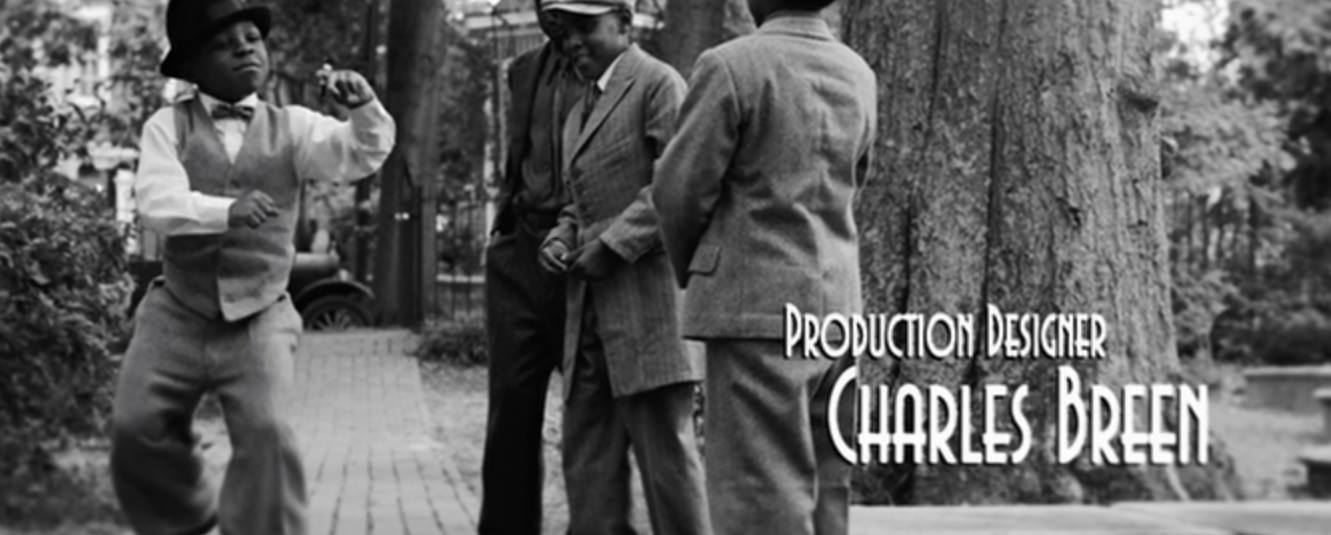
Veteran production designer and art director Charles William Breen has had an extraordinary career working on some of the most popular and long lasting films from the last 35 years. His extensive list of credits includes early career work on Ridley Scott’s masterpiece Blade Runner, Mike Nichols’ drama Postcards from the Edge, Richard Attenborough’s ambitious biopic Chaplin, James Cameron’s seminal science-fiction classic Terminator 2, Clint Eastwood’s blockbuster romance The Bridges of Madison County, Neil Labute’s scathing satire Your Friends and Neighbors and his playfully violent black comedy Nurse Betty. And that’s just naming a few! No matter the genre or the filmmaker that he’s working with, Breen is always able to transport the viewer exactly where any given project is set, and it’s through his innate sense of what’s pleasing to the eye that we’re left with some of the most visually iconic sets and brush-strokes of art direction that could possibly be imagined. Having received an Emmy nomination for Art Direction on HBO’s critically acclaimed Weapons of Mass Destruction, he’s also no stranger to the small screen, having just recently worked on the pilot for the short-lived but extremely funny FX series The Comedians, as well as 23 episodes of the USA comedic series Sirens. Breen is also a frequent contributor on short films, working with a wide variety of talent throughout the years on multiple projects, and has put his talents to use as a solo art director on the powerful drama Flesh and Bone, the glossy copy thriller Jade, the fiery revenge tale The Crow: City of Angels, and Walter Hill’s kick-ass actioner Trespass. There’s not much that Breen can’t do it seems!
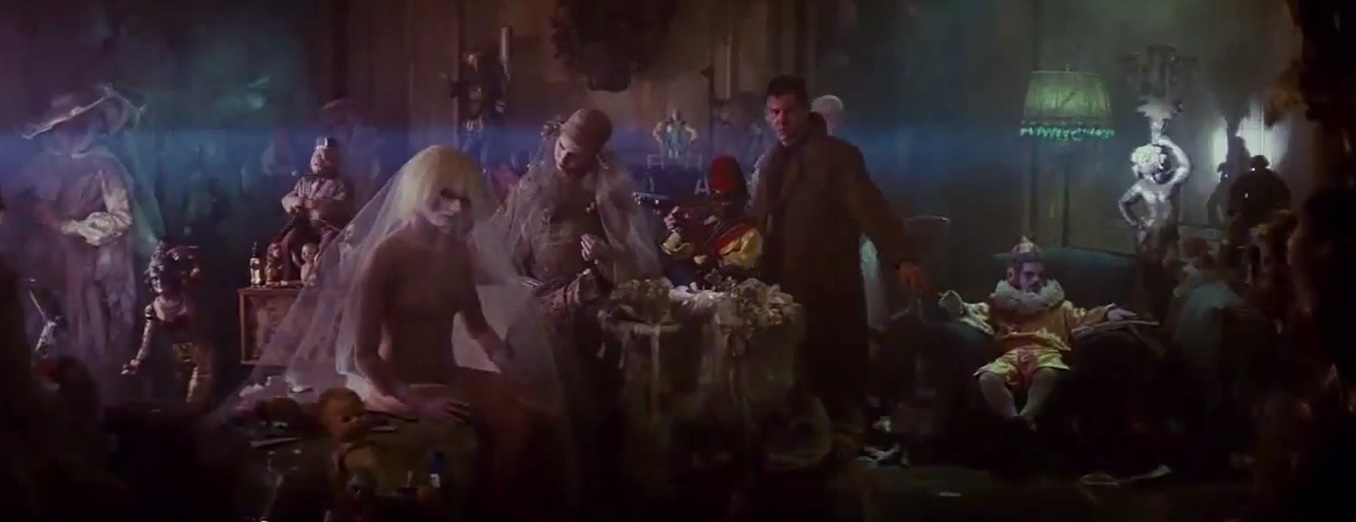
One of his most distinctive credits was the 2006 gangster-musical hybrid Idlewild, from frequent collaborator director Bryan Barber, who has spent the majority of his career in the music video world. Breen brought all of Barber’s bold visual ideas to life with his production design of Idlewild; it’s gorgeous work, overflowing with detail that spills out past the edges of the frame, always providing something visually stimulating to look at. A wildly ambitious and obscenely underrated film, it’s the sort of technical and logistical tour de force that warranted an Oscar nomination. On the opposite end of the spectrum, you have something like Neil LaBute’s nasty relationship drama Your Friends and Neighbors, which highlighted Breen’s ability to use open space and a clean frame to express sadness, hostility, and isolation. It’s an emotionally cold film, and the spare production design reflects the chilly and repressed interior worlds of the characters. And while this project arrived before Idlewild, it was an early indication of Breen’s range as an artist that would allow him to even be considered for such a daunting designing challenge. And I can only image what it must have been like to get one of your first industry jobs working on the sets for the now beyond famous Blade Runner, which has come to mean so much to some many people over the years that it’s safe to call it one of the most influential films ever made. In every single shot of Blade Runner, the audience is treated to something spectacular, and I can think of few other films that have been more art directed and designed to express so many thoughts, feelings, and emotions.
PTS PROUDLY PRESENTS CINEMATOGRAPHERS CORNER WITH NIGEL BLUCK


We are absolutely proud to present Nigel Bluck, the director of photography of all eight episodes of the second season of TRUE DETECTIVE. Nigel was the sole DP on the series this season, and did an amazing job giving the series an unprecedented and unique boost to its tone, setting the visual bedrock where we watched the new characters get the world they deserve. Nigel also was the DP of Julius Avery’s SON OF A GUN, Julie Bertuccelli’s THE TREE, and he was the second unit director of photography of visual effects on THE LORD OF THE RINGS: THE FELLOWSHIP OF THE RING, THE TWO TOWERS and RETURN OF THE KING. Nigel was listed this year in Varity’s Top Ten Cinematographers to watch. Please visit Nigel’s website here.
THE WORK OF BEN KASULKE — BY NICK CLEMENT
JULIUS AVERY’S SON OF A GUN — A REVIEW BY NICK CLEMENT
Son of a Gun, the stylish and exciting feature debut of filmmaker Julius Avery, who had previously specialized in short films, is a rock solid crime thriller, made with no pretensions, and a work that uses its subtle sense of maximum style to its constant advantage. It doesn’t transcend the genre, but at the same time, it’s energetic and entertaining at almost every turn, and despite a possibly too neat resolution, Avery offers up some crackling action sequences, and gets a refreshingly against type performance from Ewan McGregor. There’s also a central heist that’s unique in idea and execution, and it’s something that I’ve never seen before, which is always a welcome plus in my movie watching book. An amalgam of the prison picture, the escape movie, the heist thriller, and all out action flick, the film is a lower-budgeted item from Australia, released in the states by A24, and has found its way to the Blu-ray shelves after barely making a blip on the theatrical radar.
Co-starring rising star Brenton Thwaites (previously very strong in the underrated sci-fi effort The Signal), Son of a Gun centers on a young prison inmate (Thwaites) serving a six month sentence for a minor crime, who is taken under the wing of a notorious and violent criminal (McGregor), who offers to protect the youngster while in the joint if he agrees to help him upon his release. But little does the naïve gangster-in-training know that the plan is fairly large, involving a daring prison break via helicopter and then the risky robbery of a gold making facility, where McGregor, Thwaites, and the rest of their team force smelters to create gold bars on the spot at gun point, so that they can then sell the gold all around the city. Once the plot is set in motion, the film becomes all about the interaction between Thwaites and McGregor, and how their uneasy friendship gets pushed to its limits.
Not much goes according to plan, a rival mobster enters the plot, a mysterious and sexy woman shows up on the scene (Alicia Vikander, pre Ex-Machina), and before you know it, loyalties are tested, sparks fly between Thwaites and Vikander, bullets are fired from various automatic weapons, and a couple of cars do some fantastic, un-CGI’d flips and roll-overs. Shot with clarity and an excellent sense of formal composition by cinematographer Nigel Bluck, Son of a Gun looks terrific all throughout and Bluck’s effective shot selection offers up unique angles during the action sequences, while also feeling intimate during the slower, more dramatic moments between the characters. Swiftly paced and featuring durable performances by an interesting mix of familiar faces and complete unknowns, Son of a Gun is a crime picture for genre enthusiasts. It does what it sets out to do with smarts and unassuming aesthetic flair, and will likely serve as a calling card for filmmaker Avery, who I imagine is taking meetings all over town by this point.
True Detective We Get the Show We Deserve
“I didn’t live my life to go out like this.” – Frank Semyon

Bleak and hopelessness. That’s what we’re left with after the conclusion of the second season of Nic Pizzolatto’s masterclass series, TRUE DETECTIVE. Each one of the characters got exactly what we were promised, they got the world they deserved. I want to preface what I’m about to say next with this: From the first episode of the first season, I was completely obsessed with TRUE DETECTIVE. After the season concluded with the most satisfying ending it possibly could, I thought there was absolutely no way that a second season could, at the very least, be comparable on any level to the first. Rust Cohle was a cinematic and ideological godsend. No one had higher expectations for season two than I. Colin Farrell, Vince Vaughn, Rachel McAdams and Taylor Kitsch were announced as the primary cast. I thought, okay, this is interesting. I always loved Vaughn in dramatic roles and Farrell has always been an actor I’d watch in anything. Kitsch was good in SAVAGES, though I had not seen FRIDAY NIGHT LIGHTS. McAdams piqued my interest based on her performance in TO THE WONDER. All that being said, and after digesting the finale of season two, I can honestly say that not only did Farrell, Vaughn, Kitsch and McAdams give career-high performances, and not only is season two better, but it completely upped the artistic game for not only Nic Pizzolatto, but also HBO and serious television series from this point on.
If you’re outraged by this, let me explain. The first season was too big to fail. It was backed by HBO, had Cary Fukunaga directing all eight episodes, T Bone Burnett doing the music, and drew the star power of Matthew McConaughey, Woody Harrelson and Michelle Monahgan. The season was a dark cop show, wrapped in McConaughey’s dialogue sewn with lyrical realism. The first season became not only a phenomenon but a revelation. We had never seen anything like this before. It became a monster that everyone suddenly watched. Whether or not they grasped the content is irrelevant. Everyone watched it because everyone was watching it. Then came the finale, which underwhelmed a lot. Disappointed many. Those people were concerned about the ritual killing case not being fully closed. But that wasn’t what the first season was about, was it? It was all about Rust inadvertently finding his inner peace.

Then came season two. Some people found the casting to be lackluster. There wasn’t one director for the entire season, and then the initial reviews came out, which were mixed, but predominantly overly harsh on the show. Keep in mind, the critics were only sent a screener of the first three episodes. The critics directed their negativity specifically at Pizzolatto himself. The harsh criticism is akin to the same media sabotage that Michael Cimino suffered from his masterpiece HEAVEN’S GATE.

I chat with one filmmaker very often, and he initially didn’t love the show nearly as much as I did, but as the second season unraveled, he was just as drawn to it as I was. I asked him one day why there was such hostility directed towards the show and Pizzolatto. His response was one word: Jealousy. He then elaborated and told me that the disdain for Pizzolatto came from the fact he was not a part of the machine, he was a novelist who wrote a brilliant first season and went from a college professor to the showrunner of the most powerful show on the most powerful network overnight.

Whether or not that is true, it doesn’t really matter. What has me in absolute disbelief are the people “hate-watching” this previous season and proud to be doing so. I can’t help but take away that these are the same people who started watching the first season because it became pop culturally trendy too. They were the same people who on their initial reaction to the first season’s finale didn’t register it at first. These are the same people who jumped on the trendy bandwagon to hate the show this season. It became a game of Facebook “like” baiting, and Twitter retweeting. Whoever could make the snarkiest hashtagged quip won the internet for the day.