Larry Cohen’s The Stuff

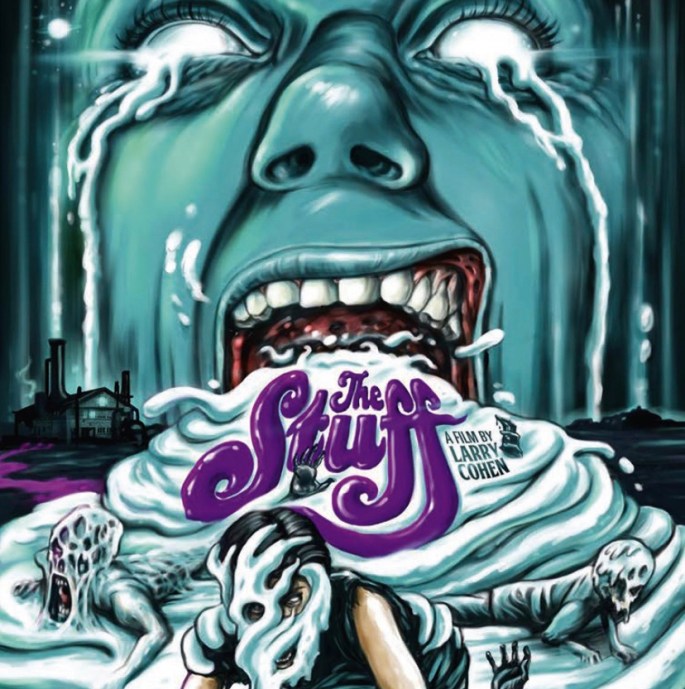
The Stuff is all the rage and people can’t seem to get enough lol, in a dusty, hazy old Larry Cohen flick that Shudder has salvaged for a VHS quality transfer. This is a great little schlock flick as long as you ignore the sheer, hilarious lack of a proper beginning or ending, seriously this thing just… starts without any sort of introduction and then when it’s had it’s fun it just… ends, quite unceremoniously as if there were multiple reels missing from the original print. What’s in between is top shelf schlock with bizarrely earnest performances from a terrific cast and some gloriously gooey, visually stimulating practical effects. Hollywood character actor royalty and Cohen regular Michael Moriarty plays some kind of corporate investigator who is mighty suspicious of The Stuff.. what is ‘The Stuff’, exactly? It’s a sentient, gelatinous white goo that literally bubbles up from crevices beneath the earth and has now been patented by a food processing conglomerate and marketed as a tasty ice cream style dessert, to massive popularity and demand from the public. Only problem is, this stuff has a malicious agenda and not only inspires dangerous cravings and maniacal addiction in its indulgers, it takes over their minds and even physically attacks them. As in all Cohen flicks there is deft social satire woven in amongst the slime and there’s something in here about mad consumerism and the unchecked corporate greed that fuels it, brought to deadpan life by some truly great actors having a blast of hammy fun. Moriarty is always on his A game and rocks it here, with a crisp suit and cowboy boots as oiled up as his attitude, while we are treated to great supporting work from Paul Sorvino as an impossibly patriotic army colonel and the late great Danny Aiello as a smarmy company man who gets his just desserts. There’s a genuinely creepy sequence where a young boy’s entire family, now mentally enslaved by The Stuff, cajoles and coerces him into eating it, it’s a terrifically suspenseful midsection interlude that’s most effective in raising tension. My favourite aspect of the film are the effects used for The Stuff, which are brilliantly tactile, wonderfully animate and really do feel like a disgusting 7-11 dessert full of horrible ingredients that has somehow come to life, like they melted down the Stay Puft marshmallow man from Ghostbusters and the remaining ectoplasmic goo started running about the place Terminator 2 style. I don’t know if a Blu Ray or even DVD transfer exists for this but the version Shudder has gotten it’s hands on is so shockingly low quality it’s tough to understand everything that’s happening onscreen but on the other hand it adds atmosphere and ‘lo-fi VHS’ vibes that are appropriate considering the tone of the film. Good Stuff.

-Nate Hill

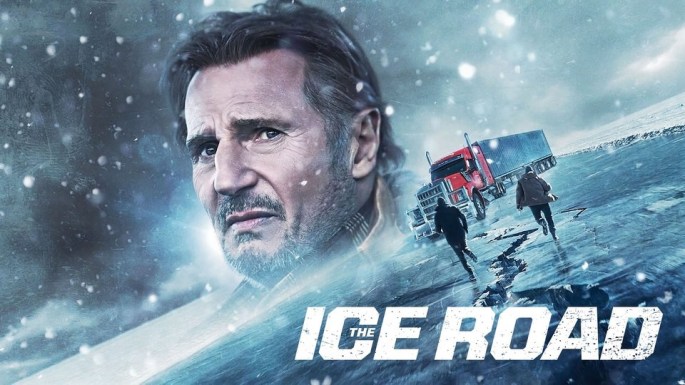
Jonathan Hensleigh’s The Ice Road

The Liam Neeson ice road trucking movie might not top any 2021 charts (including mine) and is admittedly an outlandishly hectic thriller but I’ll be damned if I didn’t enjoy every tension soaked, amped up minute of it. Neeson plays a down on his luck trucker with a special needs brother (Marcus Thomas) who is recruited by a powerful trucking boss (Laurence Fishburne) for a near suicide mission: deliver excavation parts to a remote Winnipeg mining quarry where a handful of workers have been trapped underground following a tunnel collapse. This involves navigating miles of ruthless ice road terrain with giant 18-wheel semis and someone who is trying to sabotage their mission with brutal corporate espionage at the behest of the corrupt mining company underboss (Matt McCoy). The stakes are high, the ice is thin and the sensationalism runs thick with this one; it’s not just a trucking survival thriller although those elements are handled well, it also incorporates elements of classic Neeson action fare too as their crew does battle with an almost invincible company assassin (Benjamin Walker) trying to bring them down. Neeson is reliably gritty and even displays some vulnerability while Fishburne, although sadly underused, goes by the porn-star name of ‘Jim Goldenrod’ here which alone hilariously makes up for his lack of screen time. Others make nice impressions including Amber Midthunder as a badass indigenous trucking prodigy who moonlights as a fierce activist and the always awesome Holt McCallany as the foreman of the trapped workers. The film is hectic as all hell, over-plotted and packed with incident, in addition to the hair raising ice trucking episodes we also get gunplay, snowmobile chases, surprisingly effective dramatic heft, hand to hand combat, a dynamite fuelled avalanche and the film even somehow finds time to throw in some social commentary on veterans with PTSD, the opioid crisis and stolen native land. It’s a LOT, but it somehow kind of works in a big jumble of plot, action and incident that while definitely too cluttered, could never be accused of not being anything but 100% ambitious from stem to stern.

-Nate Hill

Sion Sono’s Prisoners Of The Ghostland

Nicolas Cage has a big laundry chute from his agent’s office that goes right to his mancave at home, wherein various wild, weird and wonderful scripts are just hurled through, whereupon he can evaluate them from the safety and comfort of his pad, and agree to do absolutely amazing, one of a kind cinematic celebrations of unconventional spirit and innovation like Sion Sono’s Prisoners Of The Ghostland, a psychedelic arthouse dream-poem that I promise you is unlike anything you’ve ever seen Cage do and sits atop the mighty crest of other such curios in his recent career like Mandy, Willy’s Wonderland and Colour Out Of Space. This is my baptism by fire, so to speak, in Sono’s work, a Japanese mad scientist of celluloid whose work here is as wantonly jagged and subconsciously nebulous as it is specifically calibrated and lovingly detailed as he tells the story of one lone hero recruited by a sinister southern dandy called The Governor (Bill Moseley, curdled to hammy perfection) to rescue his ‘granddaughter’ Bernice (Sofia Boutella) from a vague netherworld called the Ghostland where she is being held by forces unknown. Cage is outfitted with an explosive device suit that looks like a hand-me-down from Snake Plissken, complete with little bombs to detonate each testicle, should he get frisky. I’m not sure why I’m describing plot here because there really isn’t one, but there also kind of is. Ever have one of those dreams where you’re in a narrative that should make sense from an earthly, rational perspective yet everything is somehow… off, somehow topsy-turvy and abstractly bizarre? This film literally functions within the logic of a dream, and you have to shift gears of perception before you’re in tune with it, there’s just no sense to be made of it beyond the intuitive on a subconscious level. Cage’s character here is nameless beyond the archetypal moniker of ‘Hero’ but I suppose if we wish to put a name to this stranger we can refer to the actor’s own comments, as he has said this guy is supposed to be a spiritual amalgamation of his work as Sailor Ripley in David Lynch’s Wild At Heart and Castor Troy in John Woo’s Face/Off. How awesome is that? It’s fitting because there’s a reunion of sorts for him and Nick Cassavetes, playing his hulking partner in crime here. The film is much less of a manic action spectacle than the trailers might show; there is action, yes, but mostly there’s just atmosphere, and heaps of it. Cowboy/samurai hybrid goons, giggling geisha girls overflowing with bizarrely effervescent personality, animalistic scavengers who roam the Ghostland, all adorned in breathtaking costumes and inhabiting some of the most arresting, beautifully otherworldly cinematography I’ve ever seen, something like post apocalyptic kabuki with vivid splashes of steampunk and shades of zombie horror peppered in too. Characters behave free from inhibition and careen wildly about at the mercy of their own impulses and those of Sono’s who is one hell of a visual artist. There are random pauses in the narrative as the cast breaks out into song for no apparent reason other than they feel like it, including a haunting group rendition of Burl Ives’ ‘My Grandfather’s Clock’ led by Moseley and tons of hectic Greek chorus exposition in blessed unison from background cast. This is cinema distilled straight from REM sleep mode and blasted onto a screen, strikingly unique dream logic storytelling disguised as a latter day Nic Cage gonzo picture, the stuff of beautiful nightmares that will lull you into a hypnotic trance with it’s relentless, all encompassing alien energy. One of the best films of the year.

-Nate Hill

James Wan’s Malignant

James Wan has some balls, I’ll say that much. He’s pioneered various chambers of the horror genre several times over in his career so far with game changers like Saw, Insidious and The Conjuring, quickly becoming a household name with the talent, innovation and passion to back it up. If his newest film Malignant is going to have any kind of the same ripple effect then buckle the fuck up because this is one wild, demented, bonkers, stir crazy oddity and the best time I’ve had with a horror this year. This will be one of those reviews where I will mention almost nothing plot related because it’s just too much tantalizing fun unwinding this ball of yarn for yourself with fresh eyes. The film focuses on a woman (Annabelle Wallis) who begins to have terrifying waking nightmares where she observes a shadowy figure committing heinous acts of murder. The rest I’ll leave be, just see this thing and experience its WTF, nonsensical yet balls-out wonderful third act that truly transcends the boundaries of coherency, decency and convention for something so weird you’ll laugh, cry and shit your pants in unison. Wan is clearly well versed and a fan of many sub-genres and in this we see sly, loving nods to many other artists, most notably Dario Argento and 70’s Italian horror, so if some of the acting comes across as campy or silly just know that was most assuredly his intention and simply bask in the nostalgia. Some of the gore is real and some is CGI and while CGI blood is never ideal in my books the melding is done pretty well here, and it’s understandable that given a story with this much movement, commotion and visual kinetic madness it would have been tough as hell to do all the effects in a practical fashion. To cement the retro vibes we also get a showstopper of an original score composed by Wan’s go to guy Joseph Bishara that’s resplendent with shrieks, howls and heart-pounding synth chords that, for me at least, heavily echoed Goblin’s iconic electronic work in Argento’s films. Wan has worked in PG-13 realms quite a bit and been incredibly successful at making effective horror within those constraints, but he’s gone full R rated here, about as far as you can go into R rated territory in fact, for a no holds barred, rip snortin, unbelievable gong show of blood, violence, mayhem, schlock and a third act twist that’s so beyond anything rational or sane that I’m not even sure it makes sense but I loved every minute of and deeply admire the sheer audacity of. One of my personal favourites of the year so far.

-Nate Hill

THE RUSS MEYER FILES: COMMON LAW CABIN (1967)

Outside the lack of a need for an optical house to create the opening titles, as far as one can tell, the major aesthetic difference between Russ Meyer’s gothic period and his soap opera period really comes down to whether he was shooting in color or black and white. On a thematic level, there was generally a little more whimsy allowed in the soaps that, in the gothic films, was a little rougher-hewed. Where he was once shackled a little more closely to the conventions of the roughies in his earlier work, the soap operas allowed him an even longer leash to explore sex and violence, albeit in his trademark style which draped everything in melodrama that was taken so seriously by the characters on screen, it’s not readily apparent to the viewer that everyone is in on the gag.

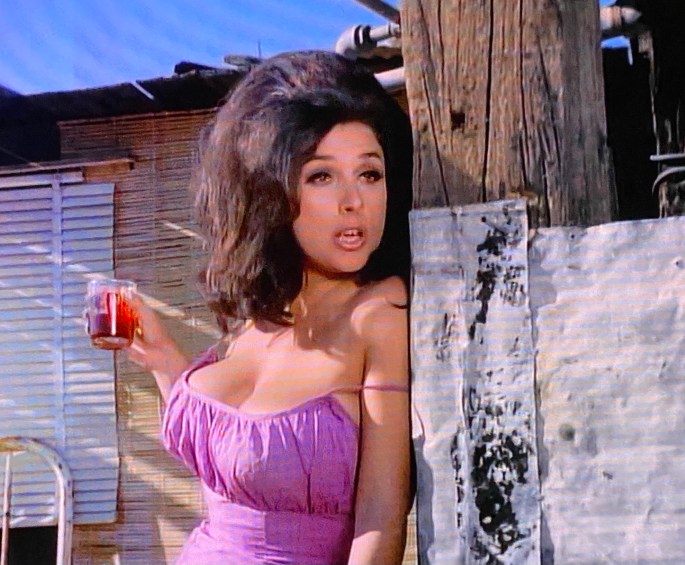
Bowdlerized from its more suggestive title of How Much Loving Does a Normal Couple Need?, 1967’s Common Law Cabin finds Meyer in mostly fine form as he keeps many plates in the air by delivering all the requisite elements found in a Meyer picture while trying to lay a sheen of cartoonish sensibility over everything. Initially set up as something of a con film in which Dewey Hoople (Jack Moran); live-in companion, Babette (Babette Bardot); and daughter, Coral Hoople (Adele Rein), run a tin-roof tourist trap of a dump in Nowheresville, Arizona that survives on suckers rooked in by their alcohol-soaked advance man, Cracker (Frank Bolger). When an ailing Dr. Martin Ross (John Furlong); his oversexed wife, Shiela (Alaina Capri); and beefcake detective, Barney Rickets (Ken Swofford) get hooked into daytripping to Hoople’s Haven, all hell breaks loose causing everything to spin out of control in an orgy of passion and destruction!

Common Law Cabin succeeds in breaking Meyer’s previous narrative mold while still retaining chunks of material that makes it very much his work. It’s a veritable cornucopia of match cuts and rapid fire dialogue either delivered by actors who hold accents so thick the lines are rendered inscrutable or it’s barked and cooed by those for whom camping it up to the nth degree is a professional sport. While the outer limits of the California deserts are exchanged for the Colorado River on the Arizona side of things (with some material filmed in the Coachella Valley), the universe inhabited by the characters in the film is 100% Meyer; desolate, barren, and 15/10 the absolute least conducive locations in which to engage in sexual congress with any comfort whatsoever. The violence which began to permeate Meyer’s work in Lorna is audacious and jaw-dropping in Common Law Cabin as the audience slowly weaned on catfights, gunshots, and the occasional dynamite mishap will probably feel as jolted as Barney Rickert does when, in the film’s utterly bananas climax, a racing and out-of-control Chris-Craft demonstrates how smoothly it can go through a human face.

Unlike the transition from the last of the nudie cuties to the gothic film, the tone and timbre of the soap operas don’t quite gel right out of the gate. Common Law Cabin has more than a foot in the fundamentals of what would make the next film in the soap cycle, Good Morning…and Goodbye,absolutely shine, but it’s also a little unwilling to let loose some of the broad, comic book flair that made Faster, Pussycat! Kill! Kill! such an irresistible gas. In one corner, Alania Capri is the pillowy prototype for Erica Gavin’s Vixen, a prowling, libidinous creature with a sexual appetite that can never be fulfilled. In the other corner is Babette Bardot, the centerpiece of Mondo Topless who is getting held over for a second run much like Lorna Maitland before her. Amazonian and necessary for one specific joke in the story, Bardot is not nearly as impressive as Capri who chews into her part like it’s a five inch steak and never throws a bad pitch. In the middle, Adele Rein never has to do much except stand around and have a meet cute with a runaway teenage millionaire (Andrew Hagara), which is sort of a shame given her impressively mature turn in Jack Hill’s Mondo Keyhole the year before.

In terms of the men, Jack Moran (also the co-screenwriter) is fine but he can’t help but be completely overwhelmed by pro scene-stealers Bolger and Furlong (who also lends his majestically dry vocals to the film’s aggressively funny table-setter of an opening narration). Ken Swofford cuts quite a figure as one of Meyer’s hulking men-beasts who also performs a double function as the reviled and corrupt authority figure that is found in much of Meyer’s oeuvre. Leering, dangerous, and highly charged, Swofford’s scenes with Capri earn the horny and corny burlesque score music atop of them while he also serves as a convincing figure of menacing and towering terror as the film moves toward its conclusion.

Meyer also does something interesting with some of the more lurid elements of the story, namely the downplaying of the incestuous angle that’s baked into the script and played to the real raincoaters in the crowd. While the convention was rife in sexploitation films of the time, one gets the impression that the ogling of a daughter by her dad is not something Meyer was entirely comfortable with, leaning out of it instead of into it. While he showed fewer scruples when it came to displaying brother and sister pairings (Vixen and, I guess, the wraparound for Cherry, Harry, and Raquel), there is something in the way Meyer dips and dabs with the specific material here that reflects a filmmaker whose robust love for sex came when there was an explicit buy-in for everyone involved. Kinks are one thing and are nobody’s business but the parties engaged, but Meyer clearly feels there is a demarcation between that and a place where things get a little more creepily complicated. Much like hardcore pornography which would begin to encroach upon his work in the 70’s, there was just a place where Meyer would not dare go whether it was due to matters of taste or something deeper and personal.

And while thinking of Meyer’s work as not being very deep and personal is probably the norm, a closer view of his work in total doesn’t much give evidence to that opinion. Regardless of his public proclamations to the contrary, Meyer’s sexual identity is laid bare in his films and, as he went along, it feels like that identity gets a little more complex and is deeper than the rote and standard observation that he loved big tits.

Or, as Mr. Rickett succinctly puts it in Common Law Cabin when asked if everything he says is a double entendre, “It’s not what people say that’s important. It’s what they do.”

(C) Copyright 2021, Patrick Crain
Spiral: from the book of cheap, lazy Saw rip-offs

There’s a part in Spiral, the new attempt to resuscitate the Saw franchise, where Samuel L. Jackson’s tough guy police captain bellows out something to the killer like “You wanna play games mothafucka, alright, I’ll play!” I was immediately reminded of the part in Scary Movie 4 that parodies Saw with Shaquille O’Neill and Dr. Phil trapped in one of Jigsaw’s dungeons, played for utmost comedic effect. Now, if I make that kind of association to a Saw film that’s supposed to be taken seriously it’s really not a good sign and is a dead indicator of just how inexcusably, punishingly bad this film is, a true spiral of the downward variety. If you’re going to take property like Saw, which has an incredibly detailed and specific lineage and one of the most die-hard franchise fandoms out there, if you’re going to rework that and fashion it into something that’s supposed to nostalgic yet fresh, something that must hold the connective tissue to the lore steadfast yet also open up new neural pathways in the mythology you better make sure you’re on your A-game and come up with something special and…. this is what they fucking did? Really? First of all, Chris Rock and Sam Jackson just don’t fit the bill, I’ll say it. As a father son duo of detectives who work in a precinct packed with morally shady cops (them included) they just seem to stand out in the worst way. Rock is alternatively manic and withdrawn, every note he chooses is off-key, while Jackson just seems bored and confused. Everyone else is miscast, from Hungarian-American bombshell Marisol Nichols as their worried lieutenant to MacMurray from freaking Letterkennny as an ill fated cop from their team who looks like he just walked out from a high stakes poker game aboard a Mississippi paddle-wheeler boat. And as for the identity of the killer? It’s fairly obvious who it is in the first ten minutes of the film, which was a massive letdown. Also the thing is just so bizarrely over-lit, like every scene is just weirdly bright, and even the underground or dungeon scenes that should feel murky and shadowy still have this odd fluorescent sheen, it’s like their gaffer was packing every illuminating device from an aircraft carrier in his gear trailer. As far as ties to the John Kramer jigsaw murders go and any respects paid to the franchise overall, it’s just lazy coincidental conjecture and bad, half assed writing. Like, why did this even need to be a Saw related film? Why did they need to shoehorn the trademark vicious booby trap aesthetic into their dumb, overcooked, predictable cop killer whodunit? And furthermore who thought it was a remotely good idea to add a bunch of silly rap songs to the soundtrack and smother any atmosphere they hoped to generate almost as badly as the lighting does? I suppose they knew they needed some kind of brand name to juice up their lifeless script and try to distract viewers from how much they didn’t even try. Pure shit.

-Nate Hill

Liam Gavin’s A Dark Song

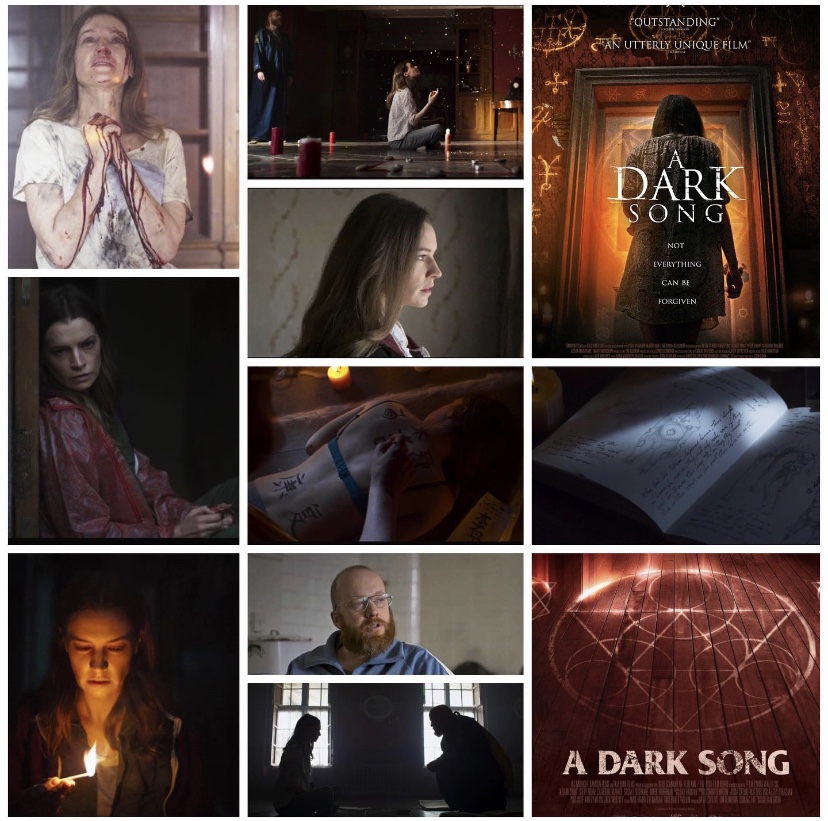
I always appreciate it when a horror film spends like 80% of its runtime lulling you into a trance with slow burn pacing and impossibly subtle advances in plot and then, in the final few minutes just cranks the dial up way past eleven and let’s it’s climax rip for a no holds barred grand finale that leaves you in the dust. Liam Gavin’s A Dark Song does precisely that and is superior quality atmospheric horror that sees a haunted, introverted young woman (Catherine Walker, who has an appropriately angelic presence) hire the services of a jaded, ill tempered occultist (Steve Oram) to guide her through a spiritual summoning ritual, for reasons that she’s.. not entirely honest about. So the two of them rent a small cottage in the remote English countryside (filmed just outside Dublin) and vigorously prepare to summon some otherworldly forces. Now, I wasn’t kidding when I said this is a slow burn, because for literally most of the film we see these two odd characters simply interacting, practicing occult magick, bickering and running about the house looking for signs that their efforts are even doing anything at all. It might feel interminable to an impatient viewer and I wouldn’t blame anyone for giving up at least halfway through. However, if you have the patience to stick it out through this very, very restrained and character based piece and make it to the final ten minutes or so… well, let’s just say you’ll be rewarded with one of the most harrowing, bonkers, surreal, atmospherically disorienting, thoroughly creepy final acts I’ve ever seen in the horror genre complete with a few dark narrative surprises and even a light one. It’s a brave, bold story structure and once the ritual takes hold, the heavens shake and the supersensible realm is made tangible, it’s nothing short of breathtaking and terrifying in equal measures, and all the more effective as a jarring thunderclap in the story after almost an entire runtime of only restless overcast skies. Terrific, unconventional and highly recommended.

-Nate Hill

The Breed

How scary can killer dogs be? I imagine in real life they’d be terrifying but in the horror genre (perhaps, Cujo aside) they’ve seldom gotten the aesthetic right and especially so in The Breed, a movie about some hard partying college kids on a remote, plane-only accessible island who find themselves hunted by a pack of angry, homicidal pooches. There isn’t much to it, it’s shot in striking broad daylight and the island isn’t much to look at scenery wise so in terms of atmosphere it’s kind of a dud. Honestly it’s strongest asset is the very young duo of Michelle Rodriguez and Taryn Manning, two edgy, cult actresses who don’t usually do the bikini clad slasher scream Queen stuff and as such are a standout here. The male actors are a few forgettable cookie cutter dude bros who make zero impression whatsoever. The production feels cheap, rushed and tactfully awkward, the dogs are good enough actors but, like, how hard is it to slather up some puppets in corn syrup blood, get a PA to dangle a drumstick on a string and have it look like they’re chasing people around an island? Oh and don’t be fooled by Wes Craven’s name above the title, he has nothing to do with this beyond an arbitrary executive producer’s credit. Silly times.

-Nate Hill