THE LOVE WITCH (2016) – A REVIEW BY RYAN MARSHALL


the-love-witch1

Anna Biller may be one of the cinema’s last truly exceptional auteurs. Sure, the term itself is thrown around a lot, and sure, it’s particularly challenging to register as one when dealing almost exclusively in homage. Somewhere and somehow, Biller – born and raised in Los Angeles – finds a way, but regardless of the individual viewer’s tolerance for the director’s unabashed parading of influences and intent, her voice is positively one-of-a-kind.

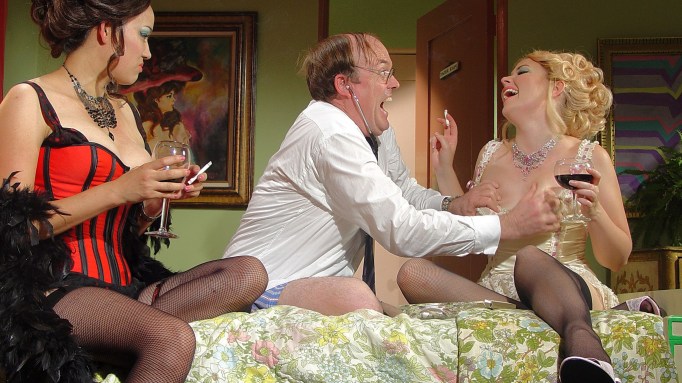
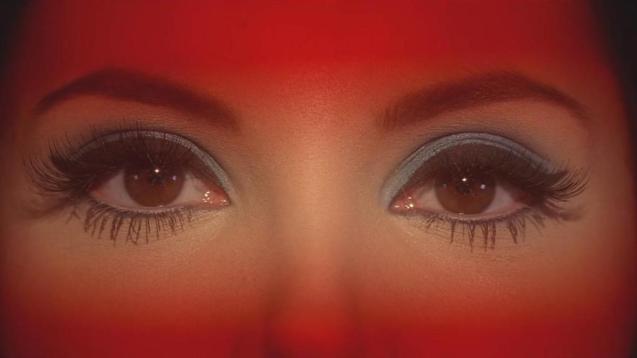
Nearly an entire decade may have separated Biller’s feature debut (2007’s VIVA) and her latest oddball offering, but the same powerfully progressive voice remains unmistakably in-tact. THE LOVE WITCH concerns, as you could probably guess, a contemporary (?) witch Elaine (Samantha Robinson) pursuing a suitable male companion by means of black magic. Holed up as the new tenant in a gorgeous Victorian-style mansion, she practices making potions, but as we learn from her voice-over narration in the coastal cruise intro, Elaine’s still got a lot to learn.

The heroine’s quest is initially driven by the desire to be desired – preferably by all who should happen upon her but more specifically by men. The trail of gullible bastards she leaves in her wake – including but certainly not limited to suave University professor Wayne (Jeffrey Vincent Parise), a police inspector (Gian Keys) perplexed by the prospect of a tampon submerged in a bottle of piss, and even her own ex-husband – ultimately leads the witch on a path to reclaiming individuality that is as hysterical as it is genuinely insightful.

elaine_wayne[1].jpg

Firmly rooted in a bygone era (or several), the film features, among other seductive delights, exceedingly over-the-top performances, vintage costumes and décor, music borrowed from the likes of classic gialli A LIZARD AND A WOMAN’S SKIN and THE FIFTH CORD (both scores courtesy of Ennio Morricone), and M. David Mullen’s photography is spot-on in recreating even the most seemingly insignificant ticks of 60’s/70’s occult-sleaze cinema to a tee. It’s a seamless evocation of everything it claims to be, but there’s much more to this beatific brew than an ornate toast to the silver screen of yesteryear.

A great artist is always flourishing, and flourish is precisely what the writer/director/set and costume designer/composer/etc. has done in her absence. True to such developments, this is perhaps the furthest extension of Biller’s vision that she’s graced us with yet; more interesting than the obvious parallels between a witch and the contemporary female is, well, just about everything else regarding the patriarchy that the film dares to challenge under the guise of an amusing, consistently vibrant entertainment.

elaine_tearoom[1].jpg

Biller would rather her indignant criticisms fester on the surface, which allows for a remarkably articulate confrontation of gender stereotypes that feels empathetic where it could have just as easily been perceived as preachy. THE LOVE WITCH neglects to give off the impression of a work influenced too much by invasive contempt, instead seeking to explore equality by way of humility. A medieval-style wedding late in the game, complete with faux duels and a puppet-toting jester, holds the key to the filmmaker’s stance on both passion and passiveness alike. Elaine’s maturation, twisted as it is, is hardly glorified; in fact, she’s just as damned as her predominantly male victims. Nevertheless, the argument appears to be that it’s time the sorceress had her day as well, however demented and morally conflicting it may be.

It’s easy to surrender to the film’s campy, hallucinatory charms but Biller’s decision to balance her immanent cinematic fetishisms with such a biting, subversive critique is the true stroke of genius. Getting lost in WITCH’s candy-colored ocean is one thing, extracting individually invaluable observations is another. Once again, the filmmaker reaches into the past in order to look to the future – that of man, woman, and our relationship with one another – and the culmination of this particular excursion speaks for itself, loud and clear. It announces its spectacular existence until it knows that it doesn’t have to, and if this is indicative of where we’re headed, we might just be in good hands.

elaine_rug_011

VIVA (2007): A Review by Ryan Marshall

pressbook_outside

An homage, when executed with the most shallow of intentions (that is, to pay tribute without any sort of recognizable personal stamp), can potentially be a deeply disastrous affair. Truth be told, just about anyone can spread their fanaticism far and wide, but it takes a particularly gifted individual to balance immeasurable admiration with a more comprehensive understanding of his/her obsessions. Anna Biller’s VIVA belongs to a long line of exploitation throwbacks that have turned up in recent years – a candy colored excursion back to a time when the idea of corrupted innocence was genuinely invigorating – and immediately it looks to be the kind of extra-cutesy affair that you either love or hate depending on your own tolerance for the kind of material it seeks to evoke. In spite of whatever complicated feelings one might have, there’s an undeniable hook from the first frame onwards, which is that Biller’s at the very least got the “look” and “feel” down to a tee; unmistakably the result of countless years spent thrifting, crate digging, and existing almost entirely in her own world.

I’m the kind of guy who appreciates a true sense of craftsmanship when it comes to production design in film (and even more-so with an intended period piece), so Biller’s commitment to recreating the sleaze and cheese of 1960’s/70’s sexploitation is an immediately imposing quality. Every last aspect of sound and sight, from the pictures hanging on the walls to the occasional (and only slightly jarring) continuity error, exists for the sole purpose of total immersion. Taking a closer look at her filmography thus far, the writer/director (plus costume designer, editor, actress, producer, animator, musical contributor, etc.) seems to have a very unique (and so far successful) brand which seeks to revisit the kind of lucid technicolor dreamscapes that once graced the silver screen with their distinctive phantasmagoria, but with an added intellectual twist which allows the material to be studied under the microscopic lens of today’s comparatively tame social-political landscape.

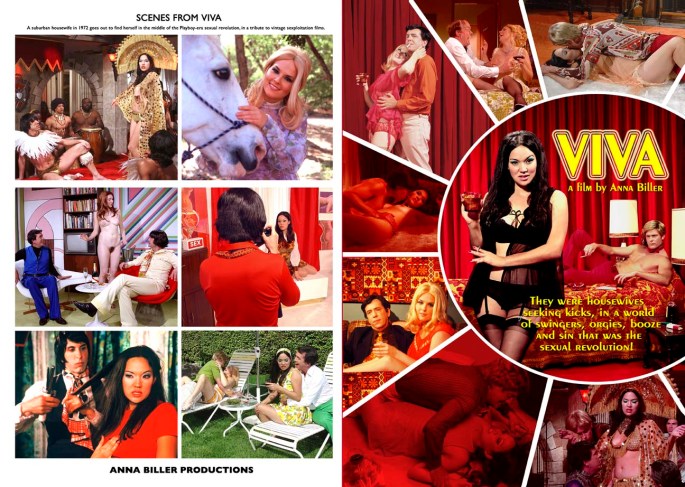
“This is a story about a housewife during the sexual revolution. The time is 1972, the place is Los Angeles, and the people are ORDINARY.” The situation at large: Barbi (Biller) enjoys, or rather submits to a stay-at-home life with her husband in and out on various business trips and the neighbors, Mark and Sheila, serving as a constant reminder of the mundanity of her sexuality as of late. But one day, Barbi ventures far outside of her comfort zone, pursuing a career in modeling, which leads to an unlikely encounter with a vivacious hair stylist that prompts her man to walk out on her. Instead of confronting the crippling emptiness she experiences in light of his absence, Barbi goes out on the town with Sheila (whose husband has also left her) where they take up new lives as call girls. Nudist hippie camps, flamboyant art snobs, the allure of showbiz, and crazy drug-fueled orgies – there’s truly something for everyone out there.

085_2048x1152

But of course, this exhilarating new world is not quite all it’s cracked up to be; the girls are of the belief that they are escaping the constricted roles of the household through all the glitter and glam, when in fact the men of this so-called “high life” are no less intolerant and negligent than their respective spouses. Where their husbands merely laughed until their faces were red or extended their skiing vacations an extra full month, these savage beasts are content to buy and sell them out or worse yet, take their abusive tendencies to more regrettably hands-on territory. Yet, Barbi proves time and time again that she is much stronger than she appears; the toxic cycle seems never-ending and the web of overbearing masculinity is a powerful obstacle, but what this tale ultimately suggests is that progress is not an all-together impossible dream.

Speaking strictly of surface-level pleasures, this covers just about anything that could be found on the unofficial sexploitation checklist, which is a modest achievement in its own right – but brewing beneath is something far more interesting and – ultimately – important. This is indubitably a feminist film, and one which is refreshingly fearless in how it pronounces itself as such; a simple but poignant story of a woman breaking free of both internal and external boundaries and learning to exist as her own separate entity. Aesthetically, Biller crafts a language that is entirely her own, in spite of her many prominent influences; if this can be compared to anything, it’s the early works of John Waters (FEMALE TROUBLE and DESPERATE LIVING, especially). Much of it is gleefully over-the-top, often hysterical, but whilst wallowing in the filth, Biller gracefully unearths honest, ugly truths when it comes to female representation both on and off the screen, though it’s her auteurist touch – her fetishistic attention to detail and supernatural gifts as a visual artist – that really allows the bigger, more progressive ideas to shine.

But most importantly, it’s just great entertainment. At two hours, there are brief moments when one feels the narrative meandering ever so slightly, although it’s safe to assume this is simply by design – either way, the film is never anything less than effortlessly engaging. Spectacular musical numbers, a vibrant color palette, the casual celebration of excess (a surplus of sex, drugs, and mood music can be found here for those inquiring) and even a mind-bending animated sequence (designed by Biller herself, to the surprise of, well, absolutely no one) ensure that it keeps finding new ways to surprise the viewer at every turn, and the cast deserves a special mention as well for keeping the material consistently amusing without overstepping into grotesque self-parody. The scene with the hair stylist, in particular, is of a (hilarious) nature that would make the aforementioned Waters green with envy; it’s positively absurd, and gleefully filthy, without abandoning the heart of the picture. Impressively, it’s one of many things that remains perfectly in-tact throughout.

VIVA is about as cool, collected and smart as feature debuts get – signifying all at once a compelling introduction to a singular obsessive cinematic conscience and a passionate call to action for those interested in the sexual politics of yesteryear and yesterday, and how from them we can derive lessons to be applied to contemporary values. It’s fresh, endearing and poetic in its artful trashiness – it’s very much the movie I needed at this particular time in my life. If ever there was further proof of the values inherent in actively searching for hidden gems within the grimiest and most effectively transgressive crevices of cinema, it can be found here, deep within the pulsating portal of pop-art progressiveness that is Anna Biller’s beautifully bat-shit psyche.