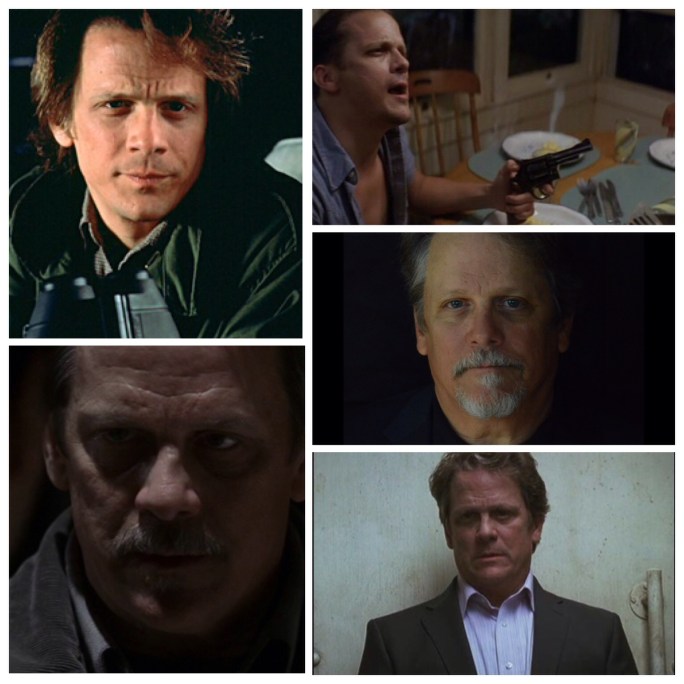
A Chat with actor Chris Ellis: An interview by Nate Hill

Very excited to bring you my latest interview, with actor Chris Ellis! Chris has an epic and wonderful career, appearing in many films including Armageddon, The Island, The Dark Knight Rises, The Devil’s Rejects, The Guest, Catch Me If You Can, Transformers, Wonderland, Planet Of The Apes, October Sky, Mr. Bean, Con Air, Wag The Dog, A Little Princess, Crimson Tide and many more. He’s a true gentleman, a hard working performer and a great guy. Enjoy our chat!


Nate: How did you first get into acting? Was it something you always wanted, or did you stumble into it?
Chris: From age 5 while watching the Mickey Mouse Club on early television, I warbled, “Hey diddley dee, that actor’s life for me.”
Nate: I’ve heard you referred to as a character actor before. What is you opinion on the term, and would you categorize yourself as such?
Chris: A male character actor is one who never gets the girl because he is not pretty enough – too bald, too chubby, too southern. I have played such roles throughout a lengthy, undistinguished career. Just once I wanted to kiss the girl.

Nate: The Dark Knight Rises: How was your experience working on this film, with Christopher Nolan and such an epic scene on that bridge?
Chris: You have the advantage of me, sir, as I have never seen that movie. More to the point, I have never read the script, though I understand I appeared in it in the early, middle and late sections. The reason I never read the script is that I was never shown any part of it other than the pages containing my own dialogue, and those pages were drastically redacted such that I was able to see the immediate cues for my dialogue and nothing else. At one point, after shooting a scene over my shoulder, the camera was turned around on me for a reaction shot. My query as to what I might be reacting to and how was answered by Nolan so: “That is on a need to know basis and you don’t need to know.” He fleshed out that response by suggesting I react as if I were “reacting to the sight of two guys talking.” No one I know who saw the movie hinted that I never looked as if I didn’t know what the hell was going on, but in fact no plot point was ever made known to me, nor any suggestion of the long arc of the movie. On the other hand, I got paid well, travelled to Pittsburgh, New York City, and Nottinghamshire in England. In all three places I had lots of time off in which to wonder what the hell the movie was about and to do lots of sightseeing. Any time, Mr Nolan.
Nate: I’ve noticed that you work with Michael Bay very frequently. Are you two pals, or has that just been coincidence? How has you experience been on his films, Armageddon/The Island etc.?
Chris: I worked with Bay on Armageddon, Transformers, and The Island. He is said by some to lack gentility and sophistication, and I have seen him on sets demonstrating a want of courtesy to actors who permit him to do so, but if you want a big action movie grossing a billion dollars about exploding planets and trucks turning over in high speed traffic mishaps, he is your boy. If you want art, go to the Lemmle Theatre in Santa Monica. I do this for a living. I go to museums for art. 
Nate: The Devil’s Rejects: such a wild and crazy film. Very memorable part as the goofball cop. How was your experience on that set, working with Rob Zombie and William Forsythe?
Chris: One day I mentioned to my theatrical agent that I had always been a fan of horror movies, by which I meant the classics of that genre, mostly from the 1950s and 60s. Very next day he called me with an offer for “a horror movie by Rob Zombie,” of whom I had never heard. I wouldn’t call The Devil’s Rejects horror – more like a Charlie Manson wet dream, but Zombie was the soul of gentility on the set. He is covered in tattoos, many of them visual renderings of famous horror movie characters from a simpler time, and when I worked with him he kept his wallet attached to his person by a length of chain sagging with languor between the wallet and his belt loop. This is a fashion accessory I associate with the Donald Trump demographic but which was belied by Zombie’s gentle and quiet spirit. 
Nate: What are some of your favourite roles you have played in your career so far?
Chris: Last year I played a judge on a TV series called Murder In The First. That was my dream job, as it involved sitting in a comfortable chair all day long on set, frequently unshod, and with an improving book in my lap to which I could refer between the words, “Cut!” and “Action!” I quite enjoyed yet another incarnation of Sheriff Cracker von Peckerwood in a 2000 movie called The Watcher, not least because I was given a rather wide berth by the director and screenwriter in making the dialogue my own. Also, it was a character with whom I felt a comfortable intimacy. The same applies to the character I played in the movie Armageddon and in one episode of the TV show X-Files. Playing Deke Slayton in Apollo 13 was probably the actual thrill of a lifetime because we all believed while working on that movie that it would become a significant movie (which it remains) and because I remembered Deke while he had been part of the Soyuz/Apollo mission in 1975. But, I hope it will not appear to be taking the liberty of rodomontade to utter the hope that there never has been a time of stepping onto a movie set without breathing a prayer of inarticulate gratitude for the consummation of a lifetime’s desire.
Nate: How was your experience on Catch Me If You Can?
Catch Me If You Can was a joy to work on, first because the script is superb, and because it gave me the chance to work with Spielberg who is a gentleman non pareil and who offers every artistic freedom to everyone on set. When I worked with him, at the completion of each set up, he would ask to the crew as well as to the cast, “Does anybody want to try another one? Anybody want to try something a little different? We have the time, so let me know if you’d like to do anything else with this shot.” Of course he has a very competent crew surrounding him, so his movies are apt always to come in one time and under budget, so it was a joy to work with such freedom.
Nate: Do you have a favourite or preferred genre to work in, or is it all equally enjoyable? Just once I’d like to kiss the girl, but as I say, every time I step onto any kind of set I remind myself that I am not laying roofing tar in Phoenix during the summer. If you ever hear me complain about any circumstance of my livelihood, you are invited to come where I am and kick me in the nuts.
Nate: What is next for you? Any upcoming projects, cinematic or otherwise that you are excited about and would like to mention?
Chris: Nope. Mostly what I do for a living is wait for the phone to ring. My family and I are now on vacation, but soon as I get home I will be slouching toward the telephone hoping to god it rings.

Nate: Thank you so much for your time Chris, it’s been a pleasure, and keep up the awesome work!
INCEPTION – A REVIEW BY J.D. LAFRANCE

INCEPTION

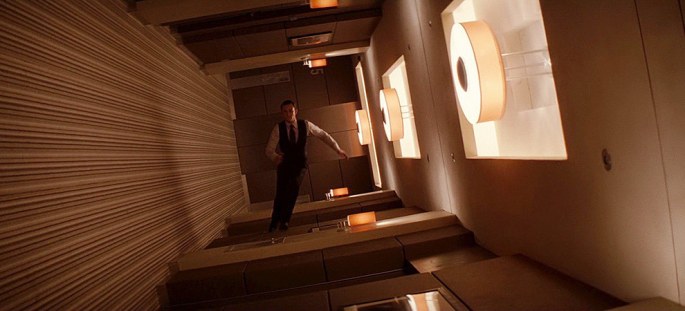
Ten years in the making, Inception (2010) was the culmination of Christopher Nolan’s career up to that point in time. This film mixed the ingenious plot twists of his independent film darling Memento (2000) with the epic scale of his Hollywood blockbuster The Dark Knight (2008). It took the heist genre to the next level by fusing it with the science fiction genre as a group of corporate raiders steal ideas by entering the dreams of their targets – think Dreamscape (1984) meets The Matrix (1999) as if made by Michael Mann. While Nolan and his films certainly wear their respective influences on their sleeve – and this one is no different (2001: A Space Odyssey, Blade Runner, Heat) – there is still enough of his own thematic preoccupations to make Inception distinctly his own. This film continues his fascination with the blurring of artifice with reality. With Inception, we are constantly questioning what is real right down to the last enigmatic image.

Dom Cobb (Leonardo DiCaprio) and his team extract thoughts of value from people as they dream. However, during his jobs, he is visited by his deceased wife Mal (Marion Cotillard), a beautiful femme fatale character that serves as an increasingly dangerous distraction from the task at hand. The film’s opening sequence does an excellent job establishing how Cobb and his team extract information from the dream of Saito (Ken Watanabe), a Japanese businessman, in a visually arresting sequence. He catches up with Cobb in the real world and offers him a new deal: plant an idea in Robert Fischer’s (Cillian Murphy) mind that will help break-up his father’s vast empire before it becomes too powerful, and do it in a way so that it seems like Fischer thought of it for it to work. This is something that has only been done once before and Cobb was the person that pulled it off but can he do it again? In exchange for completing the job, Saito will make the necessary arrangements so that Cobb can return home to the United States where his children live but where he is also wanted by the authorities in connection with his wife’s death. So, Cobb recruits a literal dream team of experts to help him pull off the most challenging job of his career.

Inception
delves into all kinds of aspects of dreams as evident in a scene early on where Cobb explains how they work, how to design and then navigate them. While there is a lot of exposition dialogue to absorb during these scenes, Nolan also keeps things visually interesting at the same time. This is arguably the most cerebral part of the film as he explores all sorts of intriguing concepts and sets up the rules for what we’ll experience later on – pretty heady stuff for a Hollywood blockbuster. And when he isn’t examining fascinating ideas, he’s orchestrating exciting and intense action sequences. There’s an incredible sequence where Nolan juggles three different action sequences operating on three different levels of dreams that are all impressively staged while also a marvel of cross-cutting editing. He anchors Inception with the character of Cobb and his desire to return home to his children while also dealing with the death of his wife. It gives the film an emotional weight so that we care about what happens to him. It also raises the stakes on the Fischer job.

Cobb continues Nolan’s interest in tortured protagonists. With Memento, Leonard Shelby tried to figure out who murdered his wife while operating with no short-term memory. Insomnia (2002) featured a cop with a checkered past trying to solve a murder on very little sleep. The Batman films focused on a costumed vigilante that waged war on criminals as a way of dealing with the guilt of witnessing his parents being murdered when he was a child. With The Prestige (2006), magician Robert Angier is tormented by the death of his wife and an all-consuming passion to outdo a rival illusionist. Inception’s Cobb also has a checkered past and is haunted by the death of loved one. Leonardo DiCaprio delivers what may be his finest performance to date, playing a complex, and layered character with a rich emotional life. Cobb must come to terms with what happened to his wife and his culpability in what happened to her. DiCaprio conveys an emotional range that he has not tapped into to this degree before. There’s a captivating tragic dimension to Cobb that the actor does an excellent job of expressing so that we become invested in the dramatic arc of his character.

Nolan populates Inception with a stellar cast to support DiCaprio. The indie film world is represented by the likes of Joseph Gordon-Levitt and Tom Hardy while also drawing from international cinema with Ken Watanabe and Cillian Murphy. Gordon-Levitt and Hardy, in particular, are stand-outs and their banter provides several moments of enjoyable levity during the course of this intense, engrossing film. And it wouldn’t be a Nolan film without his good luck charm, Michael Caine, making an appearance. As he has done in the past, Nolan plucks a once dominant actor from the 1980s, now languishing in relative obscurity – think Rutger Hauer in Batman Begins (2005) or Eric Roberts in The Dark Knight – and gives them a high-profile role. Inception gives Tom Berenger some well-deserved mainstream exposure after languishing in direct-to-video hell, reminding everyone what a good actor he can be with the right material.

Regardless if whether you like Inception or not, you’ve got to admire Nolan for making a film that is not a remake, a reboot, a sequel or an adaptation of an existing work. It is an ideal blend of art house sensibilities, with its weighty themes, and commercial conventions, like exciting action sequences. Capitalizing on the massive success of The Dark Knight, Nolan wisely used his clout to push through his most personal and ambitious film up to that point. With Inception, he created a world on a scale that he never attempted before and was able to realize some truly astonishing visuals, like gravity-defying fight scenes and having characters encounter a location straight out of the mind of M.C. Escher. It has been said that the power of cinema is the ability to transport you to another world and to dream with our eyes open. Inception does this. Nolan created a cinematic anomaly: a summer blockbuster film with a brain.

CHRISTOPHER NOLAN’S THE DARK KNIGHT – A REVIEW BY NICK CLEMENT

1

At this point, there isn’t much left to be said about The Dark Knight. The film grossed almost a billion dollars worldwide and its critical acclaim vaulted its director, Christopher Nolan, into the upper stratosphere of big-budget filmmakers. It’s a masterwork of comic book moviemaking, talking iconic imagery and filtering them through the prism of a Michael Mann crime epic, and featuring a tour de force performance by Heath Ledger as the most sinful of all superhero antagonists, The Joker. While I will always prefer the epic nature of The Dark Knight Rises (flaws and all, it’s my favorite in the Nolan series), there’s something so lean and tough-guy-poetic about The Dark Knight; it really does feel like Heat featuring men in masks. Picking up right where he left off after his excellent franchise re-boot Batman Begins, Nolan essentially made his first effort look like a student film by comparison, and that’s not to knock Begins, because it’s a wonderful piece of entertainment, a movie that reimagined Batman for a modern, more visceral style of storytelling within this particular genre. And what’s particularly awesome, and where the film is better than The Dark Knight Rises, is that The Dark Knight is both epic and intimate; this is a massive crime saga, taking cues from the aforementioned Heat and Brian De Palma’s The Untouchables, but never forgetting to stay true to the intense character dynamics that have made this universe of costumed freaks so especially memorable. By placing Batman and all of his cronies and adversaries in a real world setting, no matter how stylized his Gotham City is, Nolan was able to fashion a trilogy of films that felt all the more tangible and immediate, something that not one, single Marvel effort has ever done, with the possible exception of Captain America: The Winter Soldier.

Batman, again played with gritty determination by Christian Bale, who brought stoic seriousness to his dual performance as Bruce Wayne/Batman, is caught between his own sense of vigilante justice, crossed with deeper psychological issues. In The Dark Knight, the Nolans and David S. Goyer, stacked the deck with his arch nemesis, the Joker, played with such menacing glee by Ledger that you have to just assume that the preparation and performance might have affected his psyche; his posthumous Oscar trophy was indeed fully warranted, and not some nonsense done for sentimentality or good-faced-publicity as some dunderheads have suggested in the past. The plot is multi-layered, convoluted yet not impenetrable, and steeped in crime movie mythology that speaks both to classic film noir and the graphic novel roots that Nolan favored. The Joker is out to bring down Batman, while also trying to put a stranglehold on Gotham’s City’s overall criminal element. From the steely, Mann-esque precision of the film’s opening bank robbery sequence; you get the sense that Ledger’s Joker isn’t a playful clown, but rather, a certifiable psychopath. The way he licks his scarred lips and the way his sinister cackle fills a room with eerie rage are just two of the ways that Ledger left an indelible mark on this classic comic book icon; I wonder if any other actor will be up to the challenge in future installments. Harvey Dent, an excellent Aaron Eckhart, is trying to clean the streets up from city hall, and Jim Gordon, played with low-key integrity by Gary Oldman, is working his way up the police chain of command. Various gangsters figure into the plot and there is a morally complex chain of events that figures into the film’s gripping climax. But the real show is the duel between Batman and the Joker, and it’s here, with two of the comic-world’s most beloved characters, that The Dark Knight really excels.

Nolan, reteaming with his phenomenal cinematographer Wally Pfister, bathed the film in shadows and blacks; this is a dark movie, both in theme and in appearance, but in the end, serving a stylistic and narrative purpose. The tragic nature of Harvey Dent is highlighted in a powerful character arc that exposes the many faces (literal and metaphorical) to the character; Eckhart’s performance was one of his absolute best. And then there’s the film’s major action scene, occurring at the half-way mark, which is a towering triumph of choreography, seamless CGI integration, and old-fashioned movie magic. By the end of this haunting and beautifully crafted piece of explosive entertainment, the viewer can’t help but breathe a sigh of relief. The Dark Knight was one of the first superhero films to never feel like a traditional superhero film, and the topical, real-world grounding that Nolan infused into his trilogy has been felt on other, future projects from a variety of other filmmakers. And yet, at the end of 2008, the old farts in the Academy felt like dissing one of the most successful films of all time, which was truly a shame, because the film stands as a genre centerpiece, and a reminder that art within this particular canvass is still attainable even when toys and lunchboxes are being considered; rarely does big-budget, summertime filmmaking become this successful at fusing all of the creative elements together.

A chat with veteran film and voice actor Keith Szarabajka 

I’m proud to present my recent interview with accomplished actor Keith Szarabajka, who has many wonderful appearance in films including The Dark Knight as Detective Stephens, Argo, Clint Eastwood’s A Perfect World, We Were Soldiers, Staying Together, Billy Galvin, Missing and many more. He’s shown in up in television shows including Sons Of Anarchy, Prison Break, Charmed, 24, CSI, Archer, and more. A huge portion of his prolific career consists of an absolutely staggering amount of voice work, including video games and animated shows such as Halo 4, Bioshock, Fallout, Call Of Duty: Black Ops, The Elder Scrolls: Skyrim, L.A. Noire, Dead Space, Mass Effect, Darksiders, Metal Gear Solid, Batman: Arkham Knight, Avatar: The Last Airbender, Spider Man, Batman Beyond, and so many more. He is currently directing a play entitled Watching OJ  the Ensemble Studio Theatre in Los Angeles. He’s a great guy with a storied career. Enjoy!
Nate: How did you get into acting, did you always know it was something you wanted to do, or did you stumble into it? 
Keith: I was an altar boy for six years in grade school and high school, plus I was an officer in military school so I became accustomed to performing ritual in public. Then when I was 14, I discovered that being small left you out of a lot of school varsity sports, sports in which I participated vigorously prior to high school. I drifted into acting, as I had a knack for reading things well aloud. My first performance in public was at four when my mother made my cousin, Joyce, and I sing a duet of “I’ve Been Working on The Railroad “ in a talent night at the Bedford Park Community center near Chicago, Illinois. I’ve been hooked on applause and laughter ever since.

Nate: A Perfect World: Your character was extremely intense, and leaves a vivid impression despite only appearing in the first half. How was experience creating that character, and working with Clint Eastwood? 
Keith: Terry was very intense. I just reached into my inner self and pulled out my rage demons. It was fun, but as I said, very intense. I loved working with Clint. He’s one of my favorite directors ever. No B.S. with Clint. Two, maybe three takes at most. He knew what he wanted and he knew how to get it (and when he got it). I hope that I someday get the chance to work with him again. Though probably not, because he’s not big on working with people with whom he worked previously, especially villains (and who aren’t stars like Morgan Freeman or Gene Hackman.)

Nate:  At a certain point in your career, voice over work became a huge component of your work. How did you get into VO work? Do you enjoy it as much as in front of th camera in live action? How are they comparable? 
Keith: It was a natural segue while I lived and worked in New York. People in New York come to the theater, including ad execs and other creatives, so it just happened naturally. Of course I had a wonderful agent in New York for VO, Carole Ingber, who still represents me there. I have a long time VO agent in L.A. too, Tom Lawless @ VOX, Inc. , through whom I do most of my video game work.The great thing about VO work is you don’t have to learn lines or wear makeup. But don’t get me wrong, I like doing both acting and VO work. I like movies because you get to go on location and travel. I often confused my theatrical agent and my travel agent.
Nate: You mentioned that you have a play in the works that you are directing, when we spoke online. Care to speak about that? And any projects coming up that you are excited for. 

Keith: I just directed a new play at Ensemble Studio Theatre- L.A. Project, called WATCHING O.J. by David Mc Millan (where I am also interim co-artistic director). It’s a wonderful worms’ eye view of the O.J. verdict set in a small white-owned dry cleaners and its environs in a mixed urban neighborhood in L.A. on the day O.J. Simpson murder verdict came out, October 3, 1995. It was avery polarizing subject both in L.A. and the while US. It still is. We opened on the 20th anniversary of the verdict. (At this writing, last Saturday night. Still waiting on the reviews.)
Nate: You have a very distinct voice that stands out in the best possible way. It sure lends itself to voice over,  and I can see why that has been a major factor in your work. Have you done voice work, as in theatre classes or training? Or did the video game/animation work just kind of happen? 

Keith: As I said previously, it just kind of happened. I haven’t taken many VO classes. The one time I did, a promo and trailer class, I ceased working in that sector of the VO world. I guess it’s bad luck. I had the good fortune to live in the same building as the man, Isaiah Sheffer, who ran the Selected Shorts program at Symphony Space in NYC which aired on NPR here(our BBC Radio). We read short stories before live audiences at Symphony Space in NYC and at the Getty Center in L.A. That was in 1987, and I did Selected Shorts for as long as it ran until Isaiah died two years ago. The first time I did it, it was a cold February evening. I lived two blocks from Symphony Space, so after I did a sound check at 6pm there, I went back home and ate dinner. I expected very little from the show. When I returned for half hour at 730pm, people were lined up around the block to see it! I swear they were hanging from the rafters when we did the show! The atmosphere was electric. A lot of people in the industry in NYC came to see it and/or listened to Selected Shorts on the radio, so that’s a lot of the reason I made it into VO work.

Nate: The Dark Knight: you have an iconic exchange of dialogue with The Joker; how was your experience filming that with Heath Ledger, working with Chris Nolan, and portraying a Detective in the Gotham universe? Nolan has a reputation for seeking out actors. Did he come to you/your agent or were you submitted? 

Keith: I was submitted by my agent and auditioned. I didn’t hear from them right away, as initially they were trying for another actor, but ended up not making a deal with him. I received a call on Tuesday six weeks or so later, asking if I had a valid passport. I said yes, and by that Friday i was on a plane to London for a month. Heath was a complete pleasure to work with. Very friendly , very hard-working, very creative. It’s a loss for the industry and the world that he’s gone. Chris Nolan is … a very intelligent, very creative man as well. I would love to work with him again.
Nate: Some of your work is in some iconic games and franchises. Have you ever been asked to attend any conventions,  or comic con type things? Would you if asked? 

Keith: Sean Harry of Star Fury brought me to various UK venues twelve different times between 2003 and 2013, mainly for my work as Holtz in Angel. I loved meeting the fans and doing talks, and I got to see a lot of England, Scotland and Northern Ireland on those trips. I have never been invited to a com for video games. I would go if invited, but I don’t attend these things on my own dime. I once went to Dusseldorf, Germany on a Star Trek convention invitation in 2013.
Nate: from film work, what else do you like to do in life? Hobbies, interests? 
Keith: I love to cook. I used to parachute and rock climb, but have given those hobbies up for tamer interests, like mountain biking and scuba diving (Advanced Open Water certification). I also coached baseball and soccer for 16 years, but my sons are now aged out of my league. 
Nate: Thanks so much for chatting, Keith!

CHRISTOPHER NOLAN’S INSOMNIA — A REVIEW BY NICK CLEMENT

13

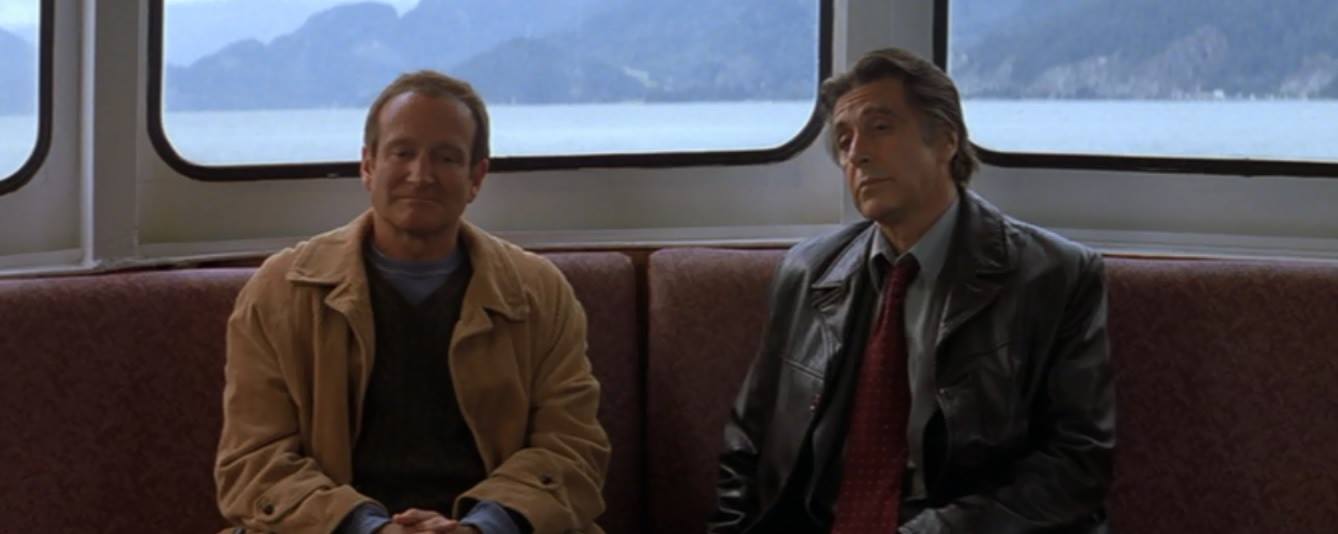
Attempting a remake of any great film is always a questionable endeavor. I can remember seeing Erik Skjoldbjærg’s terrific Norwegian psychological thriller Insomnia at the theater on my college campus back in 1998 and thinking that an American remake would be rather pointless. The themes would never travel (especially the underage sexuality), how could one outdo Stellan Skarsgård, and how could a filmmaker capture that eerie atmosphere in a new and unique way? It was never going to be an easy task, but Christopher Nolan continued his hot streak with his stylish and underrated 2002 updating, which felt like the next logical step for him as a filmmaker after his breakout indie success Memento. Al Pacino gave a tired and tortured lead performance as a cop struggling with intense inner demons not to mention the inability to get any sleep; this is a film that touches on noir (daytime noir!) and the serial killer genres but still remembers to load the narrative with interesting character beats and small bits of surface details that all add up to a riveting mystery. Robin Williams gave one of the best performances of his career as a chilling psychopath who always seems to be one step ahead of Pacino and the authorities – that chase sequence he has with Pacino across those drifting logs in that chilly river is spellbinding stuff, with Nolan using incredible sound effects and expert spatial geography to heighten the tension. Williams brought a devilish smile to numerous scenes, and his unpredictability always kept you guessing, even within the relatively predictable confines of studio based genre entertainment. Martin Donovan, Nicky Katt, Hilary Swank, and Maura Tierney all offered solid support. This was a nervous, jittery piece of work from Nolan, who would later fashion a more controlled, rigid aesthetic in Inception and The Dark Knight trilogy (The Prestige looks even more unique these days) before moving on to his magnum opus, Interstellar. Wally Pfister’s slick yet gritty cinematography worked in perfect tandem with David Julyan’s haunting music and Dody Dorn’s taut editing. Remakes of already excellent films are rarely this effective.

2