Author’s Note: This is a guest post by Damian K. Lahey, an award-winning filmmaker, and screenwriter who we had as a guest on our podcast last year.
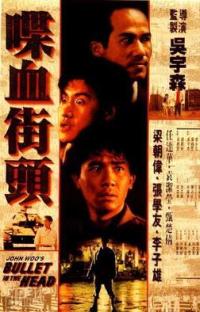 This is a hysterically violent and poetic film about loyalty and the bonds of friendship. John Woo went for the brass ring with this one. Many believe he came up short but I believe this is his greatest achievement.
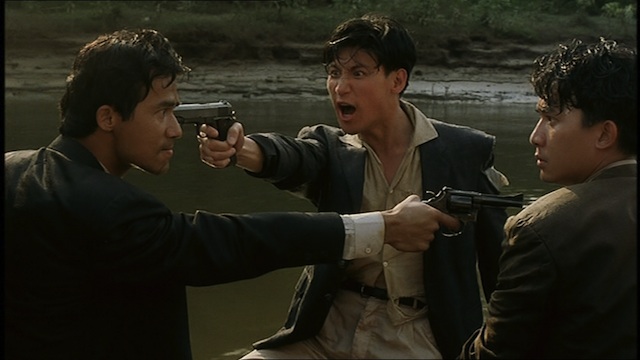
The chaos of war, the insanity, the opportunism and the complete betrayal of one’s moral instincts is splashed up on the screen in a bare naked emotionalism that is at times refreshing and startling. The stakes are high enough and the circumstances desperate enough that the fever pitch the actors maintain is tolerable if not entirely believable. Those familiar with his work know Woo is not afraid to get hammy with his melodrama. Here I found the dramatics at their most earned and poignant.
It could be argued that at times the maniacal violence underscores the level of artistic achievement Woo is going for here.
This film also makes the strong case that looking for a quick buck in war-torn countries is a bad idea.
Aside from being the director closest to mimicking Sam Peckinpah’s signature style (though he doesn’t collapse time the way Peckinpah did in his actions sequences) Woo can also be credited with giving Chinese action pictures an emotional gravitas they had not had before with his 1986 film, ‘A Better Tomorrow’ which was very influential both in Asian cinema and abroad. He would go on to whip out other action classics like ‘Hard Boiled’, ‘The Killer’ and ‘Face Off’. At the time, Woo felt ‘Bullet In The Head’ was the natural progression of his work. He spent a lot of his own money on this, too. Not until 2008 with ‘Red Cliff’ would he attempt something as epic if not as bold.
Originally some of the material for this film was going to be the basis for ‘A Better Tomorrow III’. But Woo and his partner Tsui Hark had a major falling out and Woo took his material and sculpted it into ‘Bullet In The Head’ while Hark rushed ahead with ‘A Better Tomorrow III’ to beat it at the Hong Kong box office.
Woo’s western influences for ‘Bullet In The Head’ were obviously Coppola’s ‘Apocalypse Now’ and Cimino’s ‘Deer Hunter’. I wouldn’t rank it as highly as those two films but Woo’s ambitions for this film are truly maddening. He puts his heart on the line like few do and the result is epic, daring and soaked in blood.

![489089306_640[1].jpg](https://podcastingthemsoftly.com/wp-content/uploads/2017/01/489089306_6401.jpg?w=685)
 Podcasting Them Softly