Atomic Blonde 


Atomic Blonde is the annual adrenaline shot the action genre gets every year, if we’re lucky. Amidst carbon copy superhero extravaganzas, increasingly ridiculous Fast/Furious hemorrhages and head scratching animation ventures, the multiplex is a frustrating realm these days, but sometimes we are blessed with a good old fashioned hard-R action blitzkrieg that turns out to be a pure banger, lighting up the summer movie roster like neon fireworks. Blonde rides the wake that John Wick left behind, a refreshing, stylistic, no-holds-barred form of action storytelling that cheerfully pisses in the face of all things glossy and PG-13. Set in a frenzied Berlin days before the wall comes down and the Cold War freezes over, Charlize Theron is a breathtakingly sexy super spy with a very particular set of skills and a borderline nihilistic approach to espionage, as well as a massive bone to pick with certain factions of the enemy, who stay fairly hidden until the wicked chess game of a plot rounds it’s final curves. Tasked by a sneaky British intelligence honcho (Toby Jones) and a mysterious CIA Agent (John Goodman, excellent as always) she’s caught between all kinds of warring assets including the KGB, roaming German euro trash punks and a British rogue agent (James Macavoy) playing all sides at once. The plot serves action, to be sure, but it still takes itself seriously amidst all the punches, flying kicks, icepicks to the jugular and careening vehicular destruction. Theron is a primal piston of wanton violence and slinky sexual virility, throwing herself headlong into every action sequence with the kind of reckless abandon that makes you believe those bruises for real (apparently she busted a few ribs for real filming this, the absolute champ). The highlight is a bone shattering one take wonder of a staircase fight, a hapless Eddie Marsan bandaging a bullet wound with swaths of duck tape while Theron furiously dispatches several enemies using any means within arms reach, a spectacle that leads to glorious cringes once the hits get hard and critical and sharp objects start getting close to eyeballs and major organs. The soundtrack must be noted too, the filmmakers employing nostalgic melodies straight out of the 80’s to evoke time and place nicely, with everything from Nina’s 99 Luftballoons to The Clash’s London Calling and Queen’s Under Pressure coming into play. There’s also pretty much the hottest movie sex scene I’ve seen in years, as Theron and a bombshell of a French agent (Sofia Boutella) get slippery under the sheets in a neon soaked Berlin hotel room. This is an action film made by folks who are head over heels in love with the genre, and the passion shows. We never feel cheated, chaperoned or short changed, every ounce of this piece charged up to please the crowd and keep pulses thundering. 

-Nate Hill

Xavier Gen’s Hitman 


How to put this: if none of the classic video games featuring Agent 47 were ever made, and Xavier Gen’s Hitman was a standalone film, it wouldn’t be a half bad little B-movie type actioner, with a few gnarly set pieces and a level of acceptable energy kept up throughout. As a film version of these beloved games, however, it just just crashes and burns. Here’s why: the games were very specific, stealthy and designed to be atmospheric, slow burning tactical missions carefully built upon each other like a precarious house of cards, each mission more complex, difficult and risky than the last. The film? A standard Hollywood-ized action narrative that blatantly ignores every structural piece and character quality of the games. When will they learn? What’s more is, the film would have been unique, something memorable, had they followed the blueprint which the games pioneered, but they always just insist on cheapening the formula with boring old movie tropes instead of revering an already charted course which made the source material popular enough to get a film version green-lit in the first place. Ironic. Anywho, this ones your standard globetrotting cheeseball outing, with a bald Timothy Olyphant doing his best yet coming nowhere close to being a solid 47, stuck in a mucky plot involving corrupt Eastern Europeans, double crossing fellow agents and pursued by a hyped up Dougray Scott as some Interpol bigwig and Robert Knepper as a shady Russian (dat accent tho) secret police dude. 47 is betrayed by his own organization and tossed to the dogs, forced to go rogue and, in the film’s most grave plotting misstep, saddled with babysitting duty to a Slavic damsel in distress (Olga Kurylenko). They seriously just gotta hurl a Bond babe into every flick that remotely resembles a 007 venture, don’t they, which is a major offence when you look at what a ruthlessly mythic, near inhuman creature 47 is in the games, and what a manipulatable chump he becomes when pinned under the yoke of this painfully silly script. The 46 I know would just as soon as bury a bullet in this chick’s head as let her tag along and become a liability, let alone start to develop (cringe) human emotions. Such are the dollar signs in the eyes of studio execs though, and any hope of a faithful adaptation suffers as a result. The few sequences that work, including a hotel escape and a subway car Mano á mano between 47 and his genetically altered fellow killers, just don’t feel remotely inspired by, or in the spirit of the video games. The film has a few muted notes of originality, but any action piece that feels the need to pilfer John Powell’s Bourne Identity score instead of hiring a composer to whip up something fresh just can’t be taken seriously. Big ol’ meh from me, think I’ll rent out a PS2 from the pawn shop and settle in with Hitman: Blood Money again, because this shit doesn’t cut it. 

-Nate Hill

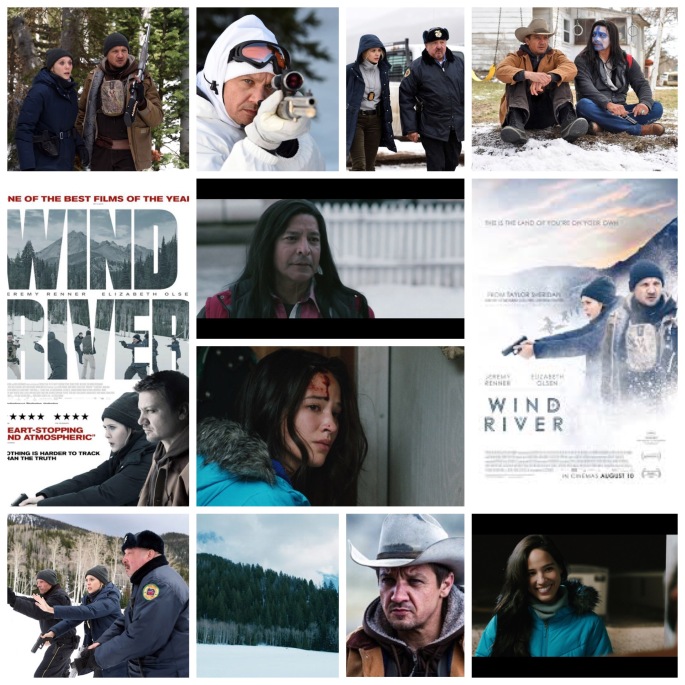
Taylor Sheridan’s Wind River


“I knew this girl, and she was a fighter. However far you think she ran, I can promise you she ran farther…”
I couldn’t find an exact verbatim quote, but that’s the kind of affecting, succinctly written dialogue to be found in Taylor Sheridan’s Wind River, a deeply moving knockout of a film. The third in a so far brilliant stateside saga dubbed the ‘frontier trilogy’ (following Sicario and Hell Or Highwater), River is the beast of the bunch, a surprisingly emotional, fully engaging murder mystery set in yet another harsh, weather beaten vista where life struggles to survive, namely a desolate Indian reservation in the heart of Wyoming. We open with life in jeopardy right out of the gate: as Nick Cave’s haunting original score howls across the snowy plain, a terrified young girl flees through the landscape, alone and injured. She doesn’t make it through the night. This sparks an investigation from the scant law enforcement the area has to offer (Graham Greene is wonderfully world weary as the tribal Sheriff), a rookie FBI Agent (Elizabeth Olsen) and a veteran game tracker (Jeremy Renner in hands down the best work he’s ever done) who’s rocked by his own personal tragedy. Their task is anything but easy, stalled on all sides by criminal activity, uncooperative suspects and that ever present, ruthless winter climate. The mystery, although not quite as elaborate as one might imagine going in, is an unfortunate and infuriating situation that fires up the blood, as well as Renner’s dogged hunting instinct and need for retribution, an act he solemnly promises to the girl’s broken father, played by Gil Birmingham in the kind of show stopping, heartbreaking performance that pretty much demands a best supporting nod. Renner is just… so good, and it’s jarring to see him out of that glossy Hawkeye getup and in a role with some real heft, but he carries himself with grave charisma, especially in a monologue that will have eyes, ears and hearts rooted to the screen. This is Sheridan’s first time in the director’s chair and the guy proves he’s just as uncannily gifted as he is with writing, especially when it comes to action, his rendition of the classic Mexican standoff/shootout is queasily suspenseful and the best sequence of it’s kind that I’ve seen in years. He’s also got a knack for finding just the right musical talent for his pictures as well. Sicario saw Jóhann Jóhannsson whip up an audible nightmare of a score, and Hell Or Highwater also had the benefit of Cave and Warren Ellis, whose compositions here echo out through the desolation like laments for those lost, dead and buried under the snow. Tightly paced, emotionally rich, suffocating in it’s scenes of tension, cathartically invigorating when it needs to be, all of the best things a story should be are on display here. If Sheridan’s output continues to ascend the way we’ve seen so far, he’ll singlehandedly save ol’ Hollywood. 

-Nate Hill

B Movie Glory- Mirror Wars: Reflection One 


Mirror Wars: Reflection One is a miserably bad, slipshod Russian produced Top Gun/Bourne Identity clone that seems to exist only so three genre heavyweights can collect a nice little paycheque. The fellows in question are Malcom McDowell, Armand Assante and Rutger Hauer, and the trio grimace their way through grade school dialogue plus a nonexistent, comatose plot line, surrounded by Russian no name ‘actors’ who do anything but perform decently. Everyone here is some sort of clandestine spy or cloak n’ dagger federal heavy, all out to get a cutting edge self flying aviation AI program implemented in fighter jets, or at least that’s what I got out of it. McDowell is a sinister nutjob who plans to steal it or something, with surprising stunt agility for a dude his age. Assante is some bumbling, overzealous law enforcement pazzi who traipses all over Eastern Europe doing not much of anything, while Hauer is a mystery man literally credited as ‘Mysterious Man’, some all powerful spook who pulls the strings on everyone. The main flub here is dubbing, as in whoever they brought in to lay English voices over those of the Russian actors, because they sound like deaf people with mouths full of maple syrup, and that’s no exaggeration. At least hire a few competent VO artists to lay in some English bars so the pitiful few people who actually give this thing the time of day (myself included, sadly) can understand the badly written dialogue. But no. Aside from the three legged table of wasted talent that Hauer, Assante and an especially gamy McDowell provide, this ones for the dogs. 

David Cronenberg’s Spider 


David Cronenberg’s Spider is a prickly, unsettling plunge into the frays of mental illness with all the subtleties of a bad dream whose source is hard to pin down. As a disoriented, emotionally shellshocked Ralph Fiennes shambles into a residency at a halfway house in London, he’s reminded of the past, and begins to brush away layers of cobwebs that hide more than a few nasty secrets from his upbringing. Raised by his wayward father (Gabriel Byrne) and haughty mother (Miranda Richardson, also showing up in a dual role), Spider, as she nicknamed him, began to lose his grip on reality at a very young age, resulting in an eerie tragedy. Or did it? That’s the key to Cronenberg’s vision here, the kind of blood chilling uncertainty that one sees a mentally ill person struggle through. Spider’s grip on the past, and his own present coherency is as tenuous as the lingering webs that gild both his memory, as well as the shrouded nooks and crannies of the desolate borough of London he aimlessly shuffles through, the empty rooms and lived-in corridors of his childhood home practically mirroring those of his mind. Fiennes is scarily good in the role, abandoning any researched mimicry to full on effortlessly sink into the psyche of this poor disturbed man, organic and believable. Byrne is solemn and somber as ever, just as complicated as his progeny yet burdened with the also torturous yoke of sanity, while Richardson is electric in both her roles. Stage stalwart John Neville babbles his way through a turn as a fellow resident of the halfway house, while Lynn Redgrave plays it’s stern matron. Dank, destitute and lost is the tone they’ve gone for here, with no Hollywood safety net to rescue both viewer and protagonist from the scintillating curves of a narrative that has no light at the end of it’s tunnel, a brave choice by Cronenberg, and stunning work from everyone who brings the tale to life, such as it is. Be ready to put on a Disney flick after sitting through the nail biting gloom of this one. 

-Nate Hill

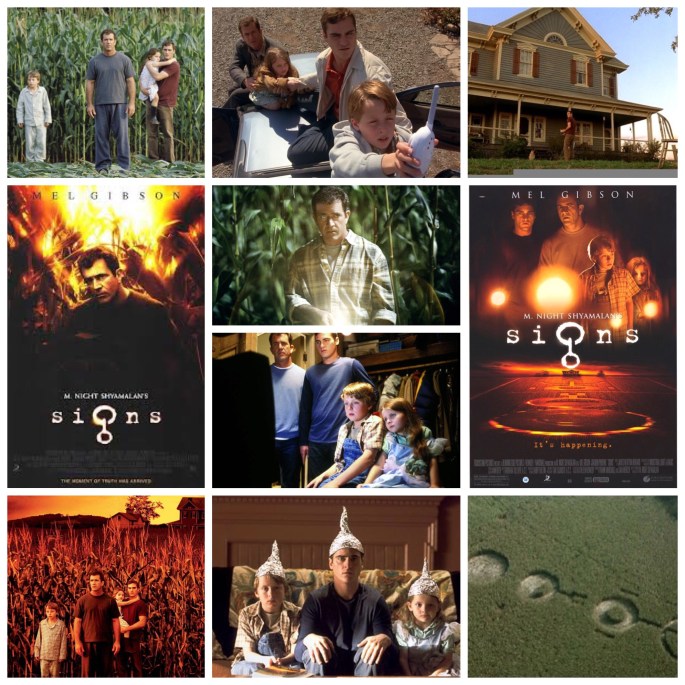
M. Night Shyamalan’s Signs 


As much as M. Night Shyamalan’s Signs is a brilliantly structured ScFi suspense yarn that’ll give your ticker a run for it’s money, it’s just as effective as a touching exploration of faith and hopelessness, the warring notions that there is either someone or something out there looking out for us, or more distressingly, there is not. One need only watch Mel Gibson’s staggeringly well pitched performance as a man bereft of belief in anything beyond the tangible to feel as alienated as he and his beloved relatives do when a sneaky, marauding band of extraterrestrials take up residence on their remote farm, leaving vast crop circles all about the place. As a dimly paced, impossibly eerie invasion narrative grips us from the forefront, we’re also somewhat primally aware of the story of a once steadfast man, already ruined by personal tragedy, come apart at the seams and start to lose his last vestige of belief in anything beyond our world. Gibson’s wide eyed desperation is almost scarier than the otherworldly beings themselves, which is saying a lot considering these are some of the most unnerving alien critters ever seen on film. A farm is the perfect oasis of desolation to set these events in, and the nocturnal romps through the corn in search of these beasties will make your heart skip a few hundred beats in apprehension. Gibson abides there with his ex baseball pro bro (Joaquin Phoenix) and two adorably deadpan children (Rory Culkin and a very young Abigail Breslin). There’s a deep sense of coziness that is violently uprooted when these unwanted guests show up, an idyllic tranquility tainted by an unknown element most foul, raising the stakes nicely, leading up to the claustrophobic finale. The proceedings almost have a dream logic to them, as if this whole deal is happening on a plane removed several degrees from ours. Characters interact in peculiar, staccato fashion, certain elements here and there don’t sound or feel like they’re… “real”, for lack of a term that doesn’t exist. Whether by choice or happy accident, Shyamalan unsettles us far beyond being spooked solely by the aliens, who aren’t seen in full till way later in the film anyhow. There’s just a hollowness to Gibson’s plight, a restless gnawing anxiety fighting at the whites of his eyes as he struggles to find the light that has left his path. The ending is a perfectly etched out cap to his arc that sideswipes you with emotional heft you never knew the film had in it, and a thoughtful, planned out story beat that takes some contemplation to fully absorb. On the surface, Shyamalan’s work here is a restless sea, but there be dragons roiling underneath, internal demons that extend farther than the excellent science fiction storyline and touch upon ideas much more disturbing: the endless fear of what comes after death, and who is really out there watching us, besides cornfield dwelling lizard-men. Great stuff. 

-Nate Hill

Sun, Sand & Savages: Oliver Stone’s underrated return to form 


Oliver Stone’s Savages is the best film the man has made since the early 90’s, and reminds us of what colourful, bloody, hectic, Mardi Gras shock & awe blistering good times the man is capable of bringing us. His political/war films are all well and good, but for me the lifeblood of this filmmaker lies in his sun-soaked pulp n’ noir toolbox, the ability to spin grisly, darkly romanticized genre campfire yarns that exist eons away from the geopolitics of our plane. Savages is so whimsical it could float right out of our grasp on a cloud, if it weren’t so heavy and heinous at the very same time, and it’s in that careful balance of heart, horror and humour that the film comes out on top, despite a relative cop-out of an ending that can be forgiven when the package as a whole is considered. Based on a novel by Don Winslow, this is an odyssey of cartels, violence, love most pure, drugs, guns, California dreaming and a cast having more fun than they have so far in their collective careers, and I do mean that. The film opens with grainy, harrowing camcorder footage of sinister cartels beheading innocents to set an example, and that’s just the start of it. Pan over to Cali paradise where angelic Ophelia (Blake Lively in a beautiful, vulnerable performance) lives with the two loves of her life, gentle hippie Ben (Aaron Tyler Johnson) and hardened Afghan vet Chon (Taylor Kitsch), two brotherly marijuana barons who provide the west coast with the finest bud the region has to offer. They live in harmony, both in love with Ophelia, existing as a functional little romantic trifecta tucked away on the sun-dappled coastline, until darkness finds them in the form of the power hungry Baja Cartel, who want a piece of their impossibly lucrative action. Although spearheaded by a fiery Salma Hayek, it’s Benicio Del Toro’s Lado who strikes fear into hearts, a ruthless, casually sadistic enforcer who’s not above the lowest brands of violence and degradation. Del Toro plays him with a knowing sneer and a grease-dripping mullet, a positive scourge of everything pure and good in his path. Ben and Chon are thrown into a world of hurt when he kidnaps Ophelia, held as a ransom so the boys play ball with Hayek’s plans for aggressive expansion, promoting all out guerrilla war-games between both factions. John Travolta does his wired up thing as a cheerfully crooked DEA underboss who is their conduit to all things intel related, and Emile Hirsch their surveillance expert. This is a film of both bright light and terrible darkness, and it’s easy to get swept up in the hypnotically wistful current before the film turns evil loose and gut punches it’s audience. The visual tone is crisp and endlessly colourful, and Dan Mindel’s cinematography doesn’t shy away from the overt nature of the brutality, especially when Hayek’s right hand accountant (Damien Bechir) is gruesomely tortured by Lado, and during a daring highway ambush that showcases both Chon’s merciless tactical resolve and Ben’s fragility, both driven to staggering extremes by their love for Ophelia. Stone has always had a flair for eye boggling excess, dastardly deeds done under a baking hot sun and garish, over the top characters that would be right at home in a cartoon if they weren’t so tangibly present, especially in Del Toro’s and Travolta’s cases, it’s a beauty of a thing to see them both chow down on the scenery here and riff off of each other in a quick scene where they share frames. Many folks were underwhelmed by the work of the three young leads, but they couldn’t have been better, really, especially Lively, who’s wounded soul brandishes a sword and shield of sunny disposition even when faced with utter hopelessness, a lilting poetry to her hazy narration that threads the tale together in fable form. Commerce is chaos here too, as we see how the south of the border drug trade encroaches on many individuals who don’t yet understand the evil emanating from that region, and are rudely awakened. There’s so much going on in this film, it’s so vibrantly alive in every facet, a showcase example of the bruising, beautiful power that movies have over us. 

-Nate Hill

B Movie Glory: The Rift


The Rift is a nifty little underwater creature feature in the tradition of stuff like The Abyss and Leviathan, a low budget affait that uses neat practical model effects to churn out some gooey thrills, and a cool cast to run around being hunted by them. When an experimental submarine dubbed the ‘Siren II’ (after the disappearance of the Siren I, naturally) descends into a deep fissure in the ocean, things begin to pop up that shouldn’t be down there. By things I mean cleverly designed miniature models that are lit just right enough to fake us out into believing they are actually giant underwater behemoths from the darkest nightmares of marine cryptozoology. Captained by R. Lee Ermey, giving the character gravitas the film almost doesn’t deserve, it’s a doomed mission from the start, especially when you factor in the shady presence of first mate Ray ‘Leland Palmer’ Wise, who has a few tricks up the old sleeve. It’s up to man of the hour Jack Scalia to swagger their way out of danger, but the rift is deep, dark and pretty soon all kinds of gooey things find their way aboard the craft. It’s not half bad, at least nowhere near the second tier hack job some critics dubbed it as. Any effort that puts that much artisan ingenuity into deep sea monsters with as little money as they were given gets a handful of gold stars from me. Plus, you can’t go wrong with that cast. 

-Nate Hill

Tab Murphy’s Last Of The Dogmen


Tab Murphy’s Last Of The Dogmen is a beautiful story, providing assurance that on a rapidly shrinking modern world there can still be some undiscovered wonder to be found, sometimes in the last place anyone would look. Tom Berenger, gruff as ever, stars as Lewis Gates, a rural bounty hunter charged with pursuing a gaggle of escaped felons who’ve hightailed it into Montana wilderness so dense that the usual branches of law can’t track them. Joined by his anthropologist friend (Barbara Hershey), he searches day and night for these convicts, and in the process finds something far more incredible. Buried far in the heart of this mostly untouched frontier is a tribe of Native Americans, thought to be wiped out by settlers generations earlier, living since then with no contact to the outside world. Gates is wary but fascinated, while Hershey recognizes this for the miracle it is and tries her best to communicate with the people, who in turn are fiercely protective of their land, especially towards the escaped prisoners who have wandered onto it as well. Hot on Berenger’s tail as well is his ex father in law (Kurtwood Smith) who is also the county Sheriff, bitter towards him for a past tragedy, volatile and unpredictable, another risky faction to flare up conflict between all sides. The action is kept to a necessary minimum, and the real meat of the piece lies in the pure spectacle of their situation, a reverence for both parties involved and a keen eye for interaction between human beings who couldn’t be more different yet have shared the same region for eons. The Native actors, including Sidel Standing Elk, Dawn Lavand, Eugene Blackbear and Steve Reevis, are all superb, as are Berenger and Smith. The real magic comes cascading through the lens of cinematographer Karl Walter Lindenlaub, who beautifully captures Banff National Park in it’s full glory, as well as other such locations not far from my Canadian home. The film hangs onto the notion that there is still undiscovered splendour out there, from rushing rivers to ancient mountains, and the mysterious tribes who once, and perhaps still do, call it home. 

-Nate Hill

B Movie Glory: Francis Delia’s Freeway


In the vein of highway set psycho thrillers, stuff like Robert Harmon’s The Hitcher and Steven Spielberg’s Duel paved and pioneered the way, fertilizing the ground for countless other similar efforts, some terrific and others not so much. Freeway falls into the former category, an atmospheric little B movie that delivers more clammy thrills than it frankly has any right to. It’s not to be confused with the classic Reese Witherspoon trash-terpiece of the same name though, this is a different animal altogether. There’s a serial killer terrorizing the nocturnal arteries of the L.A. highway system in this, an unhinged whacko in a Lincoln of or some such automobile of equally austerity, firing off love rounds into people’s faces whilst bellowing out bible verses extremely out of context all over the overpass in the wee hours. He’s mostly heard and unseen, but he’s played by none other than Billy Drago when he does show that leering visage, and the man let’s it rip in a performance that should be legendary. He’s hunted by another cool-as-ice character actor, tough guy James Russo as a Detective of few words and tons of action, namely shooting anyone that won’t give answers or spur his leads. There’s a dark, dreamy nocturnal aura to this, love and care put into atmosphere, showing is that the filmmakers, despite working with a low budget, actually give a darn about quality in their work as opposed to a throwaway second tier genre mad dash where the lack of passion is evident. A low rent classic in the realm of homicidal vehicular themed exploitation. 

-Nate Hill