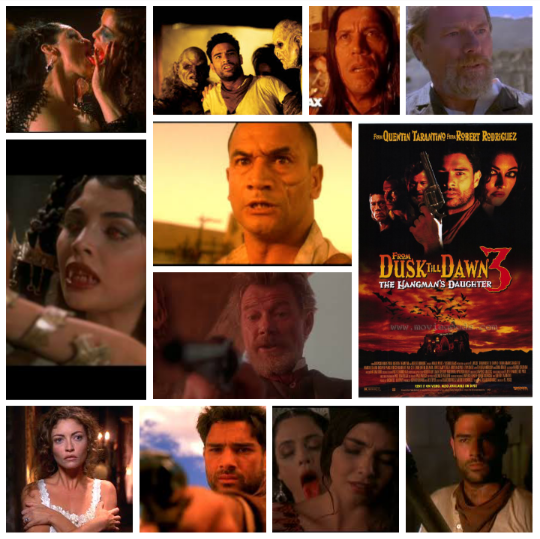
Some franchises feel stale and wrung out by the time the third effort comes along, but not From Dusk Till Dawn. In fact I’d even be so bold as to say that despite not having quite such a budget and resources as the original Tarantino/Rodriguez splatter party, this prequel almost has more in the way of imagination. The first came out of the gate roaring and paved the way, the second was a more mellow heist orientated flick that incorporated the horror elements in as it went, but the third does something altogether different. It’s a period piece, set a hundred years in the past, sometime around the Mexican/American war. When notorious outlaw Johnny Madrid (Marco Leonardi) dodges the hangman’s noose and escapes, he brings abused daughter Esmerelda (Ara Celi) along and scrambles for the state line. The ferocious hangman is none too pleased, given the menacig scowl of Maori bad boy Temuerra Morrison, who played Jango Fett in another prequel we all love. Rounding up a posse, he hunts Madrid and his scurvy gang through the terrain. Madrid is unknowingly headed for a far worse danger though, when he and Esmerelda run straight into the iconic Titty Twister bar, dressed up like a frontier whorehouse this time around. Also along for the ride are a group of wagon travellers including a young newlywed couple (Rebecca Gayheart and Lennie Loftin), oddball Ezra (Orlando Jones) and the real life writer Ambrose Bierce, played with alcoholic grit and gallows humour by Michael Parks. Bierce is famous for actually disappearing somewhere in that area back then, and I like how the film cleverly weaves fact and fiction, putting in a commendable effort to make the turn of events fascinating beyond just a servicable horror level. Danny Trejo also returns, as he must, playing pretty much the same character he did in the first and second, never mind the fact that he keeps dying (you can’t really kill Danny, everyone knows this). I love the formula for these films; they always start out with a slower paced, pulp/crime style narrative that suddenly explodes into creature FX, blood orgies and vampire mayhem without much warning. The first was the bank robbers on the run with hostages, the second was the heist crew and the third is a rousing Desperado style actioner that morphs into the horror we all know is coming. Well produced with a lot of love and some real thought put into the story, exciting and provides more than enough for any horror fan. Definitely the better of the two sequels.
Tag: film review
B Movie Glory with Nate: Gunshy
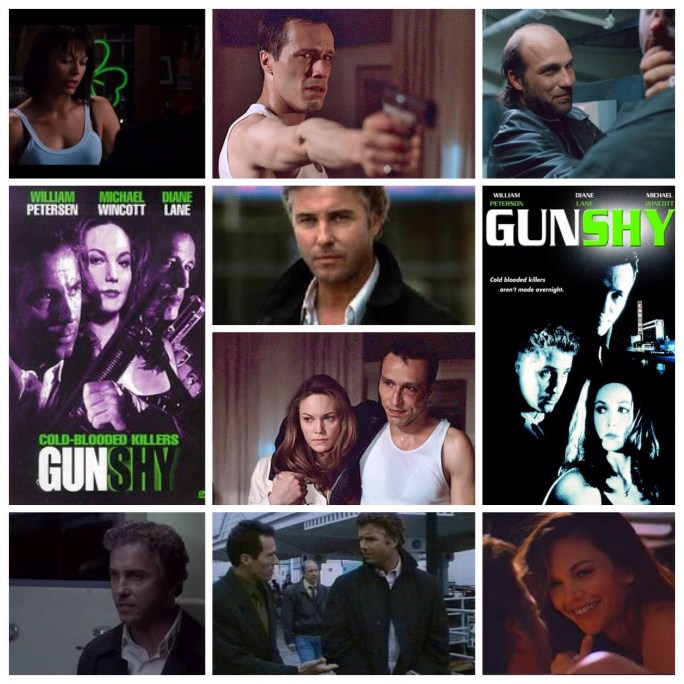
Looking for a moody Atlantic City crime drama that isn’t Boardwalk Empire? Well you’re gonna get a review of one, anyway. Gunshy may not have all the bells and whistles of a studio produced film, and admittedly is a little tattered around the edges as a result, but it’s still a solid, quaint little fish out of water story about a man out of his depth and in deep water with some dangerous people. Jake (William L. Peterson) is a failing journalist who yearns to live on the edge, mired in the doldrums of a creative sinkhole. After his boss (R. Lee Ermey cameo) fires him, he heads to the one place that offers unconditional solace to us writers all over: the bar. After an altercation with a violent scumbag (Meat Loaf offering up ham to go with his edible moniker), he meets an event more violent individual in the form of Frankie (Michael Wincott) a volatile mob enforcer. Frankie takes a shine to Jake, and in particular is fascinated by his literacy and knowledge of the written word. Frankie offers a bargain: show him the world of books and intellectual fare, and he will navigate Jake through the seedy world of organized crime, teaching each other a thing or two along the way. The plot thickens when Frankie’s girlfriend Melissa (Diane Lane, stunning as ever) drives a wedge between them, effectively creating a romantic triangle. These three leads take subpar material and make it shine, especially Wincott who rarely gets a lead role, but steals every scene with his childlike curiosity contrasted with violent tendancy. The boardwalks do make an appearance here, and they just beg to be filmed, really. In a genre centralized mainly in L.A. or New York, I’d love to see more pieces set in the baleful, windswept oceanfront locales of Atlantic City. There’s numerous supporting turns including Musetta Vander, Kevin Gage as a cop who harassed Frankie on the daily, and intense Michael Byrne as his gruesome gangster boss. It’s silly in places and clunky in others, but when it works, it works, mainly thanks to the great turns from Wincott and Lane, who seem very naturalistic and unforced as a couple. Give it a go.
Daybreakers: A Review by Nate Hill
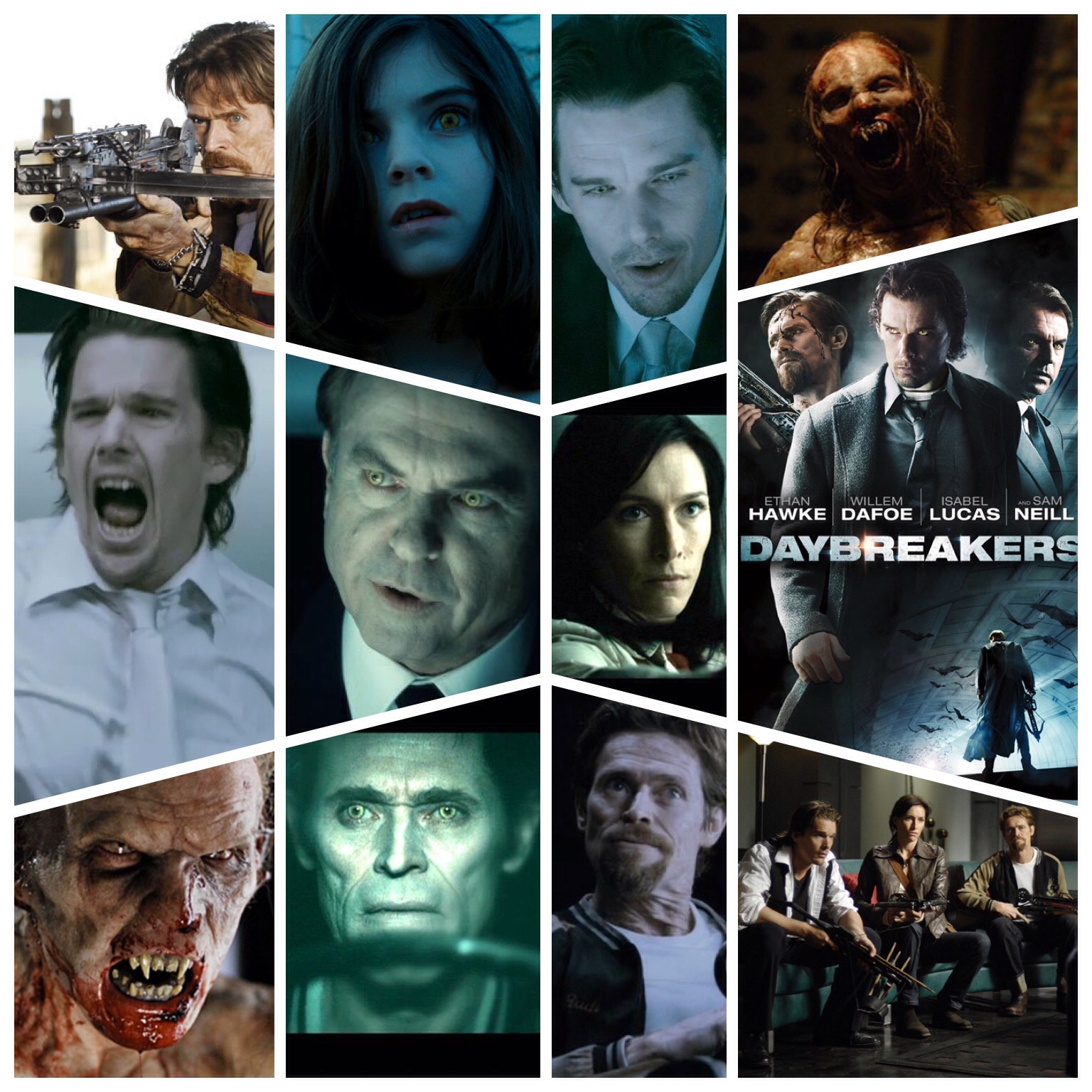
As each genre evolves, it has to find new and creative ways to stay alive and entertain it’s audience. The vampire genre has come a long way, from the grainy film stock showcasing a theatrical Bela Lugosi, to the slick, throat ripping Baltic nocturnal terrors of 30 Days Of Night. No other corner of horror (except perhaps the zombie arena) has worked so hard to reinvent, rework and revamp (hehe) it’s aesthetic than the bloodsuckers realm, and it’s in that area that Daybreakers is a huge success. Not necessarily the most groundbreaking or incredible outing as a film alone, it breaks impressive new ground in the vampire genre and had me wondering why no one had come up with such ideas sooner than 2009! In the year 2019, ninety five percent of the world’s population are now vampires, following an outbreak decades earlier. The remaining five percent of humans keep an understandably low profile and continue to dwindle in this harsh new world. There’s just one problem: vampires need blood to thrive, and once the last human is drained, they face a serious problem. In this lore, a vampire deprived of sustenance turns into a savage berserker that will attack anyone and everyone in pure feral mania. Vampire scientist Edward Dalton (Ethan Hawke) searches endlessly for an artificial blood substitute, partly out of an instinct to preserve a race that was never his own, and partly out of compassion for the humans he once called kin. Corporation executive Charles Bromley (a downright creepy Sam Neill) hordes the scarce resources, and chaos threatens on the horizon if a solution is not found. A bombshell drops, however, when Dalton stumbles across a rebel band of humans who claim that they were once vamps, until some variable turned them back into fleshy human critters. Led by hotshot renegade McCormac (Willem Dafoe dialling up the grit) they see a glimmer of hope in Dalton, not to mention his scientific prowess. Bromley sees the end of days and gets dangerous with his power, Dalton and newfound friends work to overturn the Vampire order, and gore splatters all over the screen in a sleek, entertaining and supremely gory film that should have a little more infamy. The R rating is gloriously wrung out as gallons of blood are thrown, flung and dripped all about the place and a real sense of supernatural, apocalyptic danger is attained with the story. Neill is an inspired choice to play a vamp too; Even when he’s playing a gold hearted protagonist (remember how ominous he got with the raptor claw in Jurassic Park?), there’s a semi dormant aura of menace that always dances in those Aussie eyes. Dafoe is at his best when his playing around in the genre theme park, and he’s having a barroom blast here, getting to play the ultimate badass. There’s a reverence for humanity here too, attention paid to a last ditch effort to save our race from a predatory one that is just trying to survive as well. Terrific stuff.
Hell Or Highwater: A Review by Nate Hill
Hell Or Highwater is an acrid, mournful little tumbleweed lullaby sung at the American southwest, a tale of hard times and desperate men infused with the laconic nature of the area and given the spare yet hard hitting writing skills of Taylor Sheridan, who also penned the equally bleak Sicario. I wasn’t quite sure what time period he was going for here until Jeff Bridges’s salty Texas Ranger brandishes a smartphone, signifying the present. I imagined an 80’s throwback, but I suppose the vacuous dereliction hanging about the rural West has only gathered with time, in a place where time has curiously seemed to halt dead in a financial sinkhole where not much of anything in the way of hard earned success can flourish. Chris Pine and Ben Foster play brothers and partners in crime, in the thick of a statewide bank robbing spree which gets progressivly more dangerous, all to save a piece of property from the big banks threatening to foreclose. They’re not evil men, they’re not even bad men because Sheridan’s script doesn’t allow such stark delineation. They are men forced to make decisions, just like any other, yet in times like these one’s decisions are often of an extreme nature, out of self preservation or desire to protect one’s family. Pine is the introverted one, and the actor disappears into the role with ease and scruffy calm that contrasts his usal golden boy charm. Foster is the live wire, a man who functions on mostly instinct alone, lives in the moment and reacts like an animal from situation to situation. Quite the actor he is, and hasn’t been let completely off the chain since 2004’s Hostage. Here he fills the screen with intensity and much needed humour. The two have love for each other that occasionally peeks through the cloud of trouble they’re flying in, the film adament in showing us their damaged humanity through the desperation of their actions. Bridges is crusty and jaded, the badge and gun serving as his only family other than the uneasy camaraderie he has with his younger partner (Gil Birmingham), a man he berates solely because he seems incapable of proper human interaction, no doubt a result of decades on the job, wandering through the desolation of the desert hunting men who have broken their lives and wishing he ever had one of his own to begin with. There’s an emptiness to this tale, a lonely ambience punctuated by many a beautiful song from both Nick Cave, T Bone Burnett and more, whose downbeat lyrics only pile on the mood thicker. The film wants to examine the need to go to extreme measures in times of strife, but holds us in our seat long after the deed is done to show us the ramifications, both negative and positive, of such actions. The result isn’t pretty, but it’s damn well beautiful and one of the best films I’ve seen so far this year.
B Movie Glory with Nate: The Steam Experiment
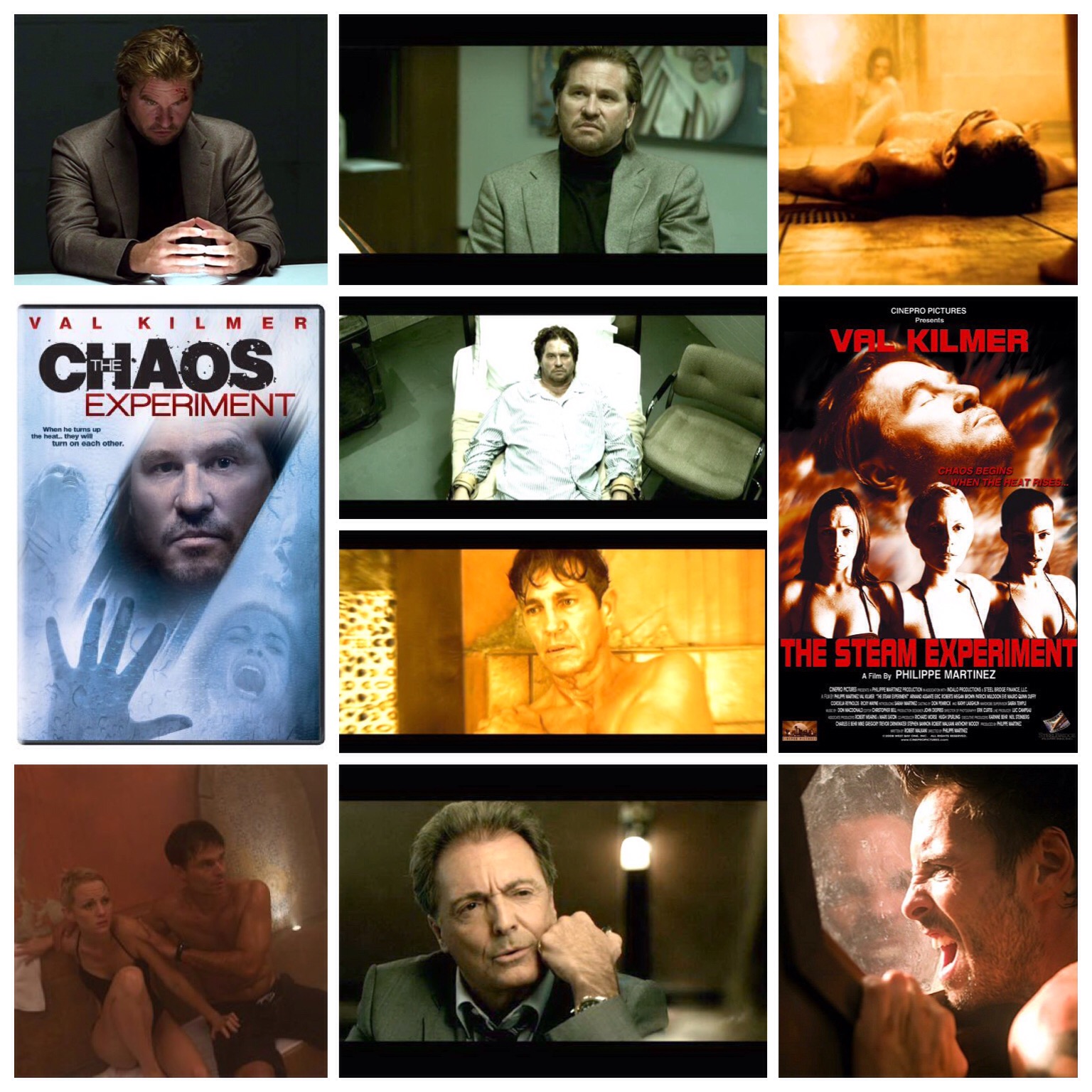
What’s the best way to raise awareness about climate change and the melting of the polar ice caps? In The Steam Experiment, it’s to lock a bunch of people in a swanky new spa and steam room and crank up the heat until they start to panic and suffocate, of course. Well at least according to half mad scientist Val Kilmer, it is. Tired of his global warming research being rejected and scoffed at, he comes to some fairly… extreme conclusions as to what should be done, and actually goes through with his plans, the absolute madman. Setting his experiment under the pretence of a high end spa getaway for a few lucky contest winners to test out his brand new prototype ‘ultra spa’, he shuts them all in and threatens to turn that heat dial up wayyy past safety standards and boil the poor suckers alive inside, if the local paper doesn’t publish his material for all to see. Radical? Yes. Ridiculous? Definitely. It makes for one shit show of a film though, and awful one, no doubt, but pretty legendary just for being able to boast a plot line in which Val Kilmer kills people with a steam room. One of the unwitting participants in this sick charade is Eric Roberts, who seems equally terrified of being trapped in this type of mucky film as he is of being stuck in the room itself. An irritating police detective played by Armand Assante hunts Kilmer down and tries to talk him out of carrying his steamy threats through to their sweaty end, but old Val is stubborn as a mule, and keeps that heat coming on, as fast and hard as the cliches, stale cookie dialogue and eyebrow raising plot turns. He approaches the role cloaked in near catatonic depression, reaching a point where he’s not even sure what he’s doing anymore, giving the film a feeling of trailing off into an aimless, clamouring conclusion where no one knows what’s up, and Assante won’t stop laughably grilling him for answers and mugging the camera, that enthusiastic Italian mess of a man. A pressure cooker of mediocrity, a disaster that ends melting down just as hard and fast as those ice caps that cause poor Val such sociopathic anxiety. Did I use enough puns in my review?
The Usual Suspects: A Review by Nate Hill
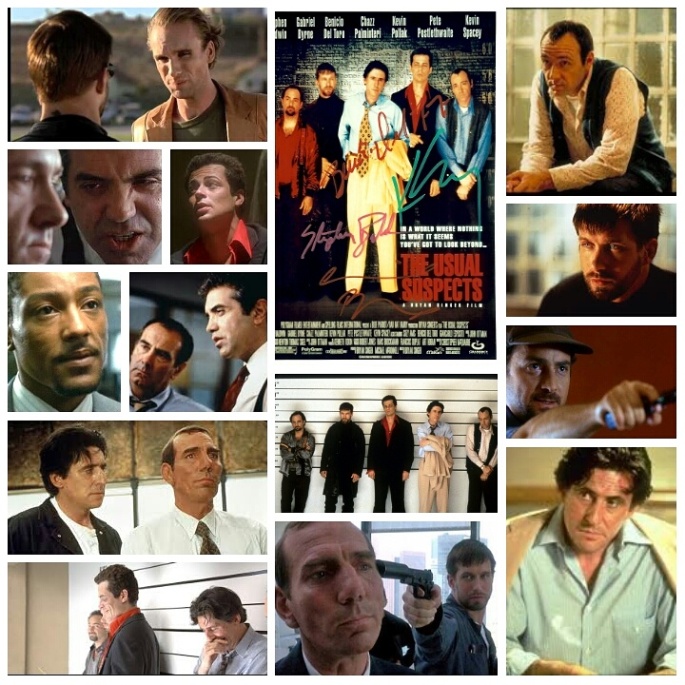
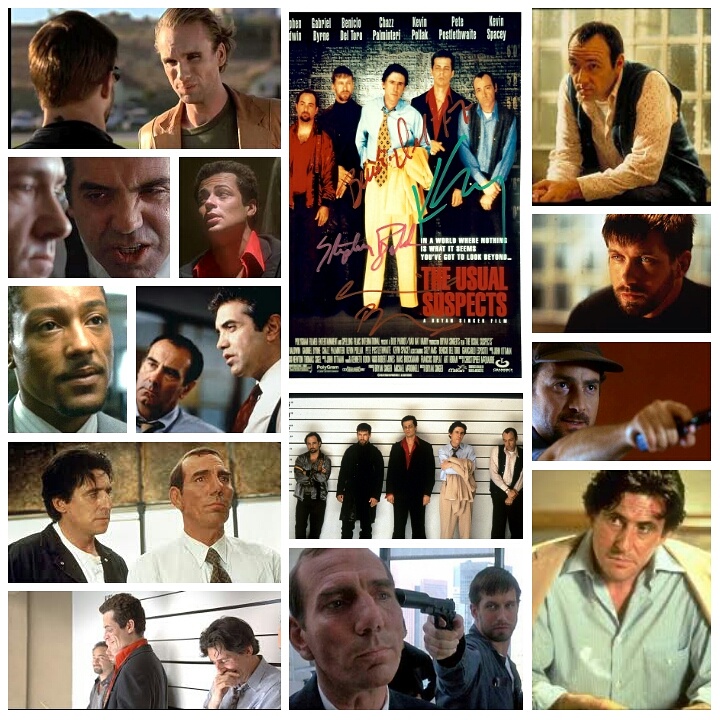
No matter how many times I watch The Usual Suspects, and believe me it’s been many, I still get the same diabolical thrill, the same rapturous excitement and the same rush of storytelling and dramatic payoff as I did the very first time I saw it. Every performance from the vast and diverse cast is a devilish creation packed with red herrings, juicy dialogue and bushels of menace, every scene piles on the mysticism of the criminal underworld beat by beat, until the characters begin to pick it apart and the whole thing unravels like a great serpent coiling forth bit by bit, scale by scale, swerving toward the shocking, disarming third act that has since become as legendary as it’s elusive and terrifying antagonist. In the crime/mystery corner of cinema, there’s no arguing that this delicious piece of hard boiled intrigue reigns supreme, and it’s easy to see why. In a seemingly random police lineup, five career criminals are harassed by an unseen hand, pushed into carrying out dangerous heists and violent manouvers by a shadowy campfire tale among the world of organized crime, a Boogeyman called Keyser Soze, if he even exists at all. Slick and sleazy ex cop Dean Keaton (Gabriel Byrne) heads up this dysfunctional crew of vagabonds which includes hothead McManus (Stephen Baldwin in a role originally intended for Michael Biehn, which kills me to this day), weirdo Fenster (Benicio Del Toro, using an indecipherable mishmash of an accent that would be the first of many), spitfire Hockney (Kevin Pollak) and Verbal Kint (Kevin Spacey) the runt of the litter. The lot of them are intimidated into performing risky enterprises by lawyer Kobayashi (Pete Postlethwaite) until the climate of their actions reaches a boiling point and answers emerge from the darkness. This is all told in retrospect by Spacey, to a rabid customs agent (Chazz Palminteri) who has designs on ensnaring Soze. Spacey scored Oscar gold for his heavy work here, spinning a tale whose layers interweave and pull the wool over our eyes time and time again before offering any glimpses of truth. Byrne is a fiercely guarded storm as Keaton, a man with secrets so deep even he doesn’t know who he is anymore, letting the anger set and smoulder in those glacial eyes of his. The supporting cast adds to the class and confusion terrifically, with fine work pouring in from Dan Hedeya, Suzy Amis, Giancarlo Esposito and a wicked cameo from Peter Greene, who provides a moment of inspired improv. The score of the film rarely relies on dips and swells until all is said and done, keeping a tight lid on the orchestra and feeding us nervous little riffs of anxious portent that keeps tension on a tightrope and anticipation on call. A mystery this tantalizing is irrisistable the first time around, but the trick is to make your story rewatchable, and I’ve seen this thing over a dozen times. Every viewing provides some new angle to the story I didn’t see before, or I notice a subtle interaction in the very naturalistic and funny dialogue which escaped me in the past. My favourite thing to do is watch films with someone who hasn’t seen them before, observe their reactions and opinions on every little story beat and cinematic flourish, it’s almost more fun for me than the actual film itself. The Usual Suspects is a showcase piece for that activity, because you get to see this very complex revelation unfold through new eyes as you watch them experience the revelations. Whether your first viewing or your fiftieth, it never loses its power, and the spell it casts just doesn’t dim. Masterpiece.
Gore Verbinski’s The Lone Ranger: A Review by Nate Hill
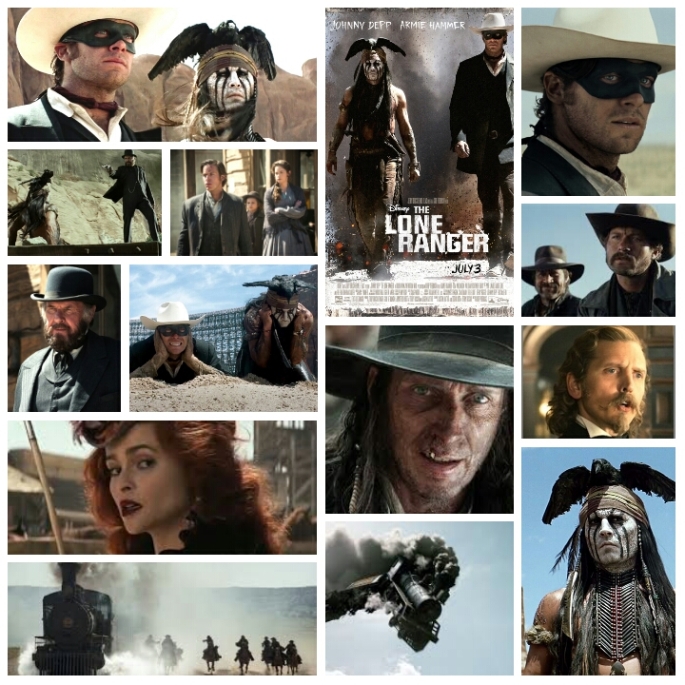
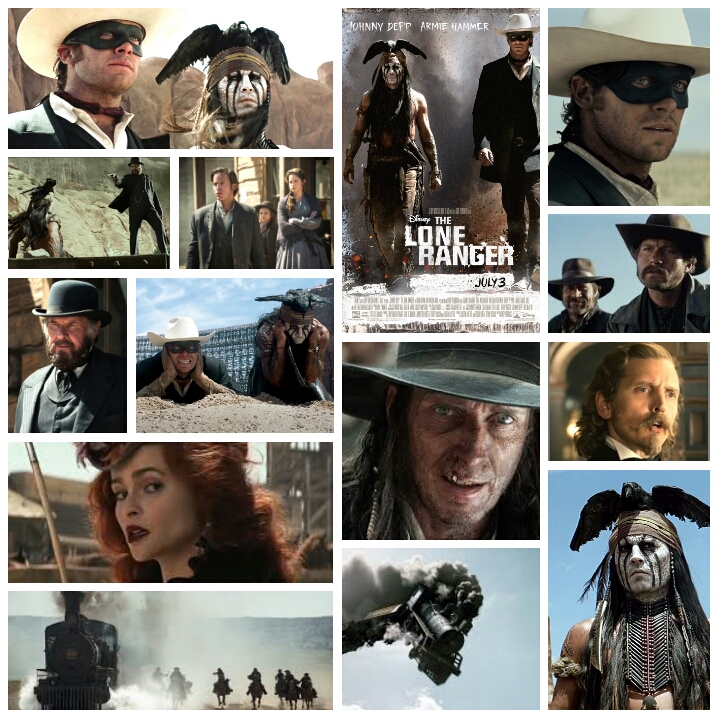
There’s always those films that get buried under a landslide of terrible reviews upon release, prompting me to avoid seeing them, and to wait a while down the line, sometimes years, to take a peek. I was so excited for Disney’s The Lone Ranger, being a die hard fan of both Gore Verbinski and Johnny Depp’s monolithic work on Pirates Of The Caribbean, and just a lover of all this western, as well as the old television serial. The film came out, was met with an uproar of negative buzz, I went “well, shit”, and swiftly forgot it even existed. The other day I give it a watch, and would now like to pull a Jay and Silent Bob, save up cash for flights and tour the continent beating up every critic I can find in the phone book. I was whisked away like it was the first Pirates film all over again, the swash, buckle and spectacle needed for a rousing adventure picture all firmly present and hurtling along like the numerous speeding locomotives populating the action set pieces. Obviously the material has been vividly revamped from the fairly benign black and white stories of the tv show, especially when you have a circus ringmaster like Verbinski at the reigns, the guy just loves to throw everything he has into the action, packed with dense choreography and fluid camerawork that never ceases to amaze. Johnny Depp loves to steal the show with theatrical prancing and garish, peacock like costumes, and he kind of takes center stage as Tonto, the loyal sidekick to the Lone Ranger, who is given a decidedly roguish, unstable and altogether eccentric edge that the series never had, but I consider it a welcome addition to a character who always seemed one note in the past. Armie Hammer has a rock solid visage with two electric blue eyes peeking out of that iconic leather strap mask. It’s an origin story of sorts, chronicling Reid’s journey to visit his legendary lawman brother (James Badge Dale) and family in the small town West. Also arriving, however, is ruthless butcher and psychopathic outlaw Butch Cavendish (William Fichtner) at the behest of opportunistic railroad tycoon Latham Cole (Tom Wilkinson). Tempers flare and violence erupts, and before you know it Reid is without a family, left for dead in the desert and befriended by Tonto, who himself is a tragic loner in a way. Revenge is on the minds of both, as they venture on a journey to find Cavendish and his men, discover what slimy Cole is up to and bring order to the west, one silver bullet at a time (actually there’s only one silver bullet used in the entire film, but let’s not get technical). Now, I’ll admit that the middle of the film meanders and drags quite a bit, half losing my interest until the intrigue steps up a notch. A sequence where the pair visit a circus brothel run by a take no shit Helena Bonham Carter seems like unnecessary dead weight and could have been heavily trimmed, as could other scenes in that area that just aren’t needed and might have been excised to make the film more streamlined. It’s no matter though, because soon we are back in the saddle for a jaw dropping third act full of gunfights, train destruction and unreal stunts that seem like the sister story to Pirates, some of the action often directly mimicing parts from those films. Depp is like fifty, and still scampers around like a squirrel, it’s a sight to see. Fichtner is a world class act, his mouth permanently gashed into a gruesome snarl, the threat of violence oozing from his pores and following him like a cloud. Wilkinson can take on any role, period, and he’s in full on asshole mode, Cole is a solid gold prick and a villain of the highest order. Barry Pepper has a nice bit as a cavalry honcho who never seems to quite know what’s going on (it’s perpetual chaos), watch for Stephen Root and Ruth Wilson as Reid’s sister in law who ends up… well you’ll see. It’s fairly dark and bloody for a Disney film as well, there’s a grisly Temple Of Doom style moment and attention is paid towards America’s very dark past with the indigenous people, which is strong stuff indeed for a kid orientated film. Nothing compares to the flat out blissful adrenaline during the final action sequence though. That classic William Tell overture thunders up alongside two careening trains and your tv will struggle to keep up with such spectacle, it’s really the most fun the film has and a dizzyingly crowd pleasing sequence. All of this is told by an elderly Tonto in a museum exhibit, to a young boy who dreams of the west. A ghost from the past, part comic relief and part noble warrior, Tonto is a strange character indeed, and the old version of him has a glassy eyed reverence for his adventures before, the last one alive to remember. Many a review will tell you how bad this film is, but not mine. I found myself in pure enjoyment for the better part of it, and would gladly watch again.
Nicolas Winding Refn’s Valhalla Rising: A Review by Nate Hill
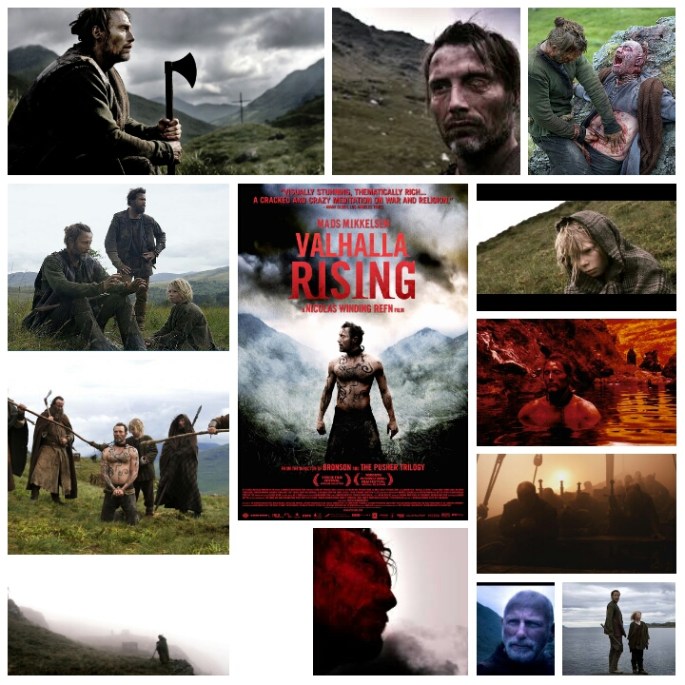
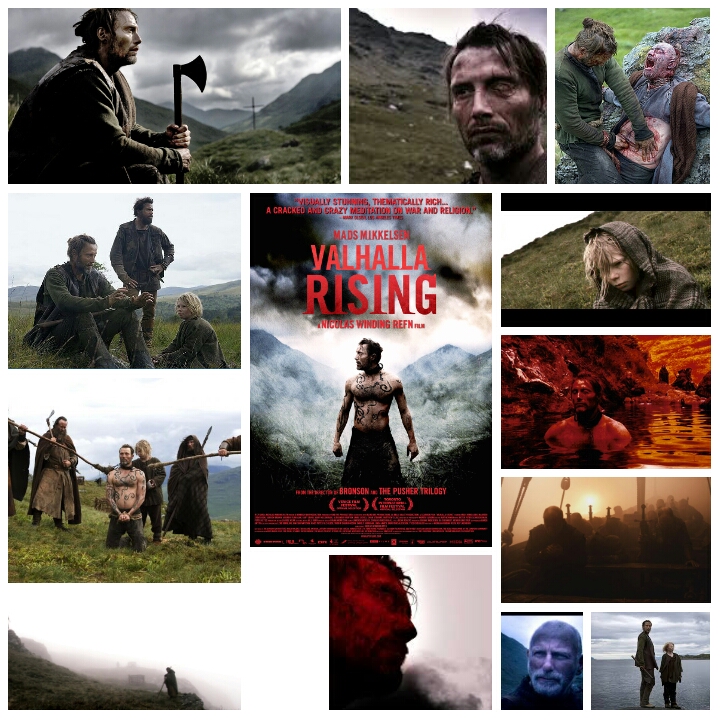
I would hazard a statement and say that Valhalla Rising is Nicolas Winding Refn’s most inaccessible film, to wider audiences. Despite the bleak, impenetrable horror of Fear X and the repulsive, Freudian filth of Only God Forgives, there’s just something so bare and primordial about Valhalla, a skeletal narrative that serves as a haunted shell for a story that is essentially the ‘anti story’, an acrid, backwards battle poem existing in a vacuum of space where genre tropes should be at play, and are mournfully absent. A lot of films set in ancient times just feel the need to give the proceedings a modern flourish, adding humour, bravery and many elements we identify with and are used to seeing. The reality is those times were probably not like that at all, and resembled a level of anthropological alienation that would confuse us. Refn casts exactly that kind of cloak over his film here, bringing us a dark, hollow world where primitive despair swirls about in the mists of the British Isles and the ocean far beyond. Refn is first and foremost concerned with his protagonists, striving to make them unique and challenging. The meek, confused griever playing detective (John Turturro in Fear X), the lonely, pent up vigilante (Ryan Gosling in Drive) and the bawdy, childish, anarchic brawling bull in a China shop (Tom Hardy in Bronson) were endlessly fascinating, but here he takes it a step further into the overgrown netherworld of the human psyhe. His outlet of exploration is a mute, feral Scandinavian warrior, simply called One Eye (Mads Mikkelsen), who is ready to inflict throat ripping, bone snapping carnage at the drop of a hat. This isn’t someone who kills for his own gain or goals though, and it’s in that characteristic that One Eye is different from every other lead in Refn’s tales. All the rest were forceful, extremely aware beings who were out to achieve clear cut goals, even if one of them was just to create as much self destructive chaos as possible. One Eye is a slave, someone’s property, and lays down the carnage hammer only when instructed to by his Saxon owners. This unfolds in a jarring opening act that you’ll need a strong stomach to fight through. The violence is scarily realistic and lands with the same sickening thud that skulls make when Mikkelsen bashes them on the jagged outcroppings of rocks which populate this austere terrain. As two warring clans squabble about who deserves sovereignty over One Eye’s terrifying talents, circumstances lead to his departure from the moors of Britain, on a boat captained by a Scottish warlord (the exceptional Gary Lewis) and with the companionship of a mysterious young boy (Maarten Stevenson). The boat drifts in a lilting trance for miles on end, seemingly headed nowhere, and it’s here that Refn let’s both his characters and audience off the leash and sends us headlong into the crushing blackness of a narrative that is maddeningly impossible to decipher. To try and think it out is to fail right off the bat; One must let this type of story wash over you and discern it’s meaning using the unconscious modes of thought that human beings have sadly forgotten amidst a flurry of science, reason and technology. The voyage across this sea is one out of time, out of mind and beyond rationality, and the land that lays at the far end of the crimson sunrise is one even more foreboding and secretive than the rocks they left behind. Encounters with a strange tribe, moody passages of time where One Eye seems to drift between dimensions of thought and animalistic contemplation, dimly perceived exchanges of dialogue that seem lost and misplaced among the pressing gloom, it all flows by like the fog on the water, making sense as an element existing in it’s place in nature, but unable to be reconciled by our minds, which always need to have the safety net of a “why” to break the great fall of the unknown. Sometimes there’s no explaining, no categorizing, because to do so is arrogant. Sometimes it’s just naked perception and acceptance, if you can bring yourself to that place. Refn can, and what’s more, he can create such feelings, which is what makes him so important as an artist. He understands the uncharted places on the territory of human experience, waiting to be mapped out like the strange new world One Eye and the boy visit, a world which may as well be a different planet to their eyes. It’s in this inaccessibility that he gives us what, although is certainly not his most enjoyable or commercially viable film, is definitely the one that says the most, if you possess and are willing to use the tools necessary to experience it. Difficult. Psychological. Troubling. Hypnotic. Beautiful. Masterpiece.
Dario Argento’s Suspiria: A Review by Nate Hill
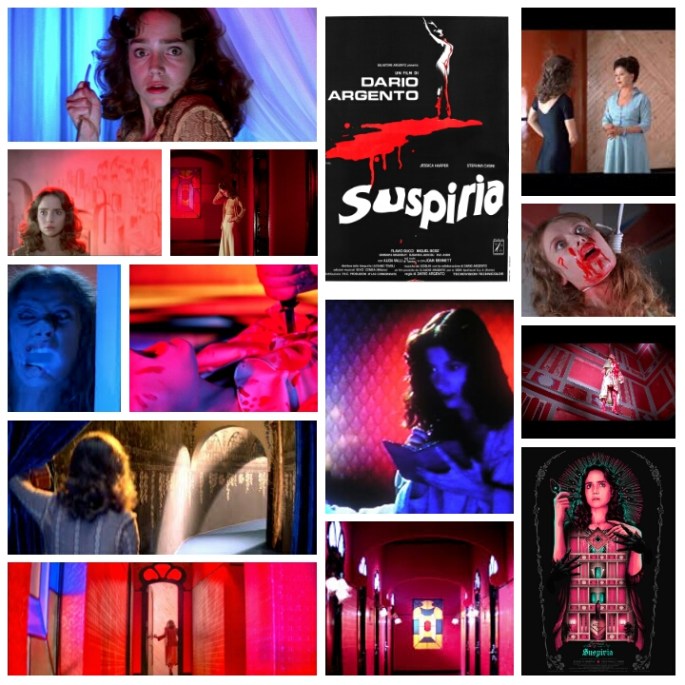
How to describe Dario Argento’s Suspiria. A psychedelic, multicolored mood piece. Free from the bonds of rationality. Surreal and incoherent, using dream logic to disorient the viewer and lull us into a subconscious fugue state, swept away by the color and light, all shot through a prism of dazzling underworld enchantment, a fairy tale designed to shock and shake, and all the while presided over by Goblin’s rhythmic, haunting score, bewitching the proceedings even further and pushing the atmosphere of the film to elemental heights. No other horror film I’ve ever seen has had quite the same unique, spellbinding effect on me as this masterpiece. The opener still stuns, a kaleidoscope of stained glass splattered in blood, a jarring murder scene that is as beautiful as it is grotesque, setting the stage for the madness yet in store. You know those dreams where you’re making your way through some corridor, drenched in fear and awaiting some doom that’s just up around the bend, but suddenly you get there and nothing seems to make sense, circumstances are now different and all attempts to extricate yourself seem hopeless? That’s the kind of nightmare that young American ballet student Suzy Banyon (Jessica Harper) finds herself in. Arriving in Germany to a prestigious dance academy, she gets a fleeting look at some poor girl running from… something, far off in the woods. That being her introduction to the school isn’t a good sign, and it doesn’t get any better. The stern headmistress (Allida Valli would give Miss Trunchbull the creeps) is overbearing and nasty, the rest of the occupants strange and withdrawn, and something seems to live inside the walls, watching Suzy from unseen perches, with evil intent in store. Maggots, a possessed dog, witches, a serial murderer and homicidal German cooks don’t even begin to describe the gauntlet of terror she fights through. Well, they do, but the film really isn’t about those things, they’re just the walls of the gingerbread house, plain, right angled and sensibly threatening. The real horror and unease comes from atmosphere, the icing, sprinkles and decorative splendour on said house. Argento has always given more effort towards atmosphere and ambience, in favor of things like acting, story or editing. It can be silly sometimes, but in Suspiria’s case it really doesn’t matter much, because the hellish haunted house he fashions is worth every second of your attention. There seems to be a starkly colored hue pouring in through every window and behind every door, the academy itself is an ornate and impossibly detailed dark gem of architecture and artistry, the sets put together like a dizzying labyrinth funhouse of brightly lit orifices and shadowed alcoves where nothing seems to be in it’s rightful place, disorder and abstraction reigning supreme. And then there’s the score. Now one of the most iconic janglers in the horror genre, the trancelike nocturnal lullaby by Goblin is a riff that instantly stands your hairs up and sucks you right into each frame, accenting the colours, shapes and hallways with organic precision, as if the dark forces inside the academy were somehow generating this music of their own accord. I also note another track by the group that makes an appearance, a wheezy death cry called ‘Sighs’, signalling that witches are nearby and consequently upping the unease factor a few more notches. This is a film that seems to come straight from the unconscious mind, a technicolor patchwork quilt stitched together with bizarre ideas, supernatural mysteries and otherworldly hysteria, with only the briefest threads of logic woven in, almost as if to further throw us off balance, to tease us with a scenario that seems like it will play out ‘normally’, only to toss us right back into the deep end, back into bizarro world with Suzy and all the forces of the night, clamoring to get her. This is unquestionably Argento’s best, and most complete film, a maniacal masterpiece of gorgeous sights and sounds, a trip to atnother realm via our world, and a horror piece unlike any other.
An American Werewolf In London: A Review by Nate Hill
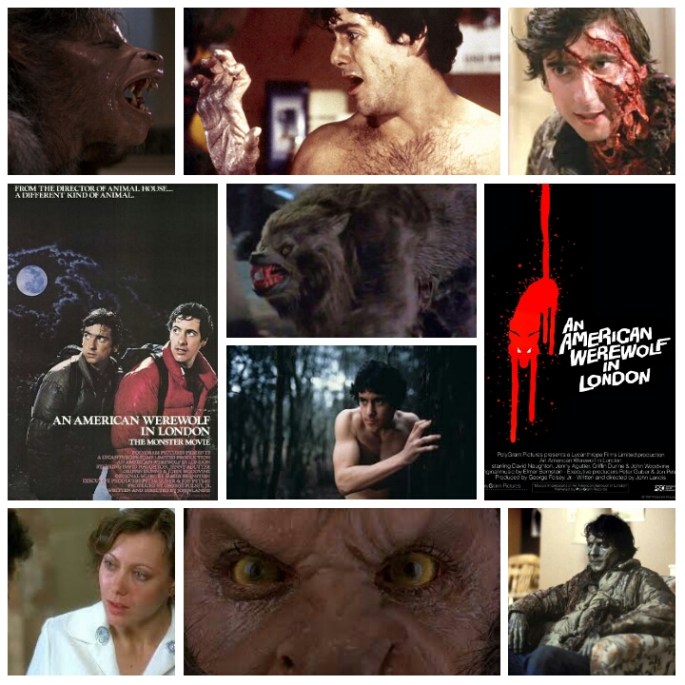
John Landis’s An American Werewolf In London has what is the most impressive human to wolf transformation sequence I’ve ever seen. You can dump your wallets out and buy all the CGI effects at hand, and none of them will ever match the tactile weight that practical effects have, the combination of hair, putty and latex that assures you there is *something real* on screen, and not the hollow timbre of computer driven wizardry. Everything in the film builds up to this shock and awe moment, and up until then it’s a fairly low key, atmospheric affair in which you never quite see the beast that kicks off the inciting incident. Griffin Dunne and David Naughton play the two American backpackers who find themselves wandering the moors of northern England, positive there is some kind of creature hunting them. The crusty locals avidly deny any such presence, but aren’t convincing and furtively shift their gaze, clearly not being honest. Sure enough, Naughton is attacked and bit one night, and he begins to exhibit those good old symptoms. The change happens all at once and is quite startling; this isn’t a sleek, aesthetic werewolf either, it’s a lumbering behemoth, all fur fangs and fury, storming about the cobbled streets of London like a coked out grizzly bear out running zookeepers. We only get to see him in London for a brief and chaotic end scene, but it’s worth it, taking the slow, misty nocturnal buildup and switching to broad daylight, revealing what was unseen before and bringing it jarringly down to earth. I can’t speak for the sequel, as I’ve never seen it, but this one remains one of the most well crafted, fun werewolf films you can find, and my personal favorite.