Joshua Michael Stern’s Neverwas

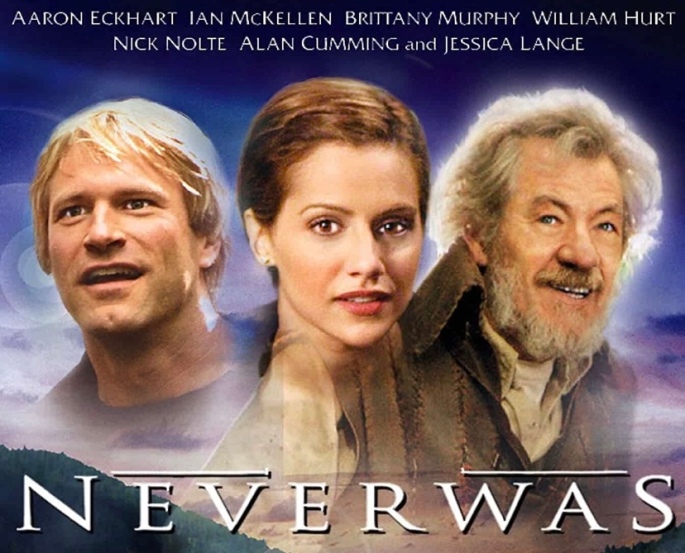
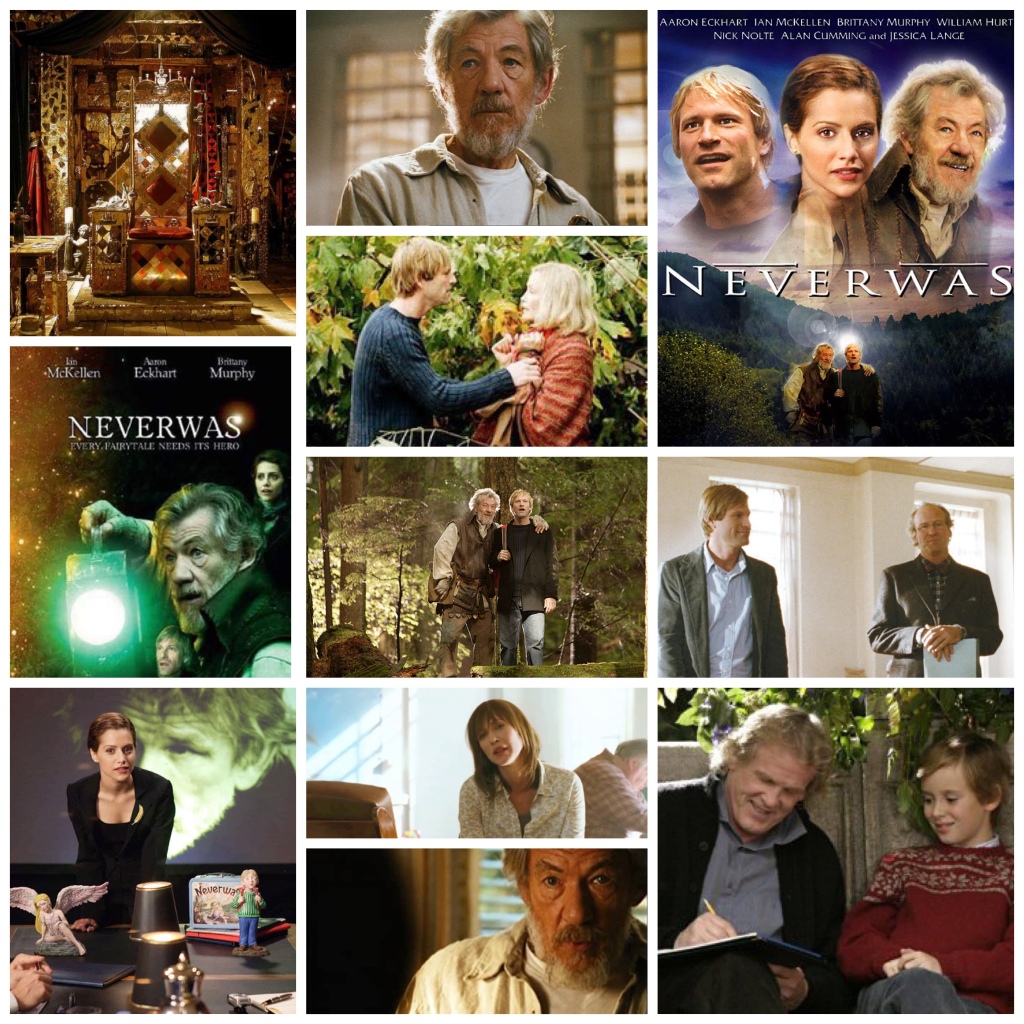
It always amazes me when a first time writer/director scores an all out, diamond encrusted A-list cast that would make the top dog filmmakers in Hollywood jealous, but it often results in a scantly marketed film that no one really ends up seeing but just happens to have a huge star studded ensemble in a quiet, curious independent piece that few are aware of. Such is the case in Joshua Michael Stern’s NeverWas, a beautiful modern fairytale that slipped under the radar back in the mid 2000’s but is ripe for rediscovery. Aaron Eckhart plays a rookie psychiatrist who expresses interest in working at a troubled mental health facility in rural BC, Canada, an institution where his mentally ill father (Nick Nolte) lived at years before. He was once a great children’s author who wrote about a magical kingdom called NeverWas and built a considerable legacy around his books, before becoming sadly unstable and being committed. Eckhart’s character wishes to find out wheat happened years before and treat some of these people now attending the facility, while the somewhat skeptical director (a sly William Hurt) doesn’t have high hopes for the program overall. Things get interesting when delusional patient Gabriel (Ian McKellen) starts mentioning NeverWas in his group sessions and believes it to be real, and Eckhart to be somehow connected to the legacy. What is he on about, why does he express a desire to break out and return to a place he calls his ‘kingdom’, and what’s his connection to the long gone father? McKellen is wonderful in the role, fiercely passionate and charismatic while showing heartbreaking undertones of some past trauma he can’t articulate yet needs to work through with this fantastical delusions. Nolte gives a mini powerhouse performance in just flashbacks alone and is incredibly affecting, while the late great Brittany Murphy is cast refreshingly against type as a local naturalist who expresses interest in this unusual situation. The cast is so blinged out that even the smallest roles have been given to someone super recognizable and so we get to see people like Jessica Lange, Alan Cumming, Michael Moriarty, Bill Bellamy and Vera Farmiga show up and not necessarily have much to do character wise other than simply bless the production with their attendance. The lush Canadian setting provides a gorgeous atmosphere for this strange, quaint and very personal story to unfold, anchored by McKellen in a superb, emotionally rich portrayal that he sticks with and lands with a final beat to the arc that cuts right to the essential. The film also managed to score Philip Glass for its original score (Candyman, Tales From The Loop, The Hours) a man whose unmistakable compositions always provide an auditory heart and propellant momentum, his work adding a lot to the overall experience here. The very definition of a hidden gem and well worth seeking out for the unbelievable cast and unique, touching story.

-Nate Hill

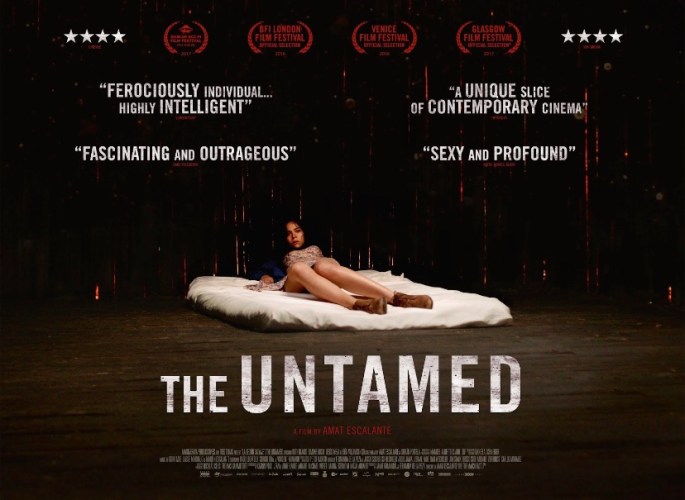
Amat Escalante’s The Untamed

So Shudder just added a Mexican horror film called The Untamed about an alien that literally has sex with people and you know what it’s actually pretty good. When I say that I don’t mean metaphorically, allegorically or any other vague or illusory way to present the concept, I just quite bluntly mean that a slimy tentacled alien emerges from a crashed meteor and has slimy alien intercourse with any female body that gets close to it. Now as stark and upfront as the premise is presented, it is also subtly used as metaphor for what’s going on in the lives of several troubled individuals in small town Mexico, the extraterrestrial itself viewed as an arbiter for sexual dysfunction, closet homosexuality in a conservative setting, clandestine adultery and other interpersonal shenanigans of the like. Nor does the film present its subject matter as anything close to schlock or exploitative in nature and at times doesn’t even feel like an abject horror film, but rather a tense, eerie, melodramatic tragedy that just happens to have an extended cameo by a sex monster from outer space. The effects on the creature itself are tangible, tactile and terrific, the performances from the human actors all most excellent and elicit sympathy, show complexity and emotional range while being sufficiently creepy when under the sultry influence of the alien’s potent, seductive and very weird pheromone like spell, almost like a cosmic drug trance that is translated excellently into the screen by these artists, none of whom I’ve seen in anything else before. Word of warning with this one though: it’s not a prudish North American studio film and as such doesn’t beat around the bush with explicit sexuality, which is totally normal and fine if it weren’t for the fact that said sexuality includes a multi-tentacled being from space and you see *everything* when this thing is copulating with women, which may be too much for some. It’s not done in a violent, perverse or shameful way and the scenes have a sort of almost bizarre tranquility to them, but it is a *very* disquieting form of intercourse to absorb and experience onscreen and some may be uncomfortable. Very unique and challenging film overall.

-Nate Hill

ZAPPA (2020) – D. ALEX WINTER

Full disclosure right up front, I’m a Frank Zappa fanatic. While I had four of Zappa’s albums in high school, it wasn’t until around 2003 that, due to a burgeoning interest in the music of Captain Beefheart, I dove into his catalogue in earnest. And, man, did I dive HARD. By hitting every new and used music store within a forty mile radius, I managed to collect every Frank Zappa album that had been released up until that time. And while it is to be expected that a fully smitten person is going to try and digest every single piece of work from an artist with whom they fall in love, the extraordinary thing about Zappa is that, in his lifetime, he released some 62 albums and, as of this writing, another 50-plus have been released by the Zappa Family Trust, the family business now run by his youngest son, Ahmet.

So that’s a lot of music and I own it all. And that’s what Frank Zappa wanted. As Zappa himself states a couple of times in Alex Winter’s long-gestating and beautiful documentary, Zappa, all he was interested in was composing his own music, recording it, and selling it to anyone who shared his passion for listening to it. It’s truly a noble goal, but when you realize that Frank Zappa’s first album came out in 1966 and the last one released during his lifetime arrived in 1993, something in the math doesn’t seem right and one can only conclude that Zappa lived a life completely out of balance. Nobody who is consistently releasing 2.3 albums every year for 27 straight years has anything resembling a normal existence.

It’s probably most surprising that Zappa almost goes out of its way to show how unbalanced Frank’s life was. Forever cutting away to images and footage of Frank hunched over some kind of table as he is painstakingly writing his compositions as if he were a Benedictine monk copying a Bible by hand, the film presents Zappa as a sentient music machine who had little feeling for anything beyond his work and interests. While he certainly loved his family, it almost feels like Zappa’s style of love was unique and could only be expressed in his own way. But there aren’t many people in Zappa’s universe who sat down for interviews that didn’t articulate the same line on Frank: he was just a laser-focused perfectionist to whom it was difficult to feel a kinship.

The film never really goes into what made Frank an emotionally distant person but there are hints sprinkled about here and there. Growing up in a family in which the parents are joyless stiffs (as Zappa’s folks mostly were) can’t help but have an effect on a person and while Zappa’s zany, anti-authoritarian persona was aimed directly at his parents’ generation, he kept his own generation at arm’s length, too. Tall, gangly, hairy, and brooding to the point where he was concocting ways to set fire to Antelope Valley High, save and except fellow rhythm and blues fanatic Don Vliet (who would later take musical form as Captain Beefheart), Zappa probably wasn’t much of a hit with his peers, male or female. Frank Zappa, quite simply, never counted on being loved and never really knew what to do with it when he was which, naturally, leaves one’s wife and children and workmates at something of a disadvantage.

But while it doesn’t shy away from the ugly truths about him, Zappa isn’t on a mission to bury him, either. Frank Zappa lived an incredible life on his terms and Winter wants to tell that story. Here is a uniquely American tale of an iconoclast who went from chronically sick child to self-taught musical genius to outrageous rock artist to Washington D.C. crank to, finally, one of the ultimate symbols of freedom and deified hero to the people of newly liberated countries of the then-crumbling Soviet bloc. That’s a lot to pack into a film meant for general audiences so Winter had the unenviable task of keeping the narrative moving forward without getting distracted on every single detail of Zappa’s career, of which there are a lot.

This approach created some very interesting reactions in me as a viewer versus me as a Zappa super fan. For me, he had no band better than the Roxy/One Size Fits All incarnation of the Mothers of Invention but the film glides over that period in what ends up being a brief moment in a quicksilver collage of his rotating bands from 1973-1979. For Winter, the lion’s share of the time is spent on the original lineup of the Mothers, highlighting as much their bizarre, performance art stage antics as he does their music. Ultimately, regardless of my personal preference of any specific era of Zappa’s impressively varied body of work, the foundation of his career and public persona was created, gestated, and borne out of the 1966-1969 lineup and it’s just as crucial to the beginning of the narrative as much as his triumphant partnership with the Ensemble Modern in the twilight of his life is to the end.

This also spills over into other aspects of the film. Frank Zappa was one of the finest, most mind-bending guitarists in all of rock history but you’d really never know it from the film. Aside from one shot of Zappa absolutely shredding which reveals, in full color, the man’s scorching dexterity on the fretboard, there are no moments of him noodling, soloing, or a montage of stage moments overlaid with audio snatches from any one of the multiple albums he released that are filled with nothing but guitar solos. But, again, this isn’t the story Winter wants to tell and the film is the better for it. As Gail Zappa insists early on in the film “I married a composer.” And regardless of what each individual Zappa fan loves about him, most all of them agree that the term “composer” is the one thing that should be elevated above all else. And this is why Winter makes it to where you’re more likely to see Zappa with a conductor’s baton in his hand than a guitar. Even when Zappa’s “stunt guitarist”, Steve Vai, shows up to talk about Frank, there’s never any real discussion about guitar technique or soloing off of Frank; it’s all about musical complexity and the Herculean effort of manually transcribing “The Black Page”, a beyond-difficult Zappa composition written for drums and percussion.

Much is made, too, of Zappa’s battles with the Parents Music Resource Center (otherwise known as the PMRC), a group of Washington wives who wanted to regulate what they considered “porn rock.” This occupied a great deal of Zappa’s time in the late eighties and helped cement his legacy as a champion for freedom at a time when it was uncertain if our country was ever going to climb out of the hole of the Reagan Era. This chapter also helps lend understanding to the weird international wrinkle that occurred when Zappa was disallowed by Bush 41’s State Department to serve as cultural attaché to the newly liberated Czech Republic (then Czechoslovakia) which had been personally requested by then-President Václav Havel.

The film does do some slight dramatizing and, at times, completely omits somewhat crucial information when it really doesn’t need to. Coming away from the film, you’d have thought Zappa served all six months of the jail sentence he got as a result of that raid on his studio when, in fact, he was only in the clink for ten days. There’s no reason to mislead the viewer by omission when the very real pain and injustice of ten days in jail on a bullshit charge wouldn’t feel minimized if it were followed up with the very real story of how Zappa was held in jail just long enough for his entire life’s work up to that point, including the studio, to be seized by the authorities and sold off. Missing also is the fact that Zappa was living in that studio because he moved in after divorcing his first wife, Kay Sherman, who is never mentioned in the film at all.

But, again, Zappa’s life was so full of left turns, details, and grand adventures with both Gail and his band that you’d need three full length features to tell it all. But Winter has a limited canvas on which to work and delivers the most comprehensive and complete story of an incredibly difficult and complex figure one could possibly hope for. And it’s not a story bereft of heart regardless of Zappa’s tough cynicism. The respect and understanding that is in the clear-voiced appreciation of Zappa though Steve Vai and Alice Cooper (who got his start on Zappa’s imprint label) feels absolutely right but there may not be a more touching figure than that of Ruth Underwood who strikes the right balance between hard-nosed realist and fawning admiration. Detecting (and connecting to) the deep soul of Frank through the complexity and beauty of his music, Underwood supplies the film with two of its most moving passages, one in which, at 74 years-old, she absolutely nails “The Black Page” on a baby grand piano, and second where she (and, curiously, only she) breaks down in tears when discussing the end of Zappa’s life.

When the end does come, the film turns impressionistic and, instead of lining up all of the interviewees to give bittersweet postmortems about Frank and his work and what it meant, Winter relates everything to the work to be done versus the time in which one has to do it. As the clock ticks out, and despite his one last heart-bursting success as an incredibly sick Zappa conducts the Ensemble Modern in a perfect performance of “G-Spot Tornado,” a song so complicated it was composed for the Synclavier, a computerized keyboard sampler with which Zappa utilized in his later years, out of fear humans couldn’t play it, we’re left with ideas of the voluminous projects that remained unfinished.

Like filmmaker Rainer Werner Fassbinder, Frank Zappa was a notoriously prickly and paradoxical figure whose dictatorial approach to his art made him a complicated individual who was destined to work himself into an early grave. For both, their art and their lives generally crossed lines as there was hardly any time and space to separate the two. In the case of Frank Zappa, his oft quoted line from Joe’s Garage “Music is the best,” was probably the simplest thesis of his entire life energy as everything seemed to flow towards it and away from it. And Alex Winter’s Zappa does as good a job as any to make audiences understand that, in the end, maybe it’s something as simple as that that fuels a contradictory, complex artist to endlessly create. And maybe it’s not so easy on everyone in their immediate orbit but we’d be foolish as a society to not celebrate their lives and their work, created just as much for us as for themselves.
Emerald Fennell’s Promising Young Woman

Carey Mulligan is a tornado of righteous fury and ruthless retribution in Emerald Fennel’s Promising Young Woman, an unconventional revenge thriller and icky glimpse into the world of men being horrible to women, and the often decades later snowball effect that can have on many lives. This is a crisply made, acid edged, cheerfully furious piece with a bubblegum pop-art visual and musical aesthetic that provides playful contrast to its very dark and fucked up subject matter and while I had a few major issues in the third act, I greatly enjoyed it overall. Mulligan is Cassie, a thirty year old girl working a humdrum barista job and living at home with her quaintly innocuous parents (Clancy Brown & Jennifer Coolidge). Many nights she gets all dolled up, hits the dive bars and takes guys home pretending to be too hammered to object to any advances, and then turns the tables on them in whip-smart fashion. Why does she do this? Well besides the surface level ‘teach shitheads a lesson’ aspect, there’s a much deeper and more personal reason for her actions that stems back to her days ten years earlier in med-school, where she has memories of a best friend who went through something terrible and isn’t around anymore. That’s all I’ll say about the languid and loose yet pointed and intricately structured narrative that is guarded about revealing backstory and let’s the expository nuggets land with devastating thunderclaps as they come. The soundtrack choices are all bangers that are fun yet have a menacing undercurrent, especially a choice like the unbearably eerie theme from the 1955 film Night Of The Hunter in which Robert Mitchum plays a terrifyingly misogynistic psycho disguised as a benign preacher. The supporting cast is meticulously peppered with an eclectic and multigenerational roster of names including Alison Brie, Adam Brody, that McLovin kid, Laverne Cox, Connie Britton, Molly Shannon and a very memorable Alfred Molina as a scumbag former defender attorney wracked with suicidal guilt. Mulligan herself seems to have been born for this role, or at least tailors her acting style quite a bit off her usual path to play Cass. She’s an actor who mostly finds herself in quiet, observant, introspectively wistful characterizations, full of long stares, sustained silences and expressions that constantly have you wondering what she’s thinking. Here she’s the antithesis of that, punishingly verbose, uncomfortably rambunctiousness and perpetually has her defences up like a cobra ready to strike. And strike she does, although I’m not sure I was quite okay with the script’s decision on her arc overall. Thats not to say I didn’t understand, appreciate and recognize the integral nature of such a turn of events and I can’t say much without spoiling it but I can say that as much as it’s a darkly poetic way for the film to go out, it didn’t quite run congruent with my aspirations for this horrific tale and left somewhat of a bad vibe in my soul. But I suppose in trying to make a story like this 100% effective and memorable, you’ve got to throw a few ‘shock and awe’ curveballs that shirk the usual limbo bar of predictable catharsis and aim to leave the viewer feeling pulverized, disoriented and unnerved to the maximum. In that aspiration, it has certainly succeeded. Great film, if one that left my mental/emotional equilibrium feeling considerably infringed upon. Mission accomplished, I suppose.

-Nate Hill

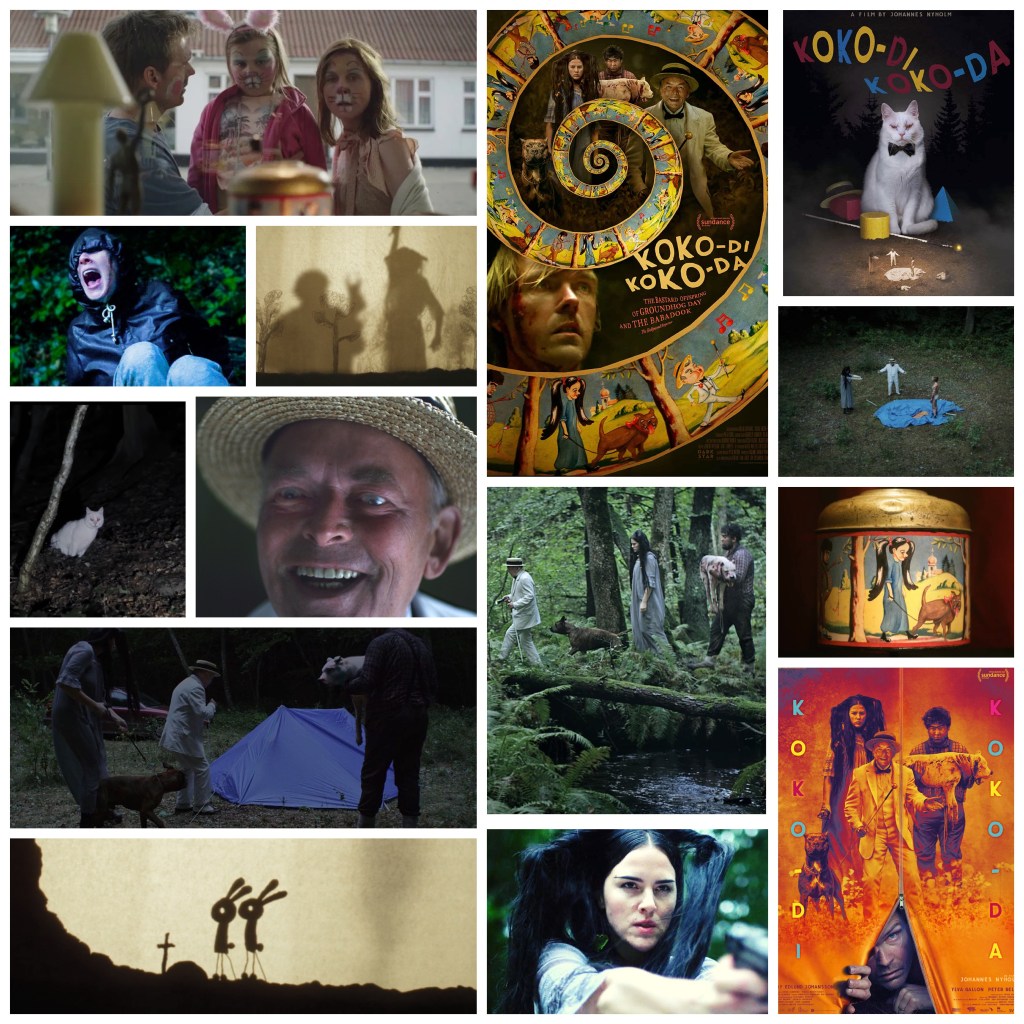
Johannes Nyholm’s Koko-Di Koko-Da

Shudder is a great streaming service if you’re looking to get lost off the beaten path within the horror genre and come across some truly weird shit that you otherwise might not have the chance to see. Long lost keystones of 80’s schlock, obscure off kilter creature features and more recently some bizarre foreign arthouse experiments like Johannes Nyholm’s Koko-Di Koko-Da, a terrifyingly surreal plunge into grief, madness, waking nightmares and past trauma that manifests in some dark, fairy tale esque ways. When a vacationing Swedish couple loses their young daughter in an accident that’s.. odd to say the least, her death sets deep rooted trauma in both of them. Sometime after they decide to go on a camping trip to rekindle their marriage and attempt to heal from the loss.. and let’s just say it doesn’t go too well. No sooner have they pitched a tent and are trying to get some sleep, three mysterious and *very* strange individuals emerge out of the forest from nowhere, proceed to torment, harass and eventually murder them. There’s a scary little white suited ringmaster dude, a big giant oaf carrying a dead dog and an unnerving mute girl with hair that would make Lady Gaga cringe. This trio of freaks continues to find and terrorize them in one of those scintillating time loops where they find themselves on the road, in the tent, under attack and murdered again and again and again. Who are they? Why do they keep accosting them? Why do they look like rejects from a Rob Zombie film or a travelling gypsy circus? Well, there’s a reason for that that’s actually a lot simpler and more straightforward than how the material is presented, through this sort of nightmarish prism of music, sound, surreal forest visuals and disorienting stylistic flourishes. The film isn’t going to work for everyone, simply for how bleak, unrelenting and alien the atmosphere is, and how the resolution of this couple’s grief and trauma comes in a fashion that’s anything but easy to process and absorb, much like their issues in question. There’s a specific object in the film, a sort of totemic MacGuffin that holds the key to everything, the identity of these three nocturnal scoundrels, related directly to their daughter and the eerie, ethereal nursery rhyme that hovers in the film’s auditory psycho sphere as a constant reminder and gives the film its inane but inherently menacing gibberish title. A challenging, deeply unsettling yet greatly rewarding piece of tricky arthouse neo-surrealism.

-Nate Hill

McG’s The Babysitter: Killer Queen

The first Babysitter on Netflix is one of my favourite 80’s nostalgia bath horror flicks out there, so naturally I was curious about the recent sequel, Babysitter: Killer Queen. The first film is a blast of retro pop culture referential bliss, cheerfully gruesome cartoon gore, vividly farcical archetypal characterizations, a beautifully bold colour palette and some punishingly funny dark humour. So how much of that does this sequel bring to the table? Well thankfully a lot, and ends being like… 70% as dope as the first with a ton of rambunctious energy and clever new ideas.. however, it implodes a bit in the third act with some inexplicably off kilter character/plot curveballs that just feel weird, which I’ll get to in a moment. It’s been a year or so since the events of the first films and young Cole (Judah Lewis) is still processing almost being murdered and sacrificed to Satan by his evil babysitter Bee (Samara Weaving) and her mad dog gang of psycho high schoolers. Life goes on and no one seems to believe him until it all happens again, his would be best friend Em (Emily Alyn Lind) turns out to be another devil worshipping bitch who goes nuts on him right as Bee’s followers all rise from the dead for one night’s last chance to finish what they started and dispatch Cole for good. He’s joined by the ‘new girl’ in his class, a spitfire problem kid named Phoebe (Jenna Ortega) and soon enough genuine sparks fly between them. The action is shifted from the pastel suburbia aesthetic and placed on a riverboat and the surrounding Arizona desert/lake atmosphere for a nice change. The gore is fast and furious, the dialogue whip smart and reliably hilarious and the soundtrack packed with joyous 80’s deep cuts of everything from Alannah Myles’ Black Velvet to Tangerine Dream’s Love On A Real Train. It’s a ton of fun, except… well the problem here is Samara Weaving, or a lack of her anyways. Her character is pretty much absent for most of the film, while her exuberant cronies do much of the chasing, terrorizing and wise cracking. When she does eventually show up in the eleventh hour, she seems distracted, listless, even a little pale and not up to the task, like she was somehow forced into this by a contractual obligation and kept her presence as scant as possible. Nowhere to be found is the spunky, sexy, full of charisma and deadly sex appeal we remember her having from the first film. Additionally, they’ve chosen a completely out of left field twist on her character that makes absolutely zero sense when you look at the first film and feels just, so shoehorned in for whatever behind the scenes reasons, most likely spearhead by Weaving’s own ideas about the whole thing. It’s shocking and a bit frustrating and kind of derails the entire franchise, if I’m being honest. Still though, the first two thirds of the film are cracking stuff and on the level of pedigree as the first film, I’m just not sold on the ending, and whoever’s plan it was to go that route with this Bee character.

-Nate Hill

THE ROBERT ALTMAN FILES: CALIFORNIA SPLIT (1974)

“You know, I know, rent means dough,

Landlord goin’ kick us in the cold, cold snow.

Rufus Rastus Johnson Brown,

What you goin’ do when the rent comes round?”

-Harry Von Tilden

“Pal… I’m gonna win!!!”

So says George Segal’s Bill Denny as he’s being flattened by the pressures of his overdue gambling debts, his irritated bookie, and being stuck in the unenviable position of having run out of personal items to sell for gambling money. It should also be said that he’s been on one hell of an impressive losing streak over the past couple of weeks. But, still, gripped by the kind of desperation that occurs when there are no options left, he says that he’s going to win a high rolling poker match in Reno as if it’s an absolute certainty. Given his circumstances, what the hell else is he going to say?

Robert Altman’s California Split is a film that understands that specific kind of desperation better than any movie I’ve ever seen. It also has a lot to say about dysfunction, camaraderie, semi-homoerotic male bonding, codependency, ennui, danger, disappointment, and, finally, the empty feeling one has after going jowls-deep into the depths of your own mania. For a small movie about two lost souls who luck out to find each other and enjoy a few eventful weeks together, California Split, one of Altman’s very best efforts, is alive in a way other films can only dream of being.

After randomly being seated at the same table at an L.A. poker club and then escaping the wrath of a fellow player who might as well wear a cape that says “sore loser,” Bill and Charlie Waters (Elliott Gould, never cooler than he is here) connect again in a nearby bar where Charlie’s infectious and quick witted assessments on basketball wagers win Bill over. Soon, they’re drunkenly staring over a graveyard of empty beer glasses and making low-stakes, bullshit bets as to whether or not they can name all seven dwarfs in their present condition. The evening ends with them getting beaten up, robbed of their winnings, arrested, and then, in the hazy, early morning hours, bailed out of jail by Gould’s call girl roommates (Ann Prentiss and Gwen Welles, both unforgettable and fantastic) which then leads to a fruitful, winning partnership.

There are many things going on under the surface but there truly is a sly romantic comedy at the heart of California Split. Sure it’s not very conventional but I’m not sure what other subgenre creates the kind of unfettered joy Bill and Charlie feel when they’re around each other. There are times that George Segal is smiling so widely, you can see all of his back teeth and fear that somehow the top half of his head may become unhooked from his lower jaw. As the movie rolls along, their relationship ebbs and flows as winning and losing streaks exchange hands leading to a temporary separation, a reconciliation, and one last big dance before finally breaking up. The film is set during the Christmas season but it’s not something the audience would notice given Altman’s insistence on keeping the two protagonists cloistered in the details of their own world and blinded by their mutual, raw enthusiasm for action and each other’s company.

The film immediately frames Elliott Gould’s flashy Charlie in stark contrast to George Segal’s more buttoned-down Bill. They come off as two very different guys but, in the granular, they really aren’t all that different. Charlie may seem like the wise guy motormouth who is careening toward disaster but it’s actually Bill who is on the path to rack and ruin. Charlie is just already there; a smooth-talking loser who takes life one day at a time and doesn’t even pretend to give a hang about a day job. He bets like a chaos agent and doesn’t seem to care whether he wins or loses. Bill, on the other hand, still keeps an office in the startup magazine for which he works though it’s not clear if he’s paid for writing, which we never see him do, or avoiding his boss (an impossibly young Jeff Goldblum), at which he’s more adept. And though it’s not explicitly telegraphed, the audience gets the sense that Bill’s failed marriage is probably still within view in the rear view mirror and that a reconciliation wouldn’t necessarily be completely out of the question.

But the screenplay by Joseph Walsh (who turns up as Sparkie, Bill’s bookie whose patience has finally run out) is less interested in the well-worn path of personal redemption when it comes its characters as, a recovering gambling addict himself, Walsh understands that the joys of the compulsive gambler are small, fleeting, and infrequent. After Bill runs a streak that nets $84,000, he goes into a semi-trance and shakily rids every pocket of its gambling chips as if he’s vomiting after a particularly impressive bender. Exhausted, he holds his head in his hands as the life is drained out of him. Even winning is painful and empty. “Don’t mean a fuckin’ thing, does it?” Charlie observes.

While he had churned out a few masterpieces in the previous four years, California Split cemented Robert Altman as one of his generation’s most observational filmmakers. Standing the tallest in a class that included Paul Mazursky, Jonathan Demme, and Hal Ashby, Altman reveled in the details and quirky inhabitants that (still) make America unique and special. Early in the film, the audience is treated to a mini-drama that erupts between a bottomless go-go dancer and her gambling addicted girlfriend which ends with the dancer having to borrow against her earnings just to get the girlfriend out of the bar. It’s a small moment that occurs courtesy of Altman’s penchant for overlapping dialogue and roaming camera but it comes alive and makes three-dimensional people out of who would be nothing more than glorified extras living on the edge of the frame in a lesser filmmaker’s work. Altman argues for an America being a country of Mom and Apple Pie as long as we understand that Mom is a hooker named Barbara who compulsively reads the TV Guide to unwind and Apple Pie is Froot Loops (or Lucky Charms, your choice) and beer. It’s an America of gambling superstitions, all night brothels, and Friday night prize fights. It’s an America choking on a cloud of cigarette smoke in tiny rooms with poor ventilation, watered down drinks at the racetrack, and lonely people perfumed in Shalimar. In short, it’s not Norman Rockwell’s America but, instead, an America that actually exists.

At the end of the film, Bill and Charlie go their separate ways with the former saying “I gotta go home.” But Charlie can see Bill even when Bill refuses to see himself. Charlie knows Bill doesn’t live anywhere outside the action and that he’s only pretending that he does. For there was probably a time in his life that Charlie admitted that he, too, had to go home only to realize that, sadly, he was already home. All of this is unspoken, by the way. It’s just that California Split is that rarity of a movie where the dialogue tells us plenty but the characters’ actions tell us more.

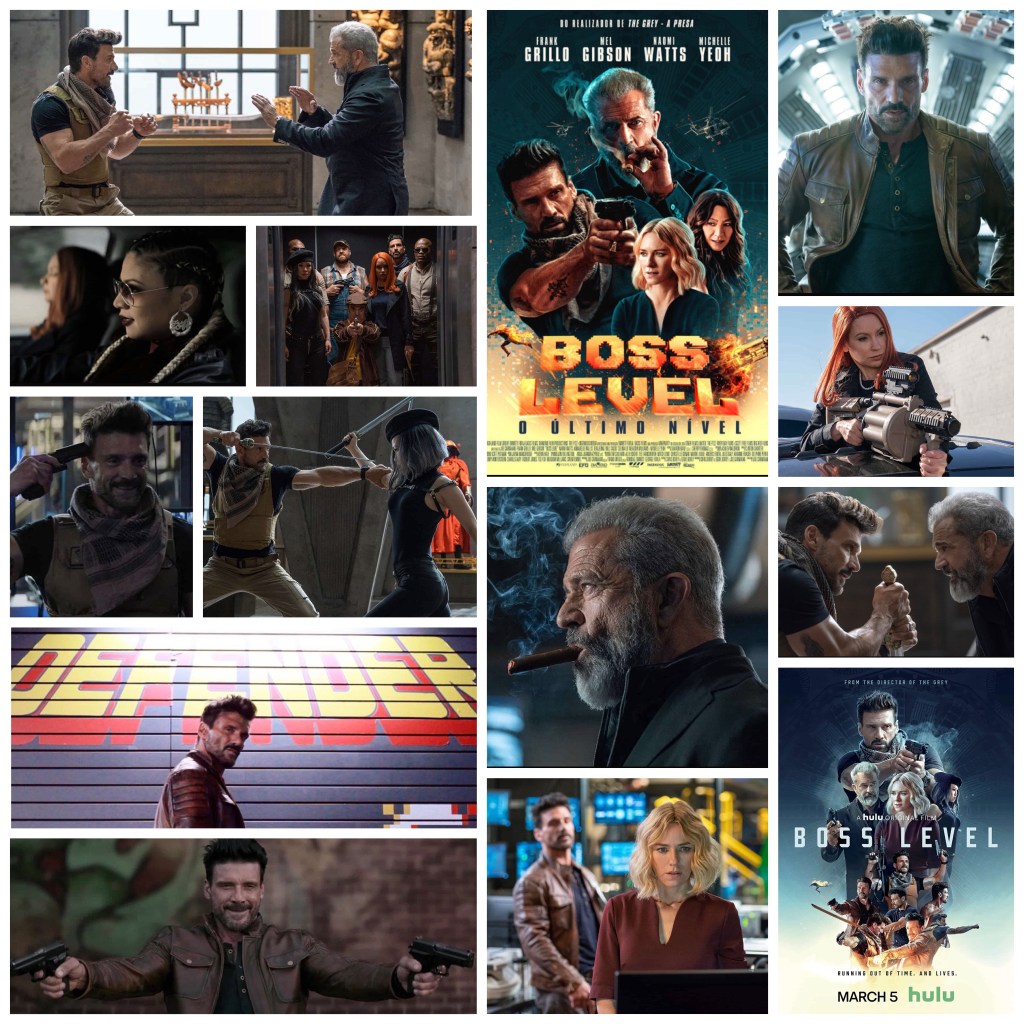
Joe Carnahan’s Boss Level

If I was mayor of FilmTown, I’d make the day a new Joe Carnahan film came out a national holiday. The guy is such a great storyteller and to me, each of his movies over the years is a solid gold classic, from the gritty Narc to the cult status Smokin Aces to the emotional masterpiece The Grey to the criminally overlooked Stretch. His new film Boss Level just dropped on Hulu and various other platforms for rental and let me tell you, it’s my favourite thing I’ve seen in awhile and most definitely of 2021 so far. The infusion of action and SciFi has always been a great love of mine and when done with wit, intelligence, inspiration and badassery it can be a truly special sub-genre. Frank Grillo stars as ex special forces soldier Roy Pulver, who finds himself in a curious metaphysical time loop on the day of his death: he wakes up, is immediately confronted with a host of eccentric and quite lethal contract killers, some of whom he is able to kill, and others not so much. The day is often a variation on the same template, but one thing remains unchanged: at some point, in some way, he always ends up dead. Who placed him in this purgatorial halo of mayhem? Does it have something to do with his ex girlfriend (Naomi Watts) who works at a mysterious physics research lab owned by a Machiavellian despot (Mel Gibson) hellbent on some nefarious agenda? Well of course it does but the fun is in seeing how, and how with each new day, or each new crack at the level as this thing is a terrific mirror board for video game concepts, he learns a little more, and gets a little closer to figuring out what’s happened, who has it in for him and why. Grillo is a great choice for an action hero because not only is he physically adept and imposing, he also has acting talent and charisma for days and just feels like someone you want to be around. He narrates the film in hilarious, touching and sardonic voiceover and makes Roy a terrific character creation. Gibson is in scenery chewing Bond villain mode, munching on a giant cigar and commanding hordes of minions like some dark god, while Watts is terrific as ever. Keep an eye out for Will Sasso, Michelle Yeoh, Annabelle Wallis, Quinton Rampage Jackson and Ken Jeong as a lippy bartender. This is a wonderful motion picture with balls to the wall ruthless gory action, absolutely hilarious and colourful dialogue (Carnahan has a way with words like no other), a SciFi concept that is just this side of silly yet still tantalizes the brain (the Osiris Spindle is such a cool idea) and feels intricate and trippy enough to keep us guessing and immerse us in the world. You know what really hit it home for me though? Roy is a real character with an arc who not only has to fix the dilemmas imposed upon him by an external antagonist, but fix his own heart and mend his own wayward tendencies, particularly in the relationship with his son (Rio Grillo, Frank’s real life kid) who he’s never seemed to find the time for, until now when all he has is one day, but a day that scintillates into eternity. There is real pathos in this story and for a 90 minute action film with this much destruction, mayhem, crazy characters, conceptual exposition and layered plotting it’s rare to find an emotional core emanating from it as well, but this one really has it all. Kinda like Source Code meets Groundhog Day with splashes of Bond and this exhilarating undercurrent of video game thematics, and also fiercely and singularly its own thing. Best film of the year so far.

-Nate Hill

Antoine Fuqua’s Shooter

I’ve always loved the absolute hell out of Antoine Fuqua’s Shooter, a mean, violent, very broad and totally enjoyable action flick with a western flavour woven in and some jaw dropping set pieces along the way. The story is like, beyond over the top, Mark Wahlberg is a near invincible force of nature, the villains are so intense they feel like they’ve walked out of a Walter Hill flick and the overall tone is just this side of tongue in cheek territory while still feeling like a legitimate thriller. Marky Mark plays an ex marine sniping guru who lives alone in the Canadian wilderness with his doggo until he’s lured back to Vancouver by his conniving former boss (Danny Glover) for a high profile political assassination. Basically blackmailed into it, he finds himself set up by his own people to take the fall for the job, betrayed, left for dead, the works. Also, as we observed in John Wick, don’t kill the dog of someone who can take out literal armies of goons and will come gunning for you and everyone in your employ. On the run he’s assisted by a rookie cop (Michael Pena) who intuits his innocence and the girlfriend (a smokin hot Kate Mara) of a former army buddy who he seeks shelter with. The villains here are truly spectacular and I must spend a portion of my review on them: Glover is so arch and evil he literally gets to say “I win, you lose” *twice* and he somehow pulls off a ridiculous line like that just because he’s Danny Glover and he’s smirking like he knows damn well what kind of script he’s waded into. His top lieutenant is a despicable, sadistic piece of work played by the great Elias Koteas in high style, all leering stubble, violent urges towards Mara and creepy charisma in spades. They all work for the the most evil US Senator in the country, a tubby, southern fried, amoral, genocidal maniac Colonel Sanders wannabe played by Ned Beatty, who doesn’t just chew the scenery, but strangles it with his bare hands while he’s at it. The cast is off the hook and also includes Tate Donovan, Mackenzie Grey, Rhona Mitra, Lane Garrison, Rade Serbedzija and a cameo from The Band’s Levon Helm. They just don’t make actioners like this anymore and even for 2007 this felt like a dying breed. Classic, melodramatic, hyper violent, neo-western revenge stuff that was huge in the 80’s and 90’s and I miss greatly. There’s a brilliant exchange of dialogue where Beatty and Glover marvel in desperation at Wahlberg’s refusal to back down or stop hunting them. “I don’t think you understand,” he growls at them: “You killed my dog.” It’s a great line sold 100% by Wahlberg and the film is full of spot on moments like that as well as visually breathtaking action sequences (that mountaintop standoff tho), a playful yet deadly tone and villains that would be at home in the Looney Toons. Great film.

-Nate Hill

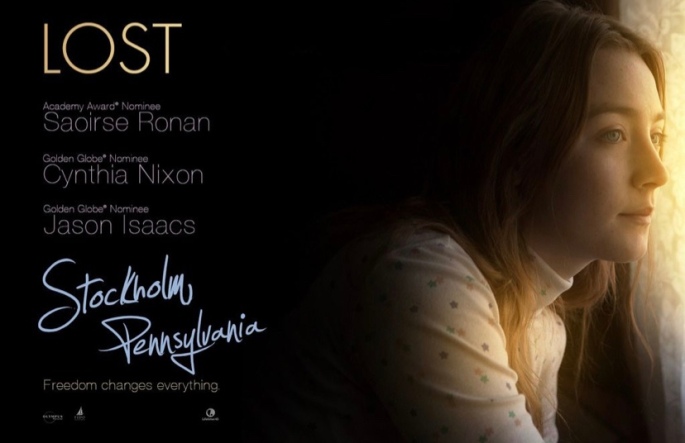
Nikole Beckwith’s Stockholm Pennsylvania

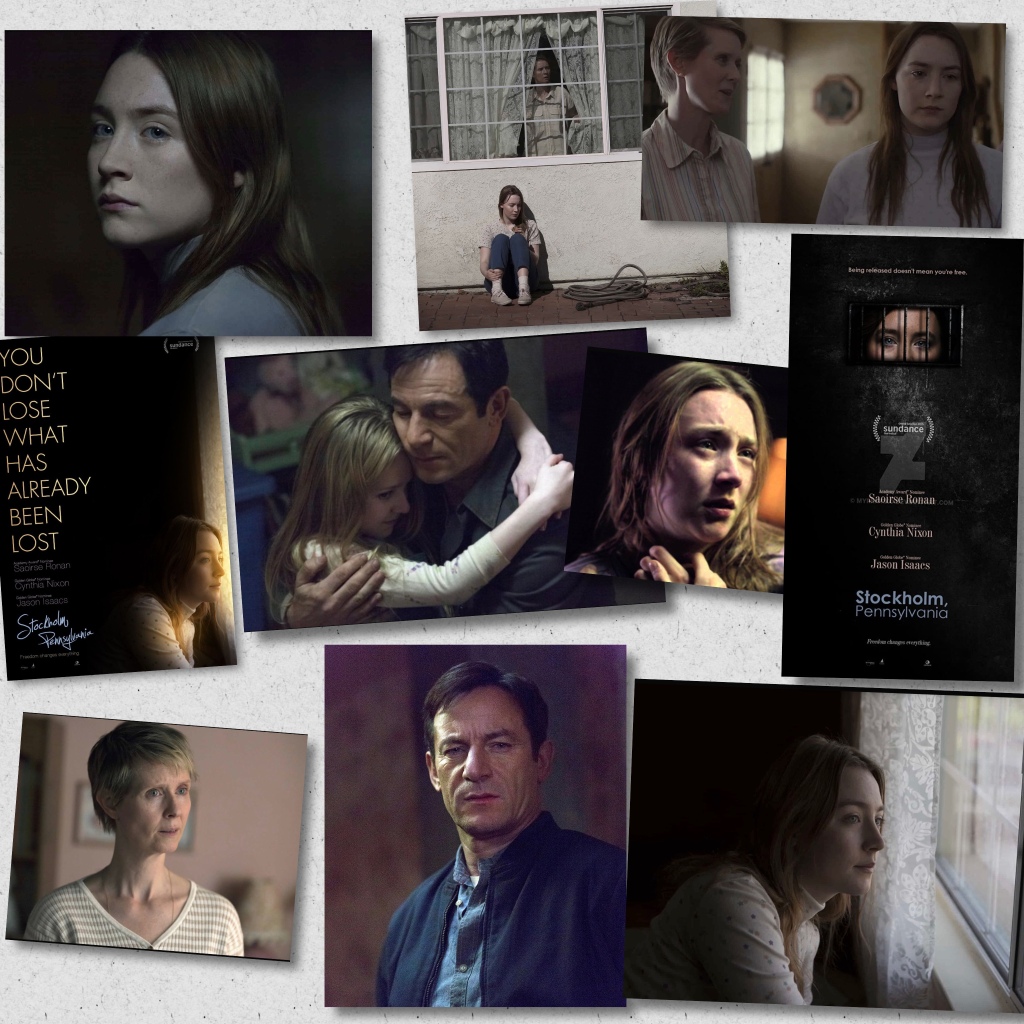
I struggled with Nikole Beckwith’s Stockholm Pennsylvania on several levels, despite it having a wicked strong cast and premise so full of potential I almost want to write my own version that does it more justice than this incredibly frustrating film. Saoirse Ronan gives a typically superb performance as Leia, a young woman who was kidnapped when she was very young by doomsday obsessed, ill adjusted Benjamin (Jason Isaacs) and raised in his captivity and care for over a decade. When she’s eventually found and freed, she returns to a life she barely has memory of, to two parents (Cynthia Nixon and David Warshofsky) who feel like strangers to her. Her life with Benjamin was never filled with abuse or horror or anything like that, beyond kidnapping her and filling her mind with all sorts of end of the world, anti-humanity nonsense he actually cared for her as his own kid and treated her decently, all things considered. So there’s this alienation from the real world, this wall of separation from parents who desperately try and reconnect with her and this strange bond with her captor who is still out there in jail, thinking of her. How does the script take this situation and evolve it into something challenging, believable and emotionally resonant? Well, it doesn’t really. Ronan, Isaacs and Warshofsky are terrific but Nixon gives this shrill, unpleasant and altogether inexplicable portrait of tyrannical maternal instinct gone wrong that curdles into her own version of holding Leia captive when she can’t reconcile that her daughter just isn’t the same person she used to be. I’m not sure what Beckwith was going for or drawing on with this original script, it seems as if she is deliberately trying to tell a knowingly obtuse, in-your-face uncomfortable story and the result is a maddening experience, or at least was for me. It’s a shame because the idea, setup and execution of the first act is really good and drew me in and then it just goes off the deep end appears to lose itself in histrionic, grim, unnecessary Mommie Dearest nonsense that feels like it walked in from a much lesser film, and as such it drags the whole experience down and you just feel emotionally depleted afterwards, with no reward, pathos, thought provocation or narrative satisfaction. An interesting experiment that needlessly nosedives and betrays both the audience and its characters to masochistic doom and gloom that doesn’t feel warranted.

-Nate Hill