Martin Campbell’s The Mask Of Zorro

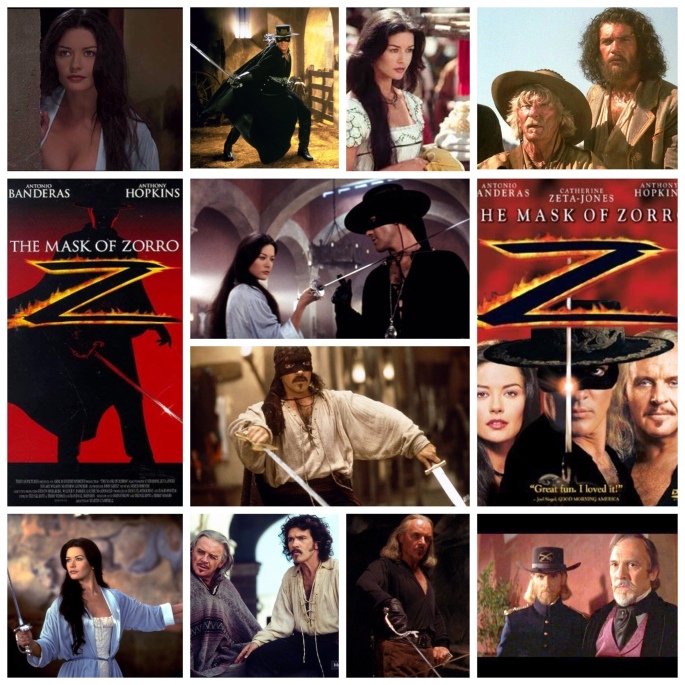
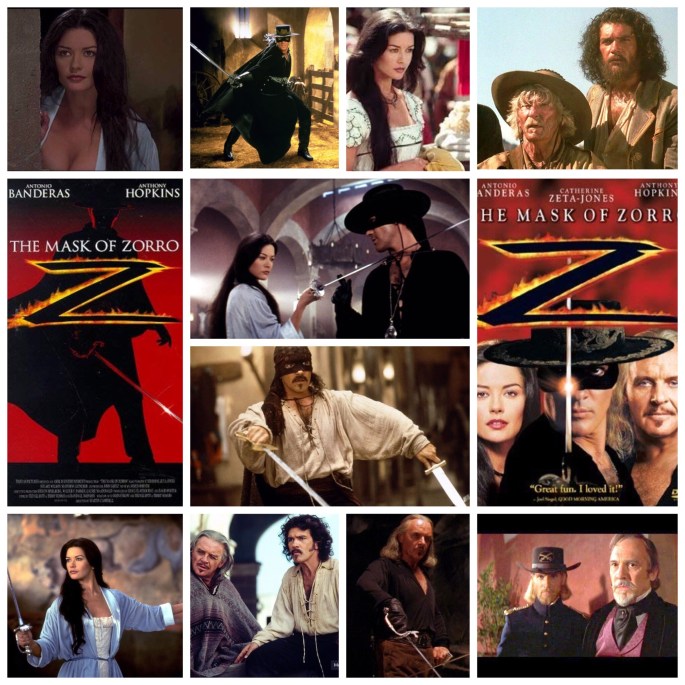
Martin Campbell’s The Mask Of Zorro still holds up today, thanks mostly to its sumptuous, sultry production design and three passionate, swashbuckling and delightfully self aware performances from Anthony Hopkins, Catherine Zeta Jones and Antonio Banderas. This was one of the first more intense and violent adventure films I saw as a young’un, and while the PG13 heroics seem tame in comparison to other films, it still has that menacing edge for me. Hopkins is a scene stealer as Don Diego, the fearless rascal who takes up the mantle of Zorro and passes it along to haughty young thief Alejandro (Banderas) years after he’s betrayed by despicable nobleman Montero (Stuart Wilson, slimy and then some). The real eye catcher is drop dead gorgeous Zeta Jones as Diego’s daughter Elena, whose swordplay and roguish attitude both match and spar with that of Banderas, their chemistry onscreen is pure Latin fire in full flame. It gets quite lighthearted and theatrical at times but this is after all Zorro and not Batman we’re talking about here, he’s kind of like the Latin Lone Ranger and the flamboyant flourish is part of the charm. The supporting cast is fun too, but Matt Letscher is a bit vanilla to play the dastardly secondary villain who literally keeps heads in a jar, they would have been better off going the grizzled character actor route instead of a golden boy like him. All is well with Maury Chaykin as a testy prison warden and the late L.Q. Jones as a crusty outlaw who mentors young Banderas and has arguably the most memorable scene of the film. The star power of our three leads is where it’s at though, Banderas is smokin’ good in the charcoal black outfit waving the classic needle sword around in people’s faces, Hopkins exudes an amused nobility and Jones… man, you don’t find beauty and charisma like that every day. James Horner’s score is a trumpet blast of celebratory cues that fires up the action energetically, Cecilia Montiel’s production design lovingly brings the world and time period to life, while Campbell paints in broad, playful director’s strokes, all to bring us what has become an adventure classic. There is a sequel, but it’s kind of a listless, gaudy retread that loses the magic in cheesy set pieces, stick with this diamond instead .

-Nate Hill
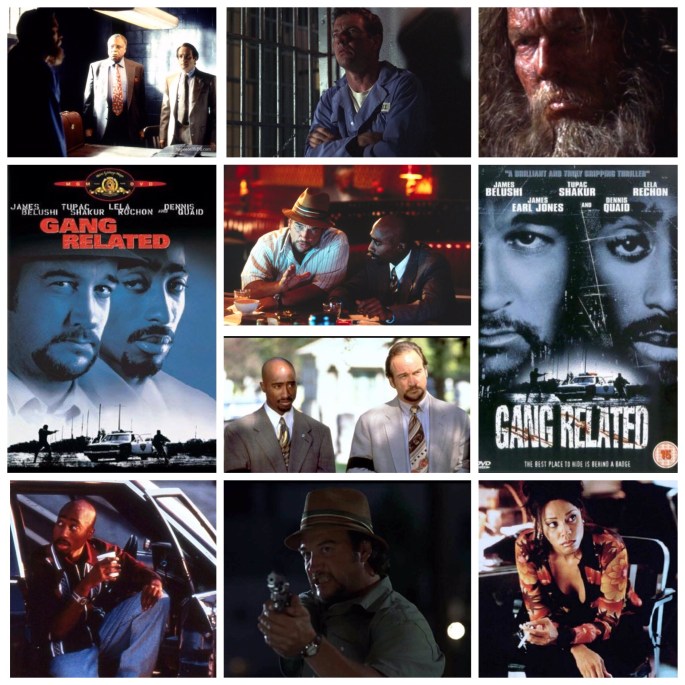
Jim Kouf’s Gang Related

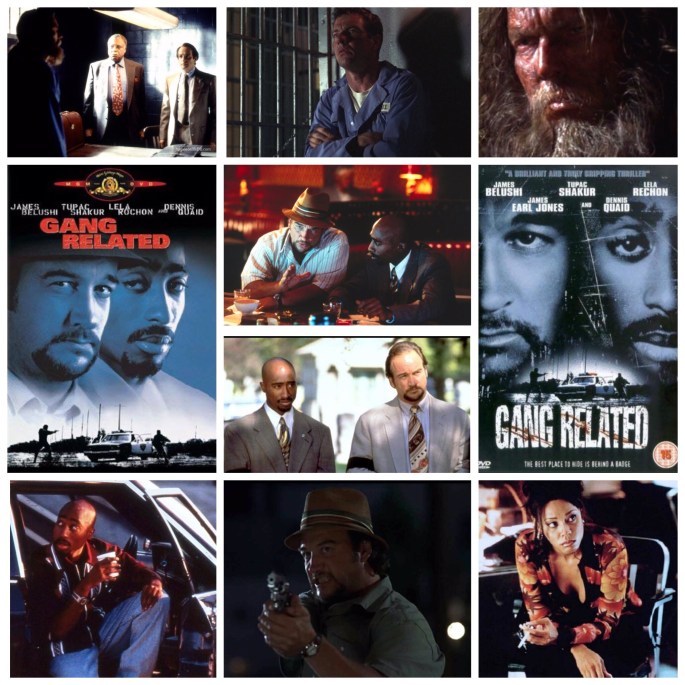
Jim Belushi and Tupac Shakur are an odd pairing on paper to star in a cop flick together, but they’re extremely effective in Jim Kouf’s Gang Related, a twisty neo-noir with a great cast and a few tricks up its sleeve. They play two inner city detectives who are corrupt, but the script doesn’t treat them with the same jaded judgment and moustache twirling villainy that some dirty cops get in Hollywood, there’s a surprising empathy towards them especially in Tupac’s performance. After they accidentally murder an undercover DEA agent, they try to frame a nearby homeless man (Dennis Quaid), coach a few witnesses and make it seem like they were never involved. Things get spectacularly messy when they discover that Quaid’s disheveled hobo isn’t just a nobody and there are people in high places, not to mention both the DEA and gang factions coming after their morally duplicitous asses. It’s kind of like a reap what you sow tale, these two guys aren’t especially nasty characters, but they did commit a really shady act and now the proverbial karmic dildo has come back to royally fuck them. Belushi is the tougher, more unflappable veteran who is more willing to compromise his soul with the cover up, while Tupac is the younger, more impressionable cop and fears the road he’s being led down, and well he should. They both put in fantastic performances, while Quaid does well against type and the three of them are supported by Tiny Lister, David Paymer, Lela Rochon, Wendy Crewson, Gary Cole and James Earl Jones. A solid urban crime thriller, fairly overlooked as well.

-Nate Hill

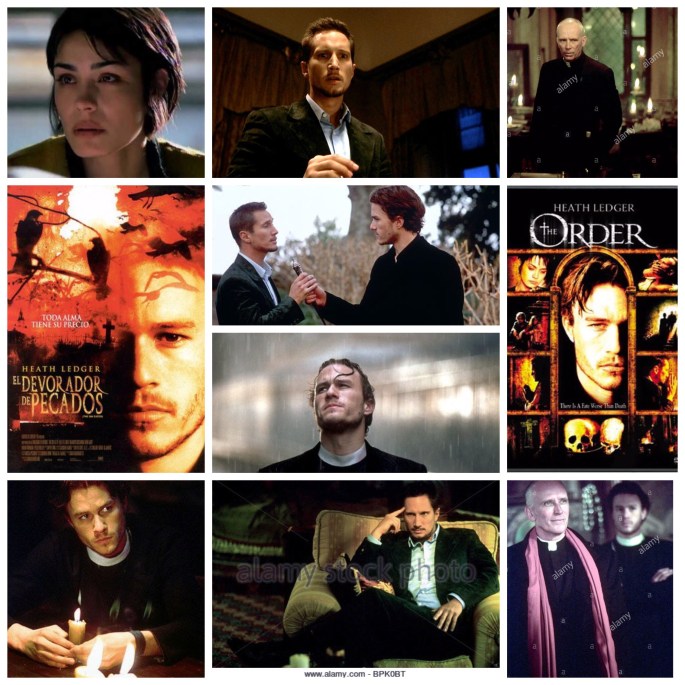
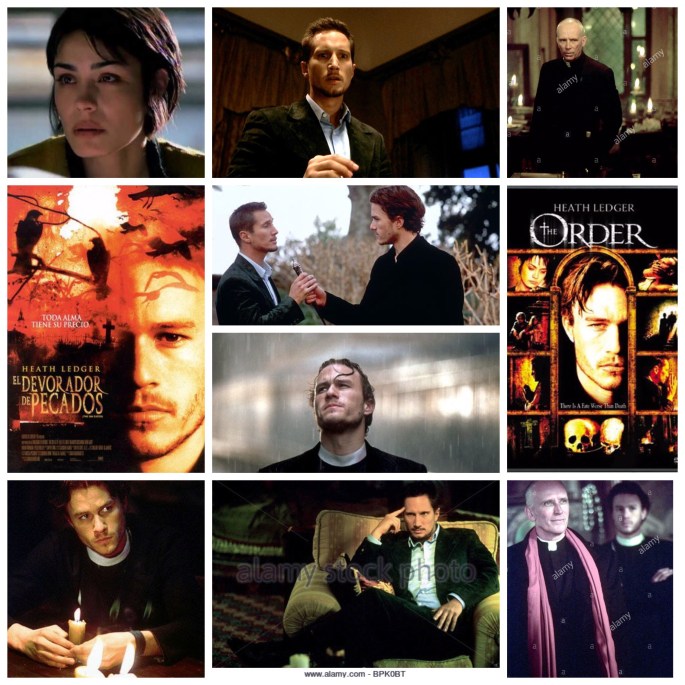
Brian Helgeland’s The Order

Brian Helgeland’s The Order is a strange, mercurial supernatural thriller that sees a restless Heath Ledger play a young priest investigating corruption in the highest echelons of the Catholic Church, but I’ll say right off the bat that it’s not the kind of controversy you’re thinking of. Ledger is probing the death of his sect’s leader, and when you consider the sort of obscure splinter group of the church he hails from, there’s clearly something going on under the surface, starting with Peter Weller as a dodgy cardinal whose mannerisms don’t exactly suggest benignity. Ledger discovers vague connections to what they call a ‘Sin Eater’, a rogue spiritualist who offers unsanctioned salvation outside the church’s jurisdiction, and teams up with his walking comic relief priest buddy (Mark Addy) and a woman he once performed an exorcism on (Shannon Sossamyn) to go on a merry renegade priest hunt. This film has a low rating on every site you’ll find and reviews have never been kind, but I really enjoyed it. There’s a grim, atmospheric blanket of fascinating visual effects and esoteric, near occult level mysticism at play that kept me engaged, I also really like the Sin Eater concept and German actor Benno Fürmann is darkly charismatic as the guy, playing him as just south of a real human being. Ledger postures a bit but ultimately nails it in a more subdued role, while Weller, although only briefly seen, exudes otherworldly menace with his trademark candidly flippant tone. The film is billed as a horror which isn’t quite the case, and that could have been the problem with reception. It’s more a moody mystery drama with subtle supernatural undertones, and works really well as such.

-Nate Hill

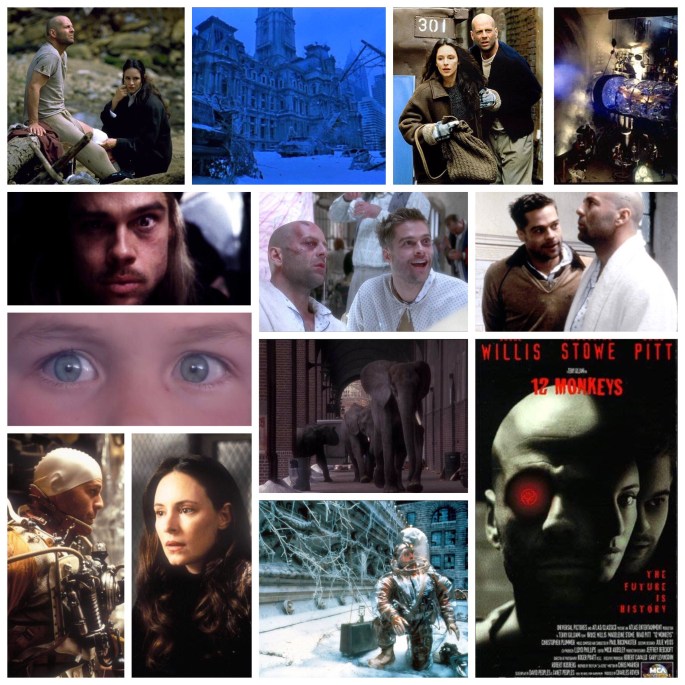
Terry Gilliam’s Twelve Monkeys

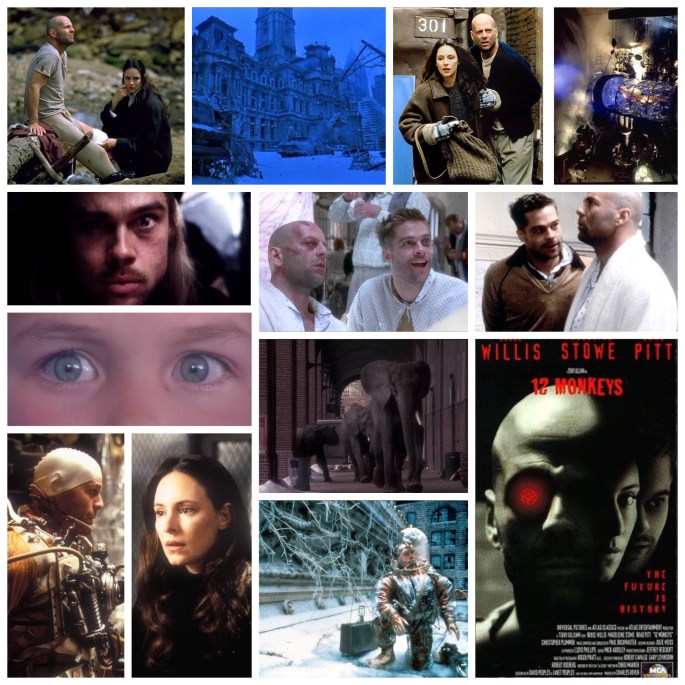
There are films that sink in almost immediately after the credits roll, others that take some days or months to absorb, and then there are ones like Terry Gilliam’s Twelve Monkeys, which in my case has taken the years since I was a kid and first saw it to digest the whole experience. Not to say it’s an especially complex or dense story, I mean it’s twisty enough but can more or less be understood with one viewing if you’re keen. There’s just a certain emotional quality to everything, coupled with the hazy unreliability that Gilliam lays over his lead character’s state of mind, an atmosphere like that of a dream you had last night and are trying to remember right as it slips away, an idea which also literally figures into the plot.

Bruce Willis plays against his tough guy image as James Cole, a shellshocked time traveller sent from a dystopian future back to the 90’s to do some cosmic R&D and figure out how a mysterious super virus wiped out almost all of humanity, forcing the rest into subterranean catacombs. Time travel doesn’t seem to be an exact science for these folks though, as they repeatedly send him to the wrong era after which he’s dumped in a mental hospital where, naturally, no one believes who he really is. Or is he even who he thinks he is? Madeleine Stowe is Kathryn Reilly, the psychiatric anthropologist assigned to his case, and Brad Pitt in one demon of a performance plays terminal odd duck Jeffrey Goines, a man whose lunatic ramblings start to sound eerily on point. The mystery of the virus sort of takes a backseat to Willis’s journey through the past, present, future and all times in between, Gilliam loves taking pause to see how he interacts with the world around him and hold scenes for a while until we get a real sense of world building. The moment James hears music for the first time is a showstopper, and the way Willis handles it is not only one of his finest moments as an actor but also a showcase of the craft in itself. Stowe always radiates fierce beauty and compassion in her work, she’s a grounding force of reason and empathy here, while Pitt takes a hyped up Joker approach to his role that takes you off guard while constantly keeping you in the dark about who he really is, the guy says nothing while blurting out everything. Others dart in and out of their story, with appearances from Christopher Plummer, Frank Gorshin, Joseph McKenna, Jon Seda, Harry O’ Toole, LisaGay Hamilton, Christopher Meloni, Bart the Bear and a super creepy David Morse.

I love this film to bits, I think it’s Gilliam’s best work and is definitely my favourite, there is just so much going on both front n’ centre and in the background. It’s a thrilling adventure story, narratives about time travel are always my bag, but it also looks at Willis’s character from a careful psychological perspective. What would time travel do to someone’s state of mind, and how would they react in the long run. Themes of reality versus dreams and imagination are present, and a gnawing sense that it could all be made up. “Maybe you are just a carpet cleaning company and this is all in my head”, James laments through a payphone that transcends space time barriers. Gilliam certainly likes to play with notions of uncertainty and self doubt when it comes to the Sci-Fi aspects, and he isn’t afraid to boldly place in a hauntingly elliptical ending that doesn’t satisfy or resolve, and if anything lingers in our thoughts for a long while, like that elusive dream I mentioned above. Gilliam almost couldn’t get this film made, there were issues with everything from script to special effects to reported studio interference, but I thank the stars that it all worked out in the end, for it is his masterpiece.

-Nate Hill

David Ayer’s Harsh Times

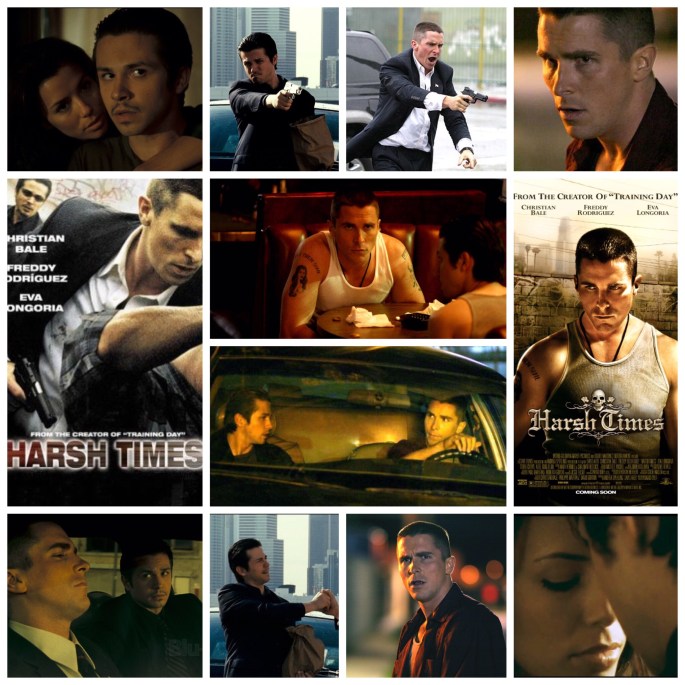
David Ayer’s Harsh Times sees Christian Bale in a character study of extreme dysfunction and maladjusted anger, it’s a tough, bitter film to watch but one that leaves a firebrand in its wake, for better or worse. Bale plays Jim, an Iraqi war vet who has come back stateside so internally fucked up and damaged that he can barely hold down a job or keep up steady relationships with anyone that don’t teeter towards self destruction. He spends his days meandering around the outskirts of LA with Mike (Freddy Rodriguez), his partner in petty crime and apprentice in all things spiteful and misanthropic, much to the dismay of Mike’s much more successful girlfriend (Eva Longoria). Jim is both psychologically broken and emotionally untethered, a dangerous combination if left unchecked, and the downward spiral of violence, drugs and antisocial behaviour he slides into is a sad, pitiable thing to see. Did Jim have an affinity for criminal activities before the war, or did his experience change him into the man he is now? What and where is the causality, if any? Where do the lines blur? Ayer keeps it close to the chest, but the clues are all there in Bale’s measured, incendiary performance that may be his best so far. Sparks of vitality still shine through, as when he shows interest in a job with the Bureau (JK Simmons has a great cameo as the chief interviewer), but even with that he causes corrosive friction, perhaps unintentionally. It’s a blistering character study of a guy whose environment has turned him hard, until he goes against the grain almost by second nature and circles a drain that was a long time coming and from which there is probably no escape. Mixed up with a whole bunch of the wrong kind of people from gangbangers to prolific drug runners, this film sees Jim hit the end of his road,. Both Bale and Ayer make it something powerful to watch, if miserable too.

-Nate Hill

Roger Donaldson’s No Way Out

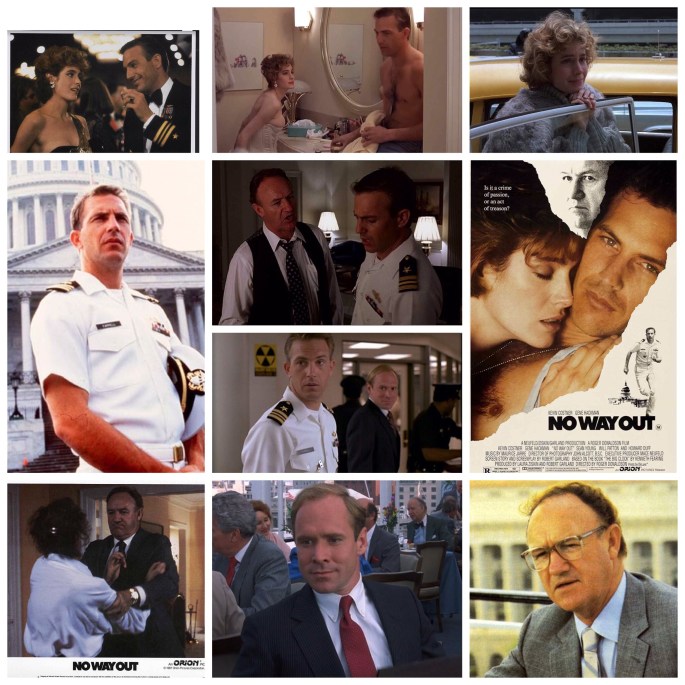
Roger Donaldson’s No Way Out is a prime example of how to stage an effective thriller, every step of the way and even when things get twisty in a time before every other film had a thunderclap twist midway through. Kevin Costner plays a navy officer operating out of the Pentagon and reporting to the secretary of defence, played by a shady Gene Hackman. He has a stormy affair with mysterious Sean Young, not knowing she is also Hackman’s side chick, and when she turns up dead a whole nightmare of a situation escalates for everyone involved. It’s great fun to see events spiral out of control until everyone is a frantic wreck and we’re just as lost for clues as they are. Then, the pieces slowly fall together and we are blessed with gradual revelation, a few delicious ‘aha!’ moments and one mother of a midway plot twist that lands in the narrative like a screeching cruise missile. Costner is subdued but keen, Hackman is his usual fired up charismatic hotshot, and the film benefits greatly from their crackling collaborate star-power. A knockout supporting turn comes our way from Will Patton, who is unnervingly twitchy as another operative doing his maniacal best to perpetuate a cover up. Maurice Jarre whips up a great score to accent the intrigue, while Donaldson’s direction is surefire skill. A premier 80’s political thriller, one of several launching pads for Costner’s career, and a bitchin’ great time at the movies.

-Nate Hill

George Miller’s The Aviator

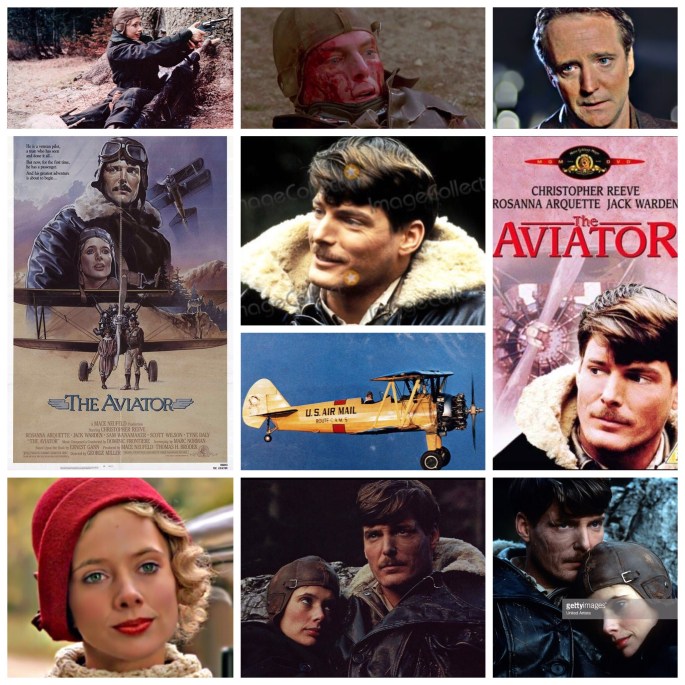
George Miller’s The Aviator (not the Mad Max George Miller, before you ask) is a fantastic piece of melancholic escapism, a simple and resonant story set during the formative decades of human flight, when planes were a lot more picturesque, and ironically far more flimsily built. This one is very special because it showcases Christopher Reeve cast way against type; he’s the guy I remember as Superman from my childhood, a sterling beacon of heroism, but here he plays a moody, haunted Air Mail pilot who is damaged both physically and emotionally from a tragedy years before. This is the only time I’ve seen him take on a role like this and let me tell you he rocks it uncannily well, from the anguished blue eyes glowering out past that crop of windswept hair to the introverted stasis he grounds his mood in. He’s tasked by his US air mail boss (Jack Warden, a pillar of well spoken gravity) to transport a wayward teenage girl (Roseanna Arquette) across the mountains to live with her aunt. When the aircraft develops mechanical failure, they make a forced crash landing in a vast, remote mountain canyon and must rely on each other for survival. I don’t mean that lightly either, he later on tells her that if it wouldn’t have been for her with him, he probably would have gave up and surrendered to the elements the first night. This is fascinating because at first they can’t really stand each other, he has shut himself off from human connection and she is young, still learning how to properly engage, and the arc they embark on together is really affecting. Arquette plays the role like a lost puppy with a fragility under all that snappy talk. There is of course a gradual romance between the two, but it’s treated with far more restraint, subtlety and realism than Hollywood can usually muster up. Their only hope for rescue lies with Reeve’s fellow pilot (Scott Wilson), who flies high above them on Warden’s orders, trying to spot the wreck. I really like how de-glamorized this is as far as survival stories go, the whimsy and adrenaline you’d often find here is replaced by a straightforward, almost downbeat mood. The script is character based, thoughtful and full of well written human interaction instead of an action sequence every few minutes. Set in the American Northwest but filmed in lush, rugged Yugoslavia to give the landscape a beautiful look that’s speckled with golden deciduous trees and craggy, snow dusted mountain walls. A fitting combination of elements that make for a wonderful film.

-Nate Hill

Jake Kasdan’s Orange County

Jake Kasdan’s Orange County is comedy gold that has since gone platinum, and one of the best examples of basket case comedy blending together with heartfelt moments I’ve ever seen. Kasdan is the son of legendary Lawrence Kasdan, and it stars Colin Hanks (Tom’s spawn) and adorable Schyuler Fisk is Sissy Spacek’s kid which is interesting, but any snarky remarks about nepotism can be shut down simply by how terrific the film is, they went out on their own, showed talent and made something genuinely good. Hanks plays a California surfer bum who has an epiphany and decides its time to go to college, Stanford in particular. Scoring admission proves a challenge when he’s saddled with his deranged family including hopeless druggie brother (Jack Black), emotionally stormy mother (Catherine O Hara, priceless) and manic nutjob dad (John Lithgow, equally priceless). Hijinks ensue as he tries to win over a tight assed Dean (Harold Ramis), hold on to his loving girlfriend (Fisk, the spitting image of Spacek) and babysit big bro. There’s a kind of full moon looniness on display here, an offbeat, near abstract style of comedy that won me over almost immediately, it’s lighthearted, raunchy when it needs to be and almost effortlessly enjoyable. Cameos abound, including Chevy Chase, Ben Stiller, Jane Adams, Leslie Mann, Lily Tomlin, Lizzy Caplan, Nat Faxon and a superb Kevin Kline. A winner.

-Nate Hill

Steve McQueen’s Widows

Ever heard the expression ‘trip over your own ambitions’ ? That applies in full force to Steve McQueen’s Widows, a film that doesn’t have half the time needed to nurture, juggle or resolve the nebula of plots, twists, sub plots and sub-twists it tries to throw out there. That’s not to say that it isn’t a valiant effort; this is a film that tries a lot of things, is very innovative and engages often, but ultimately it’s just not enough and feels more like a running start without the follow through of flight. In the opener we see a heist that goes about as incredibly wrong as it could: cops hunt down a crew of high stakes robbers led by career criminal Harry Rawlins (Liam Neeson), gunning them all down. Viola Davis is his wife Veronica, left to pick up the pieces when thuggish wannabe politician Jamal Manning (Brian Tyree James) and his sociopathic brother Jatemme (Daniel Kaluuya is a beast) come looking for money he owed them before he died. That’s when she gets the idea to carry out the plans for his would-be next heist, joined by the other widowed women of his crew. There’s also an overarching subplot involving corrupt electoral candidate Tom Mulligan (Colin Farrell), his racist, old-money prick of a father (Robert Duvall with fire n’ brimstone mode activated) and others in both low income and Ivy League Chicago, which aren’t as far apart as you think, as McQueen shows us in an all too obvious extended shot of a car ride. There are aspects I loved; the opening heist, shot mostly POV from the back of the van, is a whiz banger, taut and packed with adrenaline. The performances are excellent all round, from Michelle Rodriguez and Elizabeth Debicki as other wives of the fallen robbers to memorable supporting turns from Jacki Weaver, Garrett Dillahunt, Jon Bernthal, Carrie Coon, Kevin J. O’Connor, a quietly scene stealing Lukas Haas, the most excellent Cynthia Erivo and many more. The narrative encapsulates the heists themselves with ongoing conflict including racism, urban politics, interracial romance, low income versus filthy rich, nepotism and everything in between, and this ambition to explore many avenues in one go is where the film fatally falters. The widow’s heist, when we finally come around to it, is brazen and impactful but blares by too quick for the payoff leading up to it. Hans Zimmer’s score echoes stuff like Heat but seems to only really show up now and again instead of being a prominent presence. At two hours and nine minutes, McQueen just didn’t leave himself enough time to properly cultivate relationships, build enough tension, explain his narrative fluidly or develop the characters that he clearly loves. It’s unfortunate because the guy is one hell of a director, both with his actors and his camera, he knows how to tell a story and make it feel fresh, unpredictable and just spontaneously offbeat enough to seem like real life as opposed to a story that obviously works within the parameters of script. He’s a thoroughbred, but he didn’t leave enough track to run on with this one, and I almost feel like he would have been better off going the episodic route here, as it would have had way more space to breathe and audiences far more time to ruminate on the events. Worth watching to see everything cascade by like a parade in fast forward, but don’t expect to be satisfied with wrap ups or conclusions.

-Nate Hill

Kathryn Bigelow’s The Weight Of Water

I love Kathryn Bigelow’s early films from the 80’s and 90’s, she’s such a fantastic storyteller when she sticks to genre stuff, but I’m not quite sure what went down with The Weight Of Water, a muddy, confusing doldrum of a thriller that drifts by heading nowhere, with no real rush to get there either. I’m assuming there’s a level of clarity and coherence in the source novel by Anita Shreve that just didn’t translate onto the screen too well, but what the film lacks in discernible themes and substance it at least makes up for a bit in the production design and visual department. Two stories unfold simultaneously here: sometime in the 1800’s, restless housewife (Sarah Polley is all kinds of creepy) lusts for her brother in a rural township on the blustery New Hampshire Coast. A mysterious stranger (Ciaran Hinds) enters their lives and bears witness to a violent, romantically motivated double ax murder that culminates in a freakish storm and ends their story, becoming infamous throughout the centuries to follow. Meanwhile in present day, a keen photojournalist (Catherine McCormack) peruses that very same coast on a yacht, researching the long past events that led to the horrible crime. She’s joined by her listless husband (Sean Penn), his brother (Josh Lucas) and foxy girlfriend (Elizabeth Hurley). They start to forge an equally tense romantic triangle that is somehow supposed to mirror the past in profound or symbolic ways but doesn’t feel like anything deeper than narrative coincidence. The two stories have little to do with each other beyond happenstance and are constantly at odds in tone and intent. The Sarah Polley one works better but only just, having a more specific atmospheric mood, also because she’s just a terrific actress who puts on a dangerous, unnervingly introverted show. I’d like to read the novel one day and see if there’s more to be found there or some lynchpin of content that missed the boat from paper to celluloid, but as it stands this film is a hollow blast of nothing, and the only weight to be found is in the title.

-Nate Hill