Aneesh Chaganty’s Run

Sarah Paulsen can be pretty damn scary when she wants to be and casting directors have taken full advantage of her talents, placing her in some truly unsettling roles where she somehow always manages to find humanity in the monstrosity. Aneesh Chaganty’s Run is a diabolically calibrated shocker that sees the actress in one of her more disturbing turns yet as a new mother who, as we see in an atmospheric prologue, loses her newborn child two hours after it’s born and appears devastated. Fast forward a decade and a half and we see her living in relative tranquility with a disabled daughter (Kiera Allen) and a good teaching job. She loves her kid very much and takes care of her multiple serious medical conditions until the daughter sees some cracks in the seams and realizes that mommie dearest might not be who she says she is and may be downright dangerous. This leads to a series of excruciatingly suspenseful scenes of the kid trying to break free, figure out what’s going on and how she’s being lied to and Paulsen furiously trying to keep her close, and very much in the dark. Director Chaganty also did the sensational 2018 thriller Searching with John Cho and that film was almost entirely restricted to the realm of digital social media screens and phone/tablet interfaces and somehow managed to be as exciting and propulsive as can be. This film obviously has less limitations and takes place out and about in the real world but the same nerve wracking momentum and crackling energy are present the entire time, so it stands to reason that this guy is a filmmaker to keep a close eye on as far as thrillers go. The ending was a bit.. demented for me and although deliciously and darkly serendipitous, felt a tad strange but everything that comes before is top tier thriller material, with Paulsen firing on all certifiably deranged cylinders.

-Nate Hill

Sydney Lumet’s Before The Devil Knows You’re Dead

I’ve seen some ill advised plans in my day and even orchestrated a few of them myself but I’ve never seen quite an ethically fucked, totally stupid, domed to fail miserably scheme as the one dreamed up by two dysfunctional middle aged NYC blue collar brothers in Sydney Lumet’s Before The Devil Knows You’re Dead, a bleak, depressing, pitch dark, anxiety inducing morality play that although admittedly is an excellent film on all fronts, is *NOT* a pleasant viewing experience and I shan’t be revisiting any time soon. Ethan Hawke is the lower middle class, very aloof, perpetual screw-up brother whose marriage is a disaster, relationship with his daughter depressing and he needs cash for alimony quick. Philip Seymour Hoffman is the older, wiser (HA!) and more successful sibling with a sleek corporate career but has his own issues including backdoor corruption, a failing marriage of his own to Marisa Tomei (really? Those two?) and a crippling heroin habit. They’re both financially fucked, so big bro hatches a plan to rob a mall jewelry store on a low-key Saturday when the cash drop is in house. That’s already a bad enough idea, but get this: the store in question is owned by their own parents, who are elderly no less. Now, Hoffman has his own complicated reasons for justifying such a terrible act that stem back into their childhoods, as these kinds of inexplicably dour familial tragedies usually do, while Hawke sort of tags along in befuddled, brainless complicity. Naturally the heist itself goes just about as wrong as it can go and results in (this isn’t a spoiler it’s in the trailer) the gunshot wounding of their mother (Rosemary Harris) thanks to the incompetence of a hapless small time hoodlum (Brian F. O’Byrne) that Hawke hires to do his dirty work in an act of despicable cowardice. Their father (Albert Finney in a towering performance and the finest work of the film) is very clearly still in love with her and starts to unravel, and it becomes clear he always loved her over his own children, a gnawing thorn in the side of their overall dynamic that was just waiting for a traumatic event to rear its head in. The film skips around in time as we see the events leading up to the heist itself, each character’s desperate situation reaching a breaking point that leads to such an extreme decision, spearheaded by Hoffman’s impossibly bitter character, a fellow who is so uncomfortable in his own skin he even makes a seemingly lighthearted sex scene with Tomei come across as uncomfortable. The actors are all terrific with Finney being the standout as the furious, heartbroken and vengeful father who seems like he never wanted to be a father to begin with, just a husband. The supporting cast has some excellent cameos including Leonardo Cimino, Amy Ryan and Michael Shannon as a violent ex-con who muscles in on their lives. This is a great film with terrifically developed character dynamics, a crisp, well oiled storytelling vernacular and a refreshingly earthen portrait of lower middle class shenanigans that few films capture with authenticity, and naturally Lumet’s by now second nature knack for expressing the spirit of NYC, this time in deglamorized boroughs not usually focused on in cinema. It’s a great film, it’s just not a nice one and you’ll feel like shit after, there’s no other way to slice it.

-Nate Hill

Las Tinieblas: The Darkness

The Darkness was a weird one, even by my standards, but I somewhat enjoyed its particular brand of bizarre, despite feeling that the film overall seems a bit… incomplete. It’s a Spanish horror film, but one of those ones that seems to shirk the conventions of sub-genre and aspires to be something completely unique. Somewhere in a perpetually fog enshrouded, seemingly post apocalyptic wilderness, a paranoid fellow (Brontis Jodorowsky, son of legendary filmmaker Alejandro Jodorowsky) lives in a small cabin with his three grandchildren, in constant fear. He claims that if they go outside a mysterious ‘beast’ will come for them, and makes them wear gas masks if they set one foot outside for food or water, for fear of some vague toxicity in the air. Indoors doesn’t seem all that much better though because he’s kind of an unstable whack job who has an extremely unsettling collection of puppets he brings out, plus his rules and phobias just come across as… nuts. Soon the eldest grandchild, who bears the brunt of his antics, gets suspicious and it puts a tense saga of attempted escape and surreal, dreamlike imagery into motion. This is an arthouse film through and through, a style that I love but sometimes they get too loose, unstructured and neglect to tell a story that has any kind of discernible substance to it beyond just.. weird stuff happening. There are some absolutely striking visual terrors on display including aforementioned puppets, who are terrifyingly lifelike and a strange, split second glimpse at some kind of monster who may or may not be there for real, and the atmosphere is a smothering auditory tarpaulin of palpable unease that hangs over everything as does the eternal Silent Hill-esque fog. The film looks and sounds amazing and is very immersive from an atmospheric standpoint, it just needs more: a smidge more tangible exposition, a longer runtime to flesh things out and some more character to development to make it the full package. An almost great film.

-Nate Hill

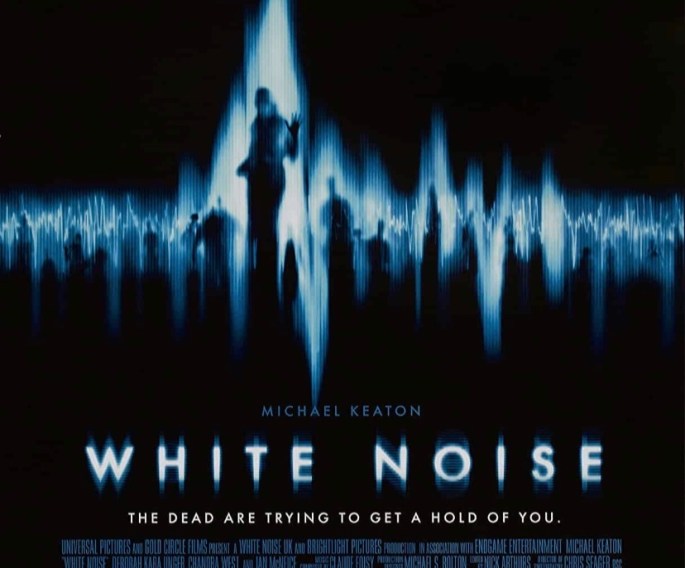
White Noise

I’ll start with the Thomas Edison quite that this film opens with because I just love it:

“Nobody knows whether our personalities pass on to another existence or sphere, but if we can evolve an instrument so delicate to be manipulated by our personality as it survives in the next life such an instrument ought to record something.”

I’m not sure what film critics were watching back in 2005 that caused such a knee jerk reaction of overall negativity, but the White Noise I saw was a chillingly effective, moodily atmospheric and very well done horror with a solid lead performance from Michael Keaton and one hell of a central premise. I mean it’s a bit low key, favouring hovering room tone and slow paced suspense over frenzied thrills or jarring shocks but that tends to be what I gravitate towards in horror anyways, so here we are. Keaton plays a Canadian construction CEO in Vancouver whose recently pregnant wife (Chandra West) doesn’t come home one night. A few days pass and her body is found near her crashed car, vaulted over a seawall gorge. As he begins mourning her, a mysterious gentleman (Ian McNeice) approaches him and claims that she has been contacting him via a phenomenon known as EVP, or electronic voice phenomenon in which the spirits of the dead can speak out across the gulf between worlds using electronic equipment, in this case a VHS recording system and a screen full of the titular white noise. Keaton is skeptical at first but it soon becomes clear that this is very real and with the help of another grieving woman (the great Deborah Kara Unger) he sets out to communicate with his wife and discern whatever message she has for him. Problem is, the VHS system is an open receiver and she isn’t the only spirit out there who can hear or talk, which sets the conflict in motion. I won’t say more but it’s a tense, brooding thriller and the Vancouver setting provides that classic rainy day, chilly PNW feel while much of the action is shot through these muted blue grey filters and accompanied by unnerving, otherworldly cues from the score by Claude Foisy. The scenes of communication over the VHS equipment are the film’s strongest attribute and fill the visual auditory realm of the film with a stark, creepy sensory dreamscape of fuzzy movement, shadows around the corner and wailing souls crying out from the abyss. Like I said, I’m really not sure what the issues were with this film from a critical standpoint other than the fact that they play fast and loose with plot a bit, but even then there’s a clear answer and resolute final act, while overall they focus on atmosphere and tone, which is my jam anyways. Great film.

-Nate Hill

The Secrets We Keep

What if you were sure, beyond a reasonable doubt, that your neighbour or someone living close to you in the area was in fact a dangerous war criminal who committed unspeakable atrocities towards you in the past and, like you, has escaped the fog of war to start a new life? Noomi Rapace’s Maja faces this dilemma in The Secrets We Keep, a deeply emotional, unbearably suspenseful dramatic thriller that showcases the actress at the most raw and vulnerable I’ve ever seen her, and if you’re familiar with her work at all you’ll know that’s saying a lot. Maja is a Romani girl from a small town whose entire family was abused, violently assaulted and terrorized by a marauding band of German SS officers on their way to escape from Bucharest sometime near the end of the war. She alone made it out, and went on to start a new life in postwar United States, where she meets a husband (Chris Messina) and has a child. But wounds of the past don’t heal too easily, especially when she notices Swiss newcomer to the town Thomas (Joel Kinnaman), who she instantly recognizes and believes to be one of the officers who brutalized her fifteen years ago. She kidnaps him, keeps him in her basement and pulls her skeptic husband into a deadly, highly emotional interrogation game as she tries to get Thomas to admit who he is, which he simply won’t do. Does she have the right man? Is Thomas really this person or has her trauma clouded judgment and altered her personal reality into projecting onto someone innocent? Things get complicated when Thomas’s wife (Amy Seimetz) comes looking for him and the whole situation threatens to blow up in everyone’s face. This is a thriller for sure and there are some moments of tension so extreme that I forgot to breathe, but at its core this is a story about how the psychological scars of war never really heal, and through Rapace’s staggeringly good, heartbreakingly intense performance that theme comes across achingly clear. They live in one of those idyllic, Shangri-La 1950’s postwar neighbourhoods you’d see in something like Malick’s Tree Of Life, made of picket fences, pastel houses, tranquil evenings, children playing on the streets and air drying laundry billowing in the breeze like angel wings keeping sentinel watch on the inhabitants. But not even angels, allegorical or otherwise, can eradicate the devils present during a war, or even cause those affected by it to forget what happened to them and the trauma always, always follows them home in one way or another. Its a terrific guessing game, a visceral captivity thriller and and an affecting interpersonal drama but for me it works most effectively as a harrowing character study of one girl, the memories that won’t die and her struggle to live some semblance of a normal life after enduring unimaginable horror. Great film with an absolutely beautiful, diamond knockout performance from Noomi.

-Nate Hill

Guns Akimbo

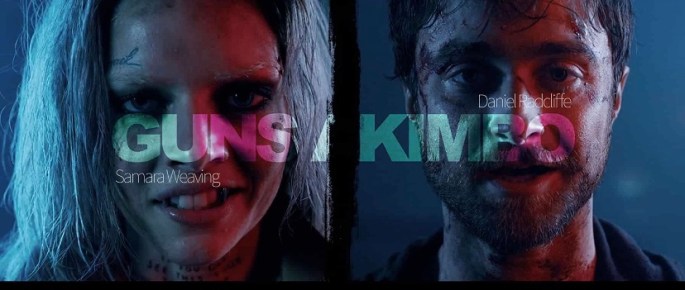
Guns Akimbo could be written off as cheap cartoonish thrills or simply whack-job hyperactive splatter without a touch of artistry like some of its type, but the fact remains that it’s actually a really good film from all standpoints and I had a ton of fun with it. Daniel Radcliffe has been doing his best to shed the deeply rooted Harry Potter mythos and pick some genuinely edgy, offbeat scripts (Horns, Swiss Army Man) and this one slam dunks squarely into that niche. In the not too distant, slightly dystopian future a terrorist cell of lunatics operates a gladiatorial games match called Skizm, in which various freaks, degenerates and maladjusted humans fight each other to the death all over an unnamed city (actually a super arbitrary combo of Auckland and Munich) as advanced drone technology catches it all and a vast, unruly community of online users observe over the interwebs. Radcliffe is Miles, a meek, beta computer programmer whose only joy in life is to troll user-boards relentlessly until he makes the wrong comment to the wrong account and finds himself targeted by the CEO of Skizm himself, a deranged, tattooed fiend called Riktor (Ned Dennehy). He’s kidnapped and wakes up with two giant guns *literally* nailed into his hands and turned loose into the death match that is Skizm for his troubles, where frying pan turns to fire but quick as he finds himself hunted by the game’s ruthless reigning champion, a rambunctious goth waif named Nix (Samara Weaving). Being an inexperienced softie he finds himself in quite the predicament until… well I won’t spoil the story but it goes to some fun places. Much of it is Miles furiously cavorting about the city with Nix in hot pursuit as vehicles are annihilated, bystanders are blown to pieces and several thousand rounds of ammo are emptied into everything animate and inanimate set to a thunderous, skeleton reverberating electronic score by Enis Rothoff. The action is frenetic, meticulously choreographed and strikingly brutal especially whenever Weaving, who is wicked here, shows up to pulverize a horde of enemies like some kind of nightmarish hell-shryke who escaped from Hot Topic. Radcliffe spends much of the film in a confused, exasperated daze and sort of just.. bungles his way into escaping each new hurdle, it’s a fun shtick. Dennehy is an actor to watch out for as the villain Riktor. He’s an Irish dude who made a distinct charismatic impression as one of the second tier baddies in Panos Cosmatos’s Mandy, but he’s positively in another orbit here, a rambling, incoherent, cheerfully psychotic animalistic nut job who is just too much fun to watch. This film falls in the category of super duper torqued up stuff like Crank, Smokin Aces and Shoot Em Up that are a ton of fun for the right audience yet many will find to be just too obnoxious and cacophonous for their tastes, which is fine. I enjoyed this a lot, it’s got style for days, momentum like nobody’s business, ruthlessly pitch black humour and even finds a moment for an albeit heavy handed (literally) yet pretty effective nugget of social commentary on toxic internet gaming culture and the poisonous, desensitizing, voyeuristic prism violence is viewed through online. Fun times.

-Nate Hill

Joshua Michael Stern’s Neverwas

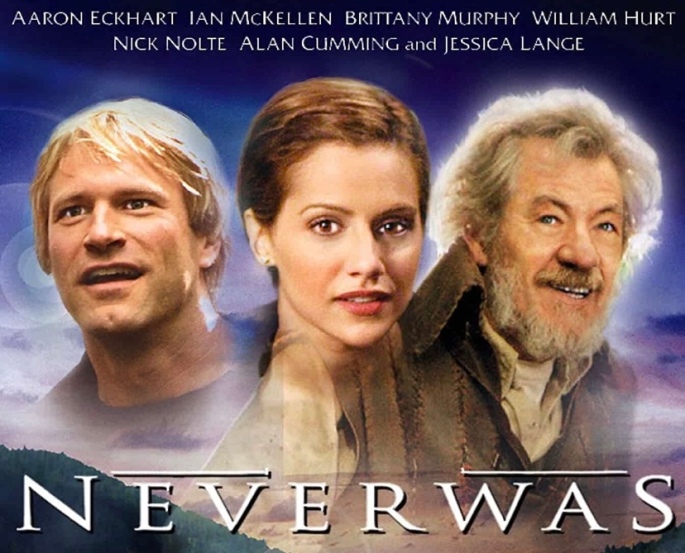
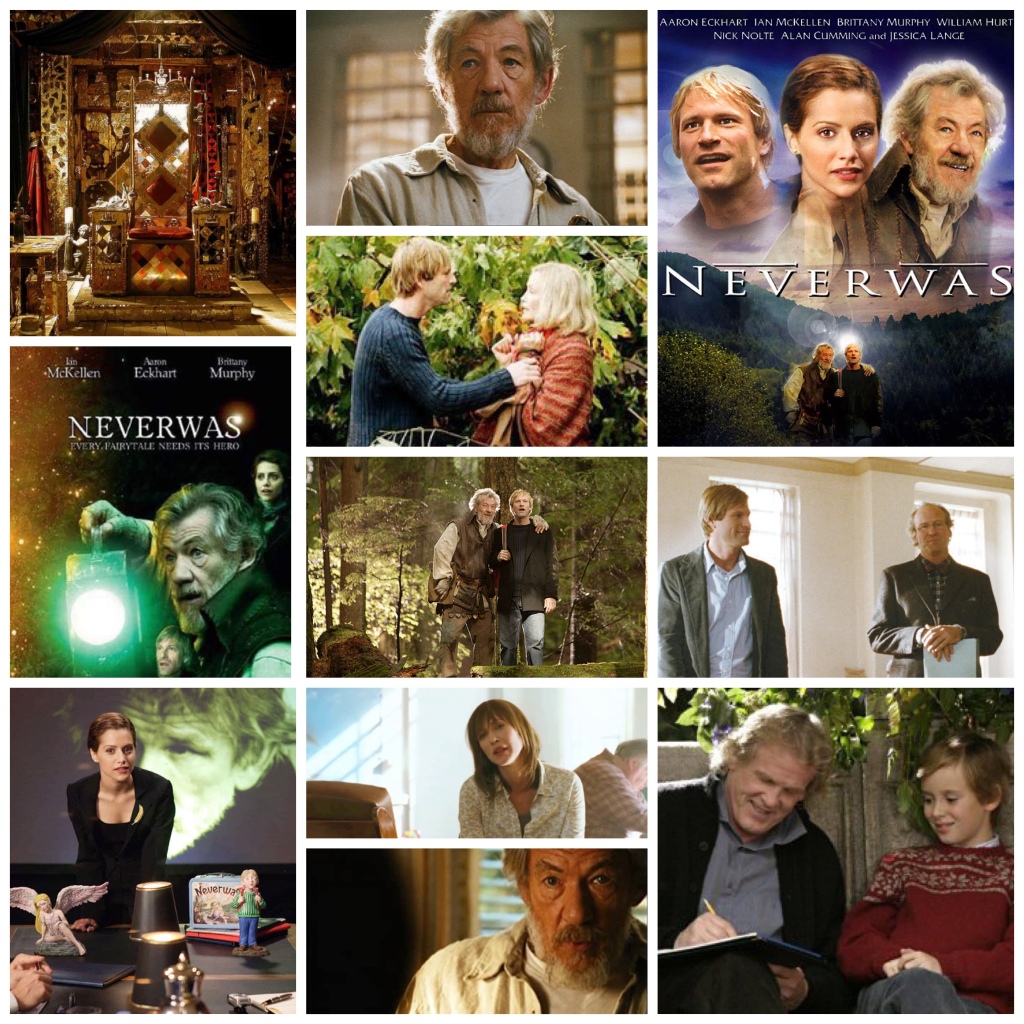
It always amazes me when a first time writer/director scores an all out, diamond encrusted A-list cast that would make the top dog filmmakers in Hollywood jealous, but it often results in a scantly marketed film that no one really ends up seeing but just happens to have a huge star studded ensemble in a quiet, curious independent piece that few are aware of. Such is the case in Joshua Michael Stern’s NeverWas, a beautiful modern fairytale that slipped under the radar back in the mid 2000’s but is ripe for rediscovery. Aaron Eckhart plays a rookie psychiatrist who expresses interest in working at a troubled mental health facility in rural BC, Canada, an institution where his mentally ill father (Nick Nolte) lived at years before. He was once a great children’s author who wrote about a magical kingdom called NeverWas and built a considerable legacy around his books, before becoming sadly unstable and being committed. Eckhart’s character wishes to find out wheat happened years before and treat some of these people now attending the facility, while the somewhat skeptical director (a sly William Hurt) doesn’t have high hopes for the program overall. Things get interesting when delusional patient Gabriel (Ian McKellen) starts mentioning NeverWas in his group sessions and believes it to be real, and Eckhart to be somehow connected to the legacy. What is he on about, why does he express a desire to break out and return to a place he calls his ‘kingdom’, and what’s his connection to the long gone father? McKellen is wonderful in the role, fiercely passionate and charismatic while showing heartbreaking undertones of some past trauma he can’t articulate yet needs to work through with this fantastical delusions. Nolte gives a mini powerhouse performance in just flashbacks alone and is incredibly affecting, while the late great Brittany Murphy is cast refreshingly against type as a local naturalist who expresses interest in this unusual situation. The cast is so blinged out that even the smallest roles have been given to someone super recognizable and so we get to see people like Jessica Lange, Alan Cumming, Michael Moriarty, Bill Bellamy and Vera Farmiga show up and not necessarily have much to do character wise other than simply bless the production with their attendance. The lush Canadian setting provides a gorgeous atmosphere for this strange, quaint and very personal story to unfold, anchored by McKellen in a superb, emotionally rich portrayal that he sticks with and lands with a final beat to the arc that cuts right to the essential. The film also managed to score Philip Glass for its original score (Candyman, Tales From The Loop, The Hours) a man whose unmistakable compositions always provide an auditory heart and propellant momentum, his work adding a lot to the overall experience here. The very definition of a hidden gem and well worth seeking out for the unbelievable cast and unique, touching story.

-Nate Hill

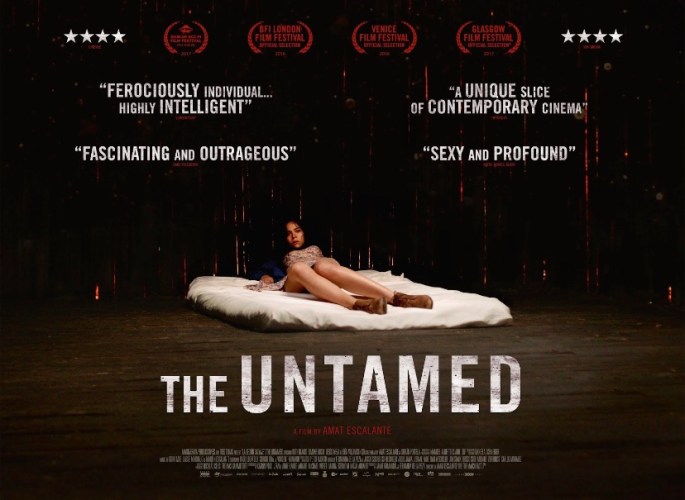
Amat Escalante’s The Untamed

So Shudder just added a Mexican horror film called The Untamed about an alien that literally has sex with people and you know what it’s actually pretty good. When I say that I don’t mean metaphorically, allegorically or any other vague or illusory way to present the concept, I just quite bluntly mean that a slimy tentacled alien emerges from a crashed meteor and has slimy alien intercourse with any female body that gets close to it. Now as stark and upfront as the premise is presented, it is also subtly used as metaphor for what’s going on in the lives of several troubled individuals in small town Mexico, the extraterrestrial itself viewed as an arbiter for sexual dysfunction, closet homosexuality in a conservative setting, clandestine adultery and other interpersonal shenanigans of the like. Nor does the film present its subject matter as anything close to schlock or exploitative in nature and at times doesn’t even feel like an abject horror film, but rather a tense, eerie, melodramatic tragedy that just happens to have an extended cameo by a sex monster from outer space. The effects on the creature itself are tangible, tactile and terrific, the performances from the human actors all most excellent and elicit sympathy, show complexity and emotional range while being sufficiently creepy when under the sultry influence of the alien’s potent, seductive and very weird pheromone like spell, almost like a cosmic drug trance that is translated excellently into the screen by these artists, none of whom I’ve seen in anything else before. Word of warning with this one though: it’s not a prudish North American studio film and as such doesn’t beat around the bush with explicit sexuality, which is totally normal and fine if it weren’t for the fact that said sexuality includes a multi-tentacled being from space and you see *everything* when this thing is copulating with women, which may be too much for some. It’s not done in a violent, perverse or shameful way and the scenes have a sort of almost bizarre tranquility to them, but it is a *very* disquieting form of intercourse to absorb and experience onscreen and some may be uncomfortable. Very unique and challenging film overall.

-Nate Hill

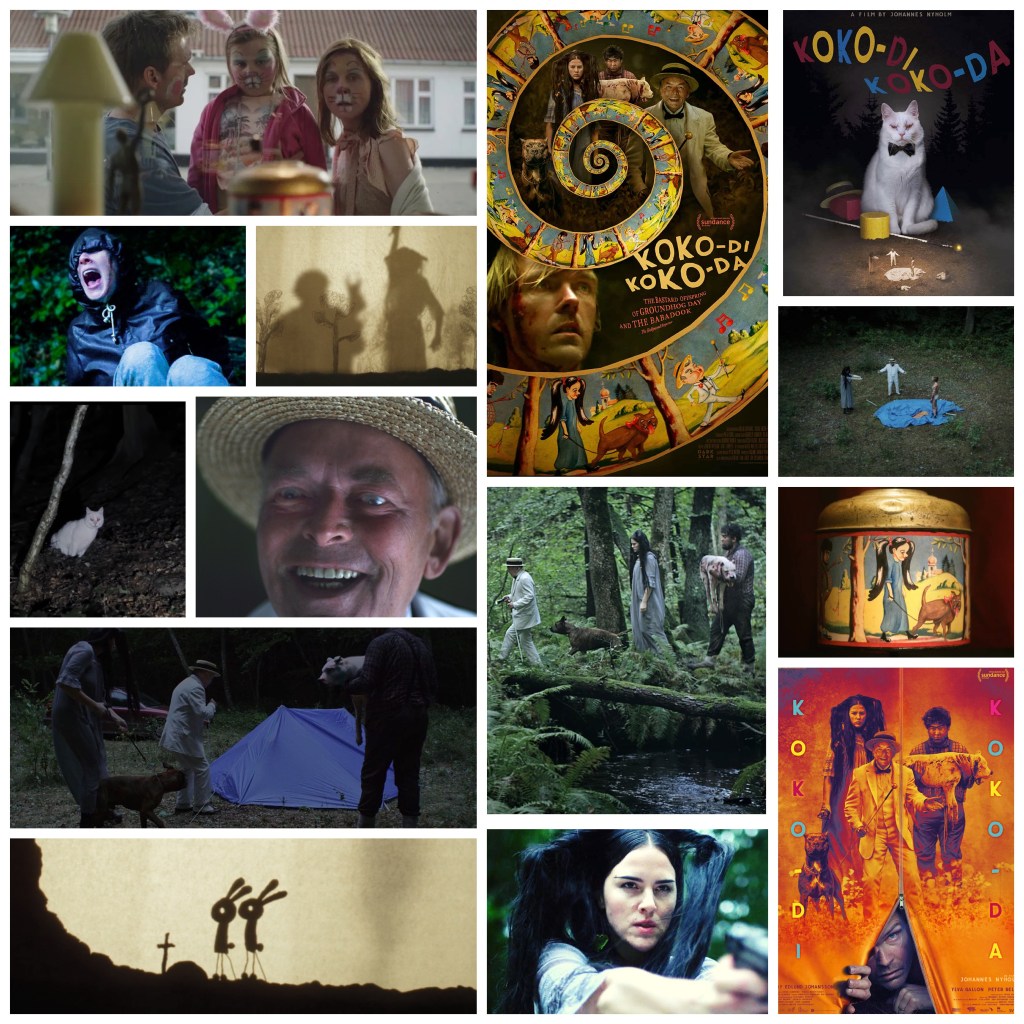
Johannes Nyholm’s Koko-Di Koko-Da

Shudder is a great streaming service if you’re looking to get lost off the beaten path within the horror genre and come across some truly weird shit that you otherwise might not have the chance to see. Long lost keystones of 80’s schlock, obscure off kilter creature features and more recently some bizarre foreign arthouse experiments like Johannes Nyholm’s Koko-Di Koko-Da, a terrifyingly surreal plunge into grief, madness, waking nightmares and past trauma that manifests in some dark, fairy tale esque ways. When a vacationing Swedish couple loses their young daughter in an accident that’s.. odd to say the least, her death sets deep rooted trauma in both of them. Sometime after they decide to go on a camping trip to rekindle their marriage and attempt to heal from the loss.. and let’s just say it doesn’t go too well. No sooner have they pitched a tent and are trying to get some sleep, three mysterious and *very* strange individuals emerge out of the forest from nowhere, proceed to torment, harass and eventually murder them. There’s a scary little white suited ringmaster dude, a big giant oaf carrying a dead dog and an unnerving mute girl with hair that would make Lady Gaga cringe. This trio of freaks continues to find and terrorize them in one of those scintillating time loops where they find themselves on the road, in the tent, under attack and murdered again and again and again. Who are they? Why do they keep accosting them? Why do they look like rejects from a Rob Zombie film or a travelling gypsy circus? Well, there’s a reason for that that’s actually a lot simpler and more straightforward than how the material is presented, through this sort of nightmarish prism of music, sound, surreal forest visuals and disorienting stylistic flourishes. The film isn’t going to work for everyone, simply for how bleak, unrelenting and alien the atmosphere is, and how the resolution of this couple’s grief and trauma comes in a fashion that’s anything but easy to process and absorb, much like their issues in question. There’s a specific object in the film, a sort of totemic MacGuffin that holds the key to everything, the identity of these three nocturnal scoundrels, related directly to their daughter and the eerie, ethereal nursery rhyme that hovers in the film’s auditory psycho sphere as a constant reminder and gives the film its inane but inherently menacing gibberish title. A challenging, deeply unsettling yet greatly rewarding piece of tricky arthouse neo-surrealism.

-Nate Hill

McG’s The Babysitter: Killer Queen

The first Babysitter on Netflix is one of my favourite 80’s nostalgia bath horror flicks out there, so naturally I was curious about the recent sequel, Babysitter: Killer Queen. The first film is a blast of retro pop culture referential bliss, cheerfully gruesome cartoon gore, vividly farcical archetypal characterizations, a beautifully bold colour palette and some punishingly funny dark humour. So how much of that does this sequel bring to the table? Well thankfully a lot, and ends being like… 70% as dope as the first with a ton of rambunctious energy and clever new ideas.. however, it implodes a bit in the third act with some inexplicably off kilter character/plot curveballs that just feel weird, which I’ll get to in a moment. It’s been a year or so since the events of the first films and young Cole (Judah Lewis) is still processing almost being murdered and sacrificed to Satan by his evil babysitter Bee (Samara Weaving) and her mad dog gang of psycho high schoolers. Life goes on and no one seems to believe him until it all happens again, his would be best friend Em (Emily Alyn Lind) turns out to be another devil worshipping bitch who goes nuts on him right as Bee’s followers all rise from the dead for one night’s last chance to finish what they started and dispatch Cole for good. He’s joined by the ‘new girl’ in his class, a spitfire problem kid named Phoebe (Jenna Ortega) and soon enough genuine sparks fly between them. The action is shifted from the pastel suburbia aesthetic and placed on a riverboat and the surrounding Arizona desert/lake atmosphere for a nice change. The gore is fast and furious, the dialogue whip smart and reliably hilarious and the soundtrack packed with joyous 80’s deep cuts of everything from Alannah Myles’ Black Velvet to Tangerine Dream’s Love On A Real Train. It’s a ton of fun, except… well the problem here is Samara Weaving, or a lack of her anyways. Her character is pretty much absent for most of the film, while her exuberant cronies do much of the chasing, terrorizing and wise cracking. When she does eventually show up in the eleventh hour, she seems distracted, listless, even a little pale and not up to the task, like she was somehow forced into this by a contractual obligation and kept her presence as scant as possible. Nowhere to be found is the spunky, sexy, full of charisma and deadly sex appeal we remember her having from the first film. Additionally, they’ve chosen a completely out of left field twist on her character that makes absolutely zero sense when you look at the first film and feels just, so shoehorned in for whatever behind the scenes reasons, most likely spearhead by Weaving’s own ideas about the whole thing. It’s shocking and a bit frustrating and kind of derails the entire franchise, if I’m being honest. Still though, the first two thirds of the film are cracking stuff and on the level of pedigree as the first film, I’m just not sold on the ending, and whoever’s plan it was to go that route with this Bee character.

-Nate Hill