B Movie Glory- Dracula III: Legacy 

Dimension films made a few Dracula sequels following their solid 2000 effort starring Gerard Butler, most of which are meh. Dracula III: Legacy, however, has the ace-in-the-hole asset of having legendary cult thespian Rutger Hauer in the titular vampire role, and that alone makes it noteworthy. Even though the guy doesn’t even show up until the third act, and isn’t around for long, he’s magnetic as the dark prince of bloodsuckers and not to be missed when rallying up the lengthy list of actors who have played the role. The film itself is grade A-cheese and hardly ever feels like a Dracula story, as well as being fairly incomprehensible in relation to the other handful of films in the franchise. I’ve got a weakness for Dimension horror films though, and they’re particularly slick brand of schlock. Jason London, who we all wistfully remember as Randall Pink Floyd in Richard Linklater’s Dazed & Confused, is some random vampire hunter, off trekking into the Eastern European alps with martial arts actor Jason Scott Lee to find the Vamp of all Vamps. They do find him, in the form of Hauer’s entertaining fiend skulking around a derelict castle and… that’s pretty much it. For Hauer fans, load up Final Cut Pro and edit a breezy short film with just his wicked good scenes. For fans of B Movie silliness, have a few beers first. Everyone else, keep on browsing the blockbuster shelf. Oh yeah, and Roy Scheider is in it too, and I’ve completely forgotten who he plays. 

-Nate Hill

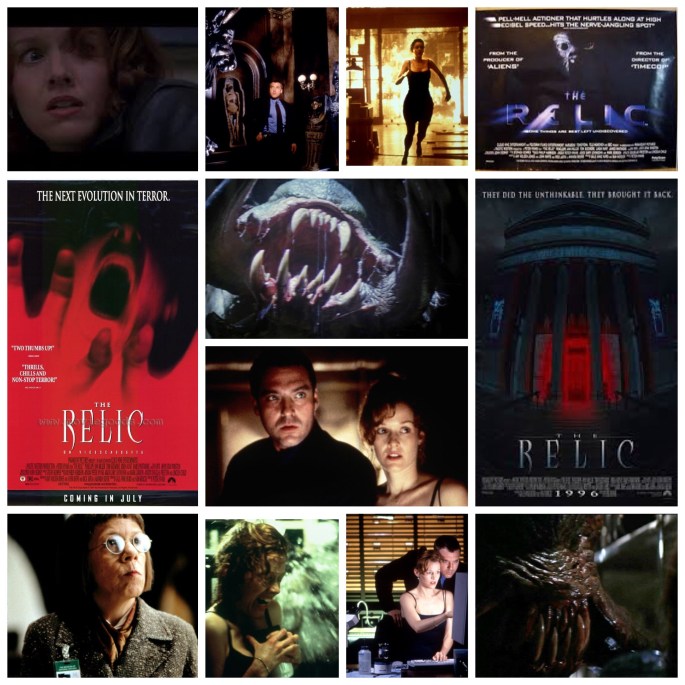
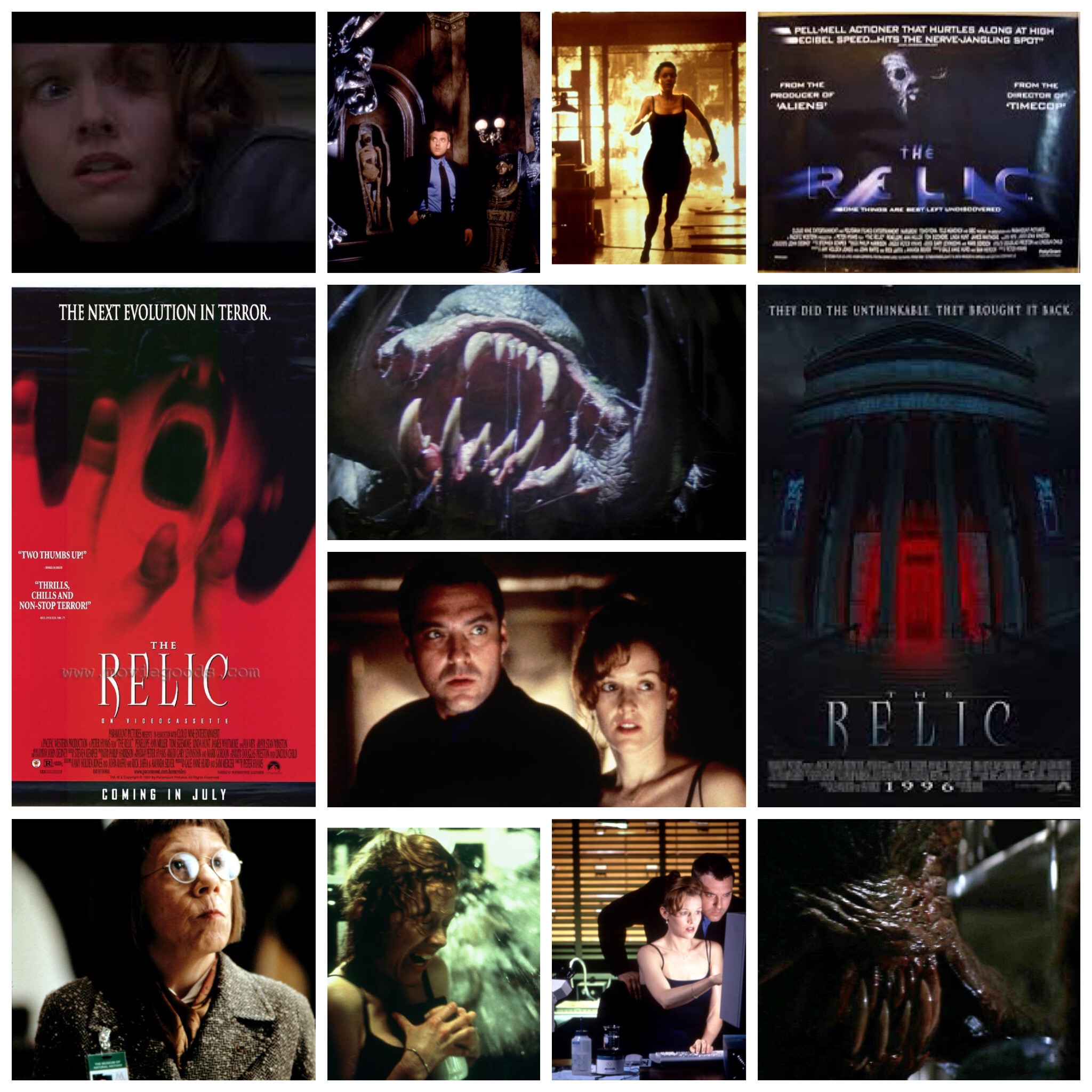
Peter Hyam’s The Relic 


Peter Hyam’s The Relic takes a smaller horror idea that usually services a low budget production and gives it the expensive, near blockbuster treatment. The result is a pretty damn fine creature feature flick that holds up better than it has any right too. When you’ve got a director like Hyams at the wheel though (see End Of Days), who is a meticulous perfectionist and often serves as DoP in addition to directing, you’re going to get class and durability all the way. Relic takes an ages old concept and injects wild screaming life into it; When an ancient artifact is brought from the South American jungle and stored at the Chicago museum of anthropology, trouble is not far off, for as we know in movie land, any ancient relic most definitely has a supernatural curse on it. Before too long a gigantic angry lizard thing from olden times awakens, tears through the building like the stampede from Jumanji and starts eating everyone it sees. It’s up to heroic police detective Vincent D’Agosta (Tom Sizemore in a rare lead role) and professor Margo Green (Penelope Ann Miller, what ever happened to her?) to use their wits and survive long enough to defeat it. Linda Hunt, that sweet little munchkin, also has a nice role as the museum director. The film is just pure fun to watch, a solid popcorn banger that has the look and feel of an old school adventure film, or something by Stephen Sommers, albeit with a healthy helping of slimy gore. The creature is truly immense, and one feels the scope of it’s rampage as Hyam’s camera arcs through the vast hallways and mezzanines of the building, following the action in crisp, tactile strokes. Sort of a forgotten gem, but one that’s always fun to check out.
-Nate Hill

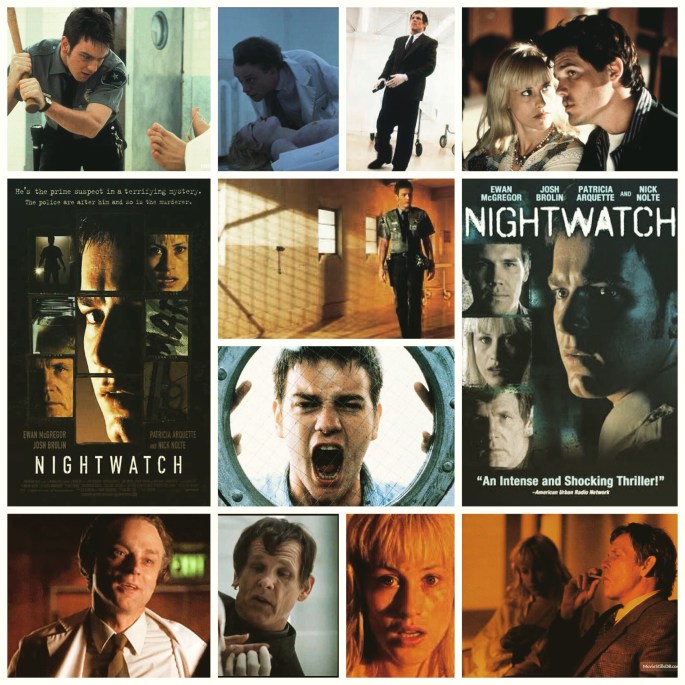
Ole Bornedal’s Nightwatch 


It’s always curious to me when directors remake their own projects. Sometimes it seems redundant and risky, and one wonders what compels them to revisit already trodden territory. In Ole Bornedal’s case it’s a creepy murder mystery called Nightwatch, made once in his native language of Danish, and again as a slicked up Hollywood version featuring some heavy acting talent and a reworked script by none other than Steven Soderbergh. I’ve only seen the newer one, and despite some awkward, clunky moments in the narrative, it can get pretty squirmy and frightening when it wants to, especially any scene involving a young Ewan McGregor stuck alone on a morgue graveyard shift. Creepy concept, and in some scenes it’s really milked to full effect, but there’s also few really silly and unnecessary subplots, particularly one with McGregor’s daredevil buddy Josh Brolin, and his girlfriend (an underused Patrica Arquette. When the film focuses on its main horror storyline it works quite well though. There’s a killer loose in the city, one with a penchant for necrophilia, and no one wants to have the night shift at a mortuary with someone like that running about. Nick Nolte adds class and charisma to his role as a weary, grizzled police detective who’s searching for the killer. Nolte rarely sets foot in the horror/thriller side of things, but his looming presence and concrete scraper sounding voice fit into the atmosphere terrifically. There’s a couple cameos as well, one from John C. Reilly as an ill fated police officer and an amusing Brad Dourif as the morgue’s cranky duty doctor. If Borendal had trimmed the fat in places as far as subplots go, given a bit more edge to the script and overall just tweaked it more it could have been a cracking good thriller, but as is it’s only above average with a few spots that really shine. 

-Nate Hill

S. Craig Zahler’s Brawl In Cell Block 99- Thoughts from Nate Hill


Bring a strong stomach with you to S. Craig Zahler’s Brawl In Cell Block 99, a casually vicious ode to 1970’s exploitation that pulls no punches, kicks, backhands or wet-crunchy head stomps that will make your balls retreat up in those nether regions. Zahler is also responsible for 2015’s incredible horror western Bone Tomahawk, which set him on the messianic path to bring hard hitting genre cinema back to the forefront of our awareness. He’s proved here that he plans to make that his long-game plan, with an utterly unapologetic, icily paced prison flick that ramps up into levels of violence that shake and stun. Vince Vaughn, that neurotic, rotund teddy bear, sheds his image as well as his shirt to ruthlessly pummel anyone that gets in the way of his quest to save pregnant wife Jennifer Carpenter after a drug deal gone bad, an area of employment he only entered to provide for those he loved. Stuck inside a minimum security prison, he’s visited by a deliberately sinister old gentleman (Udo Kier, whose very presence solidifies the film’s perpetual eccentricity) who uses the man’s captive wife as leverage, and orders him to get himself transferred to a hellhole of a facility run by a nasty warden (Don Johnson, sadism incarnate). There’s he’s forced to fight tooth, nail and skull to stay alive, and fight he does. It all sounds rather lively, doesn’t it? Not so much. Zahler is fascinated by subverting stereotypes and upturning genre expectations, going ballistic here with the film’s patient, slow-cooker pacing. There’s a Tarantino vibe to the wait vs. payoff in terms of violence especially in the last side of the third act, but it’s much more perverse and played up, and if the carnage in Tomahawk made you queasy, you’ll go full chunder with what Vaughn inflicts on his fellow jailbirds here, and shudder at Kier’s casually evil approach to his job. Zahler has given the ol’ German another chomp at the bit in terms of roles, as he hasn’t done much in years, but he’ll turn up again next year in the director’s ‘Dragged Across Concrete’, which headlines Vaughn and Mal Gibson, so there’s that to wet your panties over. Like Tarantino, Rob Zombie and others, Zahler like ms to handpick actors from bygone eras and showcase them in his roster, a quality I love in a filmmaker and one that shows they’ve done their research. Vaughn is an absolute demon here, a man with a specific, patriotic code of ethics and honour, but also not one to shy away from getting his hands dirty. Don Johnson is riding the wave of a magnificent comeback, his characters here has a southern prince exterior, with evil positively oozing from beneath. This was not the film I expected, not should it have been. It’s unique, purposefully dodging expectations, and hits home with the crippling impact of Vaughn terrifying fists. An unconventional winner.

-Nate Hill 

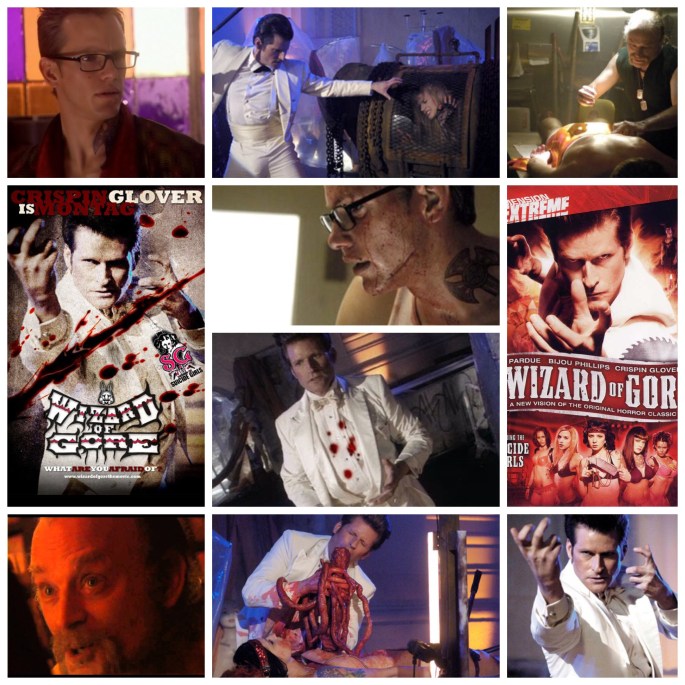
The Wizard Of Gore


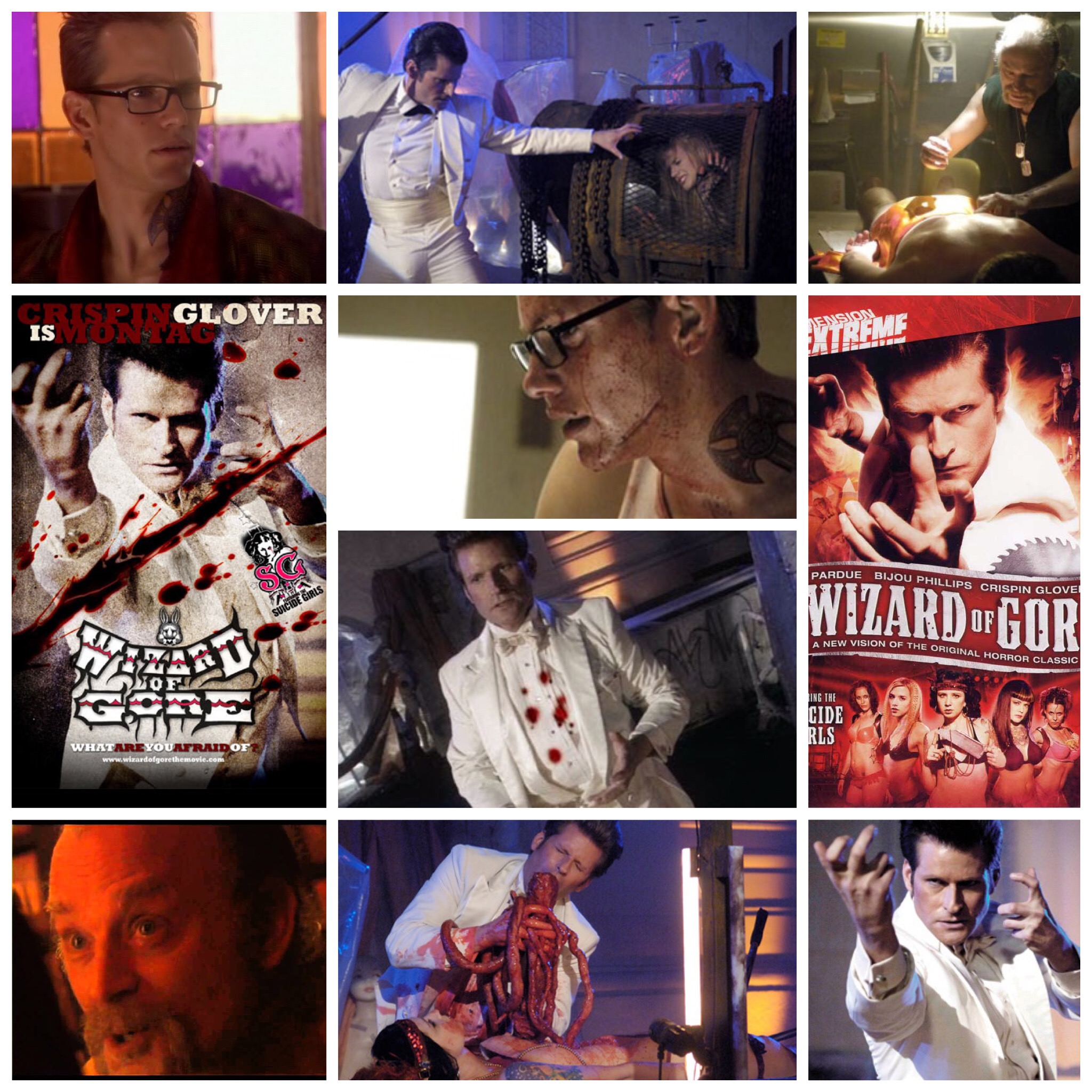
The Wizard Of Gore is an inspired little oddball of a flick, based on an obscure oldie that I’ve never seen, but the absurdity of Crispin Glover as a psychotically evil pseudo Vegas showman is worth the price of admission alone. I’ve not a clue what the original film’s plot is, but here we find Kip Pardue as some private detective, trying to make heads or tails out of Montag The Magnificent (Glover), who uses a combination of dark magic and dodgy airborne pharmaceuticals to trick his audiences into thinking he’s dismembered assistants body’s onstage, for real. Tricks of the trade, right? Sure, only problem is there’s girls turning up dead for real, and the trail leads right back to this spindly, well dressed agent of evil in magician’s clothing. I thought it was pretty cool, especially the slick production design and actual effort put into a plot with more tricks up it’s sleeve than Criss Angel. Not too mention some jarring gore, which of course the title more than suggests. Brad Dourif, who you may have guessed by now is a favourite of mine, appears as an Asian man named Dr. Chong, with creepy ties to whatever magic is being used in the murders. That’s right. Brad Dourif. As an oriental man. I laughed hard, especially since nothing about his appearance or costume is remotely of the orient. Throw in appearances from various cutie pie pinup girls from the Suicide Girls troupe, and you’ve got something memorable indeed. Check er’ out. 
-Nate Hill 

B Movie Glory: Mark Young’s Southern Gothic

A disgraced nightclub bouncer faces off against a psychotic zealot vampire preacher. Quite a crazed concept ripe for hyperactive exploitation thrills, and yet Southern Gothic plays it pretty low key and laconic, for the most part anyway. Moody where other films would have been brash, it’s a nice atmosphere piece with gore galore and a gonzo central performance from William Forsythe as Enoch Pitt, a man of the lord who has strayed from the path. Bitten by a vampire, the already sleazy Pitt turns into a full on monster, tearing up the small Deep South town of Redemption and building an army of the undead. Hazel Fortune (Yul Vasquez) is traumatized and broken by the death of his young daughter, until he meets young Hope (Emily Catherine Young), who crosses Pitt’s vision and finds herself in mortal danger. This puts the two men on a vengeful collision course of blood, retribution and carnage. Ok, so I’ve made it sound a little more epic than it actually is, but that’s more or less how it goes down. Energetic it ain’t, more of a slow burn than anything else. Firmly rooted in B-movie territory in terms of both budget and script, but entertaining and distinctly flavoured nonetheless. Vasquez is moody and four, but dangerous when he needs to be. Forsythe, as usual, is the acting equivalent to a junkyard bulldog let off the chain, chewing scenery faster than he can munch carotid arteries, and loving every campy, frightening minute of it. Not the cream of the horror crop per sé, but reasonable enough Saturday night horror background noise fodder. 

-Nate Hill

Tobe Hooper’s Lifeforce

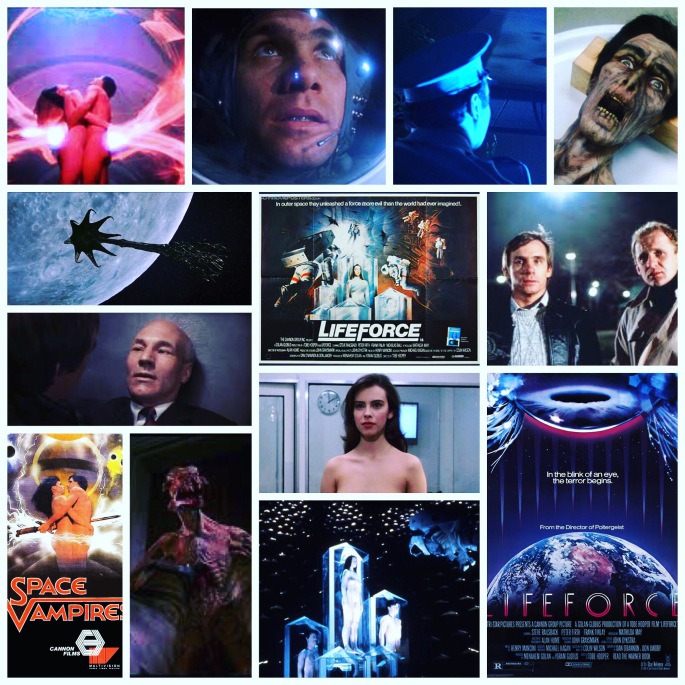
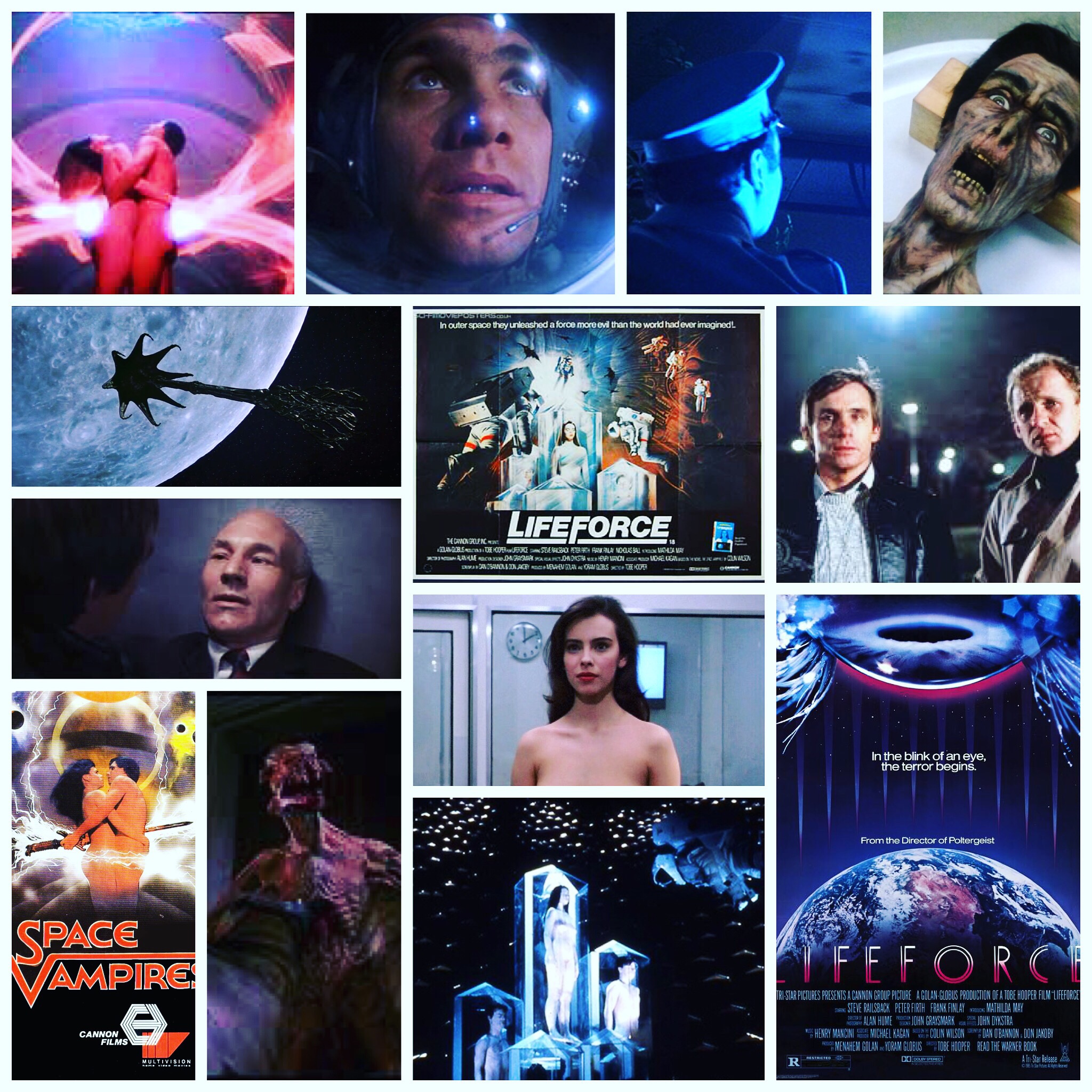
Tobe Hooper’s Lifeforce is the most dementedly unique horror SciFi mashup you’ll get. Based on a novel that’s literally titled ‘The Space Vampires’, the film is exactly that and more. It’s so out of it’s mind that at a certain point you have to surrender and bask in it, and grab the sides of the cart as it veers between all kinds of increasingly bonkers plot points. When a strange, rice kernel shaped object shows up in earth’s atmosphere, a team of exploratory astronauts led by intrepid Steve Railsback goes on up to investigate. What they find up there eclipses any weirdness aboard the Nostromo, Millennium Falcon or Event Horizon. Intergalactic vampires lie in creepy cryo suspension, just waiting for unlucky hosts to come along. Soon they’re exposed to earth and it’s a gory mad dash all over London to stope them from turning every earthling into zombies. Yes, that’s actually the plot, and despite how it sounds on paper, they really make it work. That’s mostly thanks to the screen shattering, ridiculously good special effects, especially in the opening aboard the alien’s strange, baroque vessel which is one of the most otherworldly and atmospheric sequences in any horror film ever. Once the action shifts back to earth it’s a pure shit show and near comedy of errors, with Railsback’s frenzied cosmonaut teaming up with a peppy British intelligence agent (Peter Firth), and even Patrick Stewart comes out to play as some vague scientific bro. There’s boundless imagination at work here, carried by sheer movie magic to contribute lasting, impressive images and create an entirely unique horror experience. Plus, how could a flick about space vampires not be amazing (we will not speak of Dracula 3000). A sci-Fi horror classic, an under-sung jewel of visual flights of fancy and practical effects laden nightmares.  

-Nate Hill

“I’ve seen things you people wouldn’t believe.” A review of Blade Runner The Final Cut – by Josh Hains 

I remember the first time I saw Blade Runner: The Final Cut as if it happened earlier this week, and not four or five years ago. I believe it was 2014 when I watched it, but I could be wrong. I’d recorded the movie on my DVR off the Movie Channel, it was early one morning sometime after 9 am, and I thought I’d see what all the fuss regarding this cut was about. Prior to this, I had seen the Director’s Cut and The Theatrical cut in full once each, and bits and pieces of both of those cut multiple times on TV over the years. I didn’t think much of Blade Runner prior to this occasion. I could appreciate the craftsmanship of the movie, and liked it, but it didn’t have the profound impact on me that I had heard others talk about. I felt underwhelmed, let down, disappointed. I wanted to love the movie the way others did, but just couldn’t. Then I saw The Final Cut. 

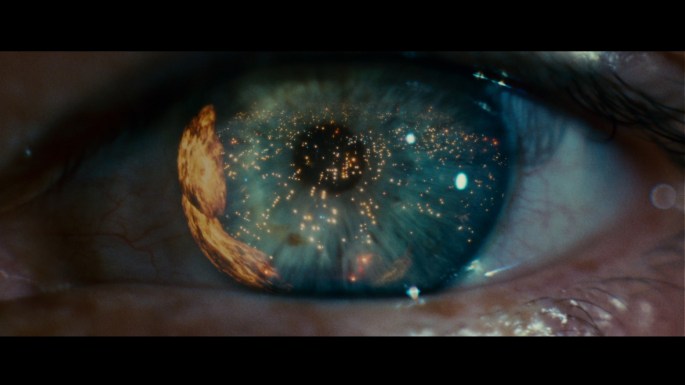
It’s easy to say that from frame one I was hooked, and it’s even easier to use all kinds of elaborate and colourful words to express how beautiful those opening moments are. But I’m being honest when I tell you that The Final Cut made my jaw drop right from the first frame, and from there on I was hooked like a fish. That Vangelis score had been humming in my ears for nearly three minutes by the time the plumes of fire billowed across the L.A. cityscape, flying cars screamed toward the building of the Tyrell corporation, before the flames danced in the eye of the Blade Runner called Holden, and my jaw fell in awe at the sublime sight of it all. 

35 years later I expect you may know the plot of Blade Runner by now. Rick Deckard (Harrison Ford), a Blade Runner for the LAPD, is tasked by Bryant and Gaff (M. Emmet Walsh and Edward James Olmos, respectively) with tracking down and retiring (killing) four Nexus 6 replicants (human-like androids that are deemed illegal on Earth), including Roy Batty (Rutgers Hauer), who seeks his maker for longer life, as Nexus 6 replicants only have a four year life span. The very nature of this particular job causes Deckard to call into question his own morality and identity, the meaning of life itself, and his own existence. 

Sci-fi neo-noir detective stories are few and far between, but the best of them (including Blade Runner and it equally terrific sequel Blade Runner 2049, both written by the brilliant Hampton Fancher) will stick around for a long time coming, and it’s not because of their plots, which always start out seeming overly complex, but wind up being rather simple once you’ve pieced them together properly. I know that what has caused Blade Runner to stay with me like dirt under my fingernails doesn’t have anything to do with plot, story, or even for the most part, acting. No, what’s stayed with me for so long has always been the feeling I get while watching the movie. Between the gorgeous cinematography and haunting synthesizer induced score, I simply find myself in awe of the sublime nature of the sights and sounds of this Blade Runner world. 

When a replicant is fleeing Deckard midway into the movie, crashing through large panes of glass while blasts from Deckard’s police issue sidearm crash into her body while the melancholic Vangelis score chimes in your ear, I feel the same sense of awe that fills my body and mind that the opening sequence also gives me. Or later, when Roy Batty is delivering a brief monologue about things he’s seen, beautiful amazing things we couldn’t possibly fathom described so simply yet so elegantly, as if pulled from a work of poetry, I once again find myself swept up in awe. 

A good movie can show and tell you various things that will surely entertain you in many ways, but a great film has the power to make you feel something profound. Sometimes we remember a movie for a great iconic quote, or a stylish well choreographed action sequence, or a barrage of snappy conversational dialogue, or even a heap of gut busting jokes. But what tends to stick with us more are are the feelings we get while we watch them. Jaws puts us on edge, anticipating what’s to come with whitened knuckles until we jump out of our seats frightened by the shark erupting from the bowels of the sea. No Country For Old Men makes us care deeply for Llewellyn Moss and Sheriff Ed Tom Bell, and when they could be in peril (especially the former), we fear for them, our bodies tense just like when we watch Jaws, and then we ease when they survive the latest potential threat. 

Blade Runner makes me fearful for the safety of Deckard, makes me hope that Deckard can retire the replicants and survive the day, then settle down and try live some semblance of a normal life with the replicant he grows to love (and is supposed to retire) named Rachael (Sean Young). It makes me want to follow Deckard around around this futuristic Los Angeles and take in every sight and sound the master Ridley Scott doesn’t show us. When Roy Batty says; “I’ve seen things you people wouldn’t believe. Attack ships on fire off the shoulder of Orion. I watched C-beams glitter in the dark near the Tannhauser gate.”; I believe him, and I wish I could have been there to bear witness to those visual wonders of their beautiful nightmare world. 

Seeing what becomes of Deckard and Los Angeles in Blade Runner 2049, I think I will wish even more now with future viewings of Blade Runner, that I could have joined Deckard and Batty in seeing these unbelievable sights of that world at that specific time, for those moments have truly become lost in time. Like tears in rain. 

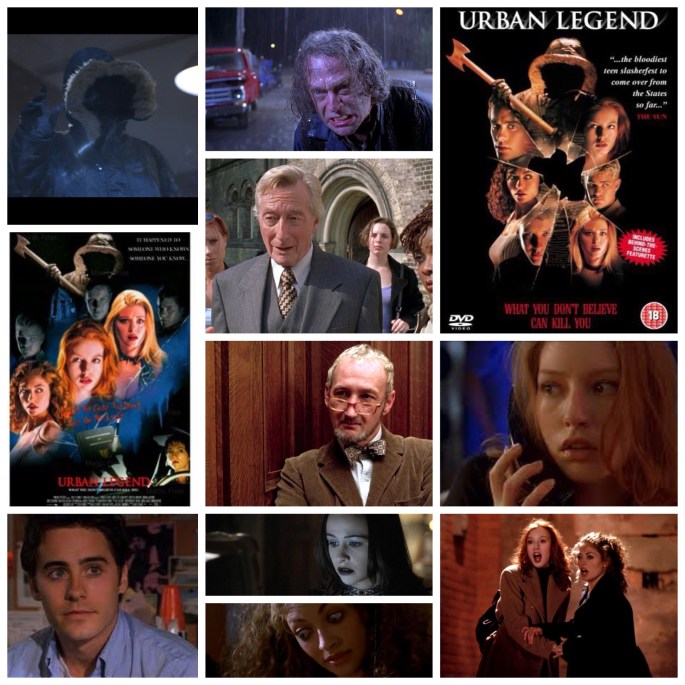
Urban Legend

Urban Legend is pretty much like Scream, but a lot less meta and a bit more atmosphere, unfolding as you’d expect it to, with a group of college kids getting killed in bizarre circumstances that all relate to half whispered local myths. One of their professors is Freddy Krueger himself, Robert Englund, and who better to lay down the tongue in cheek groundwork than such a familiar face and expressive, dynamic presence like him. Looking back on this it’s fairly shocking how terrific of a cast it has and how it’s been mostly forgotten in the annals of slasher archives. Jared Leto, Alicia Witt, Rebecca Gayheart, Joshua Jackson, Tara Reid, Natasha Gregson Warner and Danielle Harris headline as the varied campus rats, with Harris a standout as the obnoxious bitchy goth stereotype, far from her timid Jamie Lloyd in the Halloween films. There’s a prologue cameo from horror vet Brad Dourif as well as appearances from Loretta Devine, Julian Richings, Michael Rosenbaum and a priceless John Neville, getting all the best lines as the college’s salty Dean. The kills are all done in high 90’s style, the story takes a Scream-esque twisty turn in the third act and as far as atmosphere goes, it pretty much outdoes the ol’ ghostface franchise. Spooky good time. 

-Nate Hill

Denis Villeneuve’s Blade Runner 2049: Thoughts from Nate Hill


As I settled in to watch Denis Villeneuve’s Blade Runner: 2049 in a thundering imax theatre, I truly did not know what to expect. I’d successfully avoided spoilers up until that point, done a scant bit of reading hither and thither on a surface level, and obviously been privy to the mind boggling, overwhelmingly positive buzz that’s been flowing forth since the first critics were screened. ‘Masterpiece’, ‘Movie even of the century’ and ‘instant classic’ were some of the lofty adulations that were being hurled around right out of the gate, and it’s not often a sequel to such a long worshipped, culturally influential bombshell of a science fiction film has been welcomed so eagerly and almost unanimously praised. There’s been a gulf of time between Ridley Scott’s 1982 neon fever dream, which is indeed a masterpiece and one of my favourite films of all time, and the shoes to fill have never, ever been bigger. So, does it live up to the original? Is it better? Worse? Pandering fan service or bold pioneer trek into new galaxies of thematic and tonal exploration? The answers to those questions are somewhat more complicated than yes, no or similar succinct absolutes. I can say, however, that Villeneuve’s near three hour machine-dream is one of the most beautiful, ambitious, thoughtful, well wrought films I’ve ever seen, a staggering achievement in all arenas and indeed a piece of cinema they’ll be talking about for years to come. It’s a masterpiece on its own terms, blending elements of the original which we all loved, but bravely surging forward into it’s own brand new chapter of this world, a little bleaker and more austere than the poetic lullabies of Scott’s L.A., yet no less wondrous or sumptuous a creation. This is a world where quite a bit of time has passed since the initial story, and the environment these characters dwell in has shifted along with it. Los Angeles is wearier, emptier and less of a gong show than we remember, yet the buzzing life that we recall catching fleeting glimpses of between monolithic, impossibly gigantic skyscrapers is still there, that endless nocturnal hum has thrived through into a new age. So too have replicants, now far more advanced, under the label and stewardship of Niander Wallace (Jared Leto) and his mega corporation. Ryan Gosling plays a young blade Runner, a profession, it seems, that has not run out of supply in demand. Under the very stern watch of LAPD Captain Joshi (Robin Wright, terrific) he navigates a meticulously paced detective story that, yes, eventually leads him to missing former Blade Runner Rick Deckerd, played by Harrison Ford in one staggeringly well pitched performance. That’s all I’ll really be specific about in terms of plot, because it’s a gorgeously wrapped present that should be opened corner by corner, inch by inch until the viewer has actively and emotionally seen the big picture, a thoughtful process that challenges the audience and should be the standard not just for science fiction, but for big budget films in general. While Blade Runner 1982 was a visual and musical feast for the senses and still maintains that edge over it’s sequel, 2049 has a cerebral and multifaceted patchwork quilt of themes, questions and notions that play across the screen like a ballet of auroral, magnificent wonders, layered, ponderous cinema with an emotional weight and resonance that took me right off guard, a quality that although present in 1982, wasn’t quite as developed as what we get here. Hans Zimmer’s score is every bit the thundering piece you’d expect and is brilliant, a slightly industrialized departure from the lyrical, ethereal tones of Vangelis, but equally as captivating. I could go on, but I’ll let you see the thing for yourself and paint your own picture. I’ll say this: Blade Runner 1982 is the rainbow coloured light shone through a prism, abstract, illusory and trancelike. 2049 is the prism itself, the source of the light and the place where it’s understood from a more conscious, waking-life perspective, and that’s the closest I can get to explaining just how different these films are from each other. One is a dream poem, the other is a deep methodical meditation, but both are vital halves of the mythology. However you look at it, Villeneuve’s 2049 is astounding, achingly beautiful work on every level, not to mention the work of everyone’s favourite unsung maestro, cinematographer Roger Deakins. This is an important film, as it may just hasten the exodus of brainless big budget fluff and help Hollywood enter a golden age of well crafted, intelligent blockbuster films once again. One can dream.

-Nate Hill