Pascal Laugier’s Martyrs

You think you know what fucked up and disturbing is until you’ve seen Pascal Laugier’s Martyrs, and then you damn well for sure do, on top of wishing that you didn’t go looking because the experience is not one so easily shaken. This is a punishing, relentlessly cruel and violent film that will leave the viewer emotionally barren, but it’s also a very intelligent piece, with a wholly unpredictable, very thought provoking story that arrives on an avenue somewhere truly different than the one it set out on. It’s a sort of extreme existential shocker, which is an intriguing description but doesn’t begin to scratch the surface of the dark psychological netherworld it bravely troops into. Lucie (Myléne Jampanoï) remembers being brutally tortured and held captive years ago when she was very young, and with the help of her friend Anna (Morjana Alaoui) who was also abused as a child, she sets a bloody quest in motion to hunt down and slaughter those responsible. Haunted by a grim, shrieking spectre (Isabelle Chasse) that may or not be real and met with curveballs in her plan at every turn, she discovers that her traumatizing experiences as a child are but the tip of a very large, very sinister iceberg and pretty soon she finds out way more than she ever set out to. I’m being purposely vague here because the diabolical fun lies in figuring this hell-house of a story out for yourself, and if you haven’t seen it yet, you’re in for treat. Your jaw will hit the floor, your pulse will race, it will sicken, amaze, provoke heated debates and generally just cause extreme reactions all across the board. What’s important to understand is that Laugier never strays into realms of exploitation or torture porn for its own sake; yes, the scenes and situations here are incredibly, almost unbearably violent and gruesome, but they do service a narrative that has questions to ask and points to prove. Just buckle up getting there and pay close attention, because trust me this is not a trip you’re going to want to take twice. Oh, and one more thing, careful that you don’t accidentally watch the recent remake which is unnecessary garbage, Laugier’s original is the only version of this story. Good luck!

-Nate Hill
Stuart Gordon’s ReAnimator

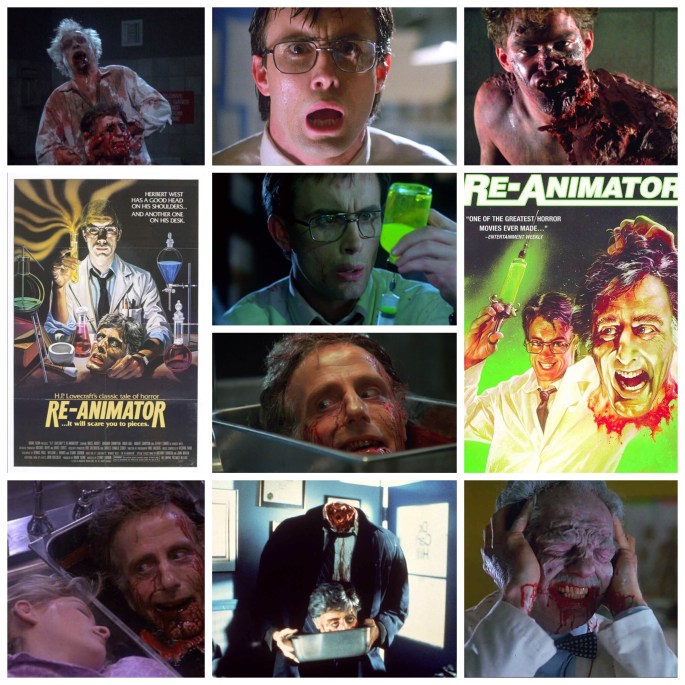
Stuart Gordon’s ReAnimator is a healthy dose of schlocktastic fun, taking a page out of the silly splatter book of Sam Raimi, and although not quite as fun as some of the stuff it draws inspiration from, it does the trick. I know this film has a massive cult fanbase and while I can’t say that I loved it quite as much as some no doubt do, I always have some love for gory practical effects, and the ones on display here are pretty impressive. Jeffrey Combs is funny (if not exactly the definition of subtle throughout his whole career) as Dr. Herbert West, a loony fuckin quack who has stumbled upon an ectoplasmic looking serum that brings dead corpses back to life, albeit with a side of extreme retardation. Things go riotously awry when a jealous rival (David Gale) literally loses his head and steals it, prompting a gruesome comedy of errors in which heads, limbs, blood and entrails are hurled about the screen in a feverish celebration of all things gory and grisly. You can’t exactly call them zombies, I mean I suppose they are but they’re given a modicum more sentience than your average shambling Romero flesh-eater, but the actors get to have fun with their zany side, as the formula sort of plays havoc with their cognitive functions, a hilarious touch. There’s a sexually icky part that was even a bit in bad taste for my lax sensibilities (poor Barbara Crampton is a trooper and better have gotten paid hefty fucking overtime), but I suppose that trash is sort of the name of the game here. The 80’s was a very formative decade for the horror genre, and its fascinating to see how not only was this inspired by earlier stuff like Raimi, but would itself go on to rouse other filmmakers and give them ideas, as Hollywood progresses in symbiosis. A fun, freaky time.

-Nate Hill

Stanley Kubrick’s The Shining

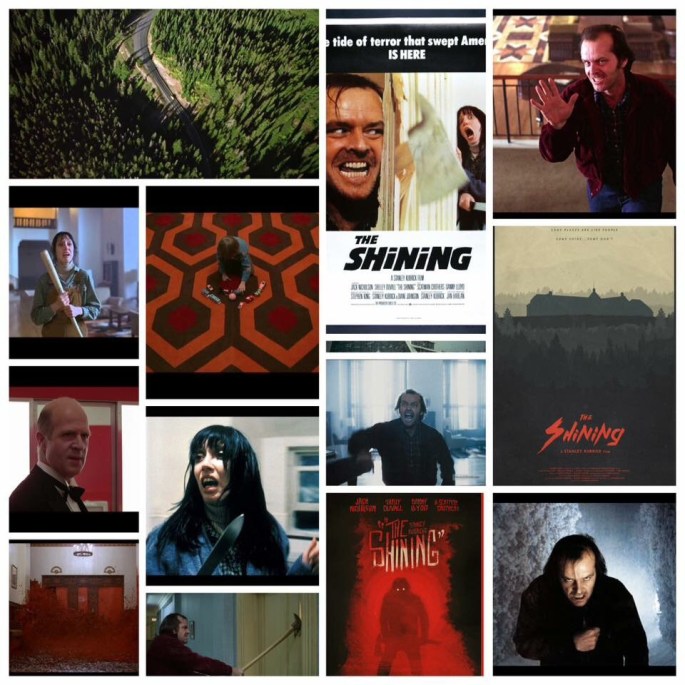
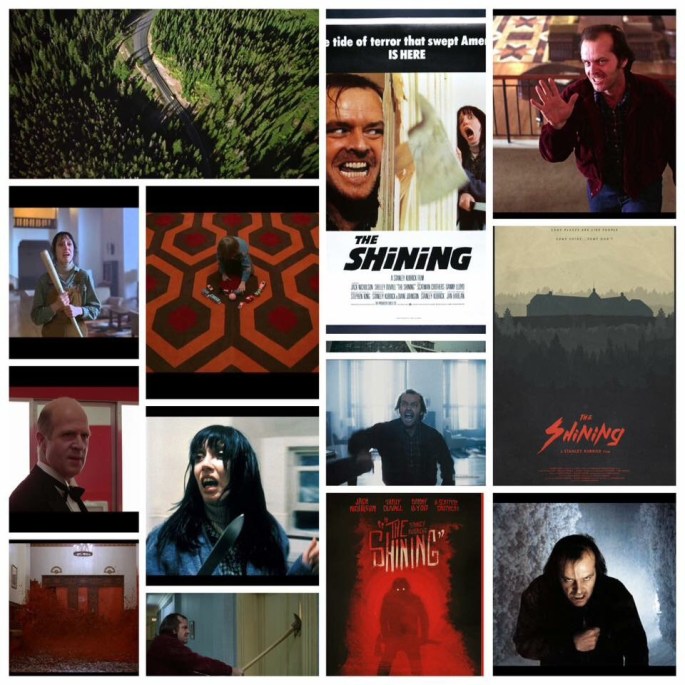
Confession time: I saw Stanley Kubrick’s The Shining for the first time last night. I know, late to the party. Gotta say, I get the hype. From the first haunting, magisterial helicopter shots that follow Jack Torrence’s car up a gorgeous Montana mountain road to the icy snowbound finale in and around the deserted Overlook Hotel, this is one effective chiller that doesn’t quit, and succeeds in whipping up an atmospheric mania that culminates in the final shot, a simple black and white photograph that says it all. Nicholson is terrifying in every staccato gesture and possessed, ravenous glare as Torrence, a man who already has the capacity for volcanic violence if pushed, and all it takes is the seething malevolence of the hotel to push him right over that edge and turn him into a homicidal monster. Danny Lloyd is appropriately creepy as his kid and handles the dual voices thing in creepy fashion. My favourite performance of the film has to be Shelley Duvall though, and now it stands as one of my favourite works of acting in the horror genre itself. I’ve heard that Kubrick pushed her to some pretty dicey places to play Wendy Torrence, and fuck man she really got there. When shit starts getting freaky, she reacts in a raw, naturally progressive way that shatters all artifice and practically burns organically right into the celluloid, I believed her outright terror and her work pulled me right into the situation. Joe Turkel and and Philip Stone are super creepy as, shall we say, permanent residents of the Overlook, and Scatman Crothers is good if a little cartoonish as Halloran, the head chef who tries to help the Torrence family before it’s too late. Now, it’s no secret that Stephen King dislikes this film, and honestly I can’t see why anyone was surprised. I’m a huge King disciple and I’ve noticed that literally every other adaptation of his work but this one has felt like King, without really doing its own thing. Kubrick boldly went and made a totally different vision than King had, and that’s fine. This is a cold, desolate chiller with none of King’s trademark emotional beats or fiercely internal storytelling, and it works wonders as that. It isn’t perfect, some of the dialogue in the first half is awfully stilted and awkward, but that was sometimes a hallmark of the 70’s. I also wish there was more character development with Jack before he goes postal, it sort of makes it so you mostly only care about Wendy as opposed to the family as a unit, which would have been more effective. The film overall is brilliant though, particularly in score, cinematography and atmosphere. So many images are now iconic: the kaleidoscope carpet design, the room full of blood, those two creepy girls, that axe busting through the door, and they are all beyond fantastic, but some of my favourite frames are the ones less celebrated, like the stark moonlight through foggy snowdrifts outside, the sentinel hedge maze on the grounds, the opening vista shots of wilderness that suggest the horror comes from some vaguely elemental place. The score is a broad, varied soundboard of threatening death notes, ambient passages and startling cues. This is every bit the beloved horror piece I’ve always heard about, I’m glad I finally saw it, I enjoyed the hell out of it and I can’t wait to revisit.

-Nate Hill

James Wan’s Saw

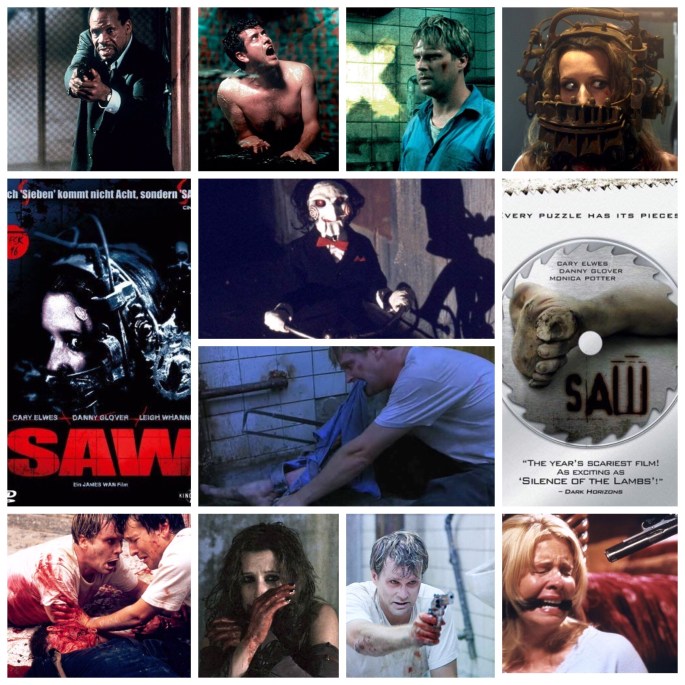
As much as the Saw franchise has become a screaming mad runaway train from which there is no escape or slowing down (I think they just rolled out the eighth one? Fucking Christ), sometimes I need to remind myself that the first is in fact an excellent horror film and worthy of the mythic status it has earned these days. Written by and starring Leigh Whannell who has recently branched out to direct this year’s awesome genre bender Upgrade, it’s directed by James Who has gone on to become a superstar in the genre, but it’s a bit ironic because with this he basically pioneered a whole new tributary of gore-centric horror, yet went on to do fright flicks that notoriously toned down the carnage in favour of real scares. In a dark, damp room, a doctor (Cary Elwes) and a smart ass (Whannell) are held prisoner, chained to radiators. They are informed by unseen serial killer Jigsaw that they must either chop off a limb with the rusty hacksaw laying about, or die in captivity. A corpse lies near them as well as several other tools and riddles, both of the men have secrets that will come to light and play a part in the unfolding horrors to come. Elsewhere, a weary police detective (Danny Glover) follows the trail of clues and tries to hunt down the elusive Jigsaw killer. It’s all a wickedly paced mechanization that moves along like one of Jigsaw’s jagged, gruesome traps until it reaches that final staggering revelation that has since become legend. Others along for the ride include Lost’s Michael Emerson, Tobin Bell, Monica Potter and Shawnee Smith as the now infamous Amanda. The key to all this, and something that they forgot when churning out those ridiculous sequels, is that less is more. This was a low budget shocker that largely relied on one location, and the looming threat of grisly violence rather than wanton gore every other minute. I suppose every successful idea gets saturated by money and excess once the ball gets rolling but holy fuck did they ever let these Saw films get out of control. The first two are like being at a bar with a few of your friends having casual drinks, then three and four roll in as those crazy friends of friends who order way too many shots and start breaking stuff, by the time five and six show up everyone is dancing and throwing up all over the bar and you forgot how you even got there, and the seventh (in 3D no less, because that’s what we needed) is the anguished hangover the next morning and by then you just want it to stoooopppp. At least that’s how I felt watching the them. I’d just as soon stick to this one, it’s a dark, surprisingly thoughtful chiller with a strong story and one of the best yuck moments in the genre. People forget how measured and restrained it is compared to the un-contained wildfire that those sequels smothered it with.

-Nate Hill

Bill Paxton’s Frailty

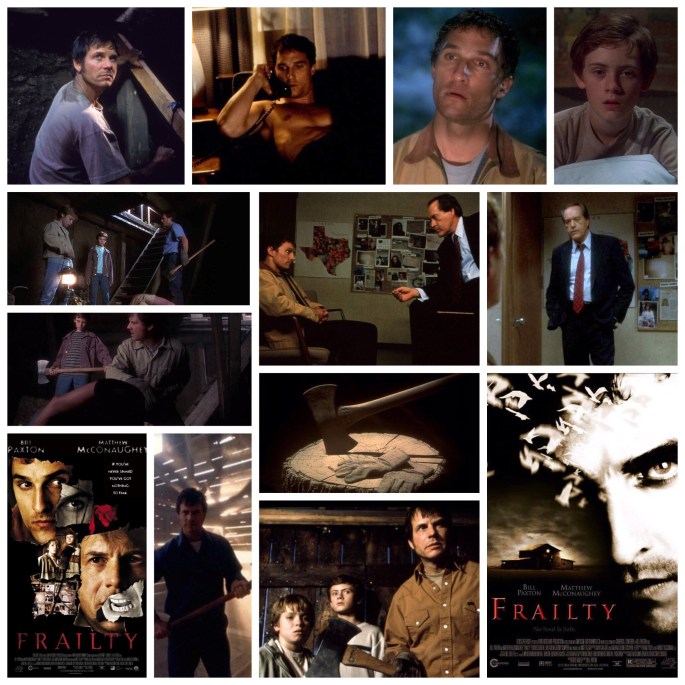
Bill Paxton’s Frailty, man what a film. It’s like a particularly warped Twilight Zone episode with heaps of southern gothic, a few plot twists that will blindside you, enough subtle hints to keep you coming back for revisits and plenty of chilling horror elements. It’s nice that the late Paxton produced a now iconic cult classic as his director’s debut because it shows that he’s a cinematic renaissance man and had talent in multiple areas, he was something special. On a rainy Texas night, a mysterious man (Matthew

McConaughey) shows up at the FBI headquarters and informs a senior agent (Powers Boothe) he knows who the God’s Hand Killer was, a case that has long gone cold. This sparks an intense, eerie tale of his growing up in midland Texas, how his father (Paxton) seemingly lost his mind and dragged his two sons (Jeremy Sumpter and Matt O’ Leary as young McConaughey) into a delusional practice of kidnapping and murdering people that god has told him are demons. It’s harrowing, blood curdling stuff because the horror is treated so bluntly, without much melodrama or shtick. Paxton was indeed a loving father and he approaches the killing with such an earnest rationality it makes one’s skin crawl. That’s just the start of it though, and watching how the past ties in with the story McConaughey weaves is a deliciously dark pathway of unexpected secrets and uncomfortable revelation. People who rag on about McConaughey’s career pre circa 2012 obviously haven’t explored deep enough. Between stuff like A Time To Kill, Lone Star, Contact, Reign Of Fire, this one and others he had one legend of a career before he even arrived at milestones like Mud or True Detective, and rocks it here. Boothe, who sadly passed the same year as Paxton, was an actor with more than a few tricks up his sleeve and he’s wicked good as the shady agent who gets visibly shook up by the gruesome campfire yarn he has to sit through. Paxton is haunting in front of the camera, turning a loving father into a conflicted killer with burrowing complexity, and in the director’s chair he proves more than competent, making this a horror thriller for the ages with its constant surprises, sickening scares and uneasy atmosphere.

-Nate Hill

Clive Barker’s Candyman

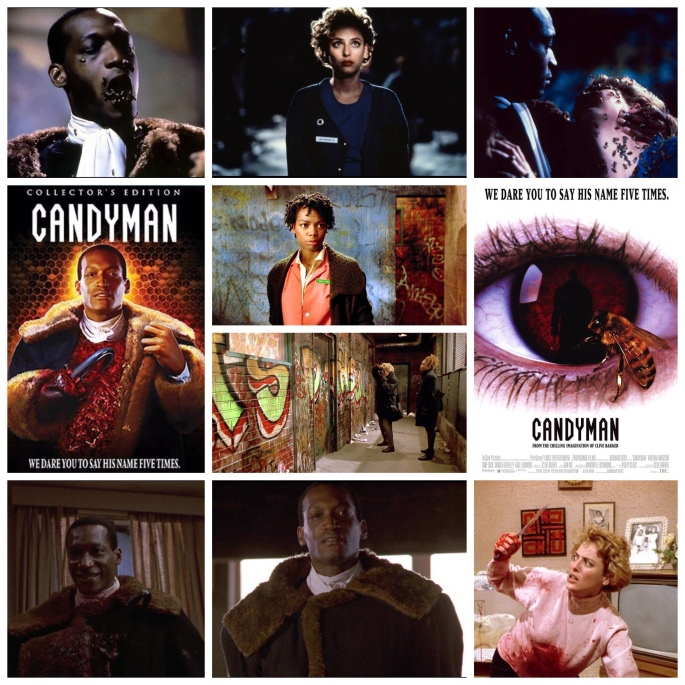
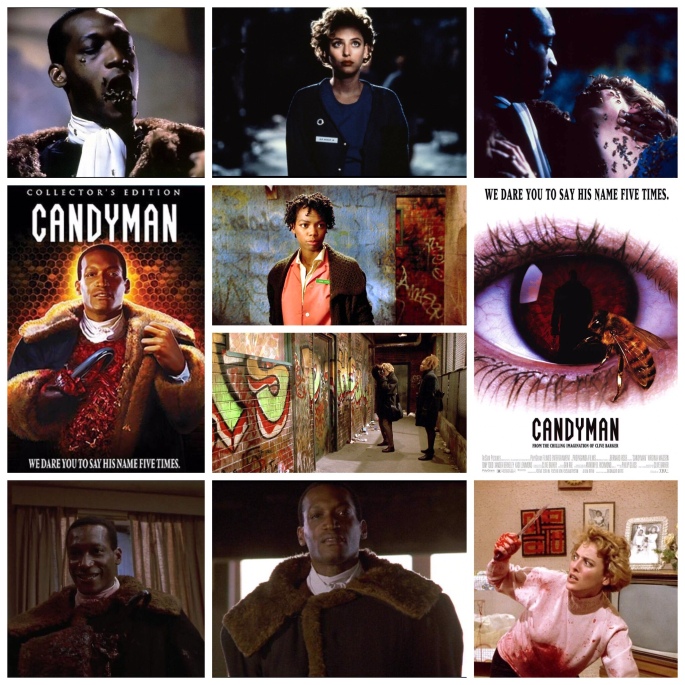
Clive Barker’s Candyman is bar none one of the best horror films ever made. Many factors can take credit for that, but the two chief among them are Tony Todd’s performance as Daniel Robitaille, the hook handed, honey voiced spectre that haunts even the frames he doesn’t appear in, and Philip Glass’s beautiful yet terrifying electronic score that rips through the story like a rogue orchestral piece with a life of its own. Production design and locations are also key here, as they filmed in Chicago’s infamous Cabrini Green Project for real, and it makes all the difference. Candyman is one of those urban legends, the angry ghost of an ex slave who was murdered, and now gets resurrected to raise hell whenever someone says his name in a mirror five times. That someone here happens to be college professor Virginia Madsen, who has heard whispered rumours among the locals and decides to research it a little too closely. Before she knows it she’s seeing Robitaille everywhere, dead bodies are starting to pile up and she begins to look an awful lot like the culprit. With the help of her boyfriend (Xander Berkeley) and colleague (Kasi Lemmons, always fantastic) she tries to get to the bottom of the mystery but Candyman is a tough curse to shake, and the killing doesn’t stop. Many of the actors here are genuine residents of the Green, providing both authenticity and a very human quality to the film. Todd is now something of a household name and has achieved cult status for this role, it pretty much set him up for good in the horror genre and it’s no wonder, he’s a hypnotic dark angel as Robitaille, with both seething menace and a crazy calm lurking behind those eyes. There’s moments of real fright that hold up to this day as truly chilling shockers, such as a kid getting ambushed off camera by Candyman in a park restroom and the horrific aftermath of a dog’s murder coupled with a missing baby, brought to life by Vanessa Williams’s vivid, heartbreaking performance as the mother. This is how you create an effective horror film, by balancing gore with story and character, creating an atmosphere in which we feel both lulled by the sights and sounds but always unsafe as to what could be lurking through that bathroom medicine cabinet or dark, graffiti scrawled hallway. A classic. There’s two sequels that aren’t too awful thanks solely to Todd’s presence, but they come nowhere close to this one.

-Nate Hill

The Crazies

Imagine if zombies weren’t just outright observable walking vegetables and it were a little harder to tell when the change happens? There’s countless variations on the theme, but The Crazies manages to be really unnerving by adding a dose of mental unrest in with the formula. After a strange toxin infects the water supply of a small town, people begin showing symptoms of instability, psychosis and then full on murdering each other at random. The town Sheriff (Timothy Olyphant), his Doctor wife (Radha Mitchell) his deputy (Joe Anderson) and a survivalist girl from town (Danielle Panabaker) band together to escape not only hordes of townsfolk infected by this mania, but also the military brought in to ‘contain’ the situation. It’s a hectic, ultra-violent affair with a doom laden apocalyptic vibe and plenty of explosions, but the real scares lie in the disconcerting way that otherwise simple townsfolk just start to slowly lose it and act mentally disassociated, before getting downright homicidal. Especially effective is a scene where a woman is helplessly strapped to a hospital gurney and one of the crazies slowly enters the room, the dread is palpable and it’s a true scene of horror. Scary stuff.

-Nate Hill

David Gordon Green’s Halloween

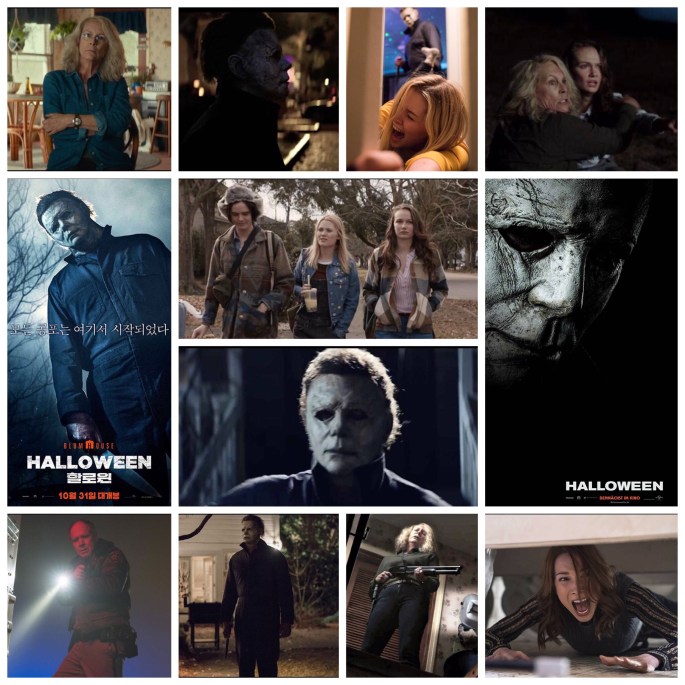
David Gordon Green’s update on John Carpenter’s Halloween is currently slashing its way through theatres, and aside from a few nit-picky asides, it’s a winner, both in terms of a genuinely scary horror and as the long awaited sequel to a film that practically reinvented the printing press of the horror landscape.

The new Halloween is sleek, vicious, aesthetically pleasing and brings back Michael Myers to do far more killing than he ever did the first time around, as this takes place in a universe bereft of any other sequels, an interesting choice which gives the it a fresh, immediate vibe. Also back is Jamie Lee Curtis’s Laurie Strode, who has calcified into a paranoid, blunt realist who doesn’t so much worry if Michael will come home, but just somehow knows it in her bones. Judy Greer is fantastic as her estranged daughter Karen, Toby Huss provides great comic relief as her husband and Andi Matichak is a sensational find as Laurie’s granddaughter Alyson, who echoes both the resilience and vulnerability we remember in Laurie when she was her age. Will Patton also kicks ass as the Haddonfield Sheriff’s deputy, always great to see him.

It’s nice to see references that aren’t overt or forced, but woven into the narrative almost seamlessly and with purpose. Many instances feel serendipitous, and as the infamous classroom scene always intones and reiterates here, fate is an inexorable bitch from which there is no escape. Green and his team have lovingly made Michael the relentless stalking Shape we fondly remember, using fluid tracking shots, lingering suspense, mounting dread and those classical music cues to herald his arrival on the fringes of nocturnal suburbia like a monster in a bad dream. There are impeccably orchestrated scares involving a closet and a motion sensor light that are impressively effective and nerve shredding. There were a few things that felt dumb, like the extended involvement of a Dr. Loomis proxy called Sartain (Haluk Bilginer) who at first is welcome until his arc gets inexplicably loopy, as well as some ham fisted writing for Alyson’s male friends, one of whom is so irritating I wish they’d casted an actor who looked and sounded like less of a ripe cheese, but oh well, at least he’s short lived.

Now, my favourite thing about the film: that beautiful score, and I’m not just referring to the original jangly tune. Carpenter himself, his son Cody and Daniel A. Davies worked together to not only rework the iconic theme a bit but compose swaths of new stuff, atmospheric passages and nightmarish synths that are instantly worthy of the main theme. This is definitely the best sequel since the original Halloween 2, which can be considered a companion piece to Carpenter’s first anyways as he reportedly directed chunks of it. This feels like a slasher should, but it’s also smart, deliriously stylish and scary in that elemental way where it’s not the violence itself that haunts the experience, but the spaces in between where Michael is lurking with intent and the suspense builds. That’s what Halloween is about.

-Nate Hill

Starz’s Ash Vs. Evil Dead

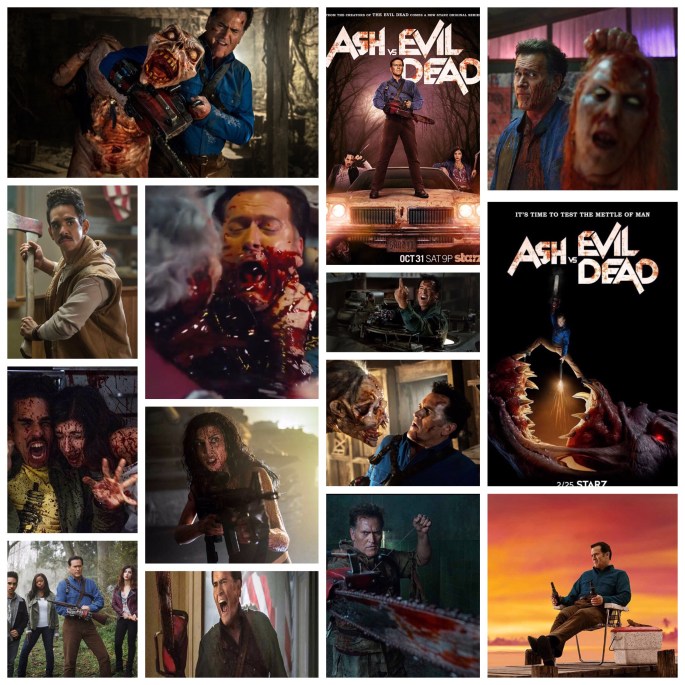
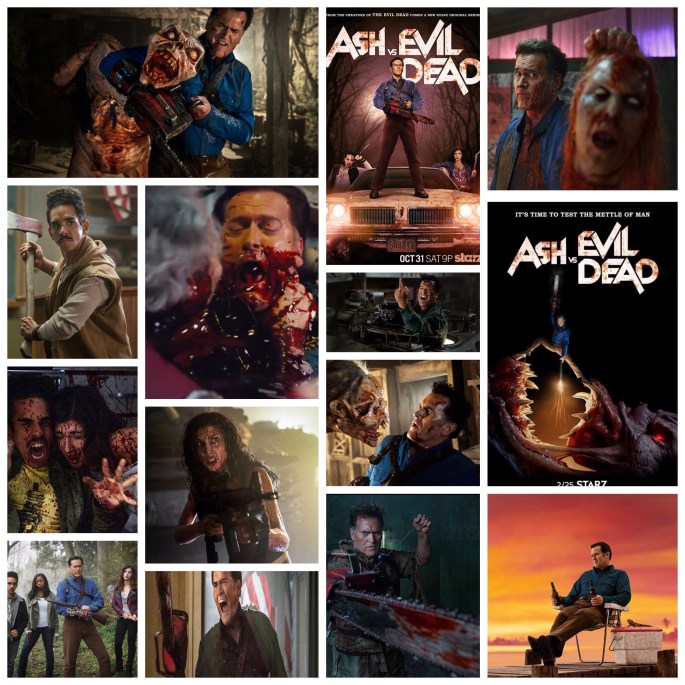
I feel like Starz’s Ash Vs. Evil Dead doesn’t get enough love or praise. It was always going to be a tough task to update and fluidly continue a scrappy, deranged, hyperactive, genre pioneering classic from the early 80’s into contemporary long form storytelling, but damn they kind of nailed it. Raimi himself directs the first episode to kick the party into gear, and sets the stage for two knockout seasons of nostalgic bloody mayhem, new ideas and demons worked into the existing lore and more deftly written comedic dialogue than you can shake a boomstick at. This picks up decades after the original cabin massacre, which Ash has now himself been blamed for. That pesky necronomicon isn’t quite done with him though, and pretty soon he’s on an epic, gore laced quest to defeat evil with two awesome sidekicks, the sexy, fearless and spirited Kelly (Dana Delorenzo) and courageous, scrappy Pablo (Ray Santiago). Their adventures take them on countless endeavours, side-quests and tussles with every demon under the sun, and it’s the characters who ultimately make it worthwhile. Middle aged Ash is different from the jittery youngster of Evil Dead and even the reluctant avenger he became in Army Of Darkness. He’s kind of a goof, but a goof who gets shit done in the end and lives to swill a beer and tell a grossly exaggerated tale about it. There are some truly inventive monsters, demons and deadites on display here too, from your garden variety howling, decayed possesses corpse to full on legendary denizens right out of the bible, a haunted car in a cool shout out to John Carpenter’s Christine, a possessed cadaver that literally shits and pisses all over a very uncomfortable Ash as the deadite inside takes liberties with it’s bodily functions, and all kinds of other stuff including an an evil Ash hand puppet that has to be seen to be believed. Other great supporting turns come from Lucy ‘Xena’ Lawless as an immortal badass demon hunter, Ted Raimi as Ash’s ketamine guzzling high school chum, Lee Majors as his ladies man of a father and more. I’ve only seen the first two seasons so far, but I’ve got nothing but great things to say about this show. It’s consistent with the tone and feel of Raimi’s original classic horror trilogy while building upon everything he did to blast new pathways into the Ash legacy. Punishingly, rewardingly gory, spectacularly hilarious at every turn, filled with loving references, deadites galore, this one is a keeper.

-Nate Hill

David Cronenberg’s The Fly

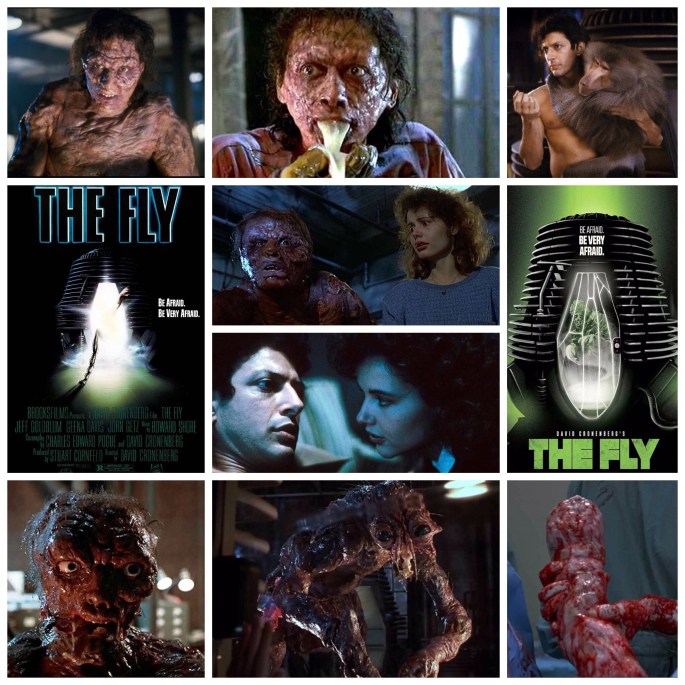
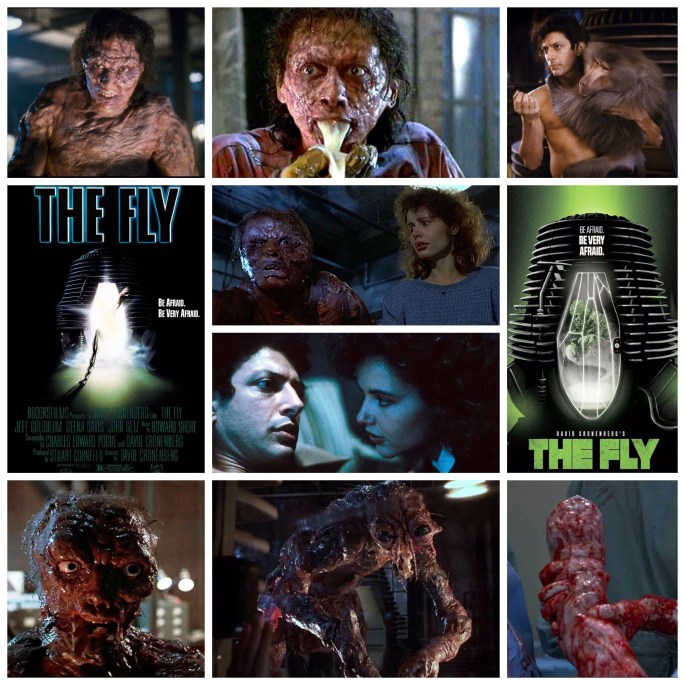
It’s taken me years to finally get around to David Cronenberg’s The Fly, but I’m glad I did as it’s a terrifically slimy gore-palooza boasting practical effects that are on par with classics like John Carpenter’s The Thing and Sam Raimi’s Evil Dead. Cronenberg is known as the prince of body horror, and has carved out a now legendary swath of schlock-tacular horror films (many of which I’m unfortunately not caught up on), but his nightmarish visions almost always have a brain in their heads or something to say about media, psychology, biology or the way things work. In The Fly he takes a look at the universal human fear of disease and decay, a collective primordial disgust that Jeff Goldblum and Geena Davis fuel their performances with. Goldblum is Seth Brundle, a brilliant but terminally awkward scientist who has developed a functioning teleportation device. Well almost, as he has trouble sending anything alive through it, and it has a habit of turning monkeys inside out. One night he drunkenly sends himself through, unaware that a tiny little stowaway has come for the ride. The computer gets confused, combines their DNA at a molecular level and, viola! Jeff Goldblum starts literally turning into a giant fly, and trust me when Cronenberg is at the helm of such a premise, no expense is spared on gallons of vile corrosive goo and repulsive glistening prosthetics, so don’t order in Pizza Hut if you have this one on in the living room. Geena Davis is effective as the journalist that falls in love with him and has to bear witness to the grotesque transformation, but unfortunately the film isn’t long enough to work as a romance, choosing instead to put the horror front and centre, which is where it’s strongest aspect lies. Goldblum is great as the twitchy doctor, and uses his physicality brilliantly once the metamorphosis begins, giving his lanky frame a staccato, animalistic rhythm that suits the character well. The effects are dazzling, if retro gore is your thing, a whole party bag of slime, pus and deformity that stands as a showcase for the FX team. I like Cronenberg’s horrors, or at least the ones I’ve seen, because no matter how schlocky they get, he never veers it totally into the sandbox and forgets his themes, he always seems in complete control of the nuttiness, following a specific recipe that doesn’t derail anything and that probably why he has become such a pedigree name in the genre. The film could have been a tad longer and a bit more fleshed out in places, but still serves as a slick, well drawn shocker that has not surprisingly stood the test of time.

-Nate Hill