Ron Howard’s Willow


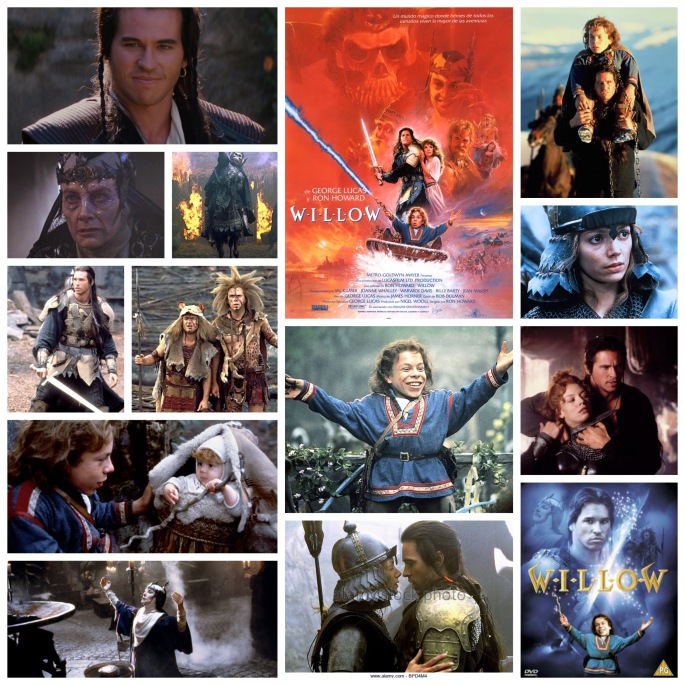
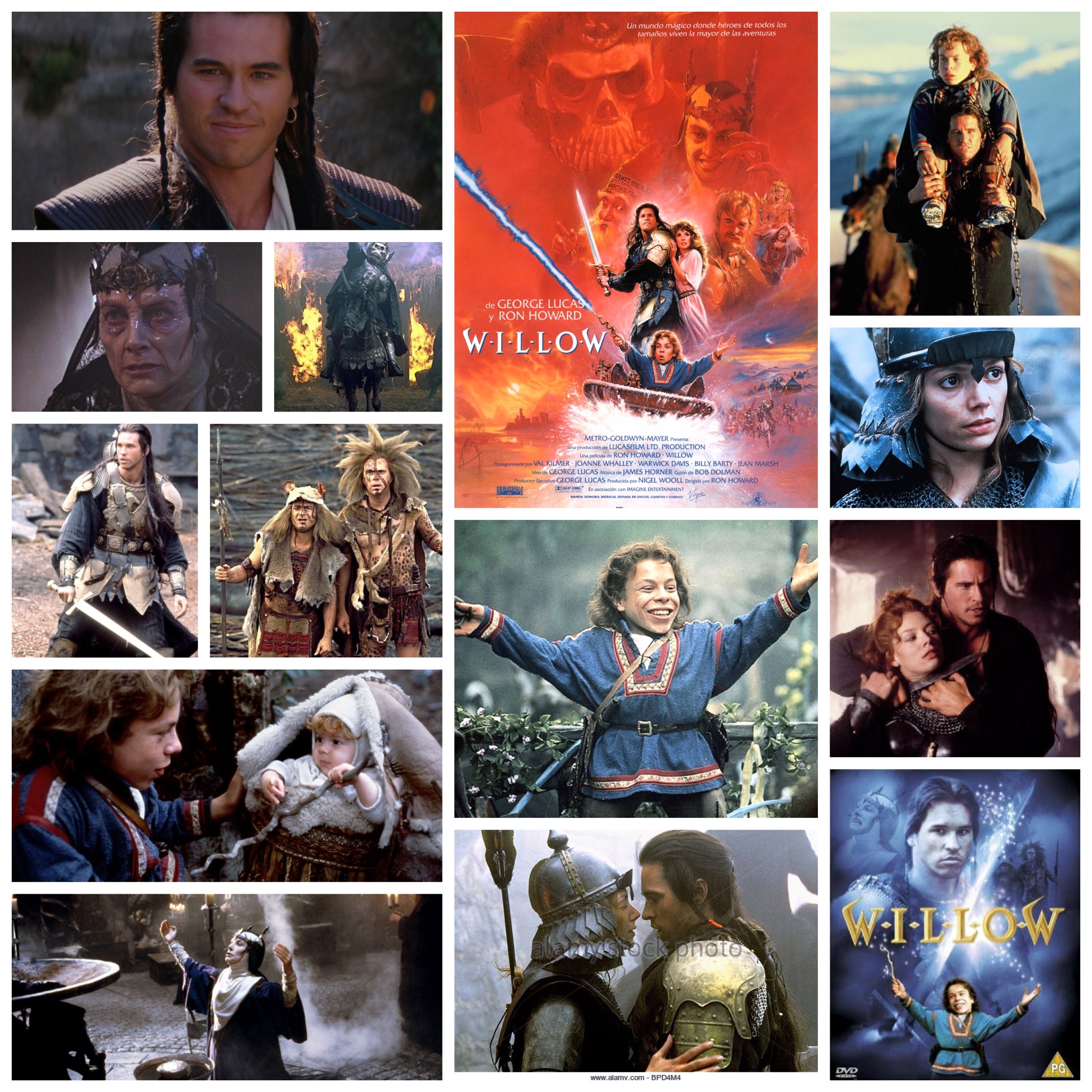
Who doesn’t love Ron Howard’s Willow? Hopefully nobody, because it’s a brilliant fantasy classic that’s aged like the finest wine. From a story by George Lucas (vague Ewok vibes abound), it’s just a rollicking picture, oriented towards the little ones whose sense of wonder hasn’t dimmed, yet eager to include a very real sense of danger and darkness, the perfect recipe to make a film like this noteworthy and nostalgic. In a village inhabited solely by dwarf-like creatures, a secret has been unearthed by the family of young would-be sorcerer Willow Ufgood (Warwick Davis). In their little Hobbitsville of a town on the edge of a vast fantastical realm, a human infant has floated down river like Moses, a special child with the power to defeat a nefariously evil witch (Jean Smart) who has terrorized the land for ages. After the baby attracts danger to their village, the council gives Willow the task of bringing the child out into the world so it can fulfill it’s potential and bring goodness back to the realm. So begins a dazzling big budget journey into the heart of sword and sorcery darkness, a well woven blend of humour, heart and magic that is never short of thrills or visual splendour. Val Kilmer steals the show as rambunctious Madmartigan, a fiercely funny rogue of a warrior who protects and guides Willow through a harsh, threatening world, while Kevin Pollak and Rick Overton score comic relief points as two pint size little pixie things with vaguely European accents, which they use to hurl many a colourful insult in Kilmer’s general direction. Val’s real life wife Joanne Whalley plays sultry Sorshia, daughter to the villainous queen and badass beautiful warrior princess with dark sex appeal for days. There’s just so much to love about this film, from the wildly boisterous score by James Horner that gets our pulses up, the gorgeous production design and attention to detail, the story itself full of wondrous magic and peril, to the reliance on practical effects as per the times. It’s adorable that the filmmakers went out of their way to cast hordes of actual little people as opposed to relying on camera trickery, right down to Willow’s tiny, impossibly cute dwarf children. Highlights I will always remember from this one are the impressively staged sled race down a snowy peak using shields as careening vehicles and the surprisingly gory attack from giant worm/gorilla hybrid creatures that seriously disturbed seven year old Nate for years after. You simply can’t go wrong with this one. 

-Nate Hill
ROGER SPOTTISWOODE’S THE PURSUIT OF D.B. COOPER — A REVIEW BY NICK CLEMENT

1

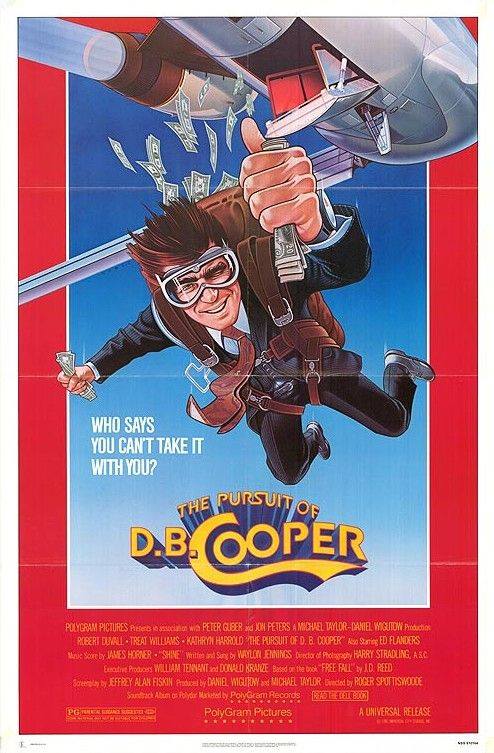
Being a product of the 1980’s, there are more than a few under the radar gems that always made me smile (for one reason or another) or that kept me entertained. Based on the novel Free Fall by J.D. Reed, The Pursuit of D.B. Cooper was one of those titles that I found myself watching on cable (or was it HBO?) repeatedly, never truly understanding it, but enjoying it nonetheless. It’s always been on the back on my mind to revisit, so I sought it out, and low and behold, it’s nearly impossible to find. So I recently purchased a Hungarian Region B DVD for the film (no American disc release has ever occurred, to my knowledge), and despite the fact that the movie was lensed 1.85:1 and then presented in the 1.33:1 aspect ratio (thus losing visual information), I had to check it out again. The disc transfer looks to have been processed in bowls of urine, which is a shame, because the image looked overly yellow in numerous spots and the cinematography, in general, is consistently eye-catching. As for the movie, it’s exactly as I remembered it being – a raucous, wild, totally crazy little action adventure that took a real man and real situation and turned the entire thing into the equivalent of story you’d tell at a campfire, or an urban legend that takes on a mind of its own.

Released in 1981, the film centers on wild-man aircraft hijacker D. B. Cooper (Treat Williams in a unique role), who made off with $200,000 in 1971 after leaping from the back of a plane over the Pacific Northwest. The script imagines what it would have been like for Cooper to hide out and attempt to evade capture by law enforcement. Jeffrey Alan Fiskin’s incident packed screenplay fictionalized most of what happened during Cooper’s escape, but that doesn’t prevent this offbeat item from being undervalued if a tad obscure; Fiskin’s other scripting credits include Cutter’s Way and Tony Scott’s pulpy thriller Revenge. John Frankenheimer was the film’s original director, and would later denounce the entire production. He was replaced by TV journeyman Buzz Kulik just before shooting began. Then, after the movie was well into production, Kulik was fired, and replaced by final collaborator Roger Spottiswoode, who would be the only director to receive an onscreen credit. The film has an interesting, sort of ramshackle visual aesthetic, heightened by a jaunty, honky-tonk-ish score by James Horner. A sort of lark that would never get made today, the performances by Robert Duvall (as an insurance investigator) and Williams anchor the film with a level of class and conviction, Kathryn Harrold was a total knock-out, and while the overall lightheartedness of the entire endeavor is apparent from frame one, the various action scenes are briskly shot, cut, and executed, especially the opening sequence complete with a real sky-dive done before the era of CGI laziness kicked in.