Charles Bronson ain’t got nothing on the level of grit seen in this revenge story. James Wan’s Death Sentence is obviously inspired by the endless Death Wish films, which by their end had gone from classy exploitation (sounds like an oxymoron, but trust me, it’s a thing) to lazy spoofs. This one goes back to the gritty roots, as well as udating the setting to our present time and laying on the gloomy, oppresively violent atmosphere so thick you’ll want a shower and some cartoons after. Kevin Bacon is Nick Hume, a mild mannered advertisement executive living an idyllic life with his wife (Kelly Preston) and two young sons. All that changes one night when one of his boys is murdered in cold blood by some punk in the midst of a gas station robbery. The thug gets released on a technicality, and Nick gets shafted of both justice and peace of mine right at the start of his grieving process. Making one of those penultimate crossroad decisions that alter both his life and the fate of the film’s narrative, he takes it upon himself to murder the perpetrator in a grisly display of vigilante justice. Only problem is, that ain’t where it stops. The murderer has a brother who makes him seem like tweety bird, a terrifying urban scumbag named Joe Darley (Garrett Hedlund) who puts Nick and his family directly in the crosshairs of revenge. Nick is forced to become a one man army to protect his family and eradicate the evil that has entered hiss life once and for all, assisted by a wicked arsenal of nasty weapons provided by sleazeball arms dealer Bones Darley (John Goodman). If you look up ‘scene stealer’ in the dictionary you’ll find a picture of Goodman’s jolly visage grinning back at you. No matter who he plays, he’s the life of the party, and his Bones is a fast talking gutter-snipe who jacks up every scene he’s in with scuzzy dialogue. He plays an integral part in Nick’s brutal and often disturbing quest for justice, a hard R urban bloodbath that pulls no punches and aims to shock. Bacon often plays morally questionable pricks, walking a fine line between upright heroes and corrupt nasties. In one character arc he gets to traverse that whole spectrum here, a regular guy who is pushed to criminal extremes until he’s barely recognizable, even to himself. Intense stuff that heads down a dark alley of human unpleasantness.
Tag: john goodman
Robert Zemeckis’s Flight: A Review by Nate Hill
When I saw the marketing and trailer hype for Robert Zemeckis’s Flight, I was strongly under the impression that when I got around to seeing it I’d get a conspiracy style thriller. Some aviation intrigue, maybe a little government corruption, valiantly unveiled by Denzel Washington’s hotshot pilot protagonist. How very wrong I was. To my credit, it wasn’t my fault, but that of the severely misleading marketing. But then, how do you market a film like this? Hell, it’s a wonder it even made it past the pitching stage! The airplane related fiasco one sees in the previews is but a tiny segment that acts as at catalyst for one of the most searing and honest portraits of addiction I’ve ever seen. Washington is Whip Whittaker, senior pilot, ladies man, assured professional and severe drug and alcohol user. Whip snorts and guzzles day and night, including during the job. He’s functional and hides it well, but thats just another facet of his problem. When an onboard malfunction causes crisis on one of his flights, he takes a giant leap of faith, spectacularly landing the airplane upside down and essentially saving every passenger’s life. End of story? Not really. From there the film throws a curveball, as we dig deeper into Whip’s life, habits and history. An inquiry is launched into his mental state during the event, led by a stern and silky voiced Melissa Leo. His superiors do everything to defend him, but it becomes clear that he has been coming apart at the seams for sometime now, and the incident was one of the final rips. It’s a journey into one man’s refusal to admit his problems, and the often extreme ways in which life holds up a mirror in front of us and demands acceptance. Kelly Reilly is superb as a damaged girl he meets who tries to take his hand and lead down the way to fixing what is broken, but he’s pretty damn far off the path. John Goodman is his charismatic self as Whip’s groovy drug dealer, and Bruce Greenwood reliably steals scenes as an airline official determind to defend Whip to the bitter end. Washington is heartbreaking, especially in the scenes of alcohol abuse, which are tough to watch. He’s never had a character arc quite like this, and it’s one of the most special, vital gifts of acting he has ever given us. The look, feel and tone of the film is anything but gritty or depressing. It has a glossy, aesthetic sheen to it that barely hints at the commotion and strife which befalls it’s lead character. Perhaps this was Zemeckis’s intention: dazzle us out of the gate with crisp frames and bright cinematography and then blindside us with the darker elements, showing us in the process that such issues can befall any one of us in society, no matter how outwardly successful, confident or in control we seem. The film is as complex as it’s protagonist and begs the audience to empathize with him on his journey, despite the glaring shortcomings we observe. It’s one of the most human stories I’ve ever seen; two hours spent with a realistic person who is assured, broken, confused, scared, stubborn, strong willed, weak and deeply wounded all at the same time. Washington paints the picture for us momentously, and it’s the best work he’s ever done. You don’t get too many films like this released by the studio system, and this one is some kind of miracle.
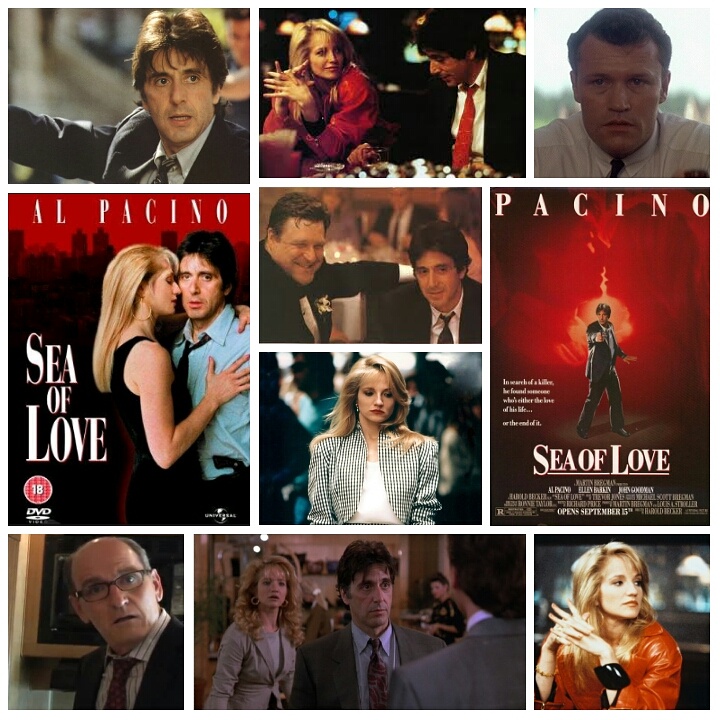
Sea Of Love: A Review by Nate Hill
Sea Of Love is one of my favourite romantic thrillers of the 80’s. It’s perfectly structured, riveting the whole way through, and just as steamy as you’d imagine a pairing between Al Pacino and Ellen Barkin to be. It’s so well made that we don’t even notice pieces of the puzzle falling into place until the image they make is staring us right in the face and we sheepishly snap out of the sensual trance the film has laid upon us. It’s never too grisly, never sappy, but strikes every note in time with the rhythm of both its script and the acting style of the two leads. Pacino is Frank Keller, a police detective pursuing a killer who is choosing their victims based on personal ads placed in the newspaper. This provides a readily made paper trail for him to follow and hopefully find his man, but in the process he must stage a bunch of blind dates that are essentially theatrical stake outs, in attempt to lure his prey into the open. Pacino is always keen and sharp when playing detective roles, but only in this one does the romantic side of his life play just as important of a part as the thrill of the hunt and the crime dynamics, which makes the role unique in his career. Things get complicated when he gets involved in a torrid and unpredictable affair with Helen, a mysterious girl who replies to one of the adds and quickly becomes a prime suspect. Aided by another detective (John Goodman is fantastic as always) from a few precincts over, he tries to race against both time and the spiderweb of danger which is unseen yet slowly winches tighter on everyone involved, as the killer circles them all. Watch fpr suppoetin turns from Michael Rooker, William Hickeyn, Paul Calderon, Richard Jenkins, Larry Joshua, John Spencer and a cery young Samuel L. Jackson who is simply credited as ‘black guy”, which cracked me up. It’s got rocket fuel for pacing and I mean that as a compliment; It’s pure cinema from both a genre standpoint and in general. Fairly forgotten these days, but one of the very best to come out of its era.
The Big Easy: A review by Nate Hill
For a film about violence, crime and police corruption, The Big Easy sure is easy going and colorful. The characters are the liveliest bunch of rascals and it’s a pleasure to spend every minute with them. Dennis Quaid plays cocky New Orleans detective Remy McSwain, a swaggering smooth talker who’s gotten wealthy taking payoffs, a dude whose silky charm matches his swanky suits. He’s gotten used to the easy life in the police department, with a captain who looks the other way (Ned Beatty brings a jovial, rotund presence), and colleagues (John Goodman is perfectly cast as the witty loudmouth of the bunch) who are just as happily willing to bend the rules as him. Trouble arrives in the sultry form of D.A. corruption task force specialist Anne Osborne (a swelteringly hot Ellen Barkin) who leans on Quaid as heavily as he hits on her. There’s immediate and electric chemistry between them, which she adamantly fights, and he chases like a horn dog pursuing the bumper of a speeding Buick. Quaid and Barkin have the same spitfire sheen to their work, their careers dotted with performances that are flashy yet brave, pulpy yet laced with depth. Here they’re having oodles of fun and carry the entire film on their crackling star power and romantic spark alone. There’s also a subplot involving a rash of gang killings, as well as family matters involving Quaid’s vivacious Cajun clan, including his Momma (monumentally talented Grace Zabriskie). It’s a lively hodge-podge of plot elements we’ve seen a zillion times, but given such flippant style and good natured southern hospitality that we can’t help but be won over. There’s some lovely live performed Cajun music as well to add extra spice.
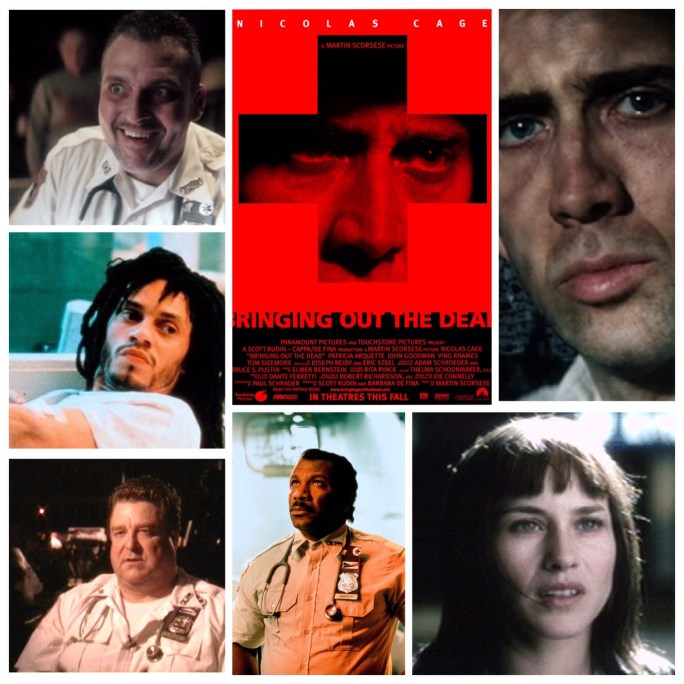
Psychology Of Film Episode 2~Paramedic Fever Dreams: Martin Scorsese’s Bringing Out The Dead
Recently myself and a good friend of mine, Mo Barrett, have begun to craft special ‘interactive’ video summaries of some of our favourite darker, more challenging films. This installmeant sees us look at Martin Scorsese’s Bringing Out The Dead, a terrific. Option picture which we both have a mutual love for. Please click the link below and enjoy!
Bringing Out The Dead
Created By Mo Barrett and Nate Hill, with thanks to the support of Frank Mengarelli and Nick Clement of Podcasting Them Softly.
JOE DANTE’S MATINEE — A REVIEW BY NICK CLEMENT

I don’t understand how Joe Dante cajoled the Universal brass into completing his love letter to cinema, the 1993 film Matinee, after the film’s original producers went bankrupt, but I am glad he did, because it’s such a wonderful, unique, and all together joyous little gem that it stands to reason that in today’s movie climate, this film just doesn’t get made, let alone contemplated, by the major film companies. Dante’s film is a period piece set in Key West, Florida, centering on a William Castle-esque indie filmmaker played with jovial enthusiasm by a perfectly cast John Goodman, and set against the back drop of the Cuban Missile Crisis. Co-starring Cathy Moriarty, filmmaker and Dante collaborator John Sayles, Simon Fenton, then popular Kellie Martin from TV’s Life Goes On, Dick Miller (a longtime Dante buddy and good luck charm), Omri Katz, child star Lisa Jakub, and Robert Picardo (Dante’s other good luck charm!), Matinee is so many things: A wistful coming of age story, an ode to the inherent power of movie magic, and a spirited shout-out to old-school showmanship. Written by Jerico Stone and Charles Haas, the film contains a film-within-the-film called Mant, which is essentially a throwback to the pulpy sci-fi movies of yesteryear featuring a half-man/half-ant with outlandish practical make-up and special effects; it’s oh-so-clear that Dante must’ve been in cinematic heaven with these scenes, as all of the footage from Mant was shot to aesthetically approximate how those movies used to get put together. The acting on the part of the teen leads was decent (if a bit stiff at times), but that doesn’t matter, because this film’s heart is so massive, and it’s wildly evident that it needed to be made by these particular creative entities. Dante is one of those filmmakers who never got his true due as a premiere director of smart and funny and always inventive mid-budgeted studio pictures, a friend of Spielberg’s who also subscribed to the Amblin philosophy of subversive family entertainment; his terrific and continually underrated credits include Explorers, Small Soldiers, Gremlins, Gremlins 2, The ‘Burbs, Innerspace, and The Howling. The film also features a fantastic score from Jerry Goldsmith, splendid cinematography by John Hora, and perfectly timed comedic editing by Marshall Harvey. Seek this one out as my guess is that it’s escaped many, many people who would absolutely love it.

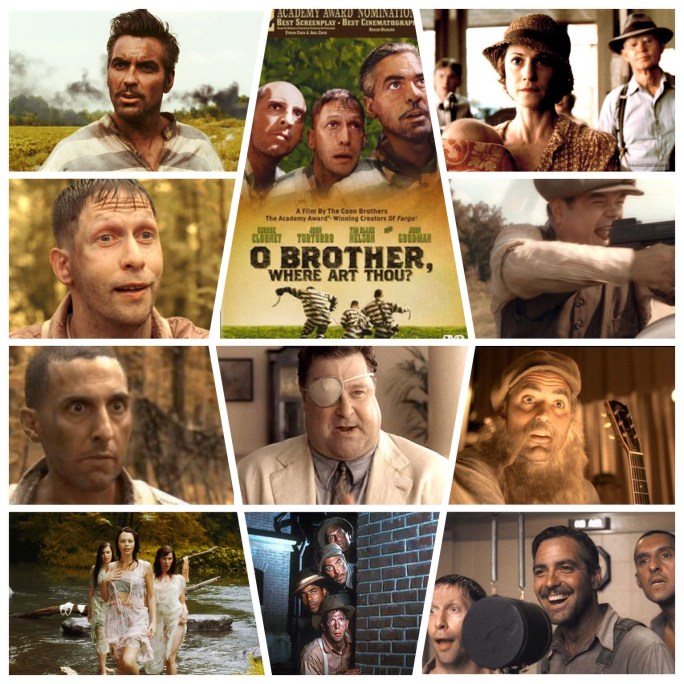
O Brother Where Art Thou? -A Review by Nate Hill
The Coen Brother’s O Brother Where Art Thou is just a rush of pure originality, musical genius and inspired storytelling, situated outside the box of used conventions, and rooted deeply in a whimsical realm of absurd, charming characters on an epic odyssey across the American south during arguably the most eccentric time period, the 1930s Great Depression. It’s the Coen’s second best for me (it’s hard to top the Lebowski, dude), and a film that I watched so many time growing up that it’s almost now a piece of my soul. It’s loosely based on Homer’s The Odyssey. Three bumbling convicts escape from a dusty chain gang in a delightful opening romp set to Harry McClintock’s The Big Rock Candy Mountain. Ulysses Everett McGill (George Clooney) is their silver tongued, troublemaking leader, on his way to reunite with his estranged wife (Holly Hunter, reliably stubborn and sassy) and little daughters. Along with him is short tempered Pete (Coen regular John Turturro in top form) and sweet, dimwitted Delmar (Tim Blake Nelson). Together they get in just about every kind of trouble that you can imagine three hapless convicts on the run in depression era south getting into. They briefly share paths with musician Tommy (Chris Thomas King), cross the radar of a boisterous bible salesman (John Goodman, stealing scenes as usual with his effortless, booming charm), become involved with duelling governor candidates Homer Stokes and Pappy O Daniels (Wayne Duvall and Charles Durning), and have run ins with sexy sirens led by Musetta Vander, the KKK, notorious mobster George Babyface Nelson (Michael Badalucco has to be seen to be believed as the lively, likely bi polar suffering wise guy) and more, all the while pursued by mysterious Sheriff Cooley (Daniel Von Bargen, RIP). It’s quite al lot of goings on for one film, but the Coens are masters of telling zany, eclectic stories that deviate into all sorts of unexpected subplots without ever derailing and losing us. This one flows along wondrously, a wild, funny and haunting fable that almost feels like a dust bowl Dante’s Inferno at times, albeit of much lighter subject matter. Roger Deakins spins poetry with his lens, capturing every chaff of wheat, every ray of southern sun and brown hued set design with painstaking expertise. What really holds it together though, is the absolute knockout soundtrack. There’s so many moments of now iconic musical storytelling that we feel we’re watching a strange bluegrass lullaby that just happens to take place in cinematic vision. The Coens have always known their music, but they transcend to another level of intuition here, gathering an incredibly evocative group of songs and artists together that stir the collective ancestral memory of historical Americana. Off the top of my head there’s You Are My Sunshine, Keep On The Sunny Side, I’ll Fly Away beautifully warbled by the Kossoy Sisters, Didn’t Leave Nobody But The Babe sung by the slinky sirens, In The Highways by the adorable Peasall sisters, Jimmie Rodgers’s In The Jailhouse Now, Lonesome Valley, Ralph Stanley’s two eerie pieces O Death, and Angel Band, also by the Peasall Gals, and the classic Down To The River To Pray, which sneaks up on you and leaves you in rapture from its inescapable grip. My favourite by far though is I Am A Man Of Constant Sorrow, an endlessly catchy hobo tune of jangling melancholy and highway humour, sung by John Hartford but cheekily lip synced by Clooney and team, an original piece made up on the fly by the three characters that goes on to make them ridiculously famous under the pseudonym the ‘Soggy Bottom Boys’. It’s all an intoxicating wonder to take in, the period authentic screenplay and production a feast for the senses. The Coens seem to be adept at whatever they try; sly satire, period piece, stinging violence, dark humour, and even touching drama when they put their minds to it. This is a career high for them, a totally unique piece of art that demands multiple viewings and a spot in any avid movie collectors pantheon.