Simon Stone’s The Dig

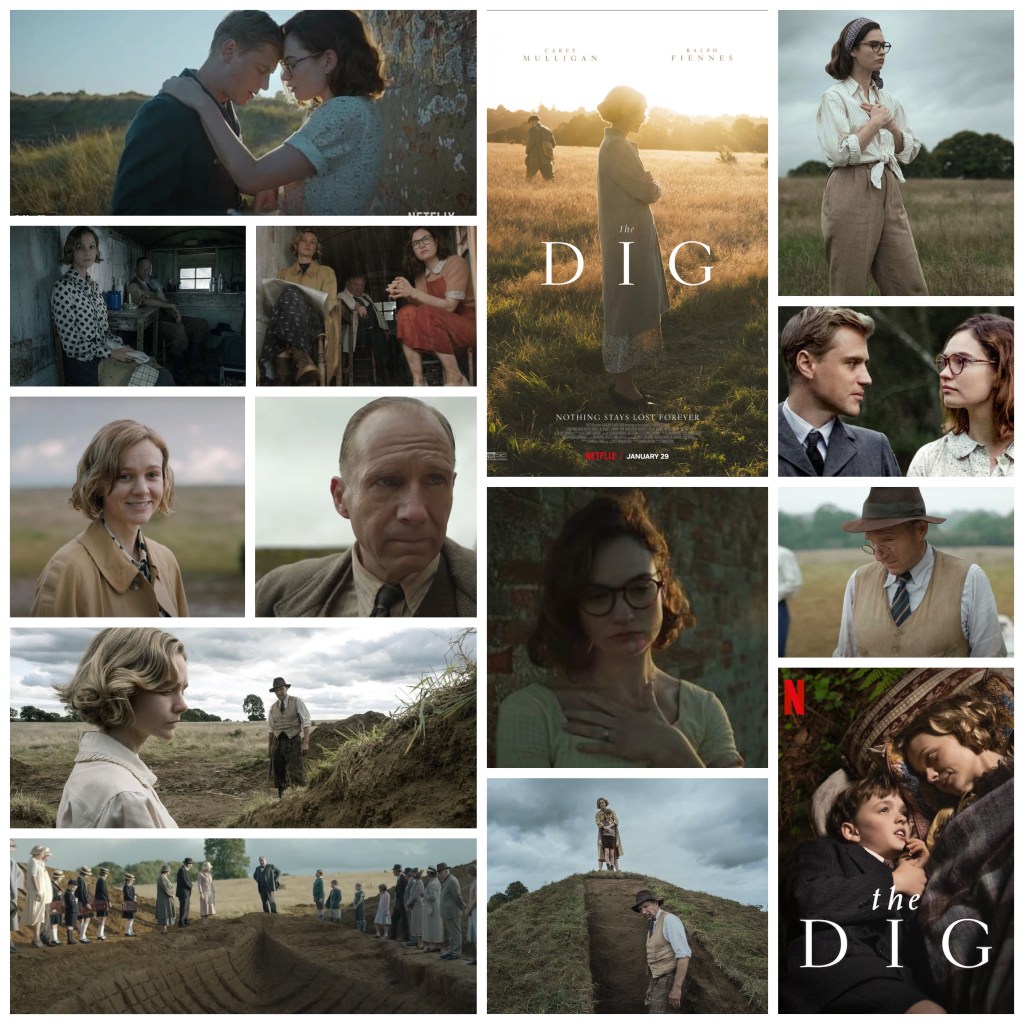
Why do we dig through the earth looking for remains of those who lived before us long ago? Is it for posterity’s sake, for the people who will come we’re gone? Simple collective genetic curiosity for our fellow humans? Is it purely academic or is there some intrinsic burning impulse to unearth what was before in the hopes it might affect our own lives, in some invisible cosmic fashion? Simon Stones’s new Netflix original film The Dig is a phenomenal piece of work that asks these questions by showing us a varied ensemble of people working in the famed archeological dig of Sutton Hoo in Suffolk England, 1938, right before the outbreak of World War 2. The excavation is commissioned by widow landowner Edith Pretty (Carey Mulligan), spearheaded by focused, workaholic expert Basil Brown (Ralph Fiennes) and assisted by others including junior archeologist Peggy Piggott (Lily James) and British Museum scout Charles Phillips (Ken Stott). While the film focuses intently on the dig and eventual unearthing of a wondrous find itself, what really stands out and feels important is the character work and how each person deals with issues like alienation, mortality and interpersonal relationships individually and as a group. Fiennes is wonderful as Basil Brown, a hard working guru who doesn’t want fame or acclaim, but simply has an organic passion for pulling back the curtain of history and illuminating the past. Mulligan is a staggering actress and displays great fragility and resilience in the face of looming adversity. James was such a bubbly presence in Mama Mia and she certainly draws attention but she’s much more restrained, subtle and heartbreakingly vulnerable here, stuck in a loveless marriage to a colleague (Ben Chaplin) and feeling trapped by circumstance. The film is beautifully shot by cinematographer Mike Eley (Touching The Void) with a lyrical feel for the scope, lighting and spacial dynamics of rural England’s elegiac fields and hills, scored to emotional, melodic perfection by Stefan Gregory, competently directed by Stone and stunningly acted by the entire cast. The menace of incoming war is always present here as fighter planes frequently careen across the overcast skies, but somehow we feel safe in picturesque Suffolk with this intrepid band as they dig and search, not only in the dirt below them but amongst themselves, inwardly and in relation to each other to find peace, love, sense and some kind of solace in an often sorrowful world. It’s early in the year but this is already one of the strongest films so far.

-Nate Hill

Antoine Fuqua’s King Arthur

I’ve been singing the praises for Antoine Fuqua’s King Arthur for years, but here’s the thing: you simply have to watch the extended director’s cut, it’s a different film entirely than the theatrical. Expanding both on complex moral quandary and lethal, bloody carnage, it allows ideas, expression and extreme violence to play out in a cut free of time and rating constraints, and as such is one of the best sword/battle flicks I’ve ever seen. The main buzz surrounding this one was how much of a departure it is from the usual Arthur lore we’re used to.. darker, grittier, more tied in with Ancient Rome and bereft of any lighthearted fantasy, it may as well be its own thing untethered of any Arthurian scope, because who can really say how it all went down back then anyways. Here Arthur is a restless, stormy Sarmatian knight played by a hot blooded Clive Owen, a fearless, jaded warrior who is steward to a rowdy troop of loyal swordsman forced by the empire to serve out fifteen years of service in exchange for freedom at the end of it all. Each of his troupe is played by a stellar actor, and each blessed with their own distinct, fully formed personality. Headstrong Bors (The always awesome Ray Winstone), dysfunctional Lancelot (Ioan Gryffud), lethal Tristan (Mads Mikkelsen, probably the coolest of the bunch), stalwart Galahad (Hugh Dancy), mischievous Gawain (Joel Edgerton) and strong, silent Dagonet (Ray Stevenson). They’re a wickedly diverse bunch of warriors, lovers, brothers and each has their own carefully carved out view on freedom, the Romans, life on the battlefield and ancestry, just a few of the themes explored deeply by the consistently surprising script. This film is notorious for its portrayal of Keira Knightley’s Guinevere, a bikini clad warrior whose appearance in the third act eclipses what is actually a really well written character, is unfairly panned based on a few brazen costume choices. Arthur and gang are up against a fearsome Saxon army led by Cerdic (stellar Stellan Skarsgard), a bloodthirsty maniac restlessly looking for his equal on the battlefield, which he finds in Arthur once they duke it out. Merlin is a tree dwelling mystic played by an unrecognizable Stephen Dillane, the round table in a dilapidated version of the glory found in books, and the knights resemble rough n’ tumble mercenaries more than the glowing reputation they’re given in classic lore. Sure, it’s a different take, but I for one really like the gritty, hellish aura surrounding the whole thing, it’s a brutal and risky departure from anything close to Disney and I applaud them for it. Better still is the way morality and philosophy are explored through the character’s actions, until we have a clear picture of Arthur as a realistic, hands on hero who isn’t afraid to get violent to prove points. The set pieces and swordplay are breathtaking, from a tense stand-off set on a deadly frozen lake to the final spectacular battle, each knight getting their chance to nail some superb fight choreography and draw gallons of blood. Hans Zimmer provides one of his most surging, palpitating thunderclap original scores, it’s up there with his best work and rides right next to the knights into battle with symphonic glory that just begs for a surround sound system to play on. I think this got so shit on because critics are usually only privy to the theatrical version right out of the gate, and first impressions cement reputation for years to come. Once again, the director’s cut is really the only way to go. It’s bolder, longer, more violent and sensual, and just tells the best version of the film’s story that it can.

-Nate Hill