Logan

Logan

2017.  Directed by James Mangold.
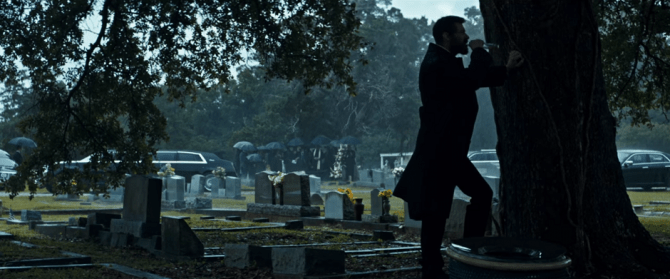
logan-wolverine-3-funeral


A skin deep swan song by way of a bloodstained road movie, James Mangold’s Logan is a touching, but sadly adequate capstone to the X-Men saga pioneered by Hugh Jackman and Patrick Stewart.  Profanity laced unbridled fury, an outstanding debut performance, and a meticulously crafted entry into the superhero genre are unable to obfuscate the film’s mediocrity.
Using threads from the Old Man Logan comic series, the story begins during the final days of the last mutants on Earth.  Logan is has finally, irrevocably broken underneath years of pain and alcoholism.  Professor X is slowly losing his mind, making him an unstable danger to friends and foes alike.  This quiet extinction is disturbed when a young girl is dropped into their midst putting them on the run from nefarious, albeit typically boring Marvel villains.  Mangold’s story is ultimately a sly metaphor on how the genre itself is being consumed by its fandom.  The heroes are used up and uninterested in caring, let alone acting.  Society has become automated allowing evil men to do evil deeds while the grassroots of manual labor are mercilessly replaced.  Regrettably these chilling concepts are only flirted with, as Mangold seems to use every intriguing moment as a stepping stone to the next CGI bloodbath.

logan-official-trailer-hd-20th-century-fox


On the topic of violence in the film, rumors of its brutality are vastly overstated.  For an R Rated adult offering, this is tame considering how practical effects could have been used for maximum impact, but ultimately violence itself is a fleeting notion in this film as scores of mechanically augmented soldiers are repeatedly, unceremoniously ripped to shreds.  Joel Harlow’s makeup design is fantastic, chronicling a life of torment on Logan’s body and as the damage multiplies, the visible, slowly healing wounds become marks of desperation.  John Mathieson’s cinematography latches onto the obvious with a death grip, never deviating from the surface except during some wonderful shots of automated behemoths in a corn field and a few stills of Logan at his worst.


In the end, there is no real villain besides time, an existential conceit that is never developed in favor of a repetitive combat rhythm that carries the story into a remarkable final act that comes too soon despite the overlong running time.  It’s a strange paradox, but this is a strange film.  Everything is apparent.  The tired gunman on one last mission cliché is everywhere, even on a television displaying one of the many films from which this trope was conceived, the ultimate admission that blockbusters have run out of fresh ideas.

166


Patrick Stewart delivers an award caliber performance.  Professor X is the heart of this film and Stewart does an amazing job with the unexciting material he’s given, delivering the film’s greatest heartbreak and some hilarious one liners.  Jackman fully embraces being able to finally be the Logan we’ve all wanted with ease and it’s a touchstone to how talented this man truly is.  Newcomer Dafne Keen gives ferocious turn as the girl that everyone is pursuing.  She’s primal and abrasive, compassionate and furious, portraying the anguish of a living experiment with a handful of words.  Stephen Merchant’s supporting performance as Caliban also merits mention, as he is the example of the work-horsed mutant’s plight in a world that no longer needs them.


In theaters now, Logan is a great sendoff for its titular character, but little else.  The marketing campaign set this up as a transcendent experience that had the potential to rewrite the entire game.  Potential is the key word because it is genuinely everywhere within Logan’s dust choked set pieces.  Sadly, the film is more interested in getting to the sendoff rather than exploring its powerful capabilities.  It’s worth seeing in theater for the remarkable tribute to Jackman and Stewart’s work and the fact that adult oriented superhero films need all the support they can get to ensure that the studios continue to take chances on them.  However, if you’re looking for something that breaks the mold, this is the not film.


Recommend.

-Kyle Jonathan

logan-film-header-front-main-stage

We Are the Flesh

We Are the Flesh

2017.  Directed by Emiliano Rocha Minter.

we-are-the-flesh-2016-movie-emiliano-rocha-minter-1


Transgressive cinema is a mixed bag, and most assuredly not for everyone.  Emiliano Rocha Minter’s We Are the Flesh is an exceptional entry into the genre and a resounding assault on any sense of discretion or restraint.  This is a prime example of offensive cinema.  Featuring non-simulated sexual acts, otherworldly cinematography, and visceral depictions of necrophilia and cannibalism, this is a film that is not for the faint of heart, pushing the boundaries of art versus pornography while delivering a scathing commentary on the degradation of Mexican culture by way of institutional corruption.

The premise involves a sibling couple that stumbles into the lunatic playground of a hermit within the heart of a post-apocalyptic city.  In exchange for food and shelter the brother and sister are forced to participate in an escalating series of deviant sexual escapades that coalesce into an oedipal nightmare.  Yollotl Alvarado’s renegade camerawork is the entire filthy ordeal.  Bathed in sleazy sepia and primordial crimson, every frame of this film is a traumatic experience rendered with bodily fluids.  The compositions, once the initial shock passes, are outstanding, clearly displaying Minter’s classical film roots while evolving into a nascent orgy of sex and violence that does not relent.

we-are-the-flesh-site-image

If there is a flaw, it is the heavy handedness of the social references as the film lasers in on Mexico’s seething discord which results in disproportionate amounts of “telling” versus the brilliance of the film’s “showing”.  There are patches of dialogue and an unspeakable rendition of the national anthem that may be interpreted differently based on the viewer’s cultural background, but the intent is undeniable and the ramifications are disquieting and accusatory.  Manuela Garcia’s art direction is a direct representation of these concepts, depicting a masking tape womb in a poisoned world, filled with horror and lust in equal amounts.  Maria Evoli’s performance as Fauna is the standout, displaying uncharacteristic courage and inhuman sex appeal that carries the disjointed narrative to its insane resolution.


Available now on a stunning, blu ray release by Arrow Video.  This is a one of a kind film that quite frankly is not for anyone who is easily offended or repulsed.  Featuring soul tainting visuals, purposefully repugnant content, and a delirious story about the wholesale slaughter of a country’s innocence, We Are the Flesh is a unique offering in an adult only genre.  If you’re brave, and extremely open minded, this film “might” be for you, but be warned, you cannot unsee the dark wonders this movie has to offer.


Highly (But Extremely Cautiously) Recommend.

images

The Girl With All the Gifts

The Girl With All the Gifts

2017.  Directed by Colm McCarthy.

the-girl-with-all-the-gifts-2016-movie-still-4

Zombies movies have been slowly losing their luster in recent years.  Production studios and publishing houses have squeezed every drop of heart’s blood out of the shambling hordes to deliver a handful of stone cold classics and a gangrenous mob of mundane horror offerings.  Colm McCarthy’s The Girl With All the Gifts thankfully belongs to the minority.  Featuring a stellar central performance, poetic cinematography, and a haunting story about the definition of humanity, this is a remarkable effort in the genre.

Despite the outstanding technical attributes, the entire film hinges on newcomer Sennia Nanua’s chilling lead performance as Melanie.  Seesawing between polite, inquisitive child and inhuman killer fluidly throughout the film’s duration showcases her uncanny physicality and wonderfully subdued demeanor that combine in truly unsettling ways as the narrative expands.  M.R. Carey’s script, based on his novel, is a breath of fresh air.  The viewer is dropped into the center of a world already lost.  There are rules to these frightening creatures, the soldiers trying to destroy them, and the hybrid children caught in the middle, but the viewer is not spoon fed the information. Instead it is seeded within the nuanced screenplay and carefully parceled out as the action progresses, leading to some stomach churning revelations.

the-girl-with-all-the-gifts-2016-movie-colm-mccarthy-6

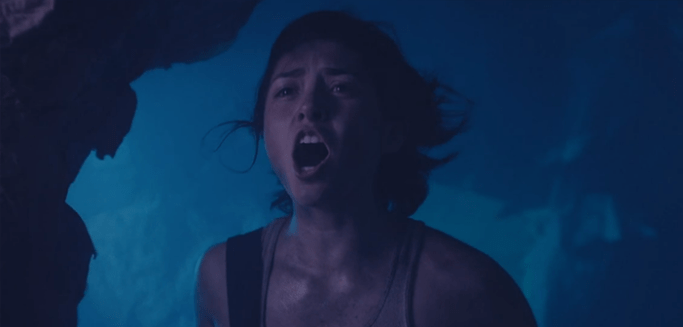
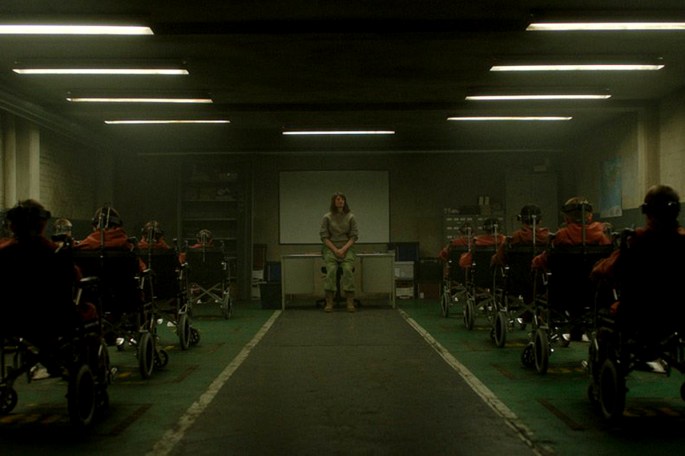
This is the best part about The Girl With All the Gifts.  Things begin en media res, with Melanie being held captive in a military research center.  She has the love of her teacher, played by  Gemma Arterton, in a maternal turn, and she has the ire of the center’s unscrupulous lead scientist, a gleefully campy Glenn Close.  The premise is then methodically built around a bizarre classroom, toying with the viewer’s sensibilities before pulling the curtain only halfway off.  It is at the end of the first act when Simon Dennis’s sublime cinematography truly begins to shine, starting with a calm tracking shot through a storm of undead combat and then sustaining throughout with longing, blood drenched close ups of Melenie and restrained wide shots of the environs.  There’s an aerial shot of a sleeping city that not only accentuates Dennis’s visuals but blissfully realizes  McCarthy’s directorial vision.

Cristobal Tapia de Veer’s score blends ominous child like voices with distorted notes to create a nightmare lullaby.  The grim ambiance is enhanced by Liza Bracey’s world weary costume design and Monica McDonald’s fungal makeup effects that present the zombies as torpid predators, laying in wait for the scent of human flesh.  Each element is aligned to present an atypical apocalypse with an elegant purpose.  The Girl With All the Gifts keeps the focus on the child at its center, exploring the innocent and often terrifying ramifications of the abuse that the young endure at the hands of their ill advised caretakers, stripping away the usual conflicts of a survival film to expose the dark naivety at the center of a heart born in world long gone.

girl-with-all-the-gifts1-640x250

Available now for digital rental, The Girl With All the Gifts is an excellent horror film.  Filled with gratuitous head shot blood splatter, bickering survivors who consistently dance around the evils they must do, and the usual trappings of a flesh eating “And Then There Were None”, it will not disappoint genre lovers.  However, underneath these cliches lies an engrossing story about the price of sacrificing our young for the greater good that resonates all the way until the film’s disturbing, but absolutely satisfying conclusion.

Highly Recommend.

-Kyle Jonathan
girl

Get Out

Get Out

2017. Directed by Jordan Peele.

Get Out (2017)

Horror is a genre that can be used to devastating, socially and culturally relevant effect when wielded by the right provocateur.  Comic mastermind, Jordan Peele’s Get Out is 2017’s first genuine surprise, a hypnotic thriller that masquerades as a commentary on race that is built upon a labyrinth of stereotypes and best intentions.  What begins as an extremely well designed horror comedy transforms into a surreal manifesto on violent domination.

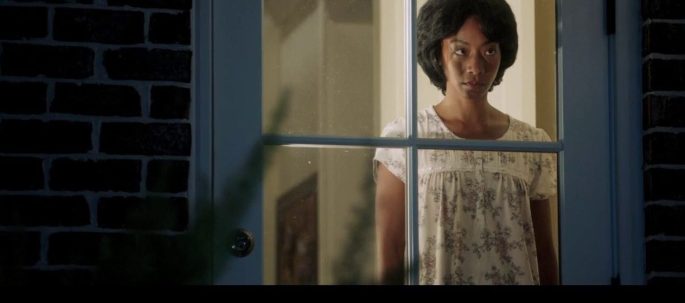
Peele’s malicious script is packed with uncomfortable polite discourse that highlights the essence of privileged sensitivity while laying an intricate trail of dominoes throughout the film’s single upscale location.  Clues abound, from robotic household staff, a cringe worthy therapy session, and the insidious placement of trophies throughout the familial home at the center of the mystery.  The humor is tied to the protagonist’s friend back home, using Peele’s well known comedic genius to bring levity to the bizarre.  Thankfully, these moments are sprinkled throughout a genuinely terrifying fever dream.  Dinner party participants simultaneously stop speaking, a groundskeeper runs circles around the house in the moonlight, and the family’s harmless maid is a smiling harbinger of madness, all of which combine to create a poisoned key that unlocks the film’s corrupted core in the thrilling final act.

get-out-1263x560

Toby Oliver’s cinematography is the film’s best surprise.  Innocuous interiors are delicately framed, using extreme closeups to ensure that the facade remains in focus.  Moonlight is used to counteract the false serenity of the environs, bathing the ensemble in pale neon blue to heighten the psychic underpinnings.  Michael Abels’s score capitalizes on the up front premise, using terse notes to supplement the uncanny behaviors of the “staff”.  Seeing the trailer is enough to fool you into thinking you know, but the outstanding cast latches onto Peele’s words and makes them something more, with Daniel Kaluuya and Allison Williams doing remarkable work as the skin tone crossed lovers at the center of a horrifying cautionary tale.

This is a layered metaphor that pulls no punches.  Violence is the inevitable result of forced captivity and red and blue lights are not always a sign of sanctuary.  These truths are subverted to remarkable ends to produce a delirious Guess Who’s Coming to Dinner by way of Beyond the Black Rainbow mind bender.  Racial discord swan dives into a cesspool of nightmarish implications to carve a bloodstained benchmark for socially aware cinema and the result is a horror film that is respectful with its homages and rebellious with its implications.

In theaters tomorrow, Get Out is a clever youknowwhodunnit.  The rules are set early, but it is the players, and Keele’s elastic mastery of the material that takes a simple premise into places best left unexplored, and yet the viewer can’t help but to watch.  The final act regrettably ups the violence, undoing the psychological dread, but this is the purposefully natural consequence of the preceding acts, symbolizing both the inherent fears of a black man in a white world and the smartphone dissertations on what those fears symbolize.

Highly Recommend.

getoutppal-670x295

A Cure for Wellness

A Cure for Wellness

2017.  Directed by Gore Verbinski.

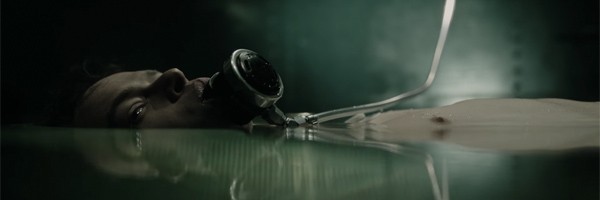
a-cure-for-wellness-slice-600x200

A neo-Gothic fable about the self constructed purgatories of obsession, Gore Verbinski’s A Cure for Wellness is a brutal existential horror film.  Filled with skin crawling compositions, macabre set designs, and absolutely stunning visuals, this is one of the most artistic studio films ever made.  Hearkening back to Frankenheimer’s Seconds, what begins as a cautionary tale about the dangers of soul consuming employment glacially devolves into a surreal homage to the boundary pushing renegade films of the 70’s.

Passive protagonists are a tricky enterprise.  Dane DaHaan’s Lockhart spends the bulk of the film as a victim, both of circumstance and physical injury.  The danger of him being a simple lens through which the story happens is gleefully subverted as the end of the film dovetails with the beginning.  DeHaan loses himself inside his role, the corporate lackey on a fool’s errand.  Justin Haythe’s screenplay is frequently disjointed, but this is part of Lockhart’s crucible.  There are no jump scares and the mystery becomes frustratingly elusive at times, however this is essential for putting the viewer into the main character’s head space.   Layer upon layer of discomfort and supposition are brick and mortared around you as you tiptoe through lonely corridors filled with affluent phantasms, upper class vanguard whose distinct lack of concern for anything outside their control is a physical apparition that clings to the walls of the sinister hospital at the heart of the narrative.

a-cure-for-wellness

Renaissance cinematographer Bojan Bazelli uses a constantly evolving repertoire to frame every shot with undeniable proficiency and palpable dread, using green whispers and blotted reds to consistently undermine the facade of safety.  Eve Stewart’s production design is essential, harnessing Grant Armstrong’s art direction and Jenny Beavan’s costume design to create an insular mythology that may or may not be real.  Everything hinges on films that came before, such as One Flew Over the Cuckoo’s Nest and The Devils, using each reference to construct a methodical morality play that almost achieves perfection.  Regrettably, everything collapses in the final act, and the mystique of the preceding two hours is undone for a cliche’, crowd pleasing resolution.  The insidious attributes of German expressionism haunt the bulk of the narrative, from inhuman camera angles to sequences of extreme physical and mental duress, but all of this is undone with haphazard CGI and underwhelming confrontations.

In theaters now, A Cure for Wellness is a genuine horror offering that pilfers heavily from the buffet of classics that came before it. It uses a wealth of genre staples to propel a trove of ideas down a razor sharp path of inconsistencies that render an incomplete masterpiece.  If you’re a horror fan, or someone who enjoys psychological turbulence, this will not disappoint.  Despite the various flaws that almost threaten its legitimacy,  A Cure for Wellness is a unique experience with merits, and sometimes, even a flawed film is worth the price of admission.

Highly recommend.

-Kyle Jonathan

a-cure-for-wellness-title