
The Void 


The best horror film of the year so far has arrived in the form of The Void, a genuinely spooky, deliriously gruesome 80’s throwback that gets tone, pacing and atmosphere right on the money, hitting that sweet spot that not all homages can fully grasp. It’s this year’s It Follows, I’ll put it that way. Balls out ballistic, atmospherically eerie and gorier than a chainsaw mud wrestling competition for spastics, it starts somewhat reigned in and then amps up to feverish nightmare fuel once it gets going, and boy does it ever get going. When emulating classics from distant eras, it’s important that these films find their own specific flavour and unique groove, as well as cleverly wearing influences on their sleeve. There’s an obvious adoration for John Carpenter’s The Thing running through it like an undercurrent, but the filmmakers find their own otherworldly pulse, and the fabulously icky body horror is subservient to an overarching plot involving forces from another dimension beyond ours, which a few lunatics are foolishly trying to contact. That happens later on though, once that special ripcord within the horror genre is pulled, the one that separates an uneasy opening act, a calm before the storm and the craziness to follow as soon as that first inciting attack occurs. The premise? Solid and simple: a small town cop (Aaron Poole) brings a blood soaked drifter to a nearly shut down county hospital run by a weary skeleton crew. No sooner has he arrived, bad shit starts happening. Some of the night staff go madly insane and start lobbing their own body parts off, while white cloaked cult weirdos gather outside to prevent anyone from leaving the building. A gruff, shotgun toting badass (Daniel Feathers) breaks in and pretty much violently threatens anything that moves. Corpses come alive and transform into glistening, pulsating piles of aborted pizza pocket waste, and to use the time honoured slogan, ‘all hell’ quite literally breaks loose. The head doctor (veteran character actor Kenneth Welsh, aka Windom Earle, is devilishly scary) clearly knows more than he lets on, and the new bodies pile up on the rotting older ones as dark forces gather for some kind of… birth. The actual how’s and whys of the story are left appropriately vague, as is tradition in hectic 80’s creature features with a supernatural twist. The term ‘void’ is never mentioned by anyone, rather hinted at by glimpses of a dreamy, austere parallel dimension that calls to mind everything from Altered States to Beyond The Black Rainbow to The Cell. A buddy of mine referred to the film as “Carpenter Fanboy Porn”, and while that’s definitely one angle you can look at it from, there’s more than just that, if you widen your gaze. It’s clearly a love letter to the man and his work, but it has its own thing going on as well, and feels at once as fresh as the titles it looks up to must have when they came out, and as lovingly nostalgic as a throwback piece should. The filmmakers have deliberately left it open for a sequel as well. Bring on the franchise, I say, the genre can really use stuff like this to fill the Void. 

-Nate Hill

Eye See You 


You know those films that you just seem to get fixated on and love for no particular reason, like they’re not even that good, you just… really like them? That’s Eye See You for me (known as D-Tox to all you folks across the pond), a heavy handed snowbound horror vehicle for a sedated Sylvester Stallone. It’s silly to the max, thoroughly implausible and perforated with cliches, but for whatever reason I just can’t get over the damn thing. Now, I admittedly have an affinity for the Agatha Christie style murder mysteries, especially ones set in the snow (cue fond memories of Hateful 8 and The Thing), and this one piles on a blizzard of red herrings, multiple shady characters, extremely graphic violence and paranoid unease. Maybe it’s that cast, a platoon of tough guy characters actors backing Sly up in one serious roster of a supporting cast. Old Rocky plays a big city FBI agent who is trying to find a jarringly vicious serial killer that targets law enforcement and has that classic obsession with his pursuer. After his girlfriend (Dina Meyer) falls victim to this beast, Sly unravels and following a suicide attempt, is sent up north by his mentor (Charles S. Dutton) for a little R&R,

and both R’s in that stand for rehab in a special remote facility designed just for cops with issues to work out. The place is run by Krusty Kris Kristofferson, and home to so many recognizable faces one has to give the casting director a tip of the fedora. A disgraced Mountie (Robert Prosky), emotionally fragile ex SWAT commander (Sean Patrick Flanery),

former Scotland Yard (Christopher Fulford), hostile ex narc (Jeffrey Wright with some pretty Harvey Dent facial scars), an insufferable macho asshole (Robert Patrick), ex military (Tom Berenger) who serves as caretaker, sympathetic therapist (Polly Walker) and a seriously creepy Stephen Lang. That’s a whole lot of suspicious characters to pick a killer from, because (you guessed it) the meanie has followed Sly out to the mountains and is posing as a member of their group. It’s a guessing game right up until one severely bloody climax, with ex cops dropping dead all over the place along the way, and Stallone looking more hollow and dishevelled as each body turns up. He’s not in action mode here at all, hell, he’s not even in sorta kinda Cop Land action mode, he’s a broken man trying to heal who’s forced back into shit kicking, and it puts a visible strain on him that the actor handles surprisingly adeptly. The rest do their job terrifically, with Flanery standing out in the scant but affecting screen time he’s given, and Patrick blustering through every scene until you’re just praying for the killer to target him next. There’s downsides galore, mind you, this isn’t well thought out territory, it’s gory genre nirvana and not much else. There’s a level of predictability that could have been avoided by making the identity of the killer a bit less… obvious, for lack of a non spoiling term, but oh well. It’s also just overblown lurid potboiler madness, but what else do you expect from this type of thing? I get exactly what I want out of it: a nice helping of ultra-violent intrigue to tune into on a cozy night, and not much more. In fact, I think I feel a revisit happening this week.

-Nate Hill

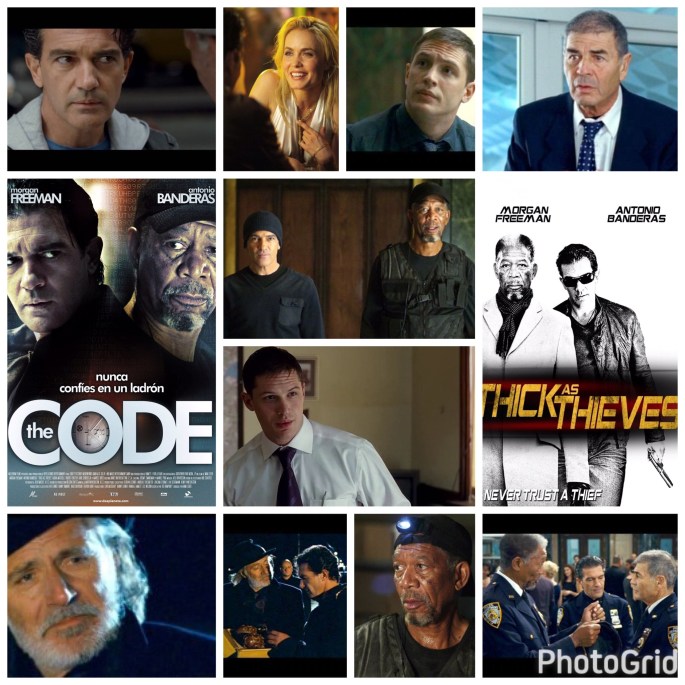
B Movie Glory: The Code


The Code, or Thick As Thieves as it’s known on DVD in some regions, is pretty much just Morgan Freeman and Antonio Banderas strutting their way through a B-grade, R-rated Ocean’s Eleven. It’s second tier stuff, but it has one hell of a cast and enough serpentine twists and betrayals to keep the viewer interested. Freeman plays a slick master burglar, recruiting Banderas’ younger thief to pull off one of those ‘impossible’ heists that requires all kinds of over elaborate planning and stylish execution. This is all in order to pay an outstanding debt to the Russian mob in the form of dangerous Rade Serbedzija, aka Boris the Blade, aka Boris the Bullet Dodger, who has a few surprising secrets of his own. All of them are also hounded by a classically dogged detective (Robert Forster, intensely excellent) and his rookie partner, who of all people is played by Tom Hardy in a role so small and random I’d love to hear the tale behind his casting. There’s also an obligatory love interest for Antonio, played by leggy Radha Mitchell. Now, it’s all mostly as pedestrian as it sounds, except for a few garnishing touches that elevate it just enough that it sticks in your memory. The master thief. The Ahab-esque cop. The vicious Eastern European gangster. The love triangle. Backstabbing. These are all ancient archetypes that have been done quite literally to death, and they’re all present and accounted for here, but there’s a few moments that genuinely surprise and break feee of that somewhat. Revelations involving the Russian who isn’t what he appears to be, a third act twist that feels welcome, and snares of dialogue that snap our attention amidst the cliches. For what it is, it does its job well enough, and a few times shows actual inspiration. Not bad at all. 

-Nate Hill

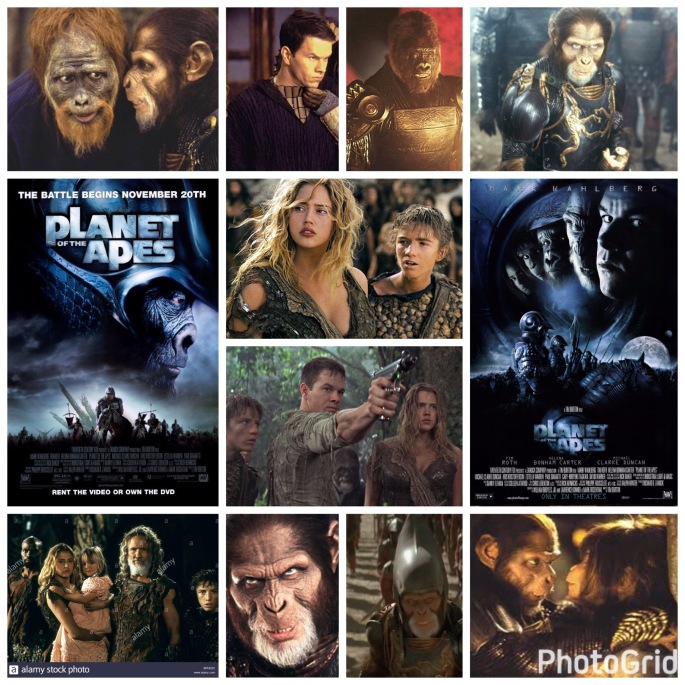
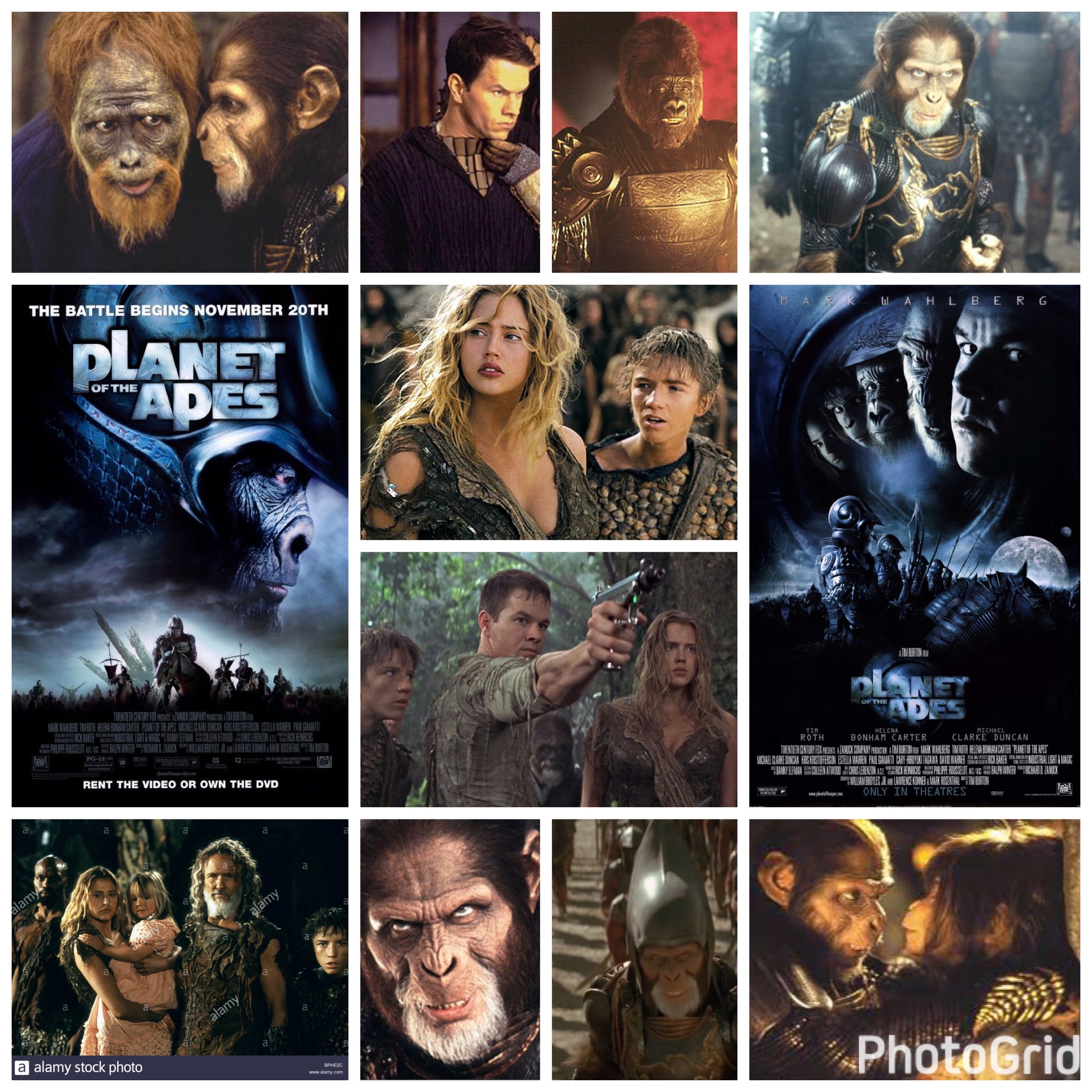
Tim Burton’s Planet Of The Apes


I’m going to catch some heat for this, but I’ve found Tim Burton’s Planet Of The Apes to be a far better film than any of the three recent versions. I can’t explain it, but there’s something so otherworldly and exotic about the production design, makeup and effects, a true storyteller’s touch used, resulting in a piece with elements of fantasy and world building brought lushly to the forefront, whereas the newer films just felt somewhat clinical and sterile, going through minimalist motions without any real sense of wonder applied. Oh and another thing: real, tactile makeup on actual human actors, which will win against motion capture/cgi any day. There’s also an old world, medieval feel to this planet, as the ‘humans being subservient to apes’ dynamic has already been in full swing for generations, as opposed to a lengthy origin story that takes up most of the newer trilogy. No build up here, just Marky Mark getting marooned on a distant world dominated by simians, fighting his way through their ranks, sort of falling in love with one (Helena Bonham Carter as a monkey=kinky) and attempting to find a way back to earth. There’s various apes of all shapes and sizes at war, the most memorable of which is a sleek, snarling Tim Roth as Thade, a volatile warlord who despises humans. Michael Clarke Duncan towers over everyone as Attar, his cohort and fellow soldier, and seeing already be-jowelled Paul Giamatti as a cumbersome orangutan is priceless. The human faction is led by weathered Kris Kristofferson and his daughter (Estella Warren, quite possibly the most beautiful girl on the planet), leading the dregs of humanity as they exist in hiding and fight for their lives. No expense was spared in filling every frame of this planet with lived-in splendour and atmospheric decoration, from suits of armour and architecture to the overgrown thickets of mountainous vegetation that grow on this world. As for the apes themselves, it’s terrific how real they feel. It’s the same thing that happened with Lord Of The Rings vs. The Hobbit, and the switch from practical Orc effects to the overblown cgi madness of the goblins in the later films. The human eye is inherently adept at deciphering what is real and what is not, and the effects of the later Ape films with Andy Serkis just felt lifeless and orchestrated, whereas here the makeup prosthetics are organic, authentic and wonderful to look at. Don’t even get me started on the ending either, it’s completely brilliant and will leaving you in cold isolation as the credits roll, a perfect gut punch to a film that could have easily turned sappy in the eleventh hour. So that’s my two cents. Bring on the backlash. 

-Nate Hill

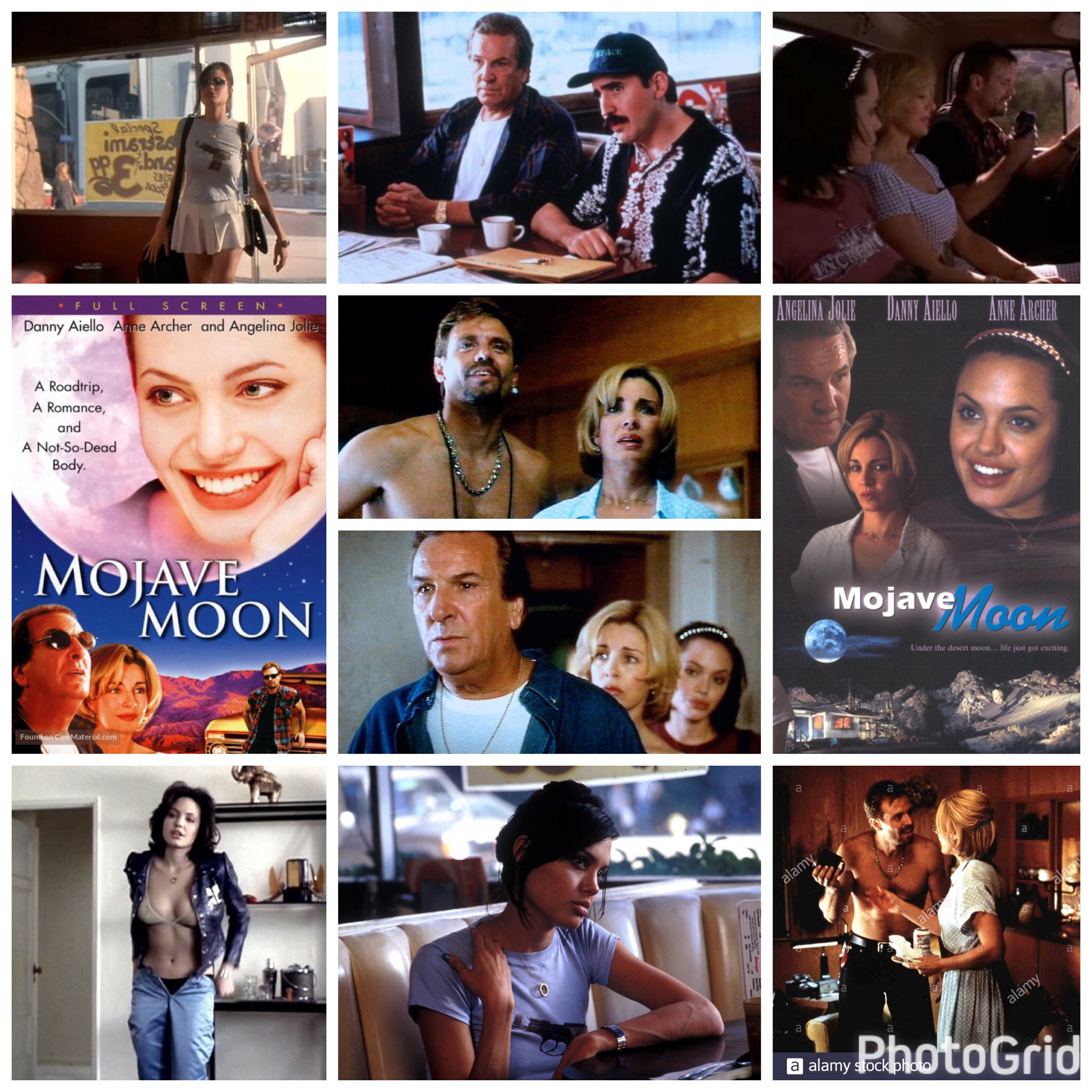
B Movie Glory: Mojave Moon


Before Angelina Jolie blew up front and centre, she got her start in some wild and wacky b movies and genre stuff, the weirdest of which has to be Mojave Moon. It’s one of those low rent flicks where not much of anything happens, the characters meander in and out of a non-story and almost everyone is completely nuts. ‘B movie dramedy’ I suppose would be the specific sub-genre. The ‘story’, as it were, follows drifter Al (Danny Aiello), who meets pretty young Ellie (Jolie) in a diner and hitches a ride out to the desert for seemingly no reason at all. As Ellie takes a shine to him, he begins to fall for her mother (Anne Archer). Only problem is, her mom has a boyfriend played by Michael Biehn who is quite possibly one of the weirdest characters I’ve ever seen in a film. Volatile, berserkly unstable and constantly in near hysteria mode, it’s an odd performance that off-sets the quirky tone straight into the twilight zone. That seems to be the idea here though, the dreamy desert climate having a strange effect on these folks, causing all kinds of outrageous behaviour and scenarios. The town offers a rogue’s gallery of characters including Michael Berryman, Alfred Molina, Jack Noseworthy, Peter Macnicol, John Getz, Michael Massee and others, all of whom don’t really do much other than show up, act weird for a bit and then wander off again. I like this type of film though, purposeless other than to languish about with characters who don’t want much, their arcs sputtering in a flatline of small town doldrums and behaviour that only makes sense to them. It’s not for everyone, which is why no one really gives credit to this stuff, but it’s enjoyable once in a while, when you’re in as strange a mood as the residents of this one horse sideshow of a town. 

-Nate Hill

B Movie Glory: The Last Drop


Before The Monuments Men, there was a dopey little WWII art heist flick called The Last Drop. Alright, it’s a tenuous connection but they’re centred around the same idea: what better time for a heist than the fog of war? Well, chaos is indeed the name of the game with this scrappy, obviously low budget barrel of fun, both in terms of setting and the film itself. The cast is the main draw, as is always the case with B movies.. without a few names, some veteran charisma, pieces like this would just be bereft of any value. Well they got Michael Madsen, because every movie needs a Michael Madsen, getting more screen-time than usual here as an American military honcho on the hunt for some priceless works of art that have gone missing from Berlin. It’s pretty much just a European wartime Rat Race, with various factions scrambling to find the loot and not get killed along the way. A platoon of Brits blunders across Holland, led by Sean Pertwee and including Tommy ‘Chibs’ Flanagan, Nick Moran, Rafe Spall, Alexander Skarsgard and more. A volatile German double agent (intense Karel Roden) pursues them all. Oh yeah, and Billy Zane calmly and deliberately poses for the camera as a Yankee operative with a fetish for wistful wartime romance, being as weird as Zane ever was. It all doesn’t make a ton of sense or add up to anything much at all, but it’s B movie bliss, and honestly I’d willingly watch this cast install drywall for ninety minutes, so one can’t complain about a silly little war flick that’s a bit rough around the edges. Good times. 

-Nate Hill

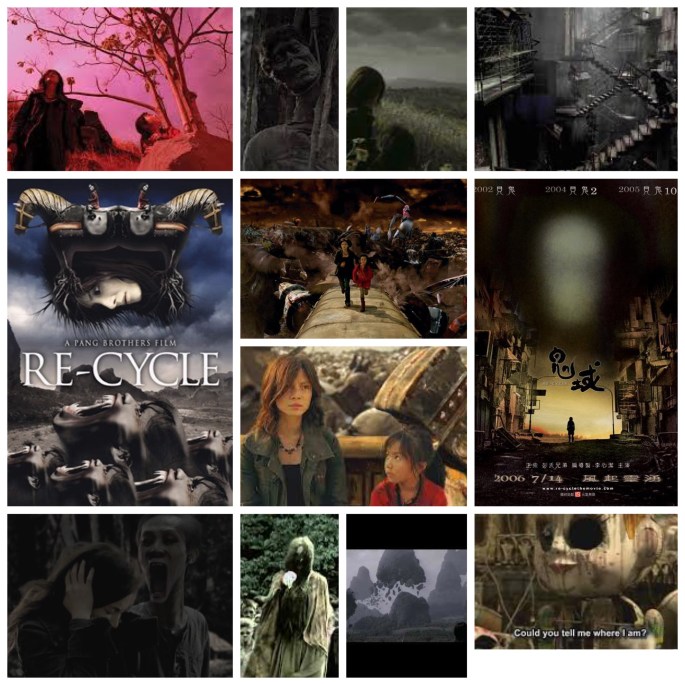
The Pang Brother’s ReCycle


What do you get if you take a mixing bowl and toss in The Cell, The Grudge, some Stephen King, Alice In Wonderland, The Lovely Bones and a not-too-subtle anti abortion message? You get ReCycle, a visually unbelievable, absolutely terrifying, boundlessly imaginative Chinese horror fantasy that no one saw, got overlooked to the max, and occupies an eternal spot in my DVD collection. Novelist Tsui (The Eye’s Anjelica Lee) is suffering from writer’s block following two bestsellers, expected by her publisher to churn out another one posthaste. Plagued at first by paranormal visions in her apartment, she’s suddenly thrown headlong into the otherworldly dimension of ReCycle, a place that can turn from beautiful to hellish and back again within minutes. Picture a surreal, abstract realm where everything that’s ever lost, forgotten or abandoned ends up, thrown together in a gorgeous but threatening dream world with various levels, planes and passages, seemingly endless and never predictable. The dead also reside here, as she soon learns, some of which don’t take kindly to intruders and can be pretty volatile. Forced to flee from one area of the realm to others and beyond, she’s joined by the spirit of a lost little girl, and put through one hell of time trying to find her way out. Included are dilapidated, haunted amusement parks, fields and mountains that extend for millions of miles, eerie forests where the ghosts of hanged prisoners leer out at them, vast crumbling cities, acres of forgotten children’s toys and in the film’s most wtf sequence, a giant gooey room filled with aborted fetuses that spring to life and slime anyone within reach. That’s right, the filmmakers aren’t really subtle with their pro-life sentiment, especially near the end, but as long as you can get past that, the rest is all incredible. The sheer scope of the film commands attention though, and anyone who daydreams or lets their imagination run wild will get an absolute kick out of it. It’s kind of like the world’s weirdest video game in cinematic form, structured like a play-through but given all the disorienting unease of your worst nightmare. 

-Nate Hill

Ernest Dickinson’s Bones


Who would have thought that a horror flick starring Snoop Dogg would actually be a winner? Bones isn’t a milestone in the genre or anything, but it sure is better than the self promoting vanity piece that I expected going in. Usually when rappers or musicians headline their own films they turn out to be spectacular failures (50 Cent’s Get Rich or Die Trying and Dee Snider’s Strangeland come to mind), but this one comes off as a legitimate, entertaining horror effort. Snoop plays Jimmy Bones, a lucrative 70’s street hustler who is betrayed and slaughtered by his partners in crime, his own sweetheart Pearl (Pam Grier is never not cool) and one sleazebag of a cop (Michael T. Weiss, excellent). Decades later he returns, undead, in the form of a smooth talking supernatural street demon, out to exact bloody ghetto revenge on his old acquaintances and clean up his former inner city neighbourhood, which is actually just Vancouver in disguise, I mean what city in any movie ever isn’t just Vancouver? Loosely threaded with the story of a few kids who plan to turn his old gothic mansion into a silly hip hop nightclub, things rev into full gore gear when he shows up back in town to stir shit around and collect heads, and I mean that literally. Snoop is wicked fun, wisely dropping any rap gags or meta smirk, showing up in full jive talking boogeyman mode, meaning business and bringing along the dark, angry charisma to back it up. Director Ernest Dickinson helmed a few Tales From The Crypt outings and therefore knows his way around this very specific and distilled niche of horror. Shades of the 80’s are prescient with incredibly gooey, gag inducing effects that would make Freddy Krueger jealous, and one gets an almost Crow vibe from the story structure, via the paranormal revenge motif and baroque, Poe-esque fire and brimstone aesthetic. It’s silly for sure, but far far more grounded and committed than you’d expect this type of thing to be on paper. More of a head on its shoulders than Tales From The Hood anyway, and yes that’s a real thing. I must make additional mention of the prosthetic effects though; not since certain Elm Street outings, early Cronenberg or stuff like The Sentinel have I seen the level of deformed, hellish grossology onscreen than is present in some scenes here, they should be really proud of what they’ve done. 

 -Nate Hill

Scott Frank’s The Lookout


Scott Frank’s The Lookout is a film where every turn of plot, exchange of dialogue, set piece and stylistic choice just seems to mesh flawlessly, resulting in a package that’s nearly as perfect as you can get. Part psychological character study, part crime thriller, sewn together lovingly by threads of brilliantly written, intelligent interpersonal drama that seems lived in, the writer never uses the pen to pander nor patronize, but provides well drawn, realistic human beings who sound like actual people and not archetypes dwelling within the pages, never fully realized. Joseph Gordon Levitt plays Chris Pratt (not actual Chris Pratt lol) a young hotshot who becomes the victim of his own cocky, self destructive behaviour. After a horrific car accident that was entirely his fault, his girlfriend is left maimed and he a busted up shell of his former self, saddled with bushels of brain damage and the inability to cohesively live his day to day life the way he did before. It’s some sort of synapse frying neurological scarring that’s never fully explained, but the symptoms are clearly and fascinatingly outlined in a way that no other film has really tried before. He’s left somewhat adrift in life, naively attracted to his foxy psychiatrist (Carla Gugino), misunderstood by his parents (Bruce McGill & Alberta Watson), and cared for by his eccentric, blind and motor-mouthed roommate (Jeff Daniels, a standout as always). He happens to be from a small midwestern town though, and in movie land these burgs are almost always filled with schemes, heists, double crosses and feed store robberies. ‘Bro seduced’ by an equally suave and shady dude (Matthew Goode, whose work here lives up to that surname and then some), Chris is shanghaied into assisting in the hold up of the very bank he works at, and soon the kind of hell that would make the Coen brothers applaud breaks loose. Everything makes sense though, the jigsaw pieces of the narrative nestling flush against one another, not a beat feeling out of place or in danger of derailing the whole thing. That’s not the easiest thing to achieve, especially in a taught running time that clocks in under two hours and still manages to feel substantial. Levitt is terrific, a guy who used to be in control, used to be revered as the alpha who takes care of things, his condition worsened by the knowledge that people know full well how broken he is. The stakes are inherently high when someone that set back by life must navigate their way through the complex ins and outs of pulling off a bank heist. One hell of a film.  

-Nate Hill

Hector & The Search For Happiness


I’ve read a lot of reviews for Hector & The Search For Happiness, and there’s a common, and fairly petty gripe that seems to be a theme throughout them, pissing me off no end. In the film, Simon Pegg plays a wealthy psychiatrist with a solid career and a beautiful wife (Rosamund Pike). Deep down though, he feels empty, unfulfilled and as if something is missing, and embarks on a spontaneous, unplanned global voyage to essentially search for the meaning of happiness, or at his own on the smaller scale. Now, a few critics have this whiny sentiment that because he’s well off, stable and lucky in life (I won’t even use the dreaded ‘P’ word), that it’s somehow offensive to see him search for more, or find himself unhappy. He ventures forth to places like Tokyo, L.A. and Africa in his travels and it seems to be some consensus that because he runs into people from third world areas who haven’t been dealt as lucky a hand as he has, materially speaking at least, that he has no right to complain or contest his position or mindset in life. Absolute butthurt. Everyone on this planet, be they billionaires, orphans, middle class mothers, movie stars or refugees, everyone is going through their own private set of problems and inner turmoil, and no one has the right to so blindly insist that some people’s problems, mental and/or material, matter more than others just because they have more money or resources than. The richest, most capable individuals could be going through hell on the inside, and they deserve to be acknowledged and sympathized with just as much as anyone else. Grow up. Now that my rant is over, on to the film, which is somewhat of an oddball and not easy to define, genre-wise. The posters and trailers make it out to be one of those quirky ‘find yourself’ comedy dramas where some plucky misfit goes on a journey, meets various archetypal characters and discovers a bunch about themselves, until the inevitable revelation that caps their story. Well, it is that, and it kind of isn’t as well. It’s certainly structured like that from beginning to end, but at times it gets quite dark, more than merely momentarily, and has far more of a brain in it’s head, both in terms of script and technical execution, than you would see coming. Pegg feels adrift in his profession, smothered by his doting but high maintenance wife and needs that leap into the unknown, which he takes. His first encounter is with a cynical hotshot businessman (Stellen Skarsgard), a man who lives in planes, airports, hotels and nightclubs, filling his time with life’s pleasures and the power of commerce, yet fully aware of what else he’s missing out on, perhaps the reason he is drawn to Pegg’s character. Over to Africa next, where he spends time with relief workers, to see if fulfillment can indeed be found in selflessly aiding others, but things turn intense when he’s captured by scary rebels and somewhat befriends a volatile arms dealer (nice to see Jean Reno, who’s been laying low these days) with a sad secret of his own. His trip takes him to the states, where he reconnects with an old flame (Toni Colette), no doubt allured by the sweet promise of nostalgia, a powerful force that doesn’t always yield happiness when adhered to. A loopy self help guru (Christopher Plummer), Skype sessions with Pike back in England and other encounters beset him, and in the end we wonder what the point of it all was, but this is his journey, not ours. I like that it doesn’t necessarily follow a blueprint that we’re used to, moves forward in fits and starts, meanders a bit, even veering into thriller territory briefly, his path truly an unforeseeable one that could lead anywhere based on chance, timing and the decisions he makes. That’s the mark of a good script, one that surprises and confounds in the best possible of ways, and shirks all labels applied to the final product, arriving on our screens as something just weird enough to be memorable and just this side of accessible in order to not be too much of an off-putting black sheep. Interesting stuff. 

-Nate Hill