ZEDER (1983) – A REVIEW BY RYAN MARSHALL

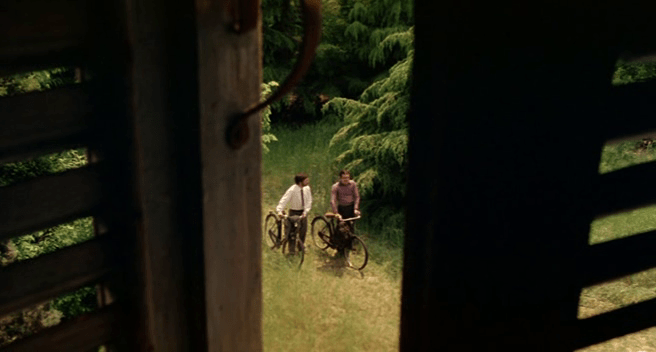
Circa 1956, young Gabriella is brought to the estate of Dr. Meyer, who believes that the girl harnesses supernatural powers and intends to put them to good use during one fateful night. After accompanying her to the basement, where she begins writhing about on the dirt-covered ground and is then attacked by something unseen when left alone, Meyer deduces that the area they’ve stumbled upon is what is known as a “K Zone” upon realizing that the man who infamously studied them, Paolo Zeder, was buried underneath the house some years ago.

vlcsnap-2017-01-06-12h48m02s515.png

Favoring petrifying ambiance over surface-level schlock, though impartial to entertaining the latter when apt, Pupi Avati’s horror films are characteristically infused with a kind of sinister, otherworldly energy; as if the man responsible for them always has one foot in reality and the other in the spirit world. In this sense, ZEDER (aka REVENGE OF THE DEAD) is straight from the heart of its maker, being (among other things) a film that deals directly with those disconcerting voices from beyond and why they are necessary to a superior understanding of our surroundings.

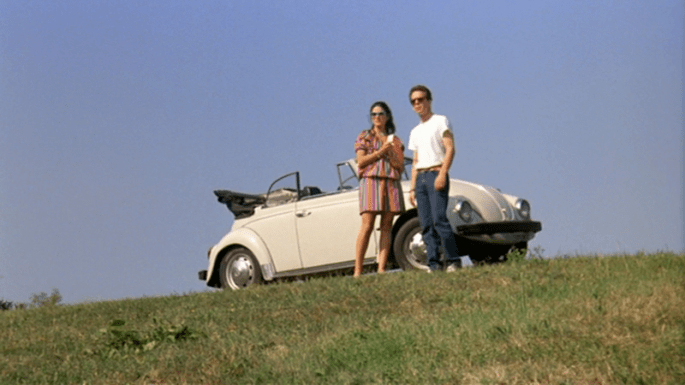
Following such a uniquely enigmatic opening, we are introduced to Stefano (Gabriele Lavia), a young novelist living in present day (1983) Bologna. He comes home one day to a surprise anniversary gift from his wife Alessandra (Anne Canovas) in the form of an old typewriter which he can’t help but test drive that same evening. Upon closer inspection of the ribbon housed inside the apparatus, he discovers an essay written by the aforementioned Zeder and becomes increasingly obsessed with the man’s studies.
vlcsnap-2017-01-06-12h49m50s260.png

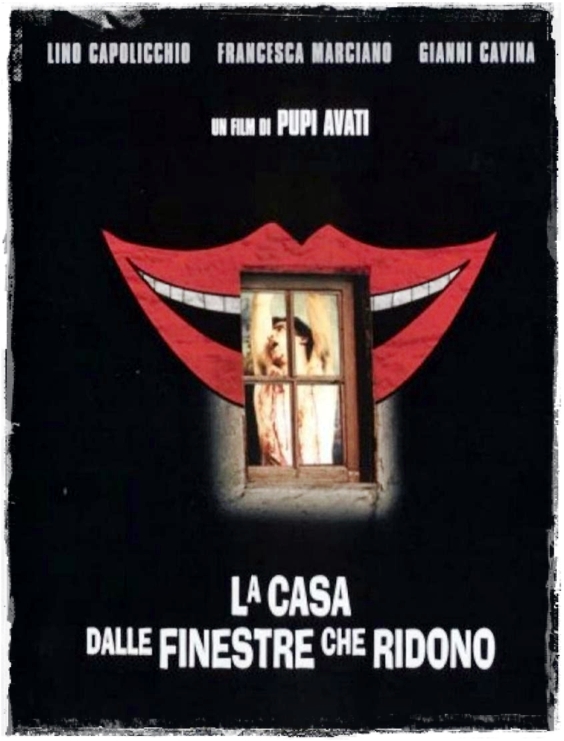
Similarly to Avati’s masterful giallo THE HOUSE WITH THE LAUGHING WINDOWS, the unlikely hero often feels alone in the world. Whenever Stefano attempts to inquire about Zeder and his finds, even the most reputable members of society turn him away; and when he decides to take matters into his own hands, they tend to get a bit dirty. He must be careful who he talks to, for their lives may be endangered if he does so.

vlcsnap-2017-01-06-12h48m38s711.png

Without showing too much, Avati manages to get deep under your skin; take the K-Zones, for instance, which have something to do with reanimation, and yet that specific “something” is never explored in explicit detail. However, it’s undoubtedly better off this way. The horrors of ZEDER, beautifully rendered as they are, seem rooted in paranoia and guilt on a profoundly national scale; the film is like an exorcism for all of Italy, albeit one where the cleansing of body and soul is secondary to the painful possession of Avati’s fellow countrymen and how they attempt to evade it. While Stefano pursues the mystery at hand, Gabriella (now an adult) and Meyer scheme – it would be unwise to trust that anyone, even those closest to you, are not in on it in some way. It’s an angry, poignant, and indeed genuinely frightening state of affairs – assuming one is enticed by implication.

European horror films tend to wear their imperfections on their sleeve, and ZEDER is no exception. Franco Delli Colli’s (RATS: NIGHT OF TERROR, MACABRE, STRIP NUDE FOR YOUR KILLER) cinematography is luscious, Riz Ortolani’s score is typically fierce, the make-up effects – particularly for the undead – are refreshingly subtle, and yet there are flaws to be found in Amedeo Salfa’s editing. On a whole, the film flows exquisitely – but once in a while there’s an abrupt transition which threatens to soil an otherwise divine experience; and although this is easily redeemed, it can’t help but pale, if only slightly, in comparison to its aforementioned cinematic brethren as a result.
vlcsnap-2017-01-06-12h49m37s733

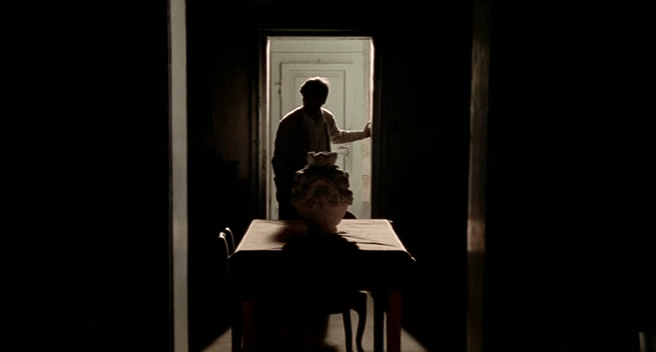
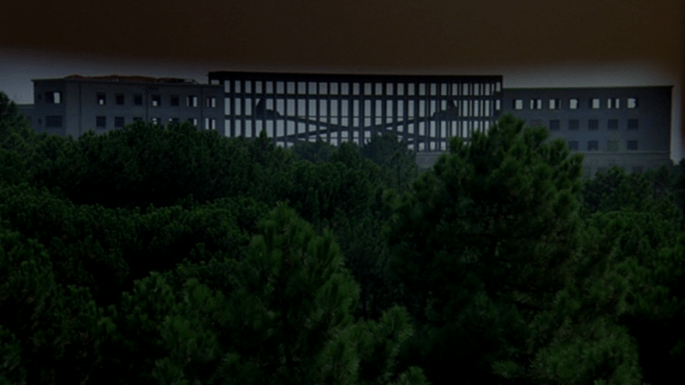
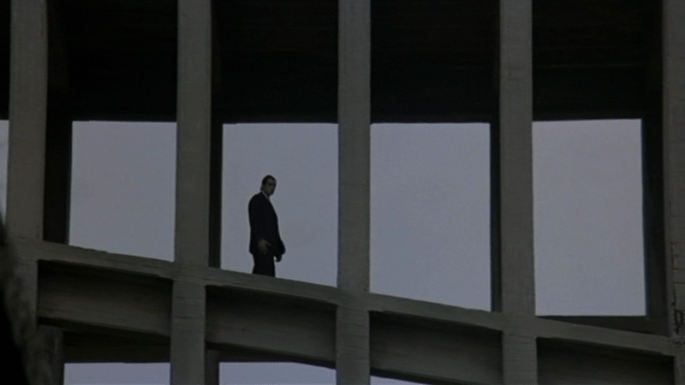
But oh, what sights Avati has to show you. From the abandoned soon-to-be-hotel which marks the high point of Stefano’s journey and the dusty tunnels running underneath to the young couple’s sleek, secure apartment, it’s remarkable how distinctive each location feels and how well the director utilizes them throughout. One feels alienated regardless of where they find themselves; the world is wired by phantoms. As is the case with some of the best, this is a film about man’s relationship with time and place in unison with his personal affairs; while the romance at the center of the story gives it a much-needed emotional backbone, it’s ultimately a vision of our ever-changing landscape and how we choose to confront those sudden transitions.

Admittedly, this could potentially disappoint viewers expecting a gorier, more straight-forward zombie yarn, but what a thing to behold. Avati has contributed something that goes far deeper than exceptional genre cinema, knowing all too well that mystery and tragedy alike account for many of the things in life which are most difficult to swallow. Some questions cannot be answered, or so the director seems to conclude at the end of this macabre tale. We can only seek so much truth before we bump up against our own limits.
vlcsnap-2017-01-06-12h52m16s121.png

THE HOUSE WITH THE LAUGHING WINDOWS (1976) – A REVIEW BY RYAN MARSHALL

vlcsnap-2016-10-01-08h10m11s101.png

I must have been thirteen or fourteen at the time, and I don’t remember too much about what my world was like then, with the exception of it being a lesser variation of what it is now. If Argento, Fulci, and Bava are the more obvious names who introduced me to the black leather and brighter blood which would eventually shape my definitive creative conscious, director Pupi Avati opened up different doors entirely with his magnificent THE HOUSE WITH THE LAUGHING WINDOWS, a brilliant subversion of the Giallo formula with heavy doses of folk horror and genuine social-political subtext.

The Gialli that I am particularly fond of have more in common with THROUGH THE LOOKING GLASS than the standard crime narratives of the yellow paperback novels from which they derive their title, and as such, this is as important an entry as SUSPIRIA, Fulci’s THE PSYCHIC, or Sergio Martino’s delectably psyched-out masterpiece ALL THE COLORS OF THE DARK. What is perhaps most immediately intriguing is the placement of this particular rabbit hole in a twisted, though ultimately familiar semblance of reality. By association, the Giallo is a heightened affair, but Avati is skillful in how and where he engages with the fantastical.

vlcsnap-2016-10-01-08h06m37s379.png

The log-line for this one is refreshingly simple: a man, Stefano (Lino Capolicchio) arrives at a small, seemingly quiet villa on business, tasked with restoring a fresco of (what at least appears to be) Saint Sebastian in the town’s church. Soon after arriving, however, things take a sharp turn for the macabre as our hero receives anonymous threatening phone calls and gets kicked out of his hotel to make room for another guest; a guest who never shows up, and was never booked to begin with. He then moves into an old house in the woods which he shares with only an elderly woman upstairs and although she never seems to leave her bed, movement is explicitly heard at all hours of the night. A dark secret seems to hang over the village, one the locals would prefer to keep from the knowledge of the general public. After the sudden murder of a friend who seemed to have some answers, Stefano decides to do some amateur detective work of his own which will ultimately drive him to madness.

But will curiosity kill the cat? When one is watching a Giallo – and a good one, to boot – all cards are on the table. As a long-time admirer of films that depict the deterioration of a mind in unison with depicting an industry, culture, or world at large on its way out, I find Avati’s film to be utterly fascinating. Here we have the classic descent-into-madness narrative, a staple of the genre, unfolding beside a positively post-apocalyptic landscape; the villa, with all its abandoned ambitions and lost souls, is most likely intended as a commentary on post-War Italy and how certain communities struggled to escape their past. Stefano’s various romantic flings with school teachers and conversations with drunks, bat-shit crazy altar boys, and of course the old woman upstairs reveal a tight circle of damned spirits, only a handful of whom dream of escape, though most only wish to keep a vicious cycle going for as long as it possibly can.

vlcsnap-2016-10-01-08h07m48s091.png

It’s quite interesting, or at least it might be to certain readers, to note that in the course of a career spanning nearly half a century, Avati only made (to my knowledge) about half a dozen features that could be branded as horror films, the most widely-acknowledged of which are this one and the equally exceptional ZEDER (aka REVENGE OF THE DEAD). Skimming through an extensive filmography such as this, it seems Avati has covered just about every base he can, returning to the realm of the macabre time and time again, but mostly at the helm of much lighter, though I’m sure no less thoughtful fare. It is clear that while he is not technically a “genre” director, Avati has a penchant for brooding phantasmagoria; a dark side that only shows itself when deemed absolutely necessary – which in turn makes for some of the most consistently engaging tales of terror on the market.

Pasquale Rachini’s photography is a real treat; I have always loved how the camera finds raw beauty early on, and throughout, in the wide lavish wetlands and partially destroyed old houses featured around the villa. A sense of purest reality is created, and then soon shattered, as day becomes night and lighting becomes more evocative, locating what lurks behind and between the shadows as well as what creates them in the first place. And yet, it will seem rather understated to those for whom “Giallo” is defined only by 70’s-era Argento (DEEP RED, SUSPIRIA, etc.), but alas, I believe it is as stunning as anything the genre has to offer. And who could forget to mention Amedeo Tommasi’s score, which swings effortlessly between nail-biting tension and fleeting romanticism, and remains shamefully unavailable to the general public to this day. One can only hope somebody, anybody, will rectify this sooner than later; it really is fantastic.

vlcsnap-2016-10-01-08h10m51s237

Some films just feel as if they were made for you, and at their best, Gialli have that precise effect on me. THE HOUSE WITH THE LAUGHING WINDOWS, for all its WICKER MAN-esque outsider horror, nevertheless feels like home. This may seem like a bit of an odd notion to those who seldom dance with the devils of celluloid, but if it happens that you do so more often than not, you will know exactly what I mean. Danger and mystery alike can be so invigorating, and Avati has conjured an atmosphere of dread so palpable that a knife (of any kind) simply wouldn’t cut it. Further proof that some of the genre’s best offerings come from those who don’t necessarily specialize in but nonetheless retain an honest appreciation for its seductive allure; one of many horror films that is more or less about watching horror films, and luckily, we are spared the usual contradictory moralism and regrettable air of superiority. Nothing but love emits from these frames. Love, blood, sweat, tears, purple flowers, tape recorders, and architecture with eyes and ears acute enough to catch even the lowest whisper.