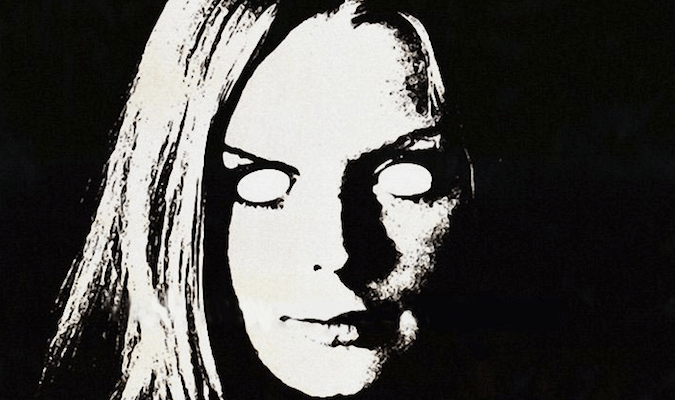
SEASON OF THE WITCH (1973) – A REVIEW BY RYAN MARSHALL

untitled-1_12673281701

George A. Romero is – or at the very least once was – the kind of socially conscious filmmaker the horror genre is in dire need of these days. His early films are the most blunt, angry, and effective in his oeuvre; though few would deny they are rough around the edges, their energy and ambition is nonetheless infectious. Sandwiched between NIGHT OF THE LIVING DEAD, Romero’s little-seen sophomore effort (1971’s THERE’S ALWAYS VANILLA, a romantic comedy), and 1973’s THE CRAZIES is SEASON OF THE WITCH (known as JACK’S WIFE when it was in production, and before the distributor excised half an hour from its run-time), a surprisingly thoughtful musing on contemporary witchcraft, repressed sexuality and the patriarchy; an endlessly fascinating, mostly successful marriage of talky, sleazy soap opera aesthetics and surreal psych-out horror.

Joan Mitchell is a bored housewife facing a mid-life crisis. Her husband Jack has little time for intimacy, there’s a considerable distance she feels between herself and their daughter Nikki, and she has recurring nightmares in which Jack aggressively pays her no mind and she envisions herself as a pale-faced old hag. The psychotherapist she’s been regularly seeing feeds her the same old crap in response to her attempts to understand these dreams (“The only one imprisoning Joanie…is Joanie.”), Nikki’s seeing more action in her week than Joan surely has in years, and things are just overall rather drab.

595

If nothing else, Joan’s got her circle of friends – a tightly knit community of fellow housewives who seem to share many of her anxieties. One evening at a dinner party, there’s talk of a new woman on the block that practices witchcraft. Joan, along with her closest friend Shirley, seeks her out and gets a Tarot reading, which surely opens up a couple of doors for them both. As Jack goes away on business, leaving her to her own devices, and terrible nightmares – in which a masked assailant breaks into the house and rapes her – continue to plague Joan’s mind, she dabbles in the occult as a way of reclaiming her sanity.

It wouldn’t be revealing too much to say that this is a film about – many things, but most importantly – a woman transcending her role in the household and discovering a new identity that has, in fact, been with her all along. Sexual identity, as is the case when Joan starts an affair with a teacher at Nikki’s school who had previously seduced her daughter as well and finds solace in the young man’s spirit, and personal identity go hand-in-hand. There’s also an emphasis on the pointlessness of the so-called “necessities” of life when one doesn’t truly believe in them, and at the beginning of this tale, Joan doesn’t believe in much of anything.
witchtools1

As evidenced in the opening dream sequence, Romero gives it you straight in regards to what the themes are here – to a fault, it could be argued, as Joan wearing a leash and collar, led on by Jack, and being locked inside a cage is a bit much – but regardless of how obvious they may be, they remain as relevant now as they were then. There’s a lot more dialogue than action, to be sure, but this is the kind of film where all the talking somehow manages to get us somewhere in the end, somewhere that feels on a whole satisfying and even intellectually stimulating. Audiences didn’t embrace the film upon its initial release, though Romero can hardly be faulted; marketed as some of kind of softcore porno in its severely cut form as HUNGRY WIVES, it would be difficult to make something this smart and genuinely challenging seem exciting to purveyors of provocation. Romero’s original 120-minute version may have been left on the cutting room floor but what resurfaced in 2005 with the help of the good folks at Anchor Bay seems like a damn fine representation of his intentions in its own right. We’ve changed with the times, and the time for SEASON OF THE WITCH is now. Better late than never, as they say.

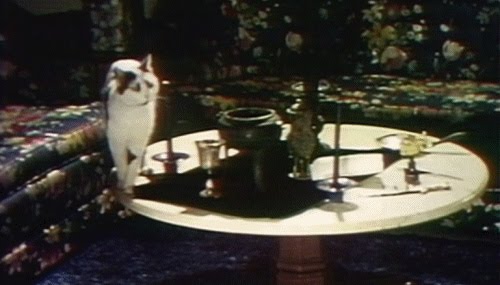
At the very least, this is an ambitious cinematic cocktail, and for the most part it works. No doubt most people won’t find it to be all that visually stimulating, but if it really is about what you do with what you’ve got, Romero is a miracle worker. As cinematographer and editor as well as writer/director, he establishes an intoxicating rhythm early on that luckily remains consistent throughout – there are some really neat tricks employed during the post-production stage, as well as some creative camera movements which keep the proceedings from becoming mundane, even when the story doesn’t seem to be moving forward. This is a chilly film, perfect for viewing during the Fall season, and once Donavan’s titular song blares over an occult shopping spree, Romero’s unique alchemy has all but won you over. It’s very much of its time – the fashion, the unquestionably ugly décor, the hep terminology – and appreciation may vary based on one’s tolerance of this kind of stuff, but a thoughtful viewer will surely find plenty to chew on here, if not even more to swallow.

2632699948_ff45f27beb1

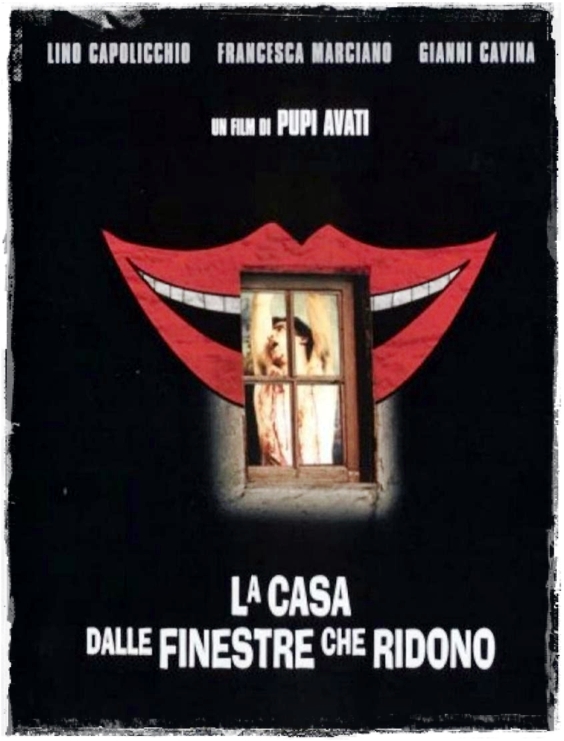
THE HOUSE WITH THE LAUGHING WINDOWS (1976) – A REVIEW BY RYAN MARSHALL

vlcsnap-2016-10-01-08h10m11s101.png

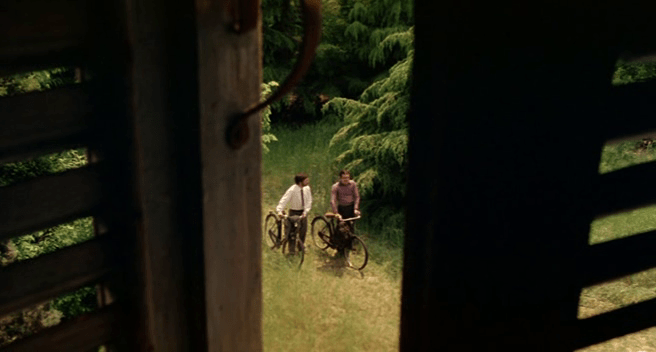
I must have been thirteen or fourteen at the time, and I don’t remember too much about what my world was like then, with the exception of it being a lesser variation of what it is now. If Argento, Fulci, and Bava are the more obvious names who introduced me to the black leather and brighter blood which would eventually shape my definitive creative conscious, director Pupi Avati opened up different doors entirely with his magnificent THE HOUSE WITH THE LAUGHING WINDOWS, a brilliant subversion of the Giallo formula with heavy doses of folk horror and genuine social-political subtext.

The Gialli that I am particularly fond of have more in common with THROUGH THE LOOKING GLASS than the standard crime narratives of the yellow paperback novels from which they derive their title, and as such, this is as important an entry as SUSPIRIA, Fulci’s THE PSYCHIC, or Sergio Martino’s delectably psyched-out masterpiece ALL THE COLORS OF THE DARK. What is perhaps most immediately intriguing is the placement of this particular rabbit hole in a twisted, though ultimately familiar semblance of reality. By association, the Giallo is a heightened affair, but Avati is skillful in how and where he engages with the fantastical.

vlcsnap-2016-10-01-08h06m37s379.png

The log-line for this one is refreshingly simple: a man, Stefano (Lino Capolicchio) arrives at a small, seemingly quiet villa on business, tasked with restoring a fresco of (what at least appears to be) Saint Sebastian in the town’s church. Soon after arriving, however, things take a sharp turn for the macabre as our hero receives anonymous threatening phone calls and gets kicked out of his hotel to make room for another guest; a guest who never shows up, and was never booked to begin with. He then moves into an old house in the woods which he shares with only an elderly woman upstairs and although she never seems to leave her bed, movement is explicitly heard at all hours of the night. A dark secret seems to hang over the village, one the locals would prefer to keep from the knowledge of the general public. After the sudden murder of a friend who seemed to have some answers, Stefano decides to do some amateur detective work of his own which will ultimately drive him to madness.

But will curiosity kill the cat? When one is watching a Giallo – and a good one, to boot – all cards are on the table. As a long-time admirer of films that depict the deterioration of a mind in unison with depicting an industry, culture, or world at large on its way out, I find Avati’s film to be utterly fascinating. Here we have the classic descent-into-madness narrative, a staple of the genre, unfolding beside a positively post-apocalyptic landscape; the villa, with all its abandoned ambitions and lost souls, is most likely intended as a commentary on post-War Italy and how certain communities struggled to escape their past. Stefano’s various romantic flings with school teachers and conversations with drunks, bat-shit crazy altar boys, and of course the old woman upstairs reveal a tight circle of damned spirits, only a handful of whom dream of escape, though most only wish to keep a vicious cycle going for as long as it possibly can.

vlcsnap-2016-10-01-08h07m48s091.png

It’s quite interesting, or at least it might be to certain readers, to note that in the course of a career spanning nearly half a century, Avati only made (to my knowledge) about half a dozen features that could be branded as horror films, the most widely-acknowledged of which are this one and the equally exceptional ZEDER (aka REVENGE OF THE DEAD). Skimming through an extensive filmography such as this, it seems Avati has covered just about every base he can, returning to the realm of the macabre time and time again, but mostly at the helm of much lighter, though I’m sure no less thoughtful fare. It is clear that while he is not technically a “genre” director, Avati has a penchant for brooding phantasmagoria; a dark side that only shows itself when deemed absolutely necessary – which in turn makes for some of the most consistently engaging tales of terror on the market.

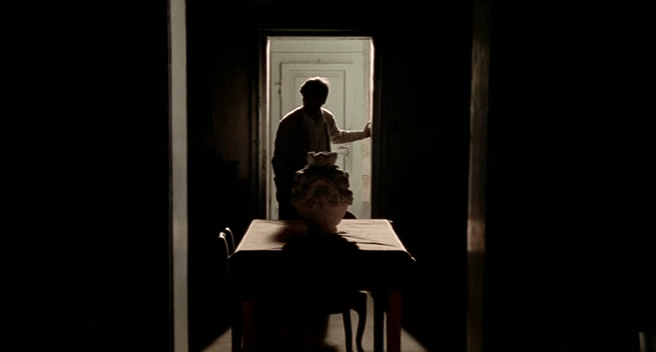
Pasquale Rachini’s photography is a real treat; I have always loved how the camera finds raw beauty early on, and throughout, in the wide lavish wetlands and partially destroyed old houses featured around the villa. A sense of purest reality is created, and then soon shattered, as day becomes night and lighting becomes more evocative, locating what lurks behind and between the shadows as well as what creates them in the first place. And yet, it will seem rather understated to those for whom “Giallo” is defined only by 70’s-era Argento (DEEP RED, SUSPIRIA, etc.), but alas, I believe it is as stunning as anything the genre has to offer. And who could forget to mention Amedeo Tommasi’s score, which swings effortlessly between nail-biting tension and fleeting romanticism, and remains shamefully unavailable to the general public to this day. One can only hope somebody, anybody, will rectify this sooner than later; it really is fantastic.

vlcsnap-2016-10-01-08h10m51s237

Some films just feel as if they were made for you, and at their best, Gialli have that precise effect on me. THE HOUSE WITH THE LAUGHING WINDOWS, for all its WICKER MAN-esque outsider horror, nevertheless feels like home. This may seem like a bit of an odd notion to those who seldom dance with the devils of celluloid, but if it happens that you do so more often than not, you will know exactly what I mean. Danger and mystery alike can be so invigorating, and Avati has conjured an atmosphere of dread so palpable that a knife (of any kind) simply wouldn’t cut it. Further proof that some of the genre’s best offerings come from those who don’t necessarily specialize in but nonetheless retain an honest appreciation for its seductive allure; one of many horror films that is more or less about watching horror films, and luckily, we are spared the usual contradictory moralism and regrettable air of superiority. Nothing but love emits from these frames. Love, blood, sweat, tears, purple flowers, tape recorders, and architecture with eyes and ears acute enough to catch even the lowest whisper.

VIVA (2007): A Review by Ryan Marshall

pressbook_outside

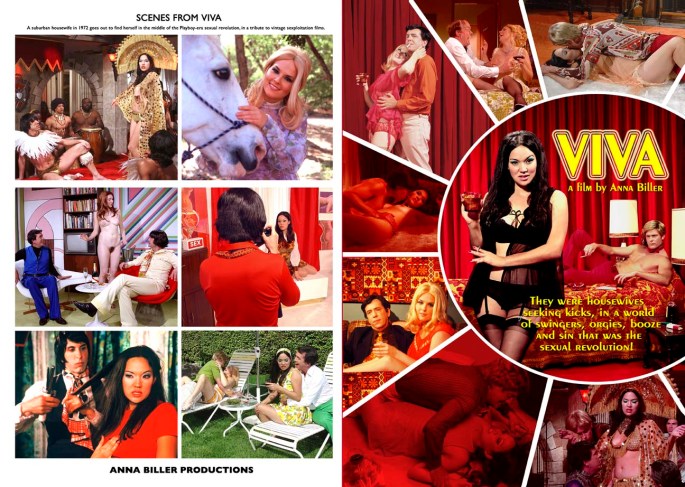
An homage, when executed with the most shallow of intentions (that is, to pay tribute without any sort of recognizable personal stamp), can potentially be a deeply disastrous affair. Truth be told, just about anyone can spread their fanaticism far and wide, but it takes a particularly gifted individual to balance immeasurable admiration with a more comprehensive understanding of his/her obsessions. Anna Biller’s VIVA belongs to a long line of exploitation throwbacks that have turned up in recent years – a candy colored excursion back to a time when the idea of corrupted innocence was genuinely invigorating – and immediately it looks to be the kind of extra-cutesy affair that you either love or hate depending on your own tolerance for the kind of material it seeks to evoke. In spite of whatever complicated feelings one might have, there’s an undeniable hook from the first frame onwards, which is that Biller’s at the very least got the “look” and “feel” down to a tee; unmistakably the result of countless years spent thrifting, crate digging, and existing almost entirely in her own world.

I’m the kind of guy who appreciates a true sense of craftsmanship when it comes to production design in film (and even more-so with an intended period piece), so Biller’s commitment to recreating the sleaze and cheese of 1960’s/70’s sexploitation is an immediately imposing quality. Every last aspect of sound and sight, from the pictures hanging on the walls to the occasional (and only slightly jarring) continuity error, exists for the sole purpose of total immersion. Taking a closer look at her filmography thus far, the writer/director (plus costume designer, editor, actress, producer, animator, musical contributor, etc.) seems to have a very unique (and so far successful) brand which seeks to revisit the kind of lucid technicolor dreamscapes that once graced the silver screen with their distinctive phantasmagoria, but with an added intellectual twist which allows the material to be studied under the microscopic lens of today’s comparatively tame social-political landscape.

“This is a story about a housewife during the sexual revolution. The time is 1972, the place is Los Angeles, and the people are ORDINARY.” The situation at large: Barbi (Biller) enjoys, or rather submits to a stay-at-home life with her husband in and out on various business trips and the neighbors, Mark and Sheila, serving as a constant reminder of the mundanity of her sexuality as of late. But one day, Barbi ventures far outside of her comfort zone, pursuing a career in modeling, which leads to an unlikely encounter with a vivacious hair stylist that prompts her man to walk out on her. Instead of confronting the crippling emptiness she experiences in light of his absence, Barbi goes out on the town with Sheila (whose husband has also left her) where they take up new lives as call girls. Nudist hippie camps, flamboyant art snobs, the allure of showbiz, and crazy drug-fueled orgies – there’s truly something for everyone out there.

085_2048x1152

But of course, this exhilarating new world is not quite all it’s cracked up to be; the girls are of the belief that they are escaping the constricted roles of the household through all the glitter and glam, when in fact the men of this so-called “high life” are no less intolerant and negligent than their respective spouses. Where their husbands merely laughed until their faces were red or extended their skiing vacations an extra full month, these savage beasts are content to buy and sell them out or worse yet, take their abusive tendencies to more regrettably hands-on territory. Yet, Barbi proves time and time again that she is much stronger than she appears; the toxic cycle seems never-ending and the web of overbearing masculinity is a powerful obstacle, but what this tale ultimately suggests is that progress is not an all-together impossible dream.

Speaking strictly of surface-level pleasures, this covers just about anything that could be found on the unofficial sexploitation checklist, which is a modest achievement in its own right – but brewing beneath is something far more interesting and – ultimately – important. This is indubitably a feminist film, and one which is refreshingly fearless in how it pronounces itself as such; a simple but poignant story of a woman breaking free of both internal and external boundaries and learning to exist as her own separate entity. Aesthetically, Biller crafts a language that is entirely her own, in spite of her many prominent influences; if this can be compared to anything, it’s the early works of John Waters (FEMALE TROUBLE and DESPERATE LIVING, especially). Much of it is gleefully over-the-top, often hysterical, but whilst wallowing in the filth, Biller gracefully unearths honest, ugly truths when it comes to female representation both on and off the screen, though it’s her auteurist touch – her fetishistic attention to detail and supernatural gifts as a visual artist – that really allows the bigger, more progressive ideas to shine.

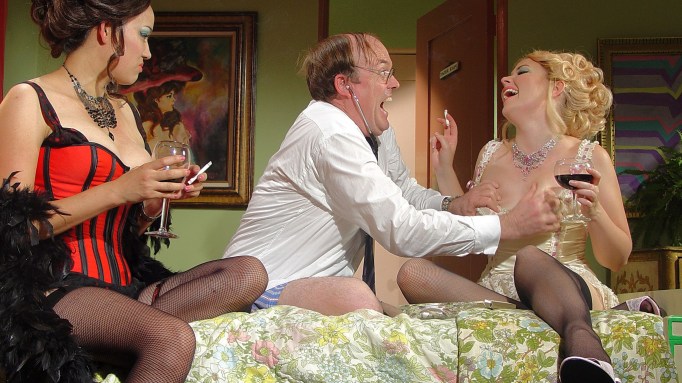
But most importantly, it’s just great entertainment. At two hours, there are brief moments when one feels the narrative meandering ever so slightly, although it’s safe to assume this is simply by design – either way, the film is never anything less than effortlessly engaging. Spectacular musical numbers, a vibrant color palette, the casual celebration of excess (a surplus of sex, drugs, and mood music can be found here for those inquiring) and even a mind-bending animated sequence (designed by Biller herself, to the surprise of, well, absolutely no one) ensure that it keeps finding new ways to surprise the viewer at every turn, and the cast deserves a special mention as well for keeping the material consistently amusing without overstepping into grotesque self-parody. The scene with the hair stylist, in particular, is of a (hilarious) nature that would make the aforementioned Waters green with envy; it’s positively absurd, and gleefully filthy, without abandoning the heart of the picture. Impressively, it’s one of many things that remains perfectly in-tact throughout.

VIVA is about as cool, collected and smart as feature debuts get – signifying all at once a compelling introduction to a singular obsessive cinematic conscience and a passionate call to action for those interested in the sexual politics of yesteryear and yesterday, and how from them we can derive lessons to be applied to contemporary values. It’s fresh, endearing and poetic in its artful trashiness – it’s very much the movie I needed at this particular time in my life. If ever there was further proof of the values inherent in actively searching for hidden gems within the grimiest and most effectively transgressive crevices of cinema, it can be found here, deep within the pulsating portal of pop-art progressiveness that is Anna Biller’s beautifully bat-shit psyche.