It’ll just be a matter of time before William Girdler has his own reconsideration — or reckoning, if you will — in the history of cinema. If the blood feaster, Herschell Gordon Lewis, can get a section on the Criterion Channel, then look for Girdler’s one day. He was a prolific, guerrilla-filmmaking veteran of war who set out to start his own film production company with his brother-in-law, ended up in Hollywood making what is maybe the most successful Jaws ripoff to date, and over a six year period, directed nine features and wrote six, only to die a martyr at the hands of the cinema itself in a helicopter wreck in the Philippines as he was location scouting for his next film. As he fostered his obsession, he found his place, working with the likes of Tony Curtis, Leslie Nielsen, and Pam Grier. To this day he’s relatively unknown, generally under-appreciated by the late-night TV horror crowd, and yet persists as an underground, underdog hero, especially in the state from which he hailed, Kentucky.
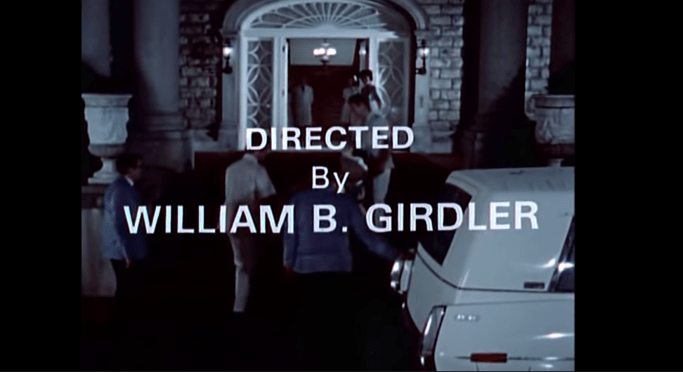
And a quick personal note: Perhaps I’m biased on the Bill Girdler front, given so many of my two-to-three degrees of connection to the filmmaker’s history. As a former manager who programmed midnight features at a local theater in the very town Girdler was from, I was bound to connect to a few folks who consider themselves experts on the local low-budget midnight grindhouse king of Louisville, so I’ve heard his name for years from folks who really do know a lot about the matter. My many thanks to my own personal Girdler aficionados, and former theater managers themselves, Dave Conover and Beau Kaelin, for finally making me sit down to watch his first film.
And who would’ve guessed it, Asylum of Satan might just be as definitively Louisville as it gets — and not just because Louisville around this time of year is a real-life asylum for Satan, being wedged right in the center of the hot, humid Ohio Valley — but rather the “relatively small potatoes, with a big heart, and lots of charm” appeal oozes the same charisma as the city itself. (And, hey, you want a little tour of the 1971-set cityscape? Check out all the scenes of TV-commercial-extraordinaire-turned-leading-man Nick Jolley driving Girdler’s cute, tacky, yellow 914 Porsche around town!)

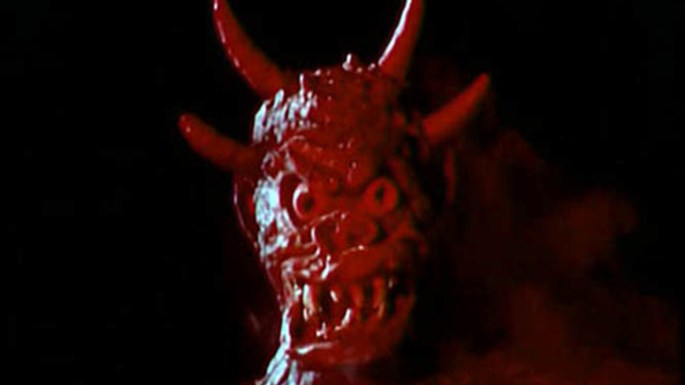
Asylum of Satan is indeed, just as the title suggests, an asylum horror flick; perhaps akin to the Amicus-produced Asylum from the same year, but less anthology-based, it feels more like Shock Corridor meets Rosemary’s Baby. Simple in premise, dirt cheap in budget, but surprisingly effective with certain scare tactics and wholesome in its cheese. The gorgeous Carla Borelli is our entrapped damsel, the victim of a Satanic conspiracy (supervised on set by the Church of Satan itself, who sent an advisor to serve for Girdler on the set) which is headed by the evil Dr. Specter, a hilariously goatee’d Charles Kissinger, a regular for Bill (and Louisville’s own years-long Fright Night host, the Fearmonger, on our local FOX-affiliate, WDRB), who comes across as a deliciously villainous, Rust Belted version of Hammer-era Peter Cushing or Christopher Lee, willing to do ham only with the utmost class and style… and not afraid of a little Hitchcockian cross-dressing either! It’s ultimately up to our leading lady’s boyfriend, who doesn’t exactly ooze protagonistic sex appeal, to annoy the police into searching the asylum in which she’s trapped — ultimately revealing the asylum’s direct connection to Satan himself.

Don’t get it wrong — this is cheap, low-grade, and was meant to be made for money (but don’t call it bad!) At one time or another, it was probably a heart-stopping name to speak around a wealthy Louisville investor, causing Vietnam-like flashbacks of money wasted. As one of the film’s investors noted in the Courier Journal in 1975, “[The film] was a training ground, and we paid the price.” The investors did eventually gain the rights to the film after it bombed, and after Girdler signed the rights away, so they could make their money back. (Today, it’s hardly available on DVD and is free on YouTube… great work, guys!)
A fantastic interview with Don Wrege, the then-17-year-old kid who served as the set’s clapperboard operator, reveals Girdler as a businessman first, filmmaker second. He was interested in making money and films, in just that order. It’s an assertion that ties Girdler directly to the genre’s other great “businessified” passion directors — think of the infamously budgeted Ed Wood, or the gimmick-master, ticket selling guru, William Castle — and there’s truly a great charm in that, ultimately revealed in the oddly oxymoronic, haphazard dedication on display, which grew that retrospective legend I’ve come to respect.

When the film premiered worldwide at the now-closed, sadly vacant Vogue Theater in St. Matthews, my city-within-the-city (the Vogue is right around the corner from my old house, the school at which I teach is right down the street), Billy Reed wrote that the actors wore tuxedos as if they were in Hollywood and “it was not Graumann’s Chinese, but it was a worthy try.” That seems to tap directly into the soul of the movie. Amidst the mix of occasionally phony, occasionally effective horror, lined along all the fake water snakes and crawling bugs and devil make-up falsely purported to have been stolen from the set of Rosemary’s Baby, there really is heart. And there’s merit. And there’s love.
And that’s clearly the Girdler touch.
Tyler Harris is a film critic, English teacher, and former theater manager from Louisville, Kentucky. His passionate love for cinema keeps him in tune with his writing.

 Podcasting Them Softly