BRAD SILBERLING’S MOONLIGHT MILE — A REVIEW BY NICK CLEMENT

1

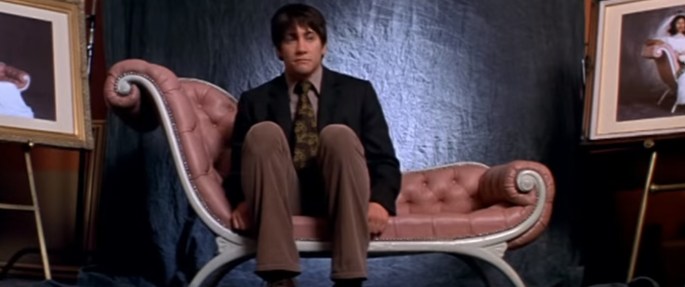
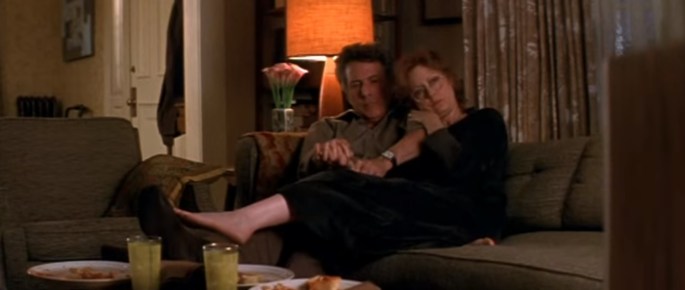
Infused with a tragic sense of personal melancholy as his wife was murdered in real life, writer/director Brad Silberling’s unfairly neglected 2002 drama Moonlight Mile is a heartfelt and consistently moving piece of cinema that features sterling work from Dustin Hoffman and Susan Sarandon as grieving parents, baby-faced Jake Gyllenhaal as their emotionally stunted would-be son-in-law who decides to stick around in the immediate aftermath of his fiancée’s death, reluctantly going into business with the man whom he would’ve called dad, and Ellen Pompeo as a local bartender/post-office clerk who catches Gyllenhaal’s sad eye and who is also nursing her own bit of heartbreak. Beautifully captured by cinematographer Phedon Papamichael (The Weather Man, Nebraska, 3:10 To Yuma) in dark tones and a brown-black-orange color palette that is frequently gorgeous in an off-kilter manner thanks to his interesting choice in camera placement, Silberling’s emotionally delicate screenplay fed right into the fragile mindsets of his characters, with the story moving in unexpected directions while still containing its fair-share of overtly audience pleasing moments. I really hope that this film gets the Blu-ray transfer upgrade that it so deserves.

2

The film’s soundtrack is absolutely stunning (and sadly out of print on compact disc so very expensive via third party sellers on Amazon) and features classic tracks from The Rolling Stones (the film takes its name from their song), Van Morrison, Bob Dylan, David Bowie, Sly and the Family Stone, Jefferson Airplane, Robert Plant, and many more. Silberling is an interesting filmmaker with an eclectic set of credits; I rather enjoyed his stylish and bittersweet City of Angels, and his bizarre and trippy sci-fi comedy Land of the Lost is better than most people gave it credit for being. But this is easily his most assured piece of storytelling, and I wonder why he hasn’t become more prolific throughout the years. There’s always been “something” about Moonlight Mile that has grabbed me, and I’m not sure, outside of the obvious and previously stated, what that “something” exactly is. And upon multiple viewings, and as I’ve gotten older, the performances from Hoffman and Sarandon have gotten even richer and more affecting; the narrative looks at life in a very direct fashion, finding awkward humor in certain spots that challenges your pre-existing expectations of films such as this. It’s nice to see that Silberling has a new film coming out later this year…
3

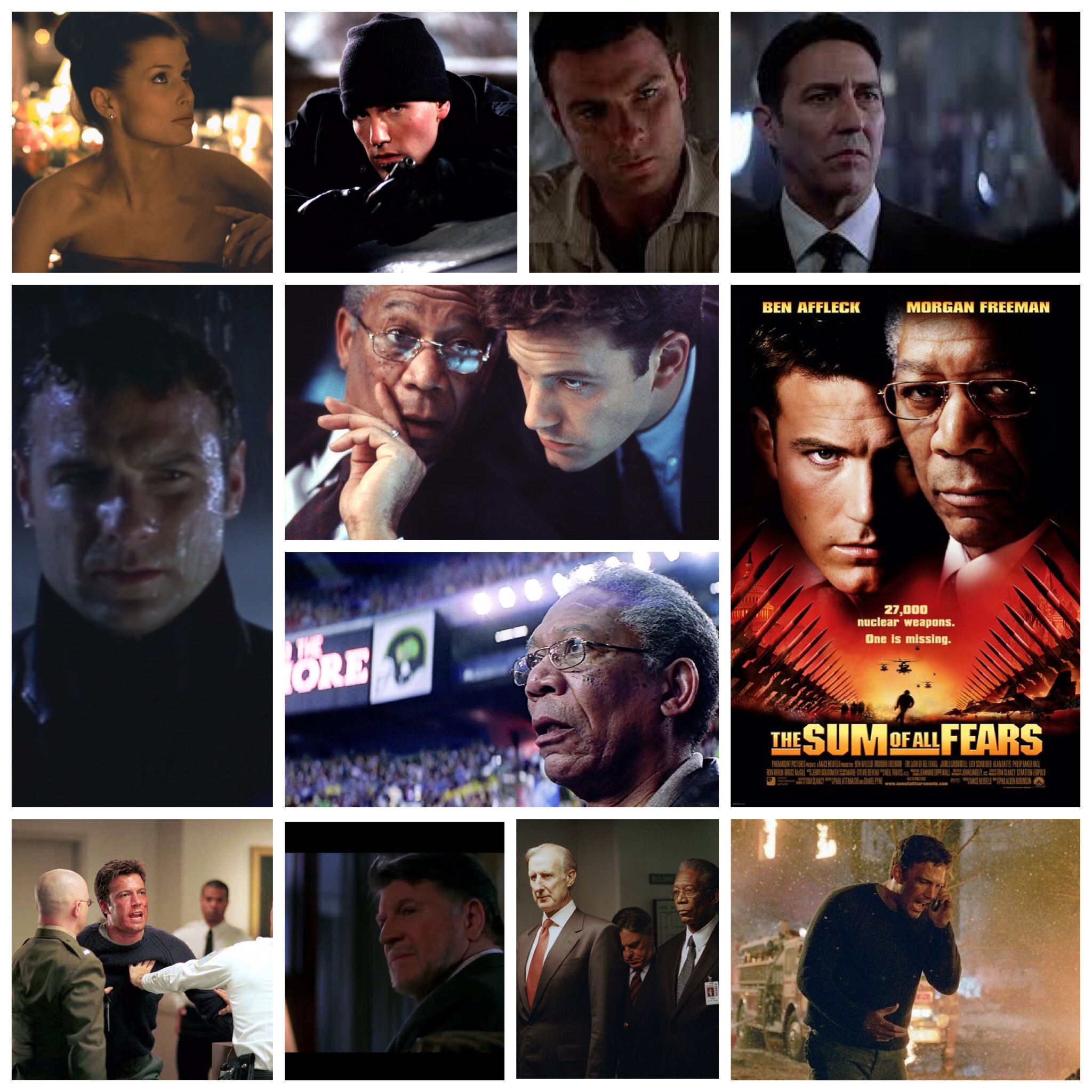
Tom Clancy’s The Sum Of All Fears


Surprisingly, The Sum Of All Fears is my favourite film version of Tom Clancy’s Jack Ryan novels. Alec Baldwin did a bang up job in the superb Hunt For Red October,

Harrison Ford held his in two beyond excellent entries, and we won’t speak of the Chris Pine/Keira Knightley snooze-palooza from a few years back. Why then do I gravitate towards this Ben Affleck incarnation? Who knows. Battfleck himself makes an adequate, inquisitive Ryan, on the younger end of the rope and under the guidance of CIA Yoda Morgan Freeman. I think it’s the early 00’s tone of the film itself though, the whip smart editing, Bourne-style escalation of suspense and terrific ensemble cast, a hallmark among Clancy films. Affleck embodies a younger, inexperienced Ryan whose infamous intuition is just breaching the surface of his character, right on time for a deadly plot to set off a nuclear device on American soil. A German radical (Alan Bates, underplaying evil nicely) with vague ties to a Neo Nazi faction is cooking up a false flag attack against Russia, using a long dormant warhead supplied by arch mercenary Colm Feore. Or at least I think that’s the crux of it, these cloak and dagger affairs can get pretty dense on you sometimes. There’s a sense of global danger though, a level of stress that ratchets up until even the stoic US President (an explosive James Cromwell) begins to lose it. The Russian President (Ciaran Hinds) gravely tries to sort out the misunderstanding, whilst Clancy staple character John Clark (Liev Schreiber gives Willem Dafoe a run for his money) covertly smokes out conspirators. Unease and tension nestle into the narrative, and when that impending disaster is minutes away during a hectic NFL game, you can feel the suspense in the air. The supporting cast is rich with talent including Michael Byrne, Bruce McGill, Philip Baker Hall, Josef Sommer, Ron Rifkin, Lisa Gay Hamilton and gorgeous Bridget Moynahan as Ryan’s fiancé. I’ve got nothing but love for Red October, Patriot Hames and Clear & Present Danger, but something about this one hit a frequency and resonated with me a little better, coming out on top as the most re-watchable, enjoyable entry.  

-Nate Hill

BEN YOUNGER’S BLEED FOR THIS — A REVIEW BY NICK CLEMENT

3

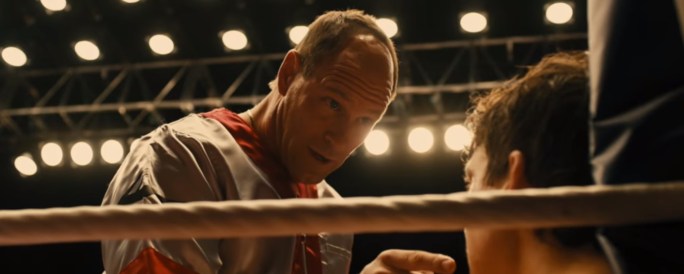
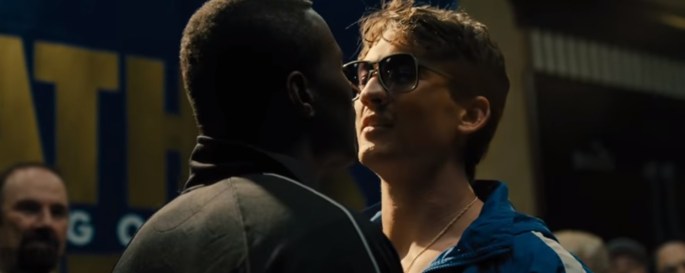
Taking familiar material and spicing it up with some unexpected touches and a strong dose of extreme personal triumph, last year’s thoroughly entertaining and always absorbing true-life boxing movie Bleed for This, from writer/director Ben Younger (Boiler Room, Prime), deserved a lot more than to bomb at the box-office and draw only middling critical responses. What were people expecting? This movie hits all the proper beats, digs in deep to the hardscrabble world that it presents, and features extremely strong acting work from Miles Teller as Vinnie Pazienza, Aaron Eckhart as his alcoholic trainer, and Ciaran Hinds as Pazienza’s father. The ringside bouts are bloody and brutal, the dialogue is appropriately rough and frequently profane (and also very funny in numerous spots), and the car-accident sequence and subsequent rehabilitation that Pazienza went through is as harrowing and squirm inducing as anything I’ve seen in a while, with a large part of that feeling stemming from the fact that this occurred in real life. Pazienza DID have the metal “Halo” device screwed into his skull (not sure which scene was tougher to view, putting it on, or taking it off…), he did go back to training while nursing his broken neck, and he did go on to fight again and become a champion.

2

All of this is communicated with fleet storytelling by Younger, and a dedication from all of the actors in making everything feel honest and believable, especially Teller, who clearly went all out physically, and really makes you care about a rather stubborn individual who makes some decisions which aren’t easy to understand. And after dropping a great supporting turn in Clint Eastwood’s Sully, Eckhart had another lost-in-the-shuffle performance in Bleed for This, playing a has-been trainer who can’t control his liquor but who still is sharp inside the gym and ring. And Hinds, who has a truly unique sense of screen presence, clearly had a blast playing the tough-love but rational father of Pazienza, a man prone to spouting the “F-word” in tandem with colorful put-downs and vulgarity, but also a man who at his core loves his family and would do anything for them. Larkin Siple’s hand-held cinematography conveys the required uneasiness and grittiness that the story demands, the soundtrack is peppered with some choice cuts, and Zac Stuart-Pontier’s sharp editing allows the film to effortlessly breeze through its 110 minute running time. Also, as it must be noted: Ted Levine POWER. Bleed for This is currently available on Blu-ray/DVD and via various streaming providers.

1

Review: Disney’s latest “Pirates” entry treads familiar waters

Full of witchery, imagination, humor and a lot of water, Pirates of the Caribbean: Dead Men Tell No Tales finds our hero, Captain Jack Sparrow in the throes of a British jail, scheduled to be executed.  The British are also holding Henry Turner, one of their own and the sole survivor of an encounter with the cursed, undead Captain Salazar.  Salazar left Turner alive to tell Sparrow of his impending reckoning.  Turner is on a quest for the Trident of Poseidon.  While the British Navy doesn’t believe Turner, the mysterious Carina offers to help him find the Trident.  Sparrow’s ally, Captain Barbosa returns, buying him the necessary time to outwit Salazar.

Tales features the directing duo of Joachim Rønning and Espen Sandberg, whose Academy Award – nominated high-seas adventure film Kon-Tiki, made them perfectly suited for this film. Or so we thought.

Johnny Depp returns as the bemused Jack Sparrow.  His performance treads the same waters (pardon the pun) as the previous entries only without the same stamina.  Kaya Scodelario’s Carina starts out strong and meanders in the middle, doing very little until the third act.  Geoffrey Rush’s Barbosa is an absolute hoot in the film, his function as a “middleman” is the most effective role in the film.  Javier Bardem was the perfect actor to play the villain, Salazar.  The role felt like Ahab-incarnate, but Bardem plays it to the hilt truly anchoring the film.

Terry Rossio co-wrote a revised script with Jeff Nathanson.  Rossio had a familiarity with the characters; Nathanson brought the same vigor he shared with George Lucas and their Indiana Jones and the Kingdom of the Crystal Skull script.

The result here was convoluted.  Perhaps this is why Brenton Thwaites seemed to get lost in the background unless he was onscreen with Depp.  Much like the Indiana Jones – Mutt Williams relationship in Crystal Skull, Sparrow is the protagonist yet it really felt like Turner’s story.

Tales echoes Crystal Skull and not in a good way.  The film was very effects heavy; the characters are strong, but they rely on technology to tell far too much of the story and the payoff got muddled. There is one particular special effects sequence featuring the Black Pearl where I genuinely laughed.

Joachim Rønning and Espen Sandberg tried their very best, but they were out of their depth.  That’s not to say that the film is a complete miss.

Javier Bardem and Geoffrey Rush rose to the challenge, elevating with and above the effects.  Johnny Depp is solid, but the character is waning.   A protégé of Hans Zimmer, Geoff Zanelli resurrects Zimmer’s famous cues from prior Pirates’ entries reminding us that we’re supposed to be enjoying our adventure on the high seas.  A lack of fresh cues pulls us out.

The overly convoluted Dead Men Tell No Tales is full of characters that don’t fully work. In an uncanny irony, Sparrow utters “I have a rendezvous beyond my horizon” at the end of the film.  Perhaps Mr. Bruckheimer and Disney will see that horizon for what it is and bring the series to a conclusion, sooner rather than later.

Review: Jack Sholder’s action-horror “The Hidden” is a diamond in the rough.

While the modern world enjoys Kyle MacLachlan in his current turn as Dale Cooper in “Twin Peaks,” I decided to celebrate his cult status with the classic The Hidden.

Recommended to me by several film friends earlier this year, Jack Sholder’s taut action-horror film features MacLachlan as young FBI agent Lloyd Gallagher on the hunt for an alien parasite that can and needs to move between hosts to survive.  Gallagher is partnered with Michael Nouri’s Tom Beck, a seasoned LAPD homicide detective.

This was MacLachlan’s third turn following his roles in Dune and the wild cult-classic Blue Velvet.  Here, he relies more on his ability to emote rather than speak, carrying a certain amount of stoicism throughout the majority of film.  Nouri’s Beck, a family man, is very much the voice of the duo, echoing the audience’s sentiments of mistrust, concern and intrigue.  Nouri’s performance was nominated for a Best Actor Saturn Award and he won in the same category at Sitges.

Jack Sholder, who had just directed A Nightmare on Elm Street 2 was an appropriate choice here.  His style is open and head-on, going for mostly wider shots.  Under the pen name of Bob Hunt, Jim Kouf’s (Money Monster) script does an excellent job of building a rich history of each character, layering in the mystery and intrigue.  Kouf disassociated himself from the project when New Line refused to allow him to direct the film.  Sholder stepped in to re-work some of the script moving it from a purely action film to an action-horror hybrid.

Many of the characters are on screen for a short while only to have their personalities altered when the parasite consumes their bodies.  Kouf’s script and Sholder’s direction make for an effective transition in each supporting character.  Of the supporting characters, William Boyett’s Jonathan Miller, who’s imposing presence was the most fun to watch.  The always scintillating Claudia Christian is a tease here.  She may be on screen for only a few minutes, but they were a blast.  A young Richard Brooks, who would go on to play the assistant D.A. in early seasons of “Law and Order” gives a very convincing performance.  I had to rewind a certain sequence twice to catch Danny Trejo’s cameo.

The most surprising turn in the entire movie is Ed O’Ross’s Detective Cliff Willis.  Mr. O’Ross is normally known for playing “rough n’ tumble” characters and here his imposing nature works for both approaches.  His character’s fate is revealed if you’ve seen the one-sheet poster, but that’s the charm of the story:  you never know who will be consumed next.

Taking advantage of the Halloween weekend, New Line opened The Hidden in 1,045 screens on October 30, 1987, taking in $2.5 million its first weekend.  It would remain in the Top 10 the following weekend, before falling off eventually taking in $9.7 million domestically.   Though it did not run very long in theaters, it’s resurgence on home video and television has certainly elevated the film to cult-classic status.

Running a tight 96 minutes, Jack Sholder’s The Hidden holds up after all these years.  The themes it explores are still as relevant as ever and Michael Nouri and Kyle MacLachlan leave a lasting impression.

Essential Viewing: James Burnett’s neo-realistic “Killer of Sheep” is timely and timeless.

In today’s flash-in-the-pan film environment where a perfectly-timed explosion, laugh, or shout punctuates a non-existent narrative, it’s very rare that I am floored by a film. Yes, I find every film to have a redeeming quality, but that doesn’t necessarily mean that something is good.

When I do find something good, that is worthy of sharing, I make it a point to do so.

That’s why when a friend mentioned a screening of Charles Burnett’s 1978 film, Killer of Sheep and ‘film school’ in the same fell swoop I knew I had to see this.

With a budget of $10,000 and a skeleton crew, Burnett wrote, directed, produced, shot, and edited what would become his master’s thesis film for the UCLA film program.

The interesting thing about Sheep is that the narrative is a series of vignettes focused on the characters and their environments.  The film nearly felt non-narrative, and yet, the vignettes work together forming a neo-realistic theme of a father trying to make a better life for his kids.

Set in the Watts area of Los Angeles, Stan, his wife and two kids are barely making ends meet.  Stan works long hours in a slaughterhouse.  Rather than turning to a life of petty crime, it’s the best work that he can find.  Stan has trouble sleeping and tries to evade his wife, while raising a son who would rather be out with his friends, getting in to trouble and a daughter who is also vying for his attention. With the help of his friend Bracy, Stan tries to buy an engine so that they can get a more reliable car.  They eventually end up worse off than they started.

Other than Stan and Bracy, Burnett did not name the main characters, but one doesn’t mind this.  He gave each of his characters a visceral richness that transcended the need for names.

Burnett shot the entire film on 16mm Black & White film in the Academy aspect ratio.  His use of close-ups was jarring at times, and at others, certain images fell partially out of frame.  Despite this, he created an intimacy out of the despair that Stan must’ve felt as he was struggling for a better life.  This dichotomy was never more prescient than during a dance scene between Stan and his wife.   In that scene, his wife was trying to be intimate while you could clearly see that Stan was focusing his attention elsewhere.

The completed film garnered a number of awards and many accolades when it was screened in 1978 at the Berlin and Toronto film festivals.  It did not receive a wide release due to complications in securing the rights to the 22 songs Burnett included in the film.

It sat for 30 years as a result.

In 2007, the UCLA Film and Television Archives and Milestone Films restored the 16mm prints and transferred them over to 35mm.  The restoration was completed due in part to a donation from Steven Soderbergh, who also paid the $150,000 to license the soundtrack.

Officially released on March 30, 2007 in select US and Canadian cinemas, Charles Burnett’s Killer of Sheep is an austere portrait of someone who wants to do better for himself and his family, and yet he is so utterly unable to alter his life.

While I can’t say that Stan’s life worked out for the better, I can say that this neo-realist portrait is something that will stick with me forever.  The film appeared on several critics’ top ten lists of 2007; it has been inducted into the United States Film Registry by the Library of Congress in 1990, and was chosen by the National Society of Film Critics as one of the 100 Essential Films.

RANDAL KLEISER’S THE FLIGHT OF THE NAVIGATOR — A REVIEW BY NICK CLEMENT

1

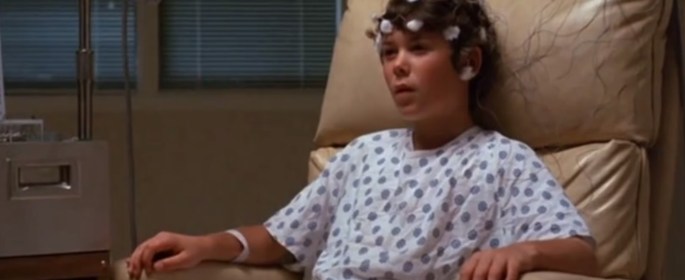
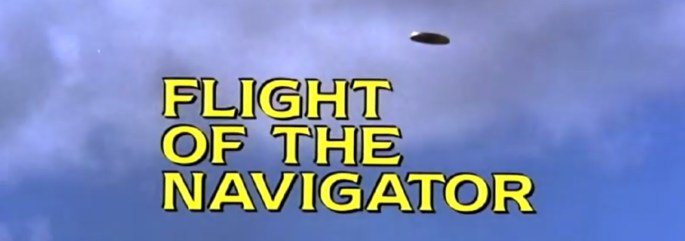
Not many films instilled as much wide-eyed wonder in me as a youthful movie-lover as The Flight of the Navigator, which was released in the summer of 1986, and while not attaining the runaway big-screen blockbuster status that it truly deserved, has lived on throughout the years as an all-time cult favorite for many children of the 80’s. Directed with a terrific sense of old-school movie-magic by Randal Kleiser (Grease, The Blue Lagoon, Big Top Pee-wee) and written with gee-whiz excitement by Michael Burton and Matt MacManus from a story by Mark Baker, child star (and future bank robber…) Joey Kramer got the role of a lifetime as a kid who gets abducted by a friendly alien (voiced by Paul Reubens but credited as Paul Mall!) who then takes him forward in time from 1978 to 1986, all the while battling the charms of a then extremely young Sarah Jessica Parker. The supporting cast included Cliff De Young, Veronica Cartwright, Matt Adler, and Howard Hesseman, but the film’s narrative was squarely placed on Kramer’s young shoulders, and he did a great job interacting with the various creatures and showing genuine responses to his otherworldly craft.

2

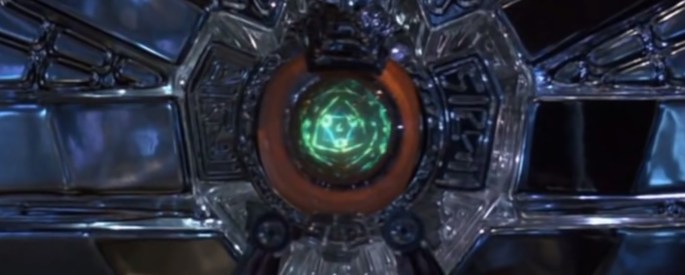
The Flight of the Navigator included some of the earliest full-on CGI effects, and features strong cinematography from James Glennon (About Schmidt, Election, Deadwood, Carnivale) and a lively musical score from Alan Silvestri (Back to the Future, Predator, The Delta Force). The film had a weird gestation, as it was first attempted to be set up as a Disney production, with the Mouse House ultimately declining to produce, but agreeing to distribute. The film was lensed on location in Florida with the scenes set aboard the ship shot in Norway on a budget of $9 million, with box office receipts reaching nearly $20 million in America; critical response was favorable. And over the years, it’s become one of those treasured items for many people that feels too refreshingly quaint to be remade in today’s overly slick and cynical CGI movie landscape, though an update has recently been threatened. I hope they leave this property alone, as it works just fine as is, and no amount of money will be able to replicate the original’s sense of overall wonderment. The Flight of the Navigator is available on Blu-ray and DVD, and as an Amazon and YouTube streaming option.

3

ROBERT REDFORD’S ORDINARY PEOPLE — A REVIEW BY NICK CLEMENT

3

Robert Redford’s brilliant family drama Ordinary People is a great movie. How could it not be? It’s real. It’s genuine. Nothing is overdone. And everything works. Redford’s invisible direction, for which he won an Oscar in no less than his directorial debut, is sublime, never showboating in any aesthetic fashion, instead allowing Alvin Sargent’s sensitive and deeply layered screenplay (which was based on Judith Guest’s novel) to do all the heavy lifting. And because Sargent was a master when it came to dialogue and crafting scenes that felt inherently real and honest, there’s nothing about Ordinary People that rings false or feels ill-conceived. The exemplary performances are beyond description. Donald Sutherland as the nice-guy father trying to keep his family together, Mary Tyler Moore with her bottled up rage and intense emotional repression, Timothy Hutton dropping a tour de force performance as an anguished, suicidal teen, Judd Hirsch as the kind shrink who takes a liking to Hutton, fresh-faced Elizabeth McGovern as Hutton’s object of desire – everyone was absolutely remarkable in this delicate piece of work. John Bailey’s plain and focused cinematography is a clear-cut lesson in less is more; sometimes you just need to frame the actors and hold the shots for a bit longer than normal (Jeff Kanew’s patient editing is superb) and pure movie magic will become the result. Marvin Hamlisch’s piano-centric score is the icing on the cake. The winner of four Academy Awards including Best Picture, Best Screenplay, and Best Supporting Actor (Hutton), Ordinary People was a critical favorite and box-office smash, and despite 37 years elapsing since its release, its power remains undiluted. No major studio would be interested in making this film today and that’s a really sad fact of life.

1

Little Nicky


I’ve never been one to actively nab the Adam Sandler flicks off the rental shelf, but even he has made the occasional winner, one of the best being Little Nicky. For some reason it’s panned over other far worse ones he’s churned out of the gumball machine (ever re-watch Billy Madison? What the fuck were we/they thinking back then?), but when you part the curtains of Sandler Stigma™ and really just look at what the movie is in itself, it’s a hoot. What other film can boast Rodney Dangerfield playing Harvey Keitel’s dad in hell? That’s right, Keitel is the red beast himself, coming down off a ten thousand year unholy monarchy, with no plans to retire. This infuriates his two wicked sons, played by Tiny Lister (must have been a different devil-mom) and a slick Rhys Ifans. They depart the inferno and set up their own devilish franchise up in New York City, raising all kinds of hell, the most amusing of which is lowering the drinking age to ten (where were these guys when I was that age?) and forcing Regis Philbin to say naughty things on live primetime. Their younger, slightly retarded brother Nicky (Sandler) must pursue them on their haunts and trap them in a magic flask before it’s too late. Dumb concept, right? Sure it is, but try and tell me it’s not hilarious m, especially with the amount of inane visual gags and trippy production design these folks have dreamed up. Between Hitler dressed as a slutty maid getting a pineapple repeatedly rammed up his rectum to a giant gorilla massaging mammaries that have sprouted on a dude’s head like fleshy succulent pigtails, there’s no shortage of wtf moments. Sander picks an odd character mask as usual, sporting a metal-head swoosh of a haircut and lisping his way through his lines sounding like he had a stroke from watching Billy Madison dailies one too many times. Patricia Arquette is in it, as a sweet, shy girl he meets topside and the closest thing to a sane person you’ll find in this madhouse. Cameos abound, from usual Sandler cronies like Jon Lovitz, Rob Schneider, Kevin Nealon, Dana Carvey, Peter Dante and Allen Covert, to randoms like Michael McKean, Clint Howard, Laura Harring, Henry Winkler, Ozzy Osborne, Reese Witherspoon as Nicky’s angelic mom and Quentin Tarantino as a blind preacher. I don’t really know what else to say about the thing, because its it’s own thing and you either rock out with it, or you don’t. Visually it’s never boring, the script was conceived in the toilet and jumped straight to the gutter, the performances are all garishly obnoxious and the overall tone is that of an sixth grade birthday party gone rogue. 

-Nate Hill

ROBERT MULLIGAN’S THE NICKEL RIDE — A REVIEW BY NICK CLEMENT

3

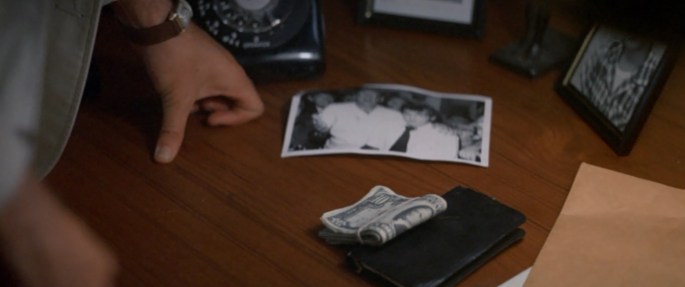
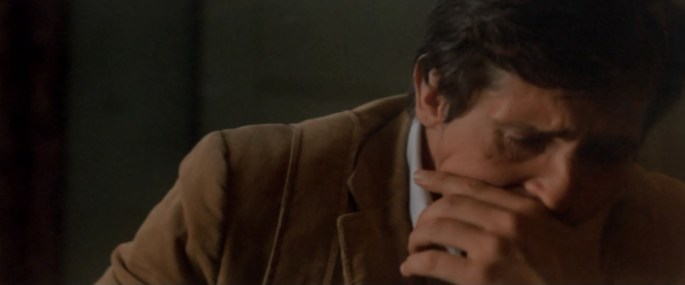
The Nickel Ride is a cool as a cucumber crime film from 1974, patiently directed by Robert Mulligan (Summer of ’42, The Stalking Moon, To Kill A Mockingbird) from a sly, morally ambiguous screenplay by then-newbie Eric Roth (Munich, Forrest Gump, The Curious Case of Benjamin Button, The Insider). The plot centers on a “key-man” named Cooper (Jason Miller), who works for a local crime syndicate, and always carries his ubiquitous key chain at all times. His job is to run a group of Los Angeles-based warehouses that house stolen goods, but things get complicated when a real estate deal turns south and local gangsters led by an evil John Hillerman who feel threatened by Cooper’s knowledge of the ins and outs of the various illegal activities. Before he knows it, someone has been sent to kill him. But who? And why? Roth’s script is clever and shifty, never giving up its full hand until the final moments, and it must be said that Miller’s ability to convey pensive, sullen, broken-down alpha males was truly signature.

2

The film is more about its tense atmosphere and the anxiety that Miller projects as an actor than it is about anything else; his underplayed performance rests in his eyes and body language and the way his sullen face is captured within the frame. The Nickel Ride was shot in 2.35:1 widescreen with a love for shadows and darkness by legendary cinematography Jordan Cronenweth (Blade Runner, Cutter’s Way, Altered States, Rolling Thunder) and features a low-key musical score from Dave Grusin (The Friends of Eddie Coyle, Three Days of the Condor, Oscar-winner for The Milagro Beanfield War). The Nickel Ride screened at the 1974 Cannes Film Festival and was nominated for the Palme d’Or before getting lost in the theatrical market with less than a $2 million domestic gross. The film is available on DVD as a double feature with the outlandishly entertaining John Frankenheimer oddity 99 and 44/100% Dead from Shout! Factory, and would easily fit the bill for a great night of 70’s crime cinema where you never can truly guess how things will end up.

1