PETER WEIR’S FEARLESS — A REVIEW BY NICK CLEMENT

1

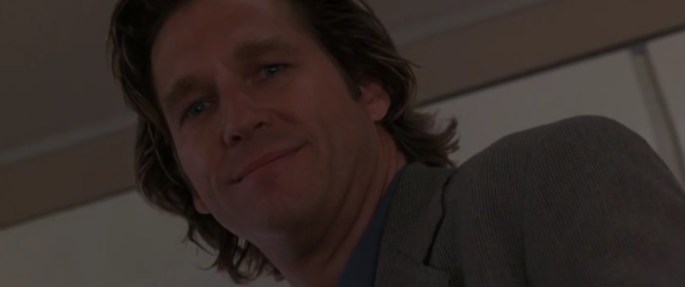
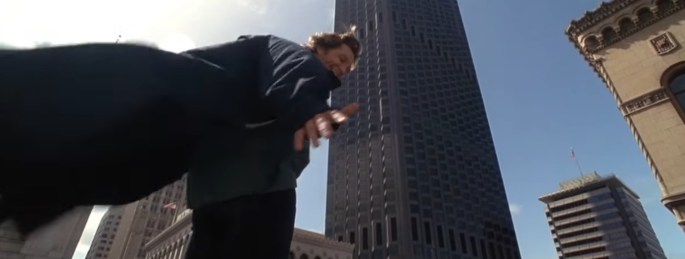
Fearless is an exceptional film. I was blown away by this shattering piece of work as a 13 year old theatergoer, and over the years, I’ve easily seen this remarkable study of the human condition at least a dozen times. I probably saw this more than a dozen times, actually, as it was on HBO seemingly every day for a few years. Peter Weir’s career is a unique one; I can think of few other filmmakers who have made as many great films as he has to then just become forgotten about by the studios. Granted, he’s not likely interested in the CGI-driven idiocy that has come to dominate the mass movie market, but it’s sad to think that he’s not getting gigs because his intelligence and compassion were always massive strengths to his work. And while Fearless explores a story that many might find hard to enjoy (survivor’s guilt after a traffic plane crash), lead actor Jeff Bridges was wholly stunning, meeting the emotionally harrowing material head on, and delivering a tour de force performance of cinematic dramatics which was spawned from the pages of Rafael Yglesias’s novel of the same name (he handled the screenplay adaptation).
2

Rosie Perez breaks your heart in this film; I love her and it’s a crime that she’s basically disappeared in recent years except for her small but pivotal turn in Ridley Scott’s diamond-cut gem The Counselor. In Fearless, she delivers an atomic bomb of on-screen emotion; only the most jaded person wouldn’t be touched by her character. Isabella Rossellini did her usual scene stealing, Tom Hulce and John Turturro, and John de Lancie were all very strong, and you also get to see a very young Benicio del Toro. Maurice Jarre’s reflective musical score hits both high and low notes of personal introspection, and Allen Daviau’s gleaming cinematography casts a visual spell over the viewer. The film contains one of the most surreal and expressive plane crash sequences that I can think of, and the scene with the strawberries is something I’ve never forgotten. Despite excellent reviews, an October release date, and Oscar buzz (Perez was nominated for Best Supporting Actress), Fearless died a quick commercial death, before becoming an audience favorite in the home video market. This is the sort of film I could watch any day of the week. Warner Archive released the Blu-ray in 2013.
3

Phil Joanou’s State Of Grace


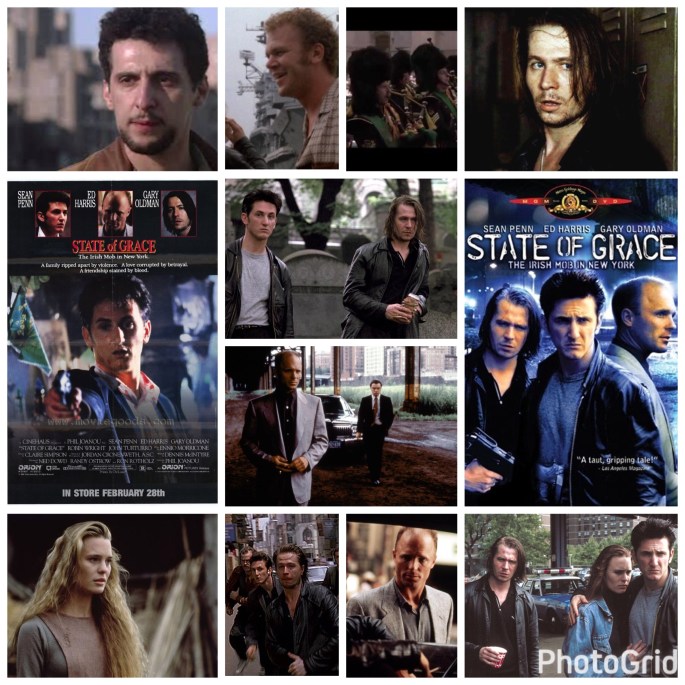
Phil Joanou’s State Of Grace had the unfortunate luck of being released in 1990, the same year that also saw Scorsese’s Goodfellas and the third Godfather film. It’s hard to gain your footing when that kind of momentum is surging about, but this film is as good as the others, and deserves recognition or at least some kind of re-release. Set in the blistering inferno of Hell’s Kitchen, NYC, it’s a violent tale of Irish Mobsters, undercover cops, betrayal and murder, set to a smoky, mournful Ennio Morricone score that lingers in the air like smog. Sean Penn is Terry Noonan, a deep cover operative who returns to his childhood neighbourhood to reconnect with old friends, and dig up buried grudges. Ed Harris is Frankie Flannery, ruthless gangster and former ally, while Gary Oldman plays his hotheaded brother Jackie with a tank full of nitrous and the kind of unpredictable, dynamite fuse

potency one expects to see from a David Lynch character. The three of them are on a collision course set in the grimy streets of New York, bound by old loyalties yet destined to clash and draw new blood. Penn shares the screen with his once wife Robin Wright here, looking lovely as ever. There’s also supporting turns from John Turturro, John C. Reilly, R.D. Call, a geriatric Burgess Meredith and an unbilled cameo from James Russo. Penn, Harris and especially Oldman are like flint sparks, a trio that won’t be stopped and light up the screen for a spellbinding, visceral two hours until their eventual confrontation, hauntingly shot by cinematographer ” in the midst of a bustling St. Patrick’s Day parade. This one has been somewhat lost to the ages, like a number of other stellar crime dramas I can think of from the nineties. The cast, score and Joanou’s thoughtful direction make it an unforgettable piece of work. 

-Nate Hill

HANY ABU-ASSAD’S OMAR — A REVIEW BY NICK CLEMENT

3

The Palestinian film Omar, which was released in 2013, is an incredibly lean and disciplined political thriller that ticks like a fine-tuned clock on a narrative level, and offers up riveting thrills when it comes to its action bits. Director Hany Abu-Assad packs a serious punch into his film, which mixes romance and sociopolitical observations into a potent mix. From the startling opening moments all the way to the film’s absolutely ferocious final shot, Abu-Assad engrosses the viewer in a dangerous and authentic-feeling landscape filled with betrayal and ultimate tests of friendship. The plot centers on a baker who braves the West Bank barrier in order to spend time with the woman he loves; after a fight breaks out with Israeli troops, he’s forced into working as a double agent with consequences that appear to be deadly.

2

First time actor Adam Bakri completely commands the screen with an intensely physical performance and a hardened gaze, while the smart plotting never goes over the top into the realm of the absurd. After winning the Special Jury Prize at the 2013 Cannes Film Festival, Omar would receive an Oscar nomination for Best Foreign Language Film. Abu-Assad’s 2006 feature Paradise Now (also Oscar nominated) is similarly intense and unforgettable. And it must be stated again that the final few moments of Omar are beyond intense; I can think of few movies that have dared to end on such an uncompromising note. And I’m always a big fan of movies that put a topical spin on genre elements. Abu-Assad’s upcoming romance/disaster film The Mountain Between Us, with Idris Elba and Kate Winslet, sounds like a winner.

1

Netflix’s Small Crimes


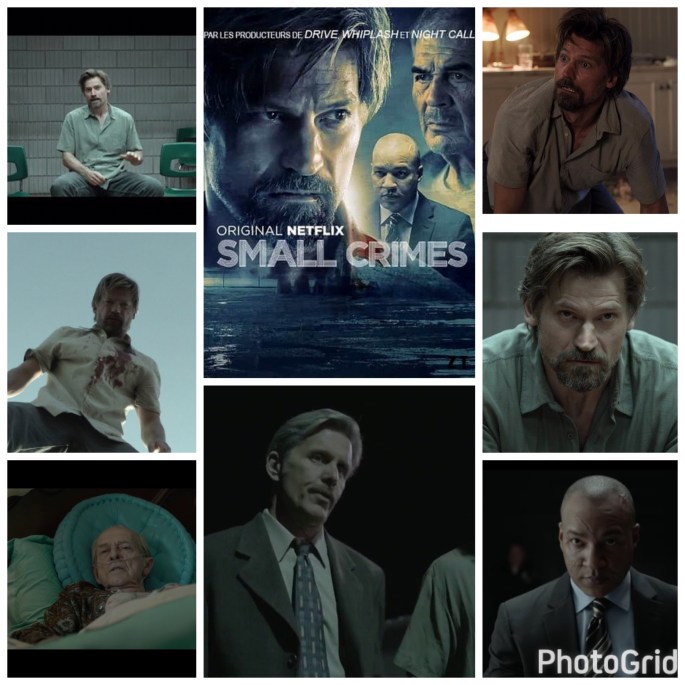
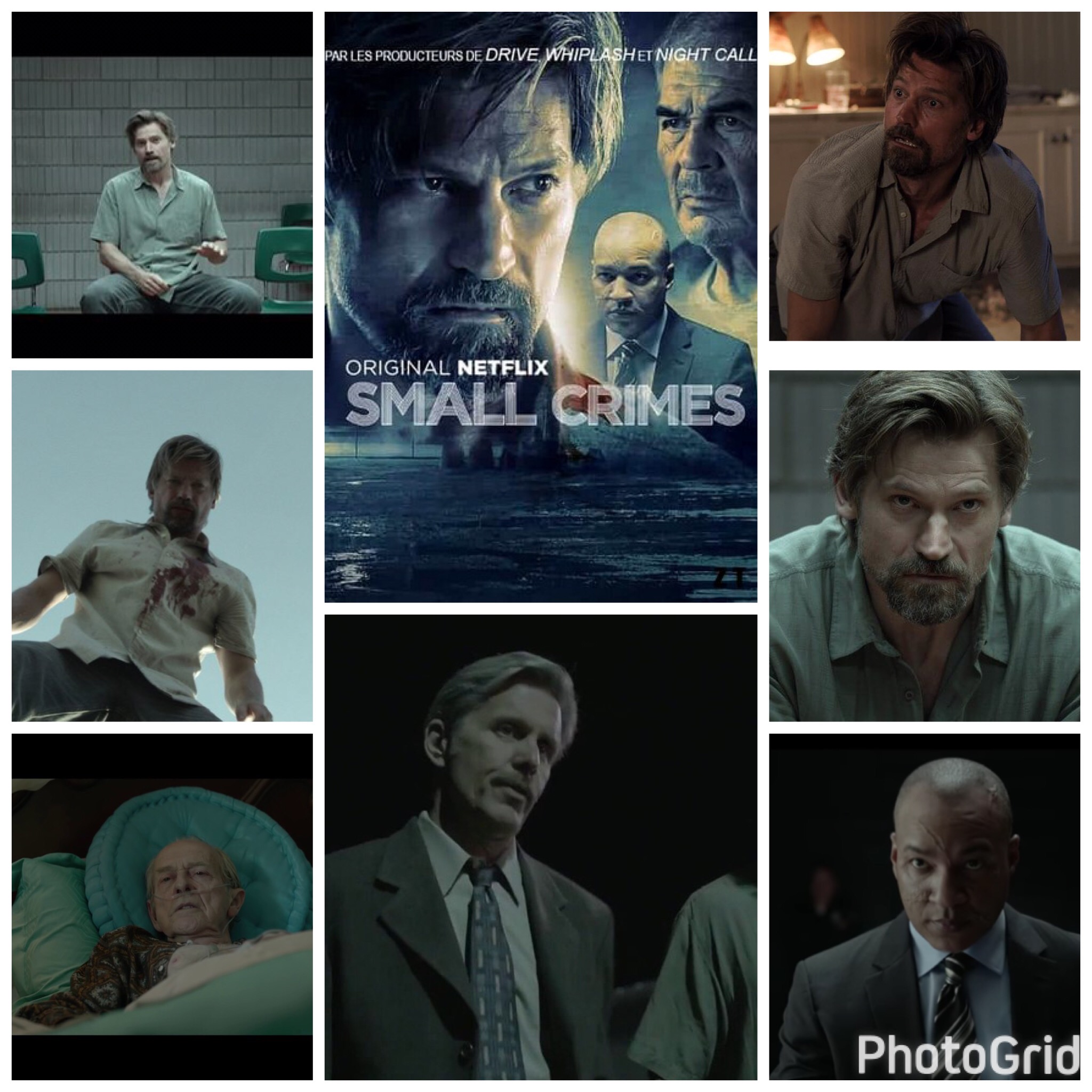
Netflix’s Small Crimes is a bitter, barren, gnarled piece of work that leaves an uneasy vacuum in the air as it passes. If you haven’t heard of it yet, that’s because the platform does almost zero promotion when new content comes off the assembly line, quietly slipping it onto the site without so much as a tv spot. Some are forgettable, and some are gems that could have done with a bit of buildup. This one is like David Mamet, Cormac McCarthy and Elmore Leonard sipping whiskey sours one cold, empty night and brainstorming ideas. I love the time honoured themes presented here, but what I love and admire more is the filmmaker’s courage in completely subverting, perverting and putrefying the formula. There’s countless films about disgraced cops, criminals or what-have-you who return home to a small town with designs on putting the wrong things right and finding a modicum of redemption. Thing is, in 99.999% of these films, we end up with a happy ending where all the kinks are ironed out and bygones are left as such, a trend which really cripples the stakes and grinds our expectations down with a blunt, predictable Hollywood ending. Not this one. Nikolai Koster-Waldau, aka Jamie Lannister, is a wiry, cracked out ex con who used to be a cop, before he viciously, and I do mean viciously, sliced up the town DA at the behest of a crime kingpin. Moping back into the county following a six year stretch in the pen, it’s inevitable that his very presence will stir up a few noxious vibes. Sure enough, he runs into trouble from all angles, including the vengeful DA (“, looking like he shaves with a wheat thresher), a scummy corrupt detective (Gary Cole eats up the dialogue like candy), the mobsters he used to be employed by, and even his parents (Robert Forster & Jacki Weaver), who are clearly broken by the past. There’s a feeling of inescapable doom, an inevitable choking quicksand that Waldau wades deeper into,

his seemingly noble intent on reconnecting with his wife and daughters gradually ground away to reveal the true nature of his path, and it ain’t pretty. Gary Cole has a way with words and mannerisms, and he runs away with his bent cop role, stealing scenes like nobody’s business. Forster has salt of the earth gravitas in spades, and nails a near career best scene with clear eyed conviction, nailing our attention to his presence. It’s not a perfect film though, there’s pacing issues, sometimes it gets a little vague or scattered and a romantic subplot involving a nurse (Molly Parker) seems glaringly out of place. Waldau anchors it though, a twitchy, unpredictable ne’er do well who seems cosmically incapable of getting his act together. The ending floored my expectations and remind that there is hope for fresh narratives and abstract thinking amongst writers. You’ll come out of this one bruised, but you’ll be glad you sat through the beating. 

-Nate Hill

GUEST CRITIC & FILMMAKER DAMIAN K. LAHEY ON RONNY YU’S THE BRIDE WITH WHITE HAIR

BrideWhiteHairPoster
The Bride With White Hair (1993) dir. Ronny Yu

Once when I was in high school I picked up a cult Asian movie magazine from Barnes N’ Noble. This was before a lot of this stuff was available on video and the DVD cult revolution was still years away. Many of these films were only available through underground catalogues. They were expensive and the quality was often dubious. This magazine in particular covered mainly sexploitation roughies. However, a section of it covered more mainstream Asian fare and included was a review of Ronny Yu’s ‘The Bride With White Hair’ that was over the rainbow in its praise of the film. I never forgot the film and years later when I got a DVD player it was one of the first DVDs I bought. While not a masterpiece rivaling ‘Citizen Kane’ as the review had claimed, it is certainly a classic of Chinese cinema and in my opinion, one of the best fantasy films ever made.

An evil cult has been terrorizing the land and a famed warrior falls in love with the cult’s chief enforcer. This is a dark fantasy ‘Romeo & Juliet’ story. Brigitte Lin and Leslie Cheung are perfectly cast and their chemistry is uncanny. They hold the tragedy of their characters’ destinies in the palms of their hands with the weight it deserves. This is forbidden love at its most fierce.

Director Ronny Yu has razor sharp instincts. He knows you can’t confuse action with soul when it comes to these types of films. The action sequences can only be as good as their emotional content. The way he blends the two here is nothing short of remarkable. Many of the images her are iconic as well. No way around it. You won’t be able to shake some of these shots. Peter Pau sealed his reputation as a cinematographer with this one. The work of a master.

This film is mounted on an epic scale though it is only 92 minutes long. Not many films that go for that scope with such a short running time can pull it off. Usually, something feels missing or seems off. But not here. It all feels deserved and earned. Though the same can’t be said for the cheesy song that plays over the end credits sequence. Woof! No offense to all you early 90s Asian synth pop fans out there but…

Ronny Yu would later have to flee China for political reasons and washed up on Hollywood’s gold encrusted shores to make movies like ‘Bride Of Chucky’ and ‘Freddy Vs. Jason’. He would not come close to making another film of this caliber until ‘Fearless’ starring Jet Li in 2006.

TheBrideWithWhiteHairStill

J.A. BAYONA’S A MONSTER CALLS — A REVIEW BY NICK CLEMENT

1

A Monster Calls is easily one of the more upsetting films I’ve seen in a long while. I knew what the narrative entailed before viewing it, but I wasn’t prepared for how much this movie would explore death and its consequences and how children cope with staggering loss. I’m typically wary of CGI-dominated storytelling, but here, the absolutely striking visual effects were in COMPLETE service to the emotionally harrowing material; the sound and fury on display means something, and therefore, as a viewer, my eyes didn’t gloss over when the aesthetic got rambunctious. Director J.A. Bayona, who previously helmed the immensely underrated tsunami drama The Impossible, has crafted a thrillingly artistic film that is both dark in theme and in palette; this is a nearly unrelentingly grim and sad piece of work that never softens any of its rough edges, with dark hued, edgy handheld cinematography employed by ace shooter Oscar Faura that feeds into Fernando Velázquez’s robust musical score.

2

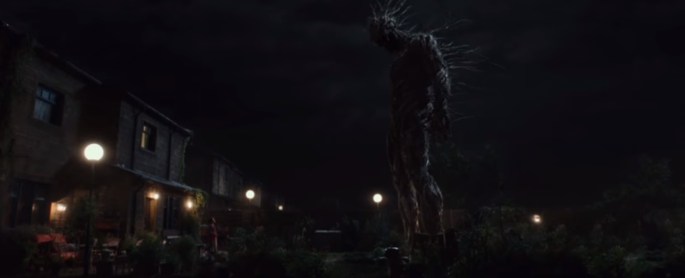
Set in the U.K. and based on the novel by Patrick Ness and Siobhan Dowd, A Monster Calls revolves around 12 year old Conor O’Malley, brilliantly portrayed by the young actor Lewis MacDougall, whose mother (Felicity Jones) is losing her battle with terminal cancer. Conor isn’t interested in living with his grandmother (Sigourney Weaver) and he’s got a father (Toby Kebbell) living in America who has various reasons for not stepping up. And he also must contend with some rather cruel school yard bullying; this film really hits some mature notes that will need to be smartly processed by younger viewers. Conor then starts to imagine a humongous tree monster (wonderfully voiced by Liam Neeson) living outside of his house who aims to tell him three stories, and demands one final story in return. The baroque visual design of the tree and his surroundings is startling and unique, with the surreal images meshing beautifully with Eugenio Caballero’s vivid production design.

4

I’m not exactly sure who this film was geared towards, as it’s a piece designed way more for adults, and yet is told through the POV of a child, and the material is way too intense and layered for tykes to find involving (if they’re not scared shitless by the tree monster). It’s got a Joe Dante/Amblin feel at times, but it’s never playful or ironic or wink-wink. But in today’s Pixar-happy marketplace, a film like this seemed destined to get lost, which is exactly what happened. Produced for a reported $50 million, this film grossed less than $5 million in America, with international ticket sales preforming only modestly despite very favorable critical notices. Films like this are too smart for the room, and too challenging for mass audience attachment. A Monster Calls is definitely one of the more distinctive “family” offerings in quite some time, and a film I’m not likely to forget anytime soon for a variety of reasons.

3

YEON SANG-HO’S TRAIN TO BUSAN — A REVIEW BY NICK CLEMENT

2

The horror genre is my least traveled and I’m certainly no big fan of zombie narratives (my favorite is easily Zack Snyder’s Dawn of the Dead) but WOW and WOW, the South Korean film Train to Busan is completely insane and amazing and unrelenting in its awesomeness. What’s also excellent about the film is that I cared about the characters and became immediately invested in them, so by the time the harrowing finale was taking center stage, I had a lump in my throat and sweaty palms of nervous excitement. Certainly inspired by Marc Forster’s visually stunning but super silly World War Z, director Yeon Sang-ho most notably borrowed the zombie-topple visual motif from the Brad Pitt blockbuster, but because this film cost roughly what the craft services bill was on WWZ, the filmmakers were able to go all out with the gore (something WWZ painfully lacked) and as a result fashioned a far more effective piece of nightmarish horror. Part of my enthusiasm for Train to Busan stems from not knowing much about it, never seeing a trailer beforehand, and having a generally low opinion and set of expectations for these sorts of items. This was a fabulous surprise. After premiering in the Midnight Screenings section of the 2016 Cannes Film Festival, Train to Busan became one of the biggest films in the history of the South Korean box office. It’s now available to stream on Netflix and well worth your time if you’re looking for a riveting and bloody piece of cinema that goes for the jugular while still respecting your brain and playing with your emotions.

3

Ken Russell’s THE DEVILS

The Devils

1971.  Directed by Ken Russell.

screen-shot-2013-10-01-at-9-39-50-am

Ken Russell’s magnum opus, The Devils, is one of the most audacious films ever made.  Banned in several countries and edited for release by the studio, The Devils has become a modern legend for film lovers and fans of transgressive cinema.  Featuring a pair of unbelievable performances, acid trip visuals, and a scathing commentary on the intermingling of religion and politics, this film is a cornerstone of renegade cinema.

Louis XIII is being influenced by Cardinal Richelieu to destroy various fortifications across France to prevent a protestant uprising.  The city of Loudun is protected by Father Urbain Grandier; a deeply flawed but honorable rebel, and as a result of his defiance, his downfall is obscenely orchestrated by both the Crown and the Church.  Russell’s screenplay was based on the novel The Devils of Loudun by Aldous Huxley and the stage play by John Whiting.  What begins as a psychedelic exploration of corruption and faith gradually evolves into an apocalyptic odyssey into the darkest corners of humanistic constructs.  Sexually repressed nuns, counterfeit saviors, and hedonistic priests populate the feverish world of The Devils, imprisoned in a hell designed from the inside out by violent supplication and archaic denials of primal instinct.  The final result is an unforgiving conglomeration of profane imagery that continues to shock the world today.

Devils_04

David Watkin’s cinematography captures two distinct worlds.  On the surface, the stinking streets of Loudun are crowded and unforgiving, presided upon by hulking Baroque temples whose white fresco walls are yellowed with the decay of time and indicative of their occupants’ self-prescribed righteousness.  The porcelain walls of the Ursine convent present as an asylum in waiting, where endless, alien like chambers await unspeakable acts of contrition.  Beyond the filth of reality, Watkin’s eye captures nightmarish vistas in which profane orgies are carried out under the unlidded celestial orb of a wasteland of the soul.  Fever dreams are interwoven into the narrative in a seamless, almost conspiratory manner that caresses the viewer’s sensibilities before utterly annihilating them by turning the mirror outwards into the theater.

Oliver Reed’s iconoclast Grandier is the fabric of cinematic excellence.  It’s fitting that one of Britain’s “bad boys” would deliver his greatest performance with a role about a fallen priest whose final act of resistance not only defines the very nature of faith but also sees him dissent whilst fully knowing the gravity of the choice.  His utter destruction in a Kangaroo court is not only some of Reed’s best acting, but it is the film’s defining centerpiece, championing the ideals of humility and grace, even in the face of true evil and apathetic idols.  Vanessa Redgrave’s turn as the deformed Sister Jeanne eviscerates the sexual arteries of Russell’s dung caked purgatory and baths in the humors of a world undone by self-baptizing her treacherous hunchback in a storm of rumor and accusation.  It is a true testament to Redgrave’s immense power that even Reed’s seminal work could not out shadow her unforgettable performance.

devils12

Derek Jarman’s ethereal production design is one of the most overlooked elements, creating a world that is familiar and yet distant, harmonizing with Russell’s razor sharp critique of the time period.  Shirley Russell’s costume design follows this trend, offsetting the poverty of the small folk with gaudy ensembles worn by their self-appointed saviors.  Everything swirls around Peter Maxwell Davies’ arcane score that ominously flows within the confines of Russell’s endless nightmare in which the fantastical and mundane hideously intertwine.

Available now on region 2 DVD or for streaming the edited US release version (this version does not feature certain elements of the orgy sequence or the extended final scene involving Redgrave) on Shudder, The Devils has garnered a reputation throughout the years that, in the age of cynicism, initially appears at first to be overblown and perhaps even misplaced.  However, upon witnessing this remarkable, and extremely relevant masterpiece, it becomes clear that not only is The Devils one of the most important films ever made, it also a once in a lifetime convergence of artistic ingenuity, shocking violence, and unbridled passion for the subject matter.  The Devils is an essential experience for connoisseurs of the vulgar who delight in films that expose the horrors of the past in a brilliantly risqué marriage of bacchanal abandon and uncommon fortitude.

Highly.  Highly Recommend.

The Devils 1971 08

Matt Dillon’s City Of Ghosts


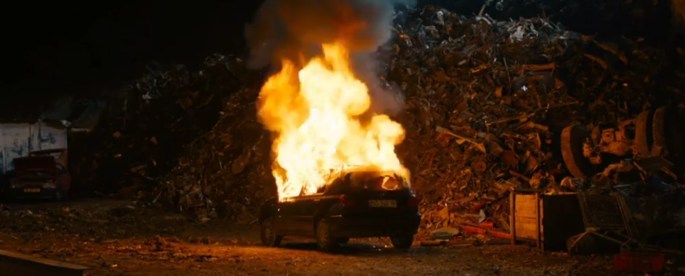
Some films just go nowhere. They start in the middle of nowhere, continue down a road towards nowhere, and eventually end up.. guess where? Nowhere. There’s no structure, no beats, little to no stakes, it’s just people hanging about in a non-story. Now, this can either make for a boring film stuck in doldrums of its own making, or it can somehow oddly just.. work. Matt Dillon’s City Of Ghosts falls in the latter category, lucky him. This was Dillon’s writing and directing debut, with him front and centre as the lead, which is a lot of pressure, but he’s crafted a meandering little exercise in mood that, although providing nothing groundbreaking or all that memorable, is a great time to watch in the dreamy AM hours when you just need something vague and atmospheric to fill the space. Matt plays a professional con artist who is forced to voyage from the US to find his boss and mentor (James Caan), last seen in Cambodia. That sounds like a setup ripe for intrigue and double crosses, right? Not so much. Once he’s there, things congeal into a smoky, languishing chamber piece that sees Dillon just wandering from one exotic locale to the next with a troupe of fellow travellers, and eventually the James Caan character, a fairly eccentric and charismatic fellow. There’s a vague love interest (the ever beautiful Natasha McElhone, always terrific), a jovial innkeeper (Gerard Depardieu) and other wayward souls who flit in and out of the proceedings, all amidst this authentic South Pacific setting (Dillon filmed on location in Cambodia, which does wonders for atmosphere). Stellan Skarsgard is in it too, a hoot as some associate of Caan’s, a mopey, Eeyore-esque pessimist who sits about, smokes, mumbles despairing platitudes and does not much else. Beginning to see the picture? It goes nowhere, and by the end the characters seem to have gotten sidetracked fifty times over, never really achieving goals or making bank like they do in noir such as this. It’s neat though, if you’re in the right frame of mind, and have shelved both expectations and adrenal glands. This is a burnished, dreamy, laconic little piece that I rather enjoyed at the hypnotic hour of 2am on some random tv channel in the triple digits. 

-Nate Hill

JAMES GRAY’S THE LOST CITY OF Z — A REVIEW BY NICK CLEMENT

3

James Gray makes films that are now considered “throwbacks” which is part of the reason why he’s yet to have a true break-out box-office hit with general audiences. It also doesn’t help that distribution problems have plagued more than one of his efforts, and let’s be honest, in this lowest common denominator movie marketplace that we find ourselves in, CGI-free pieces of filmmaking that skew towards adults and not infants like The Immigrant, Two Lovers, and his newest and by far most expansive achievement, The Lost City of Z, aren’t exactly what the studios have in mind. Which is a shame, because film after film, Gray has impressed me with his ability to tell morally complex stories with a true sense of filmic beauty, and he’s become one of my favorite filmmakers over the last 20 years. His debut was the ridiculously confident Little Odessa in 1994, which he followed up with the one-two crime-movie punch of The Yards (tragically underrated) and the 80’s policier We Own The Night. But with The Lost City of Z, Gray has stepped outside of his NYC milieu, and has crafted a visually bold and ultimately haunting story of exploration, family, and potential madness. I was in complete awe of this film, and I could have watched another hour of material had Gray been inclined to present it.

2

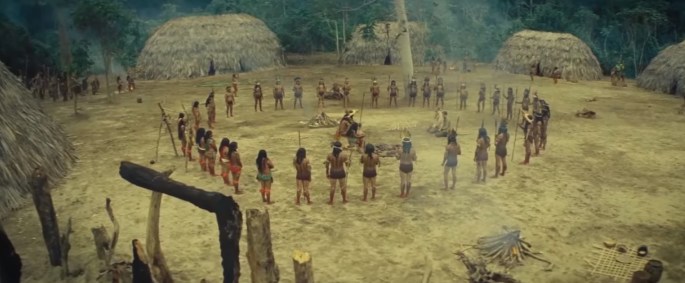
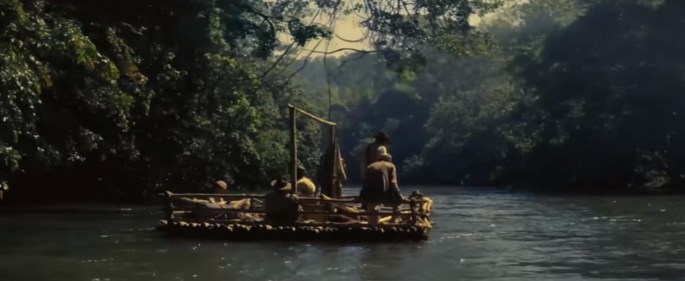
Charlie Hunnam is very commanding as Percy Fawcett, a British artillery officer in the early 1900’s who was drafted by the Royal Geographical Society to trek into the Amazon in order to create a map that would establish the border between Brazil and Bolivia. Once there, he became obsessed with finding an ancient city described to him by local indigenous tribes, which would later in time be named as El Dorado. With piqued personal interest and strong support from his wife, superbly played by the now invaluable Sienna Miller, Fawcett would return to the jungle on seven separate occasions (the film condenses to three), and would famously not return home after his final journey. These events were chronicled in the book The Lost City of Z by journalist David Grann, and Gray, in adapting the material for the screen, has fashioned an old-timey adventure picture in the vein of a David Lean epic, with shades of Herzog and Coppola thrown in for contemporary flavor. The supporting cast includes a plethora of strong performances from a bearded Robert Pattinson, Tom Holland, Edward Ashely, the great Angus MacFayden (despicably sloppy!), Ian McDiarmid, Clive Francis, and a smartly cast Franco Nero as a pivotal character in the film’s narrative.

1

The photography in The Lost City of Z is undeniably astonishing. Shot on 35mm film in 2.35:1 widescreen by master cinematographer Dariusz Khondji, re-teaming with Gray after The Immigrant and with previous credits including Seven, Evita, and Stealing Beauty, there’s a glorious richness to every single image in this movie that left me slack-jawed in numerous spots. Blacks are super-inky, the jungle’s natural light is captured in a casually graceful manner, and sequences shot in Europe have a just-rained freshness that feels tangible, with a bold yet ornate sense of color on display all throughout. Christopher Spellman’s riveting musical score hits so many phenomenal sonic notes that it’s tough to list them in a review; this is easily one of the more memorable and impressionistic film scores I’ve heard in years. The evocative and impressively varied production design by Jean-Vincent Puzos is the stuff that awards are made of; everything feels real in this movie. The two hour and twenty minute run time was perfectly paced by Gray and editors John Axelrad and Lee Haugen, allowing for a more layered experience by fleshing out Miller’s character, instead of just giving us the rote wife role. It’s wild to think that this super-expensive looking film was financially cobbled together by multiple independent investors, with Amazon Studios doing a low-key theatrical release in the head-scratching month of late April. I was overwhelmed by this epic yet intimate tale and as a relatively new father, I found the final stretches to be singularly creepy and emotionally disturbing. This is easily my favorite film of the year out of the eight movies I’ve seen, and I wish I could see it again on the big screen.

4